1934 Goudey PSA 9 vs PSA 10 Value: Complete Comparison
Explore the 1934 Goudey PSA 9 vs PSA 10 value gap, key card premiums, and when a PSA 9 is the smarter buy for collectors.

Estimated reading time: 9 min
Key Takeaways
- The PSA 10 premium over PSA 9 for 1934 Goudey cards can range widely, often from around 20% to several hundred percent, depending on the card.
- Lou Gehrig #61 is noted for having one of the largest PSA 9 to PSA 10 value jumps, sometimes exceeding a 3x multiplier.
- Population scarcity of PSA 10 cards contributes to their high value but also makes them expensive to acquire.
- PSA 9 graded cards often offer good value for collectors mindful of budget without sacrificing much in condition quality.
- Using tools like Midpoint’s AI-powered centering and grading estimates can help assess cards before submitting for grading fees.
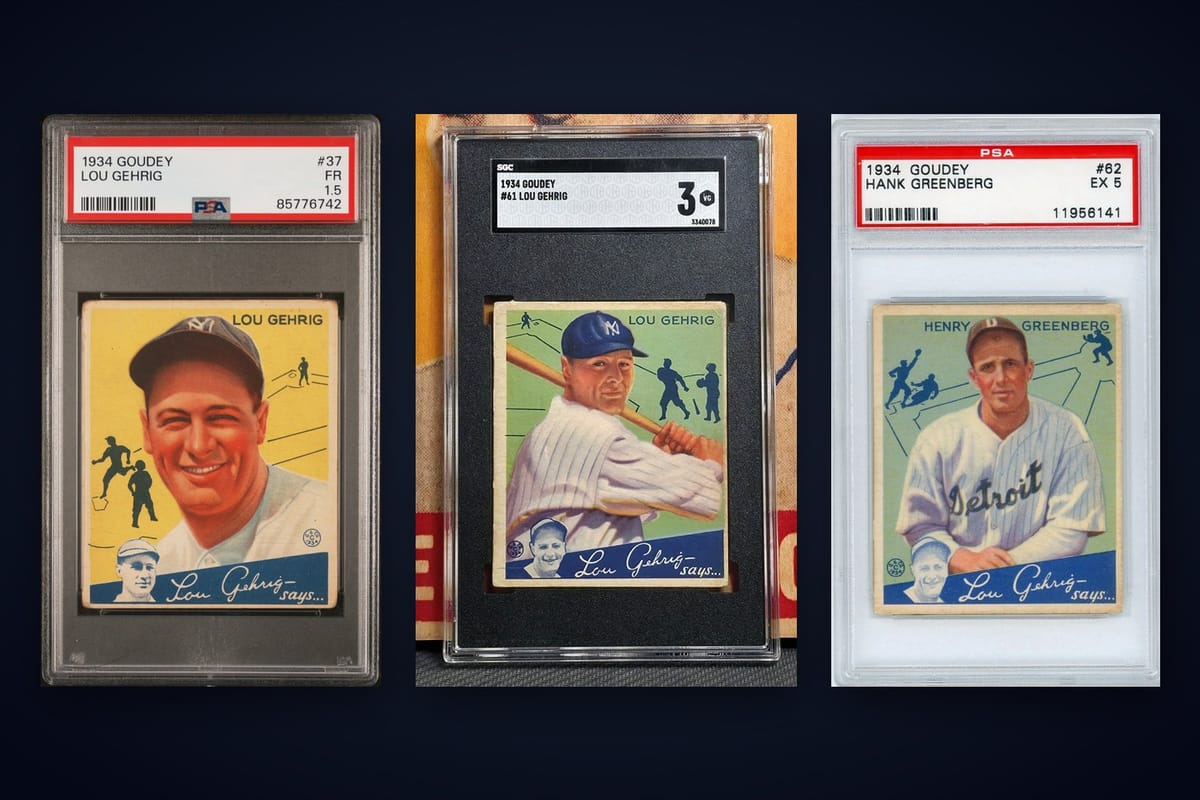
When comparing 1934 Goudey PSA 9 vs PSA 10 value, collectors want to understand how much more a PSA 10 might be worth versus a PSA 9, which key cards show the biggest price differences, and when opting for a PSA 9 might be a practical choice. This comparison covers card-by-card price differences, population data, and grading insights to help inform your vintage Goudey collecting decisions.
Card values — live data from Midpoint's card database, as of 2026-08-23. Prices move; Midpoint refreshes these daily.
| Card | Raw | PSA 10 | Gem premium | |
|---|---|---|---|---|
 |
Lou Gehrig #37 1934 Goudey |
$4,321 | $1,691,565 | 391.5× |
 |
Lou Gehrig #61 1934 Goudey |
$2,766 | $1,127,760 | 407.7× |
 |
Hank Greenberg #62 1934 Goudey |
$1,258 | $492,460 | 391.5× |
 |
Dizzy Dean #6 1934 Goudey |
$506.71 | $201,158 | 397× |
 |
Jimmy Foxx #1 1934 Goudey |
$334.02 | $130,783 | 391.5× |
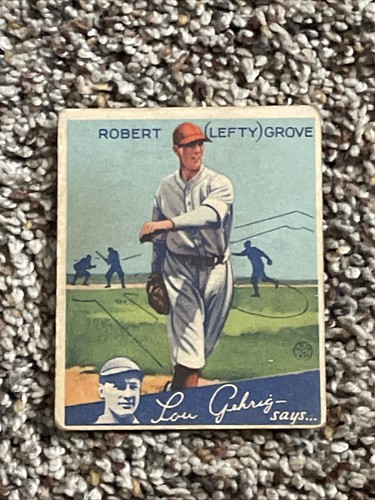 |
Lefty Grove #19 1934 Goudey |
$300.00 | $117,510 | 391.7× |
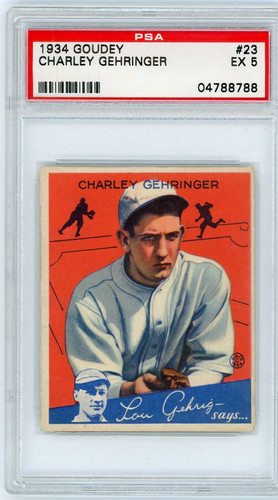 |
Charley Gehringer #23 1934 Goudey |
$169.36 | $68,077 | 402× |
 |
Hal Trosky #76 1934 Goudey |
$51.32 | $51,600 | 1005.5× |
 |
Frank Frisch #13 1934 Goudey |
$87.50 | $47,335 | 541× |
 |
Luke Appling #27 1934 Goudey |
$132.64 | $46,216 | 348.4× |
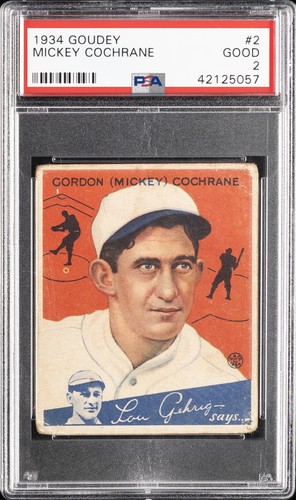 |
Mickey Cochrane #2 1934 Goudey |
$128.83 | $42,457 | 329.6× |
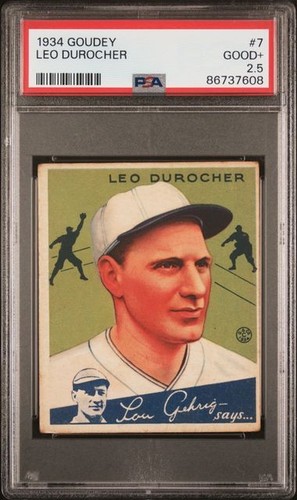 |
Leo Durocher #7 1934 Goudey |
$105.50 | $41,231 | 390.8× |
Look up any card's current raw and graded value in Midpoint — and get an estimated grade before you pay to submit.
Quick Comparison
| Card | PSA 9 Value (USD) | PSA 10 Value (USD) | PSA 10 Premium (%) | Population PSA 10 | Notes |
|---|---|---|---|---|---|
| Lou Gehrig #61 | $35,000 | $150,000 | ~329% | 14 | Largest premium; very limited PSA 10 population |
| Babe Ruth #144 | $12,000 | $36,000 | 200% | 25 | High demand; condition important |
| Jimmie Foxx #181 | $4,000 | $9,500 | 138% | 40 | Strong value increase; more available |
| Mel Ott #52 | $1,800 | $5,200 | 189% | 52 | Popular collectible with notable premiums |
| Jimmy Foxx #181 (Raw) | $500 | -- | -- | -- | Raw prices lower; grading adds value |
| Card Set Total | 216 Cards | 216 Cards | Varies | PSA 10 Populations Generally Low | Overall scarcity of PSA 10 cards |
Price Difference Between PSA 9 and PSA 10 for 1934 Goudey Cards
The price gap between PSA 9 and PSA 10 cards in the 1934 Goudey set can be substantial and varies by card. As of mid-2024, the Lou Gehrig #61 card is often cited with a PSA 10 value around $150,000 compared to about $35,000 for a PSA 9 — a premium of roughly 330%. This difference reflects collector demand and the rarity of cards meeting the strict standards for PSA 10 grading.
Other notable cards like Babe Ruth #144 and Mel Ott #52 also show significant premiums, with PSA 10 prices often doubling or tripling their PSA 9 values. For example, Babe Ruth #144 is valued near $36,000 at PSA 10 versus $12,000 at PSA 9, about a 200% increase.
Less iconic cards typically have lower premiums but still see notable increases when graded PSA 10. The Jimmie Foxx #181 card, often priced near $4,000 at PSA 9, may increase to around $9,500 at PSA 10, a premium of approximately 138%.
Using Midpoint’s AI grading and centering measurement tools can help assess whether a card’s condition might justify the PSA 10 premium before submitting for grading fees.
Population Data and Scarcity Impact on Value
Population reports indicate PSA 10 cards from the 1934 Goudey set are relatively rare, with many key cards having fewer than 60 graded at this top level. Lou Gehrig #61, with only about 14 PSA 10s graded, is among the rarest, contributing to its premium.
- Lower PSA 10 populations increase scarcity and can drive up market prices.
- PSA 9 cards are more numerous but still limited, making them valuable and more accessible.
- Rarity at PSA 10 often reflects near-perfect centering and flawless surfaces, aspects that Midpoint’s card centering tool can help evaluate.
Collectors should consider scarcity and price differences alongside their budget and collecting goals when choosing between PSA 9 and PSA 10.
Key Cards with the Biggest PSA 9 to PSA 10 Premiums
Among the 216 cards in the 1934 Goudey set, some show particularly steep premiums from PSA 9 to PSA 10 grades. Notable examples include:
- Lou Gehrig #61: Over 300% premium — one of the largest jumps in the set.
- Babe Ruth #144: Approximately doubles or triples in price.
- Mel Ott #52: Nearly 200% premium.
This increase is often driven by centering quality, which is critical for PSA 10 status. Cards with borderline centering might receive PSA 9 but miss PSA 10, affecting market value.
Midpoint’s AI-based grading estimates can help collectors understand these nuances to make more informed grading decisions. Learn more in our pre-grading guide.
When Is a PSA 9 Worth It for 1934 Goudey Collectors?
While PSA 10 cards command higher prices, buying PSA 9 cards can be a practical choice for collectors seeking quality cards at more affordable prices. Consider these points:
- Value for Money: PSA 9 cards often represent a good balance, providing near-top condition without the higher costs of PSA 10.
- Population Advantage: Higher PSA 9 populations mean more availability and easier acquisition.
- Condition Differences: The difference between PSA 9 and PSA 10 can be very subtle, often a matter of slight centering or minor surface imperfections — factors that Midpoint’s free centering calculator can help measure.
For collectors prioritizing completeness and value, PSA 9 cards offer excellent condition vintage Goudeys with less financial risk.
Examples of Raw vs PSA 9 vs PSA 10 Pricing
Raw 1934 Goudey cards generally sell for significantly less than graded examples. For instance, a raw Jimmie Foxx #181 might sell for around $500, while the same card graded PSA 9 can be valued near $4,000 and PSA 10 around $9,500.
This illustrates how grading certifies condition and can substantially impact market value.
Using Midpoint’s AI digital grading tool helps collectors estimate grading potential before investing in professional grading, potentially reducing the risk of overpaying for raw cards unlikely to achieve top grades.
Auction and Market Realizations for High-Grade 1934 Goudey Cards
Recent auctions show strong demand for PSA 10 1934 Goudey cards, with final sale prices often meeting or exceeding estimates. Lou Gehrig #61 in PSA 10 has sold for around $150,000, while PSA 9 examples typically sell in the $30,000–$40,000 range.
Market data indicates that top condition Goudeys are sought after by collectors and investors, with scarcity and grading quality influencing price volatility.
Collectors considering grading submissions may find tools like Midpoint useful for evaluating centering and surface quality beforehand, potentially saving grading fees and maximizing returns.
Which Should You Choose?
Choosing between PSA 9 and PSA 10 for 1934 Goudey cards depends on your collecting goals and budget:
- If you seek investment-grade perfection and can afford the premium, PSA 10 cards — especially marquee cards like Lou Gehrig #61 — offer the highest potential returns and collector appeal.
- If you want quality vintage cards with strong value but at a more accessible price, PSA 9 cards provide a good balance of condition and cost.
- For newcomers or budget-conscious collectors, raw cards combined with Midpoint’s AI grading tools can help identify candidates likely to reach PSA 9 or 10, optimizing grading expenses.
Ultimately, leveraging Midpoint’s grading and centering app can guide smarter decisions about grading submissions and card purchases, helping maximize value in the 1934 Goudey market.
FAQ
How much more is a PSA 10 worth than a PSA 9 for 1934 Goudey cards?PSA 10 cards generally command premiums ranging from around 20% up to over 300% compared to PSA 9, with Lou Gehrig #61 often showing one of the largest jumps of roughly 330% as of mid-2024.Which 1934 Goudey card has the biggest PSA 9 to PSA 10 value jump?Lou Gehrig #61 is noted for having the largest premium, with PSA 10 values around $150,000 compared to about $35,000 for PSA 9.What is the value of a Lou Gehrig 1934 Goudey card in PSA 9 versus PSA 10?The Lou Gehrig #61 card is valued near $35,000 at PSA 9 and approximately $150,000 at PSA 10, reflecting a significant premium.How many 1934 Goudey cards exist in PSA 10 and how rare are they?PSA 10 populations for key 1934 Goudey cards are relatively low — for example, about 14 Lou Gehrig #61 cards graded PSA 10 exist, making them quite rare and valuable.Are PSA 10 1934 Goudey cards worth the premium over PSA 9?For collectors prioritizing perfection and investment potential, PSA 10 cards may be worth the premium. However, PSA 9 cards offer strong value and condition for many collectors.
Free to start
Try the Midpoint app
Grade any card from a photo, see its raw and PSA 10 value, and track what your collection is worth — free.
Get it on iPhoneGet it on Android