1939 Play Ball Baseball Cards Value: Ultimate Collector’s Guide
Discover the 1939 Play Ball baseball cards value, key cards worth grading, and how condition affects prices with expert price guides and grading tips.

Estimated reading time: 14 min
Key Takeaways
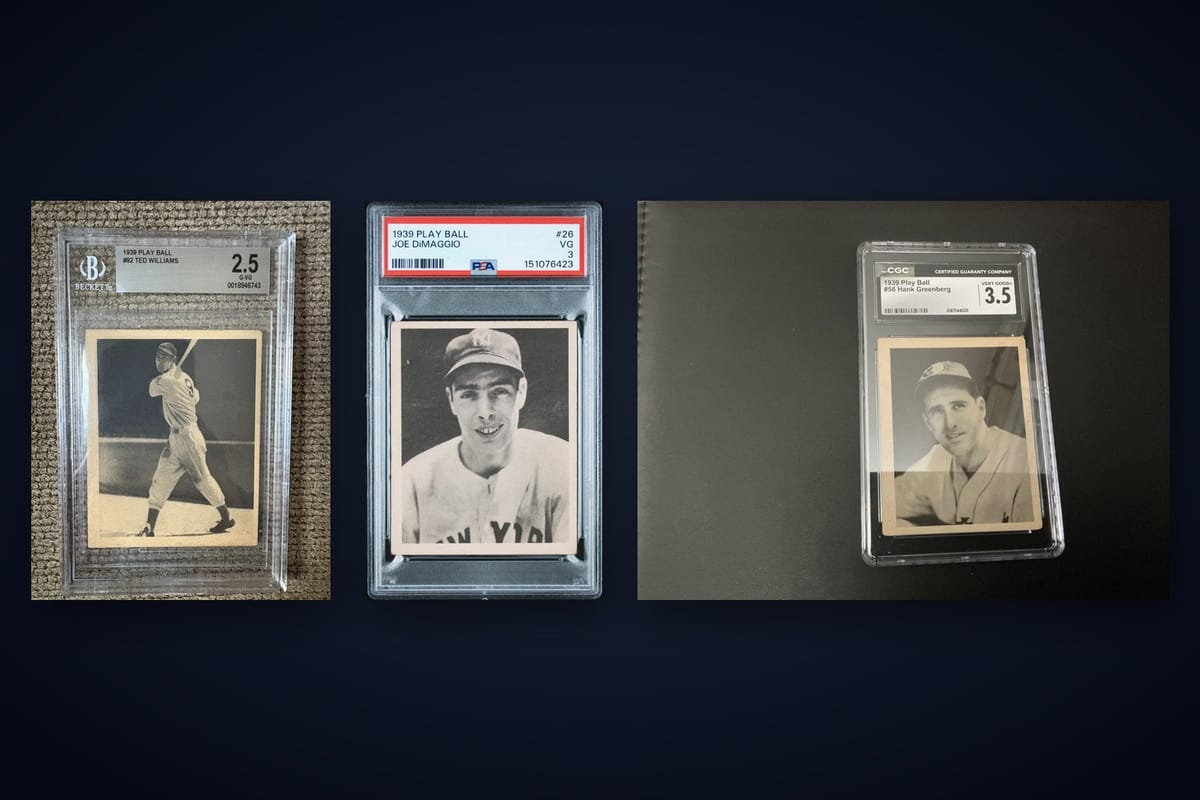
- The 1939 Play Ball set includes iconic rookie cards like Ted Williams #92 and Joe DiMaggio #26, with values varying widely by grade and condition.
- High series cards, such as the Ted Williams rookie, often command premium prices, especially in top professional grading conditions, reflecting scarcity and collector demand.
- Condition and centering significantly impact value; raw cards often see a value increase after professional grading, though results can vary.
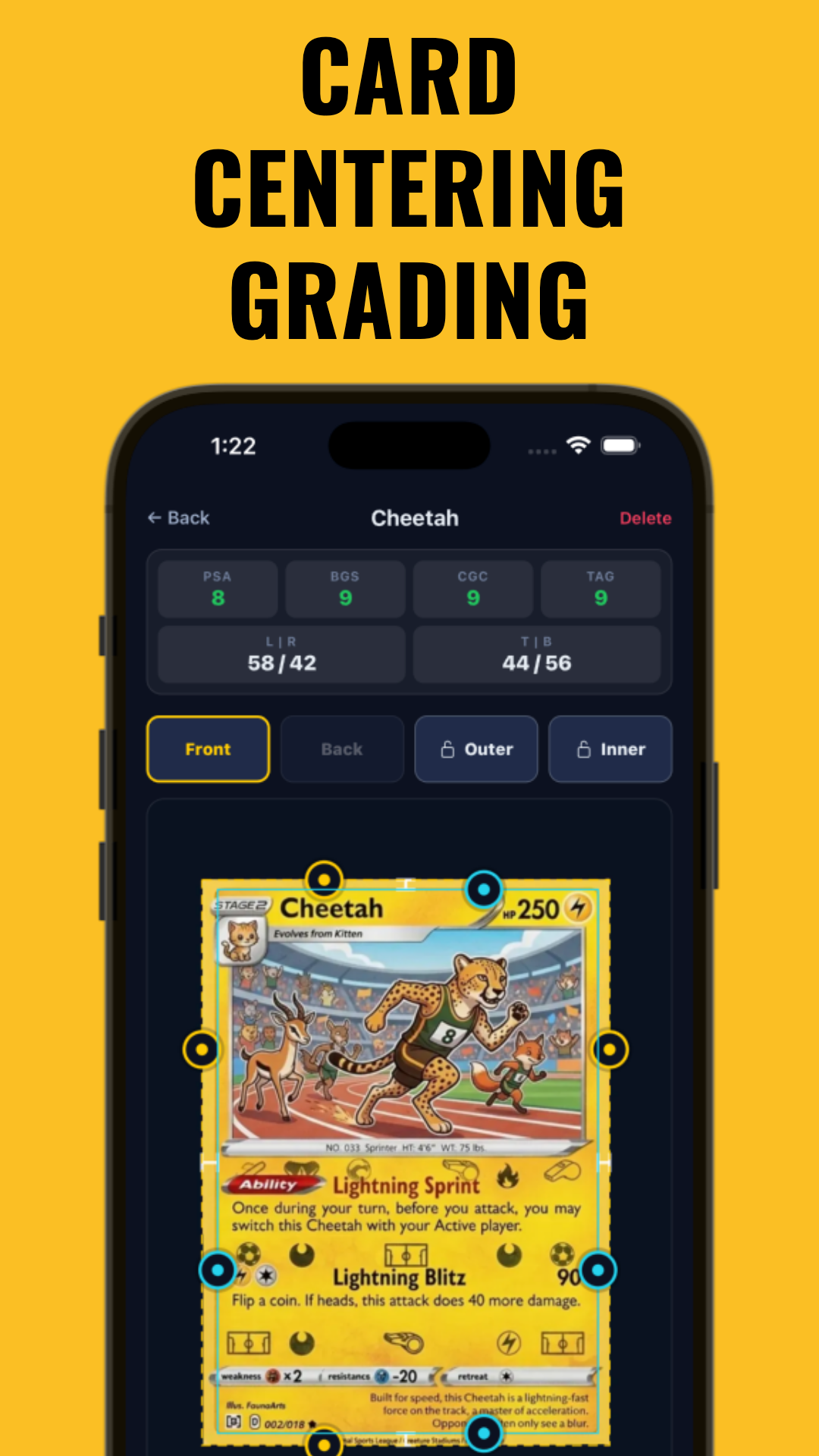
- Accurate centering measurement tools like Midpoint can help collectors decide which cards may be worth grading by providing millimeter-precise centering percentages.
- The 1939 Play Ball set is generally free from significant printing errors or major population concerns, simplifying authenticity checks and valuation.
Card values — live data from Midpoint's card database, as of 2026-09-04. Prices move; Midpoint refreshes these daily.
| Card | Raw | PSA 10 | Gem premium | |
|---|---|---|---|---|
 |
Ted Williams #92 1939 Play Ball |
$3,250 | $985,526 | 303.2× |
 |
Joe DiMaggio #26 1939 Play Ball |
$2,335 | $781,322 | 334.6× |
 |
Hank Greenberg #56 1939 Play Ball |
$176.00 | $57,802 | 328.4× |
 |
Earl Averill #143 1939 Play Ball |
$108.14 | $37,819 | 349.7× |
 |
Bobby Doerr #7 1939 Play Ball |
$73.41 | $25,826 | 351.8× |
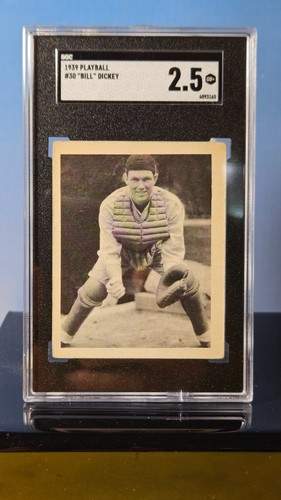 |
Bill Dickey #30 1939 Play Ball |
$54.94 | $19,080 | 347.3× |
 |
Arky Vaughan #55 1939 Play Ball |
$50.21 | $17,469 | 347.9× |
 |
Rick Ferrell #39 1939 Play Ball |
$53.50 | $17,413 | 325.5× |
 |
Bud Thomas #158 1939 Play Ball |
$48.61 | $17,049 | 350.7× |
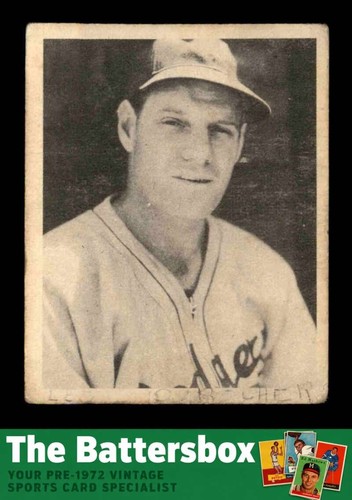 |
Leo Durocher #6 1939 Play Ball |
$48.84 | $16,969 | 347.4× |
 |
Jimmy Brown #132 1939 Play Ball |
$45.99 | $16,055 | 349.1× |
 |
Don Padgett #157 1939 Play Ball |
$44.65 | $15,712 | 351.9× |
Look up any card's current raw and graded value in Midpoint — and get an estimated grade before you pay to submit.
Table of Contents
- Section 1: Overview of the 1939 Play Ball Baseball Card Set
- Section 2: Understanding High Series vs. Low Series Cards and Scarcity
- Section 3: Spotlight on Ted Williams Rookie Card #92 Value and Sales
- Section 4: Joe DiMaggio Card #26 and Other Hall of Famers9 Values
- Section 5: How Condition and Grading Affect 1939 Play Ball Card Values
- Section 6: Price Guide Ranges and Population Data for Commons
- Section 7: Authenticity, Card Numbers, and Identifying Real 1939 Play Ball Cards
- Conclusion
- FAQ
Section 1: Overview of the 1939 Play Ball Baseball Card Set
Historical Context and Set Attributes
The 1939 Play Ball baseball card set is a well-regarded vintage collection that captures the spirit of pre-World War II baseball. Produced by the Play Ball company, this set features a total of 240 cards showcasing stars from Major League Baseball9s era, encompassing both established veterans and emerging talents. Released during a period when baseball was America's pastime, these cards serve as a historical snapshot of the sport just before the disruption caused by World War II.
Unlike some other issues from the late 1930s and early 1940s that suffered from print inconsistencies or variations, the 1939 Play Ball set is generally noted for its clean and consistent printing quality. The cards are uniform in size and do not have widely reported significant printing errors or major variations, which enhances their appeal to collectors who value authenticity and consistency. This straightforward production quality means collectors can focus more on condition and centering when evaluating cards rather than worrying about complex print variations.
Set Size and Card Checklist
The set is divided into two distinct number ranges: low-numbered cards (#19#144) and high-numbered cards (#1459#240). Collectors often refer to these as the "low series" and "high series," although Play Ball did not officially designate these terms. This segmentation is important because the high series cards include many premium cards and key rookies, which tend to be scarcer and more valuable.
The full checklist covers a broad spectrum of players, from everyday roster players to Hall of Famers and rookies making their debut. Two of the most coveted cards in the set are Ted Williams9rookie card (#92) and Joe DiMaggio9card (#26). These cards serve as marquee highlights and often drive much of the market activity for the set. The checklist also includes less heralded players, which are generally more common and provide entry points for collectors to complete the set.
Card Design and Features
The cards measure approximately 2 1/2 inches wide by 3 3/4 inches tall, a common size for cards in that era. The front features a color portrait of the player against a simple background, framed by a clean white border. The distinctive Play Ball logo is prominently displayed, adding to the set's recognizable branding.
Player names are printed in bold, typically centered below the photo, along with their team affiliation. The back of each card contains biographical data and career statistics, printed in clear, legible typefaces that remain sharp even after many decades. The set9s design balances simplicity and vibrancy, making it visually appealing and easy to identify.
Section 2: Understanding High Series vs. Low Series Cards and Scarcity
Differences Between Low and High Series Cards
The division of the 1939 Play Ball set into low and high series cards is a key factor affecting scarcity and value. Low series cards, numbered #1 through #144, are generally more common. They feature a mix of everyday players, role players, and some stars. Because of larger print runs and greater survival rates, these cards are typically easier to locate in collections, especially in lower to mid-grade conditions.
High series cards, numbered #145 through #240, include many of the set9s premium cards, particularly rookies and Hall of Famers. While the set was not officially released in two distinct series, collectors have identified these groupings based on card numbers and relative scarcity. The high series tends to have smaller print runs and lower survival rates in high-grade condition, making these cards generally more valuable and sought after by collectors and investors alike.
Scarcity and Population Insights
Population reports from major grading companies like PSA indicate disparities in survival rates between low and high series cards. For example, many low-numbered commons in the set have thousands of graded examples, with a healthy number above PSA 7. This abundance tends to keep prices relatively modest for these commons.
In contrast, high-numbered cards, especially key rookies like Ted Williams #92, show fewer examples in PSA 9 or 10 grades, with total population counts often below 50 for the highest grades. This scarcity can translate into higher market values, as collectors compete for limited mint-condition examples.
For instance, the Ted Williams rookie card is often cited as one of the tougher high-grade vintage cards from this era, with PSA 10 examples commanding high prices at auction. The rarity of these cards at top grades is primarily due to the fragility of the card stock and the challenges in handling and preserving cards over 80 years old.
Impact on Collectors and Investors
- Low series cards offer more affordable entry points for new collectors and those looking to complete the set without incurring prohibitive costs.
- High series cards attract investors and serious collectors aiming for scarcity-driven appreciation, particularly focusing on rookies and Hall of Famers.
- Condition and professional grading become critical factors for high series cards because even small differences in centering or surface quality can affect grades and prices significantly.
Given these dynamics, collectors often use centering measurement tools and grading guidelines to evaluate whether their cards merit the cost and effort of professional grading. This approach helps maximize investment returns and avoid costly grading submissions on cards unlikely to fetch high grades.
Section 3: Spotlight on Ted Williams Rookie Card #92 Value and Sales
Importance of the Ted Williams Rookie Card
The Ted Williams #92 card from the 1939 Play Ball set is widely regarded as the crown jewel of the collection. Ted Williams is considered one of the greatest hitters in baseball history, and his rookie card is a centerpiece for vintage collectors. This card9s iconic status, combined with its scarcity in high grade, makes it one of the most valuable pre-war baseball cards on the market.
Collectors prize this card not only for its historical significance but also for its investment potential. As the supply of PSA 9 and 10 graded examples remains limited, demand continues to influence prices, especially as Williams9 legacy grows with subsequent generations of collectors.
Recent Sales and Price Benchmarks
As of mid-2026, the market for the Ted Williams #92 rookie card shows a wide range of values depending on condition and grading, reflecting the card9s rarity and collector demand:
- Raw, lower-grade cards (with centering issues, corner wear, or surface flaws) typically sell in the low thousands range at auction or private sale.
- Mid-grade raw cards that are well-centered with minimal surface issues can command higher four-figure to low five-figure prices, especially if they display strong eye appeal.
- High-grade PSA 9 examples have sold for tens of thousands to over one hundred thousand dollars, depending on auction dynamics and provenance.
- PSA 10 (Gem Mint) examples are exceedingly rare, with very few known population-wide, and have sold for several hundred thousand dollars, reflecting a significant gem premium.
These price benchmarks highlight the substantial value gains associated with incremental improvements in condition and grading.
What Drives the Price Premium?
- Rarity of high-grade examples: Given the card9s age and the fragile nature of the stock, very few survive in mint condition, creating scarcity.
- Centering and surface quality: Cards with near-perfect centering and flawless surfaces receive top grades, which buyers prize highly.
- Historical significance: As one of the most iconic rookie cards in vintage baseball, its desirability transcends nostalgia, appealing to investors and collectors alike.
- Grading trends and market demand: PSA9s grading standards and the growing vintage card market contribute to increasing values over time.
Collectors considering grading submissions for this card should rigorously evaluate centering and surface condition beforehand, ideally using precise tools like Midpoint to assess the likelihood of achieving a high grade and justify grading costs.
Section 4: Joe DiMaggio Card #26 and Other Hall of Famers9 Values
Joe DiMaggio #26 Value Overview
Joe DiMaggio9s card #26 is another highly prized card within the 1939 Play Ball set. While it does not reach the same scarcity levels as the Ted Williams rookie, it remains a major draw for collectors due to DiMaggio9s legendary status in baseball history.
As of mid-2026, raw examples of Joe DiMaggio #26 typically sell in the low to mid thousands depending on condition, centering, and surface quality. PSA 9 graded examples command significantly higher prices, often in the tens of thousands. PSA 10 sales are less frequent but have approached high five-figure prices when they appear, reflecting the premium for rare gem mint examples.
Other Hall of Famers and Key Stars
The 1939 Play Ball set also includes other Hall of Famers and notable stars, each with their own value trajectory. Key cards include:
- Joe Cronin (#20): A stellar infielder and later manager, his card in high grades typically ranges from several thousand to low five figures.
- Bill Dickey (#43): Renowned Yankees catcher, with high-grade examples valued similarly to Cronin.
- Joe Gordon (#57): An MVP and All-Star, his card commands mid-four-figure prices in raw mid-grade and can reach five figures graded.
- Bob Feller (#153): A dominant pitcher, his high-grade cards are scarcer due to the higher number range and can fetch prices in the low five figures.
- Johnny Mize (#106): A power hitter with solid demand, typically selling in the low five-figure range for PSA 9 and above.
These cards generally follow a pattern similar to the Ted Williams and DiMaggio cards: raw commons sell for a few hundred dollars, mid-grade raw cards can move between several hundred and a few thousand dollars, and PSA 9910 cards often reach five figures or more depending on rarity and condition.
Collectability and Investment Potential
Collectors aiming to build a Hall of Fame subset within the 1939 Play Ball often prioritize these key stars. Their values are supported by steady demand, historical importance, and relatively lower population counts in top grades compared to more common cards. Investment in these cards can be a sound strategy, especially when combined with grading and centering evaluation tools to target cards with the best potential for appreciation.
Section 5: How Condition and Grading Affect 1939 Play Ball Card Values
Key Condition Factors Impacting Value
Condition is the primary driver of value in vintage cards, and this is especially true for the 1939 Play Ball set. Collectors and grading companies carefully evaluate the following aspects:
- Centering: Cards with centering within approximately 55/45 to 60/40 ratios typically receive higher grades. Perfectly centered cards (50/50) are exceedingly rare and command the highest premiums.
- Corners: Sharp, crisp corners free from rounding or fraying are essential. Even slight wear can reduce grades by a full point.
- Edges: Clean edges without chipping or dings enhance value. Cards with edge wear often see grade reductions.
- Surface: The absence of creases, stains, print defects, or discoloration is crucial. Surface flaws often result in significant grade penalties.
For example, a Ted Williams #92 card with excellent centering but with minor corner wear may receive a PSA 8, while a card with perfect corners and centering but a faint surface scratch might still reach PSA 9. Each factor is weighed to determine the overall grade.
Grading Companies and Standards
Several grading companies evaluate vintage cards, with PSA (Professional Sports Authenticator) being the dominant player for 1939 Play Ball cards. Beckett Grading Services (BGS), CGC, and TAG also grade vintage cards, each with slightly different criteria:
- PSA: Known for strict centering standards, especially on cards pre-1950, PSA is the most influential grading company for value determination in this set.
- BGS: Offers subgrades for centering, corners, edges, and surface, which some collectors prefer for detailed analysis.
- CGC and TAG: Newer entrants with growing vintage grading presence, often with competitive grading standards.
Because PSA is the most widely accepted and recognized, cards graded by PSA often command the highest premiums in the marketplace.
Gem Premium and Grading Economics
The "gem premium" refers to the substantial price increase for cards graded at the very highest levels, typically PSA 10. For the 1939 Play Ball set, especially key cards like Ted Williams #92, this premium can be significant:
- A raw card worth several thousand dollars might sell for tens of thousands once graded PSA 9.
- A PSA 10 gem mint card can multiply that value substantially, sometimes reaching several hundred thousand dollars.
This premium reflects the scarcity of perfect cards and the collector demand for top-condition examples. However, the cost of grading (which can exceed $100 per card for top-tier submission) and the risk of downgrades make pre-grading assessment essential.
Tools like Midpoint enable collectors to measure centering precisely, down to fractions of a millimeter, and estimate the likelihood of achieving desired grades. This digital assessment helps collectors avoid costly grading mistakes by submitting only cards with strong grading potential.
Section 6: Price Guide Ranges and Population Data for Commons
Price Guide Overview for 1939 Play Ball Commons
While the headline-grabbing rookie and Hall of Fame cards dominate attention, commons comprise the majority of the 1939 Play Ball set. These cards, featuring less prominent players, vary widely in value based on condition and grading.
Price guides provide ranges that help collectors evaluate and price their commons accurately, considering the card9s grade and overall market demand.
Typical Price Ranges by Grade
- Raw commons in poor to fair condition (with visible wear, poor centering, or minor damage) typically sell for tens to low hundreds of dollars.
- Raw commons in good to very good condition (with minor corner wear and decent centering) can command low to mid hundreds of dollars.
- Raw commons in excellent condition (sharp corners, good centering, clean surfaces) often sell in the mid to high hundreds or low thousands.
- PSA 798 graded commons demonstrate significant value increases, generally selling for low to mid thousands.
- PSA 9910 graded commons are much rarer and can command several thousand dollars, especially for better-known players.
This wide range illustrates how condition and grading influence prices, even among commons.
Population and Auction Data Insights
Population reports show that while many commons have large numbers graded at PSA 5 and below, there is a steep decline in numbers graded PSA 8 and above. This scarcity at the top end explains the premium paid for high-grade commons.
Auction data confirms that commons graded PSA 9 or 10 consistently attract multiple bids and often sell for multiples of their raw values. For collectors, this data is valuable for deciding which commons merit grading and which are better retained in raw form.
Collectors who use tools like Midpoint to precisely measure centering and evaluate condition before grading submissions can better target cards with the highest return on investment, optimizing their collection9s overall value.
Section 7: Authenticity, Card Numbers, and Identifying Real 1939 Play Ball Cards
Identifying Authentic 1939 Play Ball Cards
The 1939 Play Ball set does not have a widespread counterfeit problem, which simplifies authenticity verification. However, given the value of key cards, proper identification remains important. Collectors should verify the following to confirm authenticity:
- Correct card dimensions: Authentic cards measure approximately 2 1/2 inches by 3 3/4 inches. Variations may indicate counterfeit or altered cards.
- Printing quality and color saturation: The cards should exhibit consistent, vibrant colors and sharp printing lines. Faded or blurry printing may suggest reproduction.
- Original card stock texture and weight: Vintage card stock has a distinct feel and weight. Modern reproductions or counterfeits often use different materials.
- Consistent fonts and logo placement: Fonts for player names, teams, and the Play Ball logo should match known authentic examples, with no irregularities.
Collectors uncertain about authenticity are advised to compare their cards with verified authentic examples from trusted sources or consider professional authentication services.
Locating Card Numbers
Each 1939 Play Ball card bears a number at the top center of the front side, making it easy to identify and catalog cards. For example, Ted Williams9card is numbered #92, making it instantly recognizable. Joe DiMaggio9card is #26.
Knowing these numbers is essential for accurate valuation, cataloging, and grading submission. When submitting cards for grading, specifying the correct card number ensures proper processing and pricing.
Using Tools to Verify and Catalog Cards
Modern technology has revolutionized card collecting. Apps like Midpoint allow collectors to scan their 1939 Play Ball cards, automatically recognize card numbers, verify centering percentages, and estimate grade ranges based on condition. This technology helps collectors build accurate digital portfolios, track market values, and make informed decisions about grading submissions.
By integrating precise centering measurements with database price guides and population data, collectors minimize risks associated with submitting cards unlikely to achieve profitable grades. This approach streamlines collection management and enhances long-term investment strategy.
For a comprehensive walkthrough on pre-grading your vintage cards effectively, see our detailed guide: How to Pre-Grade Your Card.
Conclusion
The value of 1939 Play Ball baseball cards hinges on several critical factors. Key rookie cards like Ted Williams #92 and Joe DiMaggio #26 lead the market with significant premiums, especially at PSA 9 and 10 grades, due to their scarcity and historical importance. Understanding the distinction between low and high series cards helps collectors focus on the scarcer, more valuable issues, particularly the high-numbered premium cards.
Condition remains paramount for valuation, with centering, corners, edges, and surface quality all influencing grades and prices. Commons, while often overlooked, have a nuanced value spectrum, with high-grade examples commanding respectable sums that can make them worthwhile grading candidates.
Thanks to modern tools like Midpoint, collectors can digitally estimate grading and centering before investing in expensive submissions, reducing risk and maximizing returns. Armed with up-to-date price guides, population data, and grading insights, vintage baseball card enthusiasts are well-equipped to navigate the 1939 Play Ball set market confidently and strategically.
FAQ
Q: How much is a 1939 Play Ball Ted Williams rookie card worth?
A: Depending on condition and grading, values can range from a few thousand dollars raw in lower grades up to several hundred thousand dollars for PSA 10 gem mint examples as of 2026.
Q: What are the most valuable cards in the 1939 Play Ball set?
A: The Ted Williams rookie (#92) and Joe DiMaggio (#26) are the top-value cards, followed by other Hall of Famers like Joe Cronin (#20) and Bill Dickey (#43).
Q: Are high-number 1939 Play Ball cards worth more than commons?
A: Generally, high-numbered cards, especially rookies, tend to have lower populations and higher demand, leading to greater value compared to common low-numbered cards.
Q: How much do 1939 Play Ball commons sell for in different grades?
A: Raw commons can sell from tens to over a thousand dollars depending on condition; PSA 7910 grades can command low to mid thousands or more.
Q: What grade does a 1939 Play Ball card need to be valuable?
A: Cards graded PSA 8 or higher typically see noticeable value increases, with PSA 9 and especially PSA 10 commanding premium prices.
Q: How can I tell if my 1939 Play Ball card is real and what number it is?
A: Authentic cards have consistent dimensions, printing quality, and feature a card number at the top center. Using tools like Midpoint can help verify authenticity and identify card numbers accurately.
Free to start
Try the Midpoint app
Grade any card from a photo, see its raw and PSA 10 value, and track what your collection is worth — free.
Get it on iPhoneGet it on Android