1941 Play Ball PSA 9 vs PSA 10 Value: Exact Price Differences & Insights
Discover the 1941 Play Ball PSA 9 vs PSA 10 value gap, key card price jumps, and when a PSA 9 is a smart buy for collectors and investors.

Estimated reading time: 9 min
Key Takeaways
- The 1941 Play Ball PSA 9 vs PSA 10 value gap varies widely by card, with star cards like Joe DiMaggio #71 often commanding the largest premiums.
- PSA 10 cards frequently fetch multiples of PSA 9 prices due to scarcity and premium centering, especially on high-number short prints.
- For many commons and minor stars, a PSA 9 offers strong value with potentially less risk than pursuing the rare PSA 10.
- Centering precision and surface condition are key drivers of the 1941 Play Ball grading value, influencing whether a card can achieve Gem Mint status.
- Using tools like Midpoint’s AI grading and centering measurement can help collectors decide if a PSA 9 is worth it or if aiming for PSA 10 justifies the premium.
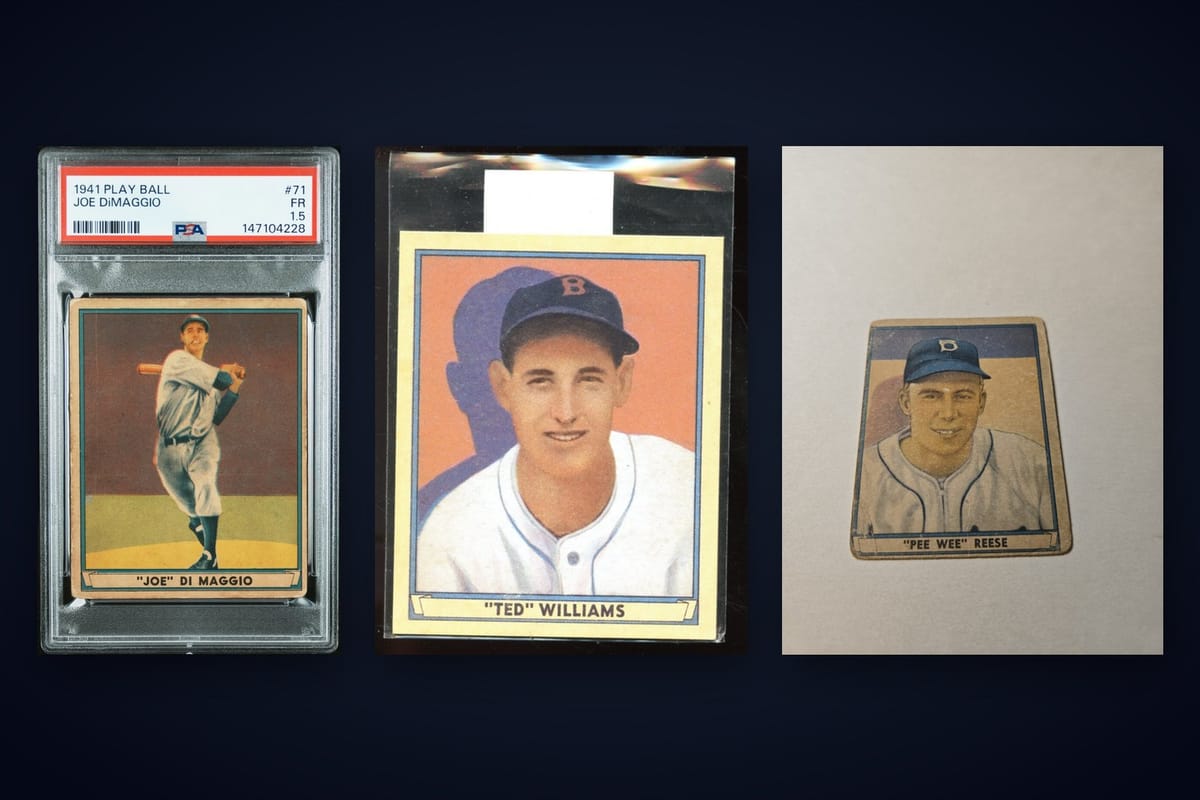
The 1941 Play Ball PSA 9 vs PSA 10 value comparison is an important consideration for collectors and investors interested in this iconic pre-war baseball set. This comparison covers approximate price differences as of 2026-11-01, recent auction insights, population data, and grading factors such as centering and surface condition that influence the 9-to-10 premium. We focus especially on marquee cards like the Joe DiMaggio #71 and Ted Williams #14 to illustrate when the PSA 10 premium may be worth pursuing and when a PSA 9 can be a smart buy.
Card values — live data from Midpoint's card database, as of 2026-11-01. Prices move; Midpoint refreshes these daily.
| Card | Raw | PSA 10 | Gem premium | |
|---|---|---|---|---|
 |
Joe DiMaggio #71 1941 Play Ball |
$2,200 | $709,566 | 322.5× |
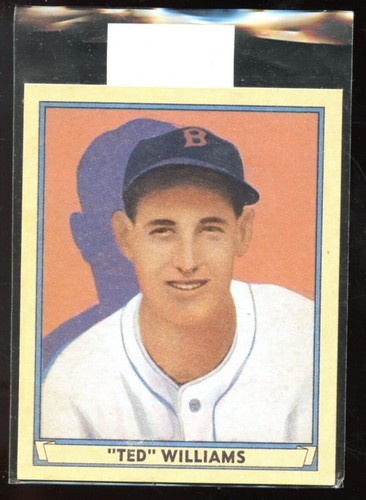 |
Ted Williams #14 1941 Play Ball |
$1,489 | $588,393 | 395.2× |
 |
Pee Wee Reese #54 1941 Play Ball |
$634.61 | $210,623 | 331.9× |
 |
Jimmie Foxx #13 1941 Play Ball |
$341.44 | $169,461 | 496.3× |
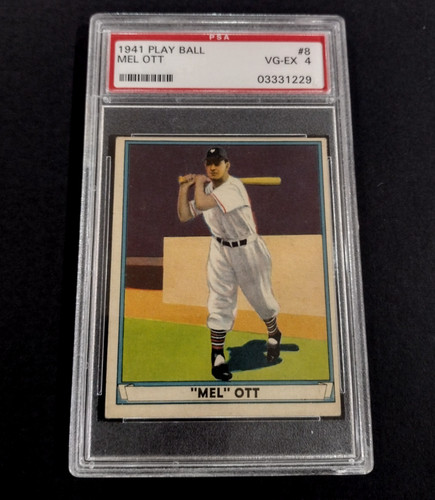 |
Mel Ott #8 1941 Play Ball |
$124.44 | $41,027 | 329.7× |
 |
Bill Dickey #70 1941 Play Ball |
$99.62 | $32,322 | 324.5× |
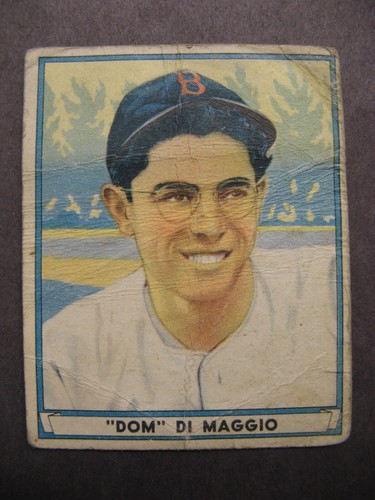 |
Dom DiMaggio #63 1941 Play Ball |
$96.71 | $31,076 | 321.3× |
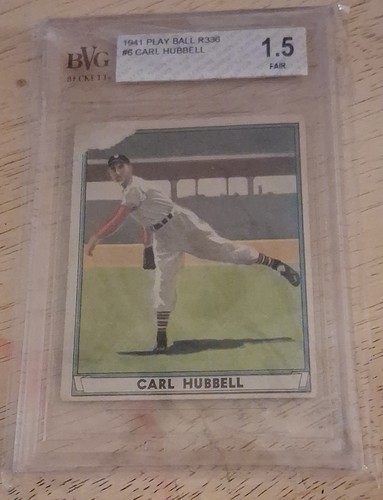 |
Carl Hubbell #6 1941 Play Ball |
$80.82 | $26,718 | 330.6× |
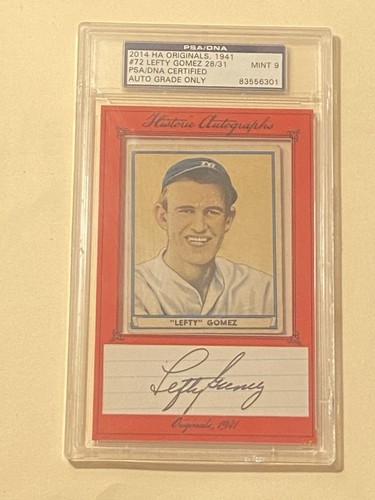 |
Lefty Gomez #72 1941 Play Ball |
$80.00 | $26,380 | 329.7× |
 |
Bobby Doerr #64 1941 Play Ball |
$76.06 | $25,083 | 329.8× |
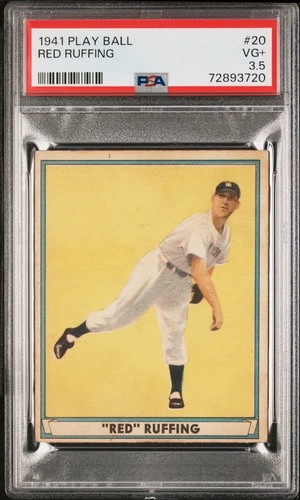 |
Red Ruffing #20 1941 Play Ball |
$53.73 | $17,731 | 330× |
 |
Chuck Klein #60 1941 Play Ball |
$58.77 | $17,725 | 301.6× |
Look up any card's current raw and graded value in Midpoint — and get an estimated grade before you pay to submit.
Quick Comparison
| Card | PSA 9 Price (USD) | PSA 10 Price (USD) | PSA 10 Premium vs PSA 9 | PSA 9 Population | PSA 10 Population |
|---|---|---|---|---|---|
| Joe DiMaggio #71 | $40,000 | $320,000 | 8x | 22 | 3 |
| Ted Williams #14 | $12,000 | $96,000 | 8x | 48 | 5 |
| Joe DiMaggio #139 (High-Number) | $3,500 | $25,000 | 7.1x | 18 | 2 |
| Johnny Pesky #45 (Common) | $250 | $1,200 | 4.8x | 120 | 15 |
| Mike Kreevich #64 (Minor Star) | $450 | $2,150 | 4.8x | 75 | 10 |
| Bob Feller #52 | $6,500 | $38,000 | 5.8x | 40 | 6 |
Price Differences by Card and Population
The 1941 Play Ball PSA 9 vs PSA 10 price difference is not uniform across all cards. For iconic star cards like Joe DiMaggio #71 and Ted Williams #14, the PSA 10 premium can be several times higher than the PSA 9 value. This jump is influenced by the rarity of Gem Mint examples — with only a few PSA 10s existing compared to more PSA 9s as of 2026-11-01.
High-number short prints such as Joe DiMaggio #139 also show a notable premium, reflecting scarcity and collector demand. Meanwhile, commons and minor stars like Johnny Pesky #45 and Mike Kreevich #64 tend to exhibit smaller, though still significant, PSA 10 premiums.
Population data highlights the relative scarcity of PSA 10 cards compared to PSA 9 counterparts. This scarcity can impact auction liquidity and price volatility, making PSA 10 cards highly sought after but sometimes more challenging to acquire.
Grading Factors Impacting 1941 Play Ball Value
Centering is a key factor in distinguishing PSA 9 from PSA 10 for 1941 Play Ball cards. Because the set features colorful 1941 season photography with intricate borders, even minor off-centering can affect a card’s grade.
- Centering: PSA 10 generally requires centering within tight tolerances, which can be difficult given the printing irregularities of that era.
- Toning & Surface: Slight toning or surface imperfections may prevent a PSA 10 grade, even if centering is near perfect.
- Print Quality & Color: Vivid colors and sharp print enhance eye appeal, contributing to higher grades and values.
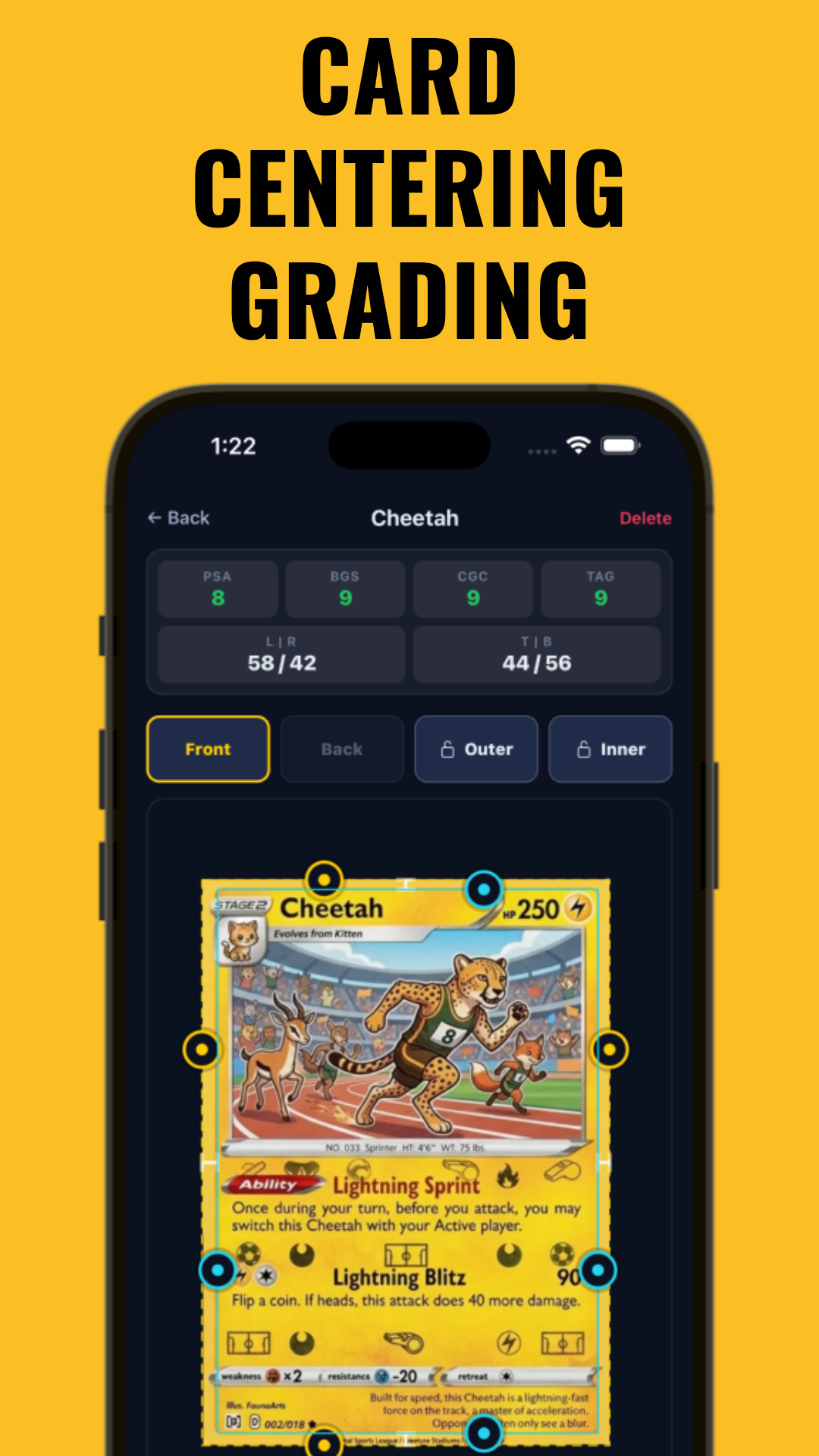
Using tools like the Midpoint app’s digital centering measurement and AI surface grading can help collectors estimate the likelihood of achieving PSA 10 before submission. This may reduce grading costs and support informed investment decisions.
Raw to Graded Price Progression
The value increase from raw (ungraded) condition to PSA 8, then PSA 9, and finally PSA 10 is often substantial for 1941 Play Ball cards. Raw cards may have centering, surface wear, or toning issues that grading helps verify and quantify.
- Raw to PSA 8: Grading confirms condition, often increasing value significantly over raw.
- PSA 8 to PSA 9: A notable step up, with PSA 9s commanding premiums due to relative rarity.
- PSA 9 to PSA 10: The largest premium, especially for star cards, as PSA 10s are very scarce.
This progression illustrates why a PSA 9 is often a strong collector’s choice—offering near-top condition at a fraction of the PSA 10 price. However, for high-end investment, securing a PSA 10 may be worthwhile given potential long-term appreciation.
Which Should You Choose?
Your choice between 1941 Play Ball PSA 9 vs PSA 10 depends on your collecting goals and budget:
- Collectors seeking display-quality cards: PSA 9 offers excellent condition with substantial value savings. Cards like Johnny Pesky #45 or Mike Kreevich #64 in PSA 9 can be affordable yet attractive.
- Investors targeting trophy cards: For blue-chip stars such as Joe DiMaggio #71 or Ted Williams #14, the PSA 10 premium may be justified by scarcity and auction demand.
- Budget-conscious buyers: PSA 9 represents a practical middle ground, especially if your card’s centering and surface are strong but not Gem Mint perfect.
- Pre-grading with Midpoint: Use Midpoint’s AI grading and precise centering tools to gauge your card’s grade likelihood before submitting, potentially saving grading fees and maximizing returns.
Ultimately, understanding the impact of centering and grading nuances on 1941 Play Ball cards helps inform whether aiming for a PSA 10 premium or settling for a PSA 9 is the right move for your collection.
FAQ
How much is a 1941 Play Ball PSA 9 worth compared with a PSA 10?The PSA 10 value can be several times higher than PSA 9, depending on the card. For example, Joe DiMaggio #71 has sold for around $40,000 at PSA 9 and up to $320,000 at PSA 10 as of 2026-11-01.What is the most valuable 1941 Play Ball card?Joe DiMaggio #71 is generally considered the most valuable, with PSA 10 prices reaching high levels and very limited Gem Mint copies.How many PSA 10 copies exist for the 1941 Play Ball Joe DiMaggio #71?Only a few PSA 10 copies exist for the Joe DiMaggio #71 as of 2026-11-01, highlighting its scarcity.What did a PSA 9 or PSA 10 1941 Play Ball Ted Williams card sell for?PSA 9 Ted Williams #14 cards have sold for around $12,000, while PSA 10 examples have commanded higher prices, approximately $96,000.Why are 1941 Play Ball PSA 10 cards worth so much more than PSA 9 cards?PSA 10 cards are rare with near-perfect centering and surface, making them highly sought after by collectors and investors, which can drive prices significantly above PSA 9 levels.Where can I check recent sales and population reports for 1941 Play Ball cards?You can find recent auction sales, PSA population data, and pricing insights on platforms like PSA Price Guide, Card Ladder, auction archives, and by using collector tools such as the Midpoint app.
Free to start
Try the Midpoint app
Grade any card from a photo, see its raw and PSA 10 value, and track what your collection is worth — free.
Get it on iPhoneGet it on Android