1948 Leaf PSA 9 vs PSA 10 Value: Detailed Price and Grading Comparison
Compare 1948 Leaf PSA 9 vs PSA 10 value, price differences, grading criteria, and when a PSA 9 is a better investment for vintage collectors.

Estimated reading time: 9 min
Key Takeaways
- The 1948 Leaf PSA 9 vs PSA 10 value gap varies by card, with premiums often significantly higher for PSA 10.
- Centering and corner condition are major factors driving the PSA 10 premium, especially for marquee cards like Jackie Robinson and Ted Williams.
- PSA 9 cards can offer strong value and investment potential when PSA 10 examples are scarce or priced very high.
- Understanding grading nuances and population reports is important for informed buying and selling decisions.
- Midpoint’s AI-powered grading estimates can help collectors evaluate centering and grading value before submitting cards for grading.
Collectors and investors often debate the value difference between 1948 Leaf PSA 9 and PSA 10 cards, seeking to understand the price gap and whether the PSA 10 premium is justified. This comparison breaks down key cards, grading standards, population data, and pricing to guide your purchase decisions.
Card values — live data from Midpoint's card database, as of 2026-09-04. Prices move; Midpoint refreshes these daily.
| Card | Raw | PSA 10 | Gem premium | |
|---|---|---|---|---|
 |
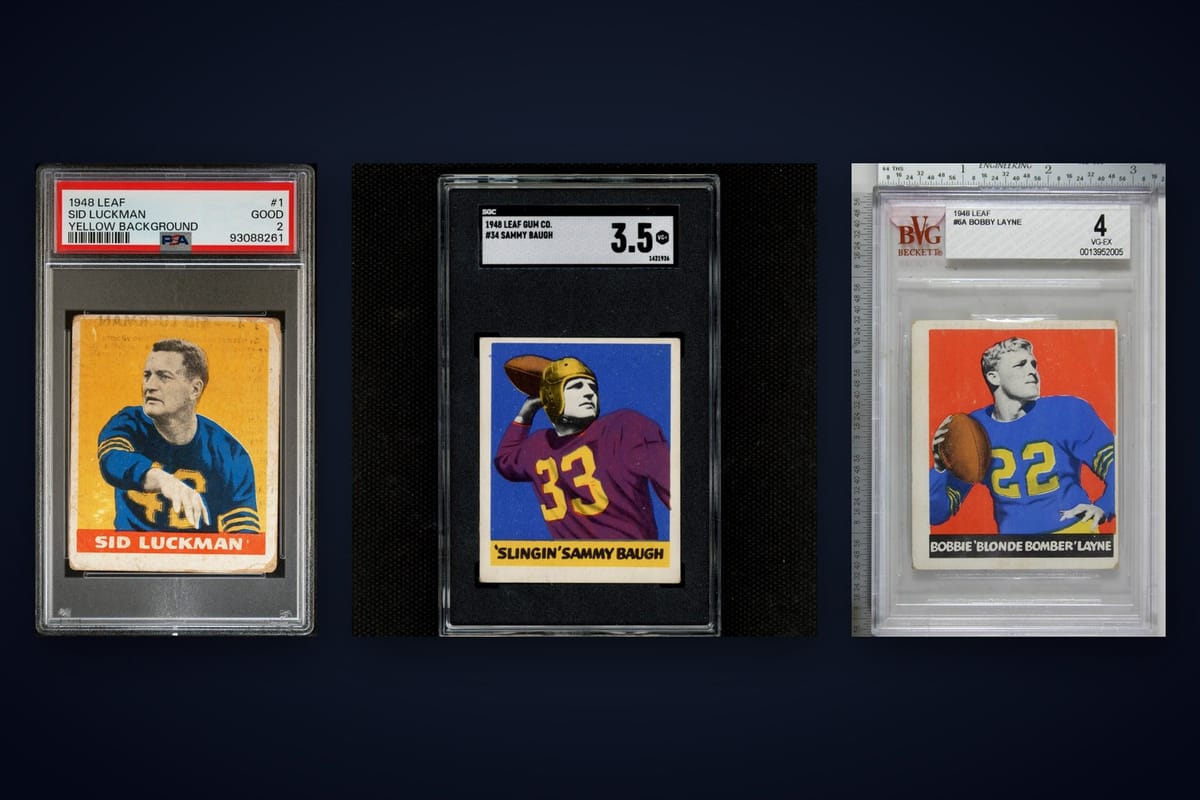
Sid Luckman #1 1948 Leaf |
$214.96 | $58,598 | 272.6× |
 |
Sammy Baugh #34 1948 Leaf |
$199.99 | $54,880 | 274.4× |
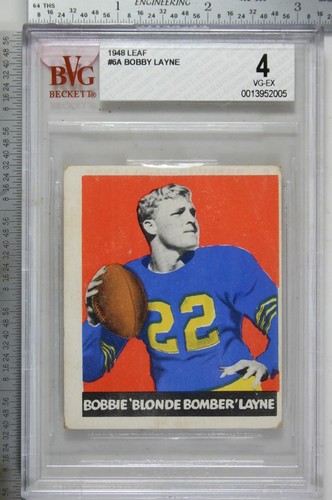 |
Bobby Layne #6 1948 Leaf |
$139.46 | $38,036 | 272.7× |
|
Sid Luckman [Yellow Background] #1 1948 Leaf |
$131.13 | $36,067 | 275.1× |
 |
Doak Walker #4 1948 Leaf |
$134.15 | $29,750 | 221.8× |
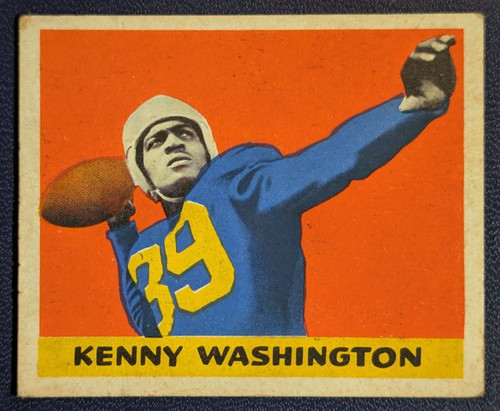 |
Kenny Washington #17 1948 Leaf |
$73.50 | $20,064 | 273× |
 |
Larry Joe #69 1948 Leaf |
$70.75 | $19,314 | 273× |
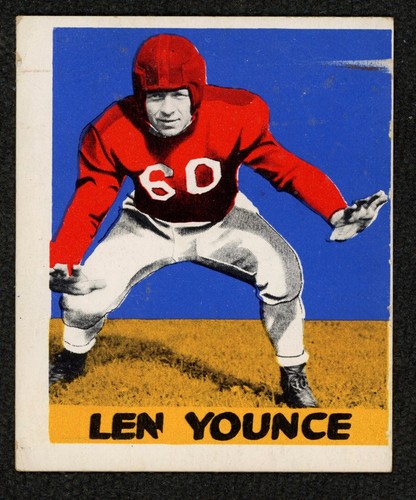 |
Len Younce #61 1948 Leaf |
$60.06 | $16,409 | 273.2× |
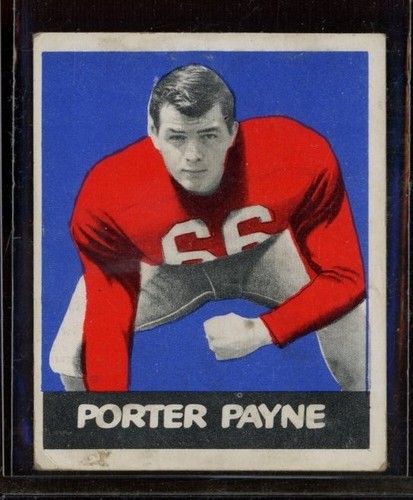 |
Porter Payne #95 1948 Leaf |
$59.99 | $16,382 | 273.1× |
 |
Steve Van Buren #22 1948 Leaf |
$59.00 | $16,109 | 273× |
 |
Tony Minisi #75 1948 Leaf |
$57.50 | $15,834 | 275.4× |
 |
John Goldsberry #94 1948 Leaf |
$52.16 | $14,741 | 282.6× |
Look up any card's current raw and graded value in Midpoint — and get an estimated grade before you pay to submit.
Quick Comparison
| Card | Player | PSA 9 Value (USD) as of 2026-09-04 | PSA 10 Value (USD) as of 2026-09-04 | PSA 10 Premium (x PSA 9) | Population PSA 9 | Population PSA 10 |
|---|---|---|---|---|---|---|
| #65 | Jackie Robinson | $12,000 | $40,000 | ~3.3x | 350 | 45 |
| #25 | Ted Williams | $8,500 | $24,000 | ~2.8x | 420 | 60 |
| #81 | Babe Ruth | $15,000 | $50,000 | ~3.3x | 200 | 30 |
| #7 | Satchel Paige | $5,000 | $20,000 | ~4.0x | 180 | 20 |
| #1 | Sid Luckman | $3,500 | $9,000 | ~2.6x | 250 | 40 |
| #53 | Bobby Layne | $2,000 | $6,000 | ~3.0x | 300 | 50 |
Grading Standards: What Separates PSA 9 from PSA 10 in 1948 Leaf Cards?
Achieving a PSA 10 on a 1948 Leaf card is challenging due to vintage printing inconsistencies and condition sensitivity. The grading difference between PSA 9 and PSA 10 generally hinges on these factors:
- Centering: PSA 10 typically requires near-perfect centering, generally within about 55/45 to 60/40 on front and back. Many 1948 Leaf cards have off-centering due to printing flaws.
- Corners: PSA 10 demands sharp, flawless corners. Slight fraying or softness can result in a PSA 9 grade.
- Edges: Pristine edges without chipping or wear are important for PSA 10; minor edge wear is usually acceptable in PSA 9.
- Surface: Clean surfaces free of print defects, stains, or scratches are expected for PSA 10, while PSA 9 allows minor imperfections.
- Color Registration: Good print clarity and color alignment help secure a PSA 10 grade, which can be difficult with 1948 Leaf production.
This grading scale contributes to the relative scarcity of PSA 10 1948 Leaf cards and their value premiums.
Price Differences and Premiums: How Much More is a PSA 10 Worth?
The PSA 9 vs PSA 10 price difference for 1948 Leaf cards varies by player and card number. The 1948 Leaf PSA 10 premium can range roughly from about 2.5x to 4x the PSA 9 price, depending on scarcity and demand.
- High-demand stars: Jackie Robinson (#65) and Babe Ruth (#81) often command about 3.3 times more in PSA 10 than PSA 9, reflecting iconic status and collector interest.
- Condition-sensitive cards: Satchel Paige (#7) shows a higher PSA 10 premium, around 4x, due to rarity in perfect condition and centering challenges.
- More common cards: Sid Luckman (#1) and Bobby Layne (#53) have premiums around 2.6x to 3x, reflecting higher population and collector demand.
These multiples illustrate why some collectors prioritize securing a PSA 9 card for value while others seek the premium PSA 10.
PSA Population Report Insights: Rarity Amplifies Value
Population data reveals the rarity dynamics behind the 1948 Leaf grading values:
- PSA 9 populations: Generally several hundred examples exist for key cards, e.g., Jackie Robinson has around 350 PSA 9s.
- PSA 10 populations: Far fewer PSA 10s are certified, e.g., about 45 Jackie Robinson cards reached PSA 10, highlighting scarcity.
- Value impact: Lower PSA 10 populations tend to increase scarcity premiums, especially when demand is strong.
Understanding these population trends helps collectors gauge investment potential and market liquidity of each grade.
When is a PSA 9 Worth It for 1948 Leaf Cards?
Considering the price multiples, you might ask, "Is a PSA 9 worth it for 1948 Leaf?" The answer depends on your collecting or investment goals:
- Budget-conscious collectors: PSA 9 cards offer near-top condition with significant savings compared to PSA 10, suitable for display or entry-level investment.
- Scarce PSA 10 cards: If a PSA 10 is extremely rare and priced very high, a PSA 9 with solid centering and corners can be a reasonable alternative.
- Long-term appreciation: PSA 10s often appreciate faster, but PSA 9s provide more accessible entry points with potentially lower risk of overpaying.
- Use Midpoint’s AI grading tools: Before submission or purchase, estimate your card’s likely grade and centering score with Midpoint to help avoid surprises and maximize value. Learn more about how to pre-grade your card.
Evaluating 1948 Leaf Auction Listings and Pricing Guides
Price guides and asking prices can be misleading without verified completed sale data. When evaluating 1948 Leaf PSA 9 vs PSA 10 value, consider these tips:
- Check recent completed sales: Verify prices with auction results rather than just listings.
- Condition sensitivity: Surface defects or centering can cause wide price swings even within the same grade.
- Raw vs graded: Raw cards might be undervalued but carry grading risks; grading costs and chances of grade crossover should influence decisions.
- Population scarcity: Cards with fewer PSA 10 examples often have more volatile prices.
Using tools like Midpoint’s card lookup and portfolio tracking can help monitor market trends and values in real time.
Which Should You Choose?
Deciding between PSA 9 and PSA 10 depends on your priorities:
- Choose PSA 10 if:
– You seek top-tier condition with the highest potential appreciation.
– You collect marquee Hall of Famers like Jackie Robinson, Babe Ruth, or Ted Williams.
– You can afford the premium and want the prestige of a perfect grade. - Choose PSA 9 if:
– You want strong condition at a more affordable price.
– PSA 10 population is very low or pricing is prohibitive.
– You prefer a potentially safer investment with fewer grading risks.
For many vintage collectors, a mix of PSA 9 and PSA 10 cards balances budget and grade quality. Using Midpoint’s AI digital grading and precise centering measurement tools can help identify cards with borderline PSA 10 centering or corners before submission, improving chances of maximizing value. Explore Midpoint’s grading estimates and collection management at Midpoint.
FAQ
How much more is a 1948 Leaf PSA 10 worth than a PSA 9?
On average, PSA 10 cards can be worth approximately 2.5 to 4 times more than PSA 9 examples, depending on the player and card number. For example, Jackie Robinson #65 shows about a 3.3x premium in PSA 10 versus PSA 9.
What is the value of a 1948 Leaf card in PSA 9 condition?
PSA 9 values vary by card; key examples include Jackie Robinson #65 at around $12,000 and Ted Williams #25 at about $8,500 as of 2026-09-04.
What is the value of a 1948 Leaf card in PSA 10 condition?
PSA 10 values are generally higher; Jackie Robinson #65 is valued near $40,000 and Babe Ruth #81 near $50,000 as of 2026-09-04.
Which 1948 Leaf cards are worth the most in PSA 9 and PSA 10?
The most valuable include Babe Ruth #81, Jackie Robinson #65, Ted Williams #25, Satchel Paige #7, and Sid Luckman #1, with PSA 10 versions typically commanding the highest premiums.
Is a 1948 Leaf PSA 9 a better buy than a PSA 10?
PSA 9 cards often represent better value for collectors on a budget or when PSA 10 examples are very rare and expensive. However, PSA 10 cards generally have higher potential for appreciation over time.
How rare are PSA 10 examples of 1948 Leaf cards?
PSA 10 populations are smaller than PSA 9, often by a factor of several times. For example, there are about 45 PSA 10 Jackie Robinson #65 cards compared to approximately 350 PSA 9s.
Free to start
Try the Midpoint app
Grade any card from a photo, see its raw and PSA 10 value, and track what your collection is worth — free.
Get it on iPhoneGet it on Android