
1951 Bowman Football Cards Value: Ultimate Price Guide & Grading Tips
Discover the 1951 Bowman football cards value, top rookies, grading impact, and selling tips to maximize your collection’s worth with expert insights.

Estimated reading time: 15 min
Key Takeaways
- The 1951 Bowman football set includes 144 cards featuring iconic players and vibrant action photography, capturing the essence of early 1950s NFL.
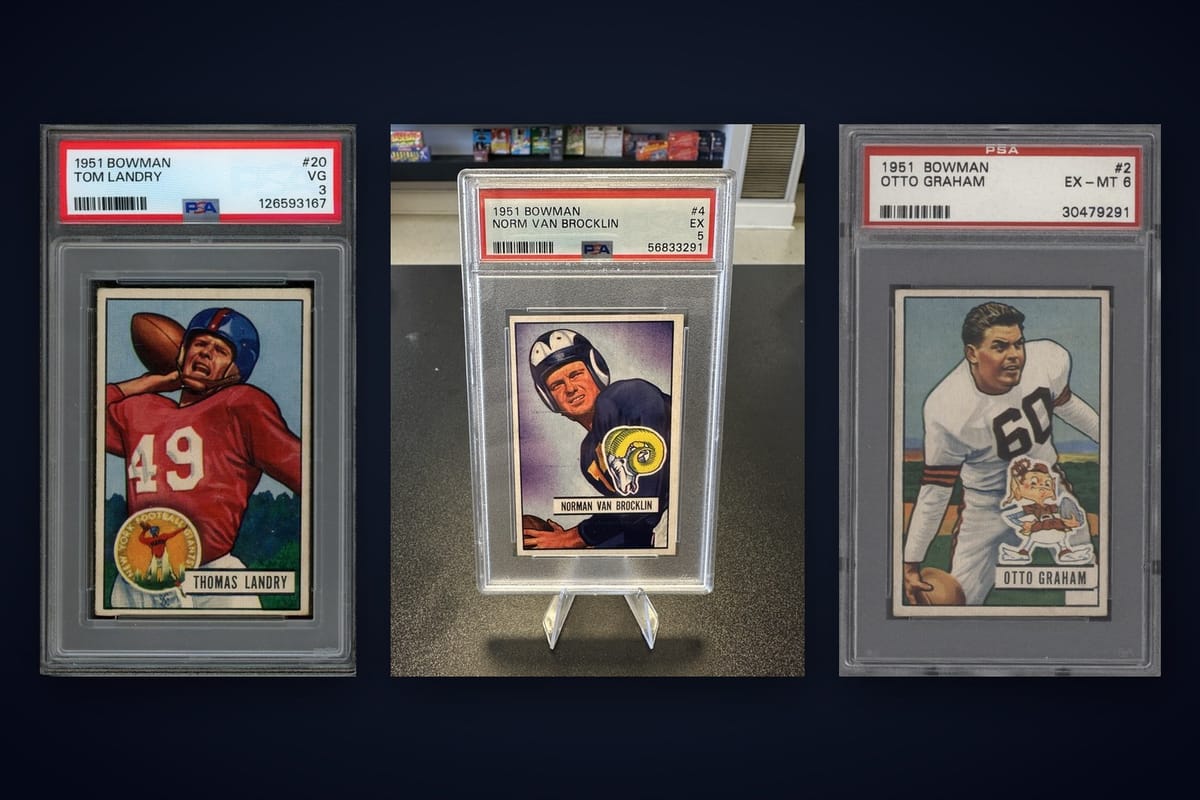
- Norm Van Brocklin #4 and Tom Landry #20 rookies are among the most valuable cards, especially when graded PSA 10, often commanding high prices.
- Condition factors like centering, corners, surface, and edges heavily impact 1951 Bowman football cards value; even slight flaws can reduce worth significantly.
- Cards graded PSA 9 and PSA 10 command significant premiums due to scarcity in top grades, with population reports indicating relatively few reach these levels.
- Using tools like Midpoint’s AI grading and centering measurement can help decide which cards are worth grading, potentially reducing costly grading errors.
- Authentication and knowledge of alteration signs are important before buying or grading, as counterfeit or tampered cards compromise investments.
- Understanding market trends, recent sales, and appraisal techniques is essential for sellers to maximize returns.
Card values — live data from Midpoint's card database, as of 2026-09-04. Prices move; Midpoint refreshes these daily.
| Card | Raw | PSA 10 | Gem premium | |
|---|---|---|---|---|
 |
Tom Landry #20 1951 Bowman |
$222.20 | $61,108 | 275× |
 |
Norm Van Brocklin #4 1951 Bowman |
$111.25 | $25,714 | 231.1× |
 |
Otto Graham #2 1951 Bowman |
$88.50 | $22,389 | 253× |
 |
Ed Sprinkle #51 1951 Bowman |
$72.50 | $20,016 | 276.1× |
 |
Sammy Baugh #34 1951 Bowman |
$82.25 | $18,765 | 228.1× |
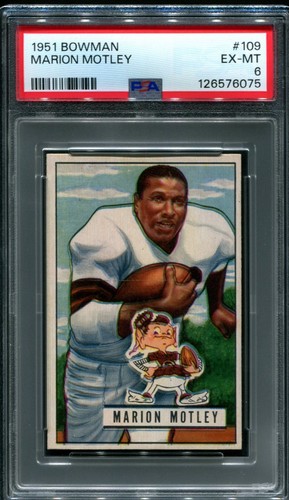 |
Marion Motley #109 1951 Bowman |
$61.66 | $16,523 | 268× |
 |
Emlen Tunnell #91 1951 Bowman |
$60.46 | $16,050 | 265.5× |
 |
Ernie Stautner #96 1951 Bowman |
$43.29 | $13,487 | 311.6× |
 |
Elroy Hirsch #76 1951 Bowman |
$19.96 | $12,977 | 650.2× |
 |
Chuck Bednarik #12 1951 Bowman |
$43.61 | $10,337 | 237× |
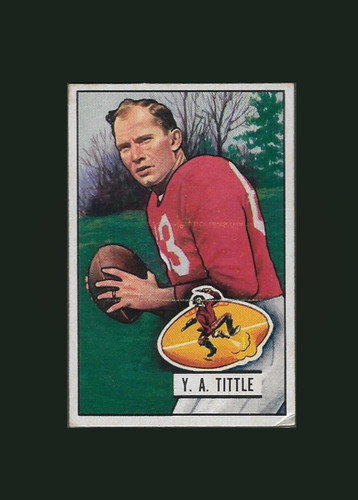 |
Y.A. Tittle #32 1951 Bowman |
$54.67 | $9,313 | 170.4× |
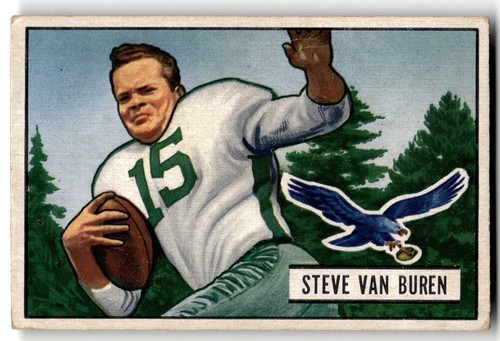 |
Steve Van Buren #10 1951 Bowman |
$32.28 | $8,668 | 268.5× |
Look up any card's current raw and graded value in Midpoint — and get an estimated grade before you pay to submit.
Table of Contents
- Section 1: Overview of the 1951 Bowman Football Card Set
- Section 2: Complete Checklist and Key Rookie Cards
- Section 3: Understanding 1951 Bowman Football Cards Value by Condition
- Section 4: The Impact of Grading and Why PSA 10 Values Matter
- Section 5: How to Authenticate and Identify 1951 Bowman Football Cards
- Section 6: Selling, Appraisal, and When to Grade Your Cards
- Conclusion
- FAQ
Section 1: Overview of the 1951 Bowman Football Card Set
Historical Context and Set Composition
The 1951 Bowman football card set represents an important moment in sports card collecting history, capturing NFL players during a transformative era. This single-series set consists of 144 cards, each featuring players from the early 1950s NFL landscape. Bowman’s release followed the post-World War II boom in sports memorabilia, and the set is notable for its vibrant color photography and unique design elements, including player-name mascots that add a playful yet identifiable touch.
Distributed primarily through gum packs, these cards were affordable collectibles for young fans and are now prized by seasoned collectors. The set encapsulates a broad spectrum of players, from established stars to promising rookies, reflecting the evolving nature of professional football at the time.
Card Dimensions and Design Features
Standard for the era, each card measures approximately 2-1/2 by 3-1/2 inches, a size that has become traditional in trading card manufacturing. The front of each card showcases a full-color action photograph, often capturing players mid-play, which was innovative for the time and enhanced the dynamic appeal of the set.
The backs of the cards provide essential player information: the player's name, team affiliation, and a concise bio or career statistics. The numbering system, from 1 to 144, aids collectors in organizing and tracking their collections. The design blends functional simplicity with aesthetic appeal, contributing to the set's enduring popularity.
Significance in Sports Card Collecting
The 1951 Bowman set is considered a cornerstone in football card collecting for several reasons. It was among the first post-war sets to feature full-color photography paired with player action shots, setting a new standard for sports cards. The set includes numerous Hall of Famers and key rookies, making it a rich repository of NFL history.
The scarcity of high-grade cards from this era, due to rough handling and the passage of time, generally increases their desirability and value. Collectors prize the set not only for its nostalgic value but also for its potential investment appeal. This set often serves as a benchmark for evaluating condition and grading standards in vintage football collectibles.
| Card Number | Player | Team | Notable Status |
|---|---|---|---|
| #4 | Norm Van Brocklin (Rookie) | Los Angeles Rams | Hall of Famer, Rookie |
| #20 | Tom Landry (Rookie) | New York Giants | Coach Legend, Rookie |
| #2 | Otto Graham | Cleveland Browns | Hall of Famer |
| #102 | Bobby Layne | Detroit Lions | Hall of Famer |
Section 2: Complete Checklist and Key Rookie Cards
1951 Bowman Football Card Checklist
The complete set comprises 144 cards, numbered sequentially from #1 through #144. Collectors aiming to assemble a full set should be aware of the varying scarcity among cards; some are common, while others, especially key rookies or Hall of Famers, are considerably rarer in high grade.
The checklist spans players from multiple NFL teams active during the early 1950s, including the Los Angeles Rams, New York Giants, Cleveland Browns, Detroit Lions, and others. This broad representation provides a comprehensive snapshot of the league’s talent at that time.
- Cards #1-144 cover a wide roster of players with diverse roles, from quarterbacks and running backs to defensive standouts.
- Rookie cards are explicitly designated in collector guides, making them prime targets for investment.
- The set includes multiple Hall of Fame players such as Otto Graham (#2), Norm Van Brocklin (#4), and Bobby Layne (#102), whose cards attract consistent demand.
Most Valuable 1951 Bowman Cards
Within the set, several cards stand out due to player significance and rarity in top condition. These cards often command significant premiums, especially when graded PSA 9 or PSA 10:
- Norm Van Brocklin #4 Rookie: This is a highly sought-after card due to Van Brocklin’s Hall of Fame career and the card’s scarcity in top grades. PSA 10 examples have been known to sell for tens of thousands of dollars.
- Tom Landry #20 Rookie: While Landry is more famous for his legendary coaching career, his rookie card is prized for its rarity and historical significance. PSA 10 examples have sold for prices in the low to mid five figures.
- Otto Graham #2: A dominant quarterback and Hall of Famer, Graham’s card enjoys steady demand. PSA 9-10 graded cards typically sell for several thousand dollars.
- Bobby Layne #102: Another Hall of Famer known for his toughness and skill, Layne’s card holds strong value, especially when graded highly.
Rookie Card Importance and Identification
Rookie cards often represent the first official card of a player and are generally the most valuable within a set. In the 1951 Bowman series, rookie cards such as Norm Van Brocklin (#4) and Tom Landry (#20) are particularly prized. Identifying a card as a rookie involves consulting reputable checklists and guides, as well as recognizing subtle design differences.
For instance, rookie cards may have slight variations in card stock, color saturation, or back print patterns. Collectors should reference detailed images and descriptions from trusted sources or use apps like Midpoint to compare their cards’ characteristics. Proper identification helps ensure accurate valuation and can prevent costly mistakes during buying or grading.
Section 3: Understanding 1951 Bowman Football Cards Value by Condition
Condition Factors Impacting Value
The value of vintage cards like those in the 1951 Bowman set is closely tied to their physical condition. Key condition factors include:
- Centering: The alignment of the image within the card borders is critical. Perfect centering typically means the image is evenly spaced from all edges, ideally within a tolerance of 55/45 to 60/40. Cards off-center beyond these ratios can lose multiple grade points. For example, a card with 70/30 centering may be downgraded significantly compared to a well-centered 55/45 card.
- Corners: Sharp, crisp corners with no rounding or fraying indicate careful handling. Corners are often the first to show wear, so even light rounding can reduce grade by one or more points.
- Edges: Clean edges without chipping, trimming, or discoloration are vital. Edge wear is especially common on older cards due to storage conditions and handling.
- Surface: The card surface must be free of creases, stains, print defects, or gum residue. Surface issues, including scratches or print dots, negatively affect eye appeal and grading.
Even minor imperfections can cause a card's grade to drop from a potential PSA 10 to a PSA 8 or lower, which can significantly affect market value. For example, a Norm Van Brocklin #4 with a tiny corner ding might see a substantial decrease in value compared to a pristine PSA 10 example.
Raw vs. Graded Values
Raw cards—those ungraded by professional services—often trade at a significant discount compared to graded cards. This is due to buyer uncertainty about condition and authenticity. For instance, a raw Norm Van Brocklin #4 in solid condition might sell for several hundred to a few thousand dollars, but a PSA 10 graded example can command much higher prices.
This disparity underscores the importance of grading for maximizing returns, but also highlights the risk of grading cards that don’t meet top-tier standards, as the grading fee may not be recouped.
Population Scarcity and Premiums
Population reports from grading companies provide data on how many cards have achieved specific grades. As of mid-2024, very few 1951 Bowman football cards have been graded PSA 10, especially key rookies. This scarcity tends to increase prices for top-graded examples.
For example, only a limited number of Norm Van Brocklin #4 cards have received PSA 10 status, making each one highly sought after. Similarly, PSA 9 and PSA 10 cards of Tom Landry #20 and other Hall of Famers command significant premiums as collectors compete for these rare examples.
Understanding this rarity helps collectors make informed decisions about which cards to grade and which to hold raw.
Section 4: The Impact of Grading and Why PSA 10 Values Matter
Grading Companies and Standards
Professional grading companies play a central role in the modern collectibles market. The most recognized for vintage football cards include:
- PSA (Professional Sports Authenticator): The market leader with a 1–10 numerical grading scale, PSA is widely respected for consistency.
- BGS (Beckett Grading Services): Known for subgrades on centering, corners, edges, and surface, providing a detailed condition profile.
- CGC (Certified Guaranty Company): Newer to sports cards, CGC offers competitive grading and encapsulation.
- TAG Grading: A smaller company focusing on vintage cards with detailed grading reports.
While each grading company has slightly different criteria, PSA's scale and population data often serve as the benchmark in 1951 Bowman football card valuations.
1951 Bowman PSA 10 Value Insights
Cards graded PSA 10 are considered "Gem Mint" and represent the highest quality, typically free from any visible flaws under close inspection. Such grades are exceedingly rare for 1951 Bowman football cards, given their age and common handling wear.
As of mid-2024, example prices include:
- Norm Van Brocklin #4 PSA 10: Frequently sells for tens of thousands of dollars, reflecting both the player’s Hall of Fame legacy and the card’s scarcity in mint condition.
- Tom Landry #20 PSA 10: Valued in the low to mid five figures, boosted by Landry’s stature as a coaching legend and rarity of PSA 10 examples.
- Otto Graham #2 and Bobby Layne #102 PSA 10 cards: While less expensive than rookies, these still command several thousand dollars due to their Hall of Fame status and condition rarity.
These valuations underscore the significant financial difference grading can make, especially at the highest levels.
Why Grading Is Worth It for Select Cards
Given the substantial price premiums for PSA 9 and PSA 10 cards, grading is a worthwhile investment for cards likely to achieve these grades. However, grading services charge fees typically starting at $30 per card, with additional costs for expedited service or high-value submissions.
This financial outlay means collectors should carefully evaluate a card’s condition before submission to avoid grading costs on cards that may receive low grades.
Midpoint’s AI digital grading and precise centering measurement tools provide a valuable pre-assessment, helping collectors approximate probable grades. Combining these tools with visual inspection and pre-grading checklists increases the likelihood of submitting only premium candidates.
For detailed guidance, collectors can refer to pre-grading guides that walk through the evaluation process step-by-step.

Section 5: How to Authenticate and Identify 1951 Bowman Football Cards
Key Authentication Features
Authenticating a 1951 Bowman football card is important to avoid counterfeit, reprints, or altered cards that can lead to financial loss. Important authentication checkpoints include:
- Card Dimensions: Genuine cards measure approximately 2.5" x 3.5". Variations in size may indicate reprints or trimming, both of which decrease value. Use precise measuring tools such as calipers for verification.
- Card Backs: Original backs have a distinctive layout with player data and numbering consistent with 1951 Bowman design. Look for clear, unaltered text and the absence of added or missing print elements.
- Paper Stock: The original Bowman paper has a specific thickness and texture from the era. Modern reprints often use thinner or glossier paper. Comparing suspected cards to known authentic samples helps identify discrepancies.
Signs of Alteration or Reprint
Collectors should be vigilant for common alterations or counterfeit indicators such as:
- Edge Trimming: Illegitimate trimming to improve centering can be detected via uneven edges under magnification.
- Surface Recoloring or Cleaning: Artificial attempts to remove stains or improve gloss may leave residue or color inconsistencies visible under blacklight.
- Font or Print Inconsistencies: Differences in font style, size, or alignment on card fronts or backs suggest reproduction.
- Creases or Repairs: Attempts to flatten creases or repair tears can often be detected with careful inspection and may affect grading.
Tools such as a magnifying glass, blacklight, and comparison to reference cards are useful for thorough examination.
Expert Verification and Tools
For high-value cards, professional authentication services or grading submissions are recommended. These services provide expert opinions and encapsulation that assure buyers and sellers alike.
Additionally, AI-powered tools like Midpoint offer advanced condition analysis and flag suspicious characteristics early, assisting collectors in identifying potential tampering or authenticity issues before costly appraisal or grading.
Section 6: Selling, Appraisal, and When to Grade Your Cards
When to Submit Cards for Grading
Submitting for grading should be reserved for cards with strong potential to achieve PSA 8 or higher. Ideal candidates have:
- Centered images within 55/45 to 60/40 ratios or better.
- Sharp, crisp corners without rounding or damage.
- Clean edges free from chipping or trimming.
- Flawless surfaces without creases, stains, or print defects.
Using Midpoint’s centering calculator and AI grading tools can help predict the likely grade and avoid grading fees on lower-quality cards.
How to Compare Sold Listings
When determining a card’s market value, rely on actual completed sales rather than asking prices. Resources include:
- PSA’s official population and auction sale databases.
- Recent eBay completed listings filtered for condition and grade.
- Sports memorabilia auction house results and price guides.
Analyzing these data points offers realistic valuations and helps set appropriate selling expectations, reducing the risk of overpricing or undervaluing.
Where to Sell Your 1951 Bowman Football Cards
Collectors have several selling avenues depending on card value and desired exposure:
- Online Auction Sites: eBay offers broad reach and competitive bidding, ideal for mid-range cards.
- Specialized Auction Houses: Houses like Heritage Auctions or Goldin Auctions specialize in high-value sports memorabilia and provide expert marketing and buyer vetting.
- Private Sales: Selling directly through collector networks or forums can yield premium prices but requires more effort to establish trust and negotiate.
In all cases, providing clear, high-resolution photos, detailed condition notes, and provenance (ownership history or grading certificates) increases buyer confidence and sale prices.
Portfolio Tracking and Collection Management
Maintaining a comprehensive record of your collection is useful for tracking value fluctuations, grading status, and sale history. Apps like Midpoint offer features such as:
- Real-time value estimation based on market trends.
- Grading submission management with reminders.
- Inventory organization by player, team, grade, and condition.
- Alerts on market demand changes or comparable sales.
These tools can help collectors make informed decisions about when to hold, grade, or sell cards, optimizing investment returns over time. For more detailed strategies on managing your collection, see our Card Collection Portfolio guide.
Conclusion
The 1951 Bowman football card set remains a cornerstone of vintage sports memorabilia, offering a compelling blend of nostalgic charm and potential investment value. Collectors seeking to maximize value from this set should understand the intricate relationship between player significance, card condition, grading standards, and market dynamics.
Key rookie cards like Norm Van Brocklin #4 and Tom Landry #20 exemplify this dynamic, commanding high prices when preserved in top condition and professionally graded. Condition factors such as centering, corners, edges, and surface integrity are paramount, with even minor imperfections heavily impacting value.
Modern AI-powered tools like Midpoint facilitate smarter collecting by enabling accurate pre-grading assessments, condition analysis, and market tracking. Leveraging these technologies alongside traditional expertise allows collectors to avoid costly grading mistakes and identify cards truly worth submitting.
By following this comprehensive guide, embracing careful authentication, understanding grading impact, and adopting strategic selling practices, collectors can confidently build and monetize their 1951 Bowman football card collections with greater insight.
FAQ
Q: What is a 1951 Bowman football card worth?
A: Values vary widely based on card number, player, and condition. Common cards in raw condition might be worth a few dollars, while top rookies like Norm Van Brocklin #4 can sell for high prices when graded PSA 9 or PSA 10. Mid-range cards and Hall of Famers often fetch prices ranging from several hundred to several thousand dollars depending on grade.
Q: Which 1951 Bowman football cards are worth the most?
A: The most valuable include Norm Van Brocklin #4 rookie, Tom Landry #20 rookie, Otto Graham #2, and Bobby Layne #102. Their value increases significantly in high-grade PSA 9-10 condition due to rarity and player legacy.
Q: How much is a 1951 Bowman Tom Landry rookie card worth?
A: As of mid-2024, a Tom Landry rookie graded PSA 10 can fetch prices in the low to mid five figures, whereas raw examples typically sell for a fraction of that depending on condition, often ranging from a few hundred to a couple thousand dollars.
Q: How much is a 1951 Bowman Norm Van Brocklin rookie card worth?
A: A PSA 10 Norm Van Brocklin #4 rookie card is valued in the tens of thousands of dollars, reflecting its scarcity and demand among collectors. Raw copies in good condition may sell for several hundred to a few thousand dollars, while lower-grade graded cards range widely in price.
Q: How can I tell if my 1951 Bowman football card is valuable?
A: Check if it’s a key rookie or Hall of Famer, assess condition focusing on centering, corners, edges, and surface, and compare recent sales for similar grade cards. Using AI grading tools like Midpoint’s app can also help estimate value before investing in professional grading.
Q: Should I get my 1951 Bowman football cards professionally graded?
A: Yes, but only for cards with strong condition and potential PSA 8+ grades. Grading adds credibility and value but incurs costs, so pre-grade with tools like Midpoint to avoid paying for low-grade submissions that may not increase in value.
Free to start
Try the Midpoint app
Grade any card from a photo, see its raw and PSA 10 value, and track what your collection is worth — free.
Get it on iPhoneGet it on Android


