1952 Parkhurst Hockey Cards Value: Complete Price & Grading Guide
Discover 1952 Parkhurst hockey cards value, top stars, grading impact, and tips to maximize your collection's worth with Midpoint's AI grading tool.

Estimated reading time: 14 min
Key Takeaways
- The 1952 Parkhurst hockey cards value varies widely based on condition, grading, and player popularity, with notable premiums for well-preserved cards.
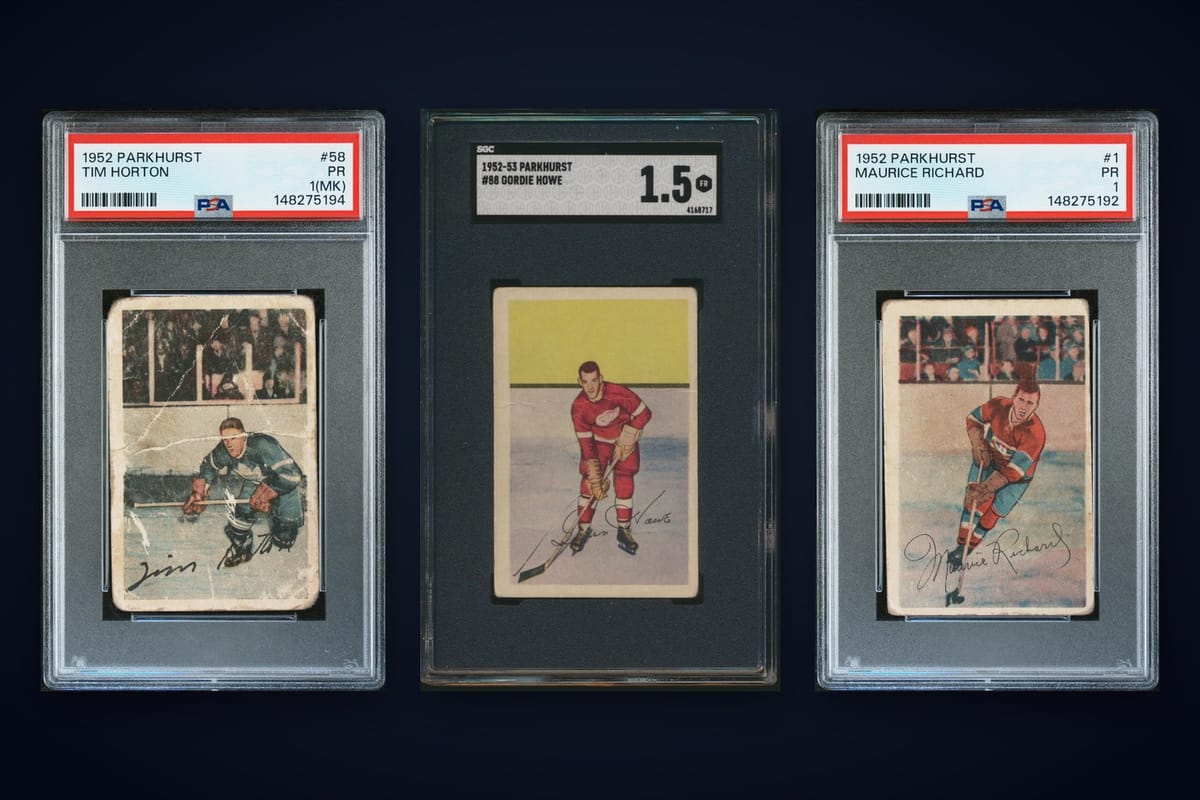
- Key cards like Gordie Howe, Maurice Richard, and Tim Horton often command the highest prices, especially in high PSA grades, sometimes reaching five-figure sums.
- Grading by PSA, BGS, or CGC generally increases card value, with price gaps between PSA 9 and PSA 10 that can be significantly higher.
- Centering, corners, edges, and surface condition critically affect grading and market price; even minor imperfections can reduce value.
- Using Midpoint’s AI-powered centering and grading estimates can help collectors decide which 1952 Parkhurst cards may be worth grading submission, supporting investment strategies.
Card values — live data from Midpoint's card database, as of 2026-09-04. Prices move; Midpoint refreshes these daily.
| Card | Raw | PSA 10 | Gem premium | |
|---|---|---|---|---|
 |
Tim Horton #58 1952 Parkhurst |
$677.91 | $161,206 | 237.8× |
 |
Gordie Howe #88 1952 Parkhurst |
$600.10 | $145,264 | 242.1× |
 |
Maurice Richard #1 1952 Parkhurst |
$219.75 | $53,311 | 242.6× |
 |
George Armstrong #51 1952 Parkhurst |
$83.52 | $25,959 | 310.8× |
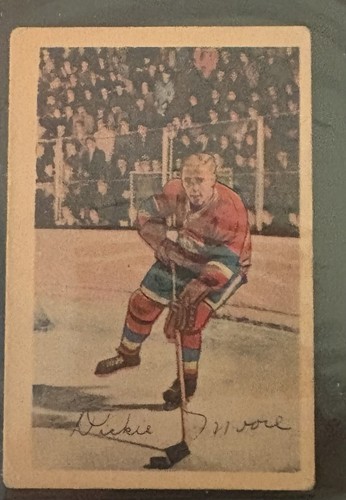 |
Dickie Moore #10 1952 Parkhurst |
$86.34 | $18,072 | 209.3× |
 |
Alex Delvecchio #53 1952 Parkhurst |
$42.50 | $10,335 | 243.2× |
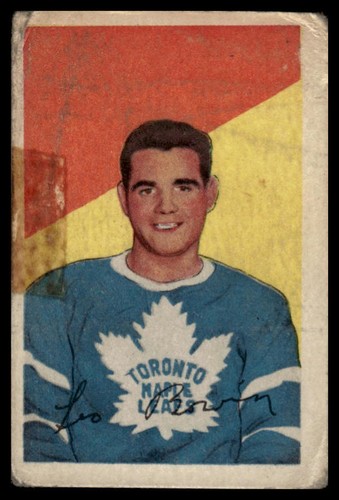 |
Leo Boivin #34 1952 Parkhurst |
$38.87 | $9,482 | 243.9× |
 |
Ted Lindsay #87 1952 Parkhurst |
$38.03 | $9,094 | 239.1× |
 |
Doug Harvey #14 1952 Parkhurst |
$34.75 | $8,497 | 244.5× |
 |
Milt Schmidt #70 1952 Parkhurst |
$33.57 | $8,165 | 243.2× |
 |
Bob Hassard #105 1952 Parkhurst |
$12.81 | $7,800 | 608.9× |
 |
Howie Meeker #42 1952 Parkhurst |
$31.69 | $7,716 | 243.5× |
Look up any card's current raw and graded value in Midpoint — and get an estimated grade before you pay to submit.
Table of Contents
- Section 1: Overview of 1952 Parkhurst Hockey Cards Value
- Section 2: Most Valuable 1952 Parkhurst Cards and Stars
- Section 3: Raw vs Graded Values and Grading Companies
- Section 4: The Impact of High Grades - PSA 9 vs PSA 10 Value Gap
- Section 5: Condition Factors That Drive 1952 Parkhurst Card Value
- Section 6: Building and Valuing a Complete 1952-53 Parkhurst Set
- Section 7: Using Midpoint to Optimize Your 1952 Parkhurst Collection
Conclusion
FAQ
Section 1: Overview of 1952 Parkhurst Hockey Cards Value
The 1952 Parkhurst hockey cards set is a notable vintage hockey collection, featuring key NHL players from that era. Understanding the 1952 Parkhurst hockey cards value involves considering both raw and graded price points, condition factors, and market demand.
This set consists of 132 cards and is recognized as one of the prominent Canadian hockey sets of the early 1950s. It includes many of hockey’s well-known players such as Gordie Howe, Maurice Richard, Tim Horton, and Terry Sawchuk, making it sought after by collectors.
As of 2026-09-04, raw cards in average good condition generally have moderate values, while cards graded at high levels can command substantially higher prices. For example, a raw Gordie Howe card may be valued in the low hundreds, whereas PSA 9 or PSA 10 graded versions can reach several thousand dollars. Interest in vintage hockey memorabilia and the relative scarcity of high-grade examples contribute to the market strength.
Below is a snapshot table of select key card values across raw and graded conditions to illustrate the price range:
| Card | Raw (Good Condition) | PSA 9 | PSA 10 |
|---|---|---|---|
| Gordie Howe (#60) | $500 | $7,200 | $20,500+ |
| Maurice Richard (#2) | $350 | $5,100 | $15,300+ |
| Tim Horton (#55) | $1,000 | $3,500 | $10,200+ |
| Terry Sawchuk (#64) | $600 | $3,000 | $9,000+ |
Collectors should consider whether to grade their cards or hold them raw, depending on condition and rarity. This analysis aims to guide you on which 1952 Parkhurst cards may be worth grading, and how condition impacts the overall value. Understanding the nuances of the vintage card market, including population reports and auction trends, is important for making informed decisions.

Section 2: Most Valuable 1952 Parkhurst Cards and Stars
Key Star Cards That Influence Set Value
The most valuable 1952 Parkhurst cards are associated with legendary NHL stars whose legacy and relative scarcity drive collector interest. These cards often top price charts and influence market trends for the set.
- Gordie Howe (#60): Known as "Mr. Hockey," his card from this set is highly prized. A raw card in good condition might be worth around $500, while PSA 9 examples can exceed $7,000, and PSA 10 copies are rare and valued at over $20,000. PSA population reports indicate relatively few PSA 10 copies, highlighting their scarcity.
- Maurice Richard (#2): The Rocket’s card is sought after. PSA 9 grades are often around $5,000, with PSA 10 examples potentially surpassing $15,000, reflecting his status and limited availability in top condition.
- Tim Horton (#55): Horton's card is valued near $1,000 raw in decent condition, with PSA 9 prices near $3,500 and PSA 10 premiums above $10,000. Horton’s legacy as a hockey star and founder of the Tim Hortons chain adds to collector interest.
- Terry Sawchuk (#64): The goalie’s card commands solid prices, with PSA 9 grading around $3,000 and PSA 10 values higher depending on scarcity. Sawchuk’s reputation as a top NHL goaltender supports demand.
Additional Noteworthy Cards
Other cards such as Ted Kennedy (#5), Doug Harvey (#45), and Dickie Moore (#30) also hold value, especially in high grades. For example, Ted Kennedy’s card in PSA 9 can reach around $1,200, while Doug Harvey’s PSA 9 values are near $1,000. These mid-tier stars offer attainable entry points for collectors building the set and add value to a collection.
Understanding these star cards helps collectors prioritize grading submissions and collection focus, potentially maximizing value. Tracking population reports and recent auction results can also inform timing and pricing strategies.
Section 3: Raw vs Graded Values and Grading Companies
Raw 1952 Parkhurst Cards Value
Raw card values vary by condition categories such as Good, Very Good, and Near Mint. Pricing for commons and mid-tier cards generally ranges from $5 to $100 raw. Raw star cards like Gordie Howe can start in the low hundreds but require excellent condition to approach higher prices. For instance, a Near Mint raw Gordie Howe card may fetch over $1,000, assuming sharp corners, good centering, and no surface defects.
Impact of Grading on Value
Professional grading by companies such as PSA, BGS, CGC, and TAG generally affects card value positively. Graded cards provide authentication, condition assurance, and market confidence, often increasing raw value by multiple times for top grades. For example, a raw Maurice Richard card valued at $350 can increase substantially in PSA 10 condition.
- PSA (Professional Sports Authenticator) is widely recognized and often commands the highest premiums for 1952 Parkhurst cards. Its population reports and market acceptance make PSA slabs desirable.
- BGS (Beckett Grading Services) offers subgrades and attracts collectors seeking detailed condition breakdowns. For 1952 Parkhurst, BGS grades with high centering and surface subgrades can sometimes command premiums comparable to PSA.
- CGC and TAG are growing grading companies with competitive pricing and turnaround times. While less dominant, they offer alternative certification options that may be more cost-effective, especially for mid-tier cards.
Choosing a Grading Company
Collectors should consider grading costs, population reports, and market preferences. PSA remains dominant in the 1952 Parkhurst market, but BGS grades with high subgrades can also command strong prices. Midpoint’s AI grading estimates can help predict expected grades across companies before investing in submissions, reducing the risk of low or unexpected grades.
Turnaround time and submission fees vary by company and service level. For example, PSA’s standard grading fee for vintage cards often starts at $30+, with expedited options costing more. BGS and CGC offer similar fee structures but may have different grading standards, which can affect final grade outcomes.
Section 4: The Impact of High Grades - PSA 9 vs PSA 10 Value Gap
Understanding the Price Premium for PSA 10
The difference between PSA 9 and PSA 10 for 1952 Parkhurst hockey cards is often significant. PSA 10 cards represent the highest condition—excellent centering, sharp corners, clean edges, and pristine surfaces. These cards are rare and can command prices multiple times higher than PSA 9 examples, sometimes two or three times greater, reflecting their near-mint condition.
Examples of PSA 9 vs PSA 10 Value Differences
- Gordie Howe (#60): PSA 9 value is around $7,200, while PSA 10 copies can reach approximately $20,500 as of 2026-09-04. This premium illustrates the scarcity and desirability of perfect cards.
- Maurice Richard (#2): PSA 9 cards fetch about $5,100, with PSA 10 examples increasing to nearly $15,300, reflecting condition rarity.
- Tim Horton (#55): PSA 9 cards trade near $3,500, with PSA 10 copies valued over $10,200, emphasizing the value of top condition.
Why the Gap Exists
This premium is driven by scarcity and collector demand for flawless condition. Even slight imperfections such as minor corner wear, off-centering, or surface marks can downgrade a card to PSA 9 or below, so PSA 10 cards are often highly prized collectibles.
Midpoint’s centering tool and AI grading estimates can help identify potential PSA 10 candidates before grading submissions, allowing collectors to target cards with higher investment potential. For example, Midpoint’s centering analysis can detect whether a card meets the sub-55/45 centering threshold important for PSA 10 designation.
Population reports show significantly fewer PSA 10 cards exist for this set compared to PSA 9, reinforcing scarcity and price premiums.
Section 5: Condition Factors That Drive 1952 Parkhurst Card Value
Centering
Centering refers to how evenly the image is positioned within the card borders. 1952 Parkhurst cards with centering within 55/45 or better tend to receive higher grades. Cards with centering closer to perfect 50/50 are more likely to receive PSA 10 grades, while those outside these limits may be downgraded. Poor centering can reduce value significantly, even if corners and surfaces are excellent.
For example, a card off-center by a few millimeters may drop from PSA 10 to PSA 9, impacting value by thousands of dollars on key cards. Midpoint’s AI tools measure centering precisely, helping identify cards that meet top-grade centering criteria.
Corners and Edges
Sharp, square corners and smooth edges without chipping or fraying are important for premium grading. Cards with original sharp edges contribute to PSA 9 or 10 grades. Even slight corner wear or edge chipping can cause grade reductions.
Given the age of the 1952 Parkhurst set, many cards show natural wear, making pristine corners and edges less common and more valuable. Collectors should inspect these areas carefully before grading submission.
Surface and Print Quality
Surface condition includes gloss, staining, creases, and print defects. 1952 Parkhurst cards often show print dot patterns and color saturation issues due to printing technology of the era, so flawless surfaces are uncommon and valuable.
Common surface issues include minor scratches, wax residue, or slight discoloration, which can impact grades. Cards free from creases or bends and retaining original gloss typically command higher prices.
Using Midpoint to Measure Condition Factors
Midpoint’s AI-powered grading tools analyze centering, detect surface wear through high-resolution imaging, and estimate grades from PSA to BGS and CGC scales. This digital pre-grade helps collectors assess if a card is worth the grading fee by evaluating condition factors upfront.
By comparing estimated grades with market data, collectors can decide which cards to submit for grading, potentially reducing grading failures and maximizing returns.
Learn more about how centering impacts card value and optimize your grading submissions with Midpoint.
Section 6: Building and Valuing a Complete 1952-53 Parkhurst Set
Set Composition and Value
The 1952-53 Parkhurst set includes 132 cards, featuring stars, commons, and rookies. While star cards drive much of the set’s value, completing the set adds collectible prestige and overall portfolio value. The set includes top-tier stars, mid-level contributors, and many common players, each contributing to the set’s completeness and historical significance.
Complete Set Market Value
As of 2026-09-04, a complete set in raw condition may range around $3,000 to $5,000 depending on condition, with variation reflecting the quality of included cards and presence of major stars. A fully PSA graded set with mid to high-grade cards can command significantly higher prices, with star cards contributing the largest premiums.
For example, a PSA 8 graded complete set might fetch approximately $45,000 to $60,000, while a PSA 9 or 10 set could reach six figures. Such sets are rare due to the difficulty in sourcing high-grade examples of every card, especially commons in top condition.
Affordability and Set Building Strategy
- Focus on acquiring raw star cards in good condition for later grading, prioritizing key players like Gordie Howe, Maurice Richard, and Tim Horton to enhance set value.
- Use Midpoint’s portfolio tracking to monitor your collection’s market value and condition over time, allowing adjustment of acquisition and grading plans based on market trends.
- Consider grading only cards with high condition scores to maximize return on investment, minimizing grading fees spent on low-grade outcomes.
Building a complete 1952 Parkhurst set requires patience and strategic grading, but can be rewarding. Careful research and use of digital tools support informed acquisition and preservation, increasing the likelihood of assembling a valuable vintage collection.
Section 7: Using Midpoint to Optimize Your 1952 Parkhurst Collection
AI Digital Grading Estimates
Midpoint offers an AI-driven digital grading tool that evaluates the four key condition factors—centering, corners, edges, and surface—to provide estimated grades from PSA, BGS, CGC, and TAG before paying for physical grading. This predictive insight can help collectors make cost-effective grading decisions.
Centering Measurement Down to the Millimeter
Accurate centering measurement is important for 1952 Parkhurst cards due to their grading standards. Midpoint’s centering calculator helps identify cards with strong centering scores, increasing chances of PSA 9 or 10 grades. The tool measures exact pixel distances from edges, providing objective centering percentages.
Raw vs Graded Value Lookup
With access to over 250,000 cards, Midpoint lets you compare raw and graded values side-by-side, assisting in deciding which cards merit grading submission and which may be better held raw. This data-driven approach reduces guesswork in valuation, supporting smarter collection management.
Portfolio Tracking and Market Insights
Track your 1952 Parkhurst set’s value changes over time and stay informed about market trends. This helps collectors make data-driven decisions and potentially maximize investment returns. For example, Midpoint can alert you to recent sales trends for specific cards, enabling timely buying or selling.
Explore these features by downloading Midpoint for free on iOS and Android.
Conclusion
The 1952 Parkhurst hockey cards value landscape is influenced by player popularity, condition, and professional grading. Legendary players like Gordie Howe, Maurice Richard, and Tim Horton often command the highest prices, especially in PSA 9 and PSA 10 grades, where premiums can multiply raw values significantly.
Condition factors such as centering, corners, edges, and surface quality are critical in determining whether a card is suitable for grading. Using tools like Midpoint allows collectors to digitally pre-grade their cards and measure centering precisely before submitting grading requests, potentially reducing risk and increasing returns.
Building a complete 1952-53 Parkhurst set involves balancing affordability and strategic grading, with potential for portfolio appreciation over time. Understanding grading scales and value differences helps collectors make informed decisions to optimize their investment.
By leveraging AI grading estimates and portfolio tracking, Midpoint supports collectors in navigating the vintage hockey card market more confidently, aiming for better outcomes whether buying, selling, or grading 1952 Parkhurst cards.
FAQ
Q: What is the value of a 1952 Parkhurst hockey card in good condition?
A: In good raw condition, 1952 Parkhurst cards generally range from around $10 for commons to several hundred dollars for star cards. Graded versions, especially PSA 9 or higher, often increase value substantially, sometimes multiplying raw prices several times depending on the card and grade.
Q: How much is a 1952 Parkhurst Gordie Howe rookie card worth?
A: As of 2026-09-04, a raw good-condition Gordie Howe card is valued around $500, PSA 9 grades around $7,200, and PSA 10 examples can exceed $20,000. The relative scarcity of PSA 10 copies contributes to this premium.
Q: What is a 1952 Parkhurst Maurice Richard card worth graded PSA 9 or PSA 10?
A: Maurice Richard’s card is valued at approximately $5,100 in PSA 9 and nearly $15,300 in PSA 10 condition as of recent data. Condition and grading company can influence final prices.
Q: Which 1952 Parkhurst hockey cards are the most valuable?
A: The most valuable cards typically include Gordie Howe (#60), Maurice Richard (#2), Tim Horton (#55), and Terry Sawchuk (#64), especially in high-grade conditions. These cards often represent a large portion of the set’s value.
Q: How much is a complete 1952-53 Parkhurst hockey set worth?
A: A complete raw set may range from about $3,000 to $5,000, while a fully graded high-condition set can command significantly higher prices depending on star card grades and overall condition.
Q: Does grading a 1952 Parkhurst card increase its value?
A: Professional grading generally increases value by authenticating and certifying condition. PSA 9 and PSA 10 grades especially add premiums over raw values, often multiplying prices by several times.
Free to start
Try the Midpoint app
Grade any card from a photo, see its raw and PSA 10 value, and track what your collection is worth — free.
Get it on iPhoneGet it on Android