1953 Parkhurst Hockey Cards Value: Complete Pricing & Grading Guide
Discover the 1953 Parkhurst hockey cards value, top cards, grading tips, and market trends. Maximize your collection's worth with expert insights.

Estimated reading time: 15 min
Key Takeaways
- The 1953 Parkhurst hockey set is a notable vintage release, featuring key Hall of Famers and rookie cards from the Original Six era.
- PSA 10 values for star cards like Jean Beliveau and Maurice Richard can reach high amounts, while raw cards often show significant value differences that collectors may consider.
- Grading impacts value significantly; cards with high centering, sharp corners, and clean surfaces generally command higher premiums, sometimes multiplying raw prices.
- Population reports, error cards, and market trends influence pricing and collector interest, with scarcity more pronounced at gem mint grades.
- Using tools like Midpoint before grading can help estimate PSA/BGS grades and centering to avoid costly submissions and better assess investment potential.
Card values — live data from Midpoint's card database, as of 2026-09-04. Prices move; Midpoint refreshes these daily.
| Card | Raw | PSA 10 | Gem premium | |
|---|---|---|---|---|
 |
Jean Beliveau #27 1953 Parkhurst |
$455.79 | $107,407 | 235.7× |
 |
Gordie Howe #50 1953 Parkhurst |
$196.74 | $46,296 | 235.3× |
 |
Maurice Richard #24 1953 Parkhurst |
$180.53 | $42,639 | 236.2× |
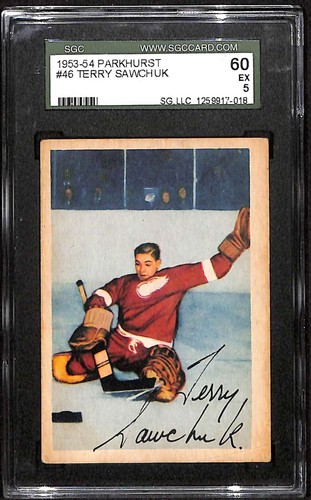 |
Terry Sawchuk #46 1953 Parkhurst |
$107.88 | $37,349 | 346.2× |
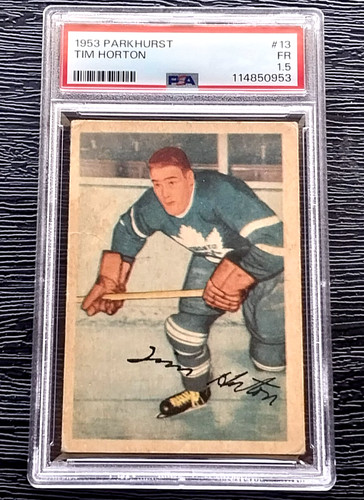 |
Tim Horton #13 1953 Parkhurst |
$94.71 | $16,833 | 177.7× |
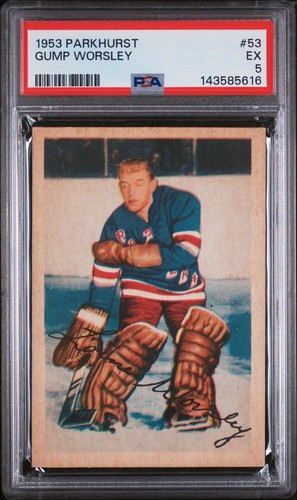 |
Gump Worsley #53 1953 Parkhurst |
$66.00 | $15,558 | 235.7× |
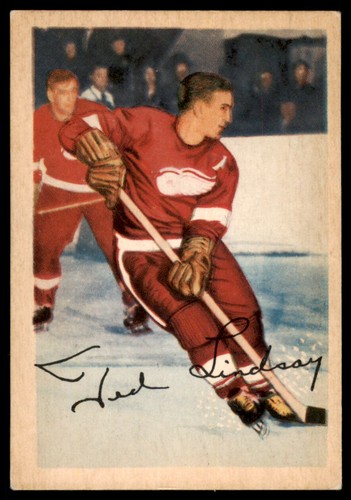 |
Ted Lindsay #52 1953 Parkhurst |
$53.32 | $12,567 | 235.7× |
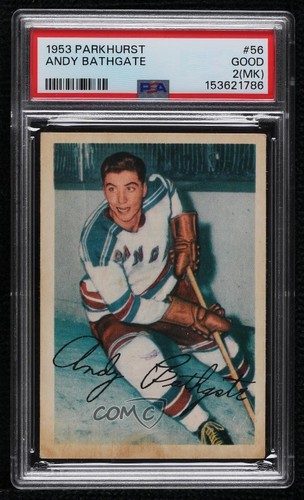 |
Andy Bathgate #56 1953 Parkhurst |
$49.08 | $11,636 | 237.1× |
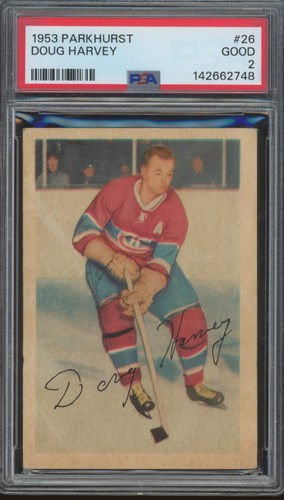 |
Doug Harvey #26 1953 Parkhurst |
$38.10 | $8,962 | 235.2× |
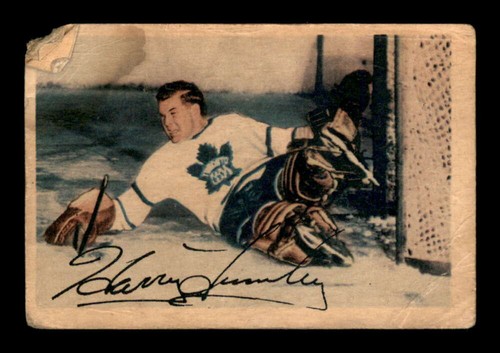 |
Harry Lumley #1 1953 Parkhurst |
$50.98 | $8,225 | 161.3× |
 |
Harry Howell #57 1953 Parkhurst |
$32.99 | $7,790 | 236.1× |
 |
Boom Boom Geoffrion #29 1953 Parkhurst |
$29.61 | $7,208 | 243.4× |
Look up any card's current raw and graded value in Midpoint — and get an estimated grade before you pay to submit.
Table of Contents
- Section 1: 1953 Parkhurst Set Overview and Significance
- Section 2: Understanding 1953 Parkhurst Cards Worth Grading
- Section 3: Key Valuable Cards and Their Market Prices
- Section 4: Complete Set Values and Mid-Grade Pricing
- Section 5: Population, Scarcity, and Grading Premiums
- Section 6: Error and Variation Cards Impact on Value
- Section 7: Recent Sales Trends and Market Insights
- Conclusion
- FAQ
Section 1: 1953 Parkhurst Set Overview and Significance
Historical Context of the 1953 Parkhurst Hockey Set
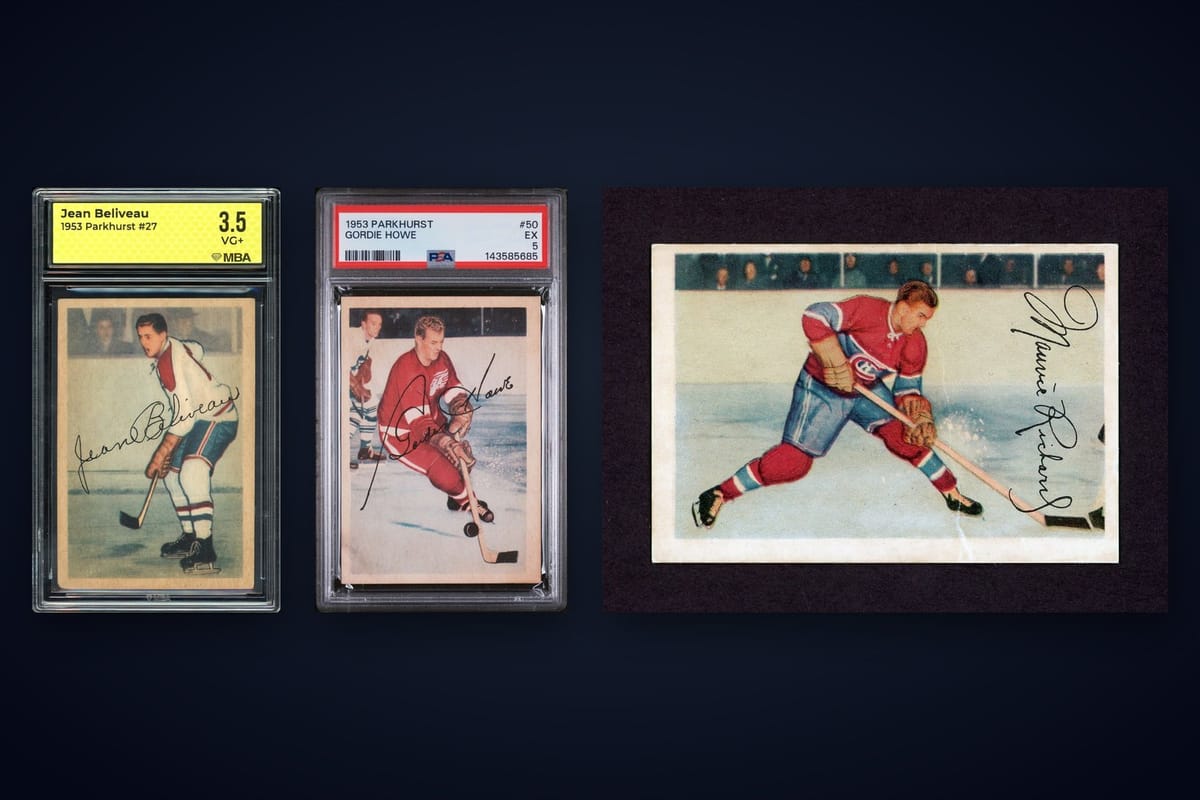
The 1953 Parkhurst hockey card set is considered an important vintage hockey release, representing the NHL’s Original Six period. Released in the early 1950s, this set features notable players such as Jean Beliveau, Maurice Richard, Terry Sawchuk, and Tim Horton. This era was significant in hockey history, with the NHL consisting of six teams and hockey growing as a major sport in Canada.
Parkhurst's 1953 cards are known for relatively high production quality compared to some earlier sets. The cards feature full-color photographs printed on glossy cardstock, which was less common at the time. This quality contributes to the set’s appeal among collectors.
Why It’s a Key Vintage Hockey Release
The 1953 Parkhurst cards are recognized for their clear player portraits and a clean design, with the front showing the player image, team logo, and card number, and the back providing player statistics and biographical details. This combination adds historical interest beyond the visual aspect.
The set includes rookie cards of future Hall of Famers and a broad roster of star players, making it desirable for collectors. Due to limited production and the aging of the paper stock, cards in high condition are relatively scarce, which can affect their value. The cards were originally sold in packs that were often opened quickly, resulting in condition challenges and making high-grade cards less common.
Set Composition and Card Count
The complete 1953 Parkhurst set contains 60 cards, including both star players and role players. Key rookie cards include Jean Beliveau (#21), alongside veterans like Maurice Richard (#18). Collectors often seek to assemble the full set to capture the era’s player lineup and meet market demand.
The set balances well-known stars with lesser-known players, providing a snapshot of NHL talent in the early 1950s. Many cards include detailed statistics such as goals, assists, and penalty minutes, which appeal to enthusiasts interested in hockey history.
| Card Name | PSA 10 Value (as of 2026-09-04) | Raw Value Estimate |
|---|---|---|
| Jean Beliveau Rookie (#21) | Up to around $40,000 | Approximately $4,000 - $10,000 |
| Maurice Richard (#18) | Up to around $15,000 | Approximately $1,500 - $5,000 |
| Terry Sawchuk (#22) | Up to around $7,500 | Approximately $700 - $2,000 |
| Tim Horton (#11) | Up to around $6,000 | Approximately $600 - $1,800 |
| Complete Set (Mid-grade PSA 7-8) | Up to around $12,000 | Approximately $3,000 - $7,000 |
Section 2: Understanding 1953 Parkhurst Cards Worth Grading
Which Cards Merit Grading Investment?
Not all 1953 Parkhurst cards have the same value potential after grading. Star cards featuring Hall of Famers and rookie cards generally justify grading costs due to their higher value premiums. Cards such as Jean Beliveau’s rookie (#21), Maurice Richard (#18), Terry Sawchuk (#22), and Tim Horton (#11) are examples where grading may significantly increase market price.
Grading fees and turnaround times for services like PSA or BGS vary, often ranging from $20 to over $100 per card depending on service level. Submitting lower-value commons may not be cost-effective. Collectors typically focus on cards with higher raw value potential and a reasonable chance of achieving grades 8 or above.
Raw vs. Graded Value Dynamics
Raw 1953 Parkhurst cards vary widely in condition and value, with many showing wear, centering issues, and surface flaws. These factors reduce raw prices but create opportunities for grading if the card is in better condition. For example, a raw Jean Beliveau rookie in mid-grade condition might sell for roughly $4,000-$10,000, while a PSA 10 can reach values near $40,000. This illustrates the premium grading can add, where PSA 10 cards often command several times the price of mid-grade or raw examples.
The difference between PSA 9 and PSA 10 can also be significant. PSA 9 Beliveau rookies typically sell in the $15,000-$20,000 range, while PSA 10 cards command higher premiums due to near-perfect centering and surfaces. This reflects collector preference for condition and the relative scarcity of flawless cards.
Centering and Condition: The Biggest Value Drivers
Centering is a key factor in grading outcomes and value. PSA and BGS grading scales penalize off-centering, which can reduce a card’s value substantially. Cards with near-perfect centering—generally considered around 55/45 or better—along with sharp corners, clean edges, and good surfaces, tend to command higher prices.
Tools like Midpoint help collectors measure centering precisely before submitting cards for grading, potentially avoiding costly grading errors. Midpoint’s digital overlay compares left/right and top/bottom borders to produce a centering ratio that aligns with PSA/BGS standards.
Using such tools, collectors can better estimate whether a card might earn a PSA 9 or 10, or if it might be better to hold or improve the card before submission.

Section 3: Key Valuable Cards and Their Market Prices
Jean Beliveau Rookie Card (#21)
Jean Beliveau’s rookie card is widely regarded as the most valuable in the 1953 Parkhurst set. PSA 10 copies have sold for amounts near $40,000 as of 2026-09-04. Raw versions in decent condition generally range from about $4,000 to $10,000 depending on centering and surface quality. This card is highly sought after by collectors and investors.
Beliveau’s notable career with the Montreal Canadiens, including multiple Stanley Cup championships and Hall of Fame induction, adds historical significance. The card’s scarcity in high grades is influenced by original production quantities and the fragile paper stock prone to wear.
Maurice Richard (#18)
Maurice Richard’s card is another valuable item. PSA 10 valuations around $15,000 reflect strong demand, with raw cards typically trading between $1,500 and $5,000. Richard’s status as the “Rocket” and his scoring achievements contribute to collector interest. Centering on Richard’s card can be challenging due to original printing variances, making PSA 10 examples rarer.
Terry Sawchuk (#22) and Tim Horton (#11)
Cards of Sawchuk and Horton also hold value, with PSA 10 prices around $7,500 and $6,000 respectively. Raw prices usually range from $600 to $2,000, making grading a consideration when card condition supports it.
Sawchuk’s reputation as a top goaltender and Horton’s legacy as a Hall of Fame defenseman and co-founder of Tim Hortons contribute to ongoing interest in their cards.
Other Notable Hall of Famers
Cards of players like Dickie Moore, Doug Harvey, and Red Kelly also have value, though generally less than the top stars. These cards add depth to the set and appeal to collectors seeking multiple Hall of Famers. While they may not reach five-figure prices, PSA 9 or 10 graded versions often sell for several hundred to a few thousand dollars depending on condition and rarity.
Section 4: Complete Set Values and Mid-Grade Pricing
Complete Set Market Overview
Completing the full 60-card 1953 Parkhurst set can increase overall value. Mid-grade complete sets graded PSA 7-8 are often valued around $12,000, reflecting the combined worth of key cards and overall condition. Raw complete sets in mid-grade condition generally range from about $3,000 to $7,000 depending on quality and completeness.
Collectors who prefer a comprehensive collection often seek complete sets, though assembling a high-grade complete set is difficult due to the scarcity of top-graded star cards, which can individually exceed the set’s total value.
Mid-Grade Cards: The Sweet Spot for Many Collectors
Mid-grade cards, typically PSA 6-8, offer a balance between affordability and quality. These grades maintain visual appeal and capture much of the value without the high premiums of PSA 9-10 cards. For many collectors and investors, mid-grade cards provide an attainable way to participate in the 1953 Parkhurst market.
Mid-grade cards usually show minor surface wear, slight centering issues (e.g., 60/40 or 65/35), and occasional corner softness but retain overall eye appeal. This range is often practical for those with budget considerations.
Common Card Pricing vs. Star Card Pricing
While the set includes many common players with modest values, star cards account for most of the set’s valuation. Lesser-known players often trade for under $50 raw or a few hundred dollars graded, highlighting the importance of star cards for overall set value. Non-Hall of Fame players typically sell for $20-$50 raw and $100-$300 graded PSA 7-8.
Collectors assembling complete sets often acquire commons in bulk and focus grading efforts on marquee cards to maximize return on investment.
Section 5: Population, Scarcity, and Grading Premiums
Population Reports and Scarcity Effects
Population data from grading companies indicate that PSA 10 copies of top 1953 Parkhurst cards are relatively scarce. For example, fewer than 20 PSA 10 Jean Beliveau rookies have been graded, which contributes to higher prices. Maurice Richard and Terry Sawchuk PSA 10 cards also have relatively low population counts, reflecting rarity at the highest grade.
This scarcity, combined with collector demand, tends to increase prices at top grades. The limited number of gem-mint examples is influenced by original production methods and the effects of time on card condition.
Grading Premiums and Gem-Mint Multipliers
The value difference between PSA 9 and PSA 10 can be significant, sometimes doubling or more, especially for key stars. This premium reflects collector preference for near-perfect condition and the rarity of flawless centering, corners, and surfaces. For example, the Jean Beliveau rookie may sell for around $15,000 at PSA 9 but closer to $40,000 at PSA 10, roughly a 2-3x multiplier.
Collectors often use centering tools like Midpoint to evaluate cards before grading submission to reduce the risk of lower grades and associated value loss.
Raw Condition Influence on Value
Raw cards in excellent condition but ungraded still hold value, particularly if centering and surface quality are strong. However, the market generally favors graded cards for condition verification and trust, making grading a worthwhile investment for high-quality specimens. Raw cards without grading often sell at a discount due to buyer uncertainty about condition and authenticity.
Sellers frequently provide high-resolution images or use third-party grading to increase buyer confidence and achieve better prices.
Section 6: Error and Variation Cards Impact on Value
Known Errors and Variations in the Set
The 1953 Parkhurst set includes some minor error cards and variations, such as miscut borders, color registration issues, and subtle printing anomalies. Examples include slight border misalignments or color smudges, which may interest niche collectors.
While these errors are not as prominent or widely recognized as major vintage errors like the T206 Honus Wagner, they can attract specialized collector interest and may affect pricing for certain cards if authenticated as genuine anomalies.
Effect of Errors on Grading and Pricing
Errors can present challenges for grading, as condition and centering may be affected. Some error cards may command premiums if verified and authenticated, especially if rare or unusual. However, most variations have a modest impact on overall set valuation compared to star cards.
Collectors should disclose known errors when selling and be aware that grading companies may handle error cards differently, potentially influencing grades or population reports.
Where to Learn More About Variations
Collectors interested in error cards should consult specialized resources and population reports. The Midpoint app and blog offer tools to analyze card centering and condition, aiding identification of subtle variations that might affect value. Collector forums and dedicated hockey card guides also provide information on known errors and rarities within the 1953 Parkhurst set.
Section 7: Recent Sales Trends and Market Insights
Sales Comps for Top Cards
Recent auction results and private sales as of 2026 indicate steady interest in high-grade 1953 Parkhurst cards. Jean Beliveau PSA 10 cards have sold near $40,000, often through major auction houses or private dealers. Maurice Richard and Sawchuk cards maintain strong demand, with prices varying by grade.
Mid-grade cards have also seen price stability or gains, reflecting ongoing interest in vintage hockey cards from collectors and investors.
Market Trends and Collector Demand
Demand for 1953 Parkhurst hockey cards remains solid, supported by growing awareness of hockey card collecting and investing. The global hockey fan base, especially in Canada, the United States, and parts of Europe, supports sustained interest.
Condition and grading remain critical factors influencing prices. Cards with excellent centering, sharp corners, and clean surfaces generally command higher premiums. Vintage cards with notable provenance or pedigrees may also attract collector attention.
Using Midpoint to Track and Maximize Value
Collectors can use the Midpoint app’s portfolio tracking features to monitor market values of their 1953 Parkhurst cards over time, aiding decisions on buying, holding, or selling. Its AI grading and centering analysis tools help users evaluate which cards to submit for professional grading, potentially reducing grading fees and improving returns.
For more information, see the pre-grade guide and centering tool overview. These resources provide step-by-step methods for assessing card condition, centering, and expected grading outcomes.
Conclusion
The value landscape for 1953 Parkhurst hockey cards is influenced by player significance, grading quality, and scarcity. Key cards like Jean Beliveau’s rookie and Maurice Richard’s card are among the most valuable, especially in PSA 10 condition where values can be substantially higher. Mid-grade cards and complete sets offer more accessible entry points for collectors interested in vintage hockey history.
By understanding population data, grading effects, and using tools like Midpoint to measure centering and estimate grades, collectors can make more informed decisions and potentially enhance their investment outcomes. Careful pre-grading evaluation helps minimize grading costs and reduce the risk of lower-than-expected grades, making the collecting experience more rewarding.
FAQ
Q: How much is a 1953 Parkhurst hockey card worth in different grades?
A: Values vary widely by card and grade. For example, a Jean Beliveau rookie card may be worth approximately $4,000-$10,000 raw, and $15,000-$40,000 graded PSA 9-10. Mid-grade cards generally hold moderate values, while top PSA 10 cards command higher premiums. Lesser-known players typically have lower values, often under $50 raw and a few hundred graded.
Q: Which 1953 Parkhurst cards are the most valuable?
A: The most valuable cards generally include Jean Beliveau rookie (#21), Maurice Richard (#18), Terry Sawchuk (#22), and Tim Horton (#11). These cards have strong demand and higher PSA 10 values, with Beliveau’s rookie often leading.
Q: How much is a 1953 Parkhurst Jean Beliveau rookie card worth?
A: As of 2026-09-04, PSA 10 Jean Beliveau rookie cards have been valued near $40,000. Raw examples in decent condition typically range from about $4,000 to $10,000 depending on centering and surface quality.
Q: How much is a 1953 Parkhurst Maurice Richard card worth?
A: PSA 10 Maurice Richard cards have been valued around $15,000, while raw cards generally range from approximately $1,500 to $5,000 depending on condition and centering.
Q: What is a complete 1953 Parkhurst set worth?
A: Complete mid-grade graded sets (PSA 7-8) are often valued around $12,000, with raw mid-grade sets typically between $3,000 and $7,000 depending on card condition and completeness.
Q: Are 1953 Parkhurst cards valuable in raw condition or only when graded?
A: Raw cards can hold value, especially in excellent condition, but grading often enhances prices by providing condition verification and buyer confidence. Using tools like Midpoint to pre-assess condition and centering before grading submissions can help optimize returns and reduce grading risks.
Free to start
Try the Midpoint app
Grade any card from a photo, see its raw and PSA 10 value, and track what your collection is worth — free.
Get it on iPhoneGet it on Android