1956 Topps Baseball Cards Value: Complete Collector’s Guide
Discover the 1956 Topps baseball cards value, key star cards, grading tips, price guide, and how condition impacts worth for raw and graded cards.

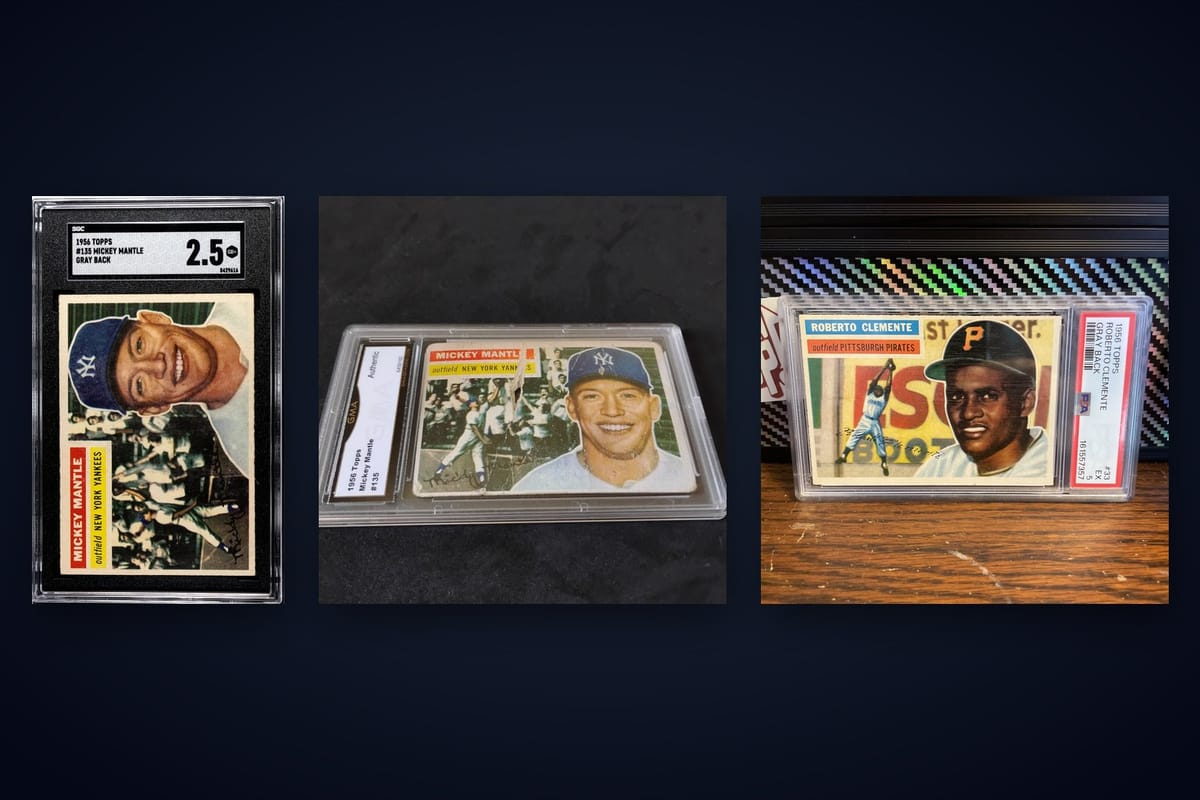
Estimated reading time: 15 min
Key Takeaways
- The 1956 Topps baseball cards value varies widely by card condition, grading, and card variation, with some high-grade cards commanding very high prices.
- Star cards like Mickey Mantle and Jackie Robinson typically command the highest prices, especially in top PSA condition, reflecting their rarity and demand.
- Understanding the difference between Gray Back vs White Back variations is important for accurate valuation, as Gray Backs are generally considered rarer and may fetch premiums.
- Many 1956 Topps cards can benefit from grading due to significant price differences between raw and graded gem mint condition, sometimes multiplying value substantially.
- Use digital grading tools like Midpoint to measure centering and estimate PSA, BGS, and CGC grades before submitting, which can help save on grading fees and improve submission success rates.
Card values — live data from Midpoint's card database, as of 2026-09-04. Prices move; Midpoint refreshes these daily.
| Card | Raw | PSA 10 | Gem premium | |
|---|---|---|---|---|
![Mickey Mantle [Gray Back] #135 1956 Topps card](https://i.ebayimg.com/images/g/BUgAAeSwwnlqUVr6/s-l500.jpg) |
Mickey Mantle [Gray Back] #135 1956 Topps |
$1,170 | $250,103 | 213.8× |
![Mickey Mantle [White Back] #135 1956 Topps card](https://i.ebayimg.com/images/g/4x8AAeSwqDRpam9u/s-l500.jpg) |
Mickey Mantle [White Back] #135 1956 Topps |
$1,050 | $230,148 | 219.2× |
![Roberto Clemente [Gray Back] #33 1956 Topps card](https://i.ebayimg.com/images/g/W3gAAeSwznxqQtVO/s-l500.jpg) |
Roberto Clemente [Gray Back] #33 1956 Topps |
$723.88 | $171,178 | 236.5× |
![Jackie Robinson [Gray Back] #30 1956 Topps card](https://i.ebayimg.com/images/g/Z-IAAeSwfE5qUU7y/s-l500.jpg) |
Jackie Robinson [Gray Back] #30 1956 Topps |
$535.32 | $142,080 | 265.4× |
![Jackie Robinson [White Back] #30 1956 Topps card](https://i.ebayimg.com/images/g/Qa0AAeSwBrJqOdvX/s-l500.jpg) |
Jackie Robinson [White Back] #30 1956 Topps |
$472.34 | $93,187 | 197.3× |
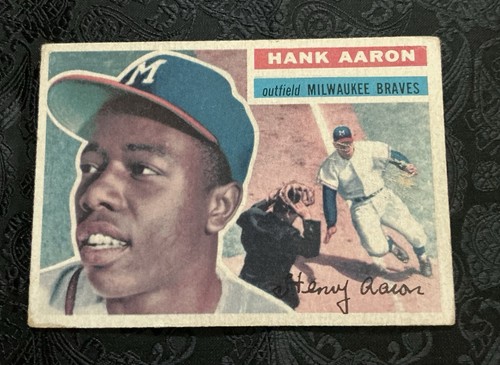 |
Hank Aaron #31 1956 Topps |
$227.04 | $72,720 | 320.3× |
![Frank Thomas [White Back] #153 1956 Topps card](https://i.ebayimg.com/images/g/D4oAAeSw5epqRXcA/s-l500.jpg) |
Frank Thomas [White Back] #153 1956 Topps |
$231.22 | $72,053 | 311.6× |
![Roberto Clemente [White Back] #33 1956 Topps card](https://i.ebayimg.com/images/g/2FEAAeSwutxqSWzg/s-l500.jpg) |
Roberto Clemente [White Back] #33 1956 Topps |
$321.00 | $70,715 | 220.3× |
![Willie Mays [Gray Back] #130 1956 Topps card](https://i.ebayimg.com/images/g/GqQAAeSwVplqTpIw/s-l500.jpg) |
Willie Mays [Gray Back] #130 1956 Topps |
$281.00 | $60,216 | 214.3× |
![Sandy Koufax [Gray Back] #79 1956 Topps card](https://i.ebayimg.com/images/g/jFMAAeSw3fxqQvGq/s-l500.jpg) |
Sandy Koufax [Gray Back] #79 1956 Topps |
$197.50 | $57,066 | 288.9× |
|
Sandy Koufax [White Back] #79 1956 Topps |
$266.57 | $56,896 | 213.4× |
![Willie Mays [White Back] #130 1956 Topps card](https://i.ebayimg.com/images/g/xQMAAeSwkEFqNzv7/s-l500.jpg) |
Willie Mays [White Back] #130 1956 Topps |
$225.50 | $48,329 | 214.3× |
Look up any card's current raw and graded value in Midpoint — and get an estimated grade before you pay to submit.
Table of Contents
- Section 1: Overview and Checklist of the 1956 Topps Baseball Set
- Section 2: How Card Condition and Grading Affect Value
- Section 3: Most Valuable 1956 Topps Cards and Price Ranges
- Section 4: Gray Back vs White Back Variations and Their Impact
- Section 5: Top Rookie Cards and Short Prints to Watch
- Section 6: Complete Set Value vs Individual Card Breakup
Conclusion
FAQ
Section 1: Overview and Checklist of the 1956 Topps Baseball Set
The 1956 Topps baseball card set remains one of the most iconic and expansive collections in baseball card history. Comprising 598 cards, it is among the largest sets of its era, offering a comprehensive snapshot of mid-1950s Major League Baseball stars, rookies, and unique card variations. This set is prized not only for its breadth but also for its vibrant design, featuring bright colors and sharp photography that have stood the test of time. Additionally, it introduced or featured key rookies who would go on to become Hall of Famers, as well as dual-player cards that added novelty to the collection.
Complete Set Composition
The 1956 Topps set includes:
- 598 individual cards covering a wide spectrum of players, from everyday team members to superstar Hall of Famers.
- Dual-player cards, a unique feature of the set, such as card #210 showcasing both Sandy Koufax and Don Drysdale, two future pitching legends of the Los Angeles Dodgers.
- Variations on card backs, most notably the Gray Back and White Back types, which emerged due to changes in the printing process mid-production and can affect card rarity and value.
- Short print cards and rookie cards that are especially prized for their scarcity and historical significance.
Checklist Highlights
Among the 598 cards, several stand out as key collector targets due to player prominence, rarity, or unique features:
- #135 Mickey Mantle: The set’s most iconic card, prized for Mantle’s legendary status and condition rarity.
- #220 Jackie Robinson: Celebrating the trailblazer who broke baseball’s color barrier, Robinson’s card is both historically and monetarily significant.
- #210 Sandy Koufax / Don Drysdale: A rare dual-player rookie card that captures two Hall of Fame pitchers early in their careers.
- #120 Roberto Clemente: Clemente’s card is a key collectible, with growing demand fueled by his legacy.
- #50 Ted Williams: Featuring one of the greatest hitters, highly sought after in premium condition.
- #130 Willie Mays: Another Hall of Famer whose card commands respect and value.
- #490 Hank Aaron: Celebrated for his career achievements, Aaron’s card is a valuable piece in the set.
Pricing Overview
The value of the 1956 Topps cards varies considerably based on player, card number, and, most critically, condition and grading. While many common cards hold modest retail values, star cards can fetch anywhere from a few hundred dollars in raw, low-grade form to very high prices for a PSA 10 gem mint graded copy. This wide spread underscores the importance of condition and professional grading in the marketplace.
| Card Number | Player | Raw Value (Good Condition) | PSA 10 Value (as of 2026-09-04) |
|---|---|---|---|
| 135 | Mickey Mantle | $1,200 | $120,000 |
| 220 | Jackie Robinson | $900 | $45,000 |
| 210 | Sandy Koufax / Don Drysdale | $200 | $8,500 |
| 120 | Roberto Clemente | $350 | $12,000 |
| 50 | Ted Williams | $400 | $15,000 |
| 130 | Willie Mays | $450 | $20,000 |
| 490 | Hank Aaron | $300 | $10,000 |
This pricing table is sourced from Midpoint’s comprehensive database as of September 4, 2026, reflecting market trends and sales data. Collectors should note that prices fluctuate with market demand, auction results, and the condition specifics of individual cards.
Section 2: How Card Condition and Grading Affect Value
Card condition and grading are paramount in determining the value of 1956 Topps baseball cards. Since the set is over six decades old, many cards have suffered from handling, storage conditions, and production flaws. Professional grading services such as PSA (Professional Sports Authenticator), BGS (Beckett Grading Services), CGC (Certified Guaranty Company), and TAG Collectibles evaluate cards meticulously based on several criteria. The resulting grade often multiplies the card’s raw market value, especially for high-grade cards.
Raw vs Graded Value Disparity
The disparity between raw and graded values can be dramatic. For example:
- The 1956 Topps Mickey Mantle card (#135) typically sells raw in good condition for around $1,200. However, a PSA 10 (Gem Mint) example, which is exceedingly rare due to centering and corner challenges, has sold for prices exceeding $100,000. This represents a very large increase.
- Similarly, the Jackie Robinson (#220) card’s raw value is approximately $900, but a PSA 10 copy can command tens of thousands of dollars, reflecting a significant jump.
These multiples highlight why collectors invest in grading, particularly for marquee cards with high demand.
Key Grading Factors
Grading companies assess cards on four core factors:
- Centering: The alignment of the card’s image relative to its borders is crucial. The 1956 Topps set is notorious for off-center printing, especially on the star cards. A perfectly centered card with even borders on all sides is rare and fetches premium prices. For example, PSA’s guidelines require centering of 70/30 or better for grades above 8, and 55/45 or better for a PSA 10.
- Corners: Sharp, crisp corners are essential. Cards with rounded, bent, or frayed corners see their grade and value drop significantly. Given the card stock and age, many 1956 Topps cards show corner wear, making high-grade examples scarce.
- Edges: Clean edges free of chipping, dings, or whitening are necessary for top grades. Edge wear is common, so cards with pristine edges stand out.
- Surface: The card’s front and back surfaces must be free from stains, print defects, creases, scratches, or discoloration. Gloss loss and staining are frequent challenges for this set.
Using Digital Tools for Pre-Grading
Given the financial and emotional investment in grading, collectors increasingly use AI-powered digital tools like Midpoint to assess cards before submission. Midpoint’s app analyzes card centering with millimeter precision and estimates grades from PSA, BGS, CGC, and TAG based on the four grading factors. This pre-grade insight allows collectors to:
- Identify which cards have a realistic chance of achieving high grades.
- Save money by submitting only likely candidates, avoiding costly grading fees on low-grade cards.
- Negotiate better purchase or sale prices armed with objective centering and condition data.
For example, a collector with a 1956 Topps Mickey Mantle card can use Midpoint to confirm if the centering meets PSA 10 standards (approximately 55/45 ratio or better). If the centering is poor, the card might still be valuable but unlikely to reach gem mint grades, guiding the submission decision.
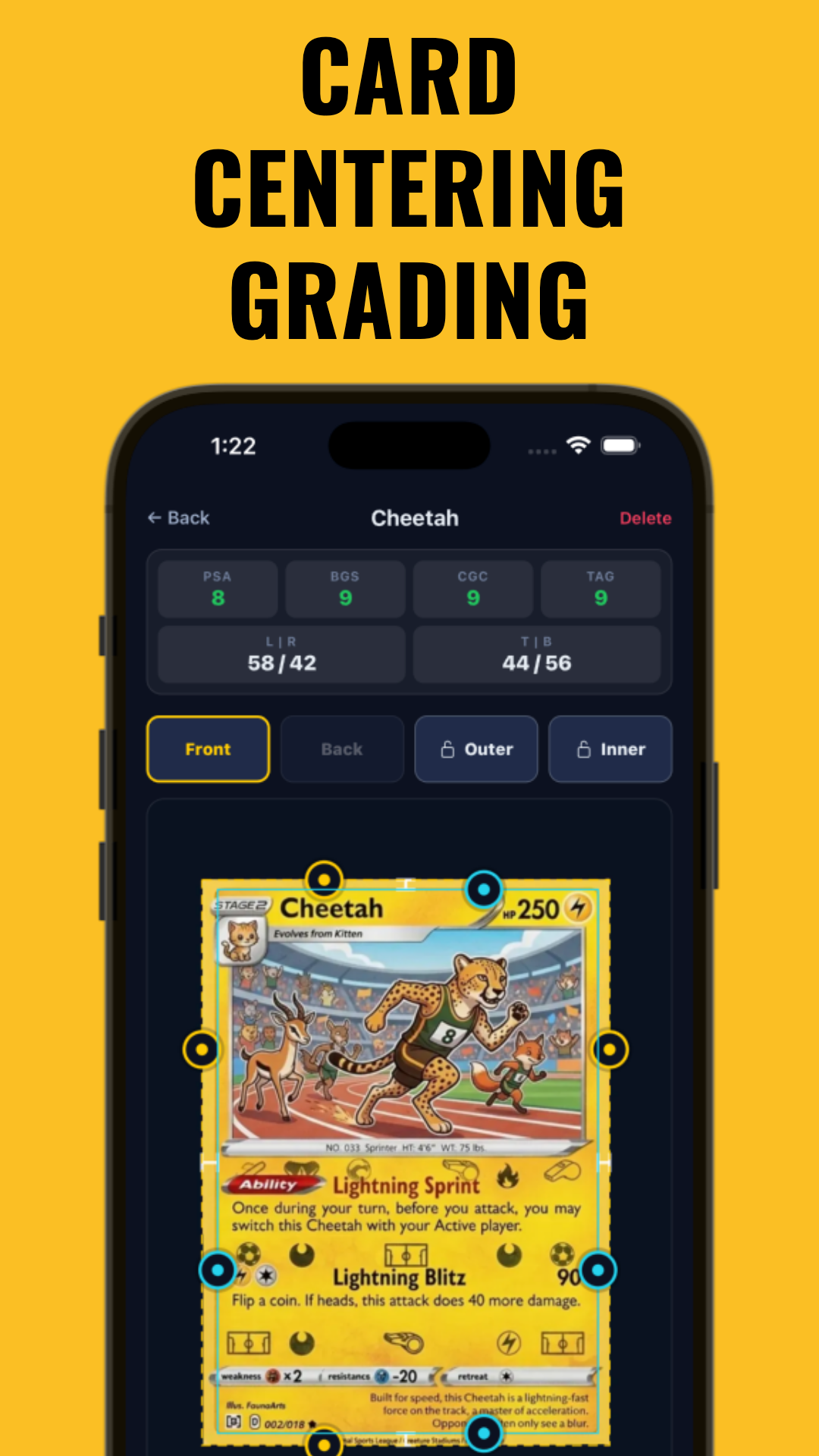
For more nuanced information on centering’s impact, see the detailed guide on How Centering Impacts Card Value, which breaks down real-world examples and grading standards.
Section 3: Most Valuable 1956 Topps Cards and Price Ranges
Collectors and investors focus heavily on the most valuable cards within the 1956 Topps set, primarily those featuring legendary players, rare rookie cards, and scarce variations. These cards not only hold sentimental value but also represent significant financial assets.
Top Star Cards and Their Values
- #135 Mickey Mantle: Crowned the most valuable card in the set, Mantle’s card is prized for its visual appeal and Mantle’s iconic status. PSA 10 examples are exceedingly scarce due to centering and corner challenges, leading to auction prices exceeding $100,000.
- #220 Jackie Robinson: Valued for its historical significance as well as player fame, the Robinson card garners tens of thousands of dollars in PSA 10 condition, with raw copies trading under $1,000.
- #210 Sandy Koufax / Don Drysdale: This dual-player rookie card is both unique and highly collectible. PSA 10 copies fetch several thousand dollars, reflecting its rarity and appeal to pitching enthusiasts.
- #120 Roberto Clemente: Clemente’s card is increasingly sought after, with PSA 10 copies valued in the low tens of thousands due to his Hall of Fame legacy and rising market interest.
- #50 Ted Williams: Williams’ card is a favorite among collectors, with PSA 10 copies reaching mid five-figure amounts, supported by his stature as one of the game’s greatest hitters.
- #130 Willie Mays: Mays’ card commands significant value in gem mint condition, driven by his status as one of baseball’s all-time greats.
- #490 Hank Aaron: Aaron’s card is a key set piece valued in the low five figures PSA 10, supported by both his career achievements and collector demand.
Common Card Price Ranges
While star cards dominate monetary attention, the majority of the 1956 Topps set consists of common cards. Raw common cards in good condition typically trade between $5 and $50. However, when graded highly—especially PSA 9 or 10—some commons can appreciate significantly, occasionally reaching $100 or more. This creates opportunities for collectors to profit from well-preserved cards that are often overlooked.
Highest Record Sales and Auction Comparisons
Top-tier auction houses such as Heritage Auctions, Goldin Auctions, and PWCC regularly feature 1956 Topps star cards in their sales. Notably:
- A PSA 10 Mickey Mantle #135 card sold for over $100,000 in a 2026 auction, setting a recent high-water mark.
- Jackie Robinson #220 PSA 10 examples have fetched tens of thousands of dollars in competitive bidding environments.
- Dual-player cards and short prints have seen accelerated interest, with prices reflecting scarcity and condition.
These auction results provide benchmarks for private sales and marketplace listings, informing buyer and seller expectations.
Section 4: Gray Back vs White Back Variations and Their Impact
Among 1956 Topps collectors, one of the most important nuances is the distinction between Gray Back and White Back cards. This variation emerged due to a mid-production change in card stock and printing, creating two distinct back types that affect rarity, desirability, and price.
What Are Gray Back and White Back Cards?
- Gray Back cards feature a gray-toned reverse side. These cards were printed earlier in the 1956 Topps production run, using a different paper stock that resulted in a noticeably duller back. Gray Backs are generally considered scarcer in high-grade condition due to their earlier print run and paper quality.
- White Back cards have a brighter, more reflective white back. They were produced later and are more common overall.
Though the fronts of Gray Back and White Back cards are identical, the back color is a key factor for collectors and graders. Many collectors prefer Gray Back cards due to their relative scarcity, and this preference influences market pricing.
Value Differences
- Gray Back versions of the set’s star cards often command a premium over White Back versions in comparable condition. For example, a PSA 9 Mickey Mantle Gray Back might sell for more than a White Back PSA 9.
- Some collectors exclusively pursue Gray Back cards, particularly for iconic cards like Mantle #135 and Robinson #220, which can push demand and prices upward.
- However, White Back cards are sometimes easier to find in higher grades due to paper quality, which can balance values in the uppermost grades.
Identifying Variations
Collectors can distinguish Gray Back from White Back cards by examining the card backs under natural or white light. Gray Back cards have a distinct gray or duller tone compared to the bright white of White Backs. Authentication and grading companies note this variation on their labels, but initial identification can be done at home with practice.
Using tools like Midpoint’s surface grading and centering analysis can assist in cataloging and verifying card variations before purchase or grading submission. Accurate identification helps ensure proper pricing and avoid confusion in the marketplace.
Section 5: Top Rookie Cards and Short Prints to Watch
The 1956 Topps set includes several rookie cards and short prints that carry significant collector interest and value. Understanding these cards helps collectors prioritize acquisitions and grading submissions.
Notable Rookie Cards
- 1956 Topps #210 Sandy Koufax / Don Drysdale: This dual-player card serves as Koufax’s rookie card and is highly coveted due to the players’ Hall of Fame careers and the card’s unique design. PSA 10 graded copies command premium pricing, currently in the several-thousand-dollar range.
- #525 Don Drysdale: Drysdale’s solo rookie card is another key rookie to watch, with collector demand increasing as his legacy endures.
- #220 Jackie Robinson: Although not technically a rookie card, it holds immense value for its historical and iconic significance.
Short Print Cards
Short print cards in the 1956 Topps set were produced in smaller quantities or intentionally printed in limited runs, making them rarer and often more valuable. Examples include:
- Cards featuring emerging stars or multi-player cards that appeared less frequently in packs.
- Special inserts or cards with distinctive features, such as dual-player fronts or unusual back printings.
Because short prints are rarer, they tend to be more condition-sensitive. High-grade short prints can achieve prices multiple times that of common cards. Collectors are advised to consult Midpoint’s database to identify short prints, monitor their current market values, and prioritize them for grading consideration.
Section 6: Complete Set Value vs Individual Card Breakup
Collectors and investors often face the choice of retaining the 1956 Topps baseball set intact or breaking it up to sell individual high-value cards. Both strategies have distinct advantages and challenges that affect total realized value.
Complete Set Value
- Complete sets, particularly those in near-mint or better overall condition, command significant premiums due to their rarity and the convenience of owning a comprehensive collection.
- As of September 2026, a near-mint complete 1956 Topps set is valued around $150,000, driven largely by the cumulative value of star cards and overall condition consistency.
- Sets that include Gray Back variations intact are especially prized among collectors, further elevating value.
- Owning a complete set preserves historical context and appeals to collectors seeking to maintain the set’s integrity.
Individual Card Breakup
- Selling marquee cards individually often yields higher total returns if those cards grade highly, as the star cards can attract premium prices when sold separately.
- However, breaking up a set to sell lower-grade or common cards individually may result in lower aggregate value than selling the set whole, due to market dynamics and collector interest.
- Using tools like Midpoint to evaluate and pre-grade individual cards can guide decisions on which cards to submit for grading and which to sell raw, optimizing financial outcomes.
- Collectors must balance personal collecting goals, market conditions, and potential tax implications when deciding on set breakup versus retention.
Ultimately, the choice depends on individual priorities — whether the collector values completeness and historical significance or prefers maximizing financial returns through targeted sales.
Conclusion
The 1956 Topps baseball cards value landscape offers rich opportunities for both casual collectors and serious investors. A deep understanding of the set’s scope, star cards, grading nuances, and variations like Gray Back versus White Back is important for unlocking significant value. Key rookie and short print cards further enhance the set’s complexity and desirability.
Modern AI-driven tools such as Midpoint empower collectors to measure centering precisely and receive accurate grading estimates before committing to expensive grading submissions. This approach can maximize return on investment by focusing grading efforts on cards with the highest potential value increase and reduces the risk of costly grading disappointments.
Whether you aim to build a complete 1956 Topps set or specifically hunt for valuable rookies and star cards, deep market knowledge combined with careful condition assessment and modern technology integration will be your best assets in navigating this classic baseball card set.
FAQ
Q: How much is a 1956 Topps Mickey Mantle card worth?
A: The 1956 Topps Mickey Mantle card (#135) typically has a raw market value around $1,200 in good condition. However, a PSA 10 graded copy, which is very rare due to centering and corner challenges, can fetch prices exceeding $100,000 as of September 4, 2026.
Q: What is the difference between Gray Back and White Back 1956 Topps cards?
A: Gray Back cards feature a gray-toned reverse side and were printed earlier in the production run, making them generally rarer and potentially more valuable. White Back cards have a bright white reverse and were printed later. This variation influences collector demand and pricing, with Gray Backs often commanding premiums in comparable condition.
Q: Which 1956 Topps cards are the most valuable?
A: The most valuable cards include #135 Mickey Mantle, #220 Jackie Robinson, #210 Sandy Koufax/Don Drysdale, #120 Roberto Clemente, #50 Ted Williams, #130 Willie Mays, and #490 Hank Aaron, especially in high-grade PSA 10 condition.
Q: How much is a complete 1956 Topps baseball set worth?
A: A near-mint complete 1956 Topps set is valued around $150,000 as of September 4, 2026. Sets including Gray Back variations and with strong overall condition can command premiums above this mark.
Q: What 1956 Topps rookie cards are worth money?
A: Key rookie cards include #210 Sandy Koufax (dual-player rookie), #525 Don Drysdale, and while not a rookie, #220 Jackie Robinson is highly valuable. Short prints and well-preserved rookies also hold strong market value.
Q: How does card condition affect 1956 Topps values?
A: Condition dramatically impacts value. PSA 10 (Gem Mint) cards can be worth many times more than raw or lower-grade examples, often significantly higher for marquee cards. Centering, corners, edges, and surface condition are the critical grading criteria that influence pricing.
Free to start
Try the Midpoint app
Grade any card from a photo, see its raw and PSA 10 value, and track what your collection is worth — free.
Get it on iPhoneGet it on Android