1957 Topps Basketball Cards Value: A Complete Collector’s Guide
Explore 1957 Topps basketball cards value, key rookies, grading tips, and price guide insights to maximize your collection’s worth with expert analysis.

Estimated reading time: 15 min
Key Takeaways
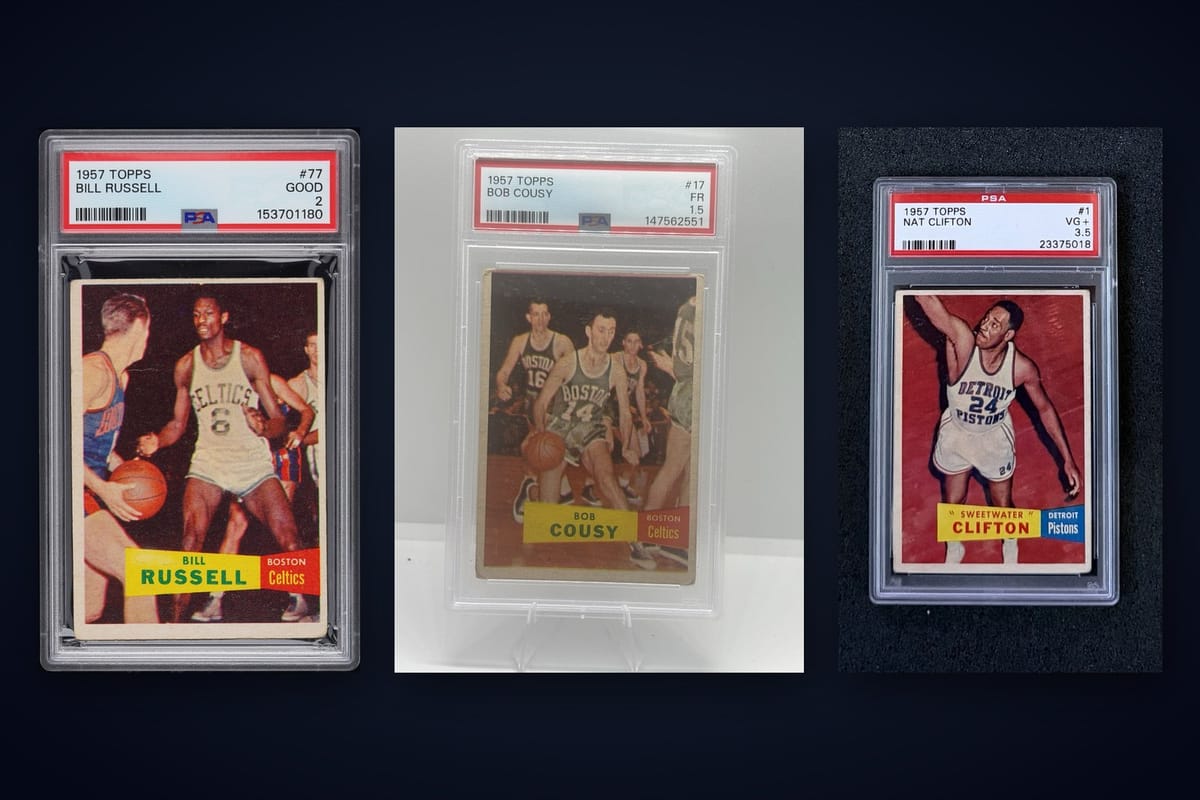
- 1957 Topps basketball cards feature notable rookies like Bill Russell and Bob Cousy, which contribute to strong interest and value among collectors and investors.
- High-grade PSA 10 cards often command significant premiums, especially for well-centered and scarce print variations, sometimes reaching multiples of raw card values.
- Condition and centering are important factors for grading and resale price; even minor deviations can affect value.
- Raw cards retain intrinsic value, but professional grading can unlock higher prices for top-tier specimens, making pre-grading assessment useful.
- Use tools like Midpoint to pre-grade and measure centering before submitting for professional grading, helping collectors make informed decisions.
Card values — live data from Midpoint's card database, as of 2026-08-23. Prices move; Midpoint refreshes these daily.
| Card | Raw | PSA 10 | Gem premium | |
|---|---|---|---|---|
 |
Bill Russell #77 1957 Topps |
$1,613 | $607,087 | 376.5× |
 |
Bob Cousy #17 1957 Topps |
$512.00 | $424,560 | 829.2× |
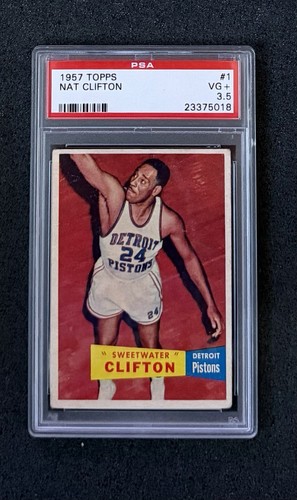 |
Nat Clifton #1 1957 Topps |
$138.75 | $32,741 | 236× |
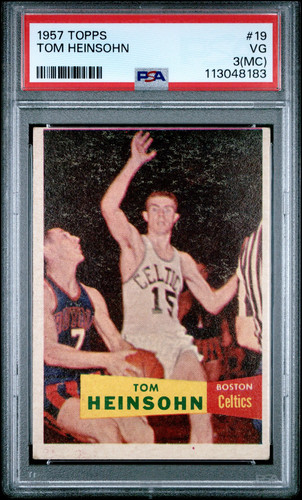 |
Tom Heinsohn #19 1957 Topps |
$102.21 | $28,400 | 277.9× |
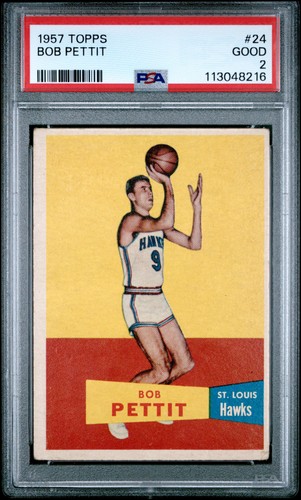 |
Bob Pettit #24 1957 Topps |
$105.56 | $24,411 | 231.3× |
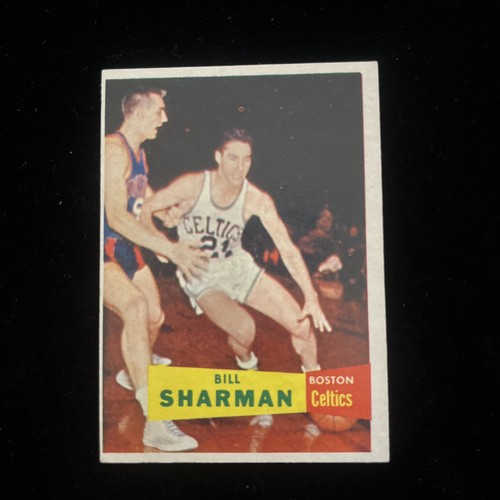 |
Bill Sharman #5 1957 Topps |
$56.00 | $12,569 | 224.5× |
 |
Frank Ramsey #15 1957 Topps |
$32.35 | $7,957 | 246× |
 |
Guy Sparrow #38 1957 Topps |
$18.50 | $7,616 | 411.7× |
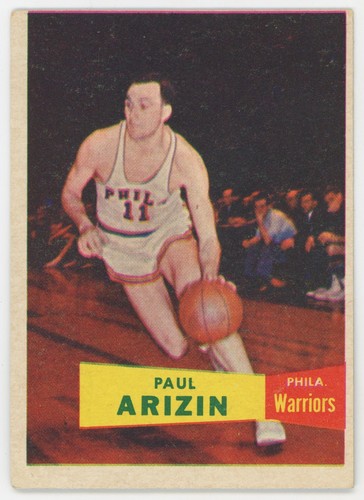 |
Paul Arizin #10 1957 Topps |
$32.50 | $6,438 | 198.1× |
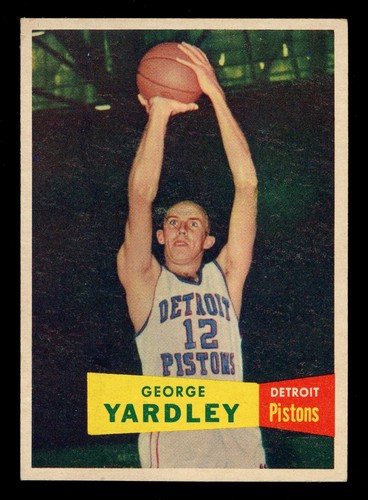 |
George Yardley #2 1957 Topps |
$30.01 | $6,263 | 208.7× |
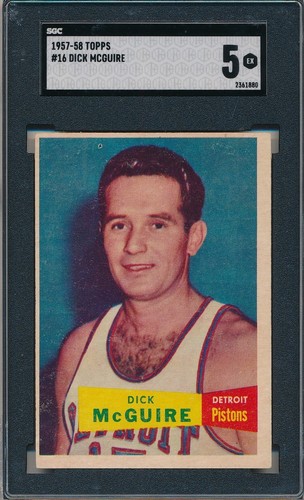 |
Dick McGuire #16 1957 Topps |
$28.93 | $6,061 | 209.5× |
 |
Slater Martin #12 1957 Topps |
$22.48 | $5,689 | 253.1× |
Look up any card's current raw and graded value in Midpoint — and get an estimated grade before you pay to submit.
Table of Contents
- Section 1: Overview of the 1957 Topps Basketball Set and Size
- Section 2: Key Rookie Cards and Their Collectible Importance
- Section 3: Understanding 1957 Topps Basketball Cards Value by Condition and Grade
- Section 4: Scarcity, Short Prints, and Population Influences on Price
- Section 5: Recent Auction Highlights and Record Sales
- Section 6: Comparing Price Guides and Valuation Resources
- Section 7: Investment and Collecting Considerations for 1957 Topps Basketball
Conclusion
FAQ
Section 1: Overview of the 1957 Topps Basketball Set and Size
Set Size and Composition
The 1957 Topps basketball set is a notable release that captures the NBA's rising stars during the 1956-57 season. Comprising 121 cards, the set is recognized for its vibrant, full-color player photographs on the front, framed by a white border and team branding, which was distinctive for its time.
The reverse side of each card presents biographical details, player statistics, and additional information, adding to the set’s appeal for collectors interested in both aesthetics and historical context. These elements make the 1957 Topps basketball set important for vintage basketball card collectors.
Physical Characteristics
The cards measure approximately 2-1/2" by 3-1/2", consistent with standard trading card dimensions of the 1950s. Printed on relatively thick cardstock, the set is known for its slightly textured finish, which contributes to its character but can also lead to surface wear over time.
Due to manufacturing processes of the era, many cards display centering issues, print smudges, or color inconsistencies. These production characteristics affect grading outcomes and market values, as collectors generally prefer well-centered cards with vibrant colors and minimal printing defects.
Set Composition and Variations
- 121 base cards featuring rookies, established stars, and role players from the 1956-57 NBA season.
- Includes Hall of Famers and notable players, such as Bill Russell and Bob Cousy.
- Some cards exist in short print variations or have known print anomalies, which can introduce scarcity and collector interest.
- Certain cards have documented centering and color variations, which can influence grading and collector preferences.
Below is a reference table of key cards and their PSA 10 values as of 2026-08-23, extracted from the Midpoint app database, illustrating the value differences for top rookies.
Section 2: Key Rookie Cards and Their Collectible Importance
Bill Russell Rookie Card
The Bill Russell rookie card (#28) is widely regarded as a key card of the 1957 Topps basketball set. Russell’s NBA career — including multiple championships and MVP awards — contributes to ongoing collector interest. The card’s scarcity in high grades adds to its desirability.
Raw Bill Russell rookie cards can be found priced approximately between $200 and $1,000, depending on condition factors such as centering, surface wear, and corner sharpness. PSA 10 graded examples have sold for significantly higher amounts, reflecting a premium over raw copies.
Fewer than 200 PSA 10 graded copies have been recorded, indicating relative rarity at this grade.
Bob Cousy Rookie Card
Bob Cousy’s rookie card (#82) is another important card in the set, representing the Boston Celtics’ Hall of Fame point guard. While not as scarce as Russell’s card, Cousy’s rookie maintains strong collector appeal.
Raw cards typically trade between $150 and $800, depending on condition. PSA 10 graded Cousy rookies have sold in the range of $6,000 to $8,000, reflecting demand based on rookie status and historical significance.
Collectors often consider grading Cousy’s card when centering and edges appear strong, as it offers a more accessible entry point into high-grade 1957 Topps basketball rookies.
Other Notable Stars and Rookies
- Tom Heinsohn (#68): A Boston Celtics star and Hall of Famer, Heinsohn’s card has mid-range value, with PSA 9 and 10 examples generally valued between $2,000 and $4,000.
- Bill Sharman (#33): Another key rookie with collectible appeal, Sharman’s cards are valued near $1,000 in PSA 9 condition, with PSA 10 examples commanding higher premiums.
- Andy Phillip (#46): While less valuable, Phillip’s card is important for collectors seeking complete sets and can range from $50 to $200 raw.
Rookie cards and Hall of Famers tend to outperform common cards, making them primary targets for investment, grading, and long-term appreciation.
Section 3: Understanding 1957 Topps Basketball Cards Value by Condition and Grade
Raw vs Graded Price Differences
The valuation gap between raw and professionally graded 1957 Topps basketball cards is notable. Raw cards, even in excellent condition, often sell at a fraction — sometimes around 1/10th or less — of prices achieved by PSA 9 or PSA 10 graded counterparts.
For example, a raw Bill Russell rookie card in near-mint condition may sell for approximately $1,000, while a PSA 10 graded version can command prices significantly higher. This difference reflects the premium collectors place on certification confirming near-perfect condition.
The Gem Premium and Why It Matters
Cards graded PSA 10, also called "gem mint," typically demand a premium over PSA 9 or raw cards. This premium arises from the scarcity of perfectly centered cards with flawless edges, corners, and surfaces from the 1950s. The 1957 Topps set is known for centering issues and print defects, making PSA 10 cards relatively rare and valuable.
Collectors and investors prize the gem mint grade because it represents the highest attainable quality, making these cards desirable for display, investment, and resale.
Condition Factors: Centering, Edges, Corners, Surface
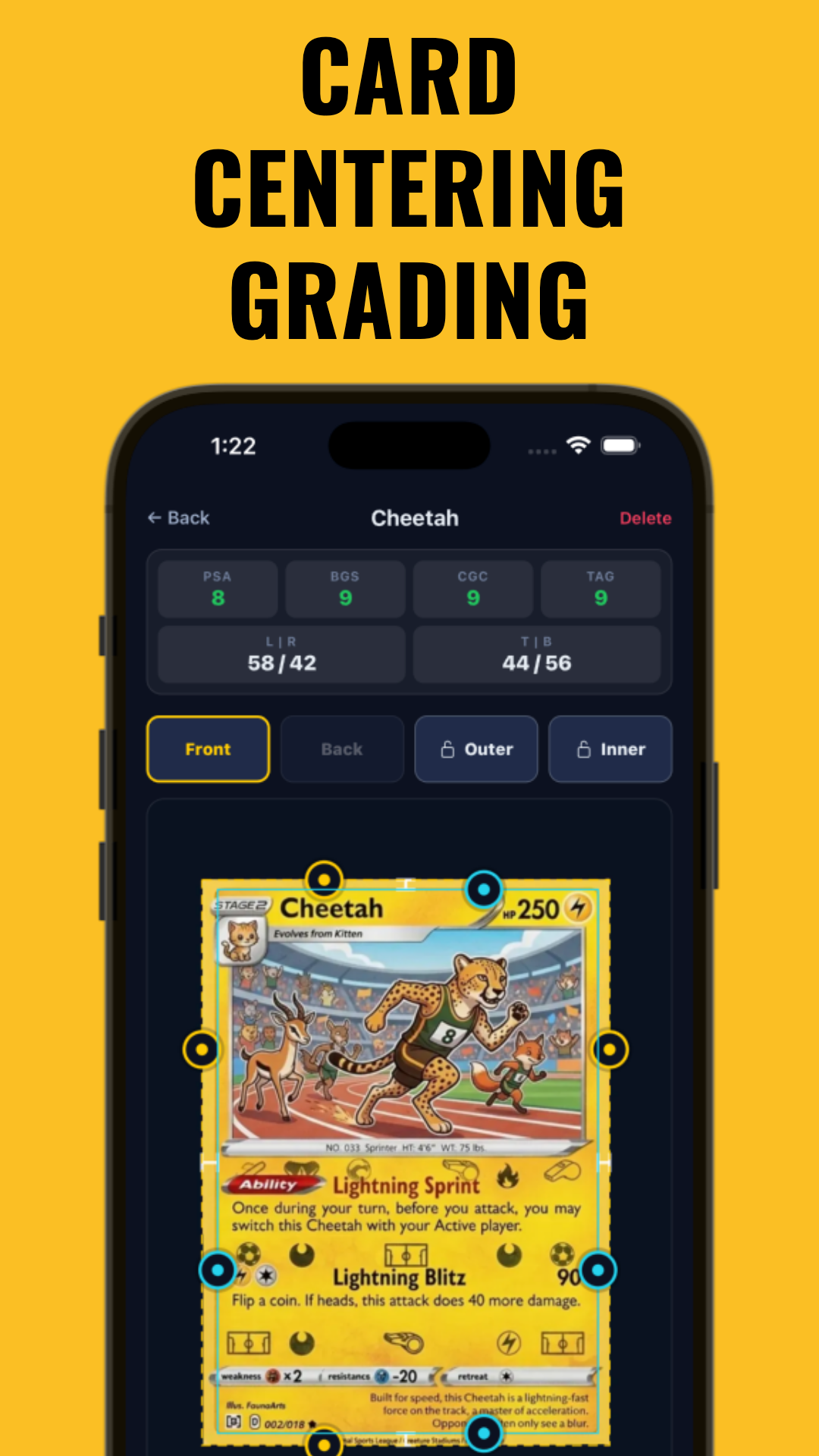
- Centering: Centering is often a key grading factor for vintage cards. The 1957 Topps set frequently exhibits off-center printing. Midpoint’s centering tool measures centering precisely, providing data that aligns with PSA grading criteria.
- Edges and Corners: Sharp, clean edges and corners free from chipping or rounding improve grading potential. Cards with wear or damage in these areas often receive lower grades.
- Surface: Clean surfaces without stains, creases, print defects, or scratches are important for top grades. Surface gloss and color vibrancy also influence grading.
Using Midpoint or similar tools before submitting cards for professional grading can help collectors estimate realistic grades and identify which cards may be worth grading.
Section 4: Scarcity, Short Prints, and Population Influences on Price
Population Reports and Rarity
Population reports from grading companies such as PSA provide insight into the scarcity of high-grade 1957 Topps basketball cards. For example, the Bill Russell #28 card has fewer than 200 PSA 10 copies recorded worldwide, indicating rarity in top condition.
Similarly, Bob Cousy (#82) and Tom Heinsohn (#68) have limited numbers of PSA 10 examples, contributing to their market values. Scarcity of high-grade cards influences pricing, particularly for rookies and Hall of Famers.
Short Prints and Print Variations
Within the 1957 Topps set, certain cards exist as short prints or feature known print variations, which can include differing color shades, slight design nuances, or positional shifts in the printed image. These variations can increase collector interest due to rarity and historical significance.
Collectors may pay premiums for short-printed cards, especially if they also have high grades. Some short print cards in the set can command modestly higher prices than their base card counterparts in comparable condition.
Common Cards vs High-Value Cards
- Common role players and lower-tier cards generally have modest market values, often under $10 in raw condition, reflecting broader availability and lower demand.
- Key rookies and stars, particularly in high-grade condition, dominate the market, with individual cards reaching thousands or more.
- Complete sets graded in high condition are sought after; however, the break-up value of singles often exceeds the value of a complete set, especially when focusing on marquee rookies.
Section 5: Recent Auction Highlights and Record Sales
Bill Russell PSA 10 Record Sales
Recent auction results highlight continued demand for top-grade Bill Russell rookie cards. As of 2026-08-23, PSA 10 Bill Russell rookie cards have sold in the $30,000 to $35,000 range. These sales occur through major auction houses and private sales, reflecting the card’s status as one of the most valuable basketball cards from the era.
Sales with strong provenance and high-quality presentation may achieve prices above this range, indicating collector willingness to pay premiums for well-documented examples.
Bob Cousy PSA 10 Sales
Bob Cousy PSA 10 rookie cards typically sell between $6,000 and $8,000 at auction. This range reflects strong but somewhat lower demand compared to Russell, influenced by relative scarcity and player prominence. Auction data shows steady interest and turnover for high-grade Cousy cards.
Notable High-Grade Sales for Other Stars
- Tom Heinsohn PSA 9 and 10 cards have sold in the $2,000 to $4,000 range, reflecting demand among Celtics fans and vintage collectors.
- Bill Sharman PSA 9 cards are near $1,000, with PSA 10 premiums pushing prices higher.
- Complete high-grade sets have sold for upwards of $50,000, though such sets are rare. Collectors often dismantle these sets to maximize value by selling key singles separately.
Section 6: Comparing Price Guides and Valuation Resources
Midpoint’s Integrated Price Lookup
Midpoint offers a large, regularly updated database with raw and graded values for over 250,000 cards, including the entire 1957 Topps basketball set. Its price guide aggregates data from multiple marketplaces (eBay, Heritage Auctions, PWCC, etc.) and grading services, providing market insights.
Additionally, Midpoint’s AI-powered tools provide grading estimates and centering measurements, giving collectors a comprehensive valuation toolkit.
Other Price Guides: PSA, SportsCardsPro, Investor Sites
- PSA Price Guide: The industry standard for graded card pricing, based on PSA census and auction data. It offers population reports and sales trends.
- SportsCardsPro: Provides retail and wholesale price insights and market trend analysis, useful for buyers and sellers.
- Investor Sites: Offer broader investment analysis, including forecasts and risk assessments, aiding collectors and investors in decision-making.
Why Use Multiple Sources?
Cross-referencing Midpoint with PSA and other price guides helps provide a well-rounded understanding of card value. Pricing can vary due to timing of sales, market fluctuations, and grading population differences. Using multiple sources helps collectors avoid overpaying and better anticipate market trends.
Section 7: Investment and Collecting Considerations for 1957 Topps Basketball
Which Cards Are Worth Grading?
Grading costs can range from $20 to over $100 per card depending on service and turnaround. Therefore, focusing grading efforts on cards with strong potential for high grades and value is advisable.
Key rookies like Bill Russell (#28) and Bob Cousy (#82), along with Hall of Famers such as Tom Heinsohn (#68) and Bill Sharman (#33), are prime candidates. Cards with strong centering, sharp edges, clean surfaces, and minimal flaws benefit most from professional grading.
Midpoint’s AI grading and centering tools allow collectors to pre-assess cards before submitting them, reducing the risk of low-grade returns and unnecessary grading fees.
Investment Potential and Market Trends
The 1957 Topps basketball set has shown appreciation over recent years, particularly for high-grade key cards. The scarcity of gem mint condition cards combined with the popularity of players like Russell and Cousy supports demand.
Investors should prioritize cards with strong provenance, excellent centering, minimal flaws, and authenticated grading. Monitoring auction results and population reports can help inform buying and selling decisions.
Storage and Preservation Tips
- Store cards in high-quality acid-free sleeves and rigid top loaders to prevent edge wear and bending.
- Avoid exposure to direct sunlight to prevent fading and discoloration.
- Maintain a stable, low-humidity environment to prevent warping or mold growth.
- Handle cards with clean hands or wear gloves to avoid oils and dirt transfer.
- Consult detailed guides such as How to Store Valuable Cards: The Ultimate Collector's Guide for preservation strategies.
Conclusion
The 1957 Topps basketball set remains a highly regarded vintage basketball card collection, anchored by notable rookies like Bill Russell and Bob Cousy. Understanding the value of these cards requires attention to condition, centering, and grading nuances. High-grade PSA 10 cards often command significant premiums due to rarity and collector demand, frequently selling for multiples of raw card prices.
Collecting and investing in this set can benefit from using tools like Midpoint, which offers AI-powered centering measurement, grading estimates, and comprehensive price guides. These tools help collectors make informed decisions, maximize returns, and avoid unnecessary grading costs by focusing on the most promising cards.
Whether aiming to complete the set or focus on marquee rookies, a data-driven approach to grading and valuation is important for success in the 1957 Topps basketball market.
FAQ
Q: How much is a 1957 Topps Bill Russell rookie card worth?
A: As of 2026-08-23, raw Bill Russell rookie cards typically range from $200 to $1,000 depending on condition, while PSA 10 graded copies can sell for significantly higher amounts, reflecting their rarity and collector demand.
Q: What is the value of a 1957 Topps Bob Cousy rookie card?
A: Raw Bob Cousy rookie cards often sell between $150 and $800 depending on condition. PSA 10 grades generally command higher prices, often in the several thousands.
Q: Which 1957 Topps basketball cards are the most valuable?
A: The Bill Russell #28 and Bob Cousy #82 rookie cards are among the most valuable, followed by Hall of Famers like Tom Heinsohn (#68) and Bill Sharman (#33), especially in high-grade condition.
Q: How much is a complete 1957 Topps basketball set worth?
A: High-grade complete sets can sell for tens of thousands of dollars, but the break-up value of key singles, particularly top rookies in gem mint condition, often exceeds set pricing.
Q: Why are high-grade 1957 Topps basketball cards so expensive?
A: Due to centering and print issues common in the era, PSA 9 or 10 cards are relatively scarce. This rarity combined with the presence of iconic players creates strong collector demand and price premiums.
Q: How do card condition and PSA grade affect 1957 Topps basketball card values?
A: Condition factors like centering, edges, corners, and surface flaws heavily influence PSA grades. Higher grades generally increase card value, with PSA 10 cards commanding the highest market prices.
Free to start
Try the Midpoint app
Grade any card from a photo, see its raw and PSA 10 value, and track what your collection is worth — free.
Get it on iPhoneGet it on Android