1957 Topps PSA 9 vs PSA 10 Value: Exact Price Gaps and Smart Buys
Explore the 1957 Topps PSA 9 vs PSA 10 value gap with card-specific prices, grading insights, and when a PSA 9 is the smarter investment.

Estimated reading time: 9 min
Key Takeaways
- The 1957 Topps PSA 9 vs PSA 10 price difference varies widely by card, with some premiums exceeding 10x.
- Centering quality is a key factor driving the steep PSA 10 premium over PSA 9 for top cards.
- For several star cards, a PSA 9 may offer better value relative to the high PSA 10 cost.
- Rookie and key star cards like Mickey Mantle #95 and Willie Mays #10 show some of the largest PSA 9 to PSA 10 price jumps.
- Using Midpoint’s AI grading and centering tools can help collectors gauge card condition before costly submissions.
When comparing 1957 Topps PSA 9 vs PSA 10 value, collectors often encounter steep premiums for the coveted PSA 10 grade, especially on star cards. This article breaks down price differences as of 2026-11-01, explains why centering influences value, and offers guidance on when buying a PSA 9 might be a smarter investment. We analyze key cards like Mickey Mantle #95, Willie Mays #10, Hank Aaron #128, and Roberto Clemente #76 to provide data-backed insights.
Card values — live data from Midpoint's card database, as of 2026-11-01. Prices move; Midpoint refreshes these daily.
| Card | Raw | PSA 10 | Gem premium | |
|---|---|---|---|---|
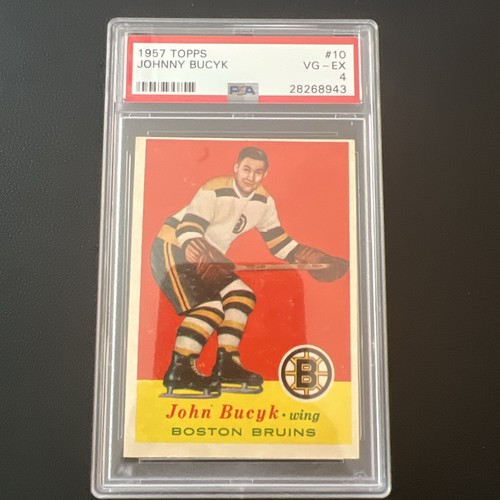 |
Johnny Bucyk #10 1957 Topps |
$316.50 | $53,782 | 169.9× |
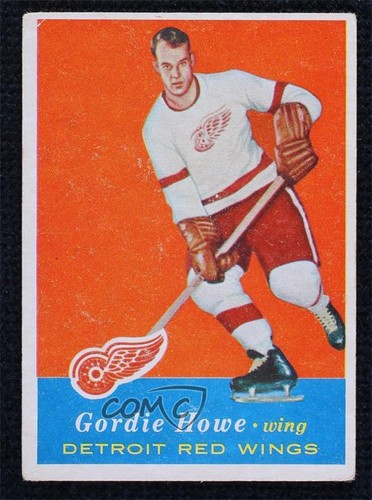 |
Gordie Howe #42 1957 Topps |
$276.04 | $41,987 | 152.1× |
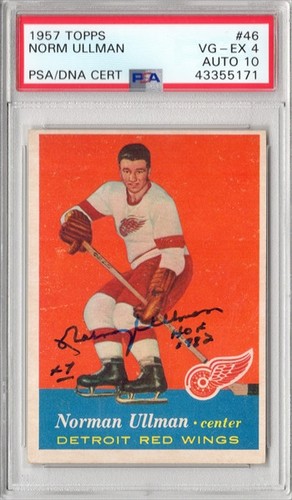 |
Norm Ullman #46 1957 Topps |
$127.12 | $26,577 | 209.1× |
 |
Pierre Pilote #22 1957 Topps |
$51.26 | $10,814 | 211× |
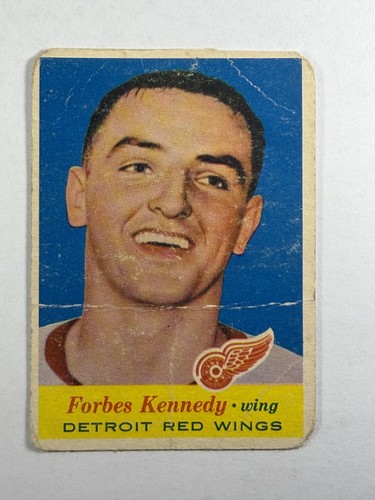 |
Forbes Kennedy #50 1957 Topps |
$38.77 | $8,068 | 208.1× |
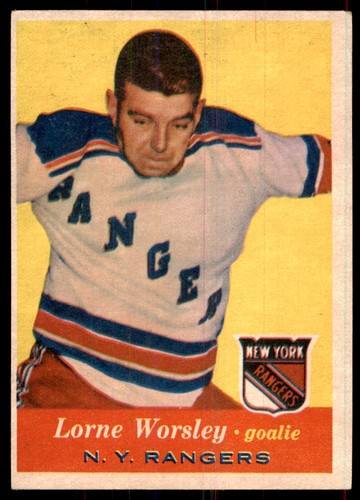 |
Gump Worsley #53 1957 Topps |
$37.55 | $6,381 | 169.9× |
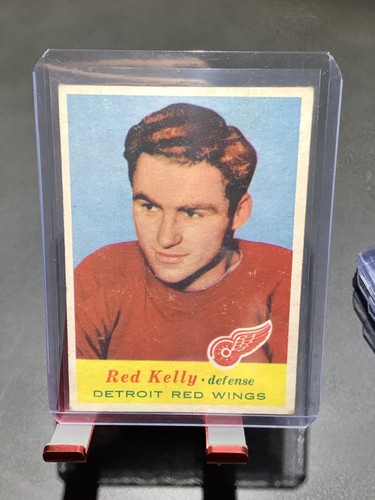 |
Red Kelly #48 1957 Topps |
$29.50 | $5,872 | 199× |
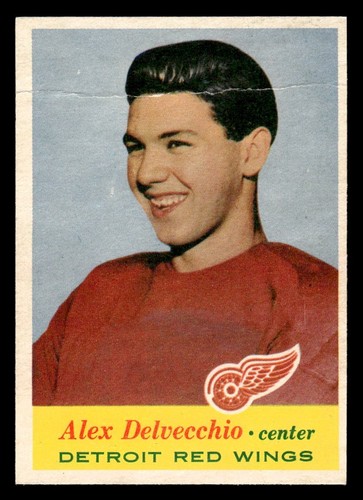 |
Alex Delvecchio #34 1957 Topps |
$27.59 | $5,492 | 199.1× |
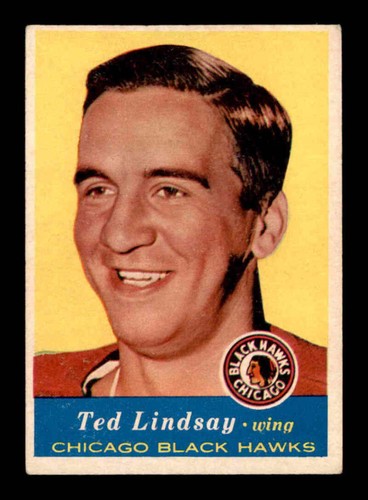 |
Ted Lindsay #21 1957 Topps |
$23.91 | $4,908 | 205.3× |
 |
Andy Bathgate #60 1957 Topps |
$21.07 | $4,399 | 208.8× |
 |
Don Simmons #14 1957 Topps |
$20.48 | $4,277 | 208.8× |
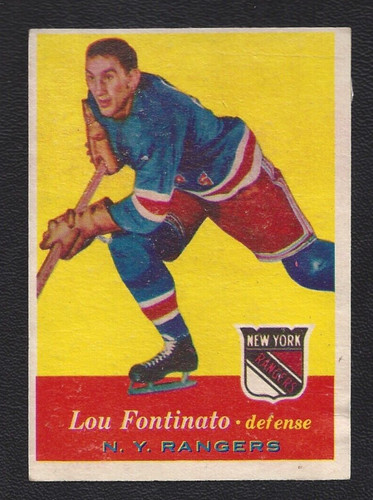 |
Lou Fontinato #64 1957 Topps |
$20.33 | $4,243 | 208.7× |
Look up any card's current raw and graded value in Midpoint — and get an estimated grade before you pay to submit.
Quick Comparison
| Card | PSA 9 Value | PSA 10 Value | PSA 10 Premium (x) | Notes |
|---|---|---|---|---|
| Mickey Mantle #95 | $45,000 | $650,000 | 14.4x | Centering critical; large premium for PSA 10 |
| Willie Mays #10 | $30,500 | $360,000 | 11.8x | Top rookie card; PSA 10 rarity |
| Hank Aaron #128 | $9,500 | $120,000 | 12.6x | Strong demand; centering important |
| Roberto Clemente #76 | $8,200 | $60,000 | 7.3x | Lower premium but still significant |
| 1957 Topps Common Cards | $50 - $200 | $500 - $1,200 | 5-7x | Less dramatic but consistent premium |
PSA 9 vs PSA 10 Price Difference 1957 Topps: Card-Specific Insights
The price gap between PSA 9 and PSA 10 grades for 1957 Topps cards can be substantial, especially for marquee players. For example, Mickey Mantle #95 commands roughly $45,000 in PSA 9 condition but may reach around $650,000 for PSA 10, reflecting a 14.4x premium as of 2026-11-01. Similarly, Willie Mays #10 shows an 11.8x jump from $30,500 to $360,000.
These premiums reflect the relative scarcity of PSA 10 examples. PSA population reports indicate only a limited number of PSA 10s exist for these star cards, making near-perfect centering and flawless surfaces important for attaining the top grade.
Hank Aaron #128 and Roberto Clemente #76 also exhibit strong premiums—12.6x and 7.3x respectively—though Clemente’s premium is relatively lower, possibly due to higher PSA 10 population availability.
For common 1957 Topps cards, the PSA 10 premium remains significant but less dramatic, typically between 5x to 7x. These cards generally have higher PSA 10 populations, so while the value gap is notable, it does not reach the multiples seen for star rookies.
How Centering and Print Quality Drive the 1957 Topps Grading Value Gap
Centering is a primary factor separating PSA 9 from PSA 10 in the 1957 Topps set. Midpoint’s centering measurement tool allows collectors to evaluate this dimension before submission, helping to avoid costly grading surprises.
- PSA 10 requires near-perfect centering: Off-center cards—even slightly—typically receive a PSA 9, which can significantly impact value.
- Print quality and registration: Minor misprints or print defects can downgrade a card from PSA 10 to PSA 9, affecting price.
- Corners, edges, and surface: Flaws here also contribute but may be less impactful than centering for the 1957 Topps set.
Because the 1957 Topps design is sensitive to centering, collectors may benefit from using tools like Midpoint to digitally pre-grade and measure centering before investing in grading fees. This can reduce the risk of missing out on a PSA 10 or overpaying for a PSA 9.
Learn more about how centering impacts card value in our detailed guide here.
Recent Verified Sales vs Historical Prices: Updated Market Realities
Recent auction and marketplace sales confirm that premiums for PSA 10 1957 Topps cards remain substantial. Verified transactions as of late 2026 show Mantle #95 PSA 10 copies selling near $650,000, while PSA 9 copies remain around $45,000.
This data underscores the rarity and collector demand for flawless examples and the financial gap between near-mint and gem-mint grades. For cards like Willie Mays #10 and Hank Aaron #128, auction records align closely with these figures, supporting the premium multiples for PSA 10.
Collectors should rely on up-to-date sales data, such as those aggregated by Midpoint, to assess current market value rather than outdated guides.
When Is a PSA 9 1957 Topps Card a Better Investment Than a PSA 10?
Given the steep PSA 10 premium, many collectors and investors consider whether a PSA 9 is a smarter buy. The answer depends on your goals:
- Budget-conscious collectors: PSA 9 cards offer strong condition and authenticity at a fraction of the PSA 10 price.
- Long-term investors: PSA 10 cards hold prestige and potential appreciation but require significant capital.
- Market liquidity: PSA 9 cards may sell faster due to affordability, making them attractive for collectors who may resell.
- Condition sensitivity: If centering or surface flaws prevent a PSA 10 grade, a PSA 9 may be the optimum grade to target.
For example, buying a PSA 9 Mickey Mantle #95 at $45,000 offers excellent condition and display value while avoiding the $650,000 PSA 10 premium. Similarly, PSA 9 Willie Mays #10 or Hank Aaron #128 cards represent strong value plays.
However, for the most discerning collectors and investors, securing a PSA 10 remains the ultimate goal whenever possible.
Which Should You Choose? PSA 9 or PSA 10 for 1957 Topps Cards?
Your choice depends on your collecting priorities and budget:
- Choose PSA 10 if: You seek top-tier prestige, the highest potential long-term value, and can afford the premium. This applies especially for rare rookie cards and star player copies with perfect centering and surfaces.
- Choose PSA 9 if: You want excellent condition at a much lower cost, desire better liquidity, or your card’s centering or surface flaws make PSA 10 unlikely. PSA 9 offers strong value and display appeal.
- Use Midpoint’s AI grading tools: Before submitting any card for grading, leverage Midpoint to estimate your card’s PSA grade based on centering, corners, edges, and surface. This helps set realistic expectations and avoid surprises.
For collectors hunting 1957 Topps cards across different sports and franchises, combining Midpoint’s portfolio tracking with precise grading estimates can support smart acquisition and preservation strategies.
Explore Midpoint for free on iOS and Android to digitally measure your card’s centering and estimate PSA, BGS, CGC, and TAG grades before submission at Midpoint.

FAQ
How much is a 1957 Topps PSA 9 worth?
Values vary by card but generally range from around $8,000 for lesser-known star cards like Roberto Clemente #76 to about $45,000 for marquee cards like Mickey Mantle #95 as of 2026-11-01.
How much is a 1957 Topps PSA 10 worth?
PSA 10 values increase significantly, with top cards like Mantle #95 estimated near $650,000 and Willie Mays #10 around $360,000, reflecting scarcity and collector demand.
Why is a 1957 Topps PSA 10 worth so much more than a PSA 9?
The PSA 10 grade requires near-perfect centering, surface, corners, and edges. Minor flaws typically downgrade a card to PSA 9, leading to steep price differences due to the rarity and prestige of flawless examples.
Which 1957 Topps cards have the biggest PSA 9 to PSA 10 price premium?
Key rookie and star cards such as Mickey Mantle #95, Willie Mays #10, and Hank Aaron #128 show premiums over 11x, with Mantle topping at about 14.4x as of 2026-11-01.
Is a PSA 9 1957 Topps card a better investment than a PSA 10?
For collectors with budget constraints or cards unlikely to grade PSA 10 due to centering, PSA 9 cards offer strong value and potentially better liquidity. However, PSA 10 remains the gold standard for rarity and long-term appreciation.
How rare is a PSA 10 1957 Topps Mickey Mantle card?
PSA population reports list fewer than 10 known PSA 10 copies of the 1957 Topps Mickey Mantle #95, making it one of the rarest and most valuable cards in the set.
Free to start
Try the Midpoint app
Grade any card from a photo, see its raw and PSA 10 value, and track what your collection is worth — free.
Get it on iPhoneGet it on Android