1963 Topps Baseball Cards Value: Complete Collector’s Guide
Discover the 1963 Topps baseball cards value, key rookies, grading tips, and price guide to maximize your collection’s worth today.

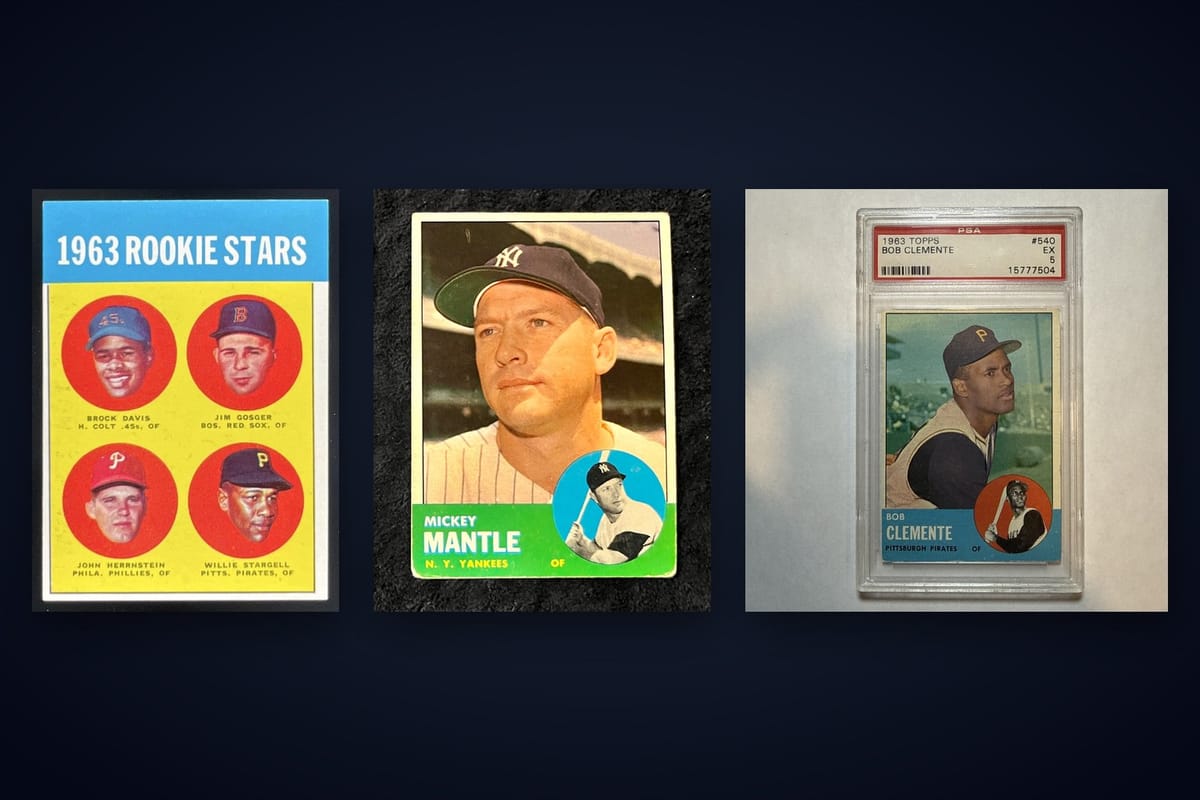
Estimated reading time: 15 min
Key Takeaways
- 1963 Topps set features 576 cards with notable rookie stars and valuable veterans, spread across seven series and several key subsets including League Leaders and World Series Highlights.
- Scarcity and condition heavily influence 1963 Topps baseball cards value, especially high-numbered and seventh-series cards which are generally rarer than earlier series.
- Rookie cards such as Pete Rose #537 and Willie Stargell #553 often command premium prices, particularly in PSA 10 condition, with multi-player rookie cards offering unique collectible appeal.
- Professional grading estimates and centering precision are important factors in assessing 1963 Topps cards worth grading; accurate pre-grading can help collectors make informed decisions and potentially save costs.
- Using tools like Midpoint can assist collectors in pre-grading cards with AI-driven precision, tracking portfolio value efficiently, and staying updated with market pricing and population data.
Card values — live data from Midpoint's card database, as of 2026-09-04. Prices move; Midpoint refreshes these daily.
| Card | Raw | PSA 10 | Gem premium | |
|---|---|---|---|---|
 |
Brock Davis / Jim Gosger / John Herrnstein / Willie Stargell #553 1963 Topps |
$165.50 | $63,000 | 380.7× |
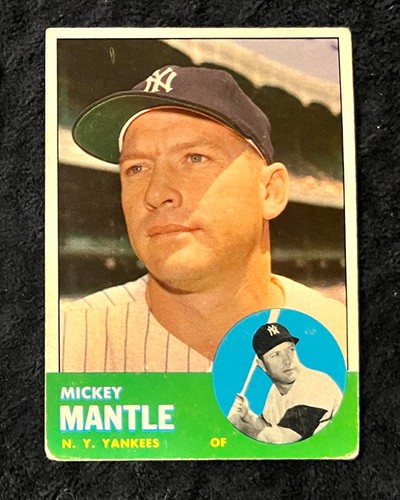 |
Mickey Mantle #200 1963 Topps |
$269.70 | $62,569 | 232× |
 |
Bob Clemente #540 1963 Topps |
$164.73 | $30,009 | 182.2× |
 |
Max Alvis / Bob Bailey / Ed Kranepool / Pedro Oliva #228 1963 Topps |
$55.25 | $24,480 | 443.1× |
 |
Willie Mays #300 1963 Topps |
$108.44 | $19,463 | 179.5× |
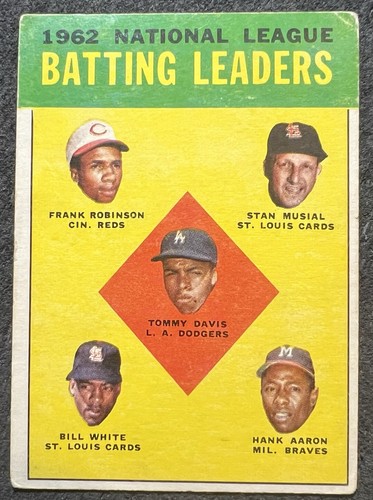 |
1962 National League Batting Leaders #1 1963 Topps |
$10.92 | $15,840 | 1450.6× |
 |
Lou Brock #472 1963 Topps |
$75.84 | $11,833 | 156× |
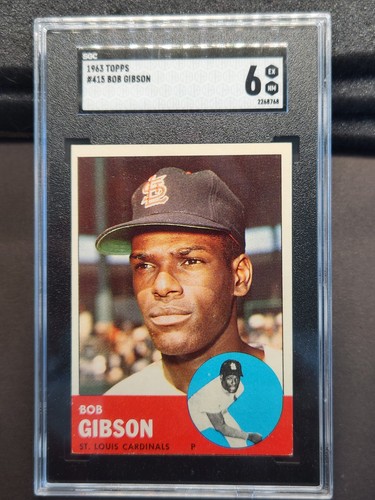 |
Bob Gibson #415 1963 Topps |
$57.50 | $11,160 | 194.1× |
 |
Hank Aaron / Ernie Banks #242 1963 Topps |
$39.42 | $10,980 | 278.5× |
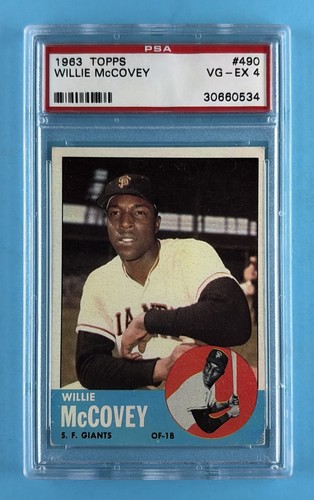 |
Willie McCovey #490 1963 Topps |
$49.34 | $10,614 | 215.1× |
 |
Sandy Koufax #210 1963 Topps |
$67.00 | $10,306 | 153.8× |
 |
Minnie Minoso #190 1963 Topps |
$7.63 | $9,528 | 1248.8× |
Look up any card's current raw and graded value in Midpoint — and get an estimated grade before you pay to submit.
Table of Contents
- Section 1: Overview of the 1963 Topps Baseball Card Set
- Section 2: Scarcity and Pricing Dynamics in 1963 Topps Series
- Section 3: Key Rookie Cards and Rookie Stars Value Analysis
- Section 4: Most Valuable Veteran Cards and Their Market Prices
- Section 5: Detailed 1963 Topps Price Guide by Condition and Grading
- Section 6: Grading Considerations and How to Identify Cards Worth Submitting
- Conclusion
- FAQ
Section 1: Overview of the 1963 Topps Baseball Card Set
Set Composition and Card Numbering
The 1963 Topps baseball card set is a cornerstone for collectors, comprising a total of 576 cards. This collection is organized into seven series, each with distinct numbering ranges and thematic focus. The first six series, encompassing card numbers #1 through #446, form the bulk of the base set featuring everyday stars and veterans. The seventh series, cards #447 through #576, is generally considered scarcer and often commands higher prices.
In addition to the base cards, the set includes notable subsets such as the League Leaders (cards #541-#553) and World Series Highlights (#554-#576). These subsets spotlight statistical leaders and historic moments from the 1962 season, adding depth and collectible interest beyond standard player cards.
Each card features a player photo on the front, with biographical and statistical information on the back, a design standard that Topps had established by this era. The variety of players, from rookies to established veterans, ensures broad appeal.
Standard Sizing and Physical Attributes
The cards adhere to the traditional Topps size format of approximately 2-5/8 inches wide by 3-3/4 inches tall. This consistency allows for easy integration into modern protective sleeves, top loaders, and binders, which is crucial for preservation and display.
Given the age of these cards—nearly six decades—condition plays a pivotal role in valuation. Key condition factors include:
- Centering: Well-centered cards where the image is equidistant from the borders are highly prized. Even a few percentage points off-center can reduce value.
- Corners: Sharp, crisp corners free of fraying or rounding dramatically enhance desirability.
- Edges: Clean edges without chipping or whitening are essential, especially for high-grade submissions.
- Surface: Cards free from creases, stains, print defects, or fading command higher prices.
For example, a sharply centered card with pristine surfaces and corners can multiply the card's market value several times compared to a similar card with worn edges or off-centering.
Importance of Series Breakdown
The series breakdown is fundamental to understanding scarcity and market value. The first six series (#1-446) were printed in larger quantities, resulting in higher availability and generally lower prices. However, within these series, certain star rookies and veterans still command premium values.
The seventh series (#447-576), printed later in the production cycle, is generally considered scarcer due to lower print runs and distribution issues. Cards in this series, especially those of prominent players, are often highly sought after and can be worth multiples of similar cards from earlier series.
Collectors often prioritize acquiring and grading seventh-series cards to capitalize on their scarcity-driven market strength. For example, the Willie Stargell rookie #553 is from the League Leaders subset within the seventh series and is known to be more difficult to find in high-grade condition.
Section 2: Scarcity and Pricing Dynamics in 1963 Topps Series
Lower Series vs. High Number Scarcity
The print runs and distribution of the first six series (cards #1-446) were substantial, making these cards relatively common in comparison. As a result, raw cards from these series in lower grades often trade for modest prices, typically under $50 for non-star cards.
In contrast, the seventh series (cards #447-576) is generally considered scarcer. These cards were produced later in the year and had more limited distribution, causing many to remain difficult to locate, especially in high-grade condition. This scarcity is one of the primary reasons seventh-series cards often command a premium in the marketplace.
For example, a raw card from the seventh series in near mint condition can sell for multiple times the value of a comparable card from earlier series. The scarcity of high-grade seventh series cards is also reflected in grading population reports, where PSA 9 and 10 grades are less common.
Price Impact of Series Scarcity
Scarcity directly affects pricing dynamics. To illustrate, consider a high-numbered rookie card like Pete Rose #537. While Rose cards from earlier years exist, the 1963 rookie is especially valuable because it is from a harder-to-find series portion. A raw near mint Pete Rose #537 might sell for around $200, but a PSA 10 example can command significantly higher prices, showing the value amplification from both scarcity and condition.
In addition, veteran cards from the seventh series, such as Willie Stargell’s rookie #553, often command premiums due to their rarity combined with the player's prominence.
Collectors and investors should note that scarcity combined with demand creates a potent value driver. Cards with lower print runs and high market interest frequently see prices appreciate over time.
Market Trends and Recent Sales
As of mid-2026, recent auction results demonstrate strong prices for scarce seventh series cards and high-grade rookies. For example, a PSA 10 Willie Stargell #553 has sold for several thousand dollars in recent auctions, reflecting both player popularity and card scarcity.
Meanwhile, common cards with large populations in high grades tend to see steadier, less volatile prices. This market behavior encourages collectors to prioritize scarce cards for grading and investment to maximize potential returns.
Moreover, the rise of digital tools and grading estimate platforms like Midpoint has increased transparency and efficiency in the market. Collectors can now track live pricing, population reports, and grading trends to make data-driven acquisition and grading decisions.
Section 3: Key Rookie Cards and Rookie Stars Value Analysis
Notable Rookie Cards in the Set
The 1963 Topps set includes several rookie cards that have become prized among collectors, both for the players’ career achievements and the cards’ scarcity. Key rookie cards include:
- Pete Rose #537: Considered the set’s marquee rookie, this card features Rose who went on to become MLB’s all-time hits leader. High-grade Rose rookie cards, particularly PSA 10 examples, are among the more valuable in the set, often selling for several thousand dollars.
- Willie Stargell #553: Stargell’s rookie card is from the scarce seventh series League Leaders subset, making it highly collectible. PSA 9 and 10 graded versions command strong premiums, often reaching several thousand dollars in top condition.
- Tony Oliva #228: Oliva’s rookie card is prized for the player’s multiple All-Star appearances and Hall of Fame credentials. Raw near mint copies can fetch several hundred dollars, with graded cards often exceeding $1,000.
Multi-Player Rookie Cards
Some cards in the 1963 Topps set feature multiple rookie players, adding unique appeal. For example, card #288 presents a group of promising rookies, offering a combined collectible value that can be attractive for those seeking a piece of baseball history with multiple potential stars.
The valuation of multi-player rookie cards depends on the individual stars featured and their career trajectories, but the combined historical significance can boost desirability. These cards also present interesting grading challenges, as condition must be strong across the entire card to maximize value.
Estimating Rookie Card Values
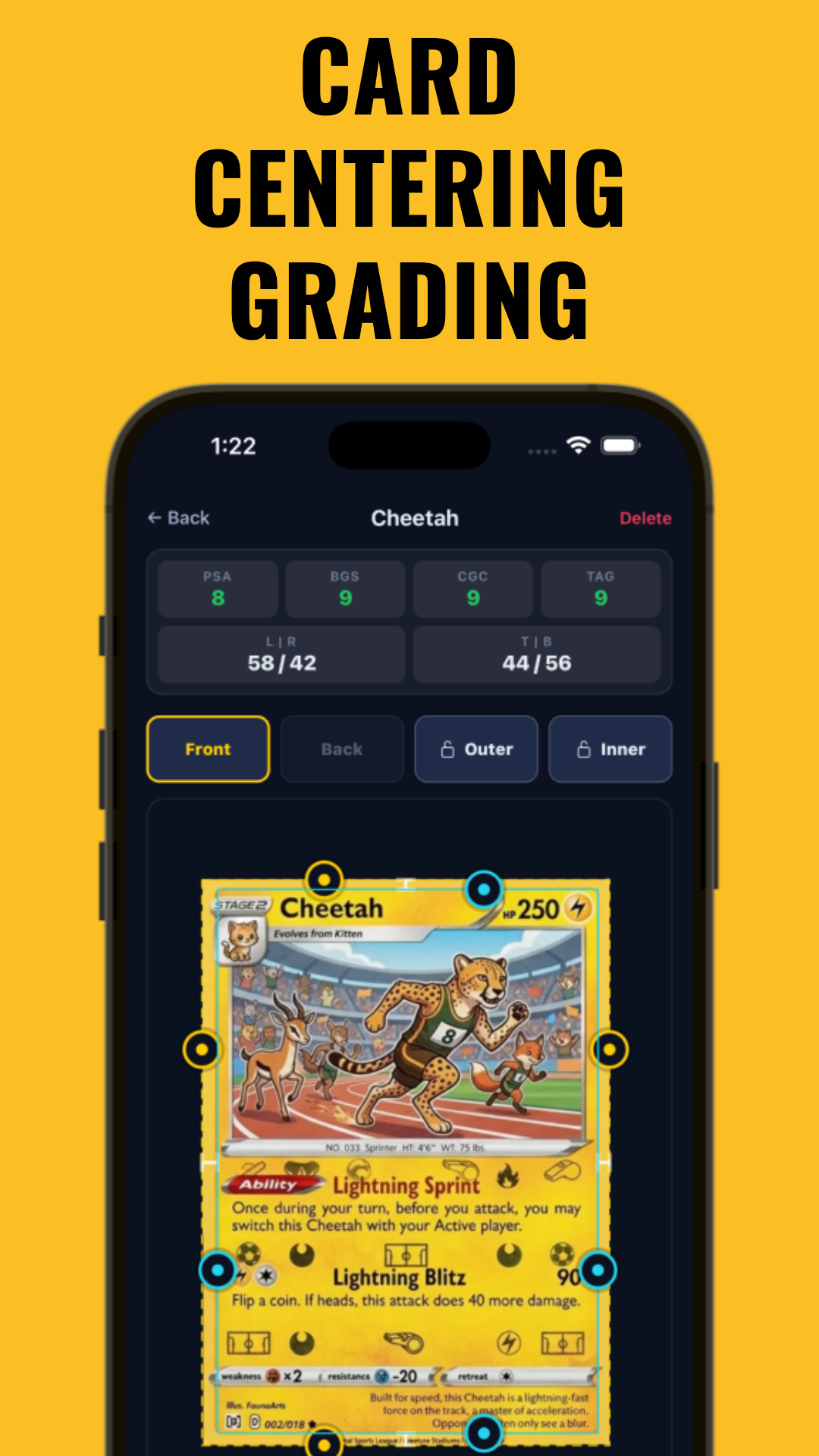
Accurately estimating rookie card values requires careful condition assessment. Here, Midpoint's AI-powered grading tools can provide significant advantages. By scanning a card and analyzing centering, corners, edges, and surface quality down to millimeter precision, Midpoint generates estimated grades aligned with top grading companies like PSA, BGS, CGC, and TAG.
This pre-grade insight helps collectors decide which rookie cards are worth submitting for grading, potentially saving fees by avoiding low-grade submissions. For example, a Pete Rose rookie card estimated at PSA 8 or higher could be a strong candidate for grading, while a card with off-centering or edge wear might not justify the cost.
Moreover, Midpoint integrates real-time price guides, enabling collectors to see current market values for various grade levels, further informing grading and investment decisions.
Section 4: Most Valuable Veteran Cards and Their Market Prices
Legendary Veterans in the 1963 Topps Set
The 1963 Topps set also features numerous legendary veterans whose cards remain highly coveted. Noteworthy examples include:
- Mickey Mantle #200: Mantle’s card is among the most valuable in the set. A PSA 10 graded card can fetch prices in the high thousands, reflecting Mantle’s enduring popularity and the card’s scarcity in top condition.
- Willie Mays #300: Mays’ card is another high-value veteran card, with PSA 10 examples often selling for several thousand dollars. Its desirability stems from Mays’ Hall of Fame legacy and the card’s visual appeal.
- Hank Aaron #390: Aaron’s card commands strong prices, often in the low to mid thousands for PSA 9 and 10 grades, reflecting his historic career milestones.
- Roberto Clemente #120, Sandy Koufax #100, Willie McCovey #430, and Yogi Berra #10: These Hall of Famers’ cards add significant collector interest and value to the set, with high-grade examples ranging from around $1,000 to several thousand dollars depending on scarcity and player popularity.
Veteran Card Price Range and Grading Impact
Veteran cards exhibit a wide range of prices influenced by condition and grading. For example, a raw Mickey Mantle #200 in very good (VG) condition may be valued in the hundreds to low thousands, but a PSA 9 graded card could command significantly higher prices, and a PSA 10 even more.
This steep price gradient underscores the importance of professional grading to unlock maximum value, especially for top-tier veterans. The scarcity of high-grade versions drives prices upward, with population reports showing relatively few PSA 10 Mantle #200 cards in existence.
Similarly, a Willie Mays #300 in raw near mint (NM) condition might sell for a few thousand dollars, while PSA 10 examples command a premium, often doubling or tripling that value.
Tracking Market Values
Staying abreast of current market values is essential for collectors and investors. Auction houses like Heritage Auctions and online platforms such as eBay provide valuable sales data, but the volume of transactions can be overwhelming.
Midpoint offers an integrated price guide updated regularly with live auction results and grading population reports. This enables collectors to benchmark their cards against recent sales, track price trends over time, and set informed buying or selling targets.
By combining grading estimates with up-to-date market data, Midpoint helps collectors minimize risk and optimize portfolio value through strategic acquisitions and timely sales.
Section 5: Detailed 1963 Topps Price Guide by Condition and Grading
Price Variations by Raw Condition
The value of 1963 Topps baseball cards varies dramatically based on raw condition, often spanning several multiples between grades. Common raw condition categories include:
- VG (Very Good): Cards exhibit moderate wear, including slight corner rounding, minor surface scratches, or mild off-centering. These are still collectible but command lower prices.
- EX (Excellent): Cards show minimal wear, sharper corners, better centering, and clean surfaces free of major defects.
- NM (Near Mint): Cards feature sharp corners, excellent centering (usually within 60/40 to 65/35), and virtually flawless surfaces.
- MT (Mint) and NM-MT (Near Mint-Mint): Cards are extremely well preserved with exceptional centering (usually 70/30 or better) and pristine edges and surfaces.
For example, a Pete Rose #537 in VG condition may be valued at roughly $40, while the same card in NM condition can command close to $200. This increase demonstrates the critical impact of condition on pricing.
Grading Scale and Price Multipliers
Professional grading companies such as PSA, BGS, CGC, and TAG assign grades on a 1 to 10 scale, considering centering, corners, edges, and surface quality. Grading creates market confidence and liquidity, often resulting in significant price premiums over raw cards.
Price multipliers can vary, but a general pattern is that each incremental grade increase can substantially increase the card’s value as it approaches the top end of the scale. For instance:
- Pete Rose #537 raw NM: ~$200
- PSA 8: ~$1,000
- PSA 9: ~$2,500
- PSA 10: $3,500+
Similar patterns hold for other key cards, e.g., Mickey Mantle #200:
- Raw VG: $800
- PSA 8: $5,000+
- PSA 9: $10,000+
- PSA 10: $15,000+
These examples highlight the substantial financial incentive for collectors to pursue high-grade cards.
Gem-Mint Premium and Population Reports
The premium for gem-mint (PSA 10 or BGS 9.5+) cards is typically the largest among all grades. Due to the scarcity of such high-grade 1963 Topps cards, population reports show limited numbers exist, especially for seventh-series and key rookie cards.
For example, only a limited number of PSA 10 Pete Rose #537 cards are known to exist, driving prices upward. Population reports also help collectors gauge the risk and reward of grading submissions, as cards with a low population at high grades often justify the expense and wait times involved with professional grading.
Midpoint integrates these population data points, allowing collectors to anticipate potential grading outcomes and market premiums, enabling smarter investment decisions.
Section 6: Grading Considerations and How to Identify Cards Worth Submitting
What Makes 1963 Topps Cards Worth Grading?
While professional grading can add significant value, it also involves costs and risks. Not all 1963 Topps cards are good candidates for grading. Cards worth submitting typically have the following characteristics:
- Strong Centering: Cards with centering close to 60/40 or better are more likely to receive high grades.
- Sharp Corners: Minimal rounding or fraying on corners enhances grade potential.
- Clean Edges and Surfaces: Cards free from creases, stains, print defects, or surface scratches.
- Scarcity and Demand: Cards that are scarce (e.g., seventh series) or highly sought after (rookies, star veterans) to justify grading costs.
- Raw Condition Value: Cards with raw market values typically above $200 are more likely to recoup grading fees and generate profit post-grading.
Conversely, cards with off-centering exceeding 70/30, creases, or heavy wear rarely benefit from grading and often sell for more raw.
Using Midpoint for Pre-Grading Assessment
Midpoint’s AI-powered grading tool offers a practical solution for pre-submission evaluation. Key features include:
- Precise measurement of centering at the millimeter level, enabling collectors to identify cards with premium centering before submission.
- Detailed analysis of edges, corners, and surface condition through high-resolution imaging and AI algorithms.
- Instant grading estimates aligned with PSA, BGS, CGC, and TAG standards, allowing comparison across grading companies.
- Integration with real-time pricing guides and population reports for informed decision-making.
This technology helps collectors avoid costly grading fees on low-potential cards, focusing resources on those with the best chance of achieving high grades and maximizing value.
Authentication, Selling, and Portfolio Tracking
Once cards are professionally graded and authenticated, they become more liquid assets, facilitating confident sales or trades. Collectors can also leverage grading to insure their collections accurately.
Midpoint supports portfolio tracking by enabling collectors to catalog graded and raw cards, monitor market values, and receive alerts on price changes. This ongoing management is vital for both casual hobbyists and serious investors seeking to optimize their baseball card holdings.
For optimal preservation, collectors should follow best practices for storage, including using acid-free sleeves, top loaders, and temperature-controlled environments. For comprehensive advice, see the ultimate guide on storing valuable cards.
Conclusion
The 1963 Topps baseball cards value is shaped by a complex interplay of scarcity, player significance, condition, and professional grading quality. Key rookie cards like Pete Rose #537 and iconic veterans such as Mickey Mantle #200 are among the most sought after, especially in PSA 10 condition, where prices can reach several thousands of dollars.
Understanding the set’s series breakdown, with its distinct scarcity layers, is essential for prioritizing grading and investment efforts. Leveraging advanced tools like Midpoint empowers collectors with AI-driven grading estimates and up-to-date price guides, enabling smarter, data-backed decisions on which cards to grade and invest in.
Staying current with market trends, grading population data, and best storage practices helps collectors maximize their collection’s value and enjoyment over time.
FAQ
Q: What are 1963 Topps baseball cards worth?
A: Values vary widely based on card number, condition, and grading. High-demand rookies and veterans can range from around $40 raw in lower grades to several thousand dollars in PSA 10 condition as of 2026. Scarce seventh-series cards typically command higher prices.
Q: What is the most valuable 1963 Topps baseball card?
A: Mickey Mantle #200 is generally considered the highest value card, with PSA 10 graded examples often exceeding $15,000 due to its scarcity and Mantle’s legendary status.
Q: How much is a 1963 Topps Pete Rose rookie card worth?
A: In raw near mint condition, it can be around $200, while a PSA 10 graded Pete Rose #537 is valued at several thousand dollars depending on market conditions.
Q: How much is a 1963 Topps Mickey Mantle #200 worth?
A: Prices range from several hundred dollars raw in good condition to over $15,000 for PSA 10 graded cards, reflecting condition and scarcity.
Q: How much is a complete 1963 Topps baseball card set worth?
A: A complete set’s value depends heavily on condition and completeness, particularly inclusion of scarce seventh-series cards. Near mint complete sets can be valued in the tens of thousands of dollars.
Q: Which 1963 Topps cards are worth money?
A: Key rookies like Pete Rose #537, Willie Stargell #553, and veterans such as Mickey Mantle #200 and Willie Mays #300 are among the most valuable. Scarce seventh-series cards generally yield higher returns.
Free to start
Try the Midpoint app
Grade any card from a photo, see its raw and PSA 10 value, and track what your collection is worth — free.
Get it on iPhoneGet it on Android