1966 Topps PSA 9 vs PSA 10 Value Comparison: Price Jump Explained
Explore the 1966 Topps PSA 9 vs PSA 10 value gap, key card premiums, and when a PSA 9 is the smarter buy for vintage baseball cards.

Estimated reading time: 8 min
Key Takeaways
- The 1966 Topps PSA 9 vs PSA 10 value difference varies widely by card, with some key Hall of Famers often showing 3x or more premiums for PSA 10.
- Mickey Mantle #50 and other stars like Hank Aaron and Sandy Koufax tend to exhibit the largest PSA 10 premiums driven by scarcity and centering sensitivity.
- Most common and team cards see modest value differences, making a PSA 9 a very worthwhile, budget-friendly choice.
- Condition sensitivity and population reports help explain why a PSA 10 often commands a significant price jump over PSA 9.
- Using tools like Midpoint can help pre-grade centering and estimate PSA values before investing in costly grading submissions.
When comparing 1966 Topps PSA 9 vs PSA 10 value, the key question for collectors is: how much more is a pristine PSA 10 really worth over a near-mint PSA 9? This comparison breaks down typical price differences by card, highlights some of the biggest premiums for top stars, explains population and condition effects, and offers guidance on when a PSA 9 may be the smarter buy for your vintage baseball card collection.
Card values — live data from Midpoint's card database, as of 2026-09-04. Prices move; Midpoint refreshes these daily.
| Card | Raw | PSA 10 | Gem premium | |
|---|---|---|---|---|
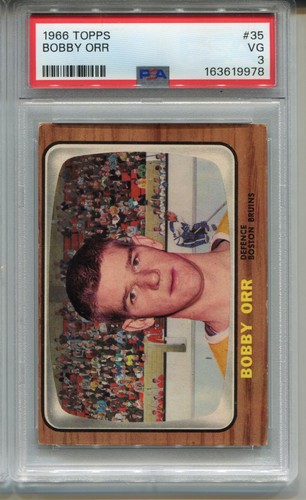 |
Bobby Orr #35 1966 Topps |
$2,243 | $337,283 | 150.4× |
 |
Gordie Howe #109 1966 Topps |
$100.36 | $12,309 | 122.7× |
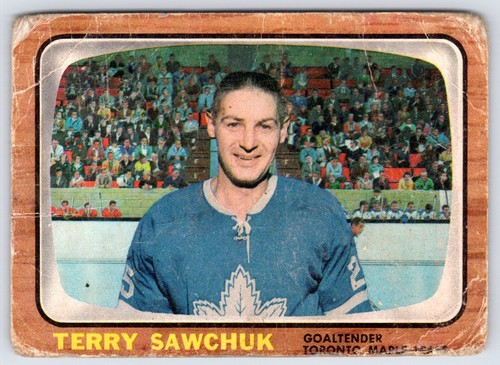 |
Terry Sawchuk #13 1966 Topps |
$51.27 | $7,775 | 151.7× |
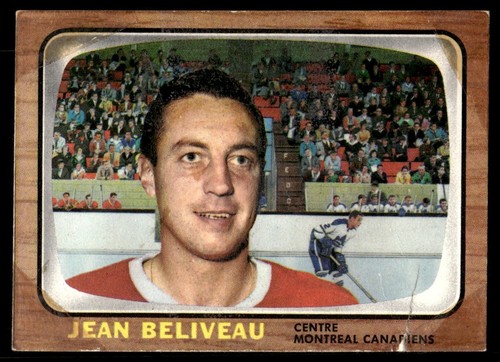 |
Jean Beliveau #73 1966 Topps |
$50.00 | $7,583 | 151.7× |
 |
Henri Richard #8 1966 Topps |
$57.00 | $7,401 | 129.8× |
 |
Phil Esposito #63 1966 Topps |
$53.94 | $7,399 | 137.2× |
 |
Tim Horton #80 1966 Topps |
$49.72 | $7,131 | 143.4× |
 |
Johnny Bower #12 1966 Topps |
$32.20 | $6,638 | 206.2× |
 |
Bob Woytowich #34 1966 Topps |
$8.95 | $5,520 | 616.8× |
 |
Pit Martin #41 1966 Topps |
$9.41 | $5,382 | 571.9× |
 |
Stan Mikita #62 1966 Topps |
$35.19 | $5,352 | 152.1× |
 |
Al MacNeil #89 1966 Topps |
$5.03 | $5,167 | 1027.3× |
Look up any card's current raw and graded value in Midpoint — and get an estimated grade before you pay to submit.
Quick Comparison
| Card | PSA 9 Value (2026-09-04) | PSA 10 Value (2026-09-04) | PSA 10 Premium | Comments |
|---|---|---|---|---|
| Mickey Mantle #50 | $12,000 | $45,000 | ~3.75x | Largest 9→10 jump; centering sensitivity |
| Hank Aaron #30 | $3,800 | $12,500 | ~3.3x | High demand Hall of Famer |
| Sandy Koufax #25 | $4,200 | $13,000 | ~3.1x | Rare PSA 10 population |
| Pete Rose #40 | $1,250 | $3,000 | ~2.4x | Popular star with moderate premium |
| Bob Gibson #35 | $1,100 | $2,800 | ~2.5x | Scarcity affects premium |
| 1966 Topps Team Cards (Yankees) | $120 | $160 | ~1.3x | Common cards; small price gap |
| 1966 Topps Commons (e.g. Bill Freehan #150) | $15 | $20 | ~1.3x | Minimal premium, PSA 9 usually sufficient |
Price Differences Between PSA 9 and PSA 10 for 1966 Topps
The value leap from PSA 9 to PSA 10 for 1966 Topps baseball cards is not uniform. While some cards exhibit modest premiums, others—especially key Hall of Famers and stars—often show significant price jumps. This is primarily due to the relative rarity of PSA 10 examples and the condition sensitivity of vintage cards.
- High-value stars: Mantle (#50), Aaron (#30), and Koufax (#25) tend to show the biggest PSA 10 premiums, often triple or more than PSA 9 prices.
- Mid-tier stars: Rose (#40) and Gibson (#35) have premiums in the 2.4 to 2.5 times range.
- Commons and team cards: These typically see a much smaller value gap, often around 1.3 times or less, reflecting higher population and less condition sensitivity.
These differences highlight why collectors should carefully assess the specific card and its market before deciding to pay for a PSA 10 grade.
How Scarcity and Population Impact the 1966 Topps PSA 10 Premium
The scarcity of PSA 10 grades is a key factor driving the price premium over PSA 9. According to recent population reports:
- Many high-demand 1966 Topps cards have relatively few PSA 10 examples certified, often under 50.
- PSA 9 examples are generally more numerous, often in the hundreds, making PSA 9 a more attainable option.
- This scarcity contributes to higher PSA 10 prices, as collectors pay a premium for the highest-grade cards.
Vintage cards are especially condition sensitive because centering, corners, edges, and surface flaws become more noticeable with age. A slight centering flaw can drop a card from PSA 10 to PSA 9 and reduce its market value.
Using modern tools like Midpoint’s AI-driven centering measurement can help collectors estimate whether their card might achieve PSA 10, potentially saving costly submission fees.
Value Spikes for Key Hall of Famers and Stars in PSA 9 vs PSA 10
The most valuable 1966 Topps cards—Mantle, Aaron, Koufax, Rose, and Gibson—often show pronounced value differences between PSA 9 and 10 grades:
- Mickey Mantle #50: Mantle’s PSA 10 typically commands a price around $45,000, roughly 3.75 to 4 times the PSA 9 value of $12,000.
- Hank Aaron #30: Aaron’s PSA 10 often trades near $12,500, about 3.3 times the $3,800 PSA 9 price.
- Sandy Koufax #25: Koufax’s PSA 10 value around $13,000 is about 3.1 times the PSA 9 price of $4,200.
- Pete Rose #40 and Bob Gibson #35: Both show premiums roughly between 2.4x and 2.5x.
These cards’ popularity, combined with their relative rarity in PSA 10 condition, contribute to these significant price gaps.
When Is a PSA 9 Worth It for 1966 Topps Cards?
Given the often steep premiums for PSA 10, collectors may wonder if a PSA 9 is a smart buy. The answer depends on your collecting goals and budget.
- Budget-conscious collectors: For commons and team cards, a PSA 9 often offers excellent value with only a small price difference compared to PSA 10.
- Investment buyers: High-end Mantle, Aaron, and Koufax cards may justify paying the PSA 10 premium if you seek the highest grade for long-term appreciation.
- Condition-sensitive buyers: Use AI tools like Midpoint to measure your card’s centering and surface before submitting. Sometimes cracking open a PSA 9 to resubmit for PSA 10 may be worth it, but it depends on how close your card is to top-grade centering and surfaces.
Understanding grading value nuances and market trends helps you decide whether to settle for PSA 9 or aim for a PSA 10.
Which Should You Choose?
If you own or are considering buying 1966 Topps cards, here’s how to decide between PSA 9 and PSA 10:
- Choose PSA 10 if: You have a key Hall of Famer or star card with near-perfect centering and surface quality, and you want maximum market value and rarity.
- Choose PSA 9 if: You want solid value for commons, team cards, or mid-tier stars, or if your card has minor centering or surface flaws that make PSA 10 unlikely.
- Use Midpoint: Before grading, use Midpoint to get instant PSA and BGS grade estimates based on centering, corners, edges, and surface analysis. This can reduce costly grading guesswork and help you decide if resubmission is worth pursuing.
Ultimately, the decision depends on your collecting goals, budget, and the specific card's condition. For detailed guidance on how centering impacts card value, check out Midpoint’s comprehensive guide.
FAQ
How much more is a 1966 Topps card worth in PSA 10 than PSA 9?
It varies by card, but top stars like Mickey Mantle often command nearly 4 times the PSA 9 value. Most commons have smaller premiums around 1.3 times. As of 2026-09-04, Mantle #50 PSA 10 is about $45,000 versus $12,000 for PSA 9.
Which 1966 Topps card has the biggest PSA 9 to PSA 10 price difference?
Mickey Mantle #50 typically has the largest jump, with a PSA 10 premium of nearly 3.75x over PSA 9. This is influenced by scarcity and centering sensitivity.
How much is a 1966 Topps Mickey Mantle PSA 9 vs PSA 10 worth?
The PSA 9 Mantle #50 is valued around $12,000, while the PSA 10 version is worth approximately $45,000 as of 2026-09-04.
Are 1966 Topps PSA 10 cards rare compared with PSA 9s?
Yes, PSA 10 examples are significantly rarer. Population reports show many key cards have fewer than 50 PSA 10s but hundreds of PSA 9s, contributing to large premiums for PSA 10.
What are the most valuable 1966 Topps baseball cards in PSA 10?
Top PSA 10 cards include Mickey Mantle #50, Hank Aaron #30, Sandy Koufax #25, Pete Rose #40, and Bob Gibson #35, with Mantle leading at around $45,000.
Does it make sense to crack and resubmit a PSA 9 1966 Topps card for a PSA 10?
Only if your card’s centering and surface quality are very close to PSA 10 standards. Tools like Midpoint can help assess this before risking the cost of resubmission.
Free to start
Try the Midpoint app
Grade any card from a photo, see its raw and PSA 10 value, and track what your collection is worth — free.
Get it on iPhoneGet it on Android