1970 Topps Basketball Cards Value: Complete Price Guide & Grading Tips
Explore the 1970 Topps basketball cards value, top cards, grading insights, and PSA 10 pricing to maximize your collection’s worth.

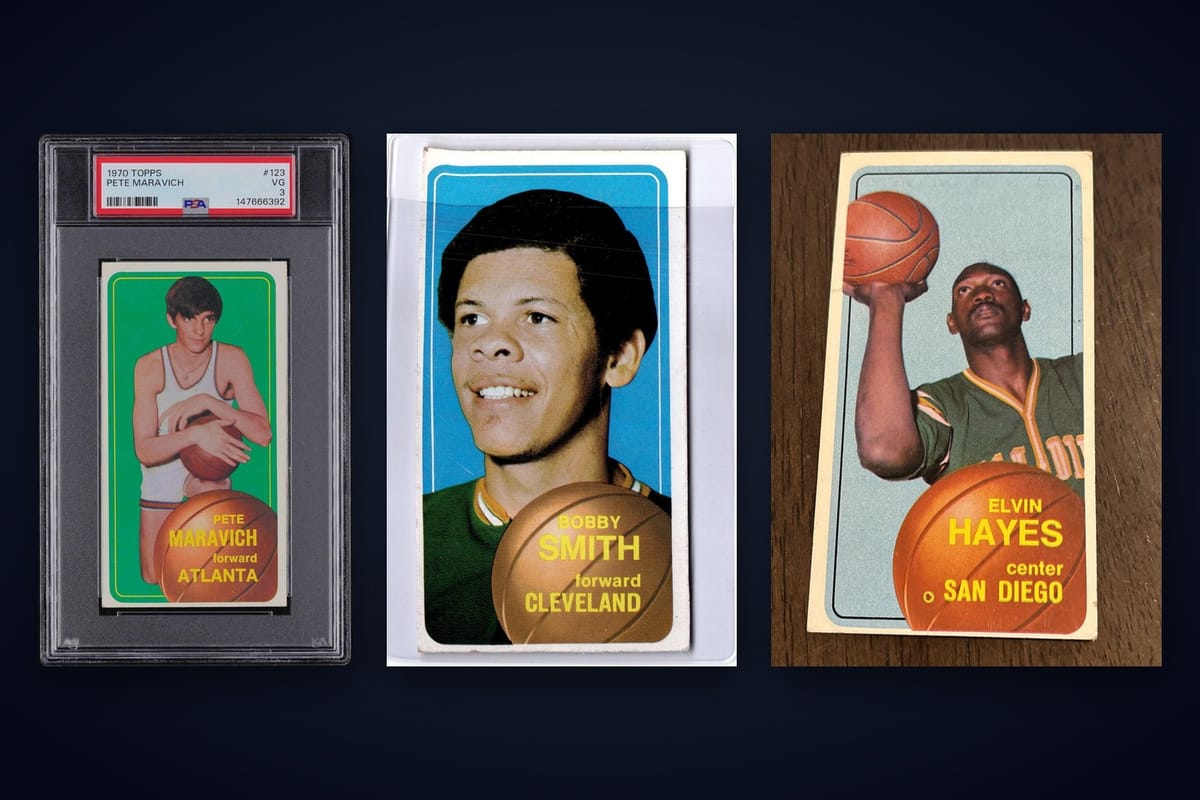
Estimated reading time: 15 min
Key Takeaways
- 1970 Topps basketball cards feature an oversized 175-card set with key rookies like Pete Maravich and Lew Alcindor, representing an important era in basketball history.
- Card condition and centering significantly impact 1970 Topps basketball cards value, especially in PSA 8-10 grades where even minor imperfections can affect prices.
- Pete Maravich #123 and Lew Alcindor #75 are among the most valuable cards, often commanding premiums in high grades due to scarcity and historical significance.
- Using AI grading tools like Midpoint can help estimate PSA/BGS grades and identify cards worth submitting for professional grading, potentially saving collectors time and money.
- Complete sets and high-number series cards (#111-175) often carry premium pricing, reflecting scarcity, collector demand, and the presence of numerous rookies and league leaders.
Card values — live data from Midpoint's card database, as of 2026-11-01. Prices move; Midpoint refreshes these daily.
| Card | Raw | PSA 10 | Gem premium | |
|---|---|---|---|---|
 |
Pete Maravich #123 1970 Topps |
$227.88 | $26,892 | 118× |
 |
Bobby Smith #74 1970 Topps |
$5.99 | $8,150 | 1360.6× |
 |
Elvin Hayes #70 1970 Topps |
$6.89 | $7,816 | 1134.5× |
 |
Willis Reed #150 1970 Topps |
$14.37 | $7,500 | 521.9× |
 |
Wilt Chamberlain #50 1970 Topps |
$53.00 | $6,478 | 122.2× |
 |
Walt Frazier All Star #106 1970 Topps |
$6.27 | $4,358 | 695.1× |
 |
Fred Foster #53 1970 Topps |
$1.91 | $3,720 | 1947.6× |
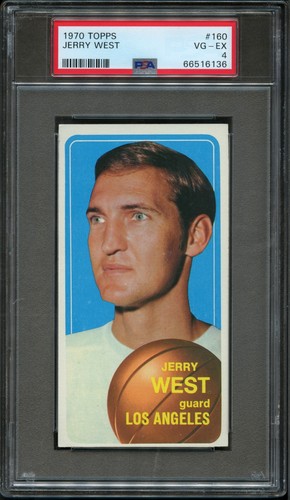 |
Jerry West #160 1970 Topps |
$29.87 | $3,695 | 123.7× |
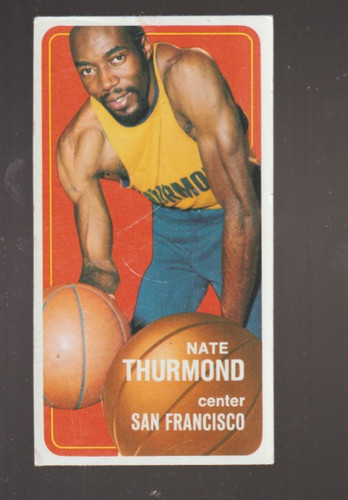 |
Nate Thurmond #90 1970 Topps |
$4.00 | $3,366 | 841.5× |
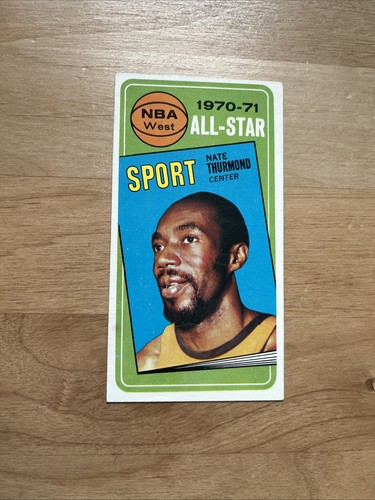 |
Nate Thurmond All Star #111 1970 Topps |
$2.56 | $3,172 | 1239.1× |
 |
Oscar Robertson #100 1970 Topps |
$24.24 | $3,159 | 130.3× |
 |
Calvin Murphy #137 1970 Topps |
$22.00 | $3,122 | 141.9× |
Look up any card's current raw and graded value in Midpoint — and get an estimated grade before you pay to submit.
Table of Contents
- Section 1: Overview of the 1970-71 Topps Basketball Set
- Section 2: Most Valuable 1970 Topps Basketball Cards
- Section 3: Understanding 1970 Topps Cards Worth Grading
- Section 4: 1970 Topps Price Guide by Condition and Grade
- Section 5: How Centering and Condition Affect Card Value
- Section 6: Tips for Selling and Pricing 1970 Topps Basketball Cards
Conclusion
FAQ
Section 1: Overview of the 1970-71 Topps Basketball Set
Set Composition and Format
The 1970-71 Topps basketball set is known for its distinctive oversized card format, measuring approximately 2½ x 4 11/16 inches, which is larger than the standard 2½ x 3½ inch trading card size common in the era. This larger format offers a unique visual appeal but also presents challenges in terms of card preservation due to increased susceptibility to edge wear and surface damage.
The set consists of 175 cards, making it one of the more extensive basketball card releases of its time. It captures a significant moment in basketball history, coinciding with a period just before the NBA-ABA merger. The checklist includes star players, rookies, and league leaders, reflecting the talent and storylines that shaped the sport during the early 1970s.
Collectors value this set not only for the players it features but also for its colorful design, which utilizes vibrant action photography and bold typography. The clear white borders lend a classic aesthetic, but these borders also reveal centering imperfections more readily, emphasizing the importance of precise manufacturing and careful grading.
Key Features and Checklist
The set highlights several legendary players who are now Hall of Famers, such as Pete Maravich (#123), Lew Alcindor (#75), Wilt Chamberlain (#50), and Oscar Robertson (#100). The inclusion of Lew Alcindor, who would later change his name to Kareem Abdul-Jabbar, adds historical significance given his dominance in the sport. Pete Maravich’s rookie card is particularly sought after due to his status as one of basketball’s most electrifying and innovative players.
The high-number series cards (#111-175) are noteworthy because they feature many rookies and league leaders, making this subset especially collectible. These cards tend to be scarcer in high-grade condition, which can increase their market value. The oversized format of the cards makes them more vulnerable to damage, especially along edges and corners, which means collectors must pay keen attention to condition when acquiring these cards.
Another notable feature is the checklist itself, which is comprehensive and includes emerging stars and veterans alike. The set’s variety makes it appealing to both rookie card collectors and those seeking cards of established basketball legends.
Set Popularity Among Collectors
The 1970 Topps basketball cards maintain a solid collector following due to their combination of historical relevance, player star power, and visual appeal. While basketball card collecting does not historically rival baseball in volume or market size, this particular set stands out because it captures an important era in professional basketball.
Collector demand is especially strong for cards in near-mint or better condition, which are comparatively rare given the large card size and manufacturing standards of the era. Complete sets in near-mint condition often command premiums in the marketplace, sometimes selling for several thousand dollars depending on the presence and grades of key cards.
Additionally, the popularity of star players like Maravich and Alcindor fuels ongoing interest, as these cards serve as cornerstone assets in many basketball card collections. The set's high-number series cards are also prized for their relative scarcity and inclusion of prominent rookies, making them a focal point for serious collectors.
| Card | Player | Raw Value (Poor Condition) | PSA 6 Value | PSA 8 Value | PSA 9 Value | PSA 10 Value |
|---|---|---|---|---|---|---|
| #123 | Pete Maravich Rookie | $30 | $400 | $1,800 | $4,500 | $10,000 |
| #75 | Lew Alcindor | $25 | $350 | $1,200 | $3,200 | $7,500 |
| #50 | Wilt Chamberlain | $20 | $280 | $1,000 | $2,700 | $6,000 |
| #100 | Oscar Robertson | $15 | $200 | $900 | $2,200 | $4,500 |
| #137 | Calvin Murphy Rookie | $10 | $150 | $600 | $1,500 | $3,000 |
Section 2: Most Valuable 1970 Topps Basketball Cards
Pete Maravich #123 Rookie Card
The Pete Maravich rookie card (#123) is widely regarded as one of the most valuable and coveted cards in the 1970 Topps basketball set. Maravich, nicknamed "Pistol Pete," was known for his dazzling ball-handling skills and scoring ability, traits that have made his rookie card a centerpiece for collectors.
As of mid-2024, raw copies of this card typically sell for around $30, depending on condition. However, the value increases significantly when the card is professionally graded. For instance, a PSA 8 grade can command roughly $1,800, while a PSA 9 (Mint) can reach around $4,500. The highest grade, PSA 10 (Gem Mint), can sell for $10,000 or more, reflecting its rarity and desirability.
Population reports from grading companies indicate that PSA 10 copies of the Maravich rookie card are relatively scarce, with a limited number of certified examples, which can increase demand and value. Collectors should look for cards with sharp corners, clean surfaces, and excellent centering to maximize their chances of achieving top grades.
Midpoint’s AI grading tool offers a resource by evaluating these factors digitally. It analyzes the card's centering, corners, edges, and surface condition, providing an estimated grade. This helps collectors decide whether the card is worth submitting for grading, potentially saving fees and effort.
Lew Alcindor #75 and Wilt Chamberlain #50
Lew Alcindor’s card (#75) is another key card in the set. Alcindor, who would later become Kareem Abdul-Jabbar, is one of the greatest players in NBA history, and his card reflects that stature. Raw versions often sell for about $25, but PSA 8 graded cards can exceed $1,200. PSA 9 and PSA 10 examples trade hands for approximately $3,200 and $7,500 respectively.
Wilt Chamberlain’s card (#50) holds similar value dynamics. Known for his dominance and record-breaking performances, Wilt’s card is highly sought after. Raw cards generally fetch around $20, while PSA 8 and PSA 9 grades command about $1,000 and $2,700 respectively. PSA 10 copies have sold for around $6,000.
Both cards are popular grading candidates, particularly when raw examples exhibit excellent centering and minimal wear. The large card size increases the risk of edge wear, so pristine examples are prized and relatively rare.
Other Notable Stars and Rookies
Beyond the marquee names, the set includes other valuable rookie cards such as Calvin Murphy (#137) and Jerry Sloan (#148), both Hall of Famers known for their impactful careers. Murphy’s rookie card can command prices up to around $3,000 in PSA 10 condition, while Sloan’s card carries collector interest, especially in high grades.
Veteran stars like Oscar Robertson (#100) and Pat Riley also carry notable values. While their cards don’t reach the highest prices of Maravich or Alcindor, they remain desirable, particularly in PSA 8 or higher condition. These cards often serve as solid collection pieces.
Valuable League-Leader Cards
Cards featuring league leaders from the 1969-70 season, such as scoring leaders, assist leaders, and rebounding champions, hold a premium among collectors. Their relative scarcity and historical relevance enhance collectibility. For example, cards of players who led the league in key statistical categories often command slightly higher prices than comparable cards of non-league leaders, especially when graded at PSA 8 and above.
Collectors seeking to build historically significant subsets within the 1970 Topps set focus on these league leader cards, which can provide an additional layer of depth and value to a collection.
Section 3: Understanding 1970 Topps Cards Worth Grading
When to Submit for Grading
Although professional grading can increase the value of key cards, the cost of grading — which often starts at around $30 and can exceed $100 for expedited services or higher-value cards — means collectors must be selective about which cards to submit.
Cards generally worth grading meet one or more of these criteria:
- They are high-value stars or key rookies, such as Pete Maravich #123, Lew Alcindor #75, or Wilt Chamberlain #50.
- They exhibit premium raw condition, with sharp corners, clean and glossy surfaces, minimal staining or discoloration, and good centering within 55/45 or better ratios.
- They appear to be close to PSA 8 or above based on a careful visual inspection or AI-assisted grading estimation.
Using Midpoint’s AI grading tool allows collectors to perform a detailed analysis of centering, corners, edges, and surface condition before deciding to submit. This pre-grading step helps avoid unnecessary grading fees for cards unlikely to achieve top grades, thereby optimizing investment strategies.
Value Impact of PSA 10 vs. Raw Cards
The value difference between raw and PSA 10 graded versions of the same card can be substantial, often increasing by a factor of many times for top cards. For instance, a raw Pete Maravich rookie card selling for around $30 may command $10,000 or more in PSA 10 condition — a significant multiplier.
This premium is driven by collector demand for authenticated, top-quality examples that can be confidently traded and displayed. The grading also protects buyers from counterfeit or altered cards, providing peace of mind.
However, cards with noticeable flaws such as off-centering beyond 60/40, rounded or damaged corners, surface creases, or stains typically do not justify the grading cost, as they are unlikely to receive high grades and therefore will not see substantial price appreciation.
Rare High-Grade Cards and Population Reports
Population reports published by grading companies such as PSA, BGS, and CGC provide data on how many cards have been graded at each level, offering insights into scarcity. For the 1970 Topps basketball set, PSA 9 and PSA 10 copies of key cards like Maravich #123 are relatively rare, with fewer than 50 known PSA 10 examples.
This scarcity can drive demand and price premiums. Collectors should consult population reports before submitting cards to understand expected rarity and potential value. Combining population data with AI grading estimates from Midpoint enables a calculated approach to grading submissions and collecting.
Section 4: 1970 Topps Price Guide by Condition and Grade
Raw and Poor Condition Values
Raw 1970 Topps basketball cards in poor condition—those exhibiting creases, heavy edge wear, rounded corners, surface scratches, staining, or fading—tend to have modest market values. For high-demand cards like Pete Maravich #123, these can range from about $10 to $30.
Common or lower-tier cards, especially those with significant damage, may be worth less than $5 raw, primarily serving as placeholders or for casual trade. Collectors typically avoid these unless seeking a complete set where condition is less critical.
It’s important to note that even slight improvements in condition can affect the value. For example, a card with a slight crease may be worth significantly less than a similar card without any creases.
Mid-Grade Values: PSA 6 to PSA 8
Cards graded in the PSA 6 to PSA 8 range represent moderate to high quality. PSA 6 (Excellent-Mint) cards often have minor corner wear or slight surface imperfections but are generally well-preserved. PSA 7 (Near Mint) cards show even fewer flaws, while PSA 8 (Near Mint-Mint) cards are highly sought after, exhibiting sharp corners and good centering.
For example, a Pete Maravich rookie card graded PSA 6 may be valued around $400, reflecting a premium over raw condition. As the grade improves to PSA 8, values can rise to approximately $1,800, balancing affordability for many collectors with desirable quality.
This mid-grade range is popular among collectors who want to own high-quality examples without paying the often-prohibitive prices for PSA 9 or 10 cards. It also reflects the reality that many vintage cards do not survive in gem mint condition.
High Grades: PSA 9 and PSA 10 Values
Cards graded PSA 9 (Mint) and PSA 10 (Gem Mint) represent the pinnacle of condition and are prized for their rarity. At PSA 9, top cards like Maravich #123 reach approximately $4,500, while PSA 10 copies command upwards of $10,000. The same trend applies to other stars: Lew Alcindor #75 and Wilt Chamberlain #50 see PSA 9 values near $3,200 and $2,700 respectively, and PSA 10 values at $7,500 and $6,000.
The rarity of PSA 10 cards—owing to the oversized card format and manufacturing variations—makes them especially valuable. Even slight imperfections can prevent a card from earning this grade, so finding Gem Mint examples is challenging and highly rewarding.
Complete Set Values and High-Number Series
Complete 1970-71 Topps basketball card sets in near-mint condition can command prices ranging from several thousand to over $10,000, depending on the condition of individual cards and the inclusion of high-number series cards (#111-175). These high-number cards are generally scarcer in top condition and include many key rookies and league leaders, increasing set desirability.
Collectors aiming for complete sets should be prepared for a significant investment, especially if targeting PSA 8 or higher condition for the entire set. The market for these sets remains active, particularly among serious basketball card collectors and investors.
In addition to condition, the presence of graded high-value rookie cards within the set (e.g., Maravich #123, Alcindor #75) greatly influences the overall set value. As such, some collectors choose to assemble partial sets centered around these key cards to balance budget and completeness.
Section 5: How Centering and Condition Affect Card Value
Importance of Centering Measurement
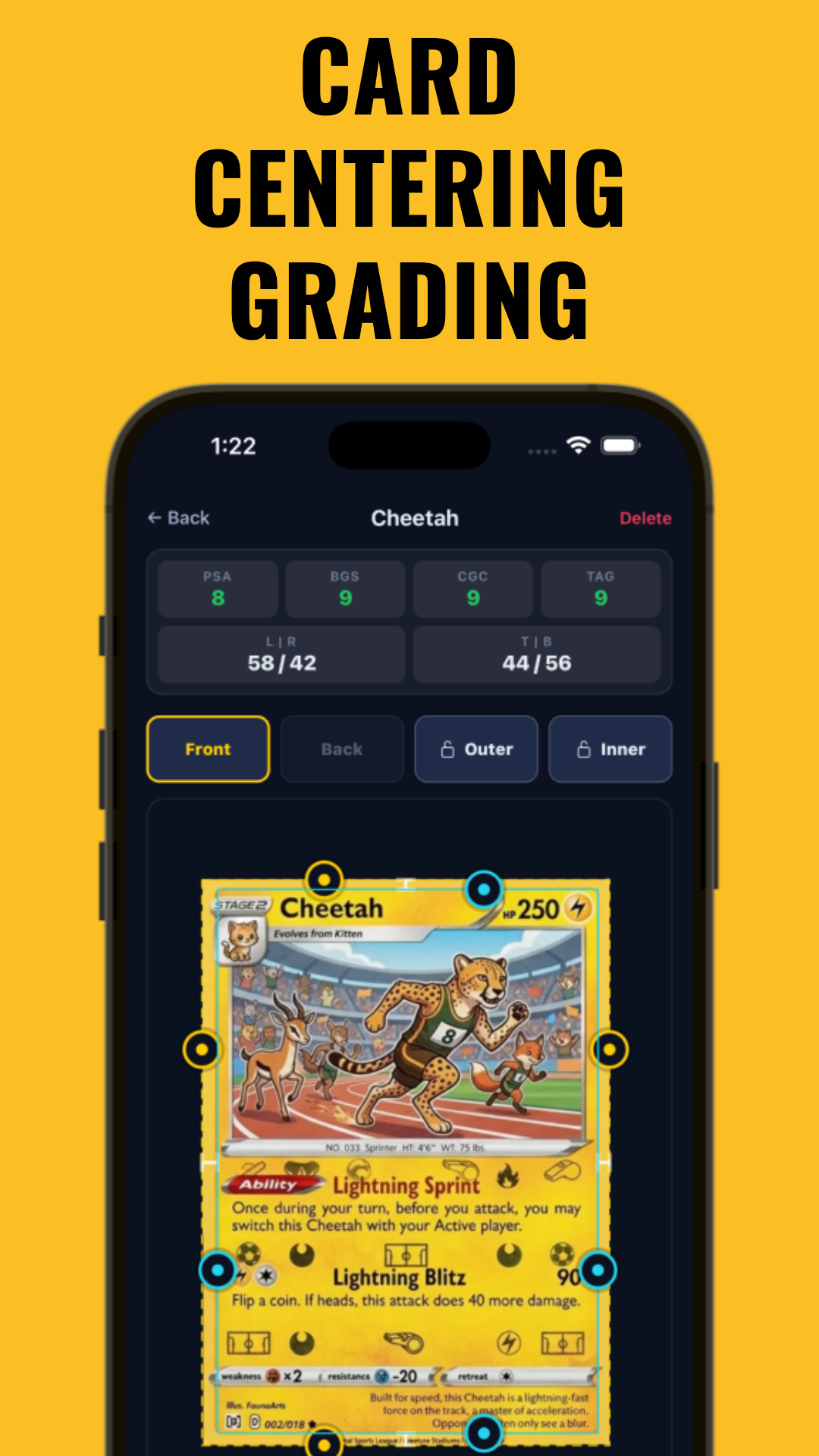
Centering refers to how evenly the image is positioned within the card’s borders and is a critical grading criterion. Due to the 1970 Topps cards’ oversized format, even slight off-centering is more visible and impacts grade more severely than on standard-size cards.
Cards with centering ratios of 55/45 or better (meaning the borders are balanced with no more than a 10% difference between opposite sides) typically receive higher grades and command premium prices. Cards with centering worse than 60/40 often see significant grade reductions, even if corners and surfaces are pristine.
Midpoint’s precise centering calculator measures card borders down to the millimeter using digital image analysis, offering objective and reproducible centering assessments. This reduces grading risk by allowing collectors to select only well-centered cards for submission, improving the chances of achieving top-tier grades.
Impact of Corners, Edges, and Surface Condition
Sharp, clean corners are essential for high grading. Rounded or frayed corners are among the most common detractors from top grades. Similarly, edges free of chipping or wear sustain higher values.
The card’s surface must be free from print defects, scratches, creases, staining, or fading. The 1970 Topps oversized cards are particularly prone to edge wear due to their larger size and thinner cardstock, making surface condition paramount for collectors seeking premium grades.
Even minor surface flaws can reduce a card’s grade by one or two points, translating into significant value differences, especially for marquee cards. For example, a slight crease on a PSA 10 candidate can result in a PSA 8 or 7 grade, causing thousands of dollars in lost value for high-end cards.
Print Defects and Trimming Issues
While some minor print inconsistencies are common in vintage cards and generally accepted by graders, deliberate trimming to improve card appearance is considered a serious alteration and results in automatic failing or low grades.
Collectors should be vigilant for telltale signs of trimming—such as excessively sharp edges inconsistent with the era, uneven borders, or unnatural cutting lines. AI grading tools like Midpoint incorporate digital analysis to detect anomalies that may indicate trimming or other tampering.
Ensuring authenticity and original condition is crucial for preserving value and trust in the marketplace.
Section 6: Tips for Selling and Pricing 1970 Topps Basketball Cards
Using Sold Auction Results Over Asking Prices
Accurately pricing 1970 Topps basketball cards requires relying on completed sales data rather than dealer or seller asking prices, which can be inflated or outdated. Sold auction results reflect actual market demand and buyer willingness to pay, offering a realistic valuation benchmark.
Platforms such as eBay, Heritage Auctions, and specialized sports card marketplaces provide tools for searching completed sales and analyzing price trends. Collectors should also consider sales volume and condition similarities when comparing prices.
By consistently referencing sold data, sellers can set competitive prices that attract buyers while avoiding undervaluing their cards. Buyers, in turn, gain confidence in the fairness of their purchases.
Leveraging Portfolio Tracking and Collection Management
Apps like Midpoint offer portfolio tracking and collection management features that help collectors monitor the value fluctuations of their cards over time. This is particularly valuable in a market as dynamic as sports cards, where player popularity, grading trends, and broader economic factors can influence prices.
By tracking collection value, collectors can make informed decisions about when to buy or sell, identify underappreciated cards, and ensure adequate insurance coverage for their collections. The ability to store high-resolution images and grading information also aids in provenance and authentication during sales.
Pre-Grading and Grading Submission Strategy
Before submitting cards to grading companies, using AI-based pre-grading tools like Midpoint is recommended. These tools assess centering, corners, edges, and surface conditions to estimate potential grades.
A strategic grading submission plan involves:
- Selecting only cards with high potential grades (PSA 8 or above) for submission.
- Avoiding cards with obvious defects that would prevent top grades.
- Submitting multiple cards in a batch to reduce per-card grading costs.
- Timing submissions to coincide with grading fee promotions or discounts.
This approach can optimize grading investment and increase the likelihood of obtaining high-value graded cards.
For more details, see our comprehensive guide on How Centering Impacts Card Value.
Conclusion
The 1970 Topps basketball cards value landscape is largely influenced by key rookies such as Pete Maravich #123 and Lew Alcindor #75, whose high-grade copies often command significant premiums due to rarity and historical importance. Understanding the critical condition factors—especially centering, corners, and surface quality—is essential for collectors to assess which cards merit professional grading and how to price them accurately in the marketplace.
Leveraging AI tools like Midpoint enables collectors to estimate grading grades and market values objectively, helping to make informed collecting and selling decisions. Whether your goal is to build a near-mint complete set, acquire individual star cards, or evaluate your collection’s worth, this guide provides insights needed to navigate the 1970 Topps basketball card market confidently.
FAQ
Q: How much are 1970 Topps basketball cards worth?
A: Values vary widely based on card and condition. Raw cards often range from $10-$30, while high-grade PSA 10 examples of top cards like Pete Maravich #123 can reach $10,000 or more as of mid-2024. Mid-grade graded cards typically sell for several hundred to a few thousand dollars depending on player and grade.
Q: What is the value of a 1970 Topps Pete Maravich rookie card?
A: Raw copies typically sell for about $30, but PSA 8 graded cards can fetch around $1,800, PSA 9 cards approximately $4,500, and PSA 10 copies exceed $10,000, reflecting the card’s rarity and significance.
Q: What is the most valuable card in the 1970-71 Topps basketball set?
A: The Pete Maravich #123 rookie card is generally considered the most valuable, especially in gem mint condition (PSA 10). Lew Alcindor #75 and Wilt Chamberlain #50 also command significant prices but generally rank just below Maravich’s card.
Q: How much is a 1970 Topps Lew Alcindor card worth?
A: Lew Alcindor #75 ranges from about $25 raw condition to $7,500 in PSA 10 condition, with mid-grade values around $1,200 (PSA 8) and $3,200 (PSA 9).
Q: Are 1970 Topps basketball cards worth anything without grading?
A: Yes, raw cards do have value, particularly well-preserved examples of key rookies and stars. However, professional grading often increases market price significantly, especially for cards in high-grade condition.
Q: How much is a complete 1970-71 Topps basketball set worth?
A: Near-mint complete sets can command thousands of dollars, often exceeding $5,000 to $10,000 depending on condition and inclusion of high-number series cards. Sets with graded key cards in top condition will fetch the highest prices.
Free to start
Try the Midpoint app
Grade any card from a photo, see its raw and PSA 10 value, and track what your collection is worth — free.
Get it on iPhoneGet it on Android