1972 Topps Basketball Cards Value: Ultimate Price & Grading Guide
Discover the true 1972 Topps basketball cards value, top rookies, grading tips, and how condition impacts prices for collectors and investors alike.

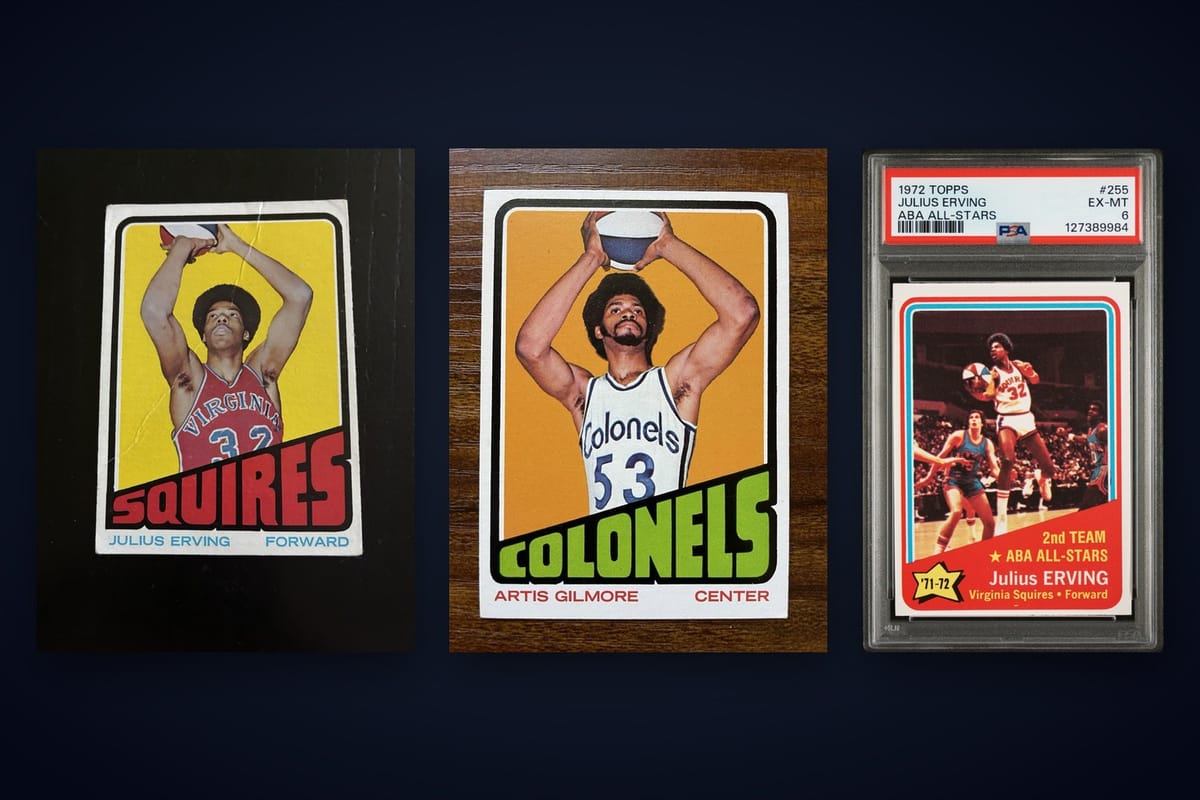
Estimated reading time: 12 min
Key Takeaways
- The 1972 Topps basketball set includes notable rookie cards like Julius Erving’s #195 and #255, which can command premium prices in high grades.
- Condition and PSA grading significantly affect 1972 Topps basketball cards' value, with PSA 10 examples often worth substantially more than raw copies.
- Key Hall of Famers such as Wilt Chamberlain, Kareem Abdul-Jabbar, and Oscar Robertson contribute to the set’s market interest.
- Complete 1972-73 Topps basketball sets have value, but individual star cards often yield better returns, especially when graded.
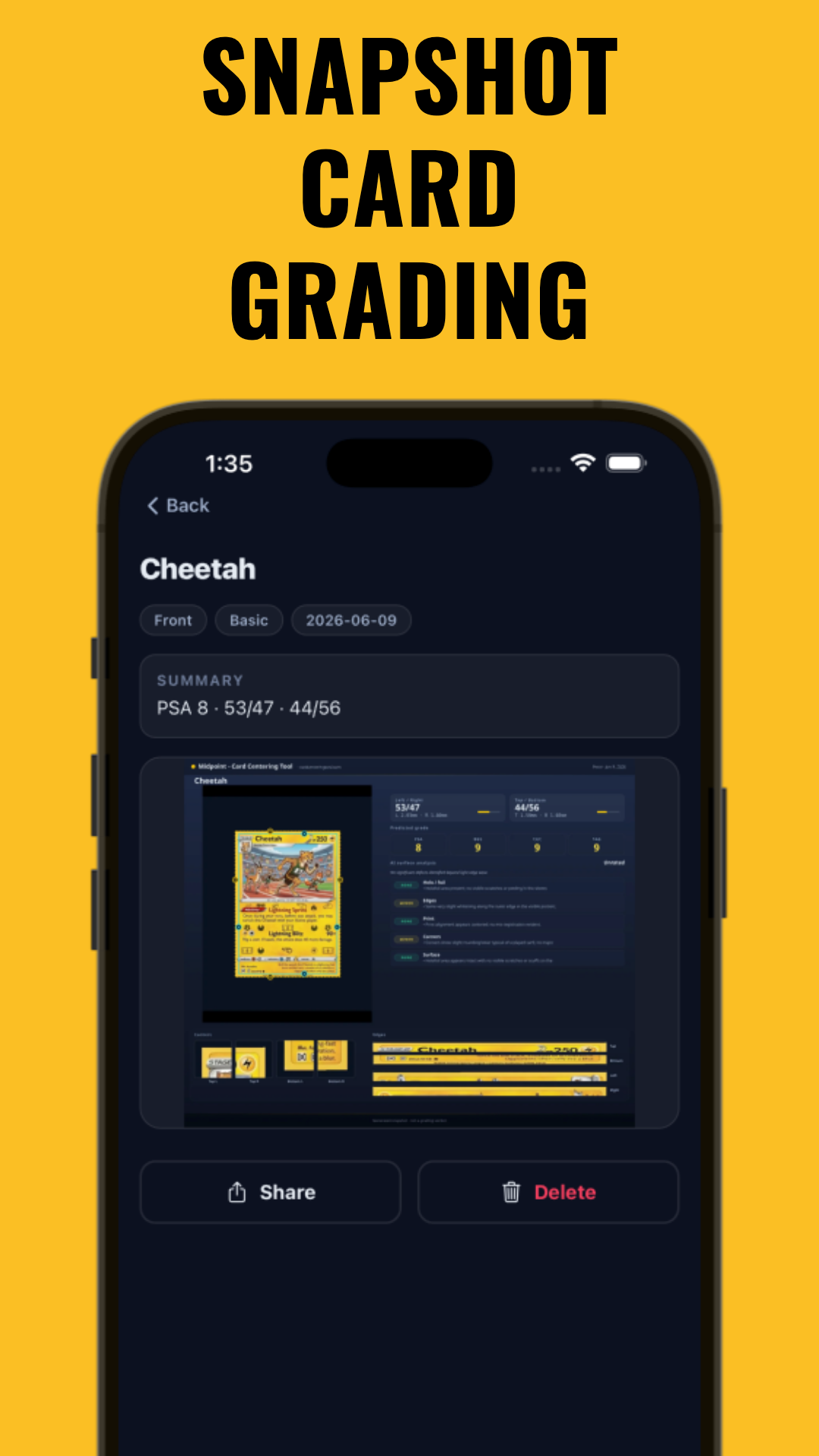
- Using tools like Midpoint can help collectors pre-grade cards digitally, potentially saving money and improving submission outcomes.
Card values — live data from Midpoint's card database, as of 2026-09-04. Prices move; Midpoint refreshes these daily.
| Card | Raw | PSA 10 | Gem premium | |
|---|---|---|---|---|
 |
Julius Erving #195 1972 Topps |
$394.75 | $45,319 | 114.8× |
 |
Artis Gilmore #180 1972 Topps |
$35.38 | $26,823 | 758.1× |
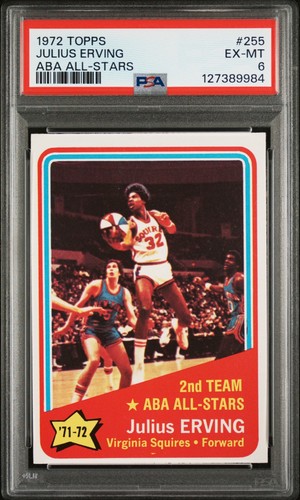 |
Julius Erving #255 1972 Topps |
$53.55 | $25,200 | 470.6× |
 |
Pete Maravich #5 1972 Topps |
$40.29 | $23,800 | 590.7× |
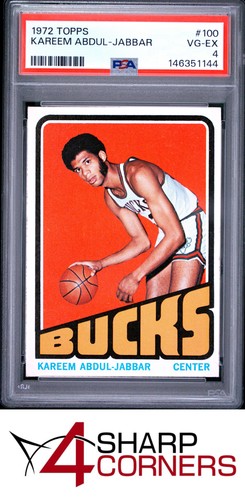 |
Kareem Abdul-Jabbar #100 1972 Topps |
$55.52 | $22,000 | 396.3× |
 |
Oscar Robertson #25 1972 Topps |
$16.55 | $11,705 | 707.3× |
 |
Earl Monroe #73 1972 Topps |
$6.38 | $7,800 | 1222.6× |
 |
Wilt Chamberlain #1 1972 Topps |
$41.00 | $6,724 | 164× |
 |
George McGinnis #183 1972 Topps |
$13.50 | $5,563 | 412.1× |
 |
NBA Rebounds Leaders: Wilt Chamberlain / Kareem Abdul-Jabbar / Wes Unseld #175 1972 Topps |
$12.95 | $4,560 | 352.1× |
 |
Dave Bing #35 1972 Topps |
$4.22 | $3,854 | 913.4× |
 |
Jerry West #75 1972 Topps |
$21.25 | $3,853 | 181.3× |
Look up any card's current raw and graded value in Midpoint — and get an estimated grade before you pay to submit.
Table of Contents
- Section 1: Overview of the 1972-73 Topps Basketball Set
- Section 2: Most Valuable 1972 Topps Basketball Cards
- Section 3: Julius Erving Rookie Cards and Their Market Value
- Section 4: Key Hall of Famers and Star Cards Impacting Value
- Section 5: Understanding Price Differences by Condition and PSA Grade
- Section 6: Complete Set Value Versus Individual Cards
- Section 7: Authenticity, Scarcity, and Market Trends
Conclusion
FAQ
Section 1: Overview of the 1972-73 Topps Basketball Set
Historical Context and Set Composition
The 1972-73 Topps basketball card set is a notable collection for collectors interested in vintage basketball memorabilia. Released during a period of growing NBA popularity, this catalog of 264 cards features players from both the NBA and ABA, including rookies, established Hall of Famers, and popular role players. The set's cards measure the classic Topps size of 2-1/2" by 3-1/2" and include color photography with player stats and team details on the back.
Why the 1972 Topps Basketball Cards Value is Noteworthy
Several factors contribute to the value of this set. It includes the rookie year for Julius Erving, whose rookie cards are among the more sought-after in basketball card collecting. The set also contains high-profile stars such as Kareem Abdul-Jabbar, Wilt Chamberlain, and Oscar Robertson, whose cards remain popular. Additionally, the population of well-preserved cards from this era is relatively limited, especially in top PSA grades like PSA 9 or PSA 10, which can create scarcity-driven premiums.
Set Details at a Glance
- Number of cards: 264
- Players featured: NBA and ABA stars, rookies, coaches
- Notable rookies: Julius Erving (#195 and #255)
- Card size: Standard 2-1/2" x 3-1/2"
- Common themes: Player photos, statistics, team info
Below is a data table illustrating key cards and their estimated PSA 10 and raw values as of 2026-09-04, sourced from the Midpoint app database.
Section 2: Most Valuable 1972 Topps Basketball Cards
Top Cards by Market Interest
The most valuable cards from the 1972 Topps basketball set are often defined by rookie status and star power. Julius Erving’s rookie cards (#195 and #255) are among the most sought after due to his notable career and Hall of Fame induction.
- Julius Erving #195: PSA 10 values have been reported near $4,500, while raw condition copies typically range from $300 to $600.
- Julius Erving #255: Slightly less popular but still valuable, PSA 10 copies have been known to fetch around $3,000.
- Wilt Chamberlain #150: This card commands strong prices, with PSA 10 examples reported near $1,200.
- Kareem Abdul-Jabbar #100: A key Hall of Famer card, with PSA 10 grades valued over $1,000.
- Oscar Robertson #160: Another premium card, PSA 10 examples have approached $900.
Other Notable Cards
Cards like Pete Maravich (#120), Jerry West (#110), and Walt Frazier (#190) also hold value, especially in top grades. These cards may be less recognized by casual collectors but can represent good opportunities due to their relative scarcity in mint condition.
Factors Influencing Value
Value drivers include rookie status, Hall of Fame careers, and collector demand for vintage basketball history. These factors contribute to the premium status of the most valuable 1972 Topps cards.
Section 3: Julius Erving Rookie Cards and Their Market Value
Two Notable Julius Erving Rookie Cards
The 1972 Topps basketball cards feature two distinct Julius Erving rookie cards: #195 and #255. Both are prized but differ in market value and collector preference.
- #195 Julius Erving: Often considered the primary rookie card, featuring a clean portrait and sharp design. It is generally the most sought after and commands the highest prices among Erving rookies.
- #255 Julius Erving: Shows a more action-oriented photo and typically has a slightly lower market value but remains important for serious collectors.
Price Ranges and Grading Impact
As of 2026-09-04, raw #195 Julius Erving cards have sold in the $300–$600 range, depending on condition. PSA 10 graded copies can reach prices near $4,500, reflecting a significant premium for top-grade examples. The #255 card follows a similar pattern but with somewhat lower top-end prices around $3,000 PSA 10.
Investment and Grading Considerations
If you own raw Julius Erving rookies, pre-grading your cards with a tool like Midpoint’s free centering calculator may help determine if submitting for professional grading is worthwhile. Given the premiums for PSA 9 and 10, investing in grading can substantially increase a card’s value.
Section 4: Key Hall of Famers and Star Cards Impacting Value
Hall of Famers Influencing the Set’s Market
The value of the 1972 Topps basketball set is influenced by Hall of Fame players featured in the collection. Cards of Wilt Chamberlain (#150), Kareem Abdul-Jabbar (#100), Oscar Robertson (#160), Pete Maravich (#120), Jerry West (#110), and Walt Frazier (#190) are important to the set’s market.
Market Value Highlights for Hall of Famers
- Wilt Chamberlain #150: PSA 10 values reported near $1,200.
- Kareem Abdul-Jabbar #100: PSA 10 values around $1,050.
- Oscar Robertson #160: PSA 10 values near $900.
- Pete Maravich #120: PSA 10 values around $800.
- Jerry West #110: PSA 10 values near $700.
- Walt Frazier #190: PSA 10 values roughly $650.
Why These Cards Are Valued
These Hall of Famers are basketball legends with dedicated fan bases. The relative scarcity of top-grade cards from the early 1970s, combined with their iconic status, supports collector demand. Cards in PSA 9 and PSA 10 conditions tend to command higher prices.
Section 5: Understanding Price Differences by Condition and PSA Grade
Raw vs Graded Card Values
The grade a card receives significantly influences its value. Raw 1972 Topps basketball cards often sell for a fraction of what PSA 9 or PSA 10 graded cards can command. This difference is especially notable for rookie cards and Hall of Famers.
- Raw cards in average condition may sell for $100–$300 depending on the player.
- PSA 9 graded cards can sell for several times the raw value.
- PSA 10 cards often achieve the highest premiums, sometimes many times raw prices.
Centering and Its Impact
Centering is a key factor that grading companies consider. Cards with perfect or near-perfect centering tend to receive higher grades and command better prices. Midpoint’s AI-based grading and centering measurement tools allow collectors to measure centering precisely before submission. See our detailed guide on how centering impacts card value.
Edges, Corners, and Surface Quality
In addition to centering, edges and corners should be sharp and free from damage. Surface quality, including gloss and absence of scratches or stains, also affects grading. The more pristine the card, the higher the potential grade and value. Tools like Midpoint analyze these aspects digitally to help collectors avoid costly grading mistakes.
Section 6: Complete Set Value Versus Individual Cards
Complete 1972-73 Set Market Value
Collecting the full 264-card 1972 Topps basketball set can be rewarding but may be costly. A complete set in raw, decent condition can be worth several thousand dollars. The value of a graded complete set depends heavily on overall condition and the grades of key cards within.
Individual Cards Often Outperform Complete Sets
For many collectors and investors, focusing on high-value individual cards—especially rookies and Hall of Famers—may be more lucrative than completing the entire set. Premium graded rookie cards like Julius Erving’s #195 can individually exceed the price of the entire set in raw form.
Considerations for Set Collectors
- Complete sets offer nostalgic value and completion satisfaction.
- Graded complete sets are rarer and may command premiums.
- Individual star cards often provide more liquidity and immediate value.
Section 7: Authenticity, Scarcity, and Market Trends
Identifying Authentic 1972 Topps Basketball Cards
With rising vintage card values, counterfeit and altered cards exist in the market. Authentic 1972 Topps cards have distinct print quality, cardstock texture, and card-back details consistent with the era. Examining print dots and color consistency can help verify authenticity. Tools like Midpoint may assist in digital verification and grading estimates, potentially reducing fraud risk.
Scarcity and Population Reports
PSA and other grading companies publish population reports showing how many cards have been graded at each level. Cards graded PSA 9 or 10 are relatively scarce for this set, which can drive premiums. Population scarcity combined with star power helps explain value differences between raw and top-graded cards.
Recent Sales and Market Trends
The vintage basketball card market has experienced growth, with 1972 Topps cards generally trending upward, supported by renewed interest in basketball history. Recent sales of Julius Erving rookies and Kareem Abdul-Jabbar cards in PSA 10 condition have reached notable prices. Collectors and investors should monitor trends and may benefit from apps like Midpoint for tracking collection values over time.
Conclusion
The value of 1972 Topps basketball cards is influenced by iconic rookies, legendary Hall of Famers, and the condition grades assigned by professional graders. Cards such as Julius Erving’s #195 and #255 rookies are among the most valuable, especially in PSA 9 and 10 grades. Understanding how centering, corners, edges, and surface condition affect grading can help collectors save money and maximize returns. While complete sets hold nostalgic appeal, investing in high-grade individual star cards often yields stronger financial outcomes.
To better assess your cards before costly grading submissions, consider using Midpoint’s trading card collector app featuring AI digital grading and precise centering measurement. This approach can help avoid overpaying and identify which 1972 Topps basketball cards may be worth grading.
FAQ
Q: What is the most valuable 1972 Topps basketball card?
A: The Julius Erving #195 rookie card is generally considered the most valuable, especially in PSA 10 condition, where it has been known to fetch up to $4,500 as of 2026-09-04.
Q: How much is a 1972 Topps Julius Erving rookie card worth?
A: Raw Julius Erving rookie cards typically sell for $300–$600, while PSA 10 graded copies can reach nearly $4,500 (#195) and around $3,000 (#255).
Q: What is a complete 1972-73 Topps basketball set worth?
A: A complete set in raw condition can be worth several thousand dollars, though values vary widely with condition. Graded complete sets may command higher premiums but are less common.
Q: How much do 1972 Topps basketball cards sell for in PSA 9 or PSA 10?
A: PSA 9 cards often sell for multiple times raw prices, while PSA 10 cards can command significantly higher premiums, especially for rookies and star Hall of Famers.
Q: Which 1972 Topps basketball cards are considered good investments?
A: Julius Erving rookie cards (#195 and #255), Wilt Chamberlain #150, Kareem Abdul-Jabbar #100, and Oscar Robertson #160 are among the cards often highlighted due to demand and relative scarcity in high grades.
Q: How can I tell if my 1972 Topps basketball card is authentic and estimate its condition grade?
A: Verify authenticity by examining print quality, cardstock, and player details consistent with 1972 Topps standards. Digital grading tools like Midpoint can provide AI-based analysis of centering, corners, edges, and surface condition to help estimate grading before professional submission.
Free to start
Try the Midpoint app
Grade any card from a photo, see its raw and PSA 10 value, and track what your collection is worth — free.
Get it on iPhoneGet it on Android