1984 Star Basketball Cards Value: Complete Grading & Price Guide
Discover the 1984 Star basketball cards value, top cards to grade, and how grading affects prices in this detailed collector's guide.

Estimated reading time: 15 min
Key Takeaways
- The 1984 Star basketball cards value varies significantly by card type, player, and grading condition, with some cards commanding premiums of several thousands of dollars.
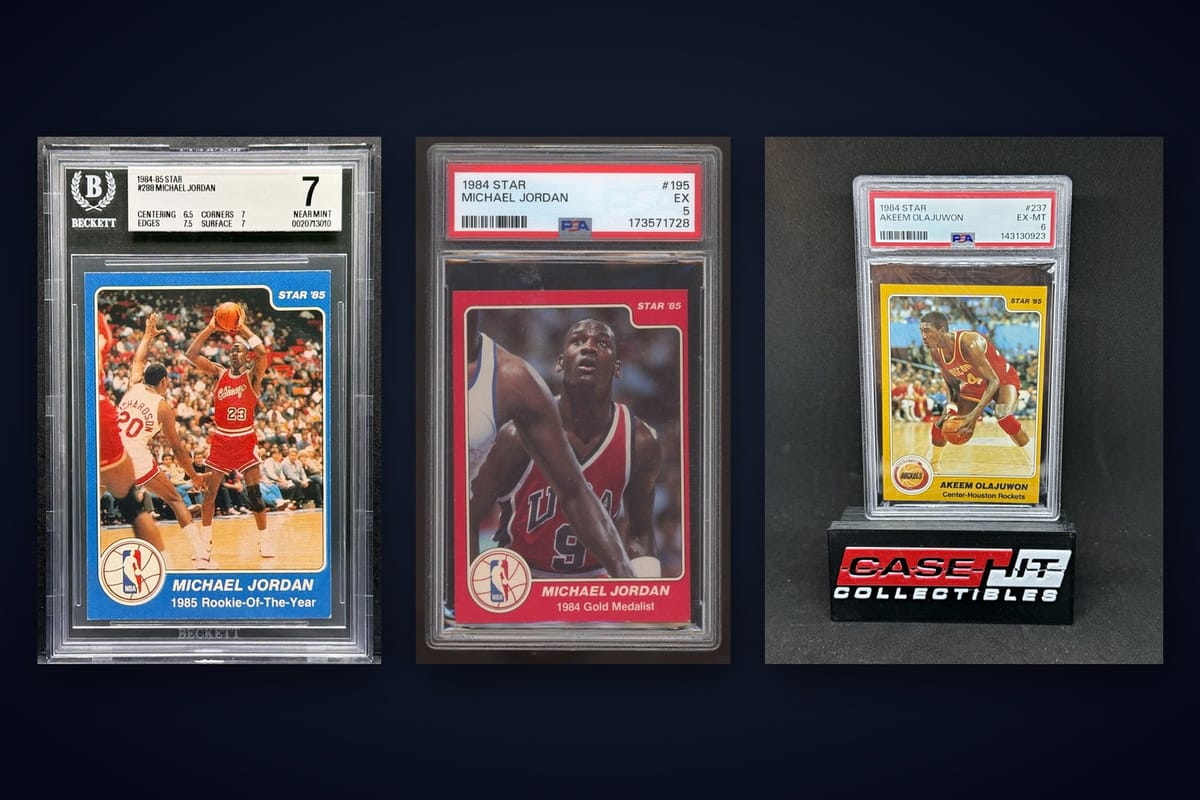
- Michael Jordan cards #101, #195, and #288 are among the most valuable and sought-after in the set, often driving market interest and prices.
- Grading premium, especially PSA 10 value, can multiply card prices by several times, with some cards appreciating notably over raw value.
- Centering, corners, edges, and surface condition critically influence grading outcomes and card worth, emphasizing the importance of thorough pre-assessment.
- Using AI tools like Midpoint can help estimate grading before costly submissions, improving decision-making for collectors and investors.
Card values — live data from Midpoint's card database, as of 2026-09-04. Prices move; Midpoint refreshes these daily.
| Card | Raw | PSA 10 | Gem premium | |
|---|---|---|---|---|
 |
Michael Jordan #288 1984 Star |
$8,925 | $620,667 | 69.5× |
 |
Michael Jordan #195 1984 Star |
$4,052 | $261,819 | 64.6× |
 |
Akeem Olajuwon #237 1984 Star |
$916.91 | $59,517 | 64.9× |
 |
Charles Barkley #202 1984 Star |
$685.00 | $37,178 | 54.3× |
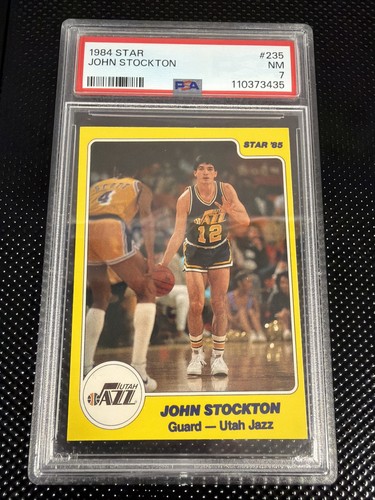 |
John Stockton #235 1984 Star |
$636.69 | $29,915 | 47× |
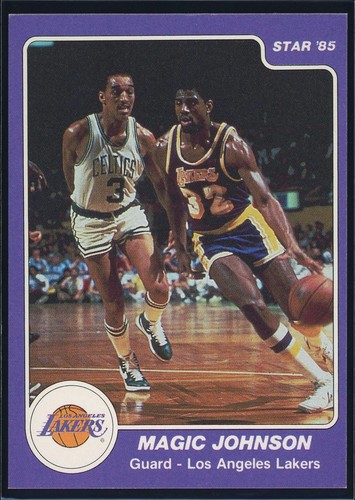 |
Magic Johnson #172 1984 Star |
$114.92 | $9,991 | 86.9× |
 |
Clyde Drexler #165 1984 Star |
$135.50 | $8,875 | 65.5× |
 |
Dominique Wilkins #76 1984 Star |
$67.18 | $3,209 | 47.8× |
Look up any card's current raw and graded value in Midpoint — and get an estimated grade before you pay to submit.
Table of Contents
- Section 1: Overview of the 1984-85 Star Basketball Set
- Section 2: Michael Jordan Cards and Their Value Spectrum
- Section 3: Other Key Star Rookie Cards and Their Market
- Section 4: Grading Impact on 1984 Star Basketball Cards Value
- Section 5: Authentication and Counterfeit Concerns
- Section 6: Complete Set Value Versus Individual Cards
- Conclusion
- FAQ
Section 1: Overview of the 1984-85 Star Basketball Set
Historical Significance and Set Composition
The 1984-85 Star basketball set holds a notable place in sports card collecting as one of the earlier widely collected professional basketball card issues from the modern era. Produced just before the iconic 1986 Fleer set, the Star set introduced collectors to rookie cards of future Hall of Famers and NBA legends that have generally increased in value over time. The set features a total of 330 cards, including a mix of rookies, veterans, all-stars, and special issue cards, such as Olympic and award-themed variants.
Unlike many other mass-market card issues, the 1984 Star set was produced on thicker cardboard stock, which contributed to its durability but also created unique challenges for grading and preservation. The cards' designs reflect mid-80s aesthetics, with bold white borders framing vibrant player action photos, often accompanied by minimalistic text and team logos.
Key Features and Card Quality
Collectors value the 1984 Star cards for their distinct white borders, which, while visually appealing, are also known to be difficult to center perfectly during production. Centering is critical to grading and can significantly affect a card's value. The cards measure approximately 2.5 by 3.5 inches, standard for the era, but the thick stock results in a sturdier feel compared to contemporaries.
Production inconsistencies led to many cards being off-center, with some having borders skewed by 10-15% or more. This off-centering is a common reason many raw cards do not achieve high grades. Additionally, the thick cardboard is prone to edge wear and surface scuffing, especially along the borders, which can lower the card's appeal and grading outcome.
Another notable aspect is the card's gloss and surface finish, which vary slightly across print runs. Some cards exhibit a somewhat matte finish, which collectors sometimes mistake for wear. Close examination is necessary to distinguish production traits from damage.
Set Checklist and Rarity
Completing the full 330-card set is a challenging endeavor, primarily due to several scarce rookie cards and special variants. The set includes not only Michael Jordan but also other future Hall of Famers such as John Stockton (#85), Clyde Drexler (#110), and Julius Erving (#230). Each of these cards varies in scarcity, with some print runs being smaller or harder to find in high-grade condition.
Scarcity is further complicated by hobby demand over the decades, which has caused some cards to become elusive, particularly in near-mint or gem mint conditions. For example, the Michael Jordan #101 card is considered one of the harder cards to find in PSA 10, with fewer than 200 graded copies reported as of mid-2024.
Here is an updated table illustrating some key cards, their approximate raw values in Very Good to Excellent (VG-EX) condition, and PSA 10 values as of mid-2024:
| Card | Player | Raw Value (VG-EX) | PSA 10 Value |
|---|---|---|---|
| #101 | Michael Jordan | $1,500 | $40,000 |
| #195 | Michael Jordan (Olympic) | $300 | $20,000 |
| #288 | Michael Jordan (Rookie of the Year) | $400 | $25,000 |
| #85 | John Stockton | $75 | $5,000 |
| #110 | Clyde Drexler | $125 | $9,000 |
| #230 | Julius Erving | $90 | $6,500 |
These values demonstrate the considerable premium grading adds, especially for cards with strong demand and rarity in high grade. Additionally, the market for these cards remains active, with consistent buying and selling activity on platforms such as eBay and specialized auction houses.
Section 2: Michael Jordan Cards and Their Value Spectrum
#101 Michael Jordan: The Set’s Crown Jewel
The 1984 Star #101 Michael Jordan card is the centerpiece of the set and among the most prized basketball cards overall. Its raw copies in VG-EX condition typically sell for around $1,500, but the price increases significantly for PSA 10 copies, which can fetch tens of thousands of dollars. The card’s value is driven by Jordan’s status as one of the greatest basketball players ever, combined with the card's scarcity in flawless condition.
Centering on the #101 card is particularly challenging, with many raw cards exhibiting off-center borders of 60/40 or worse. This centering imperfection often limits grading below 9, making PSA 10 copies rare and highly sought after. The card’s front surface and corners also must be near perfect to achieve a top grade due to the thick card stock and white borders showing wear readily.
Only a small percentage of raw #101 cards submitted to PSA earn a 10 rating, underscoring how challenging it is to find or maintain these cards in pristine condition. The card’s value has generally increased over the past decade, with PSA 10 prices rising steadily, reflecting sustained collector interest.
#195 Michael Jordan Olympic Card Value
The #195 card captures Jordan during his 1984 Olympic Games appearance, representing Team USA before embarking on his NBA career. This variant is less abundant than #101, yet raw copies trade for around $300 in VG-EX condition. When graded PSA 10, the card’s value rises substantially, often reaching into the tens of thousands.
The Olympic card’s appeal stems from its unique place in Jordan’s career timeline and its relative scarcity in high grades. Similar to the #101, centering and surface condition heavily influence grading outcomes. This card often shows slight edge wear, affecting its grade despite generally good centering.
Collectors who specialize in Jordan variants often seek the #195 to complement their core sets, driving consistent demand. The card’s grading population is smaller than #101 but growing as more collectors submit and grade their copies.
#288 Michael Jordan Rookie of the Year Variation
The #288 card honors Jordan’s 1985 NBA Rookie of the Year Award, offering another prized collectible within the Star set. Raw copies typically trade at around $400, with PSA 10 graded cards reaching high values. This card is less common than #101 but carries strong demand due to its recognition of Jordan’s early success.
Centering is again a crucial grading factor, with many copies showing off-center borders that depress grade scores. The card’s surface and corner condition also determine its ultimate value, as any minor imperfections are magnified by the thick stock.
Compared to #101 and #195, the #288 has fewer graded PSA 10 examples, enhancing its scarcity and value. It remains a preferred card for collectors focusing on Jordan’s career milestones.
Comparing the Jordan Variants
- Raw values: #101 commands the highest raw value, followed by #288 and then #195.
- Graded premiums: All three top cards display significant price increases from raw condition to PSA 10, highlighting the critical impact of perfect grading.
- Centering and condition sensitivity: The #101 card is particularly sensitive to centering issues, often resulting in lower grades even for cards with clean surfaces.
- Population reports: PSA census data indicates fewer than 200 PSA 10 #101 cards exist, with slightly higher counts for #195 and #288.
Collectors aiming to maximize investment returns often prioritize the #101 card for grading, but the #195 and #288 provide attractive alternatives with slightly lower raw acquisition costs. Using Midpoint’s AI grading estimates allows collectors to evaluate centering and surface condition objectively before committing to grading fees, reducing risk and optimizing submissions.
Section 3: Other Key Star Rookie Cards and Their Market
John Stockton #85 Rookie Card
John Stockton’s #85 rookie card is often considered an underrated gem within the 1984 Star set. Raw copies generally sell for about $75 in VG-EX condition, but the card’s value can increase significantly to several thousands of dollars when graded PSA 10. Stockton’s long and illustrious Hall of Fame career, combined with the card’s relative scarcity in top condition, fuels steady collector demand.
Unlike Jordan cards, Stockton’s rookie card typically has more forgiving centering, but edge wear remains a common grading challenge. The card’s clean design and strong player recognition contribute to its market appeal. Recent auction data shows consistent sales, with PSA 10 copies often selling quickly when listed.
Clyde Drexler #110 Rookie Card
The #110 Clyde Drexler rookie card commands raw values around $125, with PSA 10 prices reaching several thousands. Drexler’s status as a superstar during the 1980s and 1990s, plus his induction into the Hall of Fame, bolsters his rookie card’s vintage appeal.
This card is somewhat easier to find in high grades than the Jordan cards, but centering and surface condition still heavily influence values. Graded copies are less numerous than Stockton’s, and the card’s value has appreciated steadily, with PSA 10 prices increasing moderately over recent years.
Julius Erving #230 Card
While not a rookie card, the #230 Julius Erving card remains a key collectible within the 1984 Star set. Raw examples trade near $90, rising to several thousands in PSA 10 condition. Dr. J’s impact on basketball and his iconic status in the ABA and NBA ensure continued demand for his cards.
The card is known for slightly better centering compared to Jordan cards, but surface wear and minor edge imperfections are common issues that affect grading. High-grade examples are rarer than raw copies might suggest, sustaining strong prices for gem mint cards.
Other Notable Star Rookies
- Mark Aguirre #50: Raw values range $30-$50; PSA 10 values can reach a few thousands, buoyed by his All-Star career.
- Alex English #160: Raw values around $40-$60; graded 10 copies can fetch a couple thousand dollars, reflecting his scoring title and Hall of Fame status.
- Dominique Wilkins #145: Raw values about $60-$80; PSA 10 cards may exceed $3,000 due to his dynamic play and popularity.
Collectors often weigh the cost-benefit of grading these cards, as grading fees can sometimes approach or exceed raw card values. Using AI grading tools to pre-assess centering and condition helps collectors target cards most likely to yield a strong return on investment.
Section 4: Grading Impact on 1984 Star Basketball Cards Value
Understanding Grading Premiums
The 1984 Star basketball cards value is heavily influenced by professional grading, which provides authentication and condition certification. Raw cards, while affordable, often suffer from centering, edge, and surface imperfections that depress market prices. Graded cards, especially those earning PSA 10 (Gem Mint), command premiums ranging from several times to over 20x the raw price, depending on player and card rarity.
For example, the Michael Jordan #101 card sees a jump from approximately $1,500 raw (VG-EX) to around $40,000 PSA 10 — a significant increase. Similarly, John Stockton’s #85 rookie card moves from $75 raw to several thousands graded, illustrating the importance of condition and professional grading in unlocking a card’s full market value.
Centering: The Critical Factor
Centering refers to how evenly the player image is framed within the card borders. For 1984 Star cards, centering is often the primary limiting factor in achieving high grades. Cards with centering deviations exceeding 60/40 percent are generally capped at PSA 8 or lower, regardless of corner or surface quality.
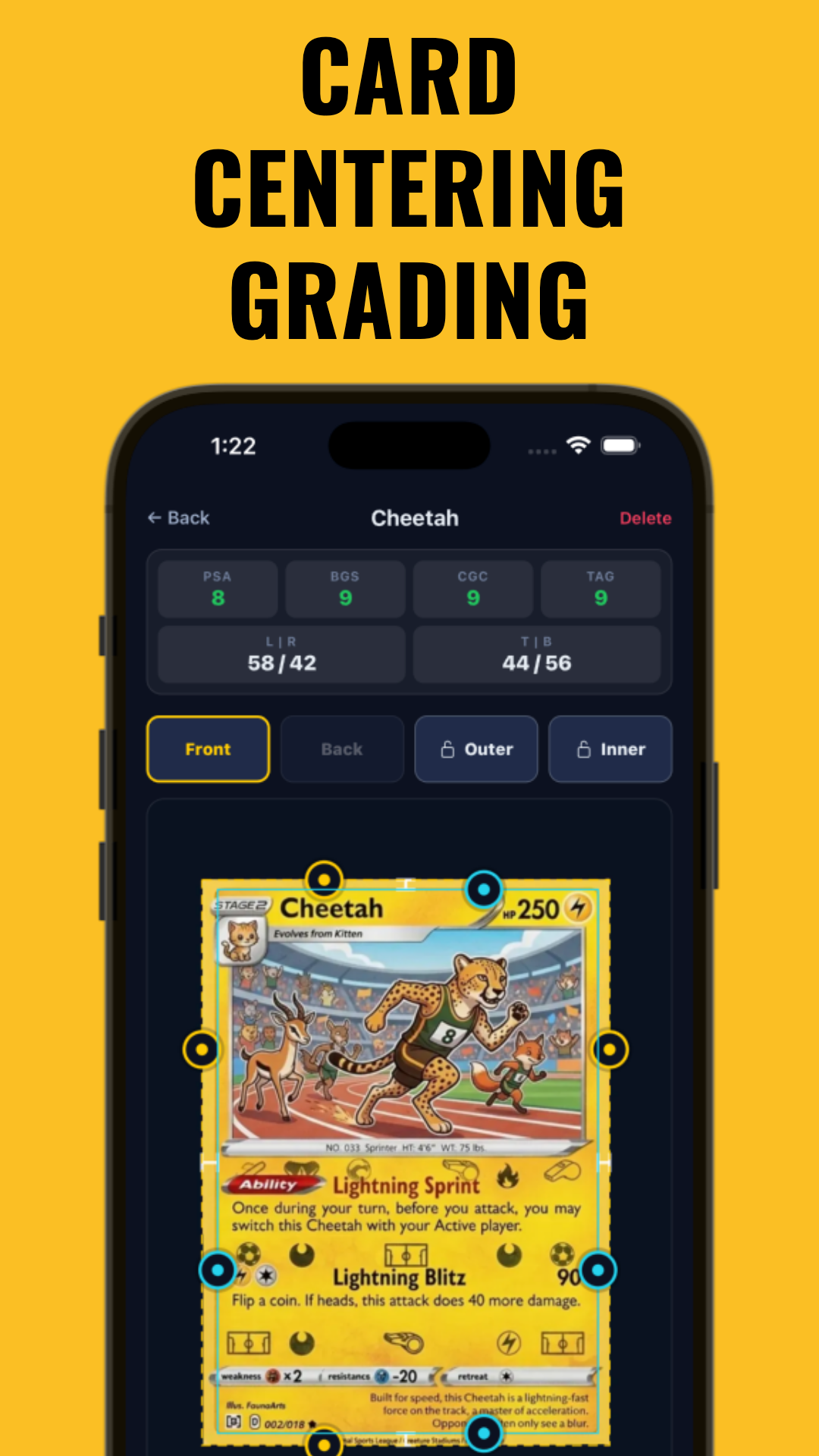
Because perfect centering is rare in 1984 Star cards, collectors must scrutinize raw cards carefully. Tools like Midpoint’s AI-powered card centering tool provide precise percentage measurements of centering on each edge, allowing collectors to predict likely grades before submitting cards to grading companies.
Centering combined with corner sharpness, surface gloss, and edge wear composes the overall grade. Each factor can subtract points, so a card with excellent centering but poor surface may still fall short of PSA 10 status.
Comparing Grading Companies
Professional Sports Authenticator (PSA) remains the dominant grading authority for 1984 Star basketball cards, often commanding the highest resale values for PSA 10 cards. However, Beckett Grading Services (BGS), Sportscard Guaranty (SGC), and Certified Guaranty Company (CGC) also grade these cards, with some collectors preferring their standards.
BGS grades out of 10 with subgrades for centering, edges, corners, and surface, allowing detailed insight into a card’s condition. BGS 9.5 (Black Label) and SGC 10 grades can fetch prices competitive with PSA 10, although market perception typically favors PSA.
Collectors should research population reports and market trends for each grading service before submitting cards, as grading standards and market preferences can influence ultimate value.
Cost-Benefit of Grading 1984 Star Cards
- Grading fees for 1984 Star cards generally range from $20 to $50 per card, depending on the service level, turnaround time, and membership status.
- Shipping, insurance, and potential resubmission fees add to costs, making pre-grade assessment essential to avoid grading cards unlikely to achieve top grades.
- Midpoint’s AI grading estimates provide collectors with centering percentages and condition analysis, enabling informed decisions about which cards to grade.
- Focusing on cards with strong centering, sharp corners, clean surfaces, and minimal edge wear enhances grading success and maximizes value.
By carefully selecting cards for grading and utilizing AI tools, collectors can increase their chances of submitting cards that will receive high grades and command premium prices, making grading a worthwhile investment.
Section 5: Authentication and Counterfeit Concerns
Prevalence of Counterfeits
Given the high value and demand for certain 1984 Star cards, counterfeit and altered cards have appeared in the market. Common counterfeit types include reprints that mimic the original design, altered centering to simulate better condition, and corner modifications to hide wear. Some counterfeiters also attempt to produce fake PSA slabs or modify slab labels to suggest higher grades.
Collectors must remain vigilant and use multiple verification methods to avoid falling victim to fakes, which can cost significant amounts and damage collection integrity.
Authentication Best Practices
- Purchase cards from trusted dealers, reputable auction houses, or platforms with strong buyer protections and authentication guarantees.
- Submit cards to well-known grading services like PSA, Beckett, or SGC, which authenticate cards during the grading process and provide tamper-evident holders.
- Use digital tools such as Midpoint to analyze card centering, edges, and surfaces for anomalies that counterfeit cards often fail to replicate accurately.
- Cross-reference card serial numbers, population reports, and slab certification numbers via grading company websites to verify authenticity.
Using Technology for Authentication
AI-driven apps and online tools have improved the card authentication process. Midpoint’s AI-powered card centering and condition analysis platform offers non-destructive, instant evaluation metrics that help collectors verify authenticity and condition before purchase or grading submission. By analyzing high-resolution images, the software can detect subtle inconsistencies in centering, surface texture, and color that might indicate a counterfeit or altered card.
These technologies can reduce risk and increase confidence in trading and investing in valuable 1984 Star cards.
Section 6: Complete Set Value Versus Individual Cards
Full 1984-85 Star Basketball Set Value
While individual star cards such as Michael Jordan #101 command high prices, a complete 330-card set also holds significant aggregate value. As of mid-2024, a raw complete set in VG-EX condition can range from approximately $7,000 to $12,000 depending on overall card condition, completeness, and the presence of key rookie cards.
Complete sets appeal to collectors seeking a comprehensive snapshot of the era and can serve as a foundation for future grading and investment. However, assembling a full set can be costly and time-consuming due to the scarcity of certain cards in high grade.
Graded Complete Sets
Fully graded complete sets are rare and can substantially exceed raw set prices, often valued at $30,000 or more. Such sets command premiums because they provide guaranteed condition and authenticity across all cards, a feat difficult to achieve given the challenges of centering and surface conditions.
However, grading every card in a set involves significant costs, potentially thousands of dollars, and considerable effort. As such, graded complete sets are typically the domain of serious collectors and investors.
Investment Strategy: Singles vs. Set
- Singles: Focused investment in high-value rookie cards generally yields higher returns and offers easier liquidity. For instance, selling a PSA 10 Michael Jordan #101 card can net tens of thousands in a single transaction, while selling a full set requires finding buyers willing to purchase the entire collection.
- Complete Set: Appeals to collectors seeking a comprehensive collection and historical completeness. Although the initial investment is large, appreciation potential exists, especially if key cards within the set are graded gem mint.
Collectors should align their strategy with personal collecting goals, budget, and market conditions. Many use portfolio tracking apps like Midpoint to monitor value fluctuations and maintain records of both single cards and complete sets, facilitating informed trading and investment decisions.
Conclusion
The 1984 Star basketball cards value landscape is multifaceted, with notable differences between raw and graded prices. Top Michael Jordan cards #101, #195, and #288 lead the market in both raw demand and grading premiums, each offering unique collector appeal and investment potential.
Other rookies such as John Stockton and Clyde Drexler provide compelling opportunities, especially when graded PSA 10, with significant premiums over raw values. Understanding the nuances of centering, corners, edges, and surface condition is important for maximizing returns.
Grading is essential to unlock maximum value, but the inherent centering and condition challenges require careful evaluation prior to submission. Leveraging AI tools like Midpoint to pre-grade and measure card centering can help collectors avoid costly grading mistakes and improve their investment strategies.
Whether focusing on singles or complete sets, a well-informed approach, supported by technology and market research, allows collectors to navigate the complex 1984 Star price guide and market trends effectively, supporting the growth of their collections.
FAQ
Q: How much is a 1984 Star Michael Jordan card worth?
A: Values vary by card and condition. The #101 card is about $1,500 raw and up to around $40,000 PSA 10. The #195 and #288 cards also hold high value, with graded prices often ranging from $20,000 to $25,000 as of mid-2024.
Q: What is the difference between the 1984 Star #101, #195, and #288 Jordan cards?
A: #101 is the standard Michael Jordan rookie card and the most valuable raw and graded. #195 features Jordan during the 1984 Olympics, while #288 commemorates his Rookie of the Year award. Each card has distinct design elements, scarcity, and collector appeal, influencing their market values differently.
Q: Which 1984 Star basketball cards are the most valuable?
A: The Michael Jordan cards (#101, #195, #288) top the list, followed by rookie cards of John Stockton (#85) and Clyde Drexler (#110), which also exhibit strong graded premiums and steady market demand.
Q: How can I tell if a 1984 Star Jordan card is real or fake?
A: Use trusted sellers and grading services for authentication. AI grading tools like Midpoint can analyze centering, edges, and surface features to detect inconsistencies indicative of counterfeit or altered cards. Additionally, verify slab serial numbers and check for common counterfeit signs.
Q: How much does grading affect the value of 1984 Star basketball cards?
A: Grading can increase value several times over raw card prices, especially for top grades like PSA 10, making it a critical factor for collectors and investors aiming to maximize returns.
Q: What is a complete 1984-85 Star basketball set worth?
A: Raw complete sets range from approximately $7,000 to $12,000 depending on condition and completeness, while fully graded sets can exceed $30,000, reflecting the rarity and demand for pristine collections among serious collectors.
Free to start
Try the Midpoint app
Grade any card from a photo, see its raw and PSA 10 value, and track what your collection is worth — free.
Get it on iPhoneGet it on Android