2003 Topps Chrome Basketball Cards Value Guide
Explore the 2003 Topps Chrome basketball cards value, grading impact, and most valuable cards including LeBron James rookie and parallels.

Estimated reading time: 15 min
Key Takeaways
- The 2003 Topps Chrome basketball set is popular among collectors, with the LeBron James rookie card #111 often commanding premium prices that have generally appreciated over time.
- Grading can significantly influence card value; PSA 10 grades often multiply raw card prices by several times, with precise centering and surface condition contributing to the highest grades.
- Parallels like Gold Refractor, Black Refractor, and Xfractor are rarer and tend to hold higher value, often commanding multiples beyond base card parallels.
- Other notable rookie cards include Carmelo Anthony, Dwyane Wade, Kobe Bryant, and Chris Webber, each with market dynamics influenced by player legacy and card scarcity.
- Sealed hobby boxes have retained value but fluctuate with market demand, grading population reports, and overall sports card market cycles.
Card values — live data from Midpoint's card database, as of 2026-08-23. Prices move; Midpoint refreshes these daily.
| Card | Raw | PSA 10 | Gem premium | |
|---|---|---|---|---|
![LeBron James [Black Refractor] #111 2003 Topps Chrome card](https://i.ebayimg.com/images/g/FO4AAeSw8fBqUcHg/s-l500.jpg) |
LeBron James [Black Refractor] #111 2003 Topps Chrome |
$1,091 | $480,000 | 440× |
![Kobe Bryant [Gold Refractor] #36 2003 Topps Chrome card](https://i.ebayimg.com/images/g/AHUAAeSwEv9qBFVG/s-l500.jpg) |
Kobe Bryant [Gold Refractor] #36 2003 Topps Chrome |
— | $38,649 | — |
![Dwyane Wade [Black Refractor] #115 2003 Topps Chrome card](https://i.ebayimg.com/images/g/~NYAAeSwrndqUnjL/s-l500.jpg) |
Dwyane Wade [Black Refractor] #115 2003 Topps Chrome |
$990.04 | $8,366 | 8.5× |
![Kobe Bryant [Black Refractor] #36 2003 Topps Chrome card](https://i.ebayimg.com/images/g/cnEAAeSwWUhqclvL/s-l500.jpg) |
Kobe Bryant [Black Refractor] #36 2003 Topps Chrome |
$760.00 | $2,640 | 3.5× |
![Dwyane Wade [Refractor] #115 2003 Topps Chrome card](https://i.ebayimg.com/images/g/~z4AAeSwQKZqP2Nn/s-l500.jpg) |
Dwyane Wade [Refractor] #115 2003 Topps Chrome |
$287.50 | $1,560 | 5.4× |
![Kobe Bryant [Refractor] #36 2003 Topps Chrome card](https://i.ebayimg.com/images/g/3ZQAAeSwtH5qfxxi/s-l500.jpg) |
Kobe Bryant [Refractor] #36 2003 Topps Chrome |
$285.00 | $1,460 | 5.1× |
![Carmelo Anthony [Xfractor] #113 2003 Topps Chrome card](https://i.ebayimg.com/images/g/lhgAAeSwQMRqLhFe/s-l500.jpg) |
Carmelo Anthony [Xfractor] #113 2003 Topps Chrome |
$855.67 | $1,382 | 1.6× |
![Chris Webber [Gold Refractor] #4 2003 Topps Chrome card](https://i.ebayimg.com/images/g/JnUAAeSwF0pqPAqB/s-l500.jpg) |
Chris Webber [Gold Refractor] #4 2003 Topps Chrome |
$118.50 | $1,009 | 8.5× |
![Tim Duncan [Gold Refractor] #21 2003 Topps Chrome card](https://i.ebayimg.com/images/g/dvEAAOSwhWFjNerF/s-l500.jpg) |
Tim Duncan [Gold Refractor] #21 2003 Topps Chrome |
$225.00 | $985.03 | 4.4× |
![Carmelo Anthony [Refractor] #113 2003 Topps Chrome card](https://i.ebayimg.com/images/g/4BYAAeSwJwdqPzEV/s-l500.jpg) |
Carmelo Anthony [Refractor] #113 2003 Topps Chrome |
$89.02 | $825.00 | 9.3× |
![Chris Bosh [Black Refractor] #114 2003 Topps Chrome card](https://i.ebayimg.com/images/g/NzQAAeSwoiloWhpB/s-l500.jpg) |
Chris Bosh [Black Refractor] #114 2003 Topps Chrome |
$169.73 | $824.03 | 4.9× |
![Shaquille O'Neal [Refractor] #34 2003 Topps Chrome card](https://i.ebayimg.com/images/g/LpcAAeSweQNqA~vI/s-l500.jpg) |
Shaquille O'Neal [Refractor] #34 2003 Topps Chrome |
$67.08 | $772.65 | 11.5× |
Look up any card's current raw and graded value in Midpoint — and get an estimated grade before you pay to submit.
Table of Contents
- Section 1: Overview of the 2003 Topps Chrome Basketball Set
- Section 2: Understanding the LeBron James Rookie Card Value
- Section 3: Key Parallels and Their Impact on Card Prices
- Section 4: Other Valuable 2003 Topps Chrome Rookie Cards
- Section 5: Grading and Its Effect on Card Values
- Section 6: Sealed Boxes, Packs, and Market Trends
- Conclusion
- FAQ
Section 1: Overview of the 2003 Topps Chrome Basketball Set
Set Composition and Significance
The 2003 Topps Chrome basketball card set is a notable release in modern sports card collecting, recognized for its comprehensive rookie class and the introduction of multiple parallel finishes that enhanced collectibility. The set features a checklist of over 200 cards, including key rookies, veteran inserts, and various refractor parallels that vary in rarity and visual appeal. It includes the rookie cards of several future NBA stars, with LeBron James #111 often considered the most sought-after.
The card stock quality is premium, with a glossy, chrome finish that was advanced for its time in 2003, offering increased durability and aesthetic appeal compared to traditional paper cards. The refractor technology, which gives cards a reflective, prism-like finish, was relatively new and prized by collectors. This combination of high-quality printing, innovative refractor technology, and a strong rookie class contributes to the set's popularity.
Why the Set Matters to Collectors
Collectors value this set not only because it captures the rookie cards of several NBA stars but also because it offers a diversity of collectible tiers. Base cards are accessible for casual collectors, while the various refractor parallels introduce scarcity and investment potential. The availability of short-printed parallels, like the Black Refractor and ultra-rare Xfractor, adds an element of chase and exclusivity, which can fuel market interest.
Moreover, the 2003 Topps Chrome set holds significance as a transitional product bridging the early 2000s traditional card era to the modern hobby’s focus on premium, technology-driven cards. This makes it both a nostalgic and strategic option for collectors aiming to balance sentimental value with market appreciation potential.
2003 Topps Chrome Price Guide Snapshot
As of 2026-08-23, raw base cards from the set show a wide price range that depends heavily on player popularity and card condition. For instance, most common rookies and veterans in raw condition trade between $10 and $50. Marquee rookies like LeBron James often start around $250 in raw near-mint condition.
When graded, especially by PSA or Beckett (BGS), values can increase substantially. A PSA 10 LeBron James rookie card (#111) may command prices exceeding $4,000, while some rare parallels in PSA 10 condition can reach higher price points. Other rookies, such as Carmelo Anthony and Dwyane Wade, see raw cards in the $30-$100 range, with PSA 10 versions often valued higher.
Collectors should consider condition factors carefully, as surface wear, centering, and edge quality heavily influence grading outcomes and thus market value. The investment in grading often pays off, but knowing which cards and parallels have the potential to grade highly can optimize returns.
Section 2: Understanding the LeBron James Rookie Card Value
Raw vs Graded Value Disparity
The LeBron James rookie card (#111) from 2003 Topps Chrome is widely recognized as one of the most iconic and valuable basketball cards of the modern era. Raw copies in near-mint condition typically sell for around $250 as of late 2026, but the grading premium is notable. Cards graded PSA 9 generally trade near $1,200, while PSA 10 graded cards—signifying a virtually flawless card—can command prices above $4,000.
This disparity arises from the relative scarcity of perfect cards and the confidence grading services provide collectors and investors. Cards graded PSA 10 are less common; for example, as of mid-2026, the PSA population report lists fewer than 1,000 LeBron James #111 PSA 10 cards globally, compared to several thousand PSA 9 graded cards. This scarcity contributes to a price premium.
Why Centering and Surface Matter
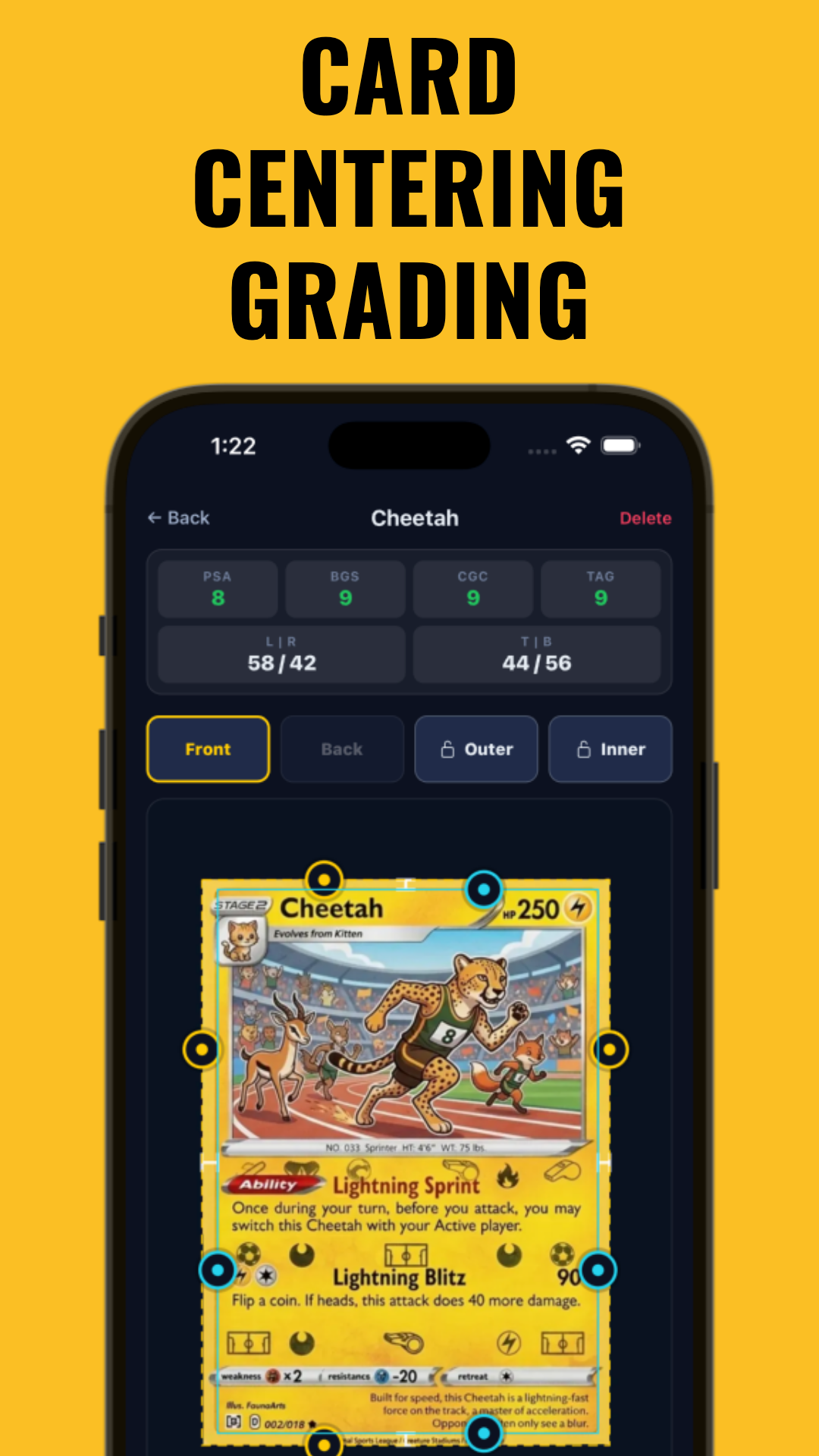
Centering is one of the most critical factors affecting a card’s grade. For 2003 Topps Chrome cards, centering is measured by the percentage of white border visible on each side, with ideal grades requiring centering within 55/45 or better. Using precise tools like Midpoint, collectors can measure centering with millimeter accuracy, helping them decide whether to submit cards for grading.
Surface condition is equally important. The chrome finish is prone to surface scratches and print defects, which can significantly lower a card’s grade. Corners and edges must also be sharp and free of dings or whitening. Cards with perfect centering but surface flaws may not reach PSA 10, illustrating the nuanced grading process.
Collectors aiming for PSA 10 should pre-grade their cards using detailed inspection, including under magnification and proper lighting, to identify any imperfections before submission. This process can help avoid grading fees on cards unlikely to receive top grades.
Investment and Resale Considerations
Investors should consider the cost-benefit of grading. PSA grading fees typically range from $20 to $150 per card depending on declared value and turnaround time. For lower-grade raw cards valued under $200, grading may not be cost-effective. However, near-perfect raw copies that can achieve PSA 9 or 10 grades often see a multiple increase in value post-grading, which can justify the expense.
Additionally, market timing affects resale value. High-profile player milestones, anniversaries, or media attention can trigger price spikes. Keeping track of market trends via sales platforms and tools like Midpoint helps investors choose optimal selling windows.
Section 3: Key Parallels and Their Impact on Card Prices
Types of Parallels in the Set
The 2003 Topps Chrome set is notable for its array of parallel cards, each with varying degrees of rarity and visual appeal. These include:
- Gold Refractor: Numbered to 500, these cards feature a distinctive gold sheen and serial numbering on the front, making them rarer than base refractors.
- Refractor: The standard refractor card has a shiny, prism-like reflective surface but is not serial numbered, making it more common than numbered parallels.
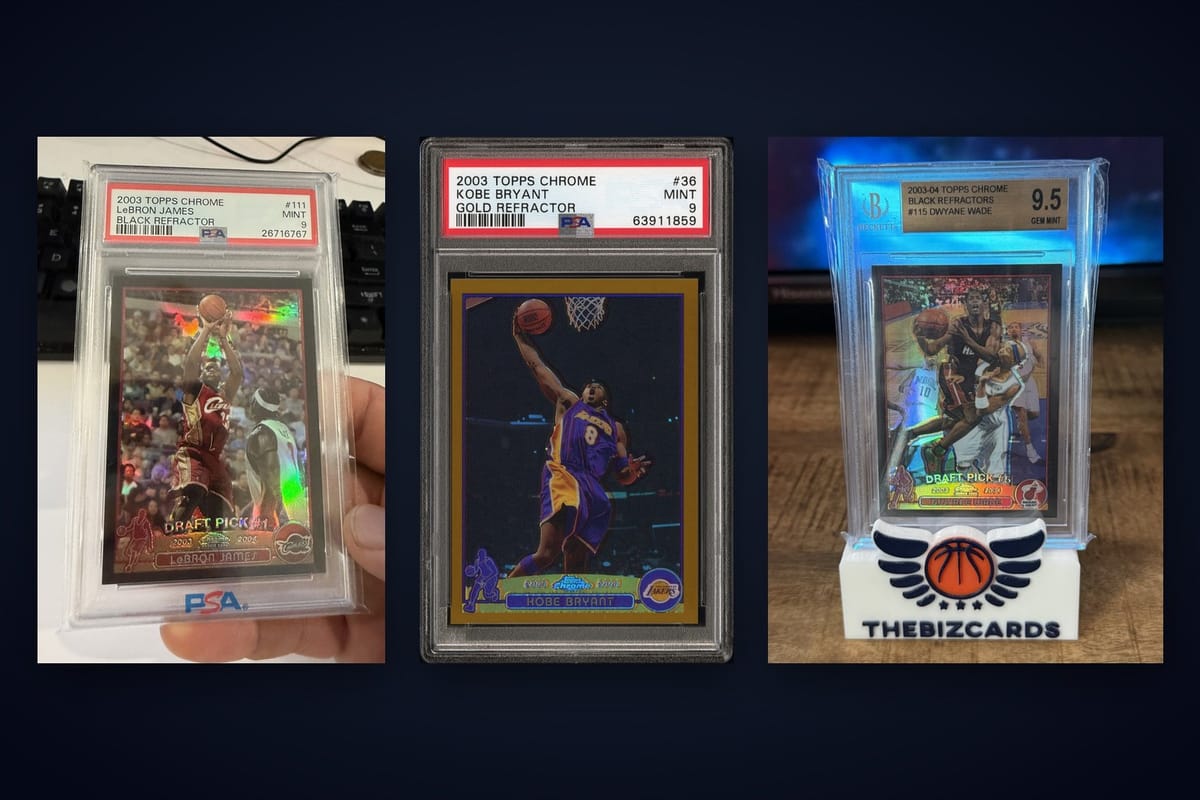
- Black Refractor: Limited to just 125 copies, these feature a sleek black refractor finish with serial numbering, often commanding premium prices due to their scarcity.
- Xfractor: Ultra-rare cards numbered to 25 or fewer, with unique cross-hatch patterns and sought after for their scarcity and distinctive look.
Value Multipliers for Parallels
Parallels typically command significant price premiums over base cards. For example, a PSA 10 LeBron James Black Refractor can surpass $10,000, reflecting rarity and collector demand. Gold Refractors in PSA 10 condition often sell in the $3,000–$6,000 range, while Xfractors, when available, can fetch even higher prices due to their scarcity—sometimes exceeding $15,000.
Other rookies’ parallels also see marked price increases. Carmelo Anthony’s Gold Refractor PSA 10 cards can trade between $600 and $1,200, and Dwyane Wade’s Black Refractor PSA 10 cards often reach $1,500 or more. The multiplier effect is typically several times the base card’s value for Gold Refractors and higher multiples for Black and Xfractors.
Identifying Authentic Parallels
Authenticity verification is important to avoid counterfeit or altered cards. Genuine parallels feature clear serial numbering on the front or back, usually foil-stamped in gold, black, or white depending on the parallel type. The numbering format is typically "###/500" for Gold Refractors or "###/125" for Black Refractors.
Collectors should also examine foil quality, gloss, and printing consistency, as counterfeit parallels often display blurry foil or inconsistent numbering. Utilizing resources such as the AI-Focused Comparison article can help collectors understand how AI tools assist in precise centering analysis and authenticity verification.
Collecting and comparing known authentic parallels side-by-side can further aid in identifying genuine cards versus fakes.
Section 4: Other Valuable 2003 Topps Chrome Rookie Cards
Beyond LeBron: Rookie Standouts
The 2003 Topps Chrome set includes several other notable rookies beyond LeBron James. These include:
- Carmelo Anthony (#180): Known for his scoring ability and NBA career longevity, Carmelo’s rookie cards remain collectible. His parallels, especially Gold and Black Refractors, see steady demand.
- Dwyane Wade (#162): A multiple-time NBA champion and Finals MVP, Wade’s rookie cards are prized, particularly in high grades and rare parallels.
- Kobe Bryant (#131): Though not a rookie card in this set (his rookie was earlier), his 2003 Topps Chrome cards still command interest due to his legacy and passing.
- Chris Webber (#139) and Reggie Miller (#56): Veteran stars featured in insert or veteran cards, with collector interest.
Price Range Overview
As of 2026-08-23, raw rookie cards for Carmelo Anthony and Dwyane Wade generally trade between $30 and $100, depending on centering and surface condition. PSA 10 graded versions often elevate these values to several hundred dollars, with parallels commanding higher prices.
Kobe Bryant’s cards in this set tend to trade higher, often ranging from $200 to $700 raw and reaching higher prices in PSA 10 condition, reflecting his enduring popularity and limited card availability from this era.
Checklist and Collector Focus
Many collectors aim to complete the rookie checklist to capture the full breadth of the 2003 Topps Chrome rookie class. This approach often involves acquiring base cards and select parallels for each key player. Alternatively, some focus exclusively on individual high-value cards, particularly those with strong investment potential.
For grading candidates, cards should be carefully pre-graded to assess centering, surface, edges, and corners. The How to Pre-Grade Your Card guide provides detailed instructions to evaluate card condition before paying for professional grading, helping collectors avoid costly grading of low-grade cards.
Section 5: Grading and Its Effect on Card Values
Grading Companies and Scales
The most recognized grading companies for the 2003 Topps Chrome set include PSA (Professional Sports Authenticator), Beckett Grading Services (BGS), Certified Guaranty Company (CGC), and TAG Grading. Each uses a 1-10 scale, but grading nuances differ:
- PSA: Emphasizes centering, corners, edges, and surface, with PSA 10 representing "Gem Mint" condition.
- BGS: Uses subgrades for centering, corners, edges, and surface, providing detailed grade breakdowns. BGS 9.5 is considered "Gem Mint."
- CGC: Similar to PSA, with some collectors preferring CGC for its modern standards and affordability.
- TAG Grading: A newer entrant offering competitive services and quick turnaround.
Among these, PSA 10 remains the gold standard for maximum value, though BGS 9.5 also commands high prices, especially for cards with strong centering and surface conditions.
Population Reports and Scarcity
Population reports provide transparency on how many cards exist at each grade, influencing scarcity and pricing. For example, as of mid-2026, there are approximately 900 PSA 10 graded LeBron James #111 cards, compared to over 4,000 PSA 9 cards. This difference in population contributes to the price premium of PSA 10 over PSA 9.
Similarly, rare parallels like Black Refractors have smaller populations in top grades, driving price increases. Collectors use population data to inform grading submissions and investment strategies.
Value Impact by Grade
Grading can multiply raw card values significantly, but the magnitude depends on the card and grade. For the 2003 Topps Chrome set, a jump from raw to PSA 9 typically multiplies value by several times, while moving from PSA 9 to PSA 10 can further increase the price. For example:
- LeBron James #111 Raw: ~$250
- PSA 9: ~$1,200 (approx. 5x raw)
- PSA 10: ~$4,100 (approx. 3.5x PSA 9)
This dynamic incentivizes collectors to submit only cards with strong grading potential to maximize returns.
Section 6: Sealed Boxes, Packs, and Market Trends
Sealed Hobby Boxes Value
Sealed 2003 Topps Chrome hobby boxes remain sought after by collectors and investors. Each box contains several packs, offering multiple chances to pull high-grade rookies and rare parallels. As of August 2026, sealed hobby boxes typically trade between $1,200 and $1,800, depending on packaging condition, market demand, and recent sales trends.
Boxes in pristine, unopened condition with intact shrink wrap often command premiums. Some collectors prefer sealed boxes as a way to gain exposure to the set without individual card selection, preserving the thrill of pack opening and the potential for rare pulls.
Unopened Packs and Collector Sentiment
Individual unopened packs from this set usually sell for lower prices per pack than sealed boxes, averaging $30-$50 depending on demand. Packs appeal to collectors who enjoy the experience of opening and the excitement of chasing rare parallels or rookie cards. However, pack prices fluctuate with market cycles, player performance, and hobby interest.
The rise of digital marketplaces and unboxing content on social media has helped sustain interest in pack openings, influencing pack valuations and collector enthusiasm.
Recent Sales and Price History
Recent sales data from eBay, auction houses, and private sales reveal steady demand for high-grade rookie cards and parallels, with occasional spikes tied to player achievements or broader market hype. For example, LeBron James’s rookie card prices often increase around NBA Finals appearances or personal milestones.
To navigate these trends, collectors and investors use tools like Midpoint to track portfolio values, monitor population reports, and analyze sales data. This data-driven approach enables informed buying and selling decisions, optimizing returns.
Conclusion
The 2003 Topps Chrome basketball card set remains a key set for collectors and investors due to its star-studded rookie class, variety of parallels, and grading premiums. Its combination of high-quality card stock, innovative refractor technology, and iconic players creates a dynamic market with opportunities. Understanding the nuances of card condition, grading impact, and market trends is important for maximizing returns and enjoyment.
Leveraging digital tools like Midpoint to assess card centering and estimate grades before submission can help save money and improve investment decisions. Whether focusing on the iconic LeBron James rookie or other valuable cards and parallels, this set offers both new and seasoned collectors a rewarding collecting experience with potential long-term value.
FAQ
Q: How much is a 2003 Topps Chrome LeBron James rookie card worth?
A: As of 2026-08-23, raw near-mint copies typically sell for around $250. PSA 9 graded cards often fetch approximately $1,200, while PSA 10 examples can reach about $4,100, with rarer parallels commanding higher prices.
Q: What is the difference between the base, refractor, gold refractor, and black refractor versions?
A: Base cards have no special finish and are the most common. Refractors feature a shiny, reflective surface but are not serial numbered. Gold Refractors are limited to 500 copies with a distinctive golden sheen and serial numbering. Black Refractors are rarer still, limited to 125 copies with a sleek black finish and serial numbering, making them generally more valuable.
Q: Which 2003 Topps Chrome basketball cards are the most valuable besides LeBron James?
A: Key valuable rookies include Carmelo Anthony (#180), Dwyane Wade (#162), Kobe Bryant (#131), Chris Webber (#139), and Reggie Miller (#56). Their values depend on card condition, grading, and parallel rarity.
Q: How much does a PSA 10 2003 Topps Chrome card sell for compared with raw?
A: PSA 10 graded cards can sell for several times the raw value depending on the card. For instance, a raw LeBron James rookie card might be around $250, while a PSA 10 can exceed $4,000.
Q: Are 2003 Topps Chrome basketball hobby boxes worth anything sealed?
A: Yes, sealed hobby boxes typically trade between $1,200 and $1,800, providing collectors with multiple chances to pull valuable rookies and parallels.
Q: How can I tell if my 2003 Topps Chrome card is a refractor?
A: Refractors have a distinct shiny, prism-like reflective surface compared to base cards. Parallels like Gold and Black Refractors have serial numbering and unique foil finishes. Utilizing grading and centering tools such as Midpoint can help you verify card type and authenticity.
Free to start
Try the Midpoint app
Grade any card from a photo, see its raw and PSA 10 value, and track what your collection is worth — free.
Get it on iPhoneGet it on Android