Alex Pereira Trading Cards: Complete Price Guide & Collector Insights
Discover Alex Pereira trading cards values, top rookies, rare parallels, autograph editions, grading tips, and market trends for UFC collectors.


Estimated reading time: 15 min
Key Takeaways
- Alex Pereira trading cards have gained popularity with diverse rookie, parallel, and autograph variants contributing to their value, reflecting his growing recognition in the UFC world.
- Key rookie cards from Panini, Topps Chrome UFC, Prizm, and Donruss often command higher prices, especially when professionally graded, which can increase their value compared to raw cards.
- High-end parallels like Ice, Daybreak, and Superfractor variants are among the rarest and most valuable options, typically limited to fewer than 100 copies or even single serial numbers.
- Autographed and relic cards, including numbered short prints and 1/1s, often see significant price increases, with some fetching thousands of dollars depending on condition and grading.
- Using AI-powered tools like Midpoint can help pre-grade and assess card centering and condition more accurately for informed investments and to reduce grading submission risks.
Table of Contents
- Section 1: Understanding Alex Pereira Trading Cards and Market Demand
- Section 2: Top Rookie and Rookie-Style Alex Pereira Cards to Collect
- Section 3: Parallel and Refractor Variants: Identifying Premium Cards
- Section 4: Autograph, Relic, and Autograph-Relic Cards: What Makes Them Valuable?
- Section 5: Numbered Short Prints and Case Hits: Downtown, Kaboom, and 1/1 Cards
- Section 6: Grading Impact: PSA, BGS, SGC Values vs Raw Cards
- Section 7: Where to Buy, Browse, and Track Alex Pereira Cards
Conclusion
FAQ
Section 1: Understanding Alex Pereira Trading Cards and Market Demand
The Rise of Alex Pereira in UFC Collectibles
Alex Pereira's rise in the UFC scene has contributed to increased interest in his trading cards. As a multi-division champion, Pereira’s fighting style and personality have attracted fans, which can influence demand for his memorabilia. Collectors and investors often seek his cards for their potential to appreciate and their cultural significance within the MMA community. This has led to varying price movements across card types, sometimes following major fight wins or media exposure. For example, some rookie cards have experienced price increases after Pereira’s championship victories.
Key Factors Influencing Card Prices
Several elements can affect the value of Alex Pereira trading cards, including:
- Card Type: Rookie cards and autographed versions often hold higher value, as they represent early career moments and direct player involvement.
- Grading and Condition: Professional grading companies like PSA, BGS, and SGC can impact prices. Cards graded PSA 9 or 10 may sell for multiples of ungraded versions.
- Rarity and Numbering: Lower print runs, 1/1 cards, and rare parallels tend to command premiums due to scarcity.
- Market Trends: Fight outcomes, championship status, and media exposure (including social media) can influence demand and price fluctuations.
- Set Popularity: Cards from well-regarded sets with strong distribution, like Topps Chrome or Panini Prizm, often maintain higher liquidity and value.
Popular UFC Card Sets Featuring Pereira
Alex Pereira cards appear in several major UFC card sets, each with unique designs and rarity tiers. These include:
- Panini UFC – Known for solid base cards and diverse parallels.
- Topps Chrome UFC – Popular for shiny refractor parallels and autograph inserts.
- Prizm UFC – Sought after for vibrant refractors and serial-numbered parallels.
- Donruss UFC – Budget-friendly options with growing collector interest.
- Chronicles UFC – Combines multiple brands with unique card designs and inserts.
- Stadium Club UFC – Offers premium photography and limited parallels.
Each set provides different opportunities for collectors to acquire rare parallels, autographs, and rookie cards, making diversification across sets a common strategy.
Section 2: Top Rookie and Rookie-Style Alex Pereira Cards to Collect
Defining Rookie Cards in the UFC Market
Rookie cards are generally the first official trading cards issued during an athlete's debut season, often commanding higher value due to their association with the player’s breakthrough moment. In UFC collectibles, the rookie card landscape is somewhat unique given the relatively recent mainstream production of UFC cards and the sport’s evolving status. For Alex Pereira, distinguishing true rookie cards from early base cards or inserts is important for informed collecting and investing. A true rookie card is usually designated by the manufacturer and appears in the player’s debut season release.
Key Rookie Cards to Target
- Panini UFC Base Rookie: The foundational rookie card, often available in multiple parallels such as Gold, Blue, and Red Prizm parallels. Raw base rookies typically range from $20-$75, while high-grade PSA 10 versions can be higher.
- Topps Chrome UFC Rookie: Known for its glossy finish and refractor parallels, Topps Chrome rookie cards are popular. Base rookies may start around $50 raw, with Prizm refractors and autographs commanding higher prices.
- Prizm UFC Rookie: Prizm rookies are sought after due to vibrant designs and refractor parallels. Rainbow refractors and numbered parallels often start in the low hundreds and can increase if graded highly.
- Donruss UFC Rookie: A more affordable entry point with growing collector interest; typically found under $30 raw but with potential for appreciation.
Rookie-Style and Early Key Base Cards
Beyond official rookies, early base cards and rookie-style inserts add depth to collections. These cards often come from limited print runs or special subsets released early in Pereira’s UFC career and may feature unique designs or foil accents. Examples include Panini Chronicles rookie inserts or early limited parallel versions. Collectors use these to diversify their portfolios and potentially capitalize on undervalued assets before wider recognition affects prices. For instance, a Panini Chronicles rookie insert graded PSA 9 may currently trade under $50 but could appreciate with increased demand.
Section 3: Parallel and Refractor Variants: Identifying Premium Cards
Understanding Parallels and Refractors
Parallels are alternate versions of base cards that differ in color schemes, foil patterns, or numbering. They often have limited print runs, which increases scarcity. Refractors are a specific type of parallel characterized by a prismatic, rainbow-like reflective surface that makes the card visually distinctive. These refractor cards often have lower print runs than base cards, which can lead to higher market values.
Popular Parallel Variants for Alex Pereira Cards
- Ice Parallels: Transparent cards with frosted, icy effects, typically numbered to 25 or fewer. Ice parallels are especially sought for their unique look and rarity.
- Daybreak Parallels: Featuring sunrise-toned foil patterns, these are rarer than base parallels and often limited to 10-50 copies.
- Blue and Green Parallels: Colored borders or backgrounds, usually sequentially numbered to between 99 and 199 copies, adding scarcity and appeal.
- Gold Parallels: Among the rarest, gold foil parallels are often numbered to 10 or fewer copies, commanding significant premiums, sometimes multiple times base card prices.
- Superfractor: Extremely rare 1/1 refractor variants with unique designs and strong collector interest, often fetching high prices depending on player popularity and condition.
Why Parallels Command Higher Prices
These variants generally have much lower print runs than base cards, making them scarcer and more collectible. For example, a Gold or Superfractor Alex Pereira card can sell for multiples of the base rookie’s value, especially when graded highly. The scarcity combined with the appealing aesthetics of refractors and parallels drives collector interest and willingness to pay premiums. Collectors aiming to maximize investment potential often target mid-to-high tier parallels graded PSA 9 or 10, as these can appreciate when market demand increases.
Section 4: Autograph, Relic, and Autograph-Relic Cards: What Makes Them Valuable?
Types of Signed and Memorabilia Cards
Autographed cards feature Pereira’s signature, typically certified by the manufacturer, while relic cards include embedded pieces of fight-worn gear such as gloves, shorts, or mouthguards. Autograph-relic cards combine both elements, increasing their desirability by offering collectors both a signature and a tangible piece of memorabilia. These cards often come in limited print runs and are sought after in the UFC collectibles market.
Factors Driving Value in Autographed and Relic Cards
- Authenticity: Cards authenticated by reputable grading companies (PSA/DNA, BGS Autograph grade) or certified by manufacturers tend to carry premium prices and buyer confidence.
- Limited Print Runs: Numbered autographs or relic cards, especially those with print runs under 100 or serial numbers like 1/10, 1/25, increase scarcity.
- Condition and Centering: Cards with excellent centering, sharp corners, and clean surfaces generally command higher prices. Minor imperfections can reduce value.
- Signature Quality: Bold, clear, and well-placed autographs add to desirability, while smudged or faint signatures may detract.
Popular Autograph and Relic Cards in Pereira’s Portfolio
Some popular collectibles include Panini Prizm Autographs, which combine vibrant refractor parallels with authentic signatures, Topps Chrome Autograph-Relics that embed fight-used memorabilia alongside autographs, and Donruss Certified Signatures offering budget-friendly signed cards. Limited edition inserts such as Kaboom! or Downtown relics feature distinctive artwork and are prized for their uniqueness. These cards often range from a few hundred to over a thousand dollars depending on print run and grading. For example, a Panini Prizm Gold Autograph-Relic numbered to 10 might sell for a high price in PSA 10 condition.
For collectors seeking to leverage AI-driven grading insights, tools like Midpoint enable precise centering and condition assessment before submitting these costly cards for professional grading, potentially reducing the risk of low grades that can affect value.
Section 5: Numbered Short Prints and Case Hits: Downtown, Kaboom, and 1/1 Cards
What Are Numbered Short Prints and Case Hits?
Numbered short prints are cards produced in very limited quantities, often fewer than 100 copies, designed to increase rarity and desirability. Case hits are ultra-rare cards found only in sealed hobby cases, frequently including unique inserts or one-of-one (1/1) cards, which are singular copies worldwide. These cards are highly coveted by serious collectors and investors due to their exclusivity.
Notable Short Prints in Alex Pereira Sets
- Downtown Inserts: Known for colorful, graffiti-inspired artwork, Downtown inserts are typically numbered to 25 or fewer copies and often feature autographs or relics, making them collectible.
- Kaboom Cards: Featuring comic-book style artwork with limited print runs, Kaboom cards are designed to stand out visually and are often numbered to 10 or 25 copies.
- 1/1 Cards: The rarest cards, each 1/1 card is unique with a single copy worldwide, often combining autographs, relics, refractor finishes, and high-end serial numbering. These cards can command prices from several thousand dollars depending on player prominence.
Impact of Short Prints and 1/1s on Market Value
These cards often experience significant price fluctuations due to their scarcity and exclusivity. For example, a 1/1 Alex Pereira card graded PSA 10 can sell for prices much higher than base or parallel cards. Short prints like Kaboom autographed relics may see notable price increases following key fight events. However, the market for these cards is less liquid, with fewer buyers able to afford premium prices, so timing and condition assessment are important.
Collectors interested in these cards may benefit from advanced tools like Midpoint to digitally pre-grade and verify centering and condition, helping avoid costly grading submissions on cards unlikely to receive top grades and thus protecting resale value.
Section 6: Grading Impact: PSA, BGS, SGC Values vs Raw Cards
Why Grading Matters for Alex Pereira Cards
Professional grading companies provide standardized assessments of card condition, which can heavily influence resale values. PSA, BGS, SGC, and TAG offer grading services with different grading scales, subgrades (corners, edges, surface, centering), and population reports that affect card scarcity and desirability.
Comparing Graded and Raw Card Prices
Generally, graded cards sell for a premium over raw (ungraded) cards. For example:
- A PSA 10 graded Panini UFC rookie card may sell for 2-3 times the price of the raw equivalent, reflecting buyer confidence in near-perfect condition.
- BGS 9.5 cards with strong centering and surface quality are often prized, sometimes commanding prices close to or exceeding PSA 10 equivalents, due to detailed subgrades.
- SGC graded cards have gained popularity for competitive grading with faster turnaround times and less submission backlog, making them an alternative for investors.
Using AI Tools to Pre-Grade for Better Investment
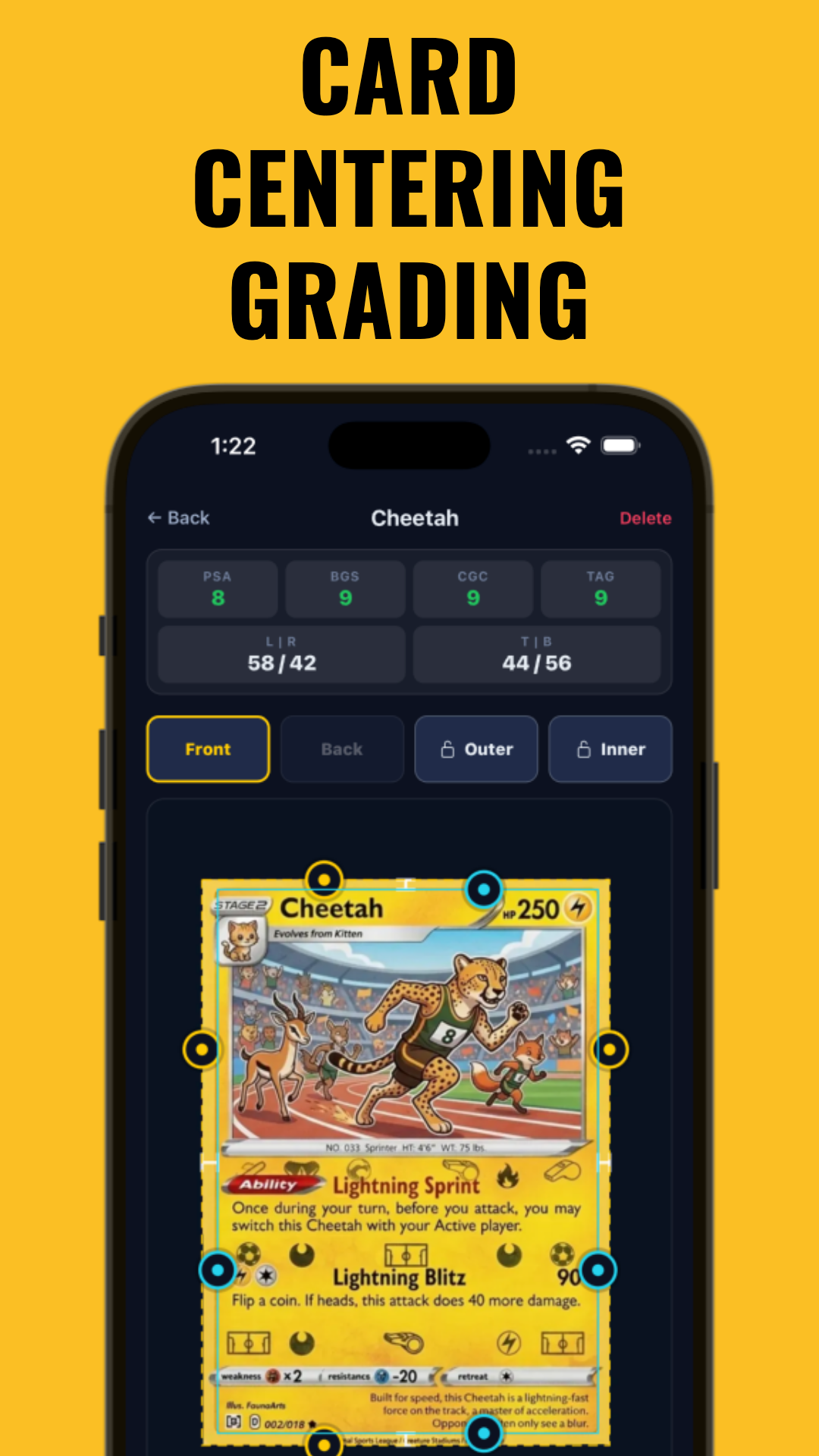
Before paying submission fees of $20-$100+ per card (depending on service and turnaround), collectors can use Midpoint to get instant AI estimates of centering, corners, edges, and surface condition. This pre-grading insight can help maximize the likelihood of securing a high grade by identifying card flaws in advance. For example, Midpoint’s analysis can detect off-centering beyond typical acceptable ratios or corner wear not easily visible. This guidance may save money by avoiding submission of cards unlikely to receive top grades, thereby protecting investment value.
For more detailed grading differences and their impact on value, see our grading scale comparison guide.
Section 7: Where to Buy, Browse, and Track Alex Pereira Cards
Top Marketplaces and Databases
Collectors can find Alex Pereira cards across popular platforms such as:
- eBay: The largest auction site with frequent listings, buyer protections, and wide selection. Using auction filters for graded cards and sold listings helps gauge market prices.
- StockX: Offers transparent pricing via recent authenticated sales, making it easier to track market value and trends.
- TCDB (Trading Card Database): Provides comprehensive card checklists, population reports, and community pricing insights, helping collectors identify rare variants and assess scarcity.
- COMC: Enables bulk buying and consignment options with a large inventory, ideal for building collections efficiently.
Tracking Collection Value Over Time
Apps like Midpoint provide portfolio tracking features, enabling collectors to monitor market fluctuations and overall collection worth in real-time. These tools can update card valuations based on recent sales and grading population changes, which is useful for making informed buy/sell decisions and for insurance purposes. For example, Midpoint’s dashboard can alert users to price changes, helping decide optimal selling windows or acquisition opportunities.
Tips for Safe and Smart Trading
- Verify seller reputations and grading authenticity by checking feedback scores, grading certificates, and using trusted marketplaces.
- Use AI grading tools before purchase to assess card condition remotely, reducing the risk of buying overvalued or damaged cards.
- Invest in proper storage to preserve card quality; consider top loaders, magnetic holders, and climate-controlled environments. See our ultimate collector’s storage guide for best practices.
- Be patient and research market trends to avoid overpaying during hype cycles or panic selling.
Conclusion
Alex Pereira trading cards represent a dynamic segment within UFC collectibles, influenced by rookie card interest, rare parallels, autographed memorabilia, and grading considerations. Understanding the nuances of card types, rarity, and grading is important for collectors aiming to maximize value. This includes recognizing the significance of rookie cards from key sets, identifying premium parallel variants, and appreciating the value added by authenticated autographs and relics.
Leveraging AI-powered tools like Midpoint to assess centering and condition before grading submission can help improve investment outcomes and confidence. Such technology provides objective condition analysis, assisting collectors in submitting their best cards for grading and potentially maximizing returns.
Staying informed on recent sales, market trends, and new releases across key sets helps collectors remain competitive. Combining knowledge with smart technology and disciplined collecting strategies can support success in the evolving Alex Pereira trading card market.
FAQ
Q: What are the best Alex Pereira trading cards to buy?
A: Popular cards include official rookie cards from Panini, Topps Chrome, and Prizm UFC sets, autograph and autograph-relic cards, and rare parallels like Ice or Superfractor variants. High-grade versions of these cards, especially those graded PSA 9 or 10, often offer good value and growth potential due to scarcity and collector demand.
Q: How much are Alex Pereira UFC cards worth?
A: Values vary widely based on card type, rarity, and condition. Base rookie cards may range from $20 to $200 raw, while graded parallels and autographed cards can reach several hundred to thousands of dollars, especially for limited editions and 1/1s. For example, a PSA 10 Topps Chrome Prizm rookie autograph may sell for over $1000 in the current market.
Q: Which Alex Pereira cards are rookie cards?
A: Rookie cards are typically from Pereira’s first UFC card releases, such as Panini UFC Base Rookie, Topps Chrome UFC Rookie, and Prizm UFC Rookie cards. Some early base cards from other sets like Donruss or Chronicles may be considered rookie-style cards but might not carry official rookie designation.
Q: What is the rarest Alex Pereira trading card?
A: The rarest cards are generally 1/1 Superfractor or unique case-hit inserts like Kaboom and Downtown cards with autograph-relic features. These are produced in extremely limited quantities, often just a single copy, and command the highest premiums.
Q: Are Alex Pereira autographed cards valuable?
A: Yes, authentic autographed cards, especially those certified by manufacturers and graded highly, hold significant value. Combining autographs with relics or low print numbers can further increase prices, with some cards selling for thousands of dollars depending on condition and rarity.
Q: Which Alex Pereira cards have seen the biggest price increases recently?
A: Recent price increases have been observed in graded rookie and autograph cards from Topps Chrome and Prizm sets, as well as rare parallels like Ice and Gold. Case-hit 1/1 cards have also seen notable appreciation following Pereira’s UFC championship wins and increased exposure.
Free to start
Try the Midpoint app
Grade any card from a photo, see its raw and PSA 10 value, and track what your collection is worth — free.
Get it on iPhoneGet it on Android