Base Pokemon Cards Value: Ultimate 1999 Set Price Guide
Discover the complete Base Pokemon cards value guide with prices, grading tips, and top cards like Charizard for raw and PSA 10 collectors.

Estimated reading time: 16 min
Key Takeaways
- Base Pokemon cards value varies widely by edition, condition, grading status, and market trends.
- Charizard, Blastoise, and Venusaur remain among the most valuable Base cards, especially in PSA 10 condition with historical sales data supporting their high worth.
- 1st Edition, Shadowless, and Unlimited print runs differ significantly in rarity, visual traits, and market price, with 1st Edition cards generally commanding premium multiples.
- Professional grading can significantly impact value; PSA 10 cards often fetch premiums over raw cards, though the grading process involves fees and some risk.
- Use precise centering and condition evaluation tools like Midpoint to estimate card grades before costly submissions, potentially increasing chances of higher returns.
Card values — live data from Midpoint's card database, as of 2026-08-30. Prices move; Midpoint refreshes these daily.
| Card | Raw | PSA 10 | Gem premium | |
|---|---|---|---|---|
 |
Charizard #4/102 Base (1999) |
$2,146 | $414,331 | 193× |
 |
Chansey #3/102 Base (1999) |
$400.00 | $44,422 | 111.1× |
 |
Pikachu #58/102 Base (1999) |
$429.98 | $28,908 | 67.2× |
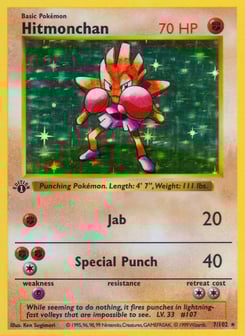 |
Hitmonchan #7/102 Base (1999) |
$254.99 | $26,504 | 103.9× |
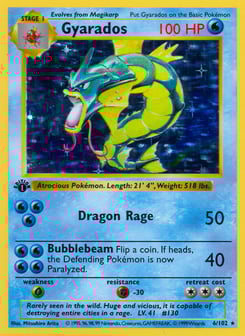 |
Gyarados #6/102 Base (1999) |
$121.39 | $26,270 | 216.4× |
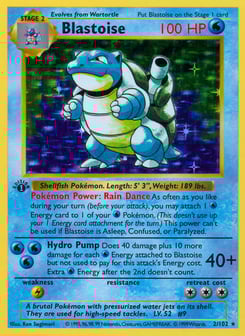 |
Blastoise #2/102 Base (1999) |
$820.00 | $23,943 | 29.2× |
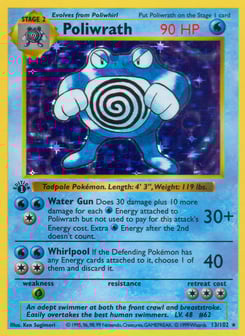 |
Poliwrath #13/102 Base (1999) |
$499.00 | $17,336 | 34.7× |
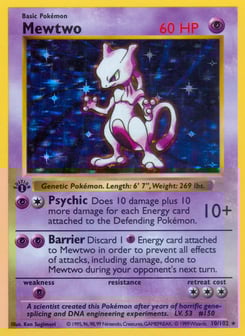 |
Mewtwo #10/102 Base (1999) |
$358.01 | $16,944 | 47.3× |
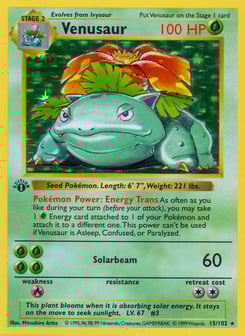 |
Venusaur #15/102 Base (1999) |
$501.29 | $16,856 | 33.6× |
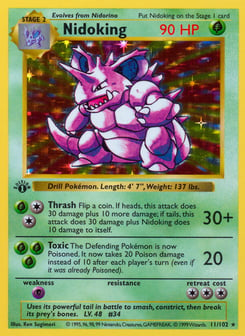 |
Nidoking #11/102 Base (1999) |
$146.41 | $14,741 | 100.7× |
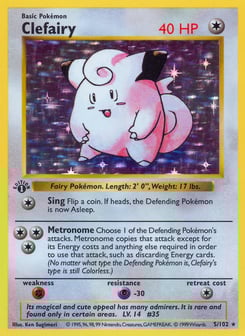 |
Clefairy #5/102 Base (1999) |
$299.00 | $11,071 | 37× |
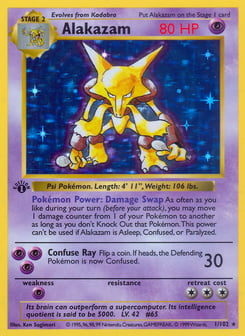 |
Alakazam #1/102 Base (1999) |
$429.00 | $10,073 | 23.5× |
Look up any card's current raw and graded value in Midpoint — and get an estimated grade before you pay to submit.
Table of Contents
- Section 1: Understanding the Base Set and Its Variants
- Section 2: Detailed Base Pokemon Cards Price Guide
- Section 3: The Most Valuable Base Cards and Their Market Impact
- Section 4: How Card Condition and Grading Affect Base Pokemon Cards Value
- Section 5: Comparing 1st Edition, Shadowless, and Unlimited Cards
- Section 6: Which Base Cards Are Worth Grading?
- Conclusion
- FAQ
Section 1: Understanding the Base Set and Its Variants
What Is the Base Set?
The Base Set represents the original 1999 Pokémon Trading Card Game (TCG) release, consisting of 102 unique cards. This set laid the foundation for the Pokémon TCG, featuring a mix of common, uncommon, rare, and holographic cards that introduced the core gameplay mechanics and iconic Pokémon artwork to collectors and players worldwide. Beyond gameplay, the Base Set holds significant nostalgic and cultural importance as it marked the beginning of the Pokémon card collecting phenomenon.
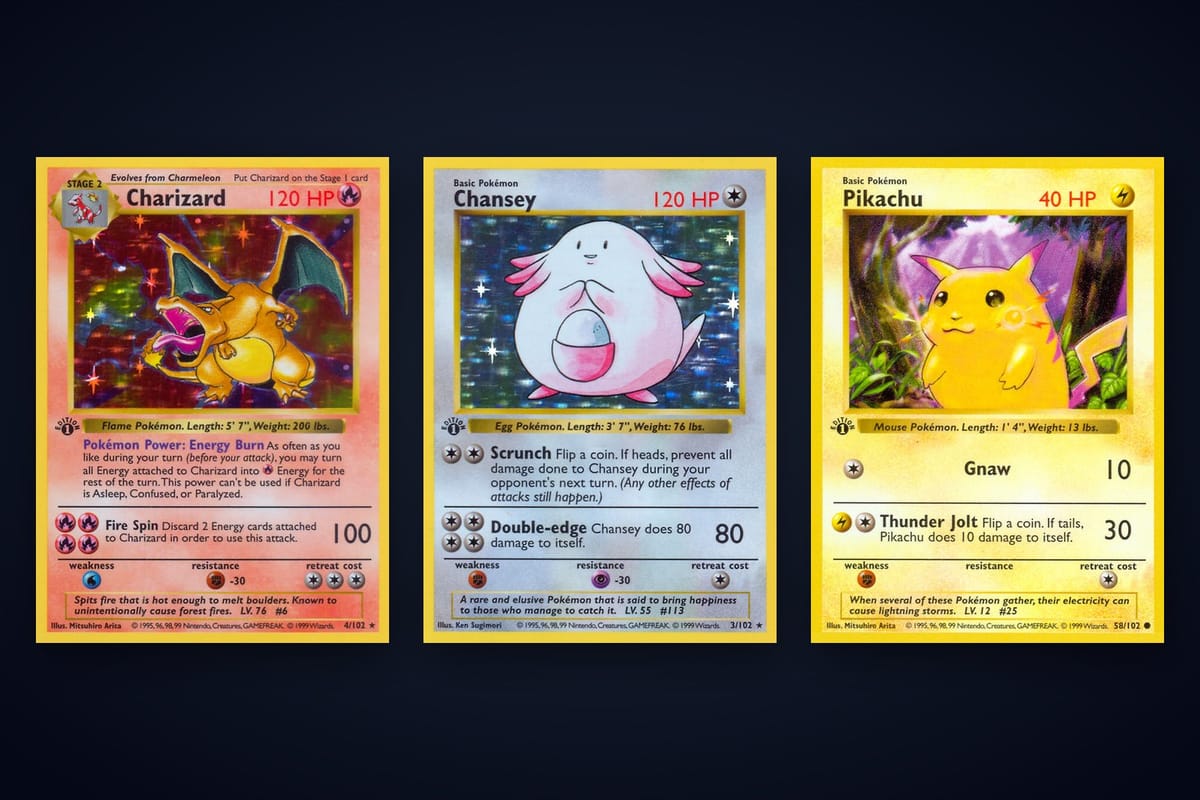
The set includes fan-favorite and starter Pokémon such as Charizard, Blastoise, and Venusaur, along with popular non-starters like Pikachu and Mewtwo. The cards’ design includes distinctive elements like the original Pokémon logo, energy symbols, rarity stars, and unique artwork styles, which differ slightly across print runs.
Collectors prize the Base Set not only for nostalgia but also due to the scarcity of certain print runs and the fact that over 25 years later, these cards remain sought after in vintage and investment markets.
Base Set Variants: 1st Edition, Shadowless, and Unlimited
The Base Set is subdivided into three main print runs, each with unique visual and rarity characteristics that significantly affect their value:
- 1st Edition: The earliest print run, identifiable by a "1st Edition" stamp (a black circular symbol with "Edition 1" text) on the left side of the card, beneath the Pokémon artwork. These cards were produced in limited quantities and are the rarest variant, making them highly coveted among collectors.
- Shadowless: The second print run, these cards lack the shadow on the right border of the card's image box, giving them a flatter appearance. They also have a slightly different font and coloring. Shadowless cards were printed after the 1st Edition but before the Unlimited print, making them less rare than 1st Editions but more scarce than Unlimited.
- Unlimited: The most common print run with the shadow on the right border and no 1st Edition stamp. These cards were printed in large quantities and are the easiest to find, thus generally carrying the lowest value among the three variants.
Understanding these variants is crucial for collectors and investors, as even cards featuring the same Pokémon and artwork can differ substantially in market value based on their edition.
Why the Base Set Still Matters in 2026
Despite being over a quarter-century old, the Base Set continues to be a cornerstone of Pokémon card collecting and investing. Several factors contribute to its enduring relevance:
- Historical Importance: As the first official Pokémon TCG release, the Base Set represents the genesis of the card game, attracting collectors interested in the origins of the franchise.
- Low Population of High-Grade Cards: Cards graded PSA 10 from the 1st Edition print run are rare due to printing imperfections and the difficulty of preserving cards in near-perfect condition for over 25 years.
- Iconic Artwork: The original artwork, especially of Charizard by Mitsuhiro Arita, has become an icon beyond the card game, fueling demand across collectors and pop culture enthusiasts.
- Market Demand: Both collectors and investors view Base Set cards as blue-chip assets within the trading card space. Auction records and private sales continue to influence prices, especially for premium condition cards.
- Technological Advances: Tools like Midpoint provide collectors with accurate centering and condition analyses, enabling better-informed grading decisions, reducing submission risks, and preserving card value.
These factors combine to keep the Base Set and its variants prominent in the vintage Pokémon card market, with ongoing interest and price appreciation.
| Card Name | Variant | Raw Price | PSA 10 Value |
|---|---|---|---|
| Charizard | 1st Edition | $12,000 | $350,000 |
| Blastoise | Shadowless | $1,500 | $12,000 |
| Venusaur | Unlimited | $400 | $2,800 |
| Pikachu | 1st Edition | $120 | $2,000 |
| Mewtwo | Shadowless | $350 | $3,200 |
Section 2: Detailed Base Pokemon Cards Price Guide
Price Breakdown by Card Rarity and Variant
The value of Base Set Pokémon cards is influenced by their rarity classification, print edition variant, and condition. Here's a breakdown of typical price ranges as of August 30, 2026, reflecting market data from auction houses, peer-to-peer sales, and dealer listings:
- Commons and Uncommons: These cards are the most numerous in the set and generally have raw values ranging from $0.50 to $5. Their value is seldom enhanced by grading unless the card is in pristine condition with perfect centering and no surface imperfections. Even then, the market for graded commons is limited.
- Rare Non-Holographics: Non-holo rare cards such as Nidoking or Nidoqueen typically range from $5 to $50 raw, depending on print run and demand. PSA 10 graded versions can reach $200 or more, especially for 1st Edition copies, due to their scarcity and collector interest.
- Holographic Cards: The holographic subset represents the highest value segment of the Base Set. Raw holographic cards commonly start at $50, with rare ones like Charizard and Blastoise reaching thousands raw. Graded holographics, especially PSA 9 or 10, can increase in value substantially.
Estimated Price Ranges for Key Base Set Cards (Raw vs PSA 10)
- Charizard 1st Edition: Raw condition prices hover around $12,000, with PSA 10 graded copies commanding approximately $350,000, reflecting a significant premium.
- Blastoise Shadowless: Raw cards typically trade around $1,500, while PSA 10 graded examples can fetch $12,000 or more.
- Venusaur Unlimited: Raw cards range near $400, with PSA 10 values around $2,800.
- Alakazam 1st Edition: Raw copies are valued at about $500, and PSA 10 grades can reach up to $4,500.
- Gyarados Shadowless: Raw prices average $300, with PSA 10 graded versions near $2,700.
Prices fluctuate based on market trends, card availability, and collector interest. For instance, recent trends have shown increased demand for non-starter holographics, slightly elevating their values.
Price Guide Utility for Collectors
A comprehensive price guide is an invaluable tool for collectors, investors, and sellers. It provides a standardized reference for current market values, helping users make informed decisions about buying, selling, or grading Base Set cards. Features that enhance price guide utility include:
- Real-Time Market Data: Access to up-to-date sales data from auctions and marketplaces helps reflect current pricing trends accurately.
- Variant and Condition Differentiation: Detailed breakdowns by print run (1st Edition, Shadowless, Unlimited) and condition grades (raw, PSA 9, PSA 10) allow for precise valuation.
- Historical Price Tracking: Viewing historical price trends helps anticipate future value trajectories.
- Large Card Database: Apps like Midpoint include extensive card data, covering all Base Set variants, ensuring broad coverage.
- Integrated Grading Tools: Combining price data with AI grading estimates streamlines investment decisions.
By leveraging these features, collectors can optimize their buying and selling strategies, minimize risk, and better understand market dynamics.
Section 3: The Most Valuable Base Cards and Their Market Impact
Top Tier Base Cards by Value
The most valuable Base Set cards are predominantly holographic rarities, with Charizard at the pinnacle. Its rarity, popularity, and iconic artwork have driven it to high valuations in PSA 10 condition. Other standout cards include Blastoise, Venusaur, and Alakazam, each commanding significant premiums in the graded market.
For example, recent auction sales have demonstrated Charizard 1st Edition PSA 10 cards selling for upwards of $350,000, with private sales sometimes reported at higher amounts. Blastoise Shadowless PSA 10 cards regularly fetch $12,000 or more, while Venusaur Unlimited PSA 10 copies trade near $2,800. These figures illustrate the financial impact these cards have on the vintage Pokémon market.
Why Charizard Dominates Base Pokemon Cards Value
- Popularity: Charizard is one of the most beloved and recognizable Pokémon globally, transcending the card game and becoming a cultural icon. This broad appeal consistently fuels demand.
- Scarcity: The limited number of 1st Edition PSA 10 Charizard cards is due to production volume and the difficulty of preserving cards in pristine condition. The print run was relatively small, and the card's popularity led to heavy play and handling, reducing mint-condition availability.
- Market Demand: Charizard maintains steady demand from collectors, investors, and speculators alike, supporting liquidity and price stability at high valuations.
- Artwork and Nostalgia: The original artwork by Mitsuhiro Arita is widely regarded as iconic, which, combined with nostalgia for the game's early days, adds emotional and aesthetic value.
- Investment Potential: Charizard cards have shown appreciation over the past decade, attracting investors seeking long-term value growth.
Other Valuable Base Cards To Watch
While Charizard is the headline card, other Base Set holographic cards also hold strong market positions. These cards are essential for completing high-end collections and often have less price volatility but steady demand:
- Blastoise Shadowless PSA 10: Valued around $12,000, it represents a strong alternative to Charizard for collectors focusing on Water-type starter Pokémon.
- Venusaur Unlimited PSA 10: Trading near $2,800, Venusaur appeals to Grass-type fans and collectors completing the starter trio.
- Mewtwo Shadowless PSA 10: Valued approximately $3,200, Mewtwo's popularity and gameplay significance support its value.
- Alakazam 1st Edition PSA 10: With a value near $4,500, Alakazam is prized for its psychic-type rarity and unique artwork.
- Gyarados Shadowless PSA 10: Trading around $2,700, Gyarados is a sought-after holographic with strong fan appeal.
These cards contribute to the overall market depth and provide diversification options for collectors and investors.
Section 4: How Card Condition and Grading Affect Base Pokemon Cards Value
Condition Categories and Their Market Impact
Condition is a critical factor affecting Base Pokemon cards value. Even rare cards can see significant price differences based on wear, damage, and centering. The standard condition categories include:
- Near Mint (NM): Cards in this category exhibit minimal wear, sharp edges, no creases, and strong centering (typically within 60/40 to 65/35 ratios). NM cards command higher prices than lower grades.
- Played: Cards show visible surface scratches, edge whitening, slight creases, or centering issues. Played cards often sell for a fraction of NM or graded values.
- Graded: Professional grading companies like PSA, BGS, CGC, and TAG assign numeric grades from 1 (Poor) to 10 (Gem Mint), evaluating surface, edges, corners, and centering. Graded cards provide market trust and liquidity, often unlocking premium value.
The difference in value between raw Near Mint and PSA 10 graded cards can be substantial, especially for high-demand Base Set cards.
PSA 10 Value Premiums
For illustration, as of August 30, 2026, a raw 1st Edition Charizard might sell for around $12,000, while the same card graded PSA 10 can command upwards of $350,000. This represents a large increase. Other cards show similar patterns:
- Blastoise Shadowless: Raw $1,500 vs PSA 10 $12,000 (approximate 8x premium)
- Venusaur Unlimited: Raw $400 vs PSA 10 $2,800 (approximate 7x premium)
- Mewtwo Shadowless: Raw $350 vs PSA 10 $3,200 (approximate 9x premium)
This premium reflects buyer confidence, condition assurance, and the prestige of owning a gem mint graded card.
Using AI and Tools for Pre-Grading
Given the cost of professional grading—typically $30 or more per card plus shipping and potential insurance—submitting lower-grade cards can be financially risky. To mitigate this, collectors increasingly use AI-based grading apps like Midpoint, which evaluate key condition aspects such as centering, surface wear, corner sharpness, and edge quality.
Midpoint uses high-resolution images and sophisticated algorithms to produce condition scores aligned with PSA and other grading standards, providing an estimated pre-grade. This allows collectors to:
- Identify cards most likely to achieve high grades (PSA 9 or 10), maximizing grading ROI.
- Avoid submitting cards with centering or surface defects that will result in lower grades and diminished value.
- Track condition improvements by comparing images pre- and post-cleaning or storage adjustments.
Learn more about the pre-grading process with detailed steps and tools in our comprehensive guide.
Section 5: Comparing 1st Edition, Shadowless, and Unlimited Cards
Visual and Print Differences
Each Base Set variant can be distinguished by key visual and printing characteristics:
- 1st Edition: Features the "1st Edition" stamp, which appears as a black circular emblem with the number 1 and the word "Edition" on the left side, below the Pokémon image. The font colors are generally richer, and cards have a distinct color saturation. These cards were printed earliest and are rarer.
- Shadowless: Named for the lack of a shadow on the right side of the Pokémon image frame, these cards have a flat border. The font is slightly different, with less color saturation compared to 1st Edition. These were printed after 1st Edition runs but before Unlimited.
- Unlimited: The most common print run, featuring a shadow on the right side of the image frame, giving a three-dimensional appearance. These cards lack the 1st Edition stamp and have more muted colors. They are printed in the largest quantities and thus are the least rare.
Accurate identification is essential for valuation and grading decisions.
Price Differences by Variant
The market generally reflects the rarity and desirability of the print runs, with 1st Edition cards commanding the highest premiums, followed by Shadowless, then Unlimited. For example:
- Charizard 1st Edition PSA 10: Approximately $350,000
- Charizard Shadowless PSA 10: Approximately $75,000 (estimated based on recent auction data and private sales)
- Charizard Unlimited PSA 10: Roughly $40,000
This multiplier effect is seen across many popular Base Set cards, with 1st Edition often valued at 2x to 5x Shadowless, and Shadowless generally 2x or more Unlimited prices.
How to Identify Your Card’s Variant
Key identifiers to distinguish Base Set variants include:
- 1st Edition Stamp: Presence or absence of the black circular "Edition 1" stamp on the left side beneath the Pokémon image.
- Shadow Border: Check the right edge of the Pokémon image box for a shadow. Shadowless cards lack this shadow, exhibiting a flat border.
- Card Number and Rarity Symbol: Location and font differences can help, as 1st Edition and Shadowless cards often have slight variations compared to Unlimited.
- Color Saturation and Font: 1st Edition cards generally have deeper colors and bolder fonts.
For detailed visual examples and measurement techniques, refer to our guide on how to measure Pokémon card centering, which also aids in variant identification.
Section 6: Which Base Cards Are Worth Grading?
Criteria for Grading Base Cards
Given grading submission costs and wait times, not all Base Set cards warrant professional grading. Consider grading cards if they satisfy most of the following criteria:
- Raw Value Threshold: Cards with raw market values exceeding approximately $100 are typically worth grading due to potential premiums.
- Strong Market Demand: Popular Pokémon (e.g., Charizard, Blastoise) or holo rarity cards tend to benefit most from grading.
- Condition Quality: Cards in Near Mint or better condition with good centering and minimal surface wear are prime candidates.
- Rare Print Runs: 1st Edition and Shadowless cards generally command higher premiums when graded, making grading more worthwhile.
- Investment Intent: Collectors aiming to hold or resell at a premium should prioritize grading for liquidity and trust.
Top Candidates for Grading
Prime Base Set cards for grading include:
- 1st Edition Charizard: The most valuable and sought-after card in the set.
- Blastoise (1st Edition and Shadowless): High demand for starter Pokémon and holo rarity.
- Venusaur (1st Edition, Shadowless, Unlimited): Completing the starter trio with significant value.
- Mewtwo Shadowless: Highly collectible psychic-type card.
- Alakazam 1st Edition: Popular holo card with strong collector interest.
- Other rares in excellent condition: Some non-holo rares with high raw value and rarity may also benefit.
Cards failing to meet these guidelines may not recoup grading costs, so careful selection is essential.
Using Midpoint to Optimize Grading Decisions
Midpoint’s AI grading and centering measurement tools empower collectors to optimize grading investments. By submitting card images, users receive estimated grades aligned with PSA, BGS, CGC, and TAG standards, including:
- Centering percentages with precise horizontal and vertical measurements.
- Surface condition assessments identifying scratches, print defects, and staining.
- Corner and edge sharpness evaluations.
- Overall grade estimations that predict likely professional grading outcomes.
This insight allows collectors to avoid submitting cards unlikely to score high grades, thus preserving time and grading fees.
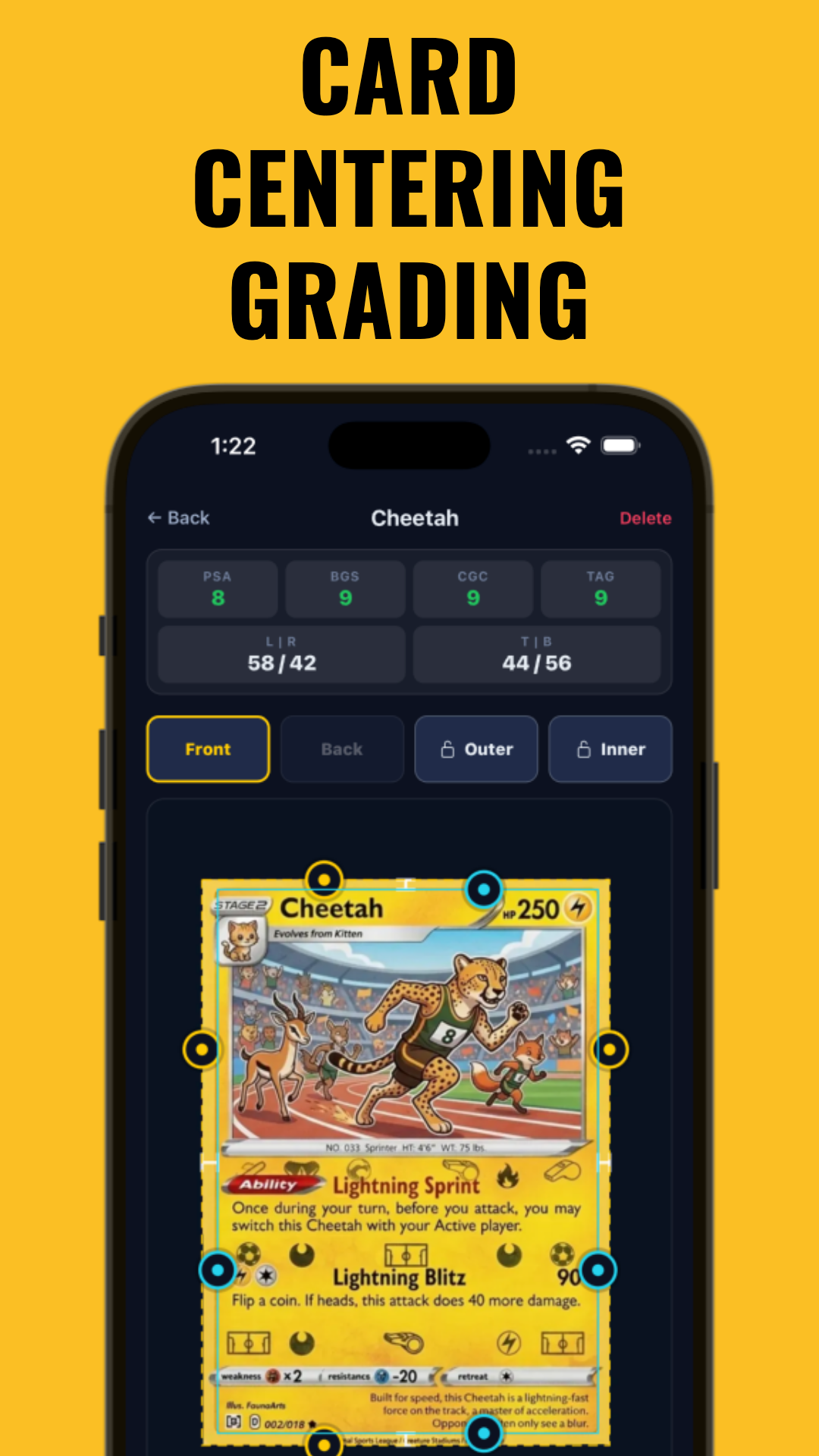
For further exploration on accurate grading and AI’s role in enhancing grading precision, see our articles on the Card Centering Tool and AI-Focused Comparison.
Conclusion
The Base Pokemon cards value landscape is intricate but rewarding for collectors who understand the interplay of rarity, print run variants, condition, and grading impact. From the iconic 1st Edition Charizard commanding high prices to lesser-known holos that still attract premiums, each card's worth depends on careful evaluation of its edition and condition.
Modern AI-driven tools like Midpoint have transformed how collectors approach grading and valuation, providing accurate centering measurements and condition estimates that can help maximize returns and reduce grading risks.
Whether aiming to build a complete Base Set collection or invest in high-value singles, staying informed with current price guides and leveraging AI-enhanced grading insights can position collectors and investors for success in the competitive vintage Pokémon card market.
FAQ
Q: How much is a complete Base Set Pokemon card set worth?
A: As of August 30, 2026, a full 102-card Base Set collection’s value varies widely based on condition and grading. A raw collection can range from a few thousand dollars (typically $3,000–$7,000) depending on card condition, while a fully graded PSA 10 set including key 1st Edition holographics like Charizard and Blastoise can exceed $100,000. Individual card condition and variant significantly affect total value.
Q: How much is a Charizard from the Base Set worth?
A: The 1st Edition Base Set Charizard raw card is valued around $12,000 in Near Mint condition as of 2026-08-30. PSA 10 graded copies are rare and can reach $350,000 or more at auction, with strong demand sustaining these prices.
Q: What is the difference between 1st Edition, Shadowless, and Unlimited Base Set cards?
A: The 1st Edition cards have a distinctive "1st Edition" stamp and are the earliest print run, making them the rarest and most valuable. Shadowless cards lack the shadow on the card border and have some font and color differences; they were printed after 1st Edition but before Unlimited. Unlimited cards have the shadow border and no 1st Edition stamp, are the most common, and generally carry the lowest value.
Q: How do I know if my Base Set Pokemon cards are valuable?
A: To assess value, check the card’s variant (1st Edition, Shadowless, Unlimited), rarity (common, uncommon, rare, holographic), condition (Near Mint, Played, graded), and current market demand. Using specialized apps like Midpoint can help estimate the card’s centering and likely grade, which strongly influence value.
Q: How much do PSA 10 Base Set cards sell for?
A: PSA 10 prices vary widely depending on the card and variant. For example, 1st Edition Charizard PSA 10 can sell for $350,000 or more, while other holo cards like Blastoise Shadowless PSA 10 may range around $12,000. Lower-value cards or common variants have correspondingly lower PSA 10 prices.
Q: Which Base Set Pokemon cards are worth the most?
A: The highest-value Base Set cards include 1st Edition Charizard, Blastoise, Venusaur, Alakazam, and Mewtwo, particularly in PSA 10 graded condition. These cards command premiums due to rarity, demand, and iconic status within the Pokémon collecting community.
Free to start
Try the Midpoint app
Grade any card from a photo, see its raw and PSA 10 value, and track what your collection is worth — free.
Get it on iPhoneGet it on Android