Baseball Card Prices Dropping September 2026: What Collectors Need to Know
Explore why baseball card prices are dropping in September 2026, which cards fell most, and how to buy the dip smartly with grading insights.

Estimated reading time: 8 min
Key Takeaways
- September 2026 sees a cooling baseball card market with notable price declines in some rookie cards and PSA 10 slabs.
- Release-week hype fading and increased supply pressure may be contributing to falling baseball card prices.
- Raw cards often show smaller price drops than graded PSA 10s, potentially widening the value spread.
- Vintage cards tend to hold value better than many ultra-modern releases despite overall market softness.
- Collectors can consider leveraging dips by grading well-centered raw cards using tools like Midpoint before submitting.
The baseball card market in September 2026 appears to be experiencing a cooldown, with prices dropping across multiple segments. Whether you're a seasoned collector or just exploring the hobby, understanding which baseball cards may be losing value and why can help you navigate this shift thoughtfully. This guide breaks down some key factors behind the price changes, highlights which cards seem most affected, and explains how you can still find value during this dip — including tips on grading and authentication using advanced tools like Midpoint.
30-day price movers — live data from Midpoint's card database, as of 2026-09-04. Prices move; Midpoint refreshes these daily.
| Card | Raw | PSA 10 | 30-day | |
|---|---|---|---|---|
 |
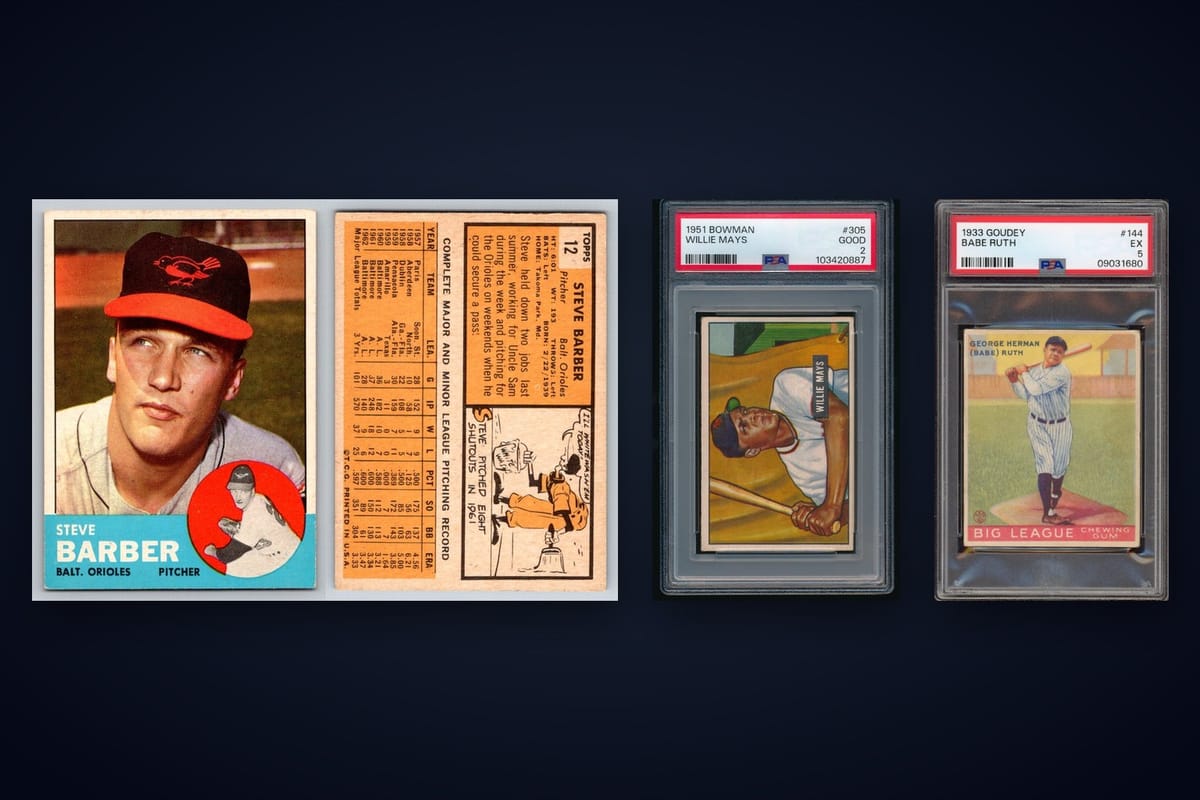
Complete Set 1963 Topps |
$10,698 | — | -53.8% |
 |
Willie Mays #305 1951 Bowman |
$2,526 | $616,625 | -41.2% |
 |
Babe Ruth #144 1933 Goudey |
$8,287 | $3,830,697 | -36.6% |
 |
Yogi Berra #50 1954 Topps |
$65.00 | $13,255 | -28.3% |
 |
Ted Williams #27 1940 Play Ball |
$849.50 | $287,269 | -24.8% |
 |
Ted Williams #165 1951 Bowman |
$217.65 | $54,330 | -17.8% |
 |
Stan Musial #24 1949 Bowman |
$375.78 | $100,180 | -15.8% |
![Frank Thomas [White Back] #153 1956 Topps card](https://i.ebayimg.com/images/g/D4oAAeSw5epqRXcA/s-l500.jpg) |
Frank Thomas [White Back] #153 1956 Topps |
$231.22 | $72,053 | -14.8% |
 |
Pee Wee Reese #33 1953 Bowman Color |
$385.98 | $93,556 | -14.1% |
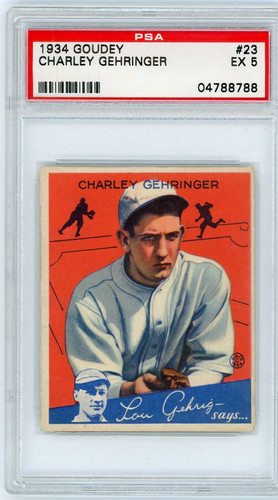 |
Charley Gehringer #23 1934 Goudey |
$149.00 | $58,621 | -13.9% |
 |
Lou Gehrig #37 1934 Goudey |
$3,663 | $1,459,779 | -13.7% |
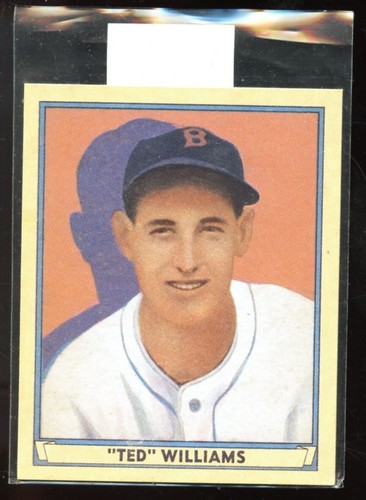 |
Ted Williams #14 1941 Play Ball |
$938.34 | $308,018 | -9.9% |
Look up any card's current raw and graded value in Midpoint — and get an estimated grade before you pay to submit.
1. September 2026 Baseball Card Market Drops: An Overview
As of 2026-09-04, the baseball card market shows signs of cooling after a period of intense hype and product releases. Prices for many rookie cards and PSA 10 graded slabs have reportedly receded by approximately 15-25% compared to August levels. This trend may reflect a natural post-release correction as initial excitement fades and supply catches up with demand. For a deeper dive into these trends, see our detailed analysis on Baseball Card Prices Dropping September 2026: What Collectors Need to Know.
For example, the 2026 Bowman Chrome Ronald Acuña Jr. rookie refractor PSA 10 has been reported to drop around 20% in value, while raw versions declined by a smaller margin, indicating a possible widening gap between raw and graded pricing. Similarly, the 2026 Topps Series 1 Shohei Ohtani rookie card has seen price dips in PSA 10 slabs.
- Price declines appear sharper in high-grade graded cards than raw, potentially due to grading and authentication costs.
- Sealed hobby boxes from recent releases like 2026 Topps Heritage have experienced price decreases on secondary markets.
- Refractor parallel cards and low-population graded slabs may face steeper drops as collector hype cools.
2. Rookie Cards Falling Faster Than Vintage
Rookie cards remain among the more volatile segments in the September 2026 market. Many rookie cards tied to 2025-2026 players have reportedly seen faster value declines than long-established vintage cards from the 1980s and earlier. This may be because recent rookies often come in higher supply with multiple parallel versions and refractors saturating the market.
Meanwhile, vintage cards like the 1986 Fleer Michael Jordan or 1975 Topps George Brett have maintained relative price stability, losing a smaller percentage of value. Collectors continue to prize scarcity and historical significance, which may cushion vintage pricing.
- Modern rookies’ price drops may reflect supply glut and fading release-week hype.
- Vintage cards benefit from limited quantities and strong collector nostalgia.
- Midpoint’s portfolio tracking suggests vintage card values hold steadier across multiple collections.
3. PSA 10 Slabs Versus Raw Cards: Price Behavior and Spreads
The difference between raw and PSA 10 graded card prices has reportedly widened in September 2026. Graded PSA 10 slabs have seen sharper declines, possibly due to grading fees, slower resale velocity, and increased market caution about over-graded cards.
Raw cards, especially those with excellent centering and minimal surface wear, show smaller drops — often around 10-12% compared to 20-25% in slabs. This creates an opportunity for collectors to buy raw cards at a discount and consider submitting them for grading when the market stabilizes.
- Raw 2026 Bowman Chrome Julio Rodriguez rookie cards dropped roughly 12%, versus 22% for PSA 10 versions.
- Collectors can use Midpoint’s free centering calculator to pre-grade cards before expensive submissions.
- Wider spreads may indicate temporary buyer caution toward graded cards in the current market.
4. Causes Behind Falling Baseball Card Prices in September 2026
Several factors may contribute to the overall price declines this month:
- Release-Week Hype Fading: Initial excitement around major product launches like 2026 Topps Heritage and Bowman Chrome appears to have settled, reducing speculative buying.
- Supply Pressure: Increased availability of rookie cards and refractors, including multiple parallels, may have diluted demand.
- Grading and Authentication Costs: Rising fees and longer turnarounds create overhead that can impact slab resale prices.
- Market Sentiment: Collectors may be more cautious amid economic uncertainty, prioritizing cards with proven long-term value.
Understanding these drivers can help collectors adjust strategies by focusing on undervalued segments and avoiding overpriced hype candidates.
5. Impact of September 2026 Product Releases on Secondary Market
New releases in September 2026 appear to influence secondary market prices. Fresh sealed hobby boxes and preorders from brands like 2026 Topps Series 2 and Panini Prizm have softened in price by approximately 15-18%, reflecting immediate post-launch sales pressure.
Collectors often sell to capitalize on short-term gains or reduce exposure to overhyped cards. This influx of supply contributes to falling prices and creates buying opportunities for those seeking entry points.
- Sealed boxes of 2026 Topps Heritage dropped around 18% as collectors wait for market stabilization.
- Preorders for 2026 Bowman Chrome refractors are down about 20% compared to peak release pricing.
- Midpoint’s bulk card upload and processing features help collectors track portfolio impact of new releases efficiently.
6. Best-Selling Baseball Card Categories and Demand Trends on Marketplaces
Despite the overall market softness, certain categories continue to perform relatively well on eBay and other marketplaces:
- High-Grade Vintage Cards: Stable demand for classic cards helps keep prices resilient.
- Popular Player Rookie Cards: Select rookies with strong fan bases still attract buyers, albeit at lower prices.
- Set Completes and Low-Population Cards: Collectors focus on completing sets and acquiring rare low-population cards.
Cards like the 2026 Topps Chrome Wander Franco rookie refractor remain sought after, albeit with cooling prices. This nuanced demand landscape means collectors should research categories carefully before buying.
7. How Grading and Authentication Policy Changes Affect Card Values
Recent grading policy updates by PSA, BGS, and CGC may impact card values in September 2026. Stricter centering tolerances and surface criteria have increased the difficulty of achieving top grades, leading to more conservative grading.
This shift can cause some previously high-grade cards to be downgraded, affecting market prices. Conversely, cards with near-perfect centering may command premiums. Using Midpoint’s AI digital grading helps estimate potential grades before committing to submission, potentially saving costs and maximizing value.
- Collectors should verify centering and surface condition carefully before grading.
- Policy shifts contribute to temporary price volatility in PSA 10 and BGS 9.5 slabs.
- Midpoint’s precise centering measurement down to the millimeter is a valuable pre-grade check.
8. Cards Still Rising Despite Broader Decline
Not all cards are dropping in value. A handful of high-demand items continue to appreciate due to scarcity and strong collector interest. These include:
- Limited-edition inserts from 2026 Panini Prizm with low print runs.
- Vintage autographed cards with authenticated signatures.
- Raw rookie cards with exceptional centering and condition, offering value-buying potential.
For example, the 2026 Panini Prizm Fernando Tatis Jr. limited parallel has reportedly gained about 5% in raw value this month. Collectors can identify such opportunities by tracking market data and leveraging portfolio tools like Midpoint’s collection tracking features.
Conclusion
Baseball card prices dropping in September 2026 appear to reflect a natural market correction after an intense release season. Key segments like rookie cards, PSA 10 slabs, and sealed hobby boxes have seen notable declines due to fading hype and supply pressure. Vintage cards generally hold up better, highlighting the value of scarcity and history.
Collecting during this dip offers a chance to buy undervalued raw cards, especially those with excellent centering that can be graded later. Using advanced grading estimate tools such as Midpoint helps collectors make informed decisions, avoid costly grading missteps, and track portfolio value through market changes.
FAQ
Q: Why are baseball card prices dropping in September 2026?
A: Prices are falling due to fading release-week hype, increased supply from recent product drops, and rising grading/authentication costs that may affect resale values.
Q: Are rookie cards falling faster than vintage baseball cards?
A: Rookie cards from 2025-2026 appear to be declining more sharply than vintage cards, possibly because of higher supply and multiple parallels saturating the market.
Q: Which baseball cards are losing the most value right now?
A: PSA 10 rookie card slabs, refractors, and sealed hobby boxes from recent releases are among those experiencing notable price drops.
Q: Are PSA 10 baseball cards still worth buying during the dip?
A: Buyers should exercise caution; however, raw cards with great centering might offer better value, especially if pre-graded using AI tools before submission.
Q: Do sealed hobby boxes and preorders usually fall after release?
A: It is common for sealed boxes and preorders to drop 15-20% shortly after release as supply increases and hype fades.
Q: What baseball card categories are still selling well on eBay in September 2026?
A: High-grade vintage cards, popular player rookie cards, and low-population inserts remain in demand despite overall market softness.
Free to start
Try the Midpoint app
Grade any card from a photo, see its raw and PSA 10 value, and track what your collection is worth — free.
Get it on iPhoneGet it on Android