Basketball Card Prices Dropping November 2026: 9 Key Dips
Basketball card prices dropping November 2026? See which names are cooling, why, and how to buy the dip or grade a well-centered copy.

Estimated reading time: 9 min
Key Takeaways
- The basketball card market in November 2026 looks flat week to week but modestly lower over 30 days, a cooling pattern rather than a crash.
- Modern cards and new releases are carrying most of the weakness, while vintage has held steadier.
- Thin eBay sales data can exaggerate any single card's move, so check sample size before reacting.
- A dip can be a good time to buy a cheap raw copy, but only if it centers well enough to grade.
- All card-specific figures belong to the as-of 2026-11-15 data table in this post, and none are repeated or guessed here.
Basketball card prices dropping November 2026 is the headline many collectors are seeing, and it is worth separating signal from noise before you buy, sell, or submit anything. Falling basketball card prices can mean oversupply, fading hype, or just a few thin sales dragging an average down.
This guide walks through the basketball card market in November 2026, which segments are losing value, how to read the data, and how to turn the dip into an advantage. Use the data table in this post (as of 2026-11-15) for exact card-level figures. The sections below explain what those numbers mean.
30-day price movers — live data from Midpoint's card database, as of 2026-11-15. Prices move; Midpoint refreshes these daily.
| Card | Raw | PSA 10 | 30-day | |
|---|---|---|---|---|
 |
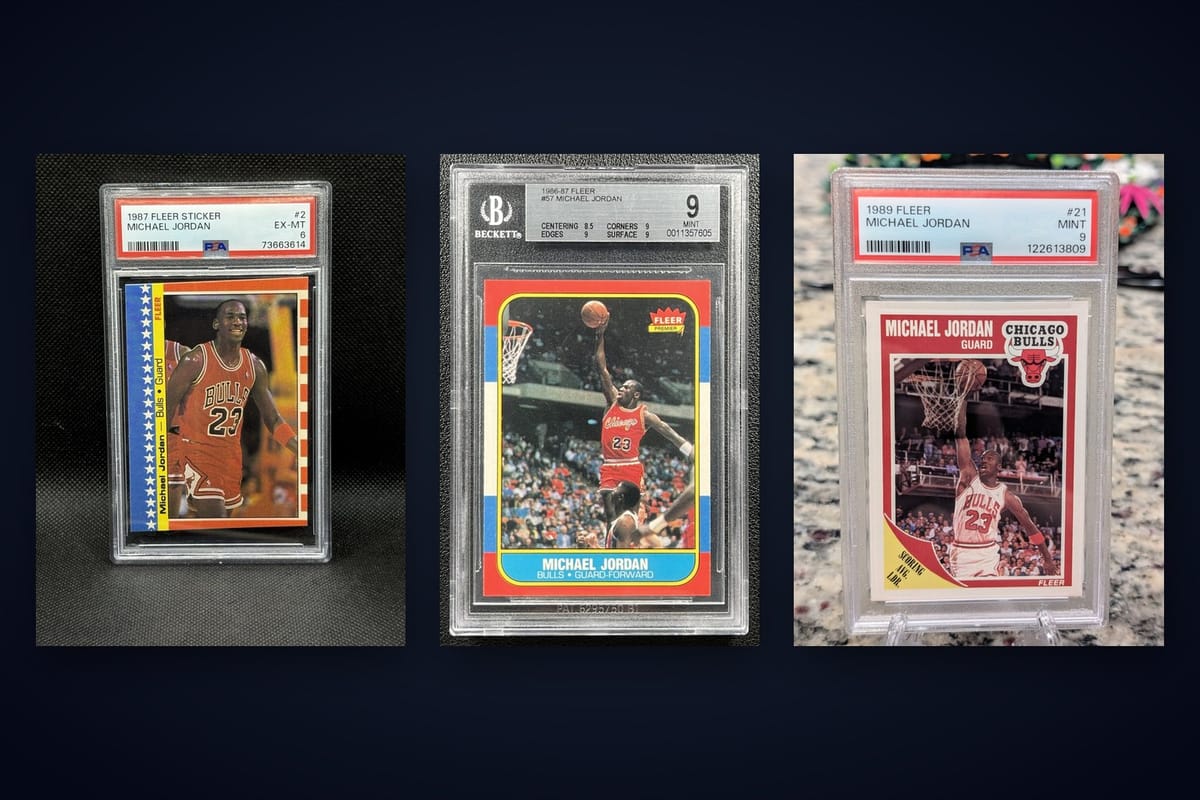
Michael Jordan #2 1987 Fleer Sticker |
$225.00 | $13,918 | -81.6% |
 |
Michael Jordan #57 1986 Fleer |
$3,792 | $251,307 | -36.6% |
 |
Michael Jordan #21 1989 Fleer |
$22.41 | $2,805 | -25.8% |
 |
Stephen Curry #M-3 2025 Topps Chrome Update Minionfractor |
$8,695 | $33,375 | -23% |
 |
Kobe Bryant #138 1996 Topps |
$106.56 | $2,198 | -13.4% |
 |
Michael Jordan #5 1990 Fleer All-Star |
$10.81 | $1,838 | -11.1% |
 |
Shaquille O'Neal #A 1992 Hoops Draft Redemption |
$98.79 | $1,232 | -8.8% |
 |
Ja Morant #GC-11 2025 Topps Chrome Update Glass Canvas |
$80.00 | $404.89 | -2.9% |
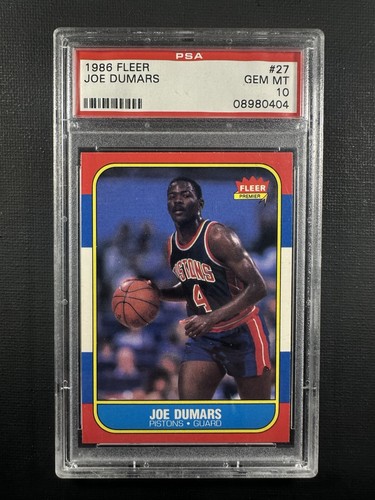 |
Joe Dumars #27 1986 Fleer |
$21.50 | $1,265 | -2.7% |
 |
LeBron James [X-Fractor] #127 2025 Topps Chrome |
$30.00 | $293.32 | -2.2% |
 |
Shaquille O'Neal [Members Only] #21 1992 Stadium Club Beam Team |
$600.16 | $21,097 | -2% |
 |
Dennis Rodman #43 1988 Fleer |
$25.00 | $3,435 | -1.9% |
Look up any card's current raw and graded value in Midpoint — and get an estimated grade before you pay to submit.
1. Market Direction: Flat Weeks, Modest 30-Day Declines
The clearest read on the basketball card market in November 2026 is a split view. Looking at a single week, performance is roughly flat. Looking at 30 days, the decline is modest. That combination usually points to a slow drift lower, not a panic.
Why the difference matters:
- Weekly flatness suggests sellers are not slashing prices right now.
- 30-day softness suggests buyers have been paying a bit less than they did a month ago.
- Together, they describe a market that is cooling and waiting for its next catalyst.
Treat it as a drift, not a collapse. Drifts reward patience and punish panic selling.
2. Modern vs. Vintage: Why Modern Basketball Cards Are Losing Value
The weakness is concentrated in modern cards. Vintage basketball cards have stayed comparatively stable, and a likely reason is supply.
Modern cards are printed in large quantities, graded in large quantities, and relisted constantly. Every new graded copy adds to what a buyer can choose from. Vintage supply is fixed, and clean copies are scarce, so a single seller often has less pressure to cut price.
- Modern: deep supply, more comps, more price competition.
- Vintage: limited supply, fewer sales, steadier asking prices.
If you hold modern cards, expect more volatility. If you hold vintage, expect fewer but lumpier price changes. For grading and condition basics, see our guide to grading scale differences by company.
3. New Releases and Supply-Driven Price Drops
New products are often a major reason basketball cards lose value in the weeks after launch. When a new release hits, early hype can push prices up. As boxes get opened and singles flood eBay, prices often settle.
A common pattern looks like this:
- Week 1: scarcity and excitement can inflate asking prices.
- Weeks 2 to 4: supply grows and sellers often undercut each other.
- After that: prices tend to find a floor based on real demand.
The lesson is simple. Paying launch-window prices for a rookie card is often paying for hype. If you are patient, the same card may become cheaper once supply catches up, though that is not guaranteed.
4. Nikola Jokić and Cooper Flagg: Star Names Not Immune
Nikola Jokić and Cooper Flagg both appear among the names showing declines in the November 2026 data. That is a useful reminder that star power does not make a card recession-proof.
Flagg is the more interesting case. As a prized rookie, his cards carry a lot of expectation, and heavy early supply can pull prices back even when demand stays strong. Jokić is established, so softness there may reflect a broader modern-card cooldown rather than a player-specific story.
Before reading too much into either, check the data table for the as-of 2026-11-15 figures, then look at the sample size behind them (see item 9).
5. Michael Jordan, Shaquille O'Neal and Lew Alcindor: Legacy Names Also Slipping
It may seem odd that Michael Jordan, Shaquille O'Neal, and Lew Alcindor show up among decliners when vintage is described as stable. A likely explanation is that individual cards behave differently from the segment as a whole.
- Thin markets: a handful of sales can move a legacy card's average.
- Condition mix: one soft-centered or lower-grade sale can drag a price down.
- Product mix: reprints and inserts of famous players trade differently from true rookies.
Do not read a single card's dip as the whole vintage market turning over. Look at several comps, and compare like grades and like editions.
6. Price Tiers: Low-Dollar Cards vs. Higher-Value Cards
How a card performs often depends on where it sits in the price range. Low-dollar basketball cards are the most exposed to oversupply, because there are thousands of similar copies and buyers have endless alternatives.
Higher-value cards tend to trade less often, and sellers can wait for the right buyer. That makes their prices stickier but their sales more erratic.
- Low-dollar cards: more listings, faster price compression, small absolute moves.
- Mid-tier cards: sensitive to hype and new releases.
- High-value cards: fewer sales, bigger swings per sale, slower to reprice.
A cheap card dropping 10 percent matters far less in dollar terms than an expensive one doing the same. Match your reaction to your position size.
7. Products Driving Sales: Topps Chrome, Prizm, Optic, Hoops and Upper Deck
Sales activity is concentrated in a few familiar brands. When you look for the best basketball cards to buy on a dip, these are where liquidity tends to live.
- Topps Chrome: a newer basketball presence with strong chrome-style demand.
- Panini Prizm: still one of the most recognized modern basketball brands, with deep comps.
- Donruss Optic: a popular, more affordable chrome-style option with steady trading.
- Hoops: a classic flagship that draws rookie and nostalgia buyers.
- Upper Deck: a legacy name that anchors many 1990s-era collectors.
High activity means more comps, which helps you price accurately. It also means more supply competing against your listing.
8. High-End Sales Are Still Happening: Curry, Flagg and Shai Gilgeous-Alexander
Falling averages do not mean the top of the market is quiet. Recent basketball card sales include high-end results for Stephen Curry, Cooper Flagg, and Shai Gilgeous-Alexander, along with a range of rookie-card sales.
That is a normal pattern in a cooling market. Premium copies, such as clean, high-grade, or low-population cards, can still command strong prices while the broad base softens. Buyers often pay up for quality and pass on average copies.
This is where condition matters most. Our guide on how centering impacts card value shows why two copies of the same card can sell for very different prices.
9. How to Read eBay Data: Completed Sales, Sample Size and Thin Markets
Many headlines about falling basketball card prices draw on eBay listing and sales data. It is useful, but easy to misread.
- Use completed sales, not asking prices. Listings show hope; sold prices show reality.
- Check the sample size. A 20 percent drop based on two sales is not a trend.
- Watch trading volume. Rising volume with falling price can signal real supply pressure. Falling volume with falling price can mean few buyers or few sellers.
- Match grade and variant. A raw copy, a PSA 9, and a PSA 10 are different markets.
Thin markets swing wildly. One unusually low or high sale can move an average a lot. Always compare several recent sales before deciding a card has truly dropped.
10. Is This a Buying Opportunity? How to Buy the Dip Smartly
Whether falling November prices are seasonal weakness, overproduction, or a longer-term correction, nobody knows for sure. What you can do is buy in a way that works under each scenario.
Basketball cards to buy the dip tend to share a few traits:
- Established players with a long track record.
- Products with deep liquidity, so you can exit later.
- Cards where the price has fallen on healthy sample sizes, not one odd sale.
Here is a practical angle: buy a cheap raw copy that centers well, then grade it. Centering is one factor you can check before paying for grading. Measure the borders first with the free centering calculator, and walk through our step-by-step pre-grading guide to check corners, edges, and surface.
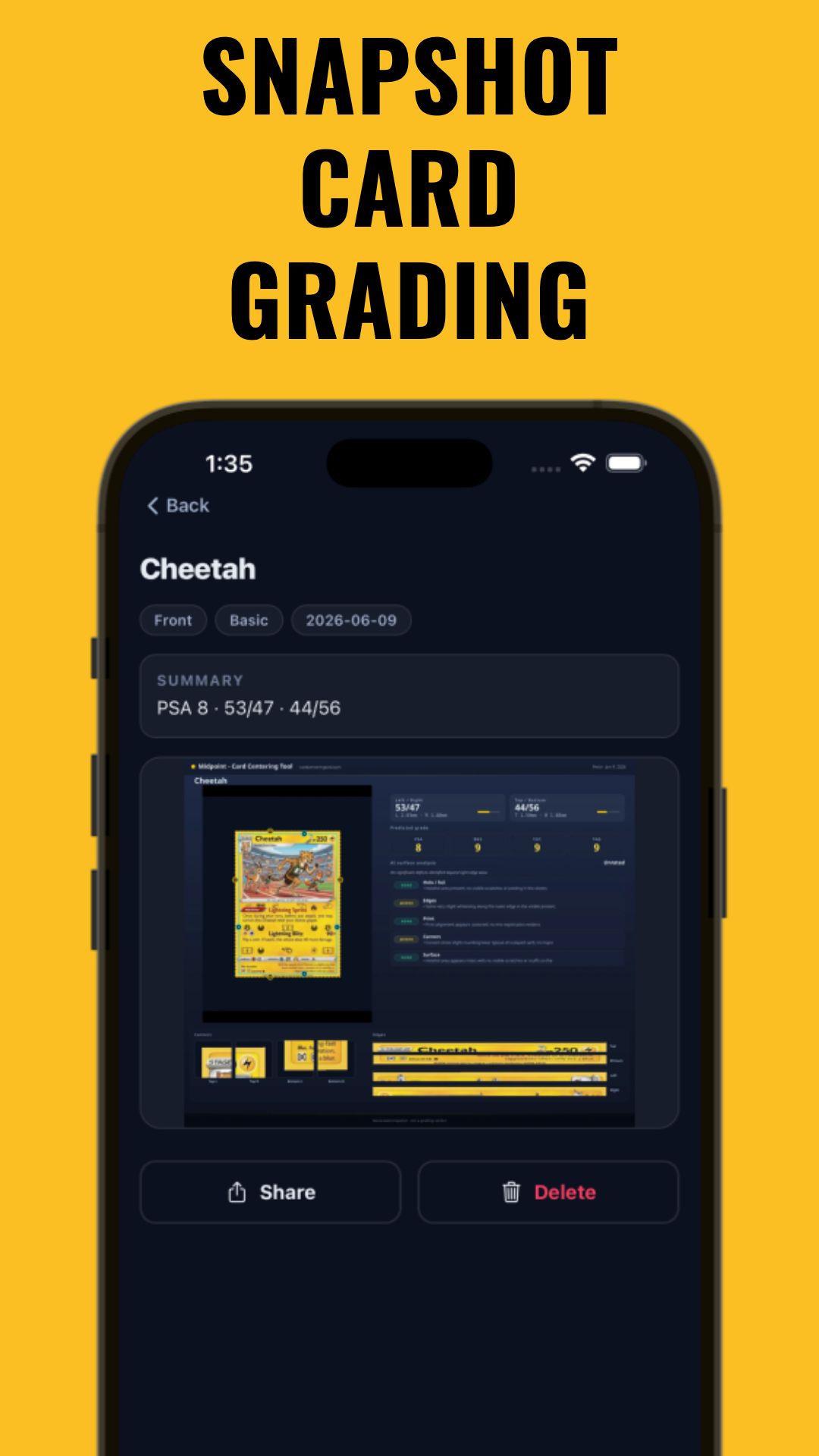
With Midpoint, you can measure centering to the millimeter and get an estimated PSA, BGS, CGC, or TAG grade before you spend $30 or more on submission. A well-centered, sharp copy bought at a dip price gives you a better chance of a strong grade at a lower entry cost.
Conclusion
The basketball card market in November 2026 is cooling, not collapsing. Weekly results are flat, 30-day results are modestly lower, and the weakest areas are modern cards and fresh releases. Vintage has been steadier, though individual legacy names still wobble in thin markets.
Use the as-of 2026-11-15 data table to see exact card-level moves, verify the sample size behind them, and avoid reacting to one-off sales. If you buy, favor liquid products and cards that center well. If you sell, remember that clean, high-grade copies can still draw strong bids. To check centering and estimate a grade before you commit, try Midpoint, which is free on iOS and Android.
FAQ
Q: Are basketball card prices dropping in November 2026?
A: Broadly, yes, but modestly. Weekly performance is roughly flat while 30-day performance is slightly lower, which suggests a gradual cooldown rather than a sharp crash. Check the as-of 2026-11-15 table for specific cards.
Q: Why are basketball card prices going down right now?
A: Likely drivers are supply and hype. New releases add many copies quickly, modern cards are heavily printed and graded, and early excitement often fades after launch. Thin eBay sales can also exaggerate the drop.
Q: Which basketball cards are losing the most value in November 2026?
A: The data points to modern cards and new-release cards, with names such as Nikola Jokić, Cooper Flagg, Michael Jordan, Shaquille O'Neal, and Lew Alcindor appearing among decliners. See the data table for exact figures, and check sample size first.
Q: Is now a good time to buy basketball cards?
A: It can be, if you buy selectively. Focus on established players, liquid products, and cards with healthy sales data. Because no one can call the bottom, buy gradually and only copies that center well if you plan to grade.
Q: Are Cooper Flagg basketball cards going down in value?
A: Flagg cards appear among the November 2026 decliners, possibly reflecting heavy early supply, though high-end Flagg sales have still occurred. Compare completed sales for the same grade and variant before drawing conclusions.
Q: Will basketball card prices recover in 2027?
A: No one can say for certain. Recovery depends on supply levels, player performance, and collector demand. If the current dip is seasonal or supply-driven, prices could stabilize, but a longer-term correction is also possible.
Free to start
Try the Midpoint app
Grade any card from a photo, see its raw and PSA 10 value, and track what your collection is worth — free.
Get it on iPhoneGet it on Android