Basketball Card Prices Dropping November 2026: 9 Key Moves
Basketball card prices dropping in November 2026? Learn which segments cool first, why, raw vs PSA 10, and how to use the dip, including grading a well-centered copy.

Estimated reading time: 9 min
Key Takeaways
- Basketball card prices dropping in November 2026 looks like a cooldown concentrated in modern, high-supply cards, not proof of a market-wide crash. Confirm it with your own sales data.
- Modern rookies, new releases, unnumbered base cards, common inserts and hype-driven prospects are the usual first casualties. Vintage and established legends tend to hold up better.
- Verify any drop with recent completed sales, a decent sample size, outlier removal and a 30-day comparison before you act.
- Do not rush to bottom-fish. Buy in stages, and grade a discounted raw card only if its centering and condition support the math.
Basketball card prices dropping in November 2026 is the question on every collector's mind right now. Posts about falling basketball card prices are everywhere, but a scary headline is not a price chart. This guide breaks down what may be happening in the basketball card market in November 2026, which basketball cards tend to lose value in a dip, why, and how to use a dip without getting burned.
The specific figures in this post come from Midpoint's own database and are dated as of 2026-11-28. The data table above shows the entries we track. We do not quote any numbers beyond it, because guessing at prices is how collectors lose money.
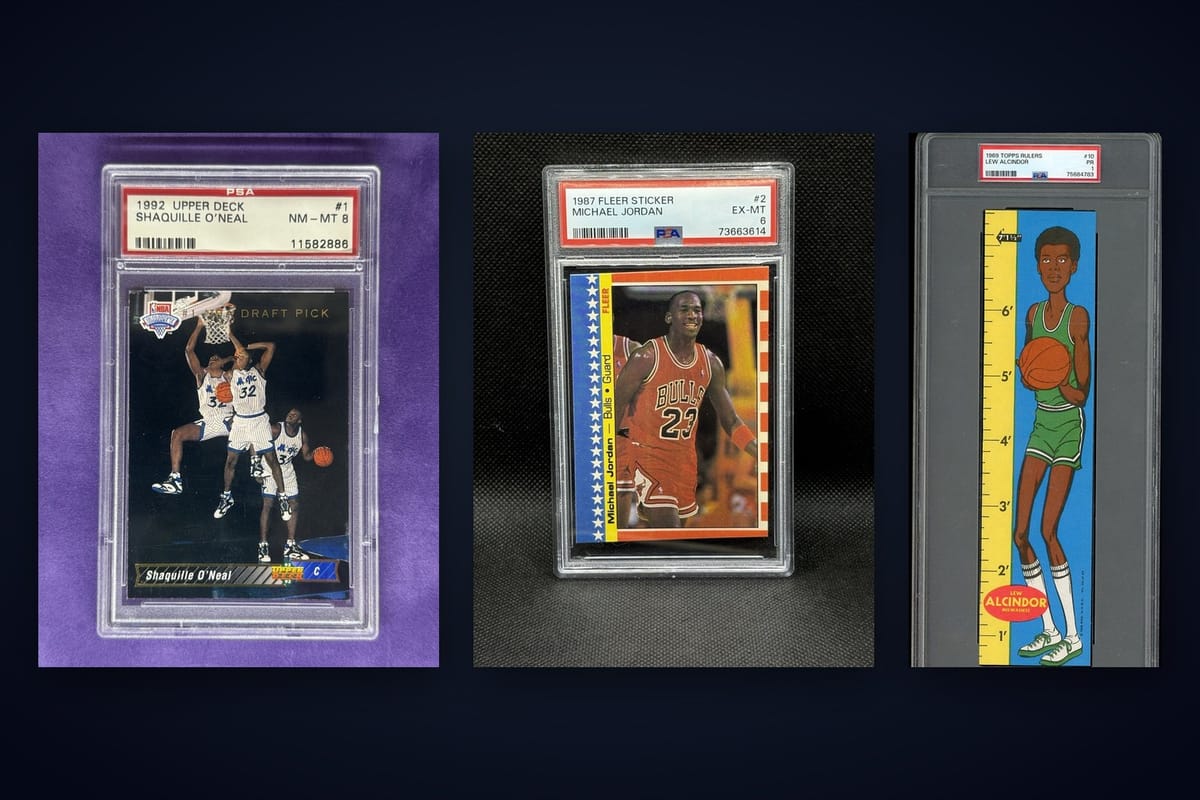
30-day price movers — live data from Midpoint's card database, as of 2026-11-28. Prices move; Midpoint refreshes these daily.
| Card | Raw | PSA 10 | 30-day | |
|---|---|---|---|---|
 |
Shaquille O'Neal #1 1992 Upper Deck |
$10.53 | $2,039 | -61.1% |
 |
Michael Jordan #2 1987 Fleer Sticker |
$180.00 | $35,400 | -51.5% |
 |
Lew Alcindor 1969 Topps Rulers |
$190.05 | $26,845 | -43.8% |
 |
Michael Jordan #21 1989 Fleer |
$26.00 | $2,390 | -37.4% |
 |
Kareem Abdul-Jabbar #1 1986 Fleer Sticker |
$31.66 | $15,641 | -35% |
 |
Michael Jordan #195 1984 Star |
$2,400 | $158,872 | -28.8% |
 |
Michael Jordan #1 1997 Ultra Court Masters |
$2,275 | $33,000 | -27.9% |
 |
Michael Jordan #5 1990 Fleer All-Star |
$10.09 | $1,525 | -24.1% |
 |
Kobe Bryant [Gold Refractor] #36 2003 Topps Chrome |
$28.00 | $29,612 | -21.7% |
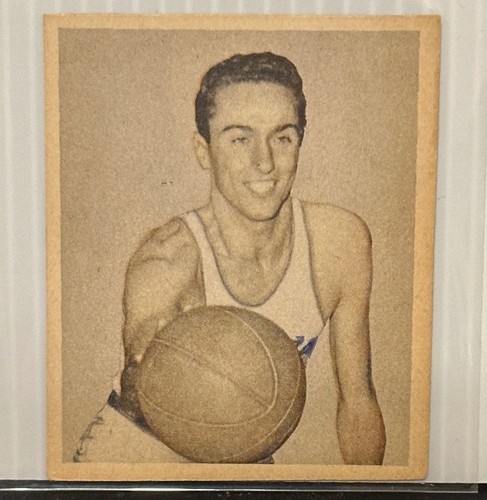 |
Carl Braun #72 1948 Bowman |
$110.92 | $30,479 | -21.6% |
 |
Michael Jordan #1 1997 Skybox Premium Silky Smooth |
$1,371 | $35,577 | -21.2% |
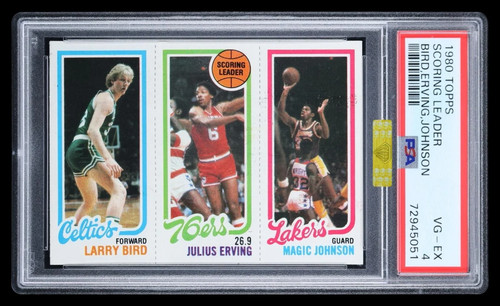 |
Larry Bird / Julius Erving / Magic Johnson #34 / 139 / 174 1980 Topps |
$624.73 | $79,036 | -17.8% |
Look up any card's current raw and graded value in Midpoint — and get an estimated grade before you pay to submit.
1. Cooling vs. a Market-Wide Crash: Read the Trend Correctly
The first job is to separate a cooling market from a crash. A cooldown means a slice of the market, usually the speculative and high-supply slice, is trading lower than a month ago. A crash means almost everything falls together, including cards with limited supply and long-term collector demand.
Two data windows help you tell them apart:
- Week-over-week: shows the current direction. One soft week can be noise, especially around holidays.
- 30-day change: shows whether the drop is sustained or a blip.
If modern rookies are sliding while vintage and legends are flat, that is a rotation or a cooldown. If both groups fall at once and keep falling, that is the pattern to worry about. The softness collectors are reporting looks more like a cooldown in specific segments than a broad crash, but you should always run the same check on the exact cards you own.
2. The Categories That Tend to Lose the Most Value
Basketball cards losing value are rarely random. The weakest segments share one trait: plentiful supply chasing uncertain demand.
- Modern rookies: priced on future potential, so any wobble in the story moves the price.
- New releases: prices often start high on novelty and can drift down as more copies are opened and listed.
- Unnumbered base cards: nothing limits supply, so they have the least price support.
- Common inserts: attractive, but often printed in quantity. They behave more like base cards than true scarcity.
- Hype-driven prospects: the most sensitive to news, performance and social buzz.
Numbered parallels, short-printed cards and rare autographs usually fall less in a soft market because scarcity is built in. Look at the table above to see how the tracked entries compare across raw and PSA 10 values.
3. Player-Specific Watch List: Wembanyama, Flagg, LeBron, Jordan, Duncan, Shaq
Collectors are talking about price movement on a handful of names. Treat each as a card-by-card question, not a verdict on the player.
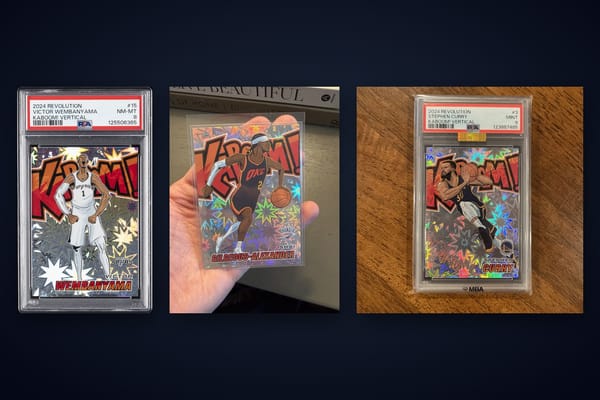
- Victor Wembanyama and Cooper Flagg: young stars with heavy hype baked into prices. Hype-heavy cards swing hardest in both directions, so they are the most important to verify with sales data.
- LeBron James: a huge range of cards, from his 2003-04 rookies to modern base. Which card you hold matters more than the name.
- Michael Jordan: an established legend whose iconic cards usually behave differently from mass-produced modern reprints and inserts.
- Tim Duncan and Shaquille O'Neal: legends whose 1990s cards were produced in an era of large print runs, so condition and grade drive their prices.
Search each exact card (set, year, parallel) in the table above or in Midpoint's card lookup before drawing conclusions. A player name alone tells you very little.
4. Why Prices Are Falling: The Real Drivers
There is rarely one cause. Several pressures can stack up at once:
- New Topps supply: fresh product pulls attention and dollars toward new cards and puts more copies into the market.
- Large print runs and saturation: when a set is widely produced, every popular card has plenty of sellers.
- Rising graded populations: as more copies reach PSA 10, the premium for that grade can shrink.
- Fading rookie hype: early excitement can cool once a player settles into a season.
- Early-season performance and injuries: a slow start or an injury can cut demand for a prospect fast.
- Holiday selling pressure: some collectors sell to fund gifts or bills, adding supply at the same time many buyers pause.
Notice that most of these are supply and sentiment issues, not a sign that people have stopped caring about basketball cards. That is why a dip tends to be uneven.
5. Raw vs. PSA 10: Which Falls Harder in a Dip?
A common question is whether PSA 10 basketball cards fall more than raw cards. Graded cards can be more volatile because a PSA 10 price is a premium over raw, and premiums can compress when graded supply grows or buyers get cautious. Raw copies often move less in dollar terms, but they can also lag when buyers hesitate over condition.
Compare the raw and PSA 10 columns in the table above for each card and ask:
- Is the gap between raw and PSA 10 narrowing? That can signal rising PSA 10 supply or fading demand for gem copies.
- Is the gap wide? A big spread can make grading a clean raw copy more attractive, if you can realistically hit the grade.
Remember that the grade spread differs by company too. See our breakdown of grading scale differences between PSA, BGS and CGC before assuming a top grade means the same thing everywhere.
6. Vintage and Established Legends Tend to Hold Up Better
Vintage basketball cards and legend cards tend to be more resilient during dips. The reasons are simple:
- Fixed supply: no new copies are being made, and many have been absorbed into long-term collections.
- Deep collector base: buyers are often long-horizon collectors, not short-term flippers.
- Less news sensitivity: a bad week for a current player does not touch a retired legend's legacy.
That does not make them immune. Condition-sensitive vintage cards can still soften, and a poor-quality copy can sell below a clean one by a wide margin. But if you want exposure to the basketball card market in November 2026 with less hype risk, legends and vintage are where many collectors look first.
7. How to Verify a Card Is Really Declining
Before you panic-sell or buy the dip, run a quick check. A single listing price means nothing. Use completed sales.
- Pull recent completed sales for the exact card: same set, parallel and grade.
- Check sample size. Three sales in a month is thin. More sales means a more trustworthy average.
- Remove outliers. Throw out the one wildly high sale (a shill or a bidding war) and the one wildly low sale (a damaged copy or a mislabeled listing).
- Compare against 30 days ago using the same filters.
- Match the grade. Do not compare a raw sale against a PSA 10 sale.
If the cleaned-up numbers still show a lower 30-day trend, the card is genuinely falling. If the drop disappears once you remove outliers, it was noise. Midpoint's card lookup shows raw and graded values side by side, which speeds up this check.
8. Will Prices Recover After the New Releases?
Nobody can promise a rebound, and we will not pretend to. What we can say is what tends to matter:
- New release cycles: prices on new cards often settle after the initial rush. That can ease the pressure on older modern cards once attention stops being split.
- Seasonal demand: holiday selling pressure often fades, and buyers may return as the season gets going.
- Player performance: a strong run by a prospect can revive demand quickly. A slump or injury can do the opposite.
Recovery is also uneven. Scarce, numbered and legend cards tend to bounce back more reliably than unnumbered base cards in oversupplied sets. Some cards may never return to their peak, especially if print runs were huge.
9. Basketball Cards to Buy the Dip: A Patient Strategy
Falling basketball card prices can create opportunity, but timing the exact bottom is a guessing game. A calmer approach works better:
- Buy: stage purchases over several weeks instead of one big buy. Favor scarcity, such as numbered cards, and established names over hype-only picks.
- Sell: if you hold unnumbered modern base cards you do not love and need cash, a dip is painful but sometimes sensible. Do not sell blindly into holiday weakness if you do not need to.
- Hold: long-term core cards with real collector demand usually do not need action.
- Wait: if a card is still falling week over week, waiting costs you nothing. Avoid premature bottom-fishing.
A simple rule: only buy a falling card once the 30-day trend has stopped getting worse and sales volume looks healthy. Track what you own with Midpoint's portfolio tools so you can see your collection's value over time instead of relying on gut feel.
10. When Grading a Discounted Raw Card Makes Sense
One clever way to use a dip is to buy a cheaper raw copy and grade it. It only works when the numbers do. Grading costs add up, often $30+ per card before shipping depending on the company and service level, so the margin needs to be real.
Run this check:
- Centering: this is the easiest flaw to measure and the hardest to fix. Learn how centering impacts card value, then measure with the free centering calculator.
- Condition: check corners, edges and surface under good light. Print lines and scratches matter on glossy modern cards.
- Expected grade: estimate a realistic grade, not the best-case one.
- Resale margin: compare the expected graded value against raw cost plus grading fees, shipping and selling costs. If you need a PSA 10 to profit and the odds are low, skip it.
Midpoint estimates PSA, BGS, CGC and TAG grades from centering, corners, edges and surface before you pay to submit. Our step-by-step pre-grading guide walks through the process.
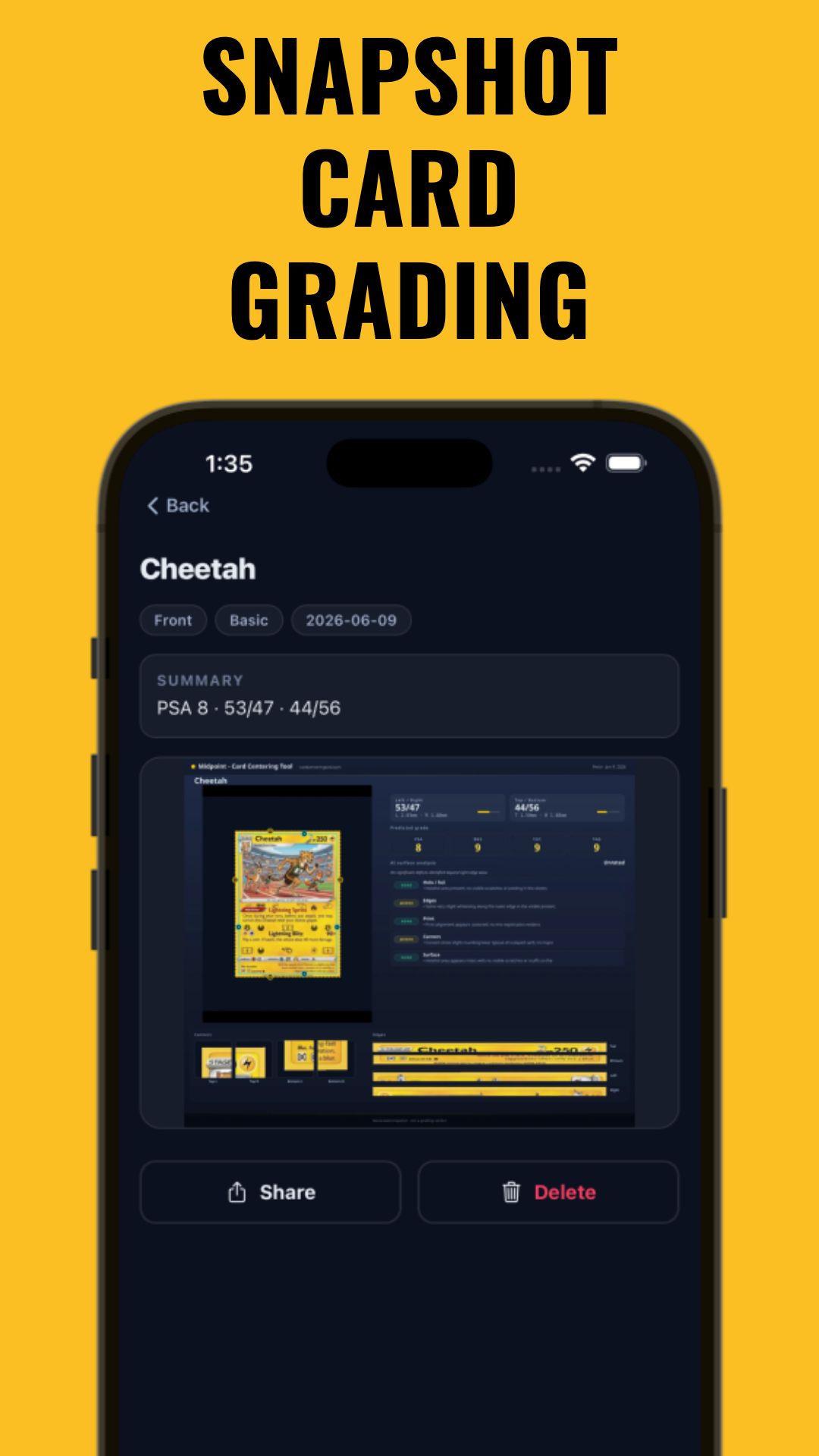
If the estimate shows a weak grade, you just saved yourself the fee. If it shows strong centering and clean surfaces on a card that is trading low, you may have found a real opportunity. Try Midpoint, free on iOS and Android.
Conclusion
Basketball card prices dropping in November 2026 is best read as an uneven cooldown, not a universal collapse. Modern, high-supply and hype-driven cards tend to feel the most pressure, while vintage and legend cards tend to hold steadier. Verify every move with cleaned completed-sales data, resist the urge to catch the exact bottom, and only grade a discounted card when centering and condition justify the fees.
Check the data table above, run your own 30-day comparison on the cards you care about, and use Midpoint to measure centering before you spend on grading.
FAQ
Q: Are basketball card prices dropping in November 2026?
A: Parts of the market appear to be cooling, especially modern, high-supply cards. Nothing here by itself shows a market-wide crash, so check the exact cards you care about using recent completed sales and a 30-day comparison.
Q: Why are basketball card prices going down right now?
A: Typical drivers include new Topps supply, large print runs, market saturation, rising graded populations, fading rookie hype, early-season performance, injuries and holiday selling pressure.
Q: Which basketball cards have dropped the most in November 2026?
A: The weakest segments are usually modern rookies, new releases, unnumbered base cards, common inserts and hype-driven prospects. See the data table in this post for the tracked entries and their raw and PSA 10 values as of 2026-11-28.
Q: Do PSA 10 basketball cards fall more than raw cards?
A: They can, because a PSA 10 price is a premium that may shrink when graded supply grows or buyers get cautious. Compare the raw-to-PSA 10 gap on each card rather than assuming.
Q: Will basketball card prices recover after the new Topps releases?
A: There is no guarantee. Prices on new cards often settle after the initial rush, and seasonal demand and player performance can help. Scarce and legend cards typically recover more reliably than oversupplied base cards.
Q: Is this a good time to buy, sell, hold, or grade basketball cards?
A: It depends on the card. Buy gradually and favor scarcity, sell only if you need to, hold core cards, and grade a discounted raw copy only when centering, condition, fees and expected resale margin support it.
Free to start
Try the Midpoint app
Grade any card from a photo, see its raw and PSA 10 value, and track what your collection is worth — free.
Get it on iPhoneGet it on Android