Card Grade Impact on Insurance Value: The Ultimate Guide
Learn how card grade affects insurance value, replacement cost, and coverage. Compare PSA, BGS, CGC grades, and see why centering matters most.

Estimated reading time: 14 min
Key Takeaways
- Card grade significantly influences insurance value and replacement cost, especially for top grades like PSA 10 and BGS Black Label.
- Declared value differs from insured value; both should be accurate to avoid being underinsured or denied claims.
- Different grading companies (PSA, BGS, CGC) set unique standards—"pristine" and "gem mint" are not equal across graders.
- Population reports, scarcity, and documentation (certs, receipts, photos) are important for insurance claims and coverage updates.
- Centering is a frequent deciding factor in achieving high grades, impacting both value and insurance considerations.
Table of Contents
- Section 1: Understanding Card Grades and Insurance Value
- Section 2: Declared Value vs. Insured Value in Grading Submissions
- Section 3: Service Levels, Insured Value Limits, and Grader Differences
- Section 4: How Insurers Assess Graded vs. Raw Card Value
- Section 5: Gem Mint, Pristine, Black Label—Why Top Grades Matter Most
- Section 6: Scarcity, Population, and Documentation—What Insurers Want
- Section 7: Shipping Insurance, Transit Risk, and When to Update Coverage
- Section 8: The Central Role of Centering in Grade and Insurance Value
- Conclusion
- FAQ
Section 1: Understanding Card Grades and Insurance Value
What Is Card Grading?
Card grading is the process of having a professional authentication company evaluate your trading card’s condition, assigning a numeric grade (usually 1–10) based on standardized criteria. The three most recognized companies—PSA, BGS, and CGC—each use slightly different scales and definitions. Their grades are widely used as benchmarks for determining card market value and, importantly, insurance value.
Insurance Value—What Does It Mean?
Insurance value refers to the amount an insurer will pay to replace or reimburse your card if it’s lost, stolen, or damaged. This is not always the same as a card’s market price; it depends on documentation, condition, and grade. Insurers often ask for proof of grade (certification), recent sales data, and sometimes a professional appraisal.
Grade’s Direct Influence on Insurance
- Higher grades (PSA 9, PSA 10, BGS 9.5, BGS 10, CGC 9.5–10) generally increase a card’s insurable value.
- Insurance policies may have specific clauses or premium increases for cards above certain grade thresholds (e.g. PSA 10).
- Replacement cost for a top-graded card can be significantly higher than the same card in a lower grade or ungraded (raw) state.
Understanding this connection is essential for collectors who want to insure high-end cards properly and avoid being underinsured. For more on the mechanics of grading, see Card Centering Tool: Accurate Card Grading Estimates.
Section 2: Declared Value vs. Insured Value in Grading Submissions
What Is Declared Value?
When submitting a card to PSA, BGS, or CGC, you must estimate and declare the card’s value. This is not an appraisal; it’s your best good-faith guess, used by grading companies to:
- Determine service level (which affects turnaround time and price)
- Set insurance limits during shipping and grading
- Establish maximum liability if your card is lost or damaged in their care
Declared Value vs. Insurance Value
- Declared value is just for the grading submission process—it’s not binding for insurance.
- Insurance value is what your homeowner’s, renter’s, or collectibles policy will pay in the event of a claim, based on proof (final grade, market comps).
- If your card grades much higher than expected, your declared value may no longer reflect its real worth or insurance needs.
Best Practices
- Be realistic, but don’t under-declare—grading companies may deny claims above your declared value.
- Update your insurance policy as soon as you know your final grade, especially if you receive a PSA 10, BGS Black Label, or other top-tier grade.
- Keep all submission paperwork, grading certs, and shipping documents for insurance claims.
For a practical walk-through, see How to Pre-Grade Your Card: A Step-by-Step Guide.
Section 3: Service Levels, Insured Value Limits, and Grader Differences
PSA, BGS, and CGC: Service Levels
Each major grading company offers multiple service levels, with varying fees and insured value caps:
- PSA: Service levels are based on declared value (e.g. Value, Regular, Express, Super Express). Maximum insurance coverage for loss/damage during grading is typically the declared value.
- BGS: BGS (Beckett) service levels are similar—Standard, Express, Premium—with declared value limits for each. Note that BGS Black Label 10s can command high insurance values.
- CGC: CGC’s levels (Economy, Standard, Express, WalkThrough) also have declared value tiers, with insurance coverage matching your stated value.
Insured Value Limits
- Most graders will not insure your card above the declared value during transit or grading. If you understate, you risk being underinsured.
- If your card grades higher than expected (e.g. you get a CGC Pristine 10 vs Gem Mint 10), your insurance coverage may be lower than the card’s true value.
- Always check current service level caps and policies on each grader’s site—they change frequently.
Why Grader Differences Matter
- Some insurers and collectors view a PSA 10 as less rare (and thus potentially lower in value) than a BGS Black Label or CGC Pristine 10 due to population reports and grading standards.
- The difference between gem mint vs pristine can mean a card is worth significantly more for insurance coverage.
- For details on grading standards and centering requirements, visit How to Measure Card Centering: Step-by-Step Precision Guide.
Section 4: How Insurers Assess Graded vs. Raw Card Value
Graded Cards: Documentation Is Key
Insurers typically cover graded cards at replacement value if you provide:
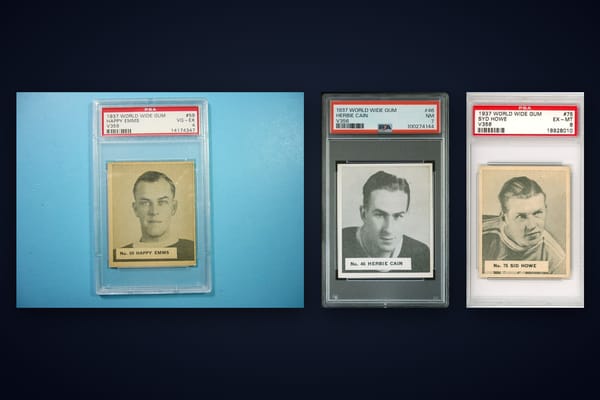
- Grader’s certificate (PSA, BGS, CGC serial number)
- Clear photos or scans of the slab
- Recent sales comps for the same grade and card
- Receipts or evidence of purchase
These documents establish both authenticity and condition, making claims easier and reducing disputes over value.
Raw Cards: Less Certainty, Lower Coverage
- Raw (ungraded) cards are harder to value; insurers may pay only a fraction of what a high-graded card would fetch.
- Insurers might require an appraisal or detailed photos/descriptions, and may still dispute condition or authenticity.
- Some insurers may not cover raw cards at full market value without professional grading.
Replacement Value vs. Actual Cash Value
- Replacement value: Pays what it would cost to buy the exact same card, in the same grade, at current market prices (most common for collectibles).
- Actual cash value: Pays depreciated value, rarely used for graded cards unless policy specifies.
Always clarify with your insurer which basis applies, and update your coverage as your cards are graded or markets change.
Section 5: Gem Mint, Pristine, Black Label—Why Top Grades Matter Most
PSA 10 vs. BGS 10 vs. CGC Pristine 10
The distinction between "gem mint" and "pristine" is important for insurance:
- PSA 10: "Gem Mint"—the highest regular grade from PSA; centering must be nearly perfect (60/40 or better front, 75/25 back), but subgrades (surface, corners, edges) are not shown.
- BGS 10: "Pristine"—generally considered harder to get than PSA 10. BGS also has the "Black Label" 10, requiring perfect 10 subgrades across the board (centering, corners, edges, surface).
- CGC Pristine 10: CGC’s top grade, considered stricter than most PSA 10s. The "CGC Perfect 10" is even rarer.
Gem Mint vs Pristine: Insurance Impact
- Pristine/Black Label grades can increase insurance value versus PSA 10s of the same card.
- Population reports show how rare these grades are—insurers may use this data to help set replacement cost.
- For PSA 10 vs PSA 9, the jump in insured value can be substantial for certain iconic cards.
For a deeper look at how AI and centering tools help predict these outcomes, see AI-Focused Comparison: How AI Transforms Card Centering Analysis.
Which Grade is Hardest to Get?
- BGS Black Label 10 is widely considered among the toughest—very few submissions achieve it.
- CGC Pristine 10s are generally rarer than PSA 10s, especially for older cards.
- Which grade is hardest to get depends on the card, era, and grader’s published statistics.
Section 6: Scarcity, Population, and Documentation—What Insurers Want
Population Reports and Scarcity
Population reports from PSA, BGS, and CGC list how many copies of a card exist at each grade. Insurers may use these reports to:
- Confirm how rare your card/grade combination is
- Help set replacement cost—fewer copies can mean higher insured value
- Detect market volatility (e.g. spikes in new PSA 10s may affect replacement cost)
Rarity Effects on Insurance Value
- Low-population, high-grade cards (e.g. BGS Black Label, CGC Pristine 10) may qualify for higher coverage limits and premiums.
- Scarcity can make it difficult to replace a lost card, so insurers may offer "agreed value" or "appraised value" policies for unique or ultra-rare items.
Documentation Needed for Claims
- Keep your grading certificates, serial numbers, and slab photos up to date.
- Store receipts and invoices for all major purchases or previous appraisals.
- Some insurers require a professional appraisal or market comp printouts for high-value claims.
For collectors, digital organization tools like Midpoint can help track card grades, population data, and documentation—all in one place.
Section 7: Shipping Insurance, Transit Risk, and When to Update Coverage
Shipping Insurance for Graded Cards
When sending cards to or from grading, or selling/trading them, shipping insurance is your first line of defense. Grading companies and postal services set their own coverage limits—always double-check:
- Declared value matches shipping insurance value
- Tracking and signature requirements are met
- Any gaps in coverage between carriers and graders are addressed (e.g. supplemental insurance)
Transit Risk: Graded vs. Raw Cards
- Graded cards are easier to insure in transit, thanks to clear condition and serial numbers.
- Raw cards are riskier—insurers may dispute damage or pre-existing flaws.
- If a card returns from grading with a higher grade than expected, update your insurance before shipping again or displaying at shows.
When and How to Update Coverage
- Update your insurance policy after grading—especially if a card achieves PSA 10, BGS 10, or Black Label status.
- Reappraise and raise coverage after significant market increases or when population reports shift, making your card rarer.
- Keep digital and paper records in sync; many insurers allow digital uploads for proof.
To see how collectors streamline this process, check out the Midpoint FAQ on digital documentation and insurance tracking.
Section 8: The Central Role of Centering in Grade and Insurance Value
Why Centering Matters Most
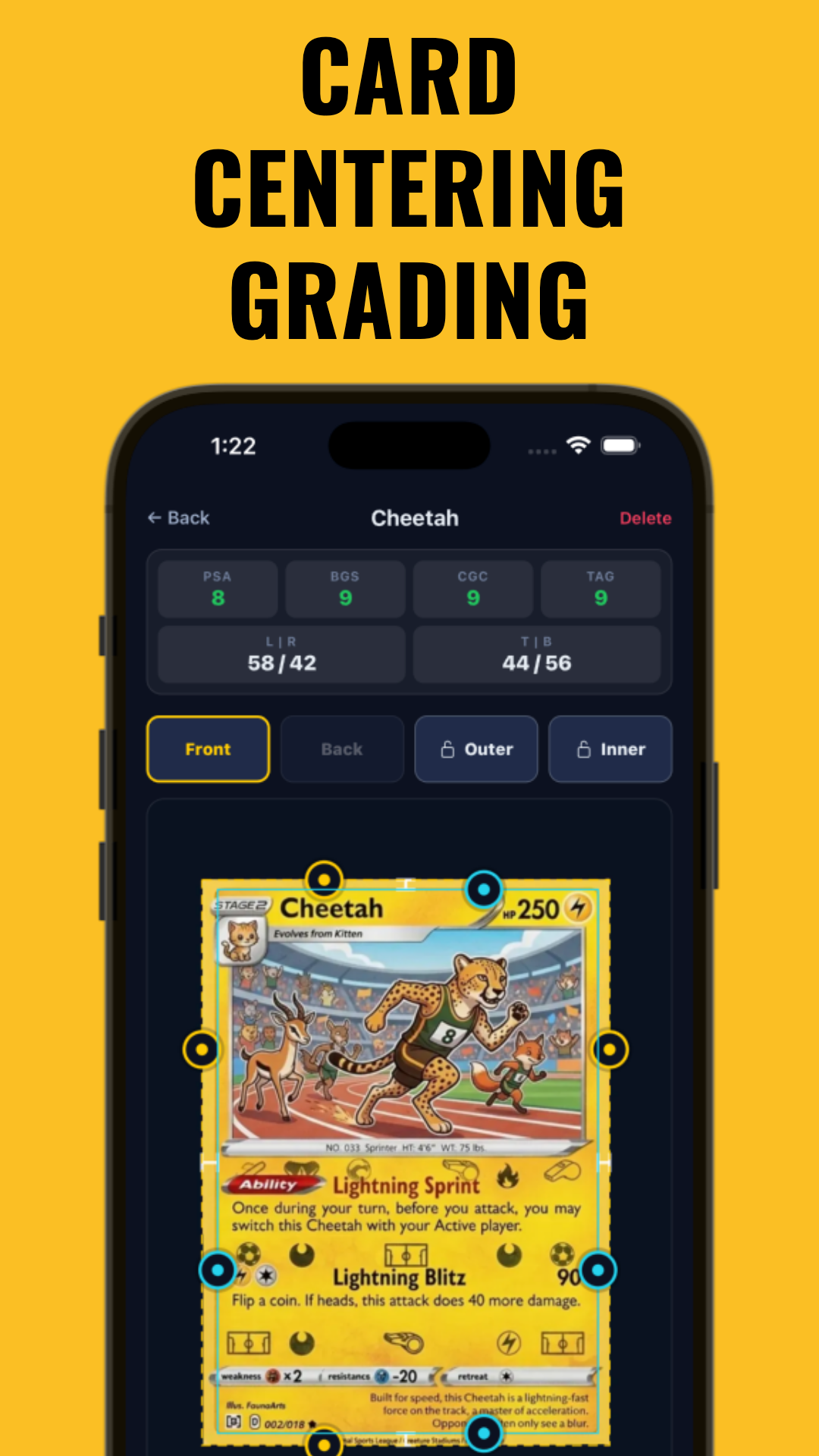
Centering is often the subgrade that determines whether a card achieves a top grade (PSA 10, BGS Black Label, CGC Pristine 10) or falls just short. Off-center cards—even with perfect corners, edges, and surface—will not reach the highest grades, which can reduce both market and insurance value.
Centering Standards by Grader
- PSA 10: 60/40 or better on the front, 75/25 on the back
- BGS Black Label: 50/50 centering (perfect); Gem Mint 10 allows only slight variance
- CGC Pristine 10: 50/50 required on the front, stricter than most PSA 10s
These differences mean that a card might earn PSA 10 but only BGS 9.5 or CGC 9.5, impacting both resale and insurance values.
How to Measure Centering for Insurance Purposes
- Measure down to the millimeter using a digital tool or app. Midpoint provides instant centering ratios and grade estimates for PSA, BGS, CGC, and TAG.
- Save centering analysis alongside your card’s other documentation for insurance claims and policy updates.
- For a hands-on guide, read How Centering Impacts Card Value: A Detailed Guide.
Using centering tools before submission can help you set a realistic declared value, avoid underinsurance, and maximize both grading and insurance outcomes.
Conclusion
The impact of card grade on insurance value is significant—especially as the trading card market matures and top-graded cards reach high prices. Understanding the difference between declared value and insured value, knowing which grading company’s standards apply, and maintaining thorough documentation are all important to protecting your collection.
Centering is a key factor that can mean the difference between a substantial insurance payout and a denied claim. Tools like Midpoint make it easier for collectors to measure, document, and insure cards confidently—before spending on grading or risking a costly oversight. Stay proactive: update your insurance after every major grade, and leverage digital tools to streamline the process, reduce risk, and maximize your investment’s security.
FAQ
Q: Does grading a card increase its insurance value automatically?
A: Not automatically, but having a high grade (e.g. PSA 10, BGS Black Label, CGC Pristine 10) with documented certification makes it easier to prove value and secure higher coverage. You must notify your insurer and provide documentation for the increase to take effect.
Q: What value should I declare when sending a card to PSA or BGS?
A: Declare the honest, good-faith market value of the card in its current (raw) state, based on recent sales. If you suspect it could grade very high, consider declaring a higher amount to ensure adequate coverage during transit and grading. Under-declaring may limit your insurance payout if the card is lost or damaged.
Q: Is a PSA 10 insured for more than a raw card of the same card?
A: Generally, yes. Insurers typically pay more to replace a graded PSA 10, BGS 10, or CGC Pristine 10 than the same card raw, depending on population and demand.
Q: Do insurance companies cover graded cards at replacement value or actual cash value?
A: Most collectible insurance policies cover graded cards at current replacement value (the cost to buy an identical card in the same grade today), but always confirm with your insurer. Actual cash value may apply in generic or limited policies.
Q: Can a card be underinsured if its grade comes back higher than expected?
A: Yes. If you declared a low value during submission and your card grades much higher (e.g. you get a BGS Black Label 10), your insurance coverage may not reflect its new market value. Update your policy and documentation as soon as you receive the grade.
Q: Does the declared value affect the grade a card receives?
A: No. Declared value is only for service level and insurance purposes during grading. It does not influence the grade assigned by PSA, BGS, or CGC—their grading is strictly based on card condition and standards.
Free to start
Try the Midpoint app
Grade any card from a photo, see its raw and PSA 10 value, and track what your collection is worth — free.
Get it on iPhoneGet it on Android