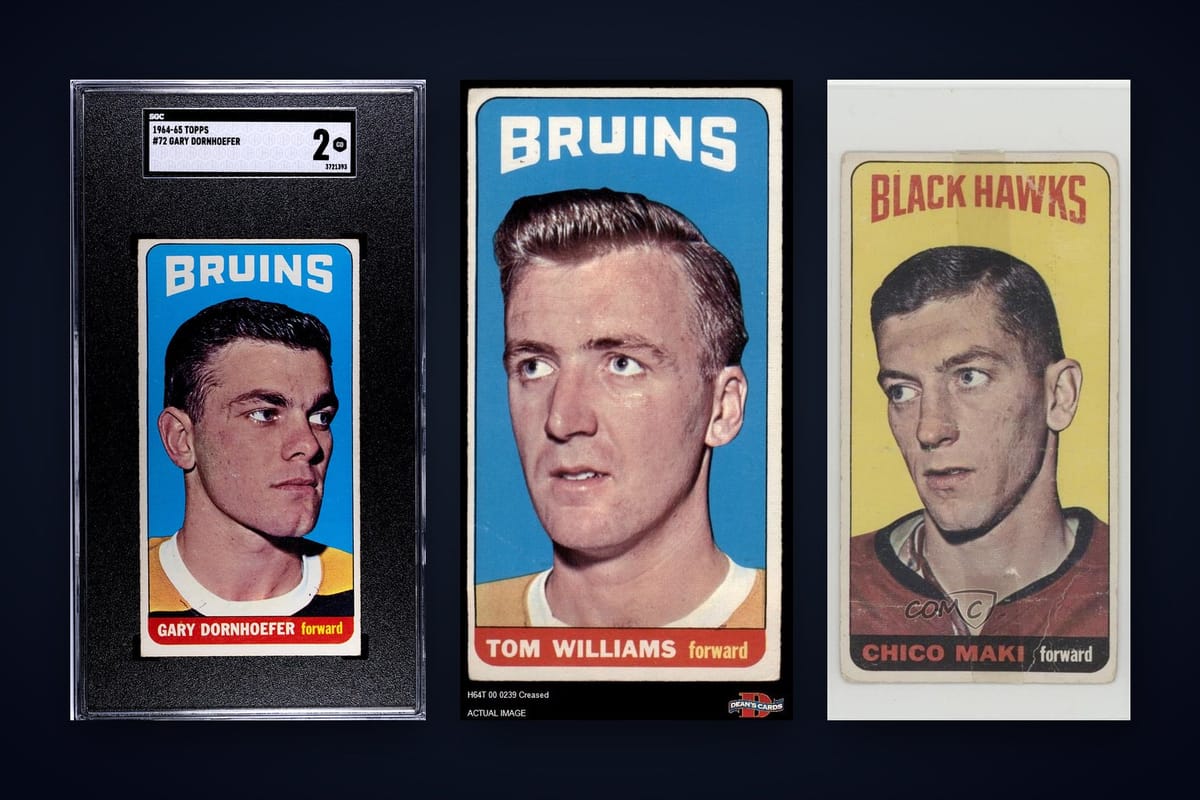
1964 Topps Hockey Cards Value: Complete Guide to Grading & Pricing
Discover the 1964 Topps hockey cards value, top cards worth grading, pricing tiers, and expert tips for collectors and sellers alike.

Estimated reading time: 12 min
Key Takeaways
- The 1964 Topps hockey set includes 108 cards with key stars and checklist variations impacting value.
- Condition and grading significantly affect 1964 Topps hockey cards value, with PSA 10 examples often commanding premium prices.
- Star cards like Gary Dornhoefer #72 and Tim Horton are among the more valuable in raw and graded form.
- Understanding the difference between raw and graded values helps collectors decide which cards to submit for grading.
- Using AI tools like Midpoint can assist in estimating card centering and grading potential before costly submissions.
Card values — live data from Midpoint's card database, as of 2026-09-04. Prices move; Midpoint refreshes these daily.
| Card | Raw | PSA 10 | Gem premium | |
|---|---|---|---|---|
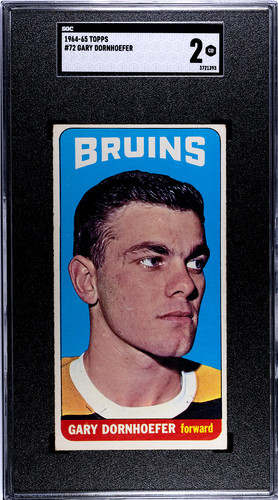 |
Gary Dornhoefer #72 1964 Topps |
$228.38 | $37,208 | 162.9× |
 |
Tom Williams #58 1964 Topps |
$206.25 | $33,611 | 163× |
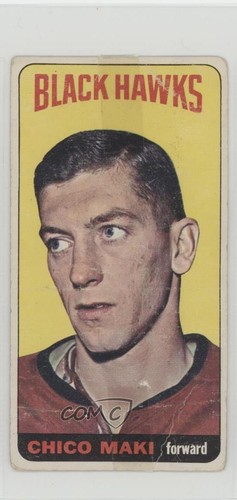 |
Chico Maki #73 1964 Topps |
$157.61 | $25,676 | 162.9× |
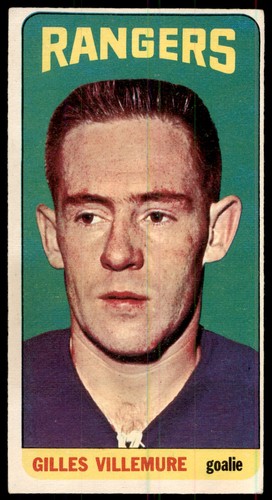 |
Gilles Villemure #74 1964 Topps |
$150.28 | $24,134 | 160.6× |
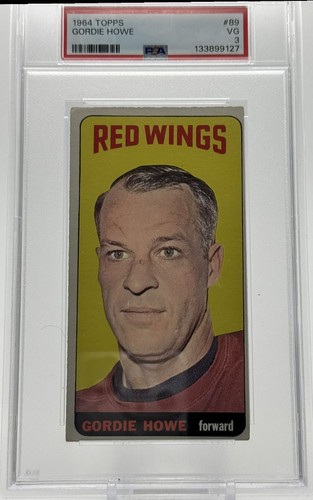 |
Gordie Howe #89 1964 Topps |
$131.86 | $21,503 | 163.1× |
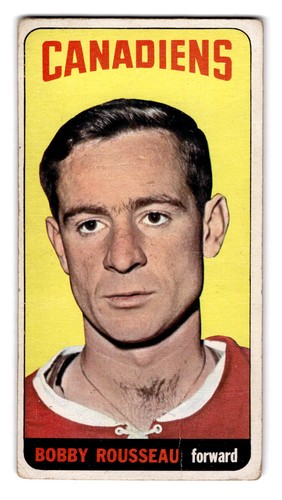 |
Bobby Rousseau #80 1964 Topps |
$131.54 | $21,441 | 163× |
 |
Tim Horton #102 1964 Topps |
$89.82 | $14,709 | 163.8× |
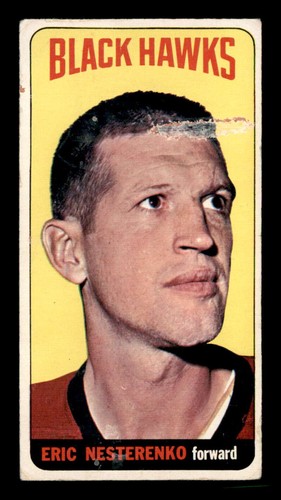 |
Eric Nesterenko #91 1964 Topps |
$77.00 | $12,567 | 163.2× |
 |
Jean Beliveau #33 1964 Topps |
$70.96 | $11,580 | 163.2× |
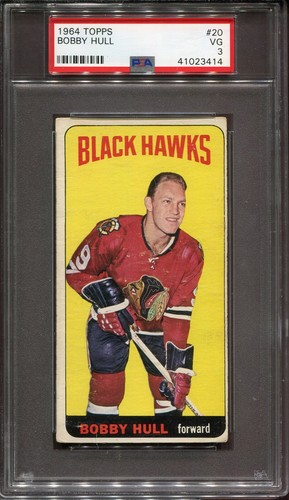 |
Bobby Hull #20 1964 Topps |
$70.79 | $11,538 | 163× |
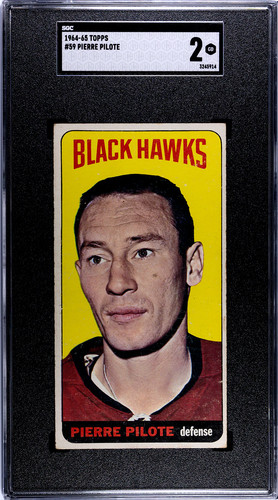 |
Pierre Pilote #59 1964 Topps |
$105.48 | $10,492 | 99.5× |
 |
Henri Richard #48 1964 Topps |
$65.11 | $9,606 | 147.5× |
Look up any card's current raw and graded value in Midpoint — and get an estimated grade before you pay to submit.
Table of Contents
- Section 1: Overview of the 1964 Topps Hockey Set and Key Cards
- Section 2: The Impact of Condition and Grading on 1964 Topps Hockey Cards Value
- Section 3: Most Valuable 1964 Topps Hockey Cards and Star Players
- Section 4: Price Ranges by Card and Grade for the 1964 Topps Set
- Section 5: Market Trends, Rarity, and Population Insights
- Section 6: 1964-65 Topps Tall Boys vs Standard 1964 Topps Hockey Cards
- Section 7: Tips for Buying, Selling, and Building a 1964 Topps Hockey Collection
- Conclusion
- FAQ
Section 1: Overview of the 1964 Topps Hockey Set and Key Cards
The 1964 Topps hockey card set is a classic collection consisting of 108 cards, representing a notable era of NHL history. The set includes both common player cards and special subsets, such as the checklist cards that help collectors track their progress. This checklist includes cards numbered #101 to #108, rounding out the set's comprehensive nature.
Set Composition and Card Numbering
The card numbering runs from #1 through #100, followed by the checklist subset cards #101 to #108. This numbering reflects the players and teams from the 1963–64 NHL season. Collectors find value in both the base cards and in acquiring the complete checklist subset to ensure a full set.
Commons vs Stars
Within the set, there is a distinction between common cards and star player cards. Commons generally have lower market values but are essential for set completion. Star cards, such as those featuring Hall of Famers and fan favorites, often carry higher value additions, both raw and graded.
Checklist Importance
The checklist cards (#101 to #108) are often overlooked but are important for collectors aiming for a complete set. Their condition can influence the overall set value.
| Card # | Player | Notable |
|---|---|---|
| 72 | Gary Dornhoefer | Key star card |
| 17 | Tim Horton | Hall of Famer |
| 64 | Glenn Hall | Star goalie |
| 54 | Johnny Bower | Popular veteran |
| 84 | Frank Mahovlich | Top scorer |
The above data (as of 2026-09-04) highlights some of the names that often drive collector interest and value within the set.
Section 2: The Impact of Condition and Grading on 1964 Topps Hockey Cards Value
Condition is a key factor in trading card value, and 1964 Topps hockey cards are no exception. Cards in mint or near-mint condition generally command higher prices, especially when graded by reputable services like PSA, BGS, CGC, or TAG.
Raw vs Graded Value Differences
Raw cards are ungraded and sold as-is, making condition assessment subjective. Graded cards have an official grade from 1 to 10, with 10 (gem mint) being the highest. The graded market provides buyers and sellers with more confidence in card quality, often resulting in price premiums.
For example, a Gary Dornhoefer #72 card might sell for a few hundred dollars raw but can fetch higher prices if graded PSA 9 or 10.
Grading Companies and Their Scales
- PSA (Professional Sports Authenticator): A widely recognized grading service; PSA 10 graded cards are highly sought after.
- BGS (Beckett Grading Services): Known for subgrades like centering, edges, corners, and surface, with 9.5 and 10 grades commanding strong premiums.
- CGC (Certified Guaranty Company): Has gained popularity for grading hockey cards with a similar 1–10 scale.
- TAG Grading: An emerging service offering instant AI-based grading estimates.
Centering’s Role in Value
Centering, or how well the image is positioned on the card front, influences grades. Cards with near-perfect centering often achieve higher grades. Tools like Midpoint provide AI-powered centering measurement down to the millimeter, helping collectors assess grading potential before submission.

Section 3: Most Valuable 1964 Topps Hockey Cards and Star Players
The market for 1964 Topps hockey cards is led by several key star cards that collectors prize. Value can vary widely based on condition and grading, but these cards often rank as the more valuable in the set.
Gary Dornhoefer (#72)
Dornhoefer’s card is considered one of the more sought after. A PSA 10 Dornhoefer can command prices over $1,000, reflecting both its scarcity in top condition and player popularity.
Tim Horton (#17)
As a legendary defenseman and Hall of Famer, Horton’s card remains highly collectible. PSA 10 examples have been known to exceed the $1,500 mark, making it a prized possession for vintage hockey collectors.
Glenn Hall (#64) and Johnny Bower (#54)
Both goaltenders have strong followings, with cards that can achieve premiums when graded highly. Mid-grade examples may sell for $100–$300, while top-graded cards can reach higher values.
Frank Mahovlich (#84)
Mahovlich’s card is valued for his scoring prowess and Hall of Fame status. Graded cards in top condition often command four-figure prices, illustrating the premium placed on star players.
Besides these stars, other cards like the checklist (#101–108) and commons hold value primarily for set completion but can also fetch prices in high grades.
Section 4: Price Ranges by Card and Grade for the 1964 Topps Set
Understanding price ranges by card and grade is helpful for collectors and sellers alike. The 1964 Topps hockey cards value spectrum spans from a few dollars for commons to thousands for graded star cards.
Commons and Checklist Cards
- Raw commons typically trade for $1–$10 depending on condition.
- Checklist cards (#101–108) raw values range $5–$20, with graded examples potentially reaching $100+ if in excellent condition.
Mid-Tier Cards
Cards featuring solid players but not stars generally fall in the $20–$100 raw range. Graded mid-tier cards can increase to $150–$500 depending on grade.
High-End Star Cards
Star cards like Dornhoefer #72 or Tim Horton #17 have raw values typically between $100 and $400 for well-preserved copies. Graded PSA 9 or PSA 10 cards often see significantly higher values:
- PSA 9 Dornhoefer #72: Approximately $1,200
- PSA 10 Tim Horton #17: Around $1,800+
- PSA 10 Frank Mahovlich #84: Near $1,500
These figures are based on market data as of 2026-09-04 and reflect auction and private sale results.
Gem Premium and Grade Premiums
The value gap between a PSA 9 and PSA 10 can be substantial, often increasing prices due to the rarity of perfect cards. This gem premium incentivizes collectors to submit top-condition cards for professional grading.
For guidance on grading impact and centering’s role, visit How Centering Impacts Card Value.
Section 5: Market Trends, Rarity, and Population Insights
Market trends for 1964 Topps hockey cards reflect ongoing interest in vintage sports cards, especially those with strong provenance and grading. Supply and demand dynamics, population reports, and rarity all factor into pricing.
Population Reports and Rarity
Population data from grading companies highlight how many cards have been graded at each level. For example, PSA population reports show relatively low numbers of PSA 10 cards for star players, indicating scarcity and supporting premium pricing.
Set Rarity and Condition Challenges
The 1964 Topps hockey set was printed in fairly large quantities, making commons relatively accessible. However, finding high-grade examples, especially with strong centering and minimal surface wear, remains a challenge.
Sell-Through and Auction Results
Recent auction results and marketplace sales confirm solid sell-through rates for high-grade star cards. This indicates consistent collector demand and a healthy market. Sellers often achieve top dollar for PSA 9 and 10 cards, while raw cards sell steadily but at lower price points.
Leveraging AI tools like Midpoint can provide grading estimates and centering analysis, helping sellers price cards accurately and decide on grading submissions. Learn more about the technology behind grading with AI-Focused Comparison.
Section 6: 1964-65 Topps Tall Boys vs Standard 1964 Topps Hockey Cards
Collectors sometimes confuse the 1964-65 Topps Tall Boys with the standard 1964 Topps hockey cards due to their close production years and similar designs. Understanding their differences is important for accurate valuation and collecting.
Standard 1964 Topps Set
The standard set features the 108 cards with a typical size and layout, widely recognized by collectors and referenced in price guides.
1964-65 Topps Tall Boys
The Tall Boys set consists of larger cards issued the following season, with a distinct format and numbering. Although related historically, they are separate sets with different market values and collector bases.
Naming Confusion and Pricing Impact
Mislabeling or confusion between these sets can lead to inaccurate pricing and valuation. When assessing your collection or purchasing, verify card dimensions and set identifiers to distinguish between them correctly.
Section 7: Tips for Buying, Selling, and Building a 1964 Topps Hockey Collection
Successfully navigating the 1964 Topps hockey cards market requires strategy and knowledge. Here are actionable tips to optimize your collecting experience.
Evaluate Condition Before Purchase
- Use free tools like Midpoint’s Centering Calculator to assess card centering and condition remotely.
- Request high-resolution images focusing on corners, edges, and surfaces from sellers.
Know When to Grade
Cards in top condition, especially star cards, are often worth grading to maximize value. Use AI-powered pre-grading guides such as How to Pre-Grade Your Card to estimate grades before submitting and avoid costly mistakes.
Building Complete or Near-Complete Sets
- Start with commons and checklist cards, then upgrade star cards as budget allows.
- Be mindful of population reports and market prices to plan purchases and sales.
- Consider storage best practices to preserve card condition; refer to The Ultimate Collector's Guide for expert advice.
Using Portfolio Tracking
Apps like Midpoint allow collectors to track their collection’s value over time, get grading estimates, and monitor market trends, empowering smarter buying and selling decisions.
Conclusion
The 1964 Topps hockey cards value landscape offers opportunities for collectors and investors. Understanding the set’s composition, key star cards, and the role of condition and grading can help in making informed decisions. Leveraging AI tools like Midpoint to pre-grade and measure centering can assist in avoiding costly grading errors and maximizing returns. Whether building a complete set or targeting high-value stars, informed decisions supported by market data and grading insights are important for success in this vintage hockey card market.
FAQ
Q: What is the most valuable 1964 Topps hockey card?
A: The Gary Dornhoefer #72 and Tim Horton #17 cards are among the more valuable, especially in PSA 10 condition, with prices often exceeding $1,000.
Q: How much is a 1964 Topps hockey card worth in different grades?
A: Prices vary widely; raw commons may sell for under $10, while PSA 9 or 10 graded star cards can reach $1,500 or more. The gem premium for PSA 10 cards can be substantial.
Q: How much is a complete 1964 Topps hockey set worth?
A: Complete sets vary by condition but generally range from several hundred dollars for raw sets to several thousand for fully graded, high-condition sets including graded star cards.
Q: What 1964 Topps hockey cards are worth money besides the star players?
A: Checklist cards (#101–108) and well-preserved commons can have value, especially when graded highly, as they are essential for set completion.
Q: Are 1964 Topps hockey cards more valuable graded or raw?
A: Graded cards typically command higher prices due to verified condition and authenticity, with PSA 9 and 10 cards achieving the strongest premiums.
Q: How do I tell if my 1964 Topps hockey card is in high grade?
A: Look for sharp corners, clean edges, minimal surface wear, and good centering. Using AI tools like Midpoint’s centering measurement and grading estimates can help identify high-grade candidates before submission.
Free to start
Try the Midpoint app
Grade any card from a photo, see its raw and PSA 10 value, and track what your collection is worth — free.
Get it on iPhoneGet it on Android