How to Check Card Value Before Selling: A Step-By-Step Guide
Learn how to check card value before selling with AI grading, price lookup, and portfolio tracking for trading cards using Midpoint.


Estimated reading time: 8 min
Key Takeaways
- Use AI-powered tools like Midpoint to estimate card grades before selling.
- Look up current market prices for raw and graded cards to help determine value.
- Measure card centering and condition precisely to better understand your card’s worth.
- Track your collection’s value over time to help choose the best selling moment.
- Understand grading impacts to avoid costly submission mistakes.
Knowing how to check card value before selling is important for collectors and sellers aiming to maximize returns. Whether you have Pokémon, sports, Magic: The Gathering, or Yu-Gi-Oh cards, accurate valuation can help prevent costly mistakes and boost your confidence when listing cards. This guide will walk you through actionable steps to determine your card’s value using AI tools, price lookup databases, and grading insights — all without spending hundreds on professional grading upfront.
Step 1: Identify Your Card Accurately
Before you check card value, make sure you have identified the card correctly. This includes the card game or sport, set name, year, card number, and any special attributes like holofoil or rookie status.
Accurate identification helps prevent lookup errors and ensures you get pricing data relevant to your exact card variant.
- Use reputable databases or apps like Midpoint that cover 250,000+ cards.
- Scan the card or enter details manually for precision.
- Note the card’s condition visually to help with grading later.
Step 2: Use AI Digital Grading to Estimate Your Card’s Grade
Card grading can dramatically affect value. Professional grading services like PSA, BGS, CGC, and TAG charge $30+ per card, so it’s often helpful to get an estimated grade first.
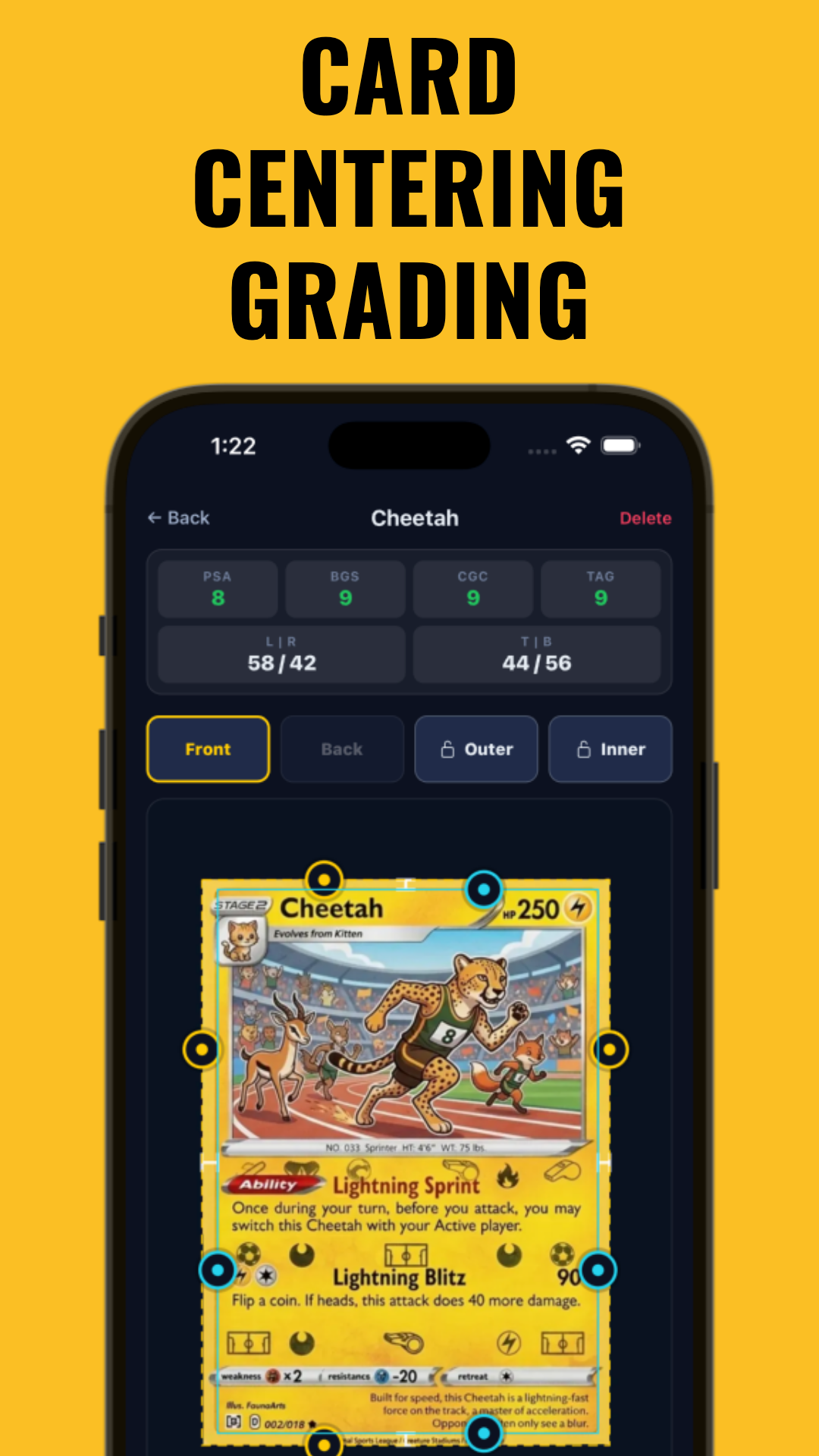
Midpoint offers AI digital grading that analyzes centering, corners, edges, and surface condition to provide instant grading estimates. This can help you understand your card’s potential score before deciding to submit it.
- Upload a clear, well-lit photo of your card to Midpoint.
- Let the AI analyze the card’s key grading factors.
- Review the estimated PSA, BGS, CGC, and TAG grades instantly.
Step 3: Check Card Value Using Price Lookup Tools
After estimating the grade, check current market prices for both raw and graded versions of your card. Prices fluctuate depending on demand, condition, and grading.
Midpoint provides comprehensive card price lookup across multiple games and sports, showing recent sales and listing prices.
- Search your card by name or scan it in Midpoint.
- Compare prices for raw vs graded cards with similar grades.
- Note trends and price ranges to set realistic expectations.
Step 4: Measure Card Centering and Condition Precisely
Centering is an important grading criterion impacting card value. Even a slight off-center card may lose some value.
Using Midpoint’s precise centering measurement tool, you can quantify centering down to the millimeter to better understand your card’s condition.
- Upload your card image to the centering calculator.
- Adjust cropping if needed to ensure accurate analysis.
- Review detailed centering percentages and edges condition.
For more details on how centering impacts value, see How Centering Impacts Card Value: A Detailed Guide.
Step 5: Track Your Collection’s Value Over Time
If you own multiple cards, tracking your portfolio’s value can help decide the right time to sell.
Midpoint allows you to organize and monitor your collection’s estimated worth, factoring in grading estimates and market price fluctuations.
- Add cards to your portfolio within the app.
- Monitor value changes triggered by market trends or grading updates.
- Use these insights to optimize your selling strategy.
Step 6: Decide Whether to Grade Professionally or Sell Raw
After estimating grades and values, decide if professional grading is worth the cost.
If your card scores high on AI grading and has strong market value, submitting it for official grading may increase your final sale price.
However, cards with mid or low grades might be better sold raw to avoid grading fees. Midpoint’s AI grading can help you make this decision with more confidence.
Tips & Common Mistakes
- Tip: Always use high-quality photos to improve AI grading accuracy.
- Tip: Compare multiple price sources to get a balanced view of card value.
- Mistake: Don’t rely solely on raw card appearance without considering centering and edges.
- Mistake: Avoid guessing card value without proper identification and grading estimates.
Conclusion
Learning how to check card value before selling is helpful for maximizing your returns and avoiding unnecessary costs. By accurately identifying your card, using AI-powered grading tools like Midpoint, and performing detailed price lookups, you can better price your cards for sale.
Midpoint’s all-in-one app simplifies this process with instant grading estimates, precise centering measurement, and portfolio tracking — helping you make informed selling decisions. Explore Midpoint for free on iOS and Android today to start checking your card value instantly.
FAQ
What is my card worth if it’s raw versus graded?
Raw cards generally sell for less than graded ones because grading certifies condition and authenticity. Use tools like Midpoint to compare prices of both raw and graded cards to help determine the best option.
How accurate are AI grading tools for estimating card value?
AI grading tools provide useful estimates of centering, edges, corners, and surface condition, giving an indication of your card’s likely professional grade. They reduce guesswork but aren’t a substitute for official grading.
Can I check card value for all trading card games with one app?
Midpoint supports Pokémon, One Piece, Magic: The Gathering, Yu-Gi-Oh, Lorcana, and many major sports cards, offering a comprehensive card price lookup and grading estimate in one place.
How does card centering affect the card’s price?
Centering is a key grading factor; well-centered cards typically fetch higher prices. Off-center cards may lose grade points, which can reduce value. Midpoint’s centering measurement tool helps quantify this precisely.
Is it worth paying for professional grading after using Midpoint?
If Midpoint’s AI grading estimate shows a high potential grade and the card has strong market demand, professional grading may increase sale price. For lower-grade cards, selling raw might be more cost-effective.
Free to start
Try the Midpoint app
Grade any card from a photo, see its raw and PSA 10 value, and track what your collection is worth — free.
Get it on iPhoneGet it on Android