
Legendary Collection Pokémon Cards Value: Complete 2026 Price Guide
Get the 2026 Legendary Collection Pokémon cards value guide: most valuable cards, PSA 10 premiums, reverse holos, and full set worth. Raw vs graded prices inside.

Estimated reading time: 15 min
Key Takeaways
- The Legendary Collection (2002) is one of the most valuable Pokémon sets, with significant premiums for PSA 10s—especially reverse holos.
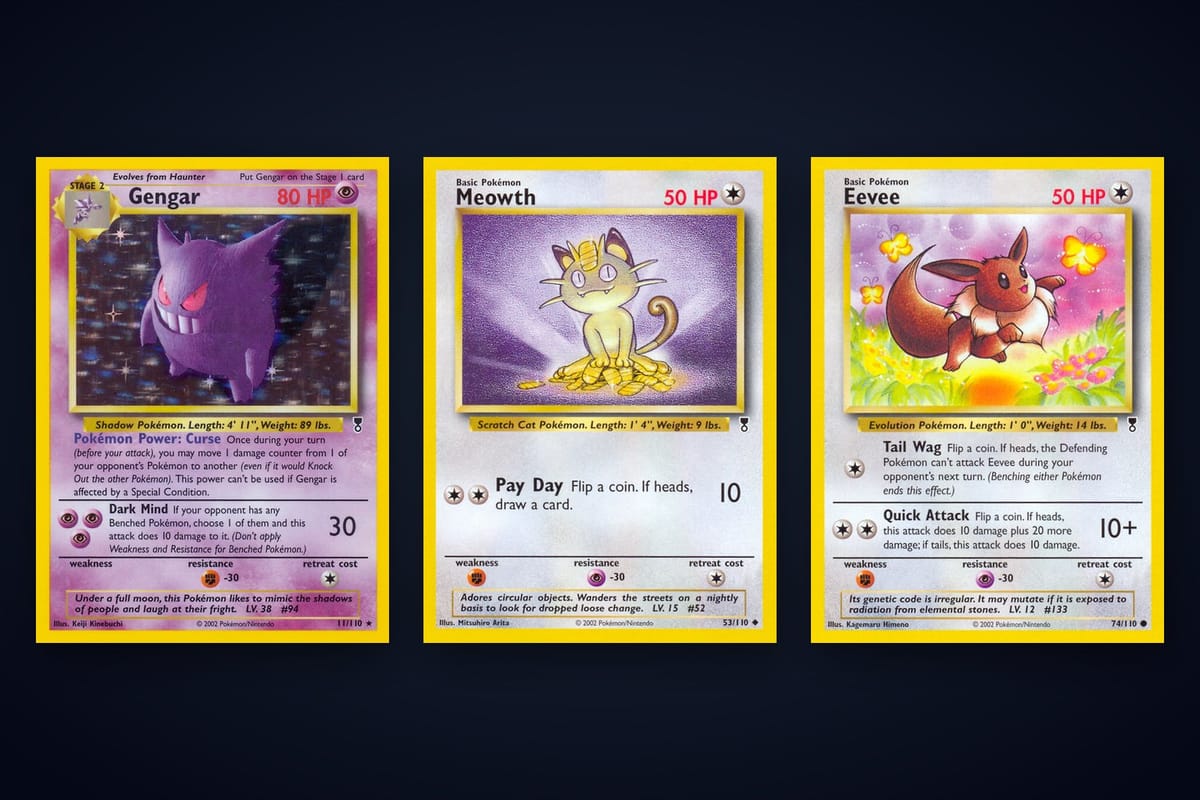
- Iconic cards like Charizard, Gengar, and Eevee can command high prices in top grade.
- Reverse holo "fireworks" cards are among the most sought-after, with notable value jumps from raw to gem mint.
- Condition, grading, and card rarity drive the set’s pricing—knowing which cards to grade is important for collectors.
- Data sources and grading standards can cause price discrepancies; always check recent comps and use digital tools like Midpoint before investing.
Card values — live data from Midpoint's card database, as of 2026-08-19. Prices move; Midpoint refreshes these daily.
| Card | Raw | PSA 10 | Gem premium | |
|---|---|---|---|---|
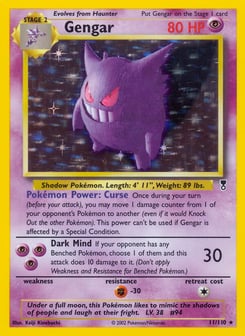 |
Gengar #11/110 Legendary Collection (2002) |
$179.99 | $408,000 | 2266.8× |
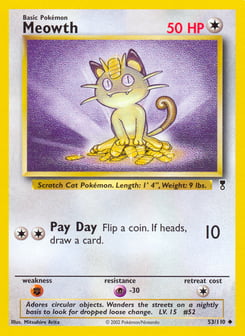 |
Meowth #53/110 Legendary Collection (2002) |
$79.99 | $66,000 | 825.1× |
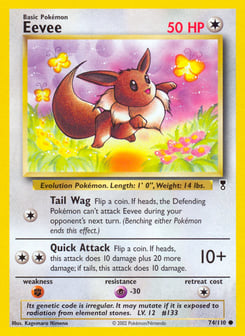 |
Eevee #74/110 Legendary Collection (2002) |
$535.00 | $66,000 | 123.4× |
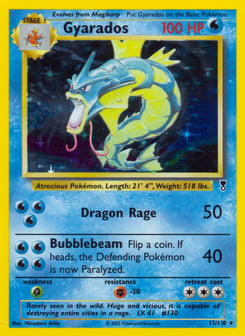 |
Gyarados #12/110 Legendary Collection (2002) |
$48.72 | $66,000 | 1354.7× |
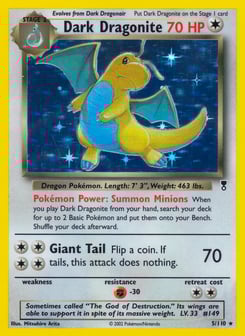 |
Dark Dragonite #5/110 Legendary Collection (2002) |
$229.55 | $60,000 | 261.4× |
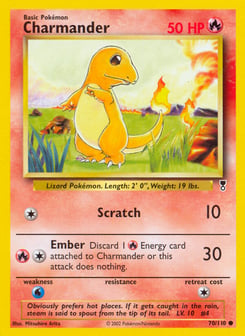 |
Charmander #70/110 Legendary Collection (2002) |
$616.33 | $30,680 | 49.8× |
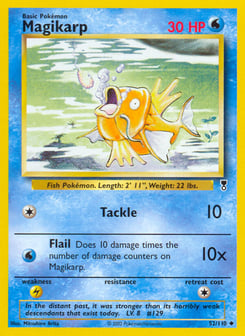 |
Magikarp #52/110 Legendary Collection (2002) |
$699.99 | $28,800 | 41.1× |
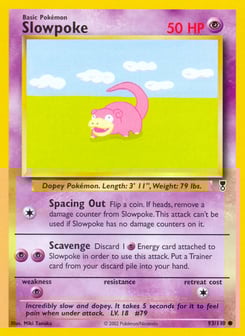 |
Slowpoke #93/110 Legendary Collection (2002) |
$300.00 | $28,800 | 96× |
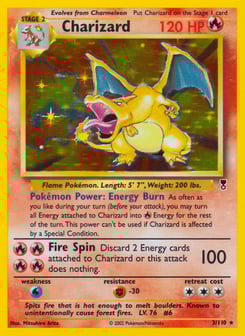 |
Charizard #3/110 Legendary Collection (2002) |
$440.99 | $27,656 | 62.7× |
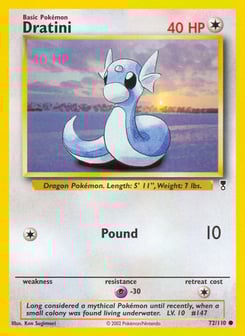 |
Dratini #72/110 Legendary Collection (2002) |
$293.33 | $24,349 | 83× |
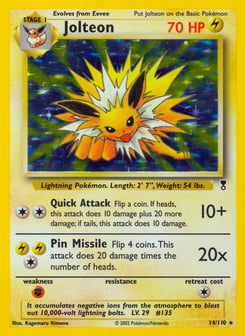 |
Jolteon #14/110 Legendary Collection (2002) |
$71.66 | $23,400 | 326.5× |
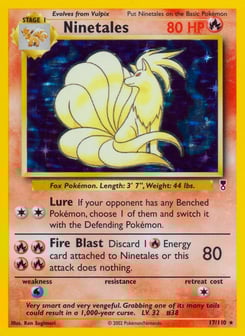 |
Ninetales #17/110 Legendary Collection (2002) |
$350.95 | $20,769 | 59.2× |
Look up any card's current raw and graded value in Midpoint — and get an estimated grade before you pay to submit.
Table of Contents
- Section 1: Legendary Collection (2002) Overview
- Section 2: Complete Legendary Collection Card List & Values
- Section 3: Most Valuable Legendary Collection Pokémon Cards
- Section 4: Raw vs Graded Prices—Why the Gem Premium Is So Extreme
- Section 5: Reverse Holos and Fireworks Patterns—Premiums Explained
- Section 6: Set Value, Grading Economics, and Sealed Product Context
- Conclusion
- FAQ
Section 1: Legendary Collection (2002) Overview
Release & Set Structure
The Legendary Collection Pokémon cards set was released in May 2002, targeting both nostalgic base set fans and new collectors. Comprising 110 cards, it is a reimagining of the earliest Pokémon TCG sets (Base, Jungle, Fossil, Team Rocket), but with a twist: every rare and uncommon card, plus all commons, received the brand-new reverse holo "fireworks" pattern.
- Year: 2002
- Total cards: 110
- Features: All cards can be pulled as reverses; main holos are reprints of classic favorites.
- Highlight: First set to introduce the "fireworks" reverse holofoil.
This was a pioneering set for the Pokémon TCG: while previous sets had only standard holos, Legendary Collection offered every card in two forms—standard and reverse holo. This doubled the chase cards and introduced a new collecting challenge. The set’s card pool is a curated "greatest hits" of early Pokémon, bringing back beloved cards in a new look, and the fireworks pattern proved so memorable that it remains unique even decades later.
Collecting Appeal & Rarity
Unlike base set, Legendary Collection print runs were reportedly more limited and distribution was spotty—making sealed product and high-grade singles less common today. Many reverses, especially in PSA 10 grade, are "low pop" (low population), which has contributed to their strong auction results.
In North America, the set was distributed to fewer big-box stores than previous releases. Anecdotally, many collectors report never seeing Legendary Collection packs at retail, and the print run is believed to be a fraction of the original base set or Neo era printings, though exact numbers are not publicly confirmed. This lower availability means fewer cards were opened, stored, and preserved in perfect condition. As a result, the population of PSA 10 Legendary Collection cards—especially reverses—is much lower compared to other early WOTC sets.
Because the set is a "reprint" product, many collectors initially undervalued it, leading to cards being mishandled or set aside. Only years later did the market recognize the fireworks reverse holos as some of the most visually striking and challenging cards to grade, driving up demand and values for high-grade examples.
Notable Inclusions
- Chase cards: Charizard, Gengar, Mewtwo, Dark Blastoise, Dark Dragonite, Venusaur, and others.
- Every card in the set can be found with the unique fireworks reverse holo pattern.
Beyond the headline cards like Charizard and Gengar, Legendary Collection uniquely elevates even common Pokémon to high-value status if found in PSA 10 reverse holo. For example, cards like Magikarp, Eevee, and Meowth—often overlooked in other sets—are among the most valuable here. This democratization of value is part of the set’s enduring appeal: nearly any card can become a centerpiece if pulled and graded in perfect condition. Collectors also prize the set for the nostalgia factor, since it revisits classic Ken Sugimori and Mitsuhiro Arita artwork, but in a new and dazzling format.
To see the full card list and values, scroll to the next section. The numbers you’ll see below are from Midpoint’s live database, as of 2026-08-19.

Section 2: Complete Legendary Collection Card List & Values
Understanding the Price Table
The Legendary Collection price guide data (automatically inserted after this section) lists each card’s latest raw price, PSA 10 value, and the gem premium (how much more a PSA 10 commands over an ungraded copy). For example:
- Gengar #11: $179.99 raw / $408,000 PSA 10 (gem premium: 2266.8x)
- Charizard #3: $440.99 raw / $27,656 PSA 10 (gem premium: 62.7x)
- Eevee #74: $535.00 raw / $66,000 PSA 10 (gem premium: 123.4x)
These multiples are among the highest in the hobby. Why? Legendary Collection reverse holos are notoriously tough to grade due to heavy print lines, factory scratching, and centering issues.
For context, in many other WOTC sets, the gem premium is often 5x–15x for holos, and 2x–5x for commons. The fact that Legendary Collection regularly sees 50x, 100x, or even 1000x jumps from raw to PSA 10 is unusual and speaks to the set’s unique grading challenge.
Price Guide Sources—Why Numbers Vary
Different sites (TCGPlayer, Cardmarket, eBay completed sales) may report slightly different prices due to:
- Currency conversion rates
- Regional demand
- Grading company population data (PSA vs BGS vs CGC)
- Recent market spikes or record sales
For the most accurate, up-to-date numbers, always check a real-time price tool like Midpoint.
Additionally, prices may reflect short-term market hype, especially after a record-breaking auction. When a PSA 10 Gengar or Eevee sets a new high, listings for other cards may spike temporarily. Always review recent comps, not just asking prices, and consider the card’s population report from PSA. A card with only a handful of PSA 10s will be extremely volatile in price compared to one with dozens or hundreds. Use population tools and historical charts to spot trends and avoid overpaying during a hype cycle.
What the Numbers Mean for Collectors
Raw cards may seem affordable compared to their PSA 10 counterparts, but the cost and risk of grading (plus tough gem rates) mean only a tiny fraction of Legendary Collection cards ever achieve top grade. This dynamic has driven the Legendary Collection Pokémon cards value higher for certain gems.
For collectors, this means two things: 1) the opportunity to "hunt" for overlooked raw cards that could grade well, and 2) the risk of overpaying for cards that fall short of PSA 10 standards. Many reverse holos with minor print lines or surface scratches will max out at PSA 8 or 9, which are worth a fraction of PSA 10s—sometimes less than the grading cost itself. Careful pre-grading and price research are essential before submitting. Collectors with an eye for condition, or access to fresh pack pulls, are best positioned to benefit from Legendary Collection’s unique value proposition.
Section 3: Most Valuable Legendary Collection Pokémon Cards
Top 5 Legendary Collection Cards by PSA 10 Value
The set is loaded with heavy hitters, but a handful of cards stand out as the most valuable Legendary Collection cards in 2026. Based on Midpoint’s data as of 2026-08-19:
- Gengar #11: PSA 10 value $408,000 (raw $179.99)
- Meowth #53: PSA 10 value $66,000 (raw $79.99)
- Eevee #74: PSA 10 value $66,000 (raw $535.00)
- Gyarados #12: PSA 10 value $66,000 (raw $48.72)
- Dark Dragonite #5: PSA 10 value $60,000 (raw $229.55)
These cards together account for substantial value in PSA 10, and several of them are not even rares in the set. This underlines how Legendary Collection upends the usual rarity value hierarchy by making condition the ultimate driver.
Iconic Cards Still Command High Prices
Charizard #3 remains a perennial favorite: raw $440.99, PSA 10 $27,656. While not the highest in the set, its brand power and collector demand ensure it’s always a top chase.
Charmander #70 (raw $616.33, PSA 10 $30,680) and Magikarp #52 (raw $699.99, PSA 10 $28,800) also surprise many with their high gem values, thanks to scarcity in pristine condition.
For example, the Legendary Collection Charmander in PSA 10 is among the most expensive Charmanders across all eras, outpacing some holos from other sets. Similarly, Magikarp, which is often overlooked in competitive play or set collecting, becomes a true grail due to the difficulty of achieving a gem mint copy with no print lines or chipping on the reverse fireworks foil.
Why These Cards?
- Gengar: Beloved fan favorite with extremely low gem population. The combination of iconic artwork, nostalgia, and the fireworks reverse holo pattern makes this card uniquely coveted. PSA’s population report may show fewer than 10 copies in PSA 10, meaning every auction sets a new bar.
- Meowth, Eevee, Magikarp: Commons/uncommons, but the fireworks pattern in PSA 10 is ultra rare. These are "low pop" commons, with populations sometimes in the single digits for PSA 10. This rarity, combined with the universal appeal of characters like Eevee, has pushed prices far beyond most holos in the set.
- Dark Dragonite, Gyarados: Classic artwork, low print defects in gem mint, high demand. Both cards feature fan-favorite Pokémon and have strong competitive and collecting histories. Their Legendary Collection prints are especially attractive to both old-school and modern collectors seeking the ultimate display piece.
Collectors often ask, "Which Legendary Collection cards are worth grading?" The answer: chase the ones with the largest gem premium and low PSA 10 census numbers, but only if your card is a true candidate for a perfect grade. (For more, see the step-by-step pre-grading guide.)
It’s also worth noting that in Legendary Collection, even cards with less competitive or nostalgic appeal—such as Rattata, Pidgey, or Magnemite—can command notable prices in PSA 10 reverse holo due to sheer scarcity. This is almost unique among Pokémon sets, and it creates opportunities for collectors who can spot underappreciated gems.
Section 4: Raw vs Graded Prices—Why the Gem Premium Is So Extreme
Analyzing the Raw-to-PSA 10 Jump
No vintage Pokémon set displays a wider value gulf between raw and gem mint than Legendary Collection. For example, Gengar #11 is $179.99 raw, but $408,000 in PSA 10—an over 2000x premium. Meowth #53 is $79.99 raw, yet $66,000 in PSA 10 (over 800x).
These jumps highlight the "jackpot" nature of Legendary Collection grading: most raw cards will not achieve gem mint, but those that do can multiply in value exponentially. For context, a gem premium over 100x is rare in most other TCG eras.
Why Are PSA 10s So Rare?
- Print Quality: Legendary Collection is known for factory scratches, print lines, and off-centering—especially on reverse holos. The fireworks pattern amplifies every imperfection, making surface flaws more obvious. Print lines often run horizontally or diagonally across the entire card, and even pack-fresh cards can have visible defects.
- Handling Damage: Many cards were mishandled when new, as the set wasn’t widely recognized as a future grail. Reverse holos, in particular, are prone to chipping and edge wear the moment they’re removed from the pack. Many collectors stored these cards in binder pages without sleeves, increasing the likelihood of scratches and edge nicks.
- Low Submission Rates: Fewer packs opened means fewer opportunities for fresh gems. Since sealed product is so rare and expensive, most cards submitted for grading are from old collections, not new openings, further reducing the pool of potential PSA 10s.
PSA’s public population reports show that for some Legendary Collection reverses, there are fewer than 10 total PSA 10s in existence. Compare this to Base Set Charizard holos, where PSA 10 population exceeds 100 copies. This difference in supply is a major driver of the gem premium.
Condition Differences: LP, NM, and Damaged Copies
The value cliff between lightly played (LP), near mint (NM), and gem mint is steep. NM copies fetch a fraction of the PSA 10 value, and anything below NM is valued primarily by set collectors or budget buyers.
- LP: minor edge/surface wear; usually 25–50% of NM value
- NM: clean but not flawless; could be 1/10th or less of PSA 10 price
- Damaged: heavily played or creased; steeply discounted
For example, an NM reverse holo Magikarp might sell for $100–$200, whereas a PSA 10 can command $28,800 or more. PSA 9 copies can be worth 5–15x raw, but still far below PSA 10. This "all or nothing" dynamic is crucial for collectors to understand: minor defects have an outsized impact on value in this set, and many buyers will only pay a premium for perfect examples.
For a detailed breakdown of how centering and flaws impact value, see this guide on centering and card value.
Using Digital Grading Tools to Close the Knowledge Gap
Apps like Midpoint use AI to pre-grade centering, corners, and surface, helping you estimate if a card is truly a PSA 10 candidate—critical given the extreme gem premium spread.
Midpoint’s digital grading tools allow users to upload high-resolution scans or photos of their cards. The app then analyzes centering (measuring border ratios), edge and corner sharpness, and surface reflection for print lines or scratches. For Legendary Collection, this is especially useful: the app can often spot defects invisible to the naked eye, helping collectors avoid costly submission mistakes. Pre-grading with Midpoint can help collectors save on grading fees over time, by steering them away from unlikely submissions and toward true potential gems.
Section 5: Reverse Holos and Fireworks Patterns—Premiums Explained
What Makes Reverse Holos Special?
Legendary Collection reverse holos feature a unique "fireworks" holographic pattern. Every card in the set has a reverse version, but these are known for print lines and edge chipping, making high grades uncommon. The visual impact, combined with scarcity, has pushed prices higher than almost any other Pokémon subset.
Unlike modern reverse holos, which use a uniform foil background, the Legendary Collection fireworks pattern is made up of colorful, exploding starbursts that scatter the light in every direction. This makes for a dazzling display in person, and the pattern is instantly recognizable among collectors. However, the same pattern is extremely vulnerable to surface damage: even minute scratches or print lines are magnified by the holographic bursts, making them much more noticeable than on standard foil cards. This is why collectors are willing to pay large premiums for flawless examples.
Reverse Holo Value vs Regular Holo
- Reverse holos, especially in PSA 10, can command multiples of basic holos—sometimes by factors of 10, 100, or more.
- Commons and uncommons in reverse holo can outpace even legendary holos by value if they achieve gem mint.
- For example, Eevee #74 (reverse) is $66,000 in PSA 10, more than many base set holos.
For instance, while a regular holo Dark Blastoise or Mewtwo might be valued in the $500–$2,000 range for PSA 10, their reverse holo versions can fetch five figures if flawless. Even a common like Caterpie in reverse PSA 10 can outpace the value of a regular holo from the same set. This reversal of the usual holo vs. reverse value hierarchy is unique to Legendary Collection and is directly tied to the extreme grading difficulty of the fireworks pattern.
Why Do Reverse Holos Command Such a Premium?
- Print Issues: The fireworks pattern is extremely unforgiving—print lines are often severe and visible even straight from pack. Reports from collectors opening fresh packs indicate that a high percentage of reverses have at least one visible line or scratch. In some cases, entire booster boxes have failed to yield a single PSA 10 candidate.
- Low Gem Rate: Only a handful of each card reach PSA 10, making them "low population" grails. Many reverses have population counts under 10, and some commons and uncommons have only a single PSA 10 in existence, making them highly sought after for master collectors.
- Collector Demand: The set’s visual distinctiveness and nostalgia factor drive strong competition. The fireworks pattern is unlike anything released before or since, making Legendary Collection reverses a must-have for serious Pokémon TCG collectors. Assembling a master set of all 110 reverses in PSA 10 is considered one of the ultimate achievements in the hobby, and only a tiny handful have attempted it.
The combination of lower print run, tough grading, and high collector demand has made Legendary Collection reverse holos a "perfect storm" for value appreciation. Even modern sets with short print runs do not command the same level of premium for reverse holos, due to improved print quality and higher submission rates. Legendary Collection stands alone in this regard.
Should You Grade Reverse Holos?
Grading can be worthwhile—if your copy is truly flawless. Use a digital grading tool or a pre-grading checklist to avoid losing money on a likely PSA 8 or 9.
Before submitting, inspect your card under a bright light and at multiple angles to catch any print lines or scratches. Use cotton gloves to handle the card to avoid adding fingerprints or micro-scratches. Check centering using a ruler or online calculator—Legendary Collection cards are known for left-right and top-bottom off-centering, which can automatically disqualify a card from PSA 10. If you’re not confident, scan your card and use Midpoint’s centering tool to get an objective measurement before paying grading fees. Only submit cards that pass both visual and digital inspection, as the cost of grading non-gem candidates can quickly add up with little chance of return.
Section 6: Set Value, Grading Economics, and Sealed Product Context
How Much Is a Complete Legendary Collection Set Worth?
The value of a complete Legendary Collection set depends on both condition and whether the set includes reverse holos. As of 2026-08-19:
- Raw, non-graded set (1 of each card): Estimated at $3,500–$6,000, depending on LP/NM mix and inclusion of key reverses.
- PSA 10 set (main holos only): Approaches $1,000,000+ given the top cards (Gengar, Eevee, Gyarados, Meowth, etc.).
- Master set (all reverses in PSA 10): Likely over $5 million—almost never assembled.
Individual card value often far outstrips the sum, since key PSA 10s drive the majority of the set’s worth.
For perspective, a collector assembling a full PSA 10 reverse holo set would need to secure all 110 cards, many of which only appear at auction infrequently. The scarcity of some reverses means even seasoned collectors may never see certain cards in the wild. This is why most "complete" sets, even among high-end collectors, are a mixture of PSA 9, 8, and a handful of 10s. The raw value of a set is much more accessible, but the "holy grail" for many is to build a full display of gem mint fireworks reverses—a feat that has only been claimed by a select few.
Sealed Product: Booster Packs and Boxes
- Booster packs: Rare; prices can exceed $2,000–$4,000 per pack, mostly for sealed collectors or those chasing fresh gems.
- Sealed booster boxes: Almost never offered; when they appear, they can fetch six-figure sums due to rarity and the chance at pristine reverses.
- Sealed product carries a premium because pack-fresh cards have the highest chance at PSA 10—but with no guarantee.
Opening sealed Legendary Collection is considered one of the ultimate risks in the hobby—packs are so expensive that even a single box break can cost over $50,000, with no certainty of pulling a PSA 10-worthy reverse. The vast majority of packs yield cards with at least minor print lines, so the odds are steep. That said, the thrill of opening and the potential to pull a high-value card continues to drive demand for sealed product, especially among collectors and content creators. Sealed booster packs are often purchased as investments or display items, with the added appeal of appreciating value over time due to extreme scarcity.
Grading Economics—Should You Submit?
With grading fees around $30–$100 per card, and such a small chance of a PSA 10, carefully pre-grade your cards. Focus on:
- Reverse holos with no print lines or scratches
- Cards with perfect centering (use a centering calculator for precision)
- High-value holos and popular Pokémon
If you’re unsure, check out the Card Centering Tool guide for grading tips, and always weigh submission cost versus potential value.
Collectors should also consider turnaround times and insurance when grading high-value cards. For cards likely to achieve four- or five-figure values, use expedited grading with maximum insurance to protect your investment. If your card is borderline (e.g., a reverse holo with a very faint print line), consider selling raw or submitting for PSA 9, as the price drop from 10 to 9 is significant. In some cases, a PSA 9 may sell for only 10–20% of a PSA 10, so grade only your absolute best candidates. The economics of grading Legendary Collection are high-risk, high-reward, and digital tools like Midpoint can be helpful in making informed decisions.
Conclusion
The Legendary Collection Pokémon cards value landscape is defined by extremes: low pop PSA 10 gems, iconic artwork, and strong competition for pristine reverse holos. If you’re targeting the most valuable Legendary Collection cards or considering which Legendary Collection cards are worth grading, focus on condition and rarity. Use digital pre-grading tools like Midpoint to maximize your chances of hitting a gem. With raw vs graded price gaps this wide, knowledge and precision are your greatest assets—whether you’re collecting, investing, or just enjoying the hobby.
Legendary Collection stands alone in the Pokémon TCG for its blend of nostalgia, unique design, and grading challenge. The fireworks reverse holos have created a chase that rewards attention to detail and patience, with the potential for significant pulls for those who find and grade a true gem. As the market continues to mature and more collectors appreciate the set’s rarity, expect prices to remain volatile but strong at the top end, especially for PSA 10s and sealed product. Whether you’re building a master set, submitting raw cards, or hunting sealed packs, Legendary Collection offers some of the most exciting opportunities—and risks—in Pokémon collecting today.
FAQ
Q: How much is a complete Legendary Collection Pokémon card set worth?
A:
A raw, non-graded Legendary Collection set typically ranges from $3,500–$6,000 as of 2026-08-19, depending on condition and whether key reverse holos are included. A full PSA 10 set can be worth over $1,000,000, with a master set (all reverses in PSA 10) valued much higher.
Q: What is the most valuable Legendary Collection card?
A:
The most valuable Legendary Collection card is Gengar #11 (reverse holo), valued at $408,000 in PSA 10 as of 2026-08-19. Other top cards include Eevee, Meowth, and Gyarados in PSA 10.
Q: Are reverse holo Legendary Collection cards worth more than regular cards?
A:
Yes, reverse holo cards—especially in PSA 10—are often worth dramatically more than their regular versions due to grading difficulty and low population. Some commons and uncommons in reverse gem mint are the most valuable in the set.
Q: How much is a PSA 10 Charizard from Legendary Collection worth?
A:
Charizard #3 from Legendary Collection is valued at $27,656 in PSA 10 as of 2026-08-19. Its raw value is about $440.99, showing a significant premium for gem mint grade.
Q: Which Legendary Collection cards are the best investment or grading targets?
A:
Cards with the highest PSA 10 premiums and low populations are top targets—like Gengar, Eevee, Meowth, and Dark Dragonite. Focus on flawless reverse holos with perfect centering and no print lines.
Q: How much do Legendary Collection booster packs or sealed products cost?
A:
Sealed booster packs often sell for $2,000–$4,000 each, while sealed booster boxes (when they appear) can reach six figures. Prices reflect rarity and the chance at pulling high-grade reverses.
Free to start
Try the Midpoint app
Grade any card from a photo, see its raw and PSA 10 value, and track what your collection is worth — free.
Get it on iPhoneGet it on Android


