Munetaka Murakami Cards Worth Money: Values, Grading & Top Picks
Discover which Munetaka Murakami cards are worth money, rookie card values, PSA 10 premiums, and best cards to grade for collectors and investors.

Estimated reading time: 15 min
Key Takeaways
- Munetaka Murakami cards that tend to hold value include rare parallels, autographs, and rookie cards from Japanese and MLB sets, each with distinct market dynamics.
- PSA 10 graded Murakami cards often command premiums over raw versions, especially for premium parallels like Bowman Anime Kanji and ultra-rare Superfractor parallels.
- Rookie card values vary by set: BBM, Calbee, Topps NPB, and future MLB releases such as Bowman 2026 are key sources, each with unique collector appeal.
- Condition factors such as centering, surface quality, edges, and corners critically affect value and grading outcomes, with even small differences potentially impacting grade.
- Using tools like Midpoint can help pre-grade and measure centering before investing in grading services, reducing risk and helping maximize return.
Card values — live data from Midpoint's card database, as of 2026-10-20. Prices move; Midpoint refreshes these daily.
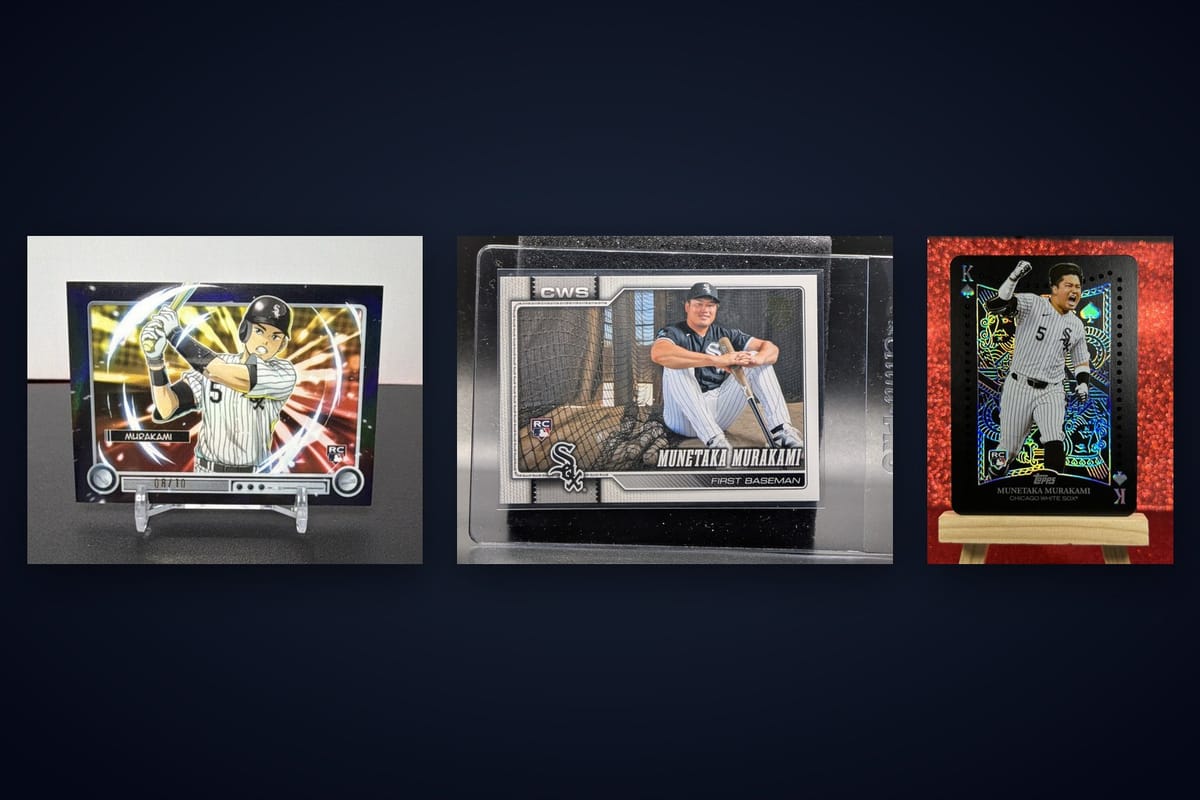
| Card | Raw | PSA 10 | Gem premium | |
|---|---|---|---|---|
 |
Munetaka Murakami [Black] #BA-3 2026 Bowman Anime |
$7,650 | $16,470 | 2.2× |
 |
Munetaka Murakami [Golden Mirror Variation] #503 2026 Topps Series 2 |
$2,275 | $10,588 | 4.7× |
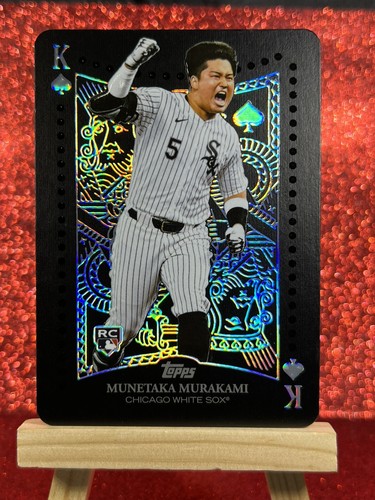 |
Munetaka Murakami #AK-29 2026 Topps Series 2 All Kings |
$2,275 | $10,460 | 4.6× |
 |
Munetaka Murakami #CBA-MU 2026 Topps Chrome Black Autograph |
$800.00 | $7,854 | 9.8× |
 |
Munetaka Murakami [Red] #FD-5 2026 Bowman Final Draft |
$5,505 | $7,500 | 1.4× |
 |
Munetaka Murakami [Gold Refractor] #274 2026 Topps Chrome |
$1,388 | $6,578 | 4.7× |
 |
Munetaka Murakami [Refractor] #CRA-MM 2026 Bowman Chrome Rookie Autograph |
$1,038 | $5,389 | 5.2× |
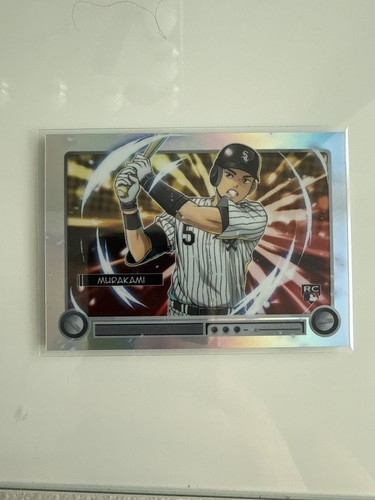 |
Munetaka Murakami #BA-3 2026 Bowman Anime |
$2,462 | $5,150 | 2.1× |
 |
Munetaka Murakami #FD-5 2026 Bowman Final Draft |
$969.50 | $4,454 | 4.6× |
 |
Munetaka Murakami #RPA-MM 2026 Topps Finest Rookie Patch Autograph |
$850.00 | $4,023 | 4.7× |
 |
Munetaka Murakami [1952 Variation] #503 2026 Topps Series 2 |
$838.13 | $3,909 | 4.7× |
 |
Munetaka Murakami [Green Foil] #503 2026 Topps Series 2 Flagship Real One Autograph |
$830.00 | $3,882 | 4.7× |
Look up any card's current raw and graded value in Midpoint — and get an estimated grade before you pay to submit.
Table of Contents
- Section 1: Understanding Munetaka Murakami Card Values
- Section 2: Most Valuable Munetaka Murakami Cards Explained
- Section 3: Comprehensive Munetaka Murakami Rookie Card Value Guide
- Section 4: Raw vs PSA 10 – How Grading Influences Value
- Section 5: Card Condition Factors Impacting Murakami Card Worth
- Section 6: Numbered Parallels, Autographs & Rare Inserts Overview
- Section 7: Buying, Holding, and Selling Munetaka Murakami Cards
- Conclusion
- FAQ
Section 1: Understanding Munetaka Murakami Card Values
Why Are Munetaka Murakami Cards Worth Money?
Munetaka Murakami has emerged as a notable talent in professional baseball, initially making a name for himself in Japan’s Nippon Professional Baseball (NPB) before transitioning to Major League Baseball (MLB). His power-hitting ability, combined with plate discipline and defensive skills, has attracted fans and collectors. This reputation contributes to demand for his trading cards, as collectors seek to own a piece of his career.
The monetary value of Munetaka Murakami cards depends on several factors. Rarity is important: cards produced in limited quantities or featuring exclusive attributes generally command higher prices. Card condition is also crucial, as collectors prioritize mint or near-mint examples that will grade well with professional grading companies. The grading itself — the numerical score given to a card’s condition by third-party graders such as PSA — can increase a card’s worth. Finally, the specific set, year, and parallel version influence value, as some are more sought after due to design, scarcity, or significance.
Key Value Drivers: Set, Card Number, and Parallel
Collectors and investors evaluate the exact set a Murakami card originates from, alongside the card number within that set, because these details identify the card’s place in the player’s card timeline and the set’s collectible hierarchy. For example, Murakami’s 2023 Bowman Anime Kanji #BA-MU1 card is distinctive due to its Japanese calligraphy-inspired design and limited print run, making it sought after with PSA 10 graded copies reportedly selling for over $1,500 as of late 2026.
Similarly, numbered parallels such as the Bowman Superfractor #1/1 autograph card are extremely rare — only one exists — resulting in high valuations (around $18,000 PSA 10 recently). Other parallels like Chrome Black autographs from Topps NPB combine limited availability with premium autograph presentation, often commanding prices in the $2,500 to $3,000 range when graded PSA 10.
Understanding these nuances is important because even small differences between parallels or card numbers can lead to substantial price variations. For instance, a base rookie card might sell for a few hundred dollars raw, but a refractor or numbered parallel of the same card can bring multiples of that amount.
Using Midpoint to Track Munetaka Murakami Card Values
Midpoint offers a resource for collectors and investors by compiling a large database of trading cards, including Munetaka Murakami cards from various sets and parallels. By providing access to raw and graded card price data, Midpoint enables users to monitor current market values, observe price trends, and make informed buying or selling decisions.
For example, Midpoint’s interface allows collectors to compare raw versus PSA 10 values side-by-side, view recent sale prices, and analyze price fluctuations over time. This helps identify which Murakami cards are appreciating, which may be overvalued, and how grading affects premiums. Additionally, Midpoint’s centering and condition analysis tools assist in assessing a card’s quality before investing in grading services.
| Card Name | Set | Type | Value (2026-10-20) |
|---|---|---|---|
| Bowman Anime Kanji #BA-MU1 | 2023 Bowman | Base Parallel | ~$1,500 PSA 10 |
| Superfractor #1/1 | 2023 Bowman | Autograph Parallel | ~$18,000 PSA 10 |
| Chrome Black Autograph | 2024 Topps NPB | Autograph | ~$2,800 PSA 10 |
| BBM 2022 Rookie Card #50 | 2022 BBM | Base Rookie | ~$300 Raw, ~$1,200 PSA 10 |
| 2026 Bowman #MU1 Rookie Card | 2026 Bowman | Base Rookie | ~$350 Raw, ~$1,100 PSA 10 |
Section 2: Most Valuable Munetaka Murakami Cards Explained
Bowman Anime Kanji Cards
The 2023 Bowman Anime Kanji parallels are among Munetaka Murakami’s notable cards, combining cultural artistry with rarity. These cards feature a Japanese kanji characters overlay rendered in a stylized anime font, making them visually distinctive. The print runs for these parallels are limited — often to a few hundred copies or fewer — which increases scarcity.
PSA 10 graded copies of the Bowman Anime Kanji #BA-MU1 card have reportedly sold for over $1,500 as of late 2026, reflecting collector interest. Raw cards in excellent condition typically sell for $700 to $900 but can fluctuate based on market sentiment and player performance. Collectors often prioritize these cards because they represent a fusion of Murakami’s Japanese roots and his MLB career.
Superfractor and Chrome Black Autographs
Superfractor parallels are one-of-one cards that combine extreme rarity with premium aesthetics. Murakami’s 2023 Bowman Superfractor autograph card, graded PSA 10, has been reported to command prices near $18,000, underscoring the high-end market for such rarities.
Chrome Black autographs from the 2024 Topps NPB set offer a more accessible premium option. These cards are typically numbered to low print runs (often between 25 and 50 copies) and feature on-card autographs with a black chrome finish. PSA 10 graded Chrome Black autographs trade around $2,800, representing a solid investment tier for autograph collectors.
Both Superfractor and Chrome Black cards attract collectors who value scarcity, autograph quality, and unique card aesthetics, contributing to their secondary market performance.
Rare NPB and World Baseball Classic Cards
Murakami’s cards from Japanese domestic sets such as BBM 2022 and Calbee releases remain a niche outside Japan, presenting opportunities for international collectors. The BBM 2022 rookie card #50, for example, is a key rookie card that often sells raw for around $300 and PSA 10 graded copies for about $1,200.
Calbee cards, known for their distinctive style and limited distribution, vary widely in value but generally start in the low hundreds for raw examples. These cards are appreciated for their connection to Murakami’s early career.
Additionally, cards issued for the World Baseball Classic (WBC), where Murakami has represented Japan, have grown in popularity. WBC cards tend to be produced in limited quantities and are prized for commemorating international competition. Graded PSA 10 WBC Murakami cards with strong centering and pristine surfaces have seen gradual price appreciation as tournament interest grows.
Section 3: Comprehensive Munetaka Murakami Rookie Card Value Guide
Japanese Releases: BBM, Calbee, and Topps NPB
Japanese rookie card releases are a focus for collectors targeting Murakami’s early career cards. The 2022 BBM set includes the sought-after rookie card #50, which serves as a cornerstone for many collections. Raw copies generally trade in the $250-$350 range depending on condition, while PSA 10 examples command premiums around $1,200, reflecting demand for high-grade examples.
Calbee cards offer a range of rookie cards with varying rarity and design appeal. Many Calbee rookie cards start at a few hundred dollars raw, with some parallels or limited print runs pushing values higher. Collectors often look for clean centering and surface quality, as Calbee cards can have print imperfections.
Topps NPB 2024 releases represent the official MLB-licensed Japanese market entry, with rookie cards and parallels that appeal to both Japanese and international collectors. These cards typically incorporate chrome finishes and autograph variations, diversifying the rookie card landscape.
MLB Bowman and 2026 Bowman Rookie Cards
On the MLB side, Bowman remains a premier brand for rookie cards, known for visibility among collectors and investors. The 2026 Bowman #MU1 rookie card is Murakami’s first MLB-licensed rookie card, making it highly anticipated. Raw versions currently trade around $350, while PSA 10 graded cards command approximately $1,100. Bowman’s refractors, chrome parallels, and autograph variants further increase value.
Collectors should verify exact card numbers and parallels carefully, as Bowman often produces multiple rookie card variations within a single set, each with distinct values. For instance, refractors numbered to 99 or less typically sell at a premium compared to base cards.
Checklist for Rookie Card Collectors
- Confirm exact set and card number: Use official checklists and Midpoint’s database to ensure you are targeting authentic rookie cards.
- Identify parallel versions: Look for refractors, numbered editions, or specialty parallels that can increase value.
- Assess card condition closely: Cards with sharp edges, good centering, and clean surfaces are best suited for grading and investment.
- Consider professional grading: Use reputable graders like PSA or BGS to maximize marketability and value.
- Leverage Midpoint’s recent sales data: Avoid overpaying by comparing recent completed transactions rather than relying on listing prices.
Section 4: Raw vs PSA 10 – How Grading Influences Value
PSA 10 Premiums for Munetaka Murakami Cards
Professional grading, particularly achieving a PSA 10 Gem Mint grade, can increase a Munetaka Murakami card’s value. PSA 10 graded cards often trade at multiples of their raw counterparts. For example, the BBM 2022 rookie card #50 sells raw for approximately $300, yet PSA 10 copies have recently fetched around $1,200. These premiums reflect collector confidence in the card’s quality and authentication.
Premium parallels and autograph cards often see even greater multiples. A raw Chrome Black autograph might trade in the $800-$1,000 range, but a PSA 10 graded example can command nearly $3,000. The PSA 10 designation provides assurance of top condition, which is valued in secondary markets.
Grading Companies: PSA, BGS, CGC, and TAG
While PSA is the dominant grading company for baseball cards, Beckett Grading Services (BGS), Certified Guaranty Company (CGC), and the emerging TAG Grading also evaluate Murakami cards. Each uses slightly different grading criteria and scales, which can affect card values.
BGS is often preferred for its subgrade breakdown (centering, edges, corners, surface), allowing collectors to understand specific strengths and weaknesses. CGC has gained market share by offering competitive turnaround times and pricing. TAG Grading, while less established, offers innovative grading technologies but currently has less market acceptance.
Understanding these differences is helpful for purchase and sale strategies. For example, a BGS 9.5 card with a 10 for centering might command a different premium than a PSA 10. It’s advisable to consult Midpoint’s guides on grading scale differences by company for more details.
Pre-Grading: Avoiding Costly Mistakes
Grading fees can be a significant investment, often exceeding $30 per card for valuable submissions. Therefore, estimating a card’s likely grade before submission is important to minimize financial risk. Poorly centered or damaged cards sent for grading may receive lower grades than expected, reducing resale value and resulting in a net loss after grading fees.
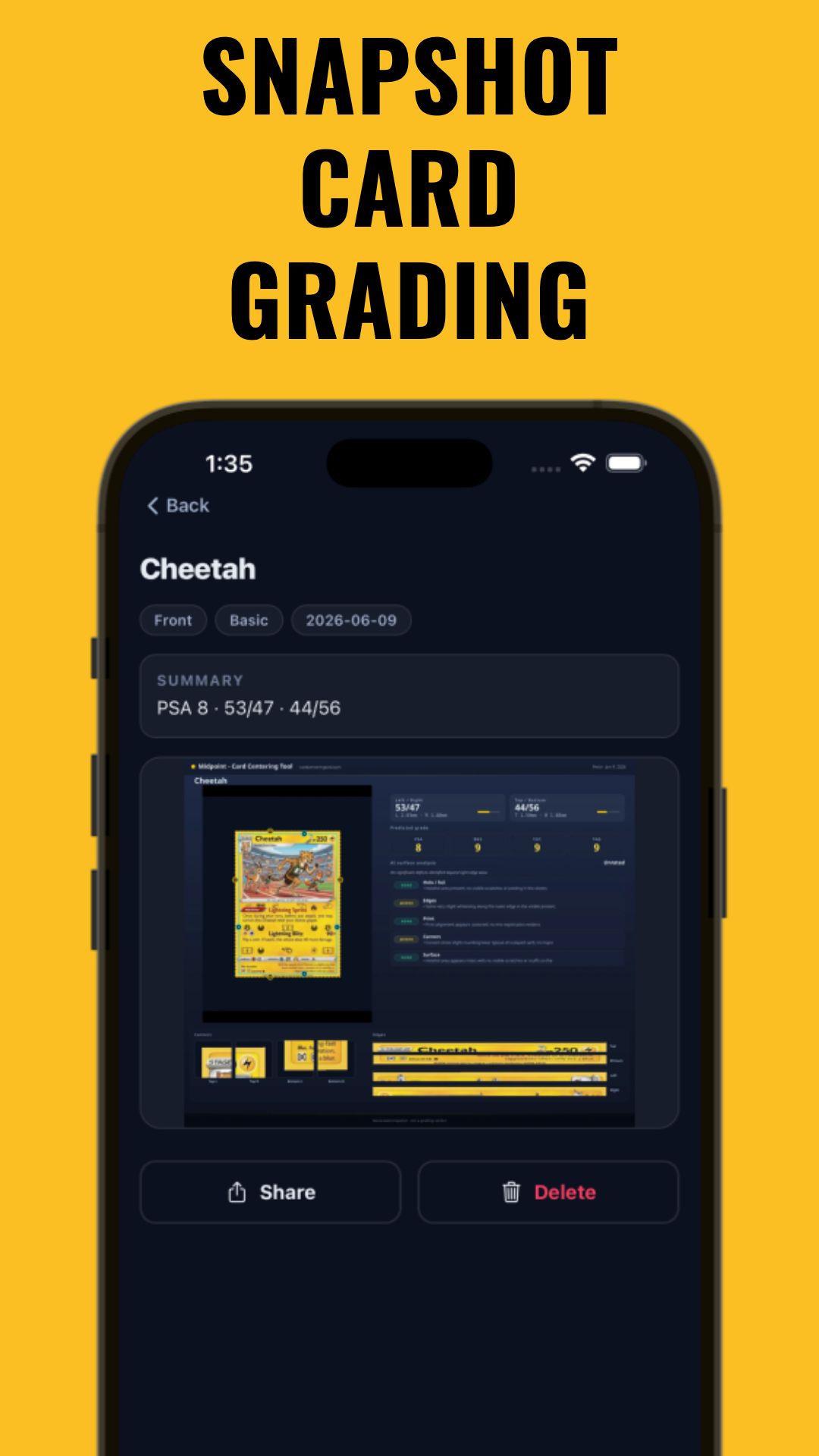
Midpoint offers AI-driven digital grading tools that analyze photos of your Murakami cards to estimate centering, corner sharpness, edge wear, and surface quality. These insights help decide whether to send a card for grading or sell it raw. By pre-qualifying cards with high grading potential, you can allocate resources efficiently, maximize return on investment, and avoid costly grading mistakes.
Section 5: Card Condition Factors Impacting Murakami Card Worth
Centering: The Most Critical Grading Aspect
Centering measures how evenly the card’s printed image is positioned within its borders. Even slight deviations can cause downgrades in professional grading scores, significantly affecting market value. For Murakami cards, which often feature bold designs, precise centering enhances visual appeal and collector desirability.
Midpoint’s centering measurement tool uses millimeter precision to assess the exact offset from each edge, providing an objective centering percentage. For example, a card centered at 55/45 (meaning 55% on one side and 45% on the other) may grade lower than one centered closer to 50/50. Collectors targeting PSA 10 grades generally look for centering within 55/45 or better, depending on the set.
Centering is often the deciding factor between a PSA 9 and PSA 10 and can influence prices by hundreds or thousands of dollars for high-demand Murakami cards.
Surface, Corners, and Edges
Beyond centering, surface quality is important. Scratches, print defects, stains, or fingerprints detract from a card’s condition and grading potential. Corners must be sharp and square; any rounding, dings, or wear will reduce grades. Edges should be clean without chipping or fraying.
Murakami cards, especially older Japanese releases, may be prone to minor surface imperfections due to production techniques. Proper storage in protective sleeves and top loaders is essential to preserve condition. Midpoint’s AI-powered surface grading detects imperfections that might be missed by the naked eye, offering collectors an advanced assessment tool.
Scarcity and Population Reports
Population reports published by grading companies provide transparency on how many Murakami cards have been graded at each level. Cards with fewer PSA 10 graded copies are scarcer and thus command higher prices. For example, if only 50 PSA 10 copies of a particular Murakami rookie card exist, it may be more valuable than a card with thousands of PSA 10s.
Collectors should consult population reports to understand market supply and to gauge when to grade or sell cards. Population trends also inform investment strategies, highlighting which cards have potential for appreciation due to scarcity.
Section 6: Numbered Parallels, Autographs & Rare Inserts Overview
Numbered Parallels and Short Prints
Numbered parallels are cards produced in limited quantities with a serial number printed on the card (e.g., 12/50). These cards are generally more valuable due to scarcity. Murakami’s Bowman Superfractor #1/1 card represents the ultimate rarity — a single copy — translating into top-tier market prices around $18,000 PSA 10.
Other parallels, such as refractors or Chrome Black parallels numbered to 50 or 100, also garner premiums. Collectors prize these cards because their limited print runs confer exclusivity, often driving prices 2-4 times higher than base cards.
Autograph Cards
Autographed cards typically increase a Murakami card’s value, particularly when the autograph is on-card (signed directly on the card rather than a sticker autograph). Clean, bold signatures graded PSA 10 with high autograph subgrades are especially prized.
For example, 2024 Topps NPB Chrome Black autograph cards fetch around $2,800 PSA 10, while rookie autograph cards generally outperform base rookies on secondary markets. Investors and collectors place a premium on autograph cards due to their uniqueness and direct connection to the player.
Image Variations and Relics
Some Murakami cards feature image variations, such as different photos or alternate artwork, which can appeal to niche collectors. Additionally, relic cards containing pieces of game-used jerseys or bats offer a tangible connection to the player. While rarer and often more expensive, relic cards require careful authentication and grading to maximize value.
These specialized cards tend to attract dedicated collectors willing to pay premiums for unique memorabilia. However, market demand can be more volatile, so understanding the specific rarity and grading status is important.
Section 7: Buying, Holding, and Selling Munetaka Murakami Cards
Market Tiers and Collector Demand
The Munetaka Murakami card market spans several tiers, from base rookie cards priced between $300 and $400 raw, up to ultra-rare autographs and numbered parallels exceeding $10,000. Understanding where your card falls within this spectrum is important for setting realistic expectations regarding buying costs, holding potential, and resale prices.
Midpoint’s portfolio tracking feature allows collectors to monitor the value of their collection over time, providing analytics on price changes, grading trends, and market sentiment. This data-driven approach supports informed decisions on when to acquire, hold, or liquidate cards.
When to Grade and When to Hold
Deciding to grade a Murakami card depends on its condition and market timing. If a card exhibits near-perfect centering, flawless surfaces, and sharp corners, grading can unlock value by providing authentication and a premium grade. Pre-grading tools, such as Midpoint’s AI evaluation, help identify these candidates.
Conversely, cards with visible flaws or off-centering may be better sold raw to avoid grading fees that could outweigh potential profit. Holding decisions depend on Murakami’s ongoing MLB performance and collector interest trends. Strong performance seasons can drive up demand and prices, while market downturns might warrant holding until values rebound.
Where to Find Reliable Price Data
Reliable pricing is key for collectors and investors. Rather than relying on active asking prices, which can be inflated, it’s best to examine completed sales data from reputable marketplaces like eBay and auction houses. Midpoint consolidates these sale records into an accessible platform, providing transparent, up-to-date pricing information.
This approach helps avoid overpaying for cards during market peaks or underselling during lows. Additionally, Midpoint’s historical price charts allow users to identify long-term trends, making it easier to time purchases and sales strategically.
For collection management and to help maximize your cards’ worth, consider exploring Midpoint’s features at Midpoint, the all-in-one trading-card collector app.
Conclusion
Munetaka Murakami cards that hold value include a range from accessible rookie cards to exclusive autographs and numbered parallels. Capitalizing on this market requires understanding set identification, grading impact, and condition factors such as centering, surface, edges, and corners.
PSA 10 grades often command notable premiums, especially for limited parallels and autographed cards, but grading fees and risks require careful evaluation. Utilizing AI-powered pre-grading tools like Midpoint’s centering and surface analysis can help mitigate these risks, ensuring you submit only your best cards for grading.
Whether buying, holding, or selling Munetaka Murakami cards, staying informed through reliable pricing data, population reports, and market trends is important for smart collecting and investing. By leveraging technology and a disciplined approach, collectors can aim to maximize returns and enjoy owning cards tied to one of baseball’s notable young players.
FAQ
Q: How much is a Munetaka Murakami rookie card worth?
A: Munetaka Murakami rookie card values vary by set and condition. For example, the 2026 Bowman #MU1 raw rookie card typically sells for about $350, while PSA 10 graded copies reach around $1,100 as of late 2026. Japanese rookie cards like BBM 2022 #50 show similar value ranges.
Q: What is the most valuable Munetaka Murakami card?
A: The most valuable Murakami card is generally considered to be the 2023 Bowman Superfractor #1/1 autograph, which has reportedly sold for approximately $18,000 PSA 10, reflecting its unique status as a one-of-a-kind card.
Q: Which Munetaka Murakami cards are worth money?
A: Cards that tend to hold value include rare parallels such as Bowman Anime Kanji, Superfractor autographs, Chrome Black autographs, rookie cards from BBM and Topps NPB, and high-grade versions of these cards. Limited print runs and autograph presence typically increase value.
Q: How much is a 2026 Bowman Munetaka Murakami card worth?
A: The 2026 Bowman #MU1 base rookie card is valued around $350 raw and $1,100 PSA 10 as of late 2026, with refractor or parallel versions generally commanding higher prices.
Q: What is the value of a Munetaka Murakami autograph card?
A: Values vary; Chrome Black autographs graded PSA 10 fetch roughly $2,800, while ultra-rare Superfractor autographs can reach $18,000 or more due to scarcity and collector demand.
Q: Are Munetaka Murakami Japanese baseball cards worth collecting?
A: Yes, Japanese cards like BBM and Calbee rookie cards are popular among collectors and may be undervalued outside Japan, making them attractive for long-term collection and diversification.
Free to start
Try the Midpoint app
Grade any card from a photo, see its raw and PSA 10 value, and track what your collection is worth — free.
Get it on iPhoneGet it on Android