Pele Cards Worth Money: The Ultimate Collector’s Guide
Discover which Pele cards are worth money, how grading affects value, and the best Pele rookie cards to grade for top returns.

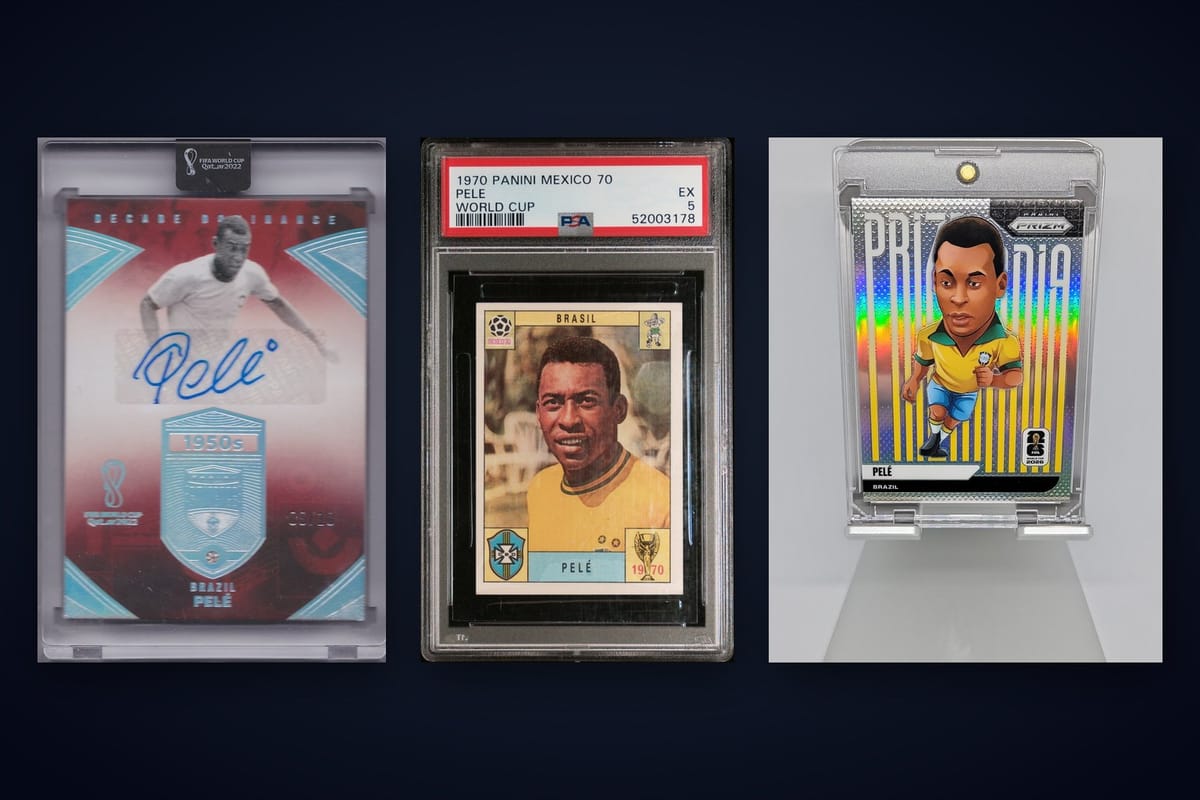
Estimated reading time: 18 min
Key Takeaways
- The 1958 Pelé rookie card, especially the Alifabolaget #635, is widely regarded as one of the most valuable and sought-after cards among collectors worldwide.
- Condition and grading, particularly PSA 9 and PSA 10 grades, significantly influence Pelé card values, with differences in centering or surface quality often leading to notable price changes.
- Record sales have pushed certain Pelé cards into six-figure territory, with some high-grade examples approaching or exceeding seven figures, making them among the most valuable soccer cards in history.
- Other valuable vintage sets to consider include the 1957 Balas Futebol and 1958 Americana Brazilian issues, which offer alternative investment opportunities beyond the marquee rookie card.
- Modern Pelé cards generally have lower values but offer accessible entry points for collectors and can appreciate with strategic collecting and grading.
- Scarcity factors such as country of issue, print runs, and survival rate affect the long-term value and desirability of Pelé cards.
- Using AI-based grading tools like Midpoint can help collectors estimate card condition and potential value before submission, minimizing grading surprises and aiding investment decisions.
Card values — live data from Midpoint's card database, as of 2026-09-04. Prices move; Midpoint refreshes these daily.
| Card | Raw | PSA 10 | Gem premium | |
|---|---|---|---|---|
 |
Pele #DD-P 2022 Panini Eminence FIFA World Cup Decade Dominance Autographs |
$8,750 | $17,510 | 2× |
 |
Pele 1970 Panini World Cup Mexico |
$99.99 | $4,757 | 47.6× |
 |
Pele #29 2026 Panini Prizm FIFA Prizmania |
$571.00 | $2,703 | 4.7× |
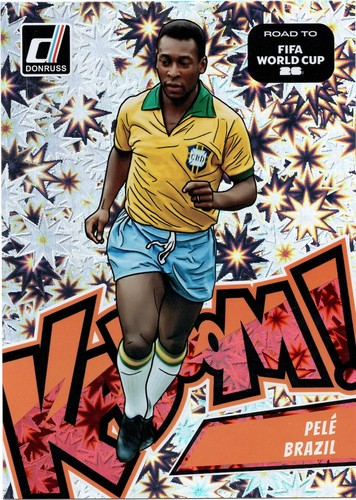 |
Pele #23 2025 Panini Donruss Road to FIFA Kaboom |
$909.00 | $2,138 | 2.4× |
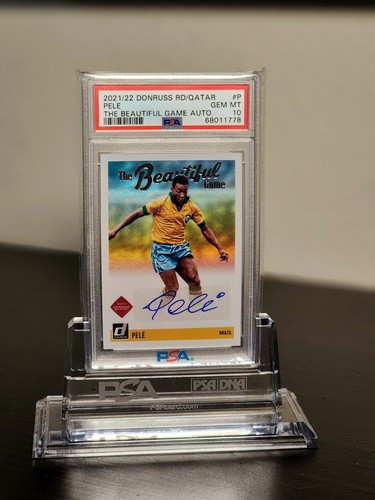 |
Pele #BG-P 2021 Panini Donruss Beautiful Game Autographs |
$735.68 | $1,550 | 2.1× |
 |
Pele #29 2026 Panini Prizm FIFA Manga |
$819.39 | $1,500 | 1.8× |
 |
Pele #32 2026 Panini Prizm FIFA National Landmarks |
$260.00 | $1,244 | 4.8× |
![Pele [Silver] #S-P 2022 Panini Prizm World Cup Signatures card](https://i.ebayimg.com/images/g/2a0AAeSwa4hqReP-/s-l500.jpg) |
Pele [Silver] #S-P 2022 Panini Prizm World Cup Signatures |
$647.77 | $1,210 | 1.9× |
 |
Pele #S-P 2022 Panini Prizm World Cup Signatures |
$706.00 | $1,167 | 1.7× |
 |
Pele #23 2024 Panini Select FIFA Stained Glass |
$333.75 | $1,000 | 3× |
 |
Pele #13 2024 Panini Prizm Copa America Color Wheel |
$382.64 | $861.00 | 2.3× |
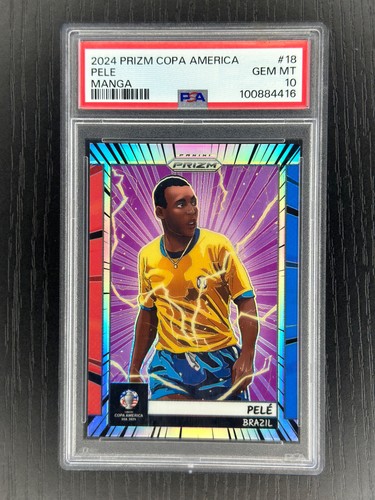 |
Pele #18 2024 Panini Prizm Copa America Manga |
$340.00 | $725.00 | 2.1× |
Look up any card's current raw and graded value in Midpoint — and get an estimated grade before you pay to submit.
Table of Contents
- Section 1: The Iconic 1958 Pelé Rookie Card and Why It’s Worth Money
- Section 2: How Condition and Grading Impact Pelé Card Values
- Section 3: Record Sales and Market Benchmarks for Pelé Cards
- Section 4: Other Valuable Vintage Pelé Card Sets to Consider
- Section 5: Modern Pelé Cards: Value Spectrum and Collecting Tips
- Section 6: Scarcity Factors Driving Pelé Card Values
- Section 7: Authenticity and Marketplaces: How to Buy and Sell Pelé Cards
Conclusion
FAQ
Section 1: The Iconic 1958 Pelé Rookie Card and Why It’s Worth Money
The 1958 Alifabolaget #635: The Holy Grail
The 1958 Alifabolaget #635 rookie card is widely recognized as the definitive Pelé rookie card, making it a centerpiece of many serious soccer card collections. Issued in Sweden by Alifabolaget, this card depicts a youthful Pelé in his Santos FC uniform, capturing the early stage of his career. The card’s imagery and historical importance contribute to its esteem among collectors.
Why This Rookie Card Stands Out
The Alifabolaget #635’s value is influenced by several factors:
- Scarcity: The card's limited print run, estimated in the few thousands, combined with attrition over more than six decades, means that high-grade copies are relatively rare. Many cards have experienced wear or damage over time.
- Historical significance: This card represents Pelé’s emergence on the global stage, coinciding with his pivotal 1958 World Cup performance that brought him international recognition. It symbolizes the early career of a football legend, adding cultural weight to its value.
- Collector demand: The growth of global soccer fandom and sports card collecting has increased demand for iconic cards like this one. Its status as a key rookie card fuels competition among collectors and investors.
Current Market Value as of 2026-09-04
Midpoint’s database indicates that raw Alifabolaget #635 cards in good condition typically start around $20,000 to $30,000, depending on surface wear and centering. Graded examples often command significantly higher prices. PSA 9 graded cards have sold in ranges from approximately $150,000 to $400,000 at auction, with scarcity of high-grade copies pushing prices upward. PSA 10 graded examples, considered Gem Mint, have sold for prices exceeding $1 million at prominent auctions. The market is sensitive to grade differences; a PSA 10 can command multiples of a PSA 9’s price.
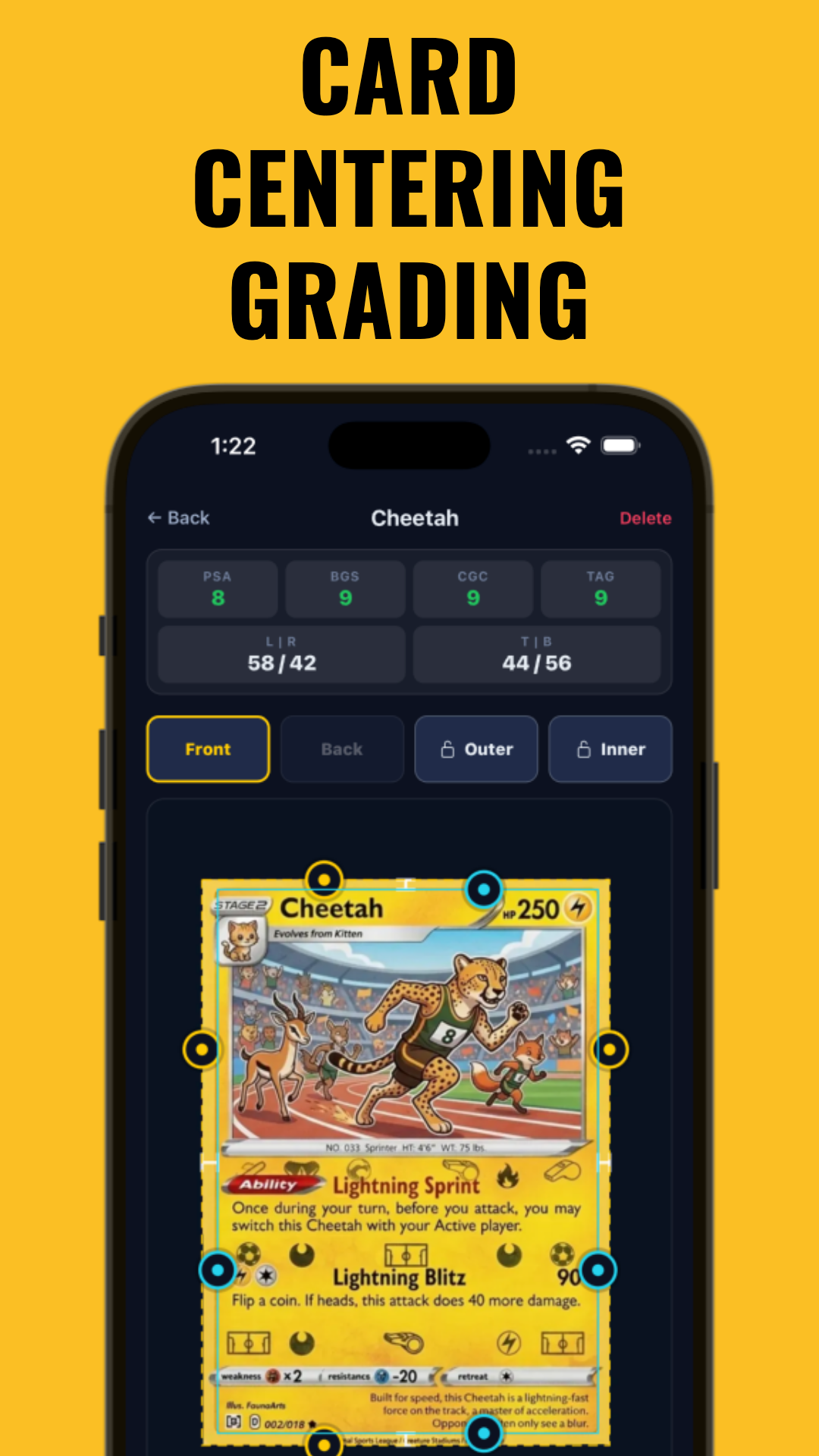
Collectors aiming to submit their Alifabolaget #635 card for professional grading can use tools like Midpoint’s free centering calculator and AI-based preliminary grade estimates. These tools analyze high-resolution images to measure centering precisely and flag surface anomalies. Using these insights helps collectors minimize grading fees and avoid surprises, potentially maximizing their return on investment.
Section 2: How Condition and Grading Impact Pelé Card Values
Understanding Grading Scales: PSA, BGS, and CGC
Professional grading companies such as PSA (Professional Sports Authenticator), BGS (Beckett Grading Services), and CGC (Certified Guaranty Company) use a 1-to-10 scale to assess a card’s condition. The evaluation considers centering, corners, edges, and surface condition, with each factor weighted to produce an overall grade.
For Pelé cards, PSA grades are most commonly referenced due to PSA’s market presence and collector acceptance. BGS and CGC also provide credible grading but may have different population reports and slight grading variances.
The difference between a PSA 9 and a PSA 10 is especially important. While a PSA 9 indicates a card in Mint condition with minor imperfections, a PSA 10, or Gem Mint, denotes near perfection. This distinction can translate to a substantial increase in market value, particularly for marquee rookie cards like the 1958 Alifabolaget #635.
The Role of Centering and Surface in Value
Centering refers to how evenly the image is positioned within the card borders. Cards with near-perfect centering (typically 55/45 or better) are highly prized because they reflect superior manufacturing quality and aesthetic appeal. Many raw collectors may underestimate the importance of centering, but professional graders consider it a key determinant of grade.
Midpoint’s AI-powered centering measurement tool can quantify centering to a precision of 0.1 millimeters, providing collectors an objective pre-submission estimate. For example, a card with a centering of 60/40 might receive a lower grade than one with 52/48 centering, even if other factors are equal.
Surface condition includes scratches, print defects, stains, or discolorations. Cards with flawless surfaces command top grades and higher values. Even subtle surface imperfections can lead to grade reductions and value declines.
Raw vs Graded: Which Is Worth More?
- Raw cards—cards not yet submitted for professional grading—can sometimes be bargains but carry the risk of hidden defects or undervalued condition. Experienced collectors may acquire raw cards intending to grade them strategically.
- Graded cards provide verified condition assessments and often enjoy higher liquidity. High-grade PSA 9 or 10 cards are easier to sell and generally command premium prices.
- For iconic Pelé rookies, the grade can significantly increase value, but low grades or unexpected flaws can reduce value substantially.
Collectors are advised to use grading estimate tools like Midpoint to analyze their cards before submission, helping avoid costly grading fees on low-grade outcomes.
For a deeper dive, see our comprehensive guide on Card Grade Impact on Insurance Value, which explains how grading influences both market value and insurance replacement cost.
Section 3: Record Sales and Market Benchmarks for Pelé Cards
Historic Sales Approaching or Exceeding Seven Figures
Some Pelé cards, most notably the 1958 Alifabolaget #635 graded PSA 10, have reached sales exceeding $1 million as of 2026. These sales have taken place at prestigious auction houses such as Heritage Auctions and Goldin Auctions, often drawing intense bidding interest. These headline sales have elevated Pelé cards to the highest levels of vintage soccer cards worldwide, setting benchmarks for future valuations.
Six-Figure Sales and Important Comparables
Other Pelé cards graded PSA 9 or BGS 9.5 have sold in the $100,000 to $500,000 range. These include rare parallel versions from the Alifabolaget set, early Brazilian regional issues like the Americana 1958, and the 1957 Balas Futebol set. For example, a 1957 Balas Futebol card in PSA 8 to 9 condition might fetch $30,000 to $80,000, illustrating the premium placed on condition even outside the marquee rookie card.
Using Market Data to Track Prices
Collectors and investors can leverage price guides, historical auction archives, and live listing comparables aggregated in apps like Midpoint to track real-time market trends. These tools provide insights into recent sales, current asking prices, and population reports. Using this data, collectors can identify optimal buying or selling windows and avoid overpaying or underselling their Pelé cards.
For example, Midpoint’s dashboard allows filtering by set, grade, and market activity, enabling users to monitor the price trajectory of specific Pelé cards. This data-driven approach is useful in a market where values can fluctuate based on player milestones, anniversaries, or changing collector sentiment.
Section 4: Other Valuable Vintage Pelé Card Sets to Consider
1957 Balas Futebol
The 1957 Balas Futebol set predates the famous 1958 Alifabolaget rookie card and includes some of the earliest known images of Pelé. While generally less valuable than the Alifabolaget #635, the Balas Futebol cards remain sought after, especially in high grades. PSA 8 to 9 graded cards from this set can reach mid-five-figure price points ($30,000 to $80,000), depending on condition and centering. The set is prized for its rarity and vintage aesthetic reflecting soccer card production in 1950s Brazil.
1958 Americana and Other Brazilian Issues
Brazilian regional releases such as the 1958 Americana set provide alternative investment-grade Pelé cards. These cards were produced in smaller print runs and distributed primarily within Brazil, leading to relative scarcity internationally. Graded examples have seen appreciation in recent years, with PSA 9 versions often selling for $40,000 to $70,000, while PSA 10 copies can reach six figures in some cases. These cards attract collectors looking to diversify beyond the Swedish Alifabolaget issue, representing different aspects of Pelé’s early career and regional significance.
Key Factors for Vintage Set Values
- Print run and distribution scope: Sets with smaller print runs or limited regional distribution tend to be scarcer and more valuable.
- Condition and centering quality: As with all vintage cards, high-grade condition is important. Cards with excellent centering and minimal surface wear command the highest prices.
- Population reports from grading companies: Understanding how many cards have been graded at each level helps gauge scarcity and pricing trends.
Collectors interested in vintage Pelé cards beyond the marquee rookie should consider these alternative sets for diversification, balancing risk and potential appreciation.
Section 5: Modern Pelé Cards: Value Spectrum and Collecting Tips
Modern Inserts and Base Cards
While vintage cards dominate the high-end Pelé market, modern Pelé cards, such as recent FIFA World Cup inserts, limited parallels, or autographed cards, offer accessible entry points for collectors. Base modern cards typically range from $10 to $50, depending on condition and popularity. More scarce inserts and autographed parallels can reach several hundred dollars or more, especially if serial numbered to low print runs (e.g., 1/25 or 1/10).
Low-End vs High-End Modern Cards
- Base modern cards are widely available and generally have modest value, serving as a foundation for new collectors to build Pelé collections affordably.
- Limited inserts, autographs, or serial numbered parallels command higher prices, influenced by scarcity and player significance.
- Grading modern cards can increase value, but the market is more volatile compared to vintage, with trends often influenced by recent player performances and media attention.
Best Practices for Modern Card Collectors
Collectors should use portfolio tracking apps like Midpoint to monitor value fluctuations, identify undervalued cards, and time grading submissions strategically. For example, submitting a serial numbered Pelé autograph graded PSA 9 or 10 can increase resale value. Monitoring market trends also helps avoid grading cards just before anticipated market dips.
Additionally, maintaining cards in top condition with proper storage and minimal handling protects value. Using soft sleeves, top loaders, and temperature-controlled environments is recommended.
Section 6: Scarcity Factors Driving Pelé Card Values
Country of Issue and Regional Releases
Cards issued in Brazil or Sweden, such as the Alifabolaget #635, are typically rarer than mass-produced international sets. Regional print runs were often limited by geographic constraints and manufacturing capabilities of the time. For example, the Alifabolaget print run is estimated to be under 5,000 copies, while mass-market issues could number in the tens of thousands or more. This regional scarcity contributes to elevated value.
Print Run and Survival Rate
Lower print runs naturally result in fewer surviving copies. Additionally, survival rate depends on how well cards were preserved over decades. Cards from the 1950s often suffered from poor storage conditions, leading to creases, stains, or edge wear. Cards with documented low population reports, such as PSA 9 or 10 graded Alifabolaget #635, are especially prized due to their rarity.
Rarity of Parallels and Variants
Rare parallels, error cards, or color variants within Pelé sets can command premiums. For example, a short-printed “gold foil” parallel or a card with a misprint can attract collectors willing to pay multiples of the base card price. Identifying these variants requires expert knowledge or access to reliable resources like Midpoint’s lookup tool, which catalogs known Pelé card variants and their market values.
Understanding these scarcity drivers enables collectors to focus on cards with strong long-term appreciation potential rather than chasing short-lived trends.
Section 7: Authenticity and Marketplaces: How to Buy and Sell Pelé Cards
Identifying Genuine Pelé Cards
The market contains counterfeits and altered Pelé cards, given their high values. To help ensure authenticity, collectors should:
- Carefully examine print quality, card stock, and ink consistency, comparing with verified authentic examples.
- Use AI-powered grading previews like Midpoint’s surface anomaly detection to spot inconsistencies such as retouching or print defects.
- Consult expert graders or trusted dealers with reputations for authenticity verification.
- Request provenance or prior grading certificates when available.
Where to Check Market Values
Price guides, auction archives, and real-time listing data aggregated on platforms like Midpoint provide comprehensive market visibility. These resources allow collectors to verify current market prices, observe trends, and assess fair values. For example, Midpoint offers filters by card set, grade, and recent sales, enabling precise market comparisons.
Best Places to Sell Pelé Cards
- Specialized sports card auctions with international reach, such as Heritage Auctions, offer exposure to premium buyers.
- Online marketplaces with verified buyer protections, like eBay and StockX, provide convenience and transparency.
- Direct sales through collector forums, social media groups, or consignment houses can yield competitive prices but require due diligence.
Leveraging Midpoint’s portfolio tracking and grading tools can help sellers optimize timing and pricing strategies, identifying peak market windows and avoiding undervaluation.
Conclusion
Understanding which Pelé cards are worth money requires knowledge of vintage and modern sets, grading impact, scarcity factors, and current market benchmarks. The 1958 Alifabolaget #635 remains the most valuable and iconic rookie card, with PSA 10 graded examples commanding prices in the seven-figure range. Condition and grading dictate value across all Pelé cards, with differences in centering or surface quality causing significant value fluctuations.
Scarce vintage sets like the 1957 Balas Futebol and 1958 Americana offer diversification opportunities for collectors seeking alternative investments within the Pelé card ecosystem. Modern Pelé cards provide accessible entry points, with grading and strategic collecting enhancing their value potential.
Utilizing tools like Midpoint to digitally assess centering, estimate grades, and track portfolio values empowers collectors and investors to make informed decisions, mitigate grading risks, and optimize returns. Whether you are a seasoned collector or new to Pelé cards, this guide offers essential insights to navigate the market and build a valuable collection backed by data and expertise.
FAQ
Q: What is the most valuable Pelé card?
A: The 1958 Alifabolaget #635 rookie card is widely considered the most valuable Pelé card, with PSA 10 graded copies having sold for over $1 million as of 2026. The card’s scarcity, historical significance, and collector demand contribute to its high value.
Q: How much is a Pelé rookie card worth?
A: Depending on condition and grading, Pelé rookie cards can range from five figures raw (starting around $20,000) to over seven figures for PSA 10 graded examples. PSA 9 graded cards typically sell in the mid-six-figure range.
Q: Which Pelé cards are rare and worth money?
A: Besides the 1958 Alifabolaget #635, rare and valuable Pelé cards include the 1957 Balas Futebol set, 1958 Americana Brazilian issues, and limited parallels or variants with low print runs. Cards with verified high grades in these sets command significant premiums.
Q: Does grading increase the value of Pelé cards?
A: Yes, professional grading, especially PSA 9 or 10, can significantly increase a Pelé card’s value by verifying condition and authenticity. High grades provide buyer confidence and greater market liquidity.
Q: How can I tell if my Pelé card is real?
A: Authenticity can be assessed by examining print quality and card stock, consulting expert graders, and using AI grading tools like Midpoint to detect surface anomalies or alterations. Provenance and prior grading certificates also help verify authenticity.
Q: Where can I sell Pelé trading cards for the best price?
A: Selling through specialized auctions, verified online marketplaces, or consignment houses typically yields the best prices. Using platforms like Midpoint helps sellers time their sales optimally by tracking market trends and values.
Free to start
Try the Midpoint app
Grade any card from a photo, see its raw and PSA 10 value, and track what your collection is worth — free.
Get it on iPhoneGet it on Android