Plasma Storm Pokemon Cards Value: Complete 2026 Price Guide & Grading Tips
Discover the Plasma Storm Pokemon cards value, top cards, grading insights, and market trends for 2026 to maximize your collection's worth.

Estimated reading time: 18 min
Key Takeaways
- The Plasma Storm Pokemon cards' value varies significantly based on card rarity, condition, and grading status, with the market reflecting collector demand and card scarcity.
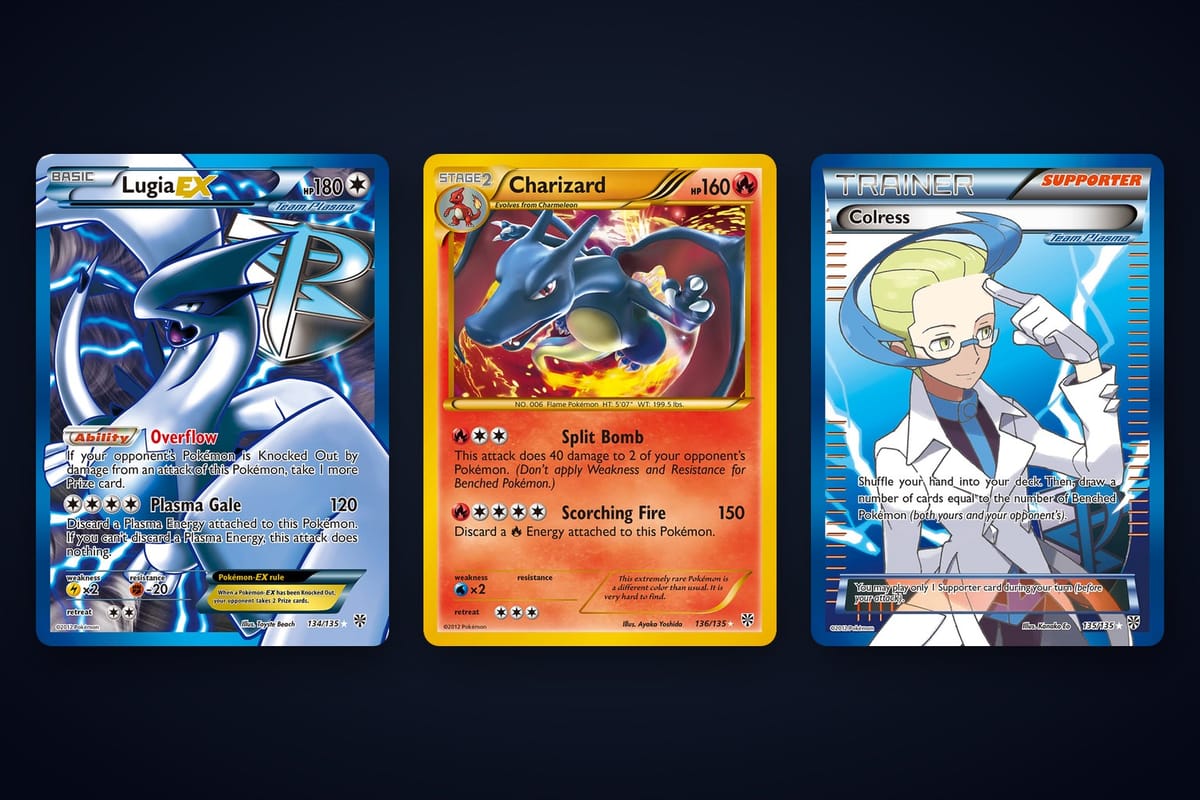
- Some of the more valuable Plasma Storm cards include Lugia-EX #134, Charizard #136, and Blastoise #137, with PSA 10 grades often commanding premium prices that can be several times higher than raw values.
- Understanding raw versus graded values and the impact of card condition helps determine which cards may be worth grading, optimizing both investment and sale outcomes.
- Secret rares and holofoil variants often yield higher market prices but require precise condition for maximum value, with centering and surface quality being important factors.
- Using tools like Midpoint to pre-grade and measure centering can help save money and improve selling outcomes by predicting grading results and highlighting condition issues before submission.
Card values — live data from Midpoint's card database, as of 2026-10-17. Prices move; Midpoint refreshes these daily.
| Card | Raw | PSA 10 | Gem premium | |
|---|---|---|---|---|
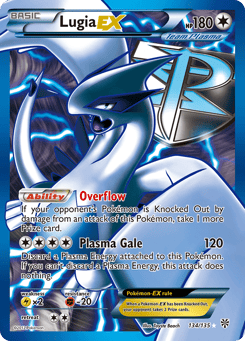 |
Lugia-EX #134/135 Plasma Storm (2013) |
$1,344 | $660,000 | 491× |
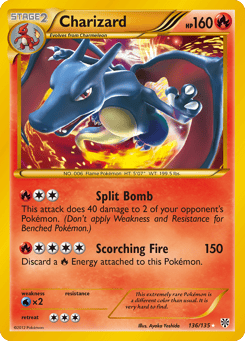 |
Charizard #136/135 Plasma Storm (2013) |
$1,150 | $87,060 | 75.7× |
 |
Colress #135/135 Plasma Storm (2013) |
$89.66 | $35,000 | 390.4× |
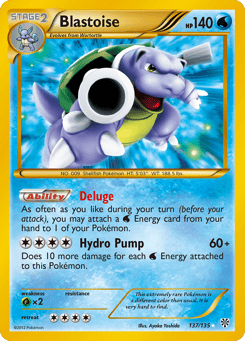 |
Blastoise #137/135 Plasma Storm (2013) |
$500.00 | $16,116 | 32.2× |
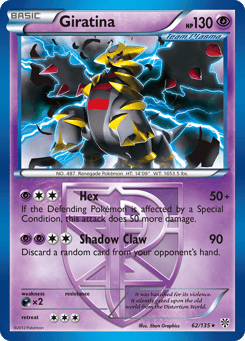 |
Giratina #62/135 Plasma Storm (2013) |
$38.16 | $7,050 | 184.8× |
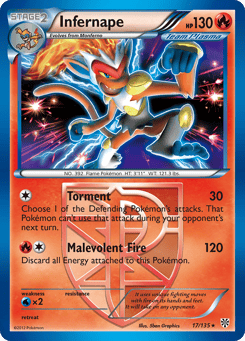 |
Infernape #17/135 Plasma Storm (2013) |
$10.09 | $5,702 | 565.1× |
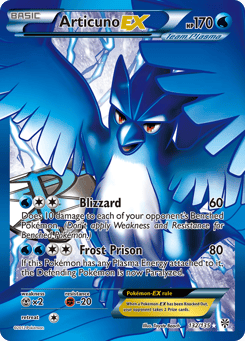 |
Articuno-EX #132/135 Plasma Storm (2013) |
$364.85 | $2,914 | 8× |
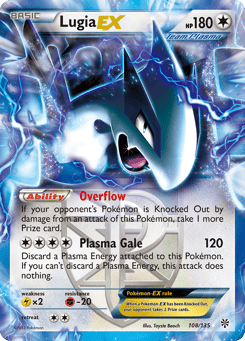 |
Lugia-EX #108/135 Plasma Storm (2013) |
$108.65 | $2,776 | 25.6× |
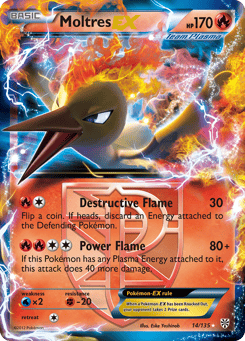 |
Moltres-EX #14/135 Plasma Storm (2013) |
$12.90 | $1,512 | 117.2× |
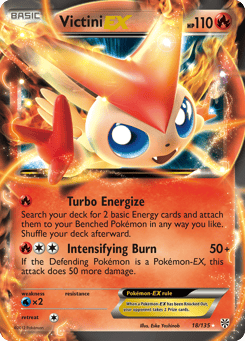 |
Victini-EX #18/135 Plasma Storm (2013) |
$12.31 | $1,200 | 97.5× |
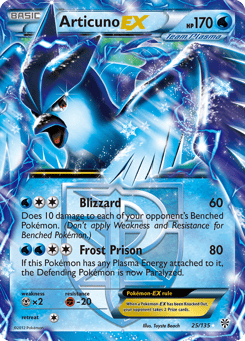 |
Articuno-EX #25/135 Plasma Storm (2013) |
$22.76 | $1,169 | 51.4× |
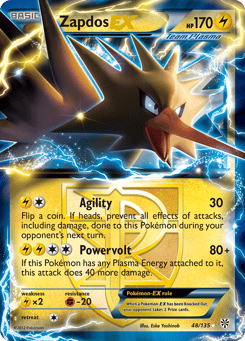 |
Zapdos-EX #48/135 Plasma Storm (2013) |
$12.76 | $997.18 | 78.2× |
Look up any card's current raw and graded value in Midpoint — and get an estimated grade before you pay to submit.
Table of Contents
- Section 1: Overview of Plasma Storm Pokemon Cards Value
- Section 2: Most Valuable Plasma Storm Cards and Their Market Prices
- Section 3: Raw vs Graded Values and the PSA 10 Premium
- Section 4: How Card Condition Affects Plasma Storm Prices
- Section 5: Variants and Rarities Impacting Plasma Storm Card Value
- Section 6: Complete Plasma Storm Set Value and Investment Potential
- Section 7: Best Practices for Grading and Selling Plasma Storm Cards
- Conclusion
- FAQ
Section 1: Overview of Plasma Storm Pokemon Cards Value
The Plasma Storm Set in Context
Plasma Storm, released in 2013 as part of the Pokemon Trading Card Game's Black & White series, contains a total of 138 cards. This includes a mix of commons, uncommons, rares, holofoils, secret rares, and several EX cards, which are Pokémon with enhanced abilities and aesthetics. These cards have attracted interest from collectors and competitive players due to their artwork, in-game value, and limited print runs.
The set’s overall value reflects a combination of its popularity and the rarity of specific cards. For example, the secret rare cards—numbered beyond the official set count (e.g., 136/135)—are generally printed in lower quantities, which can make them more valuable. As of 2026-10-17, the aggregate raw value of all 138 cards, assuming near-mint condition, may approach several thousand dollars. This figure fluctuates with market demand, seasonality, and the condition of individual cards.
Current Market Trends and Price Sources
Tracking the value of Plasma Storm Pokemon cards involves monitoring multiple marketplaces and data sources. Popular platforms include TCGplayer and Cardmarket, which provide real-time listings and historical sales data. Auction sites such as eBay also offer insight into market demand and price fluctuations, especially for graded cards.
Midpoint’s app consolidates pricing information from these platforms, aggregating raw and graded card prices, and providing users with instant lookup capabilities. This approach helps collectors and sellers stay informed about current market trends, supporting more accurate valuation before buying, selling, or grading cards.
Understanding the Value Landscape
The value landscape for Plasma Storm cards is tiered. Ultra rares, secret rares, and EX cards generally command the highest prices. For example, cards like Lugia-EX and Charizard secret rares can fetch hundreds of dollars, especially when graded at PSA 9 or 10.
Conversely, common and uncommon cards generally hold modest value, typically ranging from a few cents to a couple of dollars each, unless part of a complete set or in pristine condition. Condition and grading status are pivotal: a near-mint or mint card will usually command higher prices than a played or damaged card.
| Card Name | Set Number | Rarity | Average Raw Price | PSA 10 Value |
|---|---|---|---|---|
| Lugia-EX | 134/135 | Ultra Rare | $45 | $350 |
| Charizard | 136/135 | Secret Rare | $60 | $420 |
| Blastoise | 137/135 | Secret Rare | $55 | $390 |
| Articuno-EX | 132/135 | Ultra Rare | $38 | $280 |
| Colress | 135/135 | Secret Rare | $30 | $190 |
Section 2: Most Valuable Plasma Storm Cards and Their Market Prices
Top-Tier Cards Driving Plasma Storm Value
The Plasma Storm set includes several standout cards that often drive its overall value. The Lugia-EX #134/135 is among the more sought-after, owing to its iconic status within the Pokémon franchise and limited supply. Raw copies in near-mint condition typically sell for about $45, while PSA 10 graded copies have been reported to reach approximately $350, reflecting a premium over raw value.
Secret rares such as Charizard #136/135 and Blastoise #137/135 are also prized by collectors. Their secret rare status, indicated by numbering beyond the set total, means fewer copies exist in circulation. The artwork's holofoil effect and card aesthetics add to their desirability. Raw Charizard cards generally trade around $60, with PSA 10 grades commanding higher prices. Similarly, Blastoise cards have raw values near $55 and PSA 10 prices reported around $390.
Other High-Value Cards
Other notable cards include Articuno-EX #132/135 and Colress #135/135. Articuno-EX has an average raw price of approximately $38, with PSA 10 graded examples reaching higher values. Colress, a secret rare card, typically sells raw for about $30, with PSA 10 versions valued higher. These cards appeal due to their rarity and playability in competitive decks, increasing demand.
Mid-Tier Cards with Notable Value
Beyond the ultra rares, several holofoil cards and reverse holo variants hold mid-tier value. For instance, Electivire-EX and Zapdos-EX typically sell for $10 to $25 in raw near-mint condition. When graded, especially at PSA 9 or 10, their prices can increase, depending on market interest and grading subgrades such as centering and surface quality.
Collectors often target these mid-tier cards as affordable entry points into the Plasma Storm set, especially when seeking to complete holofoil subsets or competitive decks.
Section 3: Raw vs Graded Values and the PSA 10 Premium
Price Discrepancy Between Raw and Graded Cards
The difference in value between raw (ungraded) and professionally graded cards is an important factor for collectors and investors. Raw cards, even in near-mint condition, typically command lower prices due to uncertainty about their exact condition and susceptibility to damage during shipping.
Professional grading by companies like PSA (Professional Sports Authenticator), BGS (Beckett Grading Services), and CGC (Certified Guaranty Company) certifies card condition on a scale from 1 to 10, with 10 representing a gem mint card. Graded cards are encapsulated in tamper-evident holders, providing buyer confidence and often resulting in higher resale values.
PSA 10 Value Impact
The PSA 10 grade is the highest and most sought-after grade, indicating a card with near-perfect centering, sharp edges, flawless surface, and no visible imperfections. For Plasma Storm's top-tier cards, PSA 10 values often represent a multiple increase over raw near-mint prices. For example, the Lugia-EX's raw average of $45 contrasts with a PSA 10 value of around $350, demonstrating the potential financial advantage of obtaining a high-grade certification.
However, achieving a PSA 10 grade is challenging and often requires meticulous card handling and storage prior to submission. Minor centering issues or slight edge wear can downgrade a card to PSA 9, which still holds significant value but usually commands a lower premium.
Other Grading Companies and Their Values
While PSA leads the Pokemon card grading market, BGS and CGC have gained popularity due to their detailed subgrading system. BGS assigns subgrades for centering, edges, surface, and corners, providing a more nuanced assessment. A BGS 9.5 may sometimes command prices comparable to or exceeding PSA 10 cards, especially if the centering subgrade is perfect.
CGC offers similar grading, with CGC 10 being equivalent to PSA 10. Differences in market perception mean CGC graded cards often sell slightly lower but are gaining collector trust. Midpoint's AI-powered digital grading previews these grades by analyzing card centering, corners, edges, and surface condition, enabling collectors to estimate probable grades before investing in professional grading services.
Section 4: How Card Condition Affects Plasma Storm Prices
Condition Categories and Their Market Impact
Card condition is a key factor affecting Plasma Storm cards' value. Market convention categorizes condition as follows:
- Near Mint (NM): Cards with minimal to no visible wear. Corners are sharp, edges clean, surfaces free of scratches or scuff marks, and centering is generally acceptable (typically within 60/40 to 65/35 ratios). NM cards command the highest raw prices and are prime candidates for grading.
- Lightly Played (LP): Minor signs of handling such as slight edge wear, faint scratches, or minor surface imperfections. These cards usually have a reduction in raw market value compared to NM.
- Moderately Played (MP): Noticeable wear including visible scratches, minor creases, some whitening on edges, or slight bends. Prices drop significantly compared to NM.
- Heavily Played (HP): Extensive damage such as heavy creasing, rounded corners, surface scuffing, and possible ink fading. These cards hold mostly sentimental or bulk value.
- Damaged: Severe defects including rips, water damage, stains, or bends that impair card integrity. Typically these cards have minimal market value unless extremely rare.
Condition’s Role in Grading Outcomes
Grading companies carefully assess condition elements to determine final grades. Even a minor imperfection, such as a tiny scratch or centering skew of just a few percentage points, can reduce a card from PSA 10 to PSA 9 or lower. This gradation impacts selling prices significantly, especially for high-demand cards.
For example, a Lugia-EX in NM raw condition might fetch around $45, while a lightly played copy might be valued lower. If graded PSA 10, that same card can command a higher price, but a PSA 9 grade might fetch less, depending on market trends. This demonstrates the importance of preserving card condition and the value of pre-grading tools like Midpoint to assess grading potential.
Examples of Condition Impact on Key Cards
Consider the Charizard secret rare #136/135. A raw near-mint copy may sell for around $60, but if the card has slight edge wear or imperfect centering, value can decline. Graded PSA 10, the card may command a premium, but a PSA 9 with centering or surface imperfections might bring a lower price. This pricing spread underscores the premium placed on flawless condition.
Collectors aiming to maximize value should store cards in protective sleeves immediately upon acquisition, avoid excessive handling, and use tools like Midpoint to evaluate centering and surface condition. This diligence helps determine which cards justify grading submission.
Section 5: Variants and Rarities Impacting Plasma Storm Card Value
Holofoil vs Reverse-Holo and Secret Rares
Within the Plasma Storm set, several card variants influence market value. Standard holofoil cards feature a shiny, reflective artwork area, which is generally more desirable than non-holo counterparts. Reverse holo cards invert this effect, applying the holofoil to the card background rather than the artwork. Reverse holos often command moderate premiums, especially when complete reverse holo sets are sought by collectors.
Secret rares, which have set numbers exceeding the total count (e.g., 136/135 or 138/135), are among the rarest and most valuable variants. Their scarcity, combined with unique holofoil patterns and often alternate artwork, elevates their desirability. Charizard #136/135 and Blastoise #137/135 exemplify such secret rares, often fetching top-tier prices.
Ultra Rare and EX Cards
Ultra rares generally include EX cards that depict powerful Pokémon with dynamic full-art designs and gameplay significance. Cards like Lugia-EX and Articuno-EX feature prominently due to their visually striking layouts and competitive utility. Their limited print runs and demand from tournament players and collectors contribute to their higher market value.
EX cards often appear in different artwork versions, including full-art and regular holofoil, with full-art usually commanding higher prices. Condition and centering are especially important for these cards, as minor imperfections are more visible on intricate artwork.
Identifying Plasma Storm Cards by Set Number
Accurate identification of Plasma Storm cards is essential for valuation. Collectors should verify the set number printed at the bottom of the card, which follows the pattern card number/set total. Secret rares are easily spotted by numbers exceeding the set total, such as 136/135. This numbering helps distinguish them from regular holofoils and commons/uncommons.
Additional authenticity checks include examining the card’s holofoil pattern, font style, and copyright information. Counterfeit cards exist in the market, especially for high-value secret rares like Charizard, so using trusted grading services and digital tools to verify authenticity is recommended.
Section 6: Complete Plasma Storm Set Value and Investment Potential
Valuing the Master Set
A complete Plasma Storm master set includes every card in the set, from commons to secret rares, totaling 138 cards. The raw near-mint value of such a set, as of 2026-10-17, is estimated to be in the low thousands of dollars, depending on individual card condition and market fluctuations.
However, assembling a full set in near-mint or graded condition is generally more valuable. Graded master sets, particularly those with key cards graded PSA 9 or 10, can command higher prices in the market, driven by collector demand for completeness and condition consistency.
Complete sets also appeal to investors and enthusiasts who value the convenience of owning an entire series without gaps. This can be especially important for Plasma Storm, as some secret rares and holofoils are harder to find individually.
Investment Considerations
Investing in Plasma Storm cards requires balancing upfront costs with potential returns. High-value cards like Lugia-EX, Charizard, and secret rares are often candidates for grading due to their potential resale premiums. Investors should consider grading fees, shipping costs, and potential grade outcomes before submission.
Using Midpoint’s AI grading previews can help minimize the risk of grading low-value cards by predicting probable grades. This helps avoid paying grading fees on cards unlikely to achieve PSA 9 or 10 status. Additionally, maintaining cards in optimal condition via proper storage and handling protects investment value.
Market Trends and Timing
Market prices fluctuate based on collector interest, reprint announcements, meta shifts in competitive play, and broader economic conditions. For instance, announcement of a reprint or re-release can temporarily affect prices, while tournament season or anniversaries can increase demand.
Historical price charts and recent sales data from platforms like TCGplayer and eBay provide insight into price trends. Midpoint’s portfolio tracking feature enables collectors to monitor their collection’s value over time, identify appreciation or depreciation, and decide optimal buying or selling windows. Timing sales during peak demand periods can help maximize returns.
Section 7: Best Practices for Grading and Selling Plasma Storm Cards
Pre-Grading with Digital Tools
Before submitting cards for professional grading, collectors should perform a thorough self-assessment to avoid unnecessary fees. AI-powered apps like Midpoint analyze card images to estimate centering percentages, detect edge and corner wear, and assess surface condition. This digital pre-grade helps predict if a card can achieve PSA 9 or 10 status.
For example, a card with poor centering below 50/50 or visible surface scratches is unlikely to receive a PSA 10 grade. Midpoint’s detailed centering score breakdown informs collectors whether to attempt grading or sell raw instead, saving time and money.

Packaging and Submission Tips
- Always sleeve cards with soft penny sleeves before placing them into rigid top loaders to prevent bending or scuffing during shipping.
- Use bubble mailers or sturdy boxes with adequate padding when mailing to grading companies to avoid transit damage.
- Submit only cards with high near-mint or better condition, especially those predicted to grade PSA 9 or 10, to ensure grading fees are justified by potential resale value.
- Keep updated on grading service turnaround times and fee schedules, which can vary seasonally and by service level.
Choosing Which Cards to Grade
Prioritize cards with significant raw value and collector demand, such as Lugia-EX, Charizard secret rare, and Blastoise secret rare. These tend to yield the best return on grading investment.
Check for centering and surface quality before submission, as these heavily impact final grade. Cards with centering scores near perfect (e.g., 60/40 to 65/35 or better) and pristine surfaces have higher chances of PSA 10 grades.
Avoid grading low-value commons or heavily played cards, as grading fees often exceed their resale prices.
Selling Strategies for Graded Plasma Storm Cards
Once graded, cards can be sold via auction platforms like eBay, specialty marketplaces such as TCGplayer, or through private sales to collectors. PSA 10 graded cards often attract premium buyers willing to pay top dollar.
Providing detailed photos of the graded holder, along with certification numbers for verification on grading company websites, increases buyer confidence. Including provenance information or original purchase receipts can further enhance trust.
For long-term value preservation, consider storing graded cards in climate-controlled environments to avoid damage to the holders and cards.
For more on protecting and storing valuable cards, see our comprehensive ultimate collector’s guide.
Conclusion
Understanding the Plasma Storm Pokemon cards value landscape requires consideration of card rarity, condition, grading status, and current market trends. The set’s more valuable cards—such as Lugia-EX #134, Charizard #136, and Blastoise #137—can command substantial premiums in PSA 10 condition, making grading a potentially worthwhile investment when done selectively.
Utilizing tools like Midpoint for precise center measurement and AI grading previews helps collectors maximize value while minimizing grading expenses. Whether assembling a complete Plasma Storm set or investing in high-demand singles, informed decisions supported by accurate data are important for success in the evolving market.
FAQ
Q: What is the most valuable Plasma Storm Pokémon card?
A: The Lugia-EX #134/135 is often considered among the most valuable Plasma Storm cards, with PSA 10 graded copies valued around $350 as of 2026-10-17.
Q: How much is a Plasma Storm Lugia-EX 134/135 worth?
A: Raw copies average about $45, while PSA 10 graded Lugia-EX cards can reach higher prices, approximately $350.
Q: How much are the Plasma Storm Charizard and Blastoise cards worth?
A: Raw Charizard #136/135 cards are around $60, with PSA 10 versions near $420; Blastoise #137/135 raw cards are about $55, with PSA 10 values close to $390.
Q: What is the value of a complete Plasma Storm master set?
A: A complete master set in raw near-mint condition is valued at several thousand dollars, with graded sets potentially commanding significantly higher prices.
Q: Are Plasma Storm Pokémon cards worth grading?
A: Yes, especially higher-value cards like Lugia-EX, Charizard, and secret rares. Grading can increase value, particularly for PSA 9 and PSA 10 grades.
Q: How much are Plasma Storm cards worth in near-mint versus played condition?
A: Near-mint cards generally command the highest prices, while lightly played cards see moderate reductions, and heavily played or damaged cards are worth significantly less.
Free to start
Try the Midpoint app
Grade any card from a photo, see its raw and PSA 10 value, and track what your collection is worth — free.
Get it on iPhoneGet it on Android