Raw Price Explained: Understanding Its Role in Trading Card Value
Learn what raw price means in trading cards, how it differs from graded value, and how to calculate and use it for smarter collecting.


Estimated reading time: 18 min
Key Takeaways
- Raw price generally refers to the value of a trading card in its ungraded, unprocessed state.
- Raw price can differ significantly from graded or retail prices due to factors like condition, centering, and market demand.
- Calculating raw price involves assessing card quality and comparing market data without grading premiums or fees.
- Knowing when to sell raw versus graded depends on condition, costs, and market timing.
- Tools like Midpoint can help estimate card grades and raw prices to support collecting decisions.
Table of Contents
- Section 1: What Is Raw Price in Trading Cards?
- Section 2: Raw Price vs. Graded and Retail Prices
- Section 3: Factors Influencing Raw Price
- Section 4: Calculating Raw Price Accurately
- Section 5: When Raw Cards Are Worth More Than Graded Ones
- Section 6: Common Misconceptions About Raw Price
- Section 7: How Fees and Grading Costs Affect Raw Price Economics
Conclusion
FAQ
Section 1: What Is Raw Price in Trading Cards?
Defining Raw Price
In the trading card market, the term raw price typically refers to the value of a card in its ungraded, unprocessed state. This means the card has not been sent to a professional grading service like PSA, BGS, CGC, or TAG for authentication and condition assessment. Essentially, raw price represents the card’s base market value as-is, without any certification or enhancement.
This base value is important because it reflects the card’s worth before any external validation or premium is added. For instance, a 1998 Pokémon Base Set Charizard with minor surface wear would have a raw price representing what collectors or buyers might be willing to pay without the assurance of professional grading. It depends on the card's physical condition and current market demand.
Raw Price vs. Wholesale Price
While raw price is sometimes mistaken for wholesale price, they are not always the same. Wholesale price typically refers to the price paid by retailers or bulk buyers who purchase cards in large quantities at a discount. For example, a retailer buying hundreds of raw cards might negotiate prices below typical market raw prices to maintain margins.
Raw price, however, focuses on the individual card’s value without grading premiums or resale markups, regardless of the buyer type. A single card's raw price is often higher than wholesale because it reflects individual sale potential, while wholesale prices aim for volume discounts.
Why Raw Price Matters
Understanding raw price is useful for collectors and traders because it serves as a foundation for estimating potential resale value. Knowing the raw price before investing in grading or selling helps avoid overpaying for grading fees or mispricing cards in the marketplace.
For example, if a collector knows a raw card is worth around $150, but grading fees plus shipping total $50, and the expected graded value is $180, it might not be financially efficient to grade. Conversely, a card with a $150 raw price that could grade at a PSA 10 fetching a significantly higher price might justify grading expenses.
In short, raw price is often the starting point for valuation strategies, enabling data-driven decisions that can impact profitability.
Section 2: Raw Price vs. Graded and Retail Prices
Differences Between Raw and Graded Prices
Graded cards come with a certification of condition and quality, which can increase their value compared to raw counterparts. The grading company assigns a grade based on centering, corners, edges, and surface condition, which may boost a card’s price depending on rarity and grade level.
For example, a raw 1986 Fleer Michael Jordan rookie card might sell for a few hundred dollars in near-mint condition. If graded PSA 9 or 10, that same card can command prices significantly higher, reflecting the premium collectors pay for verified condition.
However, not all cards experience large price differences. Some cards with common print runs or poor centering might see minimal grade premiums, or sometimes graded cards can sell for less than high-grade raw cards if the grading reveals imperfections.
Retail Price and Markup Explained
Retail price reflects what consumers pay at stores or online marketplaces. It includes the raw or graded card value plus retailer markup and any associated sales fees. Retail prices tend to be higher than raw prices due to these additional costs, making raw price a more direct starting point for valuation.
Retailers often apply markups depending on demand, exclusivity, and market conditions. For example, a card with a $500 graded value might be listed in retail stores for a higher price to cover overhead, marketing, and profit margins.
In addition, sales platforms charge seller fees (e.g., eBay fees of approximately 10-12%, TCGPlayer fees around 7-10%), which further affect the net realized price for sellers and influence retail pricing strategies.
Example: Raw vs. Graded Market Values
- A raw PSA 10 Gem Mint 1993 Magic: The Gathering card might be worth around $100.
- Once graded and certified as PSA 10, the card’s value could increase substantially.
- Retailers might sell this graded card for a higher price to cover overhead and profit.
These numbers reflect typical market trends but vary widely based on card type, popularity, and grading demand cycles.
Section 3: Factors Influencing Raw Price
Condition and Centering
The most significant factors affecting raw price are the card’s condition and centering. Even if ungraded, a card with good centering and minimal surface defects will generally command a higher raw price. Centering refers to how well the image is positioned within the card’s borders, typically measured as a percentage (e.g., 60/40 centering means 60% on one side and 40% on the other).
For example, a card with near 50/50 centering is rarer and can add to raw price. Cards with off-centering beyond 70/30 often see discounts even if other condition aspects are strong.
Tools like Midpoint provide centering measurements to help sellers and buyers assess this factor more objectively. This can reduce subjectivity and help quantify condition more accurately.
Rarity and Popularity
Raw price also depends on how rare or sought-after a card is. Limited print runs, first editions, or cards from popular franchises like Pokémon or Magic: The Gathering often maintain higher raw prices due to collector demand.
For example, a first edition holographic Charizard from the Pokémon Base Set is generally more valuable raw than a common card from the same set. Similarly, limited print cards like graded PSA 10 1/1s or short-printed inserts carry higher raw values reflecting scarcity.
Popularity also fluctuates with player performance, franchise growth, and cultural trends, which impact raw prices. For instance, a Magic: The Gathering card featuring a newly popular planeswalker might see increases in raw value as competitive players seek copies.
Grading Trends and Market Sentiment
Market trends influence raw prices as well. For example, if a card’s graded value increases due to recent sales or hype, raw prices may also rise. Conversely, grading controversies or market downturns can affect raw prices, even if the card remains physically unchanged.
For example, in 2021, grading submission backlogs and increased collector interest caused a surge in graded card prices, which in turn raised raw prices as sellers anticipated higher potential returns.
Alternatively, if a grading company faces credibility issues, raw price may temporarily increase as some collectors avoid grading fees and prefer raw purchases.
Section 4: Calculating Raw Price Accurately
Step 1: Assess Card Condition
Begin by evaluating the card’s centering, edges, corners, and surface. This can be done visually or with AI-powered tools like Midpoint that estimate grading scores before submission, potentially saving time and fees.
A practical approach involves:
- Centering: Use Midpoint’s centering calculator to measure horizontal and vertical centering percentages precisely.
- Edges: Check for any chipping or wear along the card border.
- Corners: Inspect for rounding or fraying, which can detract from value.
- Surface: Look for scratches, print defects, or stains.
Documenting these factors and scoring them against standardized grading criteria (e.g., PSA or BGS scales) can help estimate an unofficial grade before incurring grading fees.
Step 2: Use Market Data for Reference
Check recent sales of similar raw cards on marketplaces like eBay, COMC, or specialized trading card platforms. Filter for cards matching your condition and edition to get realistic price ranges.
It’s important to analyze completed sales rather than asking prices. For example, a 2010 Pokémon card in near-mint raw condition might have sold for around $80 recently, whereas poorly centered examples might only fetch $40-$50.
Step 3: Adjust for Grading Probability
Estimate the likelihood that the card will achieve a high grade if submitted. If the probability is low, the raw price might be closer to its true market value since grading premiums won’t apply.
For example, a card with slight edge wear and 65/35 centering has a lower chance of PSA 9 or 10, so the expected graded premium is low. Conversely, a card with near-perfect centering and crisp corners may justify paying grading fees expecting a larger price increase.
Step 4: Compare with Graded Prices
Analyze how graded versions of the card sell and the premium applied. This contextualizes raw price within the broader market and helps set expectations.
For example, if the average selling price of a PSA 10 graded card is several times the raw price, and your card’s condition supports a high grade, grading may be worthwhile.
Using Midpoint’s free centering calculator and AI grading estimates can streamline this process by providing instant and more objective condition assessments, enabling quicker and more confident pricing decisions.
Section 5: When Raw Cards Are Worth More Than Graded Ones
Rare Errors and Variants
Some raw cards with unique printing errors or rare variations can sometimes be more valuable ungraded because grading companies may not recognize or highlight these anomalies. Collectors might pay a premium for the raw card to preserve these unique traits.
Examples include cards with misprints, inverted colors, or foil errors that grading slabs may not label or could obscure due to encapsulation. For instance, a "black-backed" Pokémon card variant from early sets can fetch higher prices raw because the rarity is visually evident and collectible.
Cost Considerations for Low-Value Cards
For low-value cards, grading fees and turnaround times can outweigh the potential price increase. Selling raw saves costs and expedites transactions, sometimes resulting in better net returns.
For example, if grading a raw card costs $30 including shipping, but the card's raw value is only $40 and graded value around $60, the profit margin is slim and the time investment lengthy. Many sellers prefer to sell raw to avoid these constraints.
Market Preferences and Trends
Some collectors prefer raw cards for sentimental reasons or to avoid the artificial inflation of graded cards. In such cases, raw cards can command higher prices due to niche demand.
For example, some vintage sports card enthusiasts prize raw cards for their tactile feel, unobstructed artwork, or personal nostalgia, paying premiums despite potential grading advantages.
Additionally, some communities reject grading companies due to perceived biases or fee structures, increasing raw card demand within these groups.
Section 6: Common Misconceptions About Raw Price
Raw Price Is Not Always the Lowest Price
Many assume raw price means the cheapest option, but in some cases, raw cards can sell for more than low-grade graded cards due to grading penalties applied to imperfections.
For example, a raw card in excellent condition might be worth $100, while a PSA 4 graded version of the same card might sell for less due to visible flaws. Collectors sometimes prefer to buy raw high-quality cards rather than low-grade slabs at a discount.
Raw Value vs. Market Price
Raw value often refers to intrinsic card quality, whereas market price is what buyers are willing to pay. Market fluctuations, hype, and collector sentiment can cause these values to diverge.
For instance, a card might have a raw value based on condition and rarity at $200, but due to a resurgence in a franchise's popularity or a player’s recent achievements, market price may temporarily increase.
Raw Price Is Not Fixed
Raw prices fluctuate frequently based on seasonality, grading trends, and collector interest. Staying up-to-date with market data and using dynamic tools like Midpoint can help with more accurate pricing.
For example, during peak grading periods or hype cycles, raw prices might increase as sellers anticipate higher graded values, while during market slumps, raw prices may decline even if physical card conditions remain unchanged.
Section 7: How Fees and Grading Costs Affect Raw Price Economics
Grading Fees and Turnaround Times
Professional grading services charge submission fees ranging from around $20 to over $100 per card depending on service speed and declared value. For instance, PSA’s standard service might be $20-$50 per card with a turnaround of several weeks, while express services can cost more with turnaround times under a week.
These costs reduce the net profit margin if the graded card doesn’t achieve a high grade. Additionally, shipping, insurance, and potential card loss or damage risks add to costs.
Marketplace Fees and Margins
Selling raw or graded cards often involves platform fees (e.g., eBay charges approximately 10-12% of the sale price, TCGPlayer fees range from 7-10%) and shipping costs. These fees should be factored into raw price calculations to understand true profitability.
For example, selling a $200 raw card on eBay might incur $20-$24 in fees, plus $5-$10 in shipping, reducing net proceeds before taxes.
Using AI Grading Tools to Optimize Decisions
Digital grading apps like Midpoint enable collectors to pre-grade cards using AI analysis of centering, corners, edges, and surface condition. This insight helps decide whether the expected graded value justifies grading expenses or if selling raw is more advantageous.
By inputting high-resolution photos, Midpoint’s AI can estimate likely PSA, BGS, or CGC grades with reasonable accuracy, allowing sellers to avoid costly grading on low-potential cards.
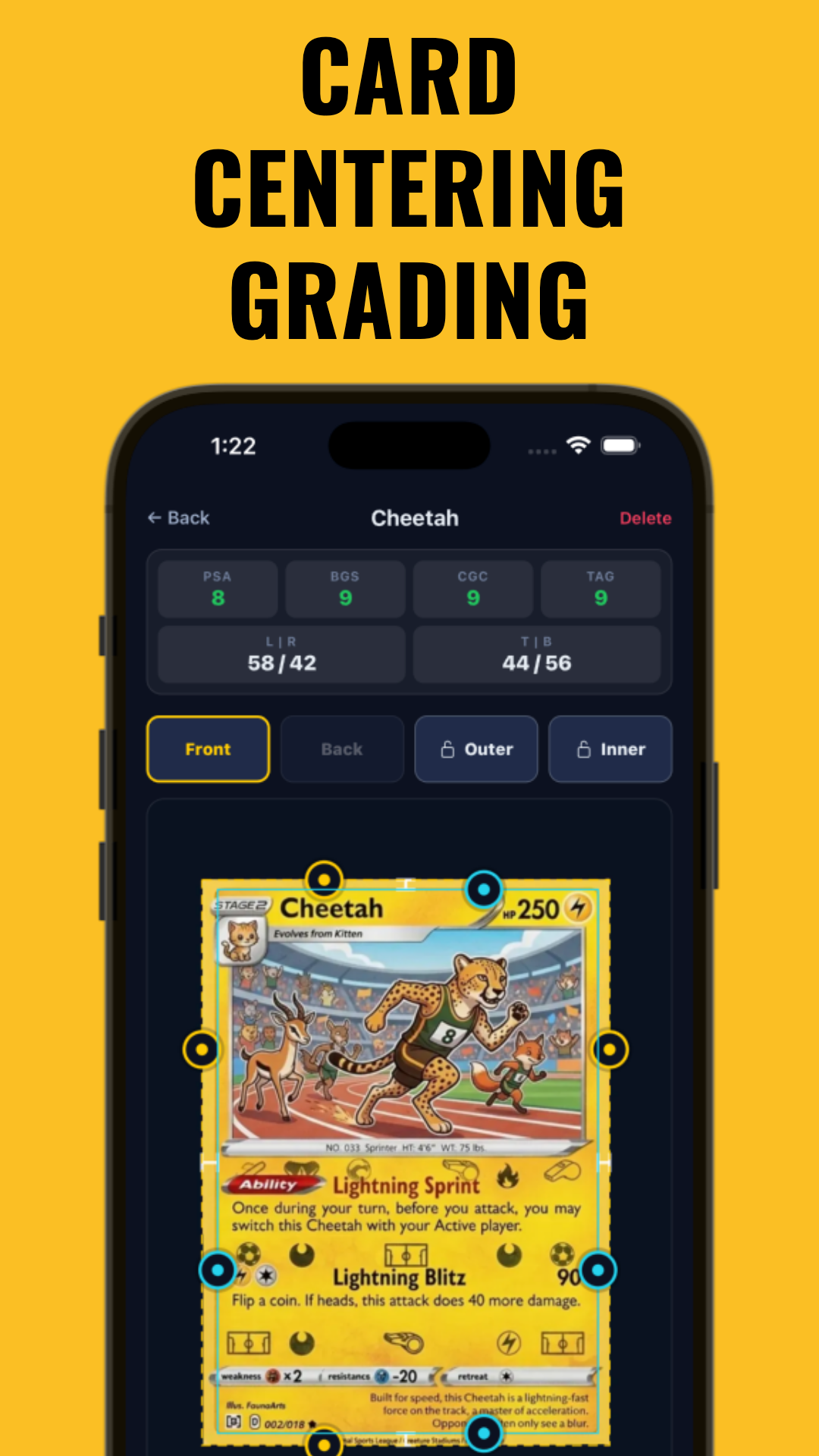
By leveraging Midpoint’s features, collectors can track their portfolio’s value over time and make informed decisions about grading versus selling raw cards. This approach can help maximize returns while minimizing unnecessary grading fees.
For more on card centering and grading impact, check out our detailed guides How Centering Impacts Card Value and How to Pre-Grade Your Card.
Conclusion
Understanding raw price is useful for trading card collectors and traders aiming to optimize their buying and selling strategies. Raw price represents the ungraded card’s market value and serves as the baseline for further valuation after grading and retail markups.
By recognizing how raw price differs from graded and retail prices, and by considering the calculation and influencing factors, collectors can make more informed decisions and potentially improve investment returns.
Tools like Midpoint provide AI-powered grading estimates and centering measurements that help assess raw cards before committing to grading fees or listing prices. This can empower smarter, data-driven decisions and enhance trading card portfolio management.
FAQ
Q: What does raw price mean?
A: Raw price generally refers to the value of a trading card in its ungraded, unprocessed state, reflecting its base market worth without grading premiums or retail markups.
Q: How is raw price calculated?
A: Raw price is estimated by assessing the card’s condition, centering, and rarity, then comparing it against recent sales of similar raw cards, adjusting for grading probability and market trends.
Q: Why would a raw item be worth more than a graded one?
A: Raw cards with rare errors, variants, or niche demand can sometimes command higher prices than graded cards, especially when grading fees or low grades reduce graded card value.
Q: When should you sell raw instead of grading?
A: Selling raw may be advisable when grading fees outweigh potential value gains, for low-value cards, or when unique card traits might be diminished by grading.
Q: What factors affect raw price?
A: Condition, centering, edges, surface quality, rarity, popularity, and current market trends all influence raw price.
Q: Is raw price the same as wholesale price?
A: Not necessarily. Wholesale price often refers to bulk purchasing discounts, while raw price focuses on an individual card’s ungraded market value regardless of buyer type.
Free to start
Try the Midpoint app
Grade any card from a photo, see its raw and PSA 10 value, and track what your collection is worth — free.
Get it on iPhoneGet it on Android