Shadow of Infinity Yugioh Cards Value: Ultimate Price & Grading Guide
Discover Shadow of Infinity Yugioh cards value, top rare cards, grading tips, and PSA 10 premiums. Maximize your collection with expert insights and Midpoint app.

Estimated reading time: 15 min
Key Takeaways
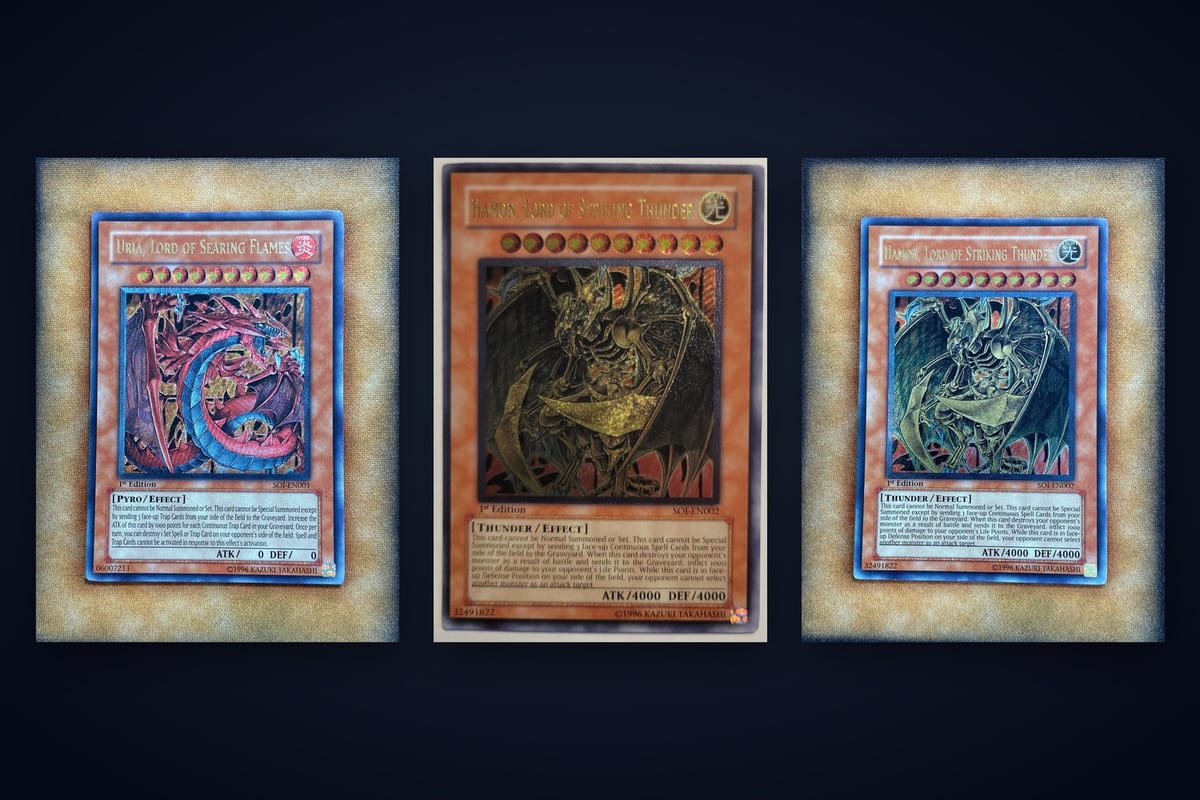
- Shadow of Infinity set includes sought-after cards like Uria, Lord of Searing Flames, with value differences influenced by rarity and edition.
- Graded cards, especially PSA 10, often command premiums that can exceed raw values by multiple times depending on condition and rarity.
- First Edition Shadow of Infinity cards generally have higher market value than Unlimited or Limited printings.
- Using tools like Midpoint’s AI-powered centering and grading estimates can help decide which cards to submit for grading, potentially saving $30+ per submission.
- Sealed Shadow of Infinity products such as booster boxes and special editions hold collector value and may appreciate over time.
Card values — live data from Midpoint's card database, as of 2026-08-23. Prices move; Midpoint refreshes these daily.
![Uria, Lord of Searing Flames [Ultimate Rare 1st Edition] SOI-EN001 YuGiOh Shadow of Infinity card](https://i.ebayimg.com/images/g/kwsAAeSwBpdqPygE/s-l500.jpg)
![Hamon, Lord of Striking Thunder [Ultimate Rare 1st Edition] SOI-EN002 YuGiOh Shadow of Infinity card](https://i.ebayimg.com/images/g/zHEAAeSwzEZqM1MB/s-l500.jpg)
![Hamon, Lord of Striking Thunder [Ultimate Rare] SOI-EN002 YuGiOh Shadow of Infinity card](https://i.ebayimg.com/images/g/zuIAAeSwHk1qPvVL/s-l500.jpg)
![Raviel, Lord of Phantasms [Ultimate Rare] SOI-EN003 YuGiOh Shadow of Infinity card](https://i.ebayimg.com/images/g/4skAAeSwN~dqQ~Vg/s-l500.jpg)
![Treeborn Frog [Ultimate Rare 1st Edition] SOI-EN025 YuGiOh Shadow of Infinity card](https://i.ebayimg.com/images/g/hzYAAeSwP3hqTQun/s-l500.jpg)
![Cyber Laser Dragon [Ultimate Rare] SOI-EN007 YuGiOh Shadow of Infinity card](https://i.ebayimg.com/images/g/hyQAAeSwU29om0JT/s-l500.jpg)
![Cyber Barrier Dragon [Ultimate Rare] SOI-EN006 YuGiOh Shadow of Infinity card](https://i.ebayimg.com/images/g/XW0AAeSwBmRqPyMJ/s-l500.jpg)
![Karma Cut [Ultimate Rare 1st Edition] SOI-EN053 YuGiOh Shadow of Infinity card](https://i.ebayimg.com/images/g/NFMAAeSwk8ZqVcYz/s-l500.jpg)
![Uria, Lord of Searing Flames [1st Edition] SOI-EN001 YuGiOh Shadow of Infinity card](https://i.ebayimg.com/images/g/iwIAAeSwn2JqWTnR/s-l500.jpg)
![Ruin, Queen of Oblivion [Ultimate Rare] SOI-EN034 YuGiOh Shadow of Infinity card](https://i.ebayimg.com/images/g/FV0AAeSwnxZqASsz/s-l500.jpg)
Look up any card's current raw and graded value in Midpoint — and get an estimated grade before you pay to submit.
Table of Contents
- Section 1: Shadow of Infinity Set Overview and Editions
- Section 2: Most Valuable Shadow of Infinity Cards
- Section 3: Grading Impact on Shadow of Infinity Cards Value
- Section 4: Price Guide for Shadow of Infinity Cards
- Section 5: Sealed Product Values and Market Trends
- Section 6: Using Midpoint for Shadow of Infinity Card Valuation and Grading
- Conclusion
- FAQ
Section 1: Shadow of Infinity Set Overview and Editions
Shadow of Infinity Release and Content
Shadow of Infinity is a Yu-Gi-Oh! set released in November 2003, during the early 2000s period of the franchise. It introduced several Ultra and Ultimate Rare cards that remain collectible. The set consists of 100 cards featuring a blend of Common, Rare, Super Rare, Ultra Rare, Ultimate Rare, and Secret Rare rarities. Notable inclusions are the three Egyptian God Cards: Uria, Lord of Searing Flames, Hamon, Lord of Striking Thunder, and Raviel, Lord of Phantasms. These cards have had a lasting presence in the Yu-Gi-Oh! community.
The Shadow of Infinity set also includes other staples and support cards that complement the Egyptian Gods, making the set popular among collectors and players interested in historical deck archetypes. The set's rarity distribution was designed to make the Ultra and Ultimate Rares scarcer compared to Common and Rare cards, which influences their market value.
Edition Variants: 1st Edition vs Unlimited vs Limited
The printing edition is an important factor when evaluating Shadow of Infinity cards. First Edition cards were the initial print run and are marked with "1st Edition" on the card, indicating their early release and limited supply. These cards generally command a premium over Unlimited versions due to scarcity and collector preference. For example, a 1st Edition Near Mint Uria, Lord of Searing Flames can command higher prices than an Unlimited Near Mint version, reflecting this price gap.
Limited editions, which are rarer and often include promotional or special print runs, tend to fall between 1st Edition and Unlimited in terms of value. They may have unique print characteristics or limited distribution, making them attractive to specialized collectors. Limited printings might include alternate artwork or foil patterns that can raise their desirability.
Collectors should check the specific edition marking on cards carefully, as differences can affect grading desirability and resale value. For example, a 1st Edition card with minor centering issues might still be more valuable than a perfectly centered Unlimited card due to collector demand for first prints.
Regional and Language Differences
The majority of the Shadow of Infinity cards circulating in the market are English printings, reflecting the large North American and European collector base. Japanese printings, released shortly after the English versions, hold a niche but dedicated following. Japanese cards sometimes feature text differences or slightly different artwork frames, which can influence collector interest.
Regional variations also include differences in set symbols, holographic patterns, and card back designs. For example, European printings may have different copyright information or language-specific text. While these variations rarely command large price premiums compared to edition or rarity, they can be significant for specialized collectors targeting specific regional releases.
In some cases, Japanese Shadow of Infinity cards are preferred by collectors focusing on pristine condition or alternate aesthetics. For instance, a Japanese 1st Edition Ultimate Rare Uria in PSA 10 condition may fetch comparable prices to its English counterpart, depending on market demand.
| Edition | Rarity Tiers | Notable Cards | Market Focus |
|---|---|---|---|
| 1st Edition | Common to Ultimate Rare | Uria, Lord of Searing Flames, Raviel | Highest collector value |
| Unlimited | Common to Ultimate Rare | Same cards as 1st Edition | More widely available, generally lower prices |
| Limited | Subset of rarities | Special prints | Mid-tier value segment |
Section 2: Most Valuable Shadow of Infinity Cards
Top Cards by Raw and Graded Value
The Shadow of Infinity set’s top-tier cards are predominantly Ultra and Ultimate Rares, with Uria, Lord of Searing Flames among the most valuable in both raw and graded markets. As of August 2026, a raw Near Mint (NM) Uria card may be valued around $180, while a PSA 10 graded version—signifying Gem Mint condition—can command significantly higher prices. This premium reflects collector willingness to pay more for verified top-condition copies.
Similarly, Hamon, Lord of Striking Thunder holds raw prices between approximately $120-$150 for NM condition and can achieve higher prices when graded PSA 10. Raviel, Lord of Phantasms is slightly lower but still commands raw NM prices near $130 and higher graded values.
Secret Rare cards, which are rarer due to their unique holofoil patterns and limited print runs, can achieve prices similar to Ultimate Rares if in top condition. While Secret Rares are generally less common in the Shadow of Infinity set, examples like Secret Rare Celestial Wolf Lord, Blue Sirius have been known to fetch prices over $200 raw when graded highly.
The demand for these rare cards is fueled by both nostalgic collectors and players seeking historically significant decks, which supports their market value.
Rarity Tier Values
- Common and Rare cards: These cards typically have low raw values, often under $5, unless they feature unique artwork or are part of a coveted playset. Condition still matters, as Near Mint or better cards maintain more stable prices compared to heavily played copies.
- Super Rare cards: These hold moderate value, generally ranging from $10 to $30 in raw NM condition. Cards with competitive relevance or unique art may reach the higher end of this range.
- Ultra Rare cards: These enjoy higher demand and value, with raw prices typically between $50 and $200. Their value depends heavily on condition and edition, with 1st Edition Ultra Rares commanding premiums.
- Ultimate Rare and Secret Rare cards: The top rarity tiers in Shadow of Infinity. Raw prices start around $100 and can exceed $180 or more for key cards like Uria. Grading can multiply their value substantially, especially for PSA 10 or BGS 9.5+ grades.
Examples of Most Valuable Cards
- Uria, Lord of Searing Flames: Raw NM around $180, PSA 10 significantly higher
- Hamon, Lord of Striking Thunder: Raw NM around $150, PSA 10 significantly higher
- Raviel, Lord of Phantasms: Raw NM around $130, PSA 10 significantly higher
- Secret Rare variants: Prices vary, but top condition can exceed $200 raw.
- Celestial Wolf Lord, Blue Sirius (Secret Rare): Raw NM over $200, PSA 10 higher
Section 3: Grading Impact on Shadow of Infinity Cards Value
Why Grading Matters
Professional grading services—such as PSA (Professional Sports Authenticator), BGS (Beckett Grading Services), CGC (Certified Guaranty Company), and TAG—are widely used in the trading card market, especially for valuable sets like Shadow of Infinity. Grading verifies a card’s authenticity and assesses condition based on centering, edges, corners, and surface quality, assigning a numeric grade from 1 (Poor) to 10 (Gem Mint).
Graded cards provide buyers and sellers confidence, reducing the risk of counterfeit or misrepresented condition. This assurance often translates into higher market prices. For Shadow of Infinity cards, particularly high-rarity cards like Uria, the difference between an ungraded Near Mint card and a PSA 10 grade can be multiple times the value. For example, an ungraded Uria may fetch around $180, but a PSA 10 can reach significantly higher prices.
Grading also protects the card by encapsulating it in a tamper-evident slab, preserving its condition over time, which appeals to long-term collectors and investors.
Cards Worth Grading
- High rarity cards: Ultimate and Secret Rare cards, such as the Egyptian Gods, are often good candidates for grading if in Near Mint or better condition. The grading premium can recoup submission costs and increase resale value.
- Iconic staples: Cards like Uria, Hamon, and Raviel are prime candidates for grading because of their demand and collectible status.
- Cards with excellent centering and surface condition: Cards that exhibit near-perfect centering (ideally within 55/45 to 60/40 ratios), sharp corners, clean edges, and flawless surfaces have higher potential to achieve PSA 10 or BGS 9.5 grades.
- Limited and 1st Edition cards: Since these editions command price premiums, grading can help confirm and maximize their value.
Pre-Grading with Midpoint
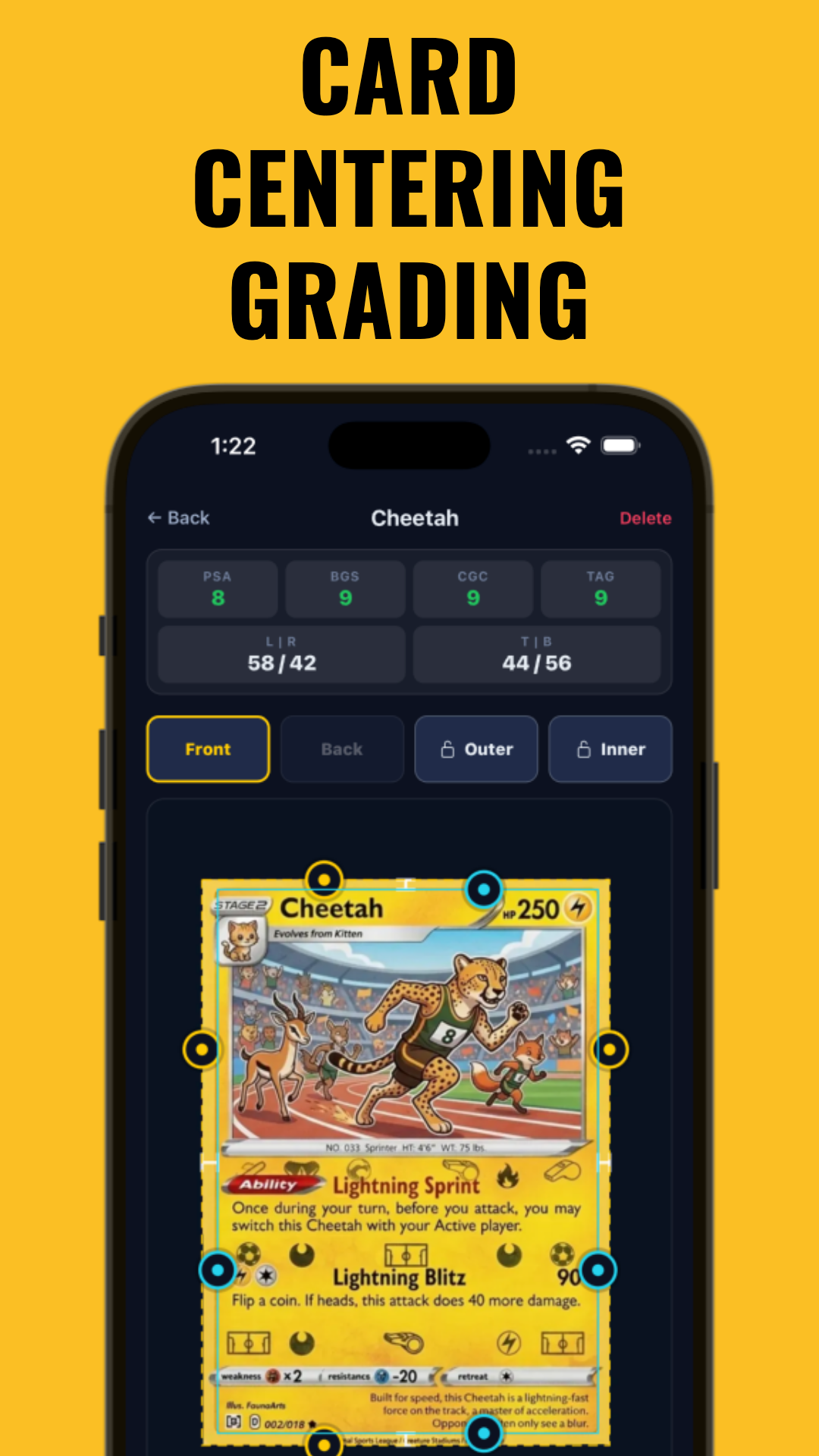
Submitting cards for professional grading can be costly, with fees often exceeding $30 per card, plus shipping and insurance. To mitigate the risk of spending on cards unlikely to receive high grades, collectors can utilize Midpoint’s AI grading tool. This technology analyzes card images using algorithms to estimate PSA, BGS, CGC, and TAG grades based on centering, corners, edges, and surface condition.
By providing a digital pre-grade, Midpoint allows collectors to make informed decisions on which cards are worth the submission cost. This reduces unnecessary grading fees and increases the likelihood of receiving high-grade results, thereby maximizing return on investment.
For example, a collector with a batch of Uria cards can scan each card through Midpoint; those estimated to be below a 9 might be set aside, while those predicted as 9.5 or 10 are prioritized for grading.
Section 4: Price Guide for Shadow of Infinity Cards
Raw Card Prices by Condition
Card condition is a key factor influencing Shadow of Infinity card prices. The grading scale from Near Mint down to Poor is reflected by price adjustments in the secondary market. Below is a general breakdown of typical price ranges for key cards as of August 2026:
- Near Mint (NM): Cards in this condition show minimal handling wear, sharp edges, and centered artwork. For example, a Near Mint 1st Edition Uria can be priced around $180, while Hamon may be close to $150.
- Lightly Played (LP): These cards exhibit minor wear such as slight edge whitening or faint surface scratches. Prices typically drop 20-30% compared to NM, meaning an LP Uria might be valued at approximately $125-$140.
- Moderately Played (MP): MP cards have visible wear including corner fraying, creases, or light scuff marks. These factors can lead to price reductions of 40-50%, so an MP Uria might fall in the $90-$100 range.
- Heavily Played and Poor: Cards with heavy damage, bends, or significant surface wear often lose most collector value and primarily retain only sentimental or play value.
Collectors should inspect cards carefully and verify condition before purchase or sale, as even minor defects can impact price significantly, especially in high-value cards.
PSA 10 and Graded Values
Professional grading adds substantial value to Shadow of Infinity cards. PSA 10 graded cards are considered Gem Mint and command the highest prices, often multiple times the value of raw NM cards. Examples include:
- Uria, Lord of Searing Flames PSA 10: significantly higher than raw NM
- Hamon PSA 10: significantly higher than raw NM
- Raviel PSA 10: significantly higher than raw NM
- Secret Rare cards PSA 10: prices vary depending on card and rarity
Graded cards in PSA 9 or BGS 9.5 condition also retain strong premiums, typically 2-3x raw NM prices. Lower grades, such as PSA 7 or 8, provide moderate premiums but are less desirable for top-tier collectors.
Additionally, subgrades like surface and centering scores can influence BGS grades and market price. For instance, a card with perfect centering but slight surface wear may receive a BGS 9.5, pushing prices higher than a PSA 9 with average centering.
Rarity and Edition Price Differences
- 1st Edition cards: These often command premiums over Unlimited editions. For example, a 1st Edition Ultimate Rare Uria in Near Mint condition might be priced higher than the Unlimited equivalent.
- Unlimited versions: While more affordable, these are generally less sought-after by collectors due to larger print runs and later release.
- Limited printings: These are typically mid-tier in price; scarcity and unique printing characteristics can elevate prices beyond Unlimited but generally fall short of 1st Edition levels.
Collectors should consider edition and rarity alongside condition when evaluating prices to make informed purchasing or selling decisions.
Section 5: Sealed Product Values and Market Trends
Shadow of Infinity Booster Boxes
Sealed booster boxes from the Shadow of Infinity set are sought-after Yu-Gi-Oh! collectibles. As of August 2026, sealed First Edition booster boxes may command prices between $1,200 and $1,800 in the secondary market. Prices depend on box condition, presence of original shrink wrap, and provenance. The limited availability of unopened boxes, combined with demand from collectors and investors, supports these values.
Unlimited edition booster boxes are less expensive but still hold value, generally priced between $700 and $1,000 sealed. Limited edition boxes or special promotional boxes, if available, may command premiums depending on rarity and packaging.
The sealed product market is influenced by factors such as overall collectible trends, Yu-Gi-Oh! popularity, and the scarcity of unopened vintage products.
Special Editions and Packs
In addition to booster boxes, Shadow of Infinity included special edition packs, promotional tins, and collector’s packs. These sealed items often contain limited print runs or exclusive cards, making them attractive to collectors. For example, sealed promotional tins containing Shadow of Infinity cards can fetch prices in the range of $150-$300 depending on edition and condition.
The appreciation of these special editions is typically steady, driven by nostalgia, rarity, and collector enthusiasm. For instance, sealed Shadow of Infinity special packs that include alternate art or foil variants have shown appreciation over recent years.
Historical Price Trends
Over the last several years, Shadow of Infinity cards have demonstrated price appreciation, particularly for graded high-rarity cards. The average price increase for PSA 10 graded Egyptian God cards like Uria has been positive, reflecting sustained collector demand. Market interest often spikes alongside renewed community focus on older Yu-Gi-Oh! sets, influencer endorsements, or reprints of older cards in newer formats.
Grading activity has also increased, with more collectors submitting Shadow of Infinity cards for professional evaluation, contributing to price stabilization and growth. The secondary market shows liquidity for high-grade cards, indicating demand and a collector base.
Conversely, raw ungraded cards have seen more modest appreciation, highlighting the importance of grading in maximizing investment returns.
Section 6: Using Midpoint for Shadow of Infinity Card Valuation and Grading
Comprehensive Card Lookup
Midpoint is an app used by trading card collectors worldwide, offering price lookup tools for over 250,000 cards including the Shadow of Infinity set. The app provides market data, including pricing for raw and graded cards across multiple grading services.
Users can search by card name, edition, rarity, and condition to access market values. This enables collectors to benchmark their cards before buying or selling. Midpoint also tracks historical price trends and sales volume, helping users identify market fluctuations and timing for transactions.
AI Digital Grading Estimates
Midpoint’s AI grading tool helps collectors minimize grading submission risks. By uploading high-resolution images, the app analyzes grading factors such as centering, corner sharpness, edge wear, and surface condition. It predicts grades for major grading companies including PSA, BGS, CGC, and TAG.
This feature helps users prioritize which cards to submit for professional grading, potentially saving $30 or more per submission. For example, a batch of Shadow of Infinity cards can be assessed, and only those with predicted PSA 9 or 10 grades are sent in, improving cost efficiency and return on investment.
Precise Centering Measurement
Centering is a critical grading criterion, particularly for Shadow of Infinity Ultimate Rare cards where slight misalignment can affect grade points. Midpoint offers a millimeter-precise centering calculator, allowing collectors to measure exact border ratios on all four sides of a card.
Cards with centering near the ideal 50/50 ratio (typically within 55/45 or better) have a higher chance of receiving top grades. Midpoint’s centering tool helps identify such cards before submission, reducing grading failures and enhancing potential value.
For those interested in improving pre-grading skills, Midpoint provides resources including a step-by-step pre-grading guide and a card centering tool overview, designed to help collectors understand and apply grading standards effectively.
Start maximizing your Shadow of Infinity collection’s potential with Midpoint, the collector app used by many worldwide.
Conclusion
The value landscape for Shadow of Infinity Yu-Gi-Oh! cards is shaped by factors including rarity, edition, condition, and grading status. Cards like Uria, Lord of Searing Flames represent the higher end of the set’s worth, especially in PSA 10 Gem Mint condition. First Edition cards generally outpace Unlimited printings in collector demand and price, underscoring the importance of edition awareness.
Professional grading can elevate card value, but it is most effective when applied to cards meeting condition criteria, such as excellent centering and surface quality. The use of tools like Midpoint’s AI-powered grading and centering analysis allows collectors to minimize grading submission costs and uncertainty, maximizing return on investment.
Whether you are an experienced Yu-Gi-Oh! collector or new to the market, understanding the nuances of Shadow of Infinity pricing and grading impact is important for building a valuable collection. Leveraging data-driven tools and market insights supports informed decision-making in buying, selling, or grading these cards.
FAQ
Q: How much is a Shadow of Infinity booster box worth?
A: As of 2026-08-23, sealed Shadow of Infinity booster boxes generally range between $1,200 and $1,800, with First Edition boxes at the higher end due to rarity and condition.
Q: What is the most valuable card in Shadow of Infinity?
A: Uria, Lord of Searing Flames is among the most valuable cards, with raw Near Mint values around $180 and PSA 10 grades significantly higher.
Q: Is Uria, Lord of Searing Flames from Shadow of Infinity worth money?
A: Yes, Uria is sought after and commands premium prices, especially in top condition and professional grading.
Q: What Shadow of Infinity cards are worth grading?
A: Ultimate Rare and Secret Rare cards, plus key staples like Uria, Hamon, and Raviel, especially when in Near Mint or better condition, are prime candidates for grading.
Q: How much is the full Shadow of Infinity set worth?
A: The full set’s value varies by edition and condition, but a complete Near Mint 1st Edition set can be valued in the thousands of dollars range, factoring in rare cards and grading premiums.
Q: Does 1st Edition Shadow of Infinity sell for more than Unlimited?
A: Yes, 1st Edition cards typically sell for a premium over Unlimited printings due to scarcity and collector preference.
Free to start
Try the Midpoint app
Grade any card from a photo, see its raw and PSA 10 value, and track what your collection is worth — free.
Get it on iPhoneGet it on Android