Skyridge Pokémon Cards Value: A Complete 2026 Pricing Guide
Explore the Skyridge Pokémon cards value, top graded prices, and which cards are best to grade for maximum return in 2026.

Estimated reading time: 15 min
Key Takeaways
- Skyridge Pokémon cards value varies widely by card, condition, and grading quality, with some cards commanding premiums exceeding multiple times raw prices when graded.
- The Crystal Charizard and Crystal Lugia are among the most valuable raw and PSA 10 Skyridge cards, reflecting their rarity and iconic status.
- PSA 10 Skyridge cards can command 2x to 5x the raw card price, underscoring the significant impact of professional grading and card condition.
- Reverse holo Skyridge cards generally hold higher value than non-holo counterparts but occasionally may outperform holo rares depending on rarity and collector demand.
- Booster boxes and sealed products show strong market demand, with prices generally increasing due to scarcity and growing vintage Pokémon interest.
Card values — live data from Midpoint's card database, as of 2026-08-17. Prices move; Midpoint refreshes these daily.
| Card | Raw | PSA 10 | Gem premium | |
|---|---|---|---|---|
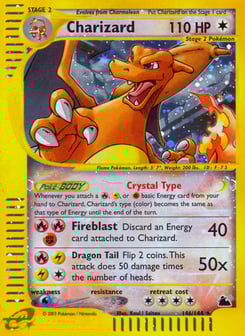 |
Charizard #146/144 Skyridge (2003) |
$249.95 | $76,373 | 305.6× |
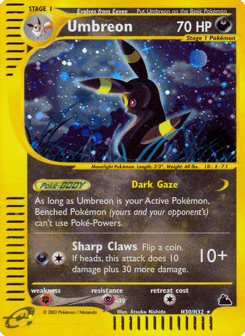 |
Umbreon #H30/H32 Skyridge (2003) |
$5,000 | $52,863 | 10.6× |
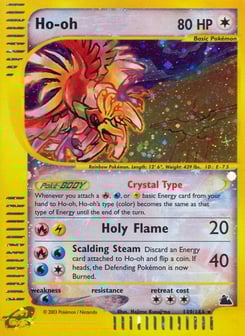 |
Ho-oh #149/144 Skyridge (2003) |
$800.00 | $30,512 | 38.1× |
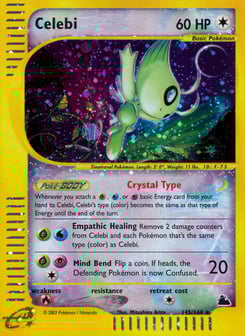 |
Celebi #145/144 Skyridge (2003) |
$4,000 | $27,642 | 6.9× |
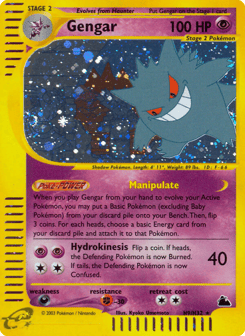 |
Gengar #H9/H32 Skyridge (2003) |
— | $27,422 | — |
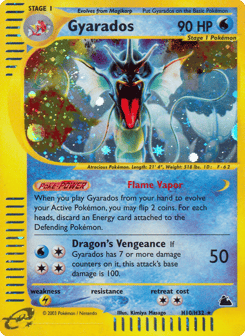 |
Gyarados #H10/H32 Skyridge (2003) |
— | $15,156 | — |
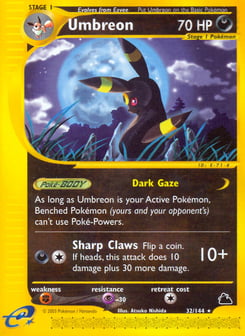 |
Umbreon #32/144 Skyridge (2003) |
$279.99 | $10,811 | 38.6× |
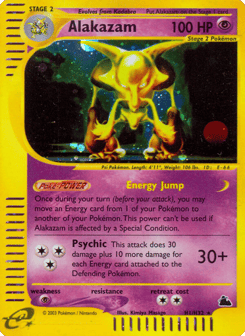 |
Alakazam #H1/H32 Skyridge (2003) |
$1,200 | $9,023 | 7.5× |
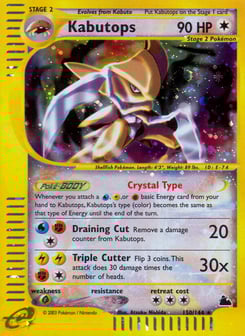 |
Kabutops #150/144 Skyridge (2003) |
$1,000 | $8,415 | 8.4× |
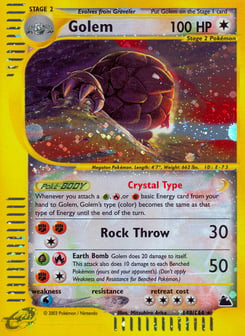 |
Golem #148/144 Skyridge (2003) |
$599.99 | $7,493 | 12.5× |
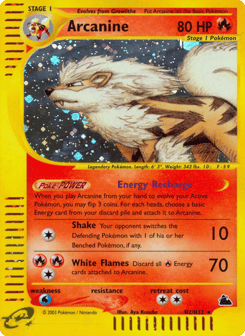 |
Arcanine #H2/H32 Skyridge (2003) |
— | $6,824 | — |
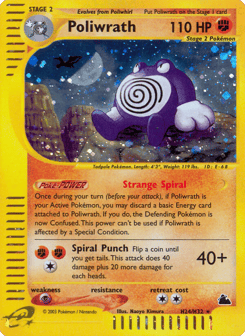 |
Poliwrath #H24/H32 Skyridge (2003) |
$500.96 | $5,721 | 11.4× |
Look up any card's current raw and graded value in Midpoint — and get an estimated grade before you pay to submit.
Table of Contents
- Section 1: Understanding Skyridge Pokémon Cards and Identification
- Section 2: Most Valuable Skyridge Cards by Raw and Graded Value
- Section 3: Pricing Differences: Holo Rare, Reverse Holo, and Non-Holo Cards
- Section 4: The Importance of PSA 10 and Grading Value Gaps
- Section 5: Complete Set and Master Set Valuation
- Section 6: Market Factors: Rarity, Population, and Demand
- Section 7: Booster Packs, Boxes, and Sealed Product Values
Conclusion
FAQ
Section 1: Understanding Skyridge Pokémon Cards and Identification
What Is the Skyridge Set?
The Skyridge set, released in 2003, is the fifth and final set in the Pokémon e-Card series, published by Wizards of the Coast. It holds a special place in the Pokémon TCG history due to its unique crystal holofoil pattern and vibrant artwork. This set contains 182 cards, including Pokémon cards, Trainer cards, and Energy cards, with notable inclusions of Crystal Pokémon cards, which differ visually and in rarity from other cards in the set.
Unlike previous sets, Skyridge used a distinctive holofoil technology that gave the cards a textured, almost prism-like surface, which is more resilient and visually striking than traditional holofoils. The set also featured alternate card numbering due to reprints, which can sometimes confuse collectors when identifying authentic Skyridge cards.
How to Identify Skyridge Cards
Identifying authentic Skyridge cards requires attention to several key features:
- Set Symbol: Look for the stylized crystal mountain symbol, typically found on the bottom right corner of the card. This symbol is unique to Skyridge and helps distinguish it from other e-Card series sets.
- Card Numbering: Cards are numbered from 1/182 through 182/182, but some reprints may have different numbering sequences. Collectors should verify these numbers carefully to confirm their edition.
- Holographic Patterns: The crystal rares, such as Crystal Charizard, feature a distinctive textured crystal holofoil. This pattern is different from the smooth holofoils of other sets and has a prismatic effect visible under light.
- Card Back: Skyridge cards use the standard Pokémon card back with no variation, which helps confirm authenticity but is not unique to this set.
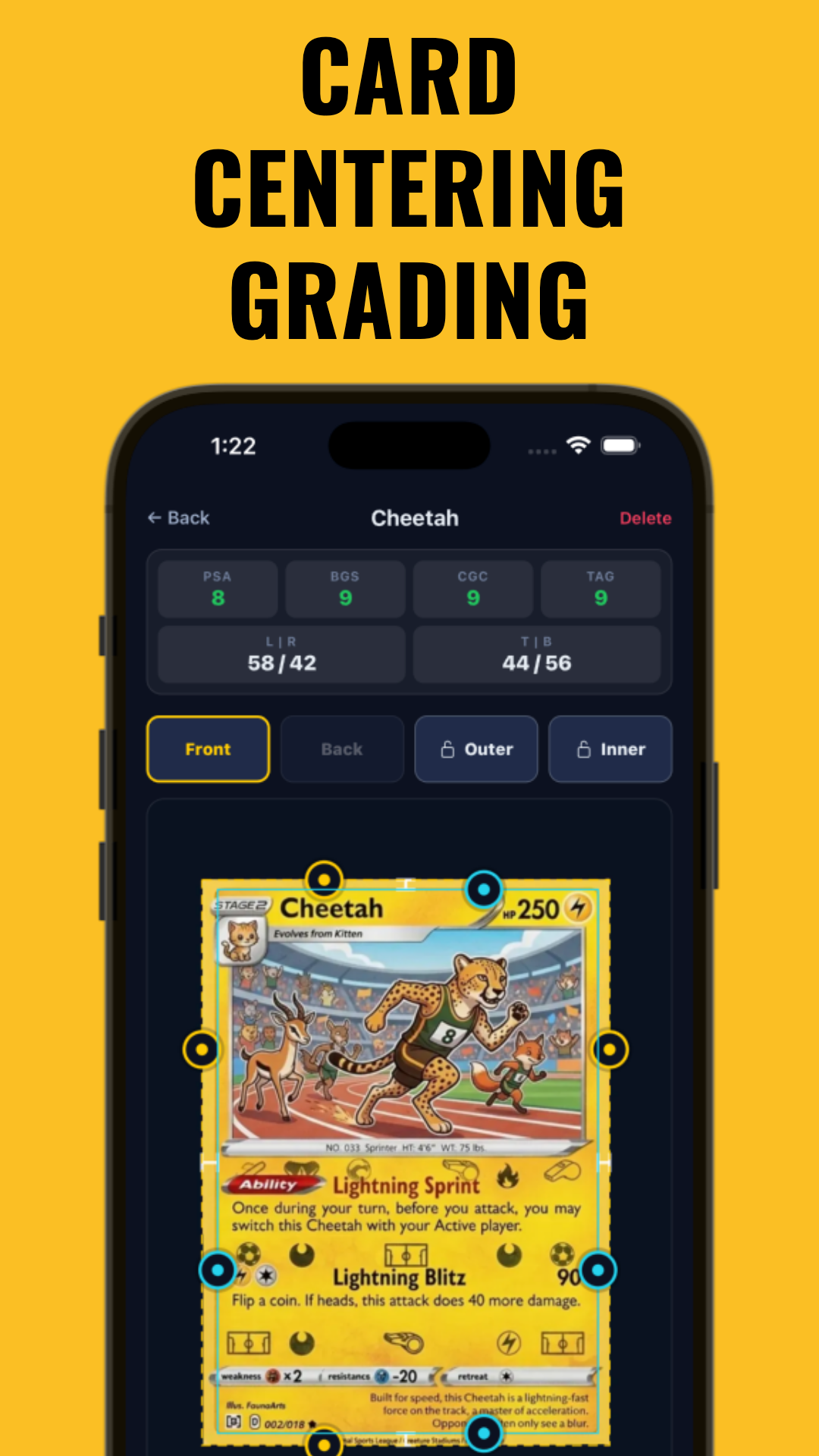
For collectors aiming for precise condition assessment and authenticity verification, using specialized tools is beneficial. The Midpoint app offers AI-powered centering measurement down to the millimeter, surface condition evaluation, and preliminary grading estimates. These features can help collectors assess cards objectively before submitting them for professional grading or investing in purchases.
Understanding Card Condition and Its Impact
Card condition remains one of the most critical factors affecting Skyridge card value. Condition categories such as Near Mint (NM), Excellent (EX), Lightly Played (LP), and Damaged influence price ranges. For example, a Near Mint Crystal Charizard may fetch significantly more than a lightly played or damaged version.
Collectors value cards with sharp corners, clean edges, flawless surfaces free from scratches or print defects, and particularly precise centering. Slight mis-centering can reduce PSA grading by one or more points, significantly lowering market price. For instance, a PSA 9 Crystal Charizard might sell for several thousand dollars, whereas a PSA 10 commands a premium price.
Damage such as whitening, edge chipping, surface scratches, or staining reduces value, sometimes drastically. Since Skyridge cards have a textured holofoil surface, they can be more resistant to minor scratches but are also susceptible to edge wear.
| Example Skyridge Cards and Prices (as of 2026-08-17) |
|---|
| Crystal Charizard (Raw, NM) - $1,200 |
| Crystal Charizard PSA 10 - $5,800 |
| Crystal Lugia (Raw, NM) - $900 |
| Crystal Lugia PSA 10 - $3,400 |
| Holo Rare Shining Steelix (Raw) - $400 |
| Reverse Holo Rare Shining Steelix (Raw) - $550 |
Section 2: Most Valuable Skyridge Cards by Raw and Graded Value
Top Skyridge Cards by Raw Market Value
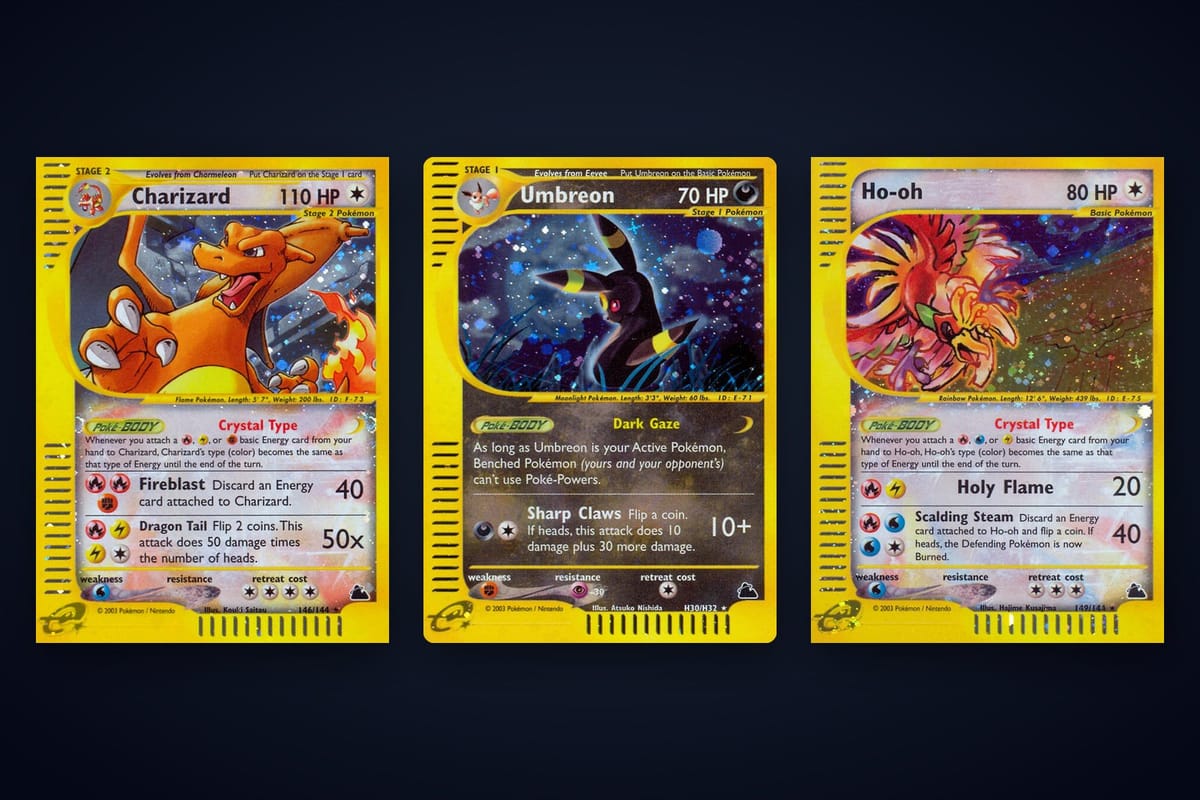
The highest raw market values among Skyridge cards are generally held by the Crystal Pokémon and holo rares, which are rarer and more visually appealing to collectors. The Crystal Charizard is among the top, commanding approximately $1,200 in raw Near Mint condition. Its iconic status from previous sets, combined with the unique crystal holofoil, drives demand.
Following Charizard, the Crystal Lugia is highly sought after, with raw prices near $900 in Near Mint condition. Other legendary Crystal Pokémon such as Crystal Gyarados and Crystal Ho-Oh also fetch strong raw values, typically ranging between $600 and $700 depending on condition and market trends.
Additionally, holo rares such as Shining Steelix, Shining Tyranitar, and Shining Magikarp have attracted collector interest, with raw prices typically between $350 and $450 for Near Mint examples.
- Crystal Charizard: This card's combination of rarity, holofoil texture, and collector nostalgia makes it one of the top raw value cards in the set.
- Crystal Lugia: Its legendary status and holofoil rarity maintain strong market desirability.
- Crystal Gyarados & Ho-Oh: Secondary legends that hold consistent raw value and are often targeted by collectors building complete crystal sets.
- Shining Pokémon Holo Rares: Cards like Shining Steelix are valuable for their unique artwork and relative scarcity.
PSA 10 Graded Value Premiums
Professional grading by PSA adds a significant premium to Skyridge cards, especially for PSA 10 (Gem Mint) examples. The premium can range from about 3x to nearly 5x the raw price. For instance:
- A Crystal Charizard PSA 10 has recently sold for approximately $5,800, nearly 5 times the raw value.
- Crystal Lugia PSA 10 commands prices around $3,400, reflecting both rarity and desirability.
- Other holo rares, such as Shining Steelix, can exceed $1,200 when graded PSA 10, illustrating the value of top condition.
These premiums reflect market confidence in card authenticity, condition, and investment quality. Graded cards also appeal to buyers who prefer guaranteed quality and protection within slabs, making them easier to resell.
Which Skyridge Cards Are Worth Grading?
Deciding which Skyridge cards to grade involves analyzing rarity, condition, and potential return on investment. Generally, the most valuable cards—Crystal Charizard, Crystal Lugia, and other Crystal rares—are prime candidates for grading due to their high market premiums.
For mid-tier cards, grading may not significantly increase value unless the card is in exceptional condition (e.g., perfect centering, flawless edges). It is vital to avoid grading cards with obvious flaws to prevent low grades that reduce market value after grading fees.
Collectors can use pre-grading guides and AI-powered tools like Midpoint to evaluate centering accuracy, surface condition, and edge quality before submitting. This step helps maximize chances of achieving PSA 10 or high grades, ensuring grading fees are an effective investment.
Section 3: Pricing Differences: Holo Rare, Reverse Holo, and Non-Holo Cards
Understanding Holo Variants in Skyridge
The Skyridge set features three primary foil variants that impact card value:
- Holo Rare: The traditional holographic foil applied over the Pokémon’s illustration area, often conferring the highest value due to rarity.
- Reverse Holo: The card background (everything but the Pokémon image) features a holofoil treatment, giving a shimmering effect distinct from holo rares.
- Non-Holo: Standard card with no holographic foil, typically the lowest in value.
Holo rare cards generally command the highest prices because they are scarcer and visually attractive. Reverse holos are less rare but often more valuable than non-holo cards due to their foil status and collector preference.
Market Pricing Examples
- Holo Rare Shining Steelix: Raw Near Mint prices hover around $400, reflecting strong demand for the holo variant.
- Reverse Holo Rare Shining Steelix: Raw prices for reverse holo versions can be higher, approximately $550, possibly due to print volumes or collector trends favoring reverse holo textures.
- Non-Holo Steelix: These cards generally sell for under $100, as they lack foil appeal and are more common.
Why Do Reverse Holos Sometimes Outperform Holo Rares?
Reverse holo cards sometimes outperform holo rares in value due to several factors:
- Limited Print Runs: Certain reverse holo cards in Skyridge may have been produced in fewer quantities or are harder to find in mint condition.
- Collector Trends: Some collectors prefer the aesthetic of reverse holo foils, which can drive up demand.
- Condition Sensitivity: Reverse holos can be more challenging to keep pristine due to full-card holo backgrounds, making high-grade versions rarer.
Monitoring current sales data and auction results through platforms like eBay and using valuation apps like Midpoint helps collectors identify which reverse holo cards currently command premiums.
Section 4: The Importance of PSA 10 and Grading Value Gaps
What Is PSA 10 and Why Does It Matter?
PSA 10, or Gem Mint, represents the highest grade assigned by Professional Sports Authenticator (PSA). It signifies a card is virtually flawless with perfect surface, edges, corners, and centering. For Skyridge cards, PSA 10 status is particularly significant because:
- It certifies condition objectively, giving buyers confidence in quality.
- PSA 10 cards are scarce, especially for older sets like Skyridge, enhancing rarity.
- They usually command much higher prices relative to raw or lower-graded cards.
Value Gap Between Raw and PSA 10 Cards
The value difference between raw and PSA 10 cards can be dramatic. For example:
- Raw Crystal Charizard cards in Near Mint condition are valued at around $1,200.
- PSA 10 Crystal Charizard cards sell near $5,800, nearly 5 times the raw price.
- Raw Crystal Lugia cards are around $900, while PSA 10 examples approach $3,400.
This value gap illustrates the financial benefits of investing in grading for high-quality cards. However, it is important to note that only cards with excellent centering, sharp edges, and clean surfaces realistically achieve PSA 10. Cards with minor imperfections may receive lower grades, reducing their market value.
Leveraging AI Tools for Better Grading Outcomes
Grading fees typically start at $30 per card and increase with turnaround speed and card value. To avoid costly grading on low-grade candidates, collectors can use AI-powered tools like the Midpoint app before submission. Midpoint provides:
- Millimeter-precise centering measurements to assess whether the card meets PSA 10 centering standards (typically within 55/45 or 60/40 ratios).
- Surface condition analysis that flags scratches, stains, or print defects.
- Edge and corner evaluation to identify whitening or chipping.
- Preliminary grading estimates based on AI algorithms trained on PSA grading criteria.
By using Midpoint’s insights, collectors can selectively grade only cards with the highest likelihood of PSA 10, maximizing return on grading investment and avoiding devaluation due to low grades.
Section 5: Complete Set and Master Set Valuation
Value of a Complete Skyridge Set
A complete Skyridge set includes all base cards, holo rares, reverse holos, trainer cards, and energy cards, totaling 182 cards. Near Mint complete sets are prized among collectors and can command prices generally between $4,500 and $6,000 depending on condition and completeness.
Sets that include all holo rares and reverse holos in Near Mint or better condition usually fetch the higher end of this range. Completeness is essential; missing even a few key cards like Crystal Charizard or Crystal Lugia can significantly reduce value.
Master Sets and Special Variants
Master sets containing graded PSA 10 cards or all Crystal rares and chase cards are highly valued in the Skyridge collecting community. These master sets can exceed $10,000 in value due to their rarity, condition, and the premium placed on graded cards.
Collectors seeking master sets often focus on the following:
- All Crystal Pokémon cards in PSA 10 condition.
- Complete trainer and energy cards in Near Mint condition.
- Careful authentication and provenance documentation.
Acquiring or selling master sets requires due diligence and often involves private transactions or specialty auction houses.
Considerations When Buying or Selling Sets
- Authentication and Condition Verification: Verify card authenticity via set symbols, holographic patterns, and card backs. Utilize AI tools like Midpoint for condition verification.
- Portfolio Tracking: Use apps such as Midpoint to monitor set value fluctuations over time and track individual card values within the set.
- Market Timing: Be mindful of seasonal demand spikes, such as holidays or anniversaries, that may influence set prices.
- Grading Strategy: When buying, consider whether cards are graded and how that impacts price. When selling, grading top cards can increase total set value.
Section 6: Market Factors: Rarity, Population, and Demand
Card Rarity and Print Runs
Skyridge cards vary widely in rarity based on card type and print run. Crystal rares and holo rares had smaller print runs compared to non-holos, making them scarcer in the market. The textured crystal holofoil was more costly and time-consuming to produce, resulting in fewer copies.
Moreover, the set was the last e-Card series release, and its discontinuation contributed to long-term scarcity, especially of sealed products and pristine cards.
Population Reports and Grading Statistics
Population reports published by PSA and other grading companies reveal relatively low quantities of PSA 10 Skyridge cards compared to some other Pokémon sets. For example, the PSA population report shows fewer than 300 Crystal Charizard PSA 10 cards worldwide, underscoring rarity.
Other cards like Crystal Lugia and select holo rares have similarly low PSA 10 populations, which positively impacts their market values.
Collectors and investors frequently consult population reports to assess scarcity and make informed purchasing decisions.
Collector Demand and Market Trends
Interest in Skyridge cards remains robust due to nostalgia, unique aesthetics, and the growing vintage Pokémon card market. The set appeals both to traditional Pokémon fans and investors seeking alternative collectibles.
Market trends show steady price appreciation for high-grade cards, with occasional spikes tied to social media exposure or prominent auctions. Collectors use portfolio management apps like Midpoint to track real-time market data, historical sales, and price averages, enabling informed buying and selling strategies.
Section 7: Booster Packs, Boxes, and Sealed Product Values
Current Market Prices for Booster Boxes
Sealed Skyridge booster boxes are among the rarest vintage Pokémon sealed products available, driving prices generally into the $8,000 to $12,000 range as of 2026. Their scarcity is due in part to the discontinuation of the e-Card series and the high demand from collectors and investors seeking unopened product.
Boxes in pristine condition with intact seals command the highest premiums. These boxes guarantee unopened packs with original cards inside, making them attractive for long-term investment.
Booster Packs and Single Pack Values
Individual sealed booster packs from the Skyridge set typically sell for $200 to $300 each, reflecting the chance to pull rare Crystal or holo Pokémon cards. Packs from unopened booster boxes often command a slight premium due to their provenance and unopened status.
Collectors purchasing packs aim to obtain chase cards such as Crystal Charizard or Crystal Lugia, which significantly impact pack desirability.
Investing in Sealed Skyridge Products
- Reduced Risk: Sealed products eliminate risks of card handling damage or counterfeit cards, preserving value.
- Long-Term Appreciation: With the vintage Pokémon market expanding, sealed Skyridge products are considered solid investments likely to appreciate further.
- Authenticity Verification: Buyers should carefully inspect seal integrity and provenance to avoid tampered or counterfeit boxes or packs.
- Storage Considerations: Proper storage in climate-controlled environments preserves seal quality and prevents box degradation.
Conclusion
The Skyridge Pokémon cards value landscape in 2026 reflects a balanced mix of nostalgia, rarity, and collector demand. Top cards like Crystal Charizard and Crystal Lugia hold substantial raw and PSA 10 premiums, emphasizing the importance of condition and grading. Understanding differences between holo rare, reverse holo, and non-holo cards helps collectors make informed purchase and grading decisions.
Complete sets and sealed booster boxes represent strong investment opportunities but require careful condition verification. Leveraging AI-powered grading estimation and precise centering measurement tools such as Midpoint allows collectors to maximize grading outcomes and safeguard their investments before submitting cards. Staying informed on population and market trends further empowers collectors to navigate the dynamic Skyridge market with confidence, ensuring they make strategic decisions to protect and grow their collections.
FAQ
Q: How much is a Skyridge Charizard worth?
A: As of 2026-08-17, a raw Crystal Charizard card in Near Mint condition is valued around $1,200, while a PSA 10 graded version commands about $5,800.
Q: What is the most valuable Skyridge card?
A: The Crystal Charizard is among the most valuable Skyridge cards by raw and graded value, followed closely by Crystal Lugia.
Q: Are Skyridge reverse holos worth more than regular cards?
A: Generally, reverse holo cards hold higher value than non-holo cards but usually less than holo rares. In some Skyridge cases, reverse holos can outperform holo rares due to rarity or collector preference.
Q: How much is a PSA 10 Skyridge card worth?
A: PSA 10 Skyridge cards can be worth 3x to 5x their raw prices, with top cards like Crystal Charizard reaching approximately $5,800.
Q: What is a complete Skyridge set worth?
A: Near-mint complete Skyridge sets are valued between $4,500 and $6,000, with master sets including graded cards potentially exceeding $10,000.
Q: Why are Skyridge cards so expensive?
A: Their unique crystal holofoil design, limited print runs, strong collector demand, and rarity of high-grade cards contribute to the high prices.
Free to start
Try the Midpoint app
Grade any card from a photo, see its raw and PSA 10 value, and track what your collection is worth — free.
Get it on iPhoneGet it on Android