Soccer Card Collecting: Ultimate Guide to Grading, Value & Top Picks
Master soccer card collecting with expert tips on grading, rookie cards, parallels, top brands, card value, and safe buying strategies.


Estimated reading time: 18 min
Key Takeaways
- Understand key soccer card types: rookie cards, parallels, inserts, and memorabilia cards, including their rarity and appeal.
- Learn how to grade sports cards accurately using AI tools and traditional grading standards, with detailed criteria and examples.
- Discover top brands like Panini and Topps, and the difference between their popular products such as Topps Chrome vs Prizm, plus lesser-known sets.
- Explore how card value is influenced by centering, serial numbers, condition, and player popularity, supported by real market examples.
- Get practical tips on safe buying, storing, and setting collecting goals for soccer cards to protect your investment.
Card values — live data from Midpoint's card database, as of 2026-08-23. Prices move; Midpoint refreshes these daily.
| Card | Raw | PSA 10 | Gem premium | |
|---|---|---|---|---|
 |
Cristiano Ronaldo #1 2017 Panini Select Kaboom |
$6,418 | $48,800 | 7.6× |
![Lionel Messi [Blue Prizm] #12 2014 Panini Prizm World Cup card](https://i.ebayimg.com/images/g/vr4AAeSw0UxqKLlU/s-l500.jpg) |
Lionel Messi [Blue Prizm] #12 2014 Panini Prizm World Cup |
$1,729 | $46,727 | 27× |
![Max Dowman [Black Refractor] #CA-MD 2026 Topps Chrome Premier League Autograph card](https://i.ebayimg.com/images/g/E~cAAeSw9XdqNsjy/s-l500.jpg) |
Max Dowman [Black Refractor] #CA-MD 2026 Topps Chrome Premier League Autograph |
$8,371 | $36,726 | 4.4× |
 |
Lionel Messi #617 2004 Mundi Cromo Liga |
$524.36 | $33,094 | 63.1× |
 |
Lamine Yamal #7 2023 Panini Donruss Kaboom |
$3,111 | $22,566 | 7.3× |
 |
Lionel Messi #10 2024 Panini Donruss Kaboom |
$3,797 | $12,651 | 3.3× |
 |
Lamine Yamal #BN-17 2024 Topps Chrome UEFA Euro Berlin at Night |
$2,100 | $11,545 | 5.5× |
 |
Lionel Messi #2 2022 Panini Donruss Kaboom |
$4,775 | $10,370 | 2.2× |
 |
Lamine Yamal #5 2025 Panini Prizm FIFA Manga |
$5,100 | $10,302 | 2× |
 |
Lamine Yamal #108-BIS 2023 Panini Megacracks La Liga |
$816.13 | $10,100 | 12.4× |
Look up any card's current raw and graded value in Midpoint — and get an estimated grade before you pay to submit.
Table of Contents
- Section 1: Getting Started with Soccer Card Collecting
- Section 2: Types of Soccer Cards and What They Mean
- Section 3: How to Grade Sports Cards Like a Pro
- Section 4: Key Brands and Popular Soccer Card Products
- Section 5: Understanding Card Value and Market Trends
- Section 6: Safe Buying, Storing, and Protecting Your Soccer Cards
Conclusion
FAQ
Section 1: Getting Started with Soccer Card Collecting
Why Soccer Card Collecting Is Growing Fast
Soccer card collecting has experienced significant growth driven by the global reach of the sport and the expanding trading card market. As one of the most popular sports worldwide, with billions of fans across continents, soccer naturally translates into a large collector base. Unlike vintage baseball or basketball cards, soccer cards integrate both the excitement of current superstars and the allure of historical legends, which appeals to a wide range of collectors—from casual fans to serious investors.
The rise of digital platforms and social media has also increased interest, with card breaks, pack openings, and trading communities thriving online. Additionally, the proliferation of licensed products and innovative insert cards adds layers of collecting depth. This accessibility combined with the sport’s cultural significance supports the growth in soccer card collecting.
Setting Your Collecting Goal
Before making purchases, it’s important to define what you want from your collection. Here are detailed approaches to consider:
- Player-centric: Focusing on a favorite player like Lionel Messi, Cristiano Ronaldo, Kylian Mbappé, or Erling Haaland allows you to build a personalized collection. This approach often leads to acquiring rookie cards, autographs, and rare parallels of those stars. For example, Messi's rookie cards from early 2000s sets are often considered valuable.
- Team-based: Collecting only cards from your favorite club, such as Manchester United, Real Madrid, or Paris Saint-Germain, lets you follow the team’s roster changes and highlights memorable seasons. This can also include national teams, appealing during World Cup years.
- League-specific: Concentrating on leagues like the English Premier League, La Liga, Serie A, or Bundesliga offers a structured path. Collectors might chase complete sets from each league’s licensed products, which can be easier to manage.
- Set Completion: Some collectors enjoy completing entire sets or series. This involves tracking every base card, inserts, and parallels within a particular release, which can be challenging but rewarding.
- Investment: Seeking cards with potential appreciation, including rookie cards of emerging stars, low-numbered parallels, and autographed memorabilia. This requires market research and understanding trends.
Having a clear goal not only narrows your focus but also helps manage your budget and avoid impulse purchases. For example, if investing, you might prioritize PSA 10 graded rookie cards of top prospects, while a fan might prioritize affordable base cards for enjoyment.
Essential Terms for Beginners
- Rookie Card: The first officially licensed card released for a player, often the most sought after and valuable, especially if the player becomes a superstar.
- Parallels: Variations of base cards featuring alternate colors, patterns, or finishes, often with limited numbering to create scarcity.
- Inserts: Special cards inserted randomly into packs, typically highlighting specific themes, achievements, or unique designs.
- Numbered Cards: Cards that have a serial number printed on them, e.g., "12/99," indicating only a limited number of copies exist, increasing rarity.
- Autographs & Memorabilia: Cards featuring player signatures or embedded pieces of game-worn jerseys, boots, or balls, often highly prized.
Section 2: Types of Soccer Cards and What They Mean
Base Cards vs Rookie Cards
Base cards are the backbone of any trading card set and typically include established stars, veterans, and rookies. They usually form the largest portion of a release and are often the most affordable. Rookie cards, however, denote a player’s first official card appearance and tend to command a premium due to their significance and relative scarcity.
For example, the 2017 Panini Select Kaboom Cristiano Ronaldo #1 raw card has been reported in the market around $6,400, reflecting Ronaldo’s status and the card’s limited production. When graded PSA 10, the same card’s value can be significantly higher, demonstrating how condition and grading multiply worth. Collectors often prioritize rookie cards because they usually outperform base cards in value growth over time.
Additionally, rookie cards may have variants such as autographed versions, numbered parallels, or special inserts that can increase desirability. Tracking which release is considered the "true rookie" in cases where a player debuts in multiple sets is important for accurate valuation.
Parallels and Prizm Explained
Parallels are alternate versions of base or rookie cards, distinguished by unique colors, finishes, or patterns. They add variety and rarity, making them a significant focus for collectors. Panini's Prizm line is among the most popular for parallels, offering a spectrum of options:
- Silver Prizms: The base parallel featuring a shiny, reflective surface that's more common but still visually appealing.
- Blue Prizms: Scarcer than Silver Prizms, often with serial numbering (e.g., 1/199), increasing scarcity and value.
- Black Refractors: Among the rarest parallels, with a distinctive black mirror finish; highly sought after and usually serial numbered to low counts.
Understanding these parallels helps collectors identify cards with higher potential returns. For instance, Lionel Messi’s 2014 Panini Prizm World Cup Blue Prizm #12 raw card has been listed around $1,700, but a PSA 10 graded copy can command a much higher price, illustrating the importance of both rarity and condition.
Collectors should also recognize other parallel types, such as Red, Green, Gold, or Atomic Refractors, each with different print runs and values. Keeping up with print run numbers and population reports can guide smart acquisitions.
Inserts, Autographs, and Memorabilia Cards
Inserts are special cards embedded randomly into packs, often spotlighting specific themes like "Goal Kings" or "Legends." They usually feature unique designs, foil stamping, or limited print runs, making them more collectible than base cards.
Autographed cards include player signatures, either hand-signed or on-card, and can increase a card's value. For example, a signed rookie card of a rising star like Kylian Mbappé can command thousands of dollars, especially when graded PSA 9 or 10.
Memorabilia cards embed pieces of game-used items such as jerseys, boots, or balls within the card itself. These are often serial numbered to low counts (sometimes under 10 copies), adding exclusivity. For example, a 2025 Panini Megacracks jersey patch card of a top player can trade for multiple times the price of a base rookie card.
Collecting inserts, autographs, and memorabilia cards requires awareness of authenticity, print runs, and grading nuances, as these factors heavily influence value.
Section 3: How to Grade Sports Cards Like a Pro
Why Grading Matters in Soccer Card Collecting
Grading authenticates a card’s condition and assigns a numeric score, typically on a 1 to 10 scale, with 10 being gem mint. This score heavily influences market value; higher grades command significant premiums. For example, raw Lamine Yamal 2023 Panini Donruss Kaboom #7 cards have been observed selling for several thousand dollars, but PSA 10 copies can sell for substantially more.
Grading also provides buyer confidence, reduces disputes, and enhances liquidity when reselling. For collectors and investors alike, understanding grading can prevent overpaying for damaged cards or missing out on undervalued high-grade gems.
Grading Criteria: Centering, Corners, Edges, and Surface
Professional graders such as PSA, BGS, CGC, and TAG evaluate cards based on four main aspects:
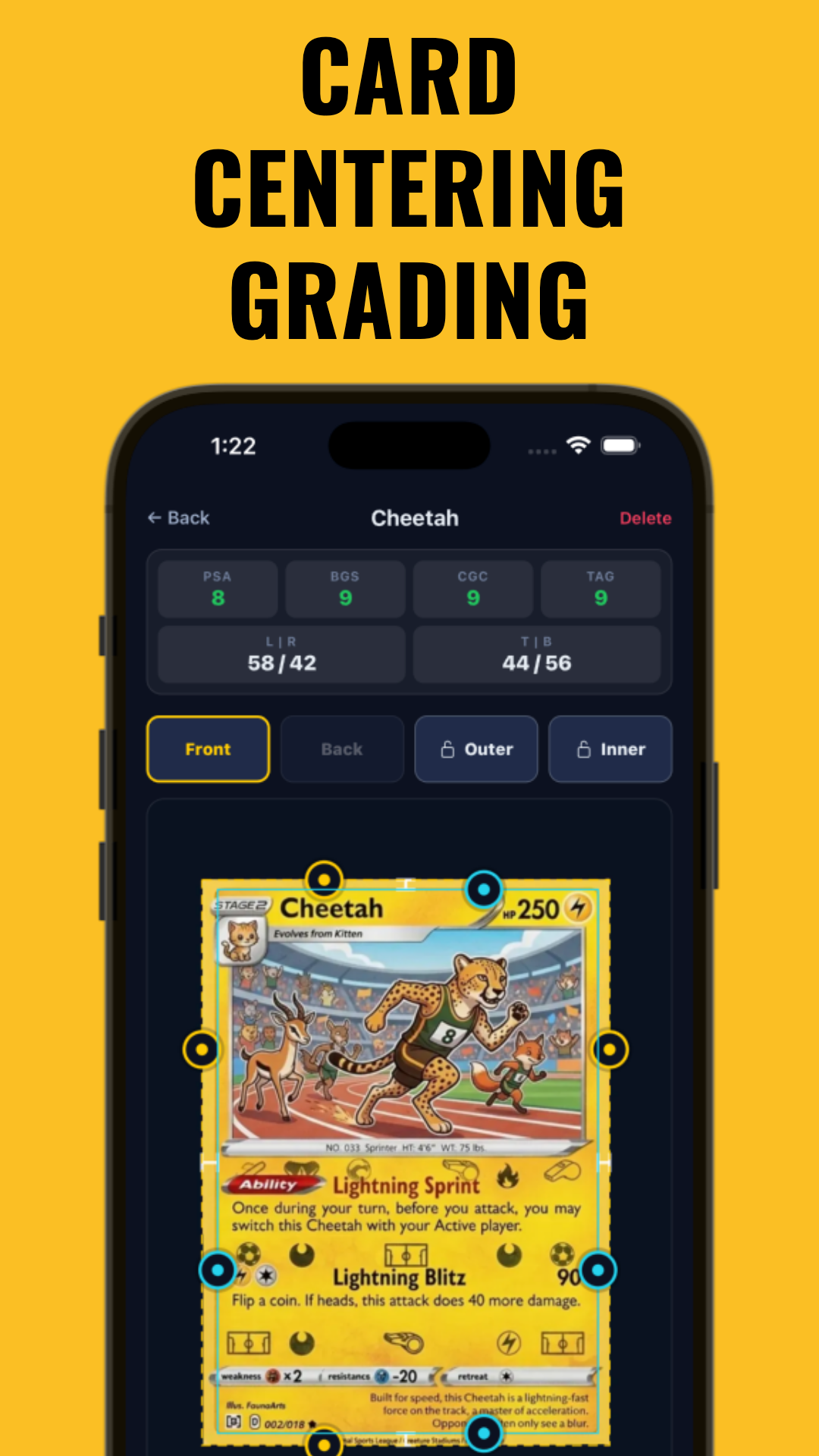
- Centering: The balance of the printed image relative to card edges. Perfect centering is rare and highly prized; even a 70/30 centering ratio can impact grade and value. For example, a PSA 10 card typically requires 60/40 or better centering.
- Corners: Sharpness and absence of dings or wear. Corners are vulnerable to damage, and even slight fraying can reduce the grade.
- Edges: Clean edges without chipping or whitening contribute to a higher grade. Edge wear is common in poorly handled cards.
- Surface: Free of scratches, stains, print defects, or discoloration. Glossy cards like those in Panini Prizm are especially susceptible to surface scratches, which severely impact grading.
Cards with perfect or near-perfect grades command the highest prices. Midpoint’s free centering calculator precisely measures card centering down to the millimeter, providing estimates for PSA, BGS, CGC, and TAG grades before spending money on professional submissions.
For example, if a card measures 63/37 centering, it might receive a maximum grade of 9 rather than 10 from PSA due to centering alone. This information helps collectors decide whether to submit cards or retain them raw.
Using AI Sports Card Grading Apps
Artificial intelligence-powered apps like Midpoint are increasingly used to analyze photos of cards to assess centering, edge wear, and surface flaws. These apps utilize computer vision and machine learning algorithms trained on thousands of graded cards, providing grade estimates within seconds.
Using AI grading tools benefits collectors by:
- Reducing the risk of submitting low-grade cards to professional graders, saving money on grading fees.
- Providing confidence in buying raw cards by previewing expected grades.
- Speeding up portfolio management with batch grading features.
- Helping sellers price cards competitively based on anticipated grades.
For example, a collector considering purchasing a $1,000 raw card can use Midpoint to assess its condition remotely. If the AI suggests a PSA 9 grade, the buyer can anticipate the card’s resale value before committing.
Section 4: Key Brands and Popular Soccer Card Products
Panini: The Soccer Card Giant
Panini is the dominant manufacturer of soccer cards worldwide, having secured licenses for major leagues and tournaments such as the FIFA World Cup, UEFA Champions League, and top European leagues. Their diverse product lines include:
- Donruss: Known for affordable pricing, colorful inserts, and a mix of base and autograph cards.
- Prizm: Featuring numerous parallels and refractors with vibrant finishes, a favorite among collectors for chase cards.
- Select: Combines base cards with inserts and multiple parallels, often including autographs and memorabilia.
- Megacracks: Popular in Europe, focusing on detailed player info and premium inserts.
For example, the 2026 Topps Chrome Premier League Autograph Max Dowman #CA-MD card has been reported with raw market values in the thousands, while PSA 10 graded copies can command significantly higher prices, reflecting the premium for condition and authentication.
Panini’s consistent quality, innovative parallels, and official licensing make it a leading brand for serious soccer card collectors.
Topps Chrome vs Prizm: What’s the Difference?
Topps Chrome and Panini Prizm are both chromium-finished card sets but differ in several key ways:
- Topps Chrome: Traditionally focused on baseball but producing soccer sets under licenses; it emphasizes glossy, chromium surfaces with a strong rookie card presence and clean design. Topps Chrome soccer cards often have fewer parallel variations but maintain high-quality production standards.
- Panini Prizm: Known for a wide range of parallels and refractors, Prizm sets feature vibrant colors and a variety of rarities (Silver, Blue, Black, Red, Gold, etc.). Prizm also includes serial-numbered parallels and is popular for chasing rare parallels and autographs within soccer.
Collectors should note that Panini Prizm sets generally offer more variety and rarity tiers, while Topps Chrome provides a classic, polished look. Depending on collecting goals, one may prefer the broader chase opportunities in Prizm or the elegant simplicity of Topps Chrome.
Other Notable Brands and Sets
- Upper Deck: Although primarily known for hockey, Upper Deck produces high-quality soccer cards featuring premium materials and autographs. Their limited releases often appeal to niche collectors seeking unique cards.
- Bowman: Mostly baseball-focused, Bowman occasionally crosses into soccer, especially with prospect cards, emphasizing rookies and young talent.
- Sticker Cards: Widely popular in soccer culture, sticker cards like Panini’s World Cup sticker albums are collectible but differ from traditional cards. Stickers typically have lower individual value but high nostalgic appeal.
- Other regional brands: Some markets have smaller brands producing limited regional or national team cards, which can be valuable due to scarcity.
Section 5: Understanding Card Value and Market Trends
Factors Driving Soccer Card Value
Several key factors influence the value of soccer cards:
- Player popularity: Cards featuring superstars like Lionel Messi, Cristiano Ronaldo, Neymar, and emerging talents like Vinícius Jr. tend to have high demand and prices.
- Rookie status: Rookie cards are often the most valuable because they represent a player's debut and have limited availability.
- Condition and grading: Cards graded PSA 10 or BGS 9.5 can sell for multiples of raw versions. Condition is often the single biggest value driver.
- Serial numbering: Cards numbered to low print runs (e.g., 1/25, 5/10) are scarcer and therefore more valuable.
- Market trends: Demand can fluctuate based on player performance, injuries, retirements, and hype cycles. For instance, World Cup years often spike interest and prices.
Understanding these factors helps collectors make informed decisions and time purchases or sales strategically.
Examples of Card Value Premiums
Market data illustrates how grading and scarcity can amplify card values. Consider Lionel Messi’s 2004 Mundi Cromo Liga #617 card: raw versions have been observed averaging several hundred dollars, but PSA 10 graded copies can reach significantly higher prices, demonstrating a large premium as of recent market data. Similarly, Lamine Yamal’s 2023 Panini Megacracks La Liga #108-BIS card has raw prices in the hundreds, with PSA 10 copies valued notably higher.
Such disparities highlight the importance of condition and grading. The rarity of serial-numbered parallels or autographed versions can push prices even higher. For example, a Black Refractor parallel of a rookie card might command multiples of the value of a base card.
Seasonal trends also impact values; a player performing well in a major tournament can cause spikes in demand, while injuries or poor form may depress prices temporarily.
How to Research and Track Market Data
Effective research is vital for successful collecting and investing. Recommended practices include:
- Using tools like Midpoint’s card lookup and portfolio tracking to compare raw and graded prices across a large database of soccer cards. This helps identify undervalued cards or track appreciation.
- Following grading company population reports (“pop reports”) to understand the scarcity of high-grade cards.
- Monitoring serial numbers to assess rarity levels.
- Keeping an eye on player news, transfers, injuries, and performance to anticipate market shifts.
- Engaging with collector communities on forums and social media for real-time insights and trends.
Avoiding hype-driven purchases without thorough research reduces the risk of losing money on overvalued cards.
Section 6: Safe Buying, Storing, and Protecting Your Soccer Cards
Safe Buying Tips
- Purchase from reputable dealers, established online marketplaces (e.g., eBay with seller ratings), or trusted local card shops to reduce fraud risk.
- Verify card authenticity and condition using grading certificates and AI tools like Midpoint before completing purchases.
- Set a clear budget aligned with your collecting goals to avoid overspending.
- Exercise caution with ungraded cards; research comparable sales and consult price guides to assess fair value.
- Request detailed photos and ask questions about card history if buying from unknown sellers.
- Consider third-party escrow or payment methods that protect buyers.
Best Practices for Storing Soccer Cards
Proper storage is essential to maintain card condition and value over time. Recommended methods include:
- Using penny sleeves or soft card sleeves to prevent surface scratches.
- Inserting sleeved cards into rigid toploaders or semi-rigid magnetic holders for edge and corner protection.
- Organizing collections in binders with acid-free pages for easy viewing and reduced handling.
- Maintaining a climate-controlled environment, ideally between 65-75°F (18-24°C) with 40-50% humidity, to prevent warping, mold, or fading.
- Storing cards away from direct sunlight and UV light to avoid discoloration.
- Keeping cards in a secure, dust-free location such as a safe or lockable cabinet.
For more detailed instructions, see How to Store Valuable Cards: The Ultimate Collector's Guide, which covers everything from materials to environmental controls.
Grading Impact on Insurance and Resale
Professional grading not only increases resale value but also facilitates insurance appraisals. Having a certified grade and documented market value helps collectors accurately assess the worth of their collection for insurance purposes, protecting assets against loss, theft, or damage.
Midpoint’s AI grading estimates offer a cost-effective way to preliminarily assess cards, enabling collectors to prioritize which cards to submit for professional grading or insure. This approach can save money and time, especially when managing large portfolios.
When reselling, graded cards generally attract more buyers and higher prices due to trust in condition and authenticity. Insurance companies also prefer graded cards as they provide standardized valuation benchmarks.
Conclusion
Soccer card collecting beautifully combines passion for the sport with potential investment opportunities. Understanding different card types, mastering grading essentials, recognizing top brands, and tracking market trends are key to building a rewarding and valuable collection.
Innovative tools like Midpoint simplify the process by providing instant grading estimates, detailed card data, and portfolio management features. These empower collectors at all levels—from beginners chasing rookie cards to seasoned investors pursuing rare parallels and autographed memorabilia.
By setting clear goals, researching thoroughly, and protecting your collection with proper storage and authentication, you can help ensure your soccer card hobby grows in both enjoyment and value over time.
FAQ
Q: What are the best soccer cards to collect for beginners?
A: Beginners should focus on popular rookie cards, base sets from trusted brands like Panini, and affordable parallels. Starting with well-known players like Lionel Messi or Cristiano Ronaldo rookie cards provides a good foundation. Additionally, using tools like Midpoint to assess card grades and market value can help beginners make informed purchases.
Q: Should I collect soccer cards by player, team, or set?
A: It depends on your interest and budget. Player-focused collections highlight favorite athletes and can lead to valuable rookies and autographs. Team-based collecting celebrates club loyalty and can be more affordable. Set-based collecting appeals to those who enjoy completing series and provides a structured challenge. Each approach offers unique benefits.
Q: How do I know if a soccer card is valuable?
A: Value depends on player popularity, card condition, rarity, and grading. Using tools like Midpoint’s lookup and grading app helps assess current market prices for both raw and graded cards. Additionally, tracking serial numbers, population reports, and recent sales data informs valuation.
Q: What is the difference between soccer cards and stickers?
A: Soccer cards are traditional collectible cards featuring player images, stats, and sometimes autographs or memorabilia. Stickers are adhesive-backed collectibles often used in albums, popular especially during tournaments like the World Cup. Cards generally have higher individual value and grading options compared to stickers.
Q: How do I store soccer cards so they keep their value?
A: Store cards in protective sleeves, toploaders, or binders in a cool, dry place away from sunlight. Use acid-free materials and maintain stable temperature and humidity. Proper storage prevents damage such as edge wear, surface scratches, and fading, preserving grading condition and value.
Q: Are soccer card boxes worth buying or should I buy singles?
A: Boxes offer the excitement of breaks and the chance to find rare inserts or autographs but are more expensive and riskier. Singles allow targeted purchases of specific cards, better for budget control and focused collecting. Beginners often start with singles to build a collection deliberately before investing in boxes.
Free to start
Try the Midpoint app
Grade any card from a photo, see its raw and PSA 10 value, and track what your collection is worth — free.
Get it on iPhoneGet it on Android