Soccer Card Prices Dropping November 2026: 9 Smart Moves
Soccer card prices dropping in November 2026? Learn how to verify falling prices with sold comps, spot what's losing value, and use the dip wisely.

Estimated reading time: 9 min
Key Takeaways
- Soccer card prices dropping in November 2026 is a signal to check sold comps, not a reason to panic-sell or panic-buy.
- Falling prices often come from a mix of more supply, post-World Cup demand cooling, and hype fading on specific players.
- Common base cards and unnumbered rookies tend to be hit hardest, while scarce, numbered or clean-graded cards are often easier to hold.
- A dip can be a good time to grade a cheap copy that centers well, because standard grading fees don't depend on what the raw card cost.
- Use the data table in this post (figures as of 2026-10-21) as a starting point, then confirm against your own recent sold listings.
If you've noticed soccer card prices dropping in November 2026, you're not alone. The soccer card market in November 2026 may be cooling after a busy stretch of new releases and World Cup attention, and many collectors are asking whether this is a broad slide or a few segments correcting.
This guide walks through nine practical steps for dealing with falling soccer card prices. It covers how to verify the drop, why soccer cards lose value, which card types are most exposed, and how to approach soccer cards to buy the dip without catching a falling knife. A data table of specific cards and prices (as of 2026-10-21) appears near the top of this post. I won't repeat it in prose or guess at numbers beyond it. Where a figure isn't in that table, the right move is to check live sold data yourself.
30-day price movers — live data from Midpoint's card database, as of 2026-10-21. Prices move; Midpoint refreshes these daily.
| Card | Raw | PSA 10 | 30-day | |
|---|---|---|---|---|
 |
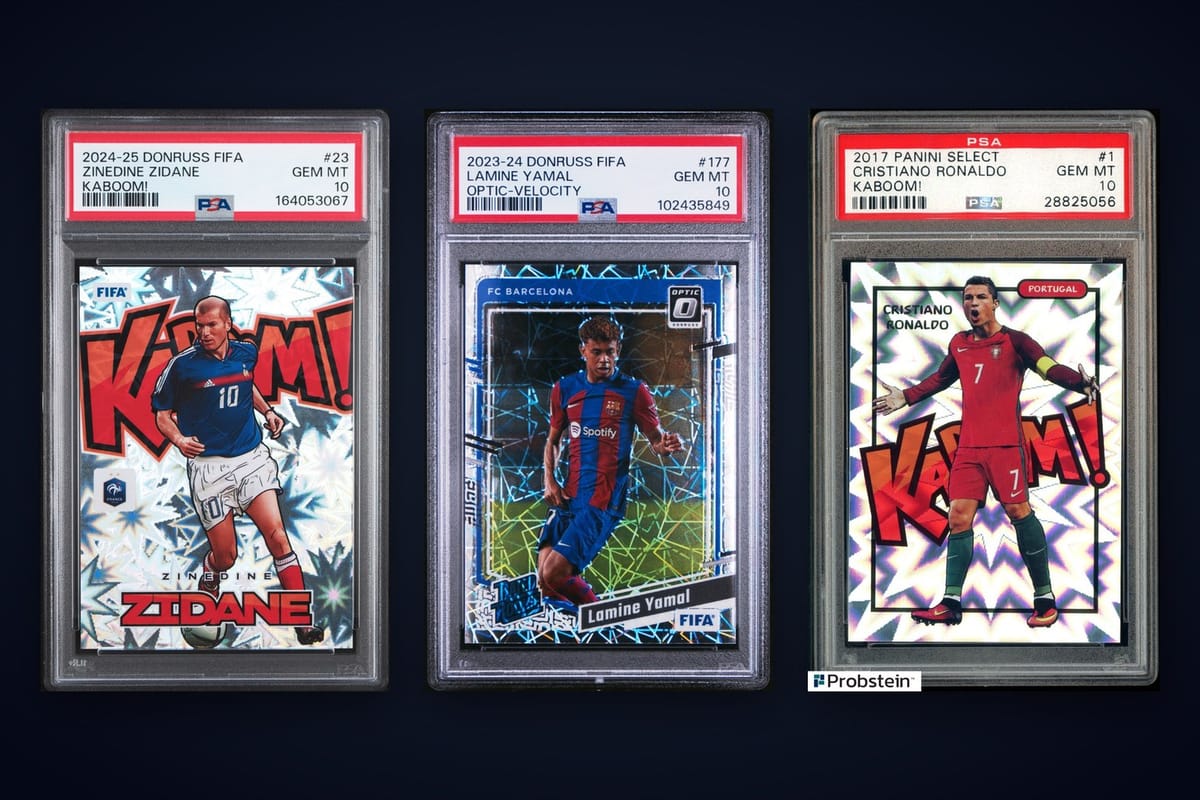
Zinedine Zidane #23 2024 Panini Donruss Kaboom |
$530.88 | $1,656 | 0% |
 |
Lamine Yamal [Velocity Optic] #177 2023 Panini Donruss |
$89.75 | $588.48 | 0% |
 |
Cristiano Ronaldo #1 2017 Panini Select Kaboom |
$4,945 | $48,800 | 0% |
 |
Lamine Yamal #24 2023 Panini Select FIFA Visionary |
$265.15 | $1,200 | 0% |
 |
Zinedine Zidane #164 1998 Panini France World Cup Stickers |
$22.36 | $2,000 | 0% |
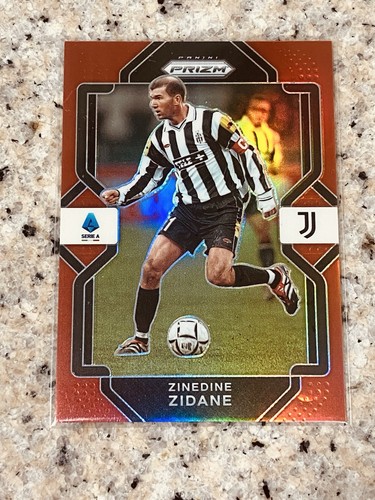 |
Zinedine Zidane [Gold] #206 2022 Panini Chronicles Serie A |
$2,964 | — | 0% |
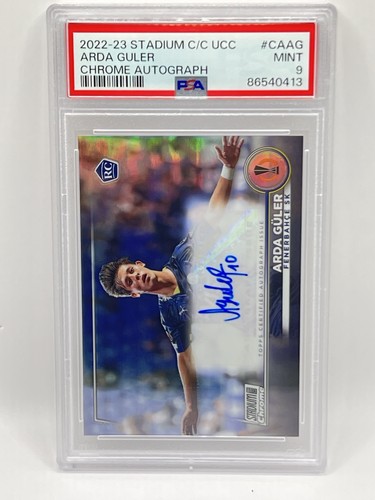 |
Arda Guler #CA-AG 2022 Stadium Club Chrome UEFA Competitions Autographs |
$101.30 | $321.00 | 0% |
Look up any card's current raw and graded value in Midpoint — and get an estimated grade before you pay to submit.
1. Verify the Drop With Completed Sales, Not Asking Prices
The first rule of any market check: asking prices can be misleading. A seller can list a card at any number, and a listing that sits unsold tells you almost nothing. What matters is what buyers actually paid.
Here is a quick way to verify falling soccer card prices for any card you own:
- Search the exact card (player, set, parallel, serial number, grade) on eBay and filter to Sold Items.
- Compare the last 5 to 10 sales against the 30 days before that.
- Separate raw sales from graded sales. Never mix PSA 10s with ungraded copies.
- Throw out obvious outliers such as damaged cards, lot sales and best-offer sales you can't see.
If sold prices fell and sales volume held steady, that's a genuine price decline. If prices fell and few cards are selling, the market is thin, which is a different problem. You may not be able to exit at the last price you saw.
2. Understand Why Supply Can Push Prices Down
A common reason a card cools off is plain supply. Recent release cycles, including 2025-26 and 2026 products, have put a lot of new product on the market, and every box opened adds copies of the same rookies and stars to the pool of sellers.
Watch for these supply signals:
- Heavy new releases: More boxes opened means more base cards and common parallels listed at once.
- Many parallel tiers: Collector demand gets split across dozens of versions of the same player.
- Print runs: Unnumbered cards have no hard cap, so supply can keep growing. A card numbered to a small run has a built-in ceiling.
Market saturation doesn't mean soccer cards are dead. It means a given player's cards compete with each other and with a flood of new inventory, so the price of the average copy can slide.
3. Factor In a Possible Post-World Cup Demand Slowdown
Soccer card demand is tied to attention. During a World Cup run, casual buyers often pile in, prices stretch, and sellers list aggressively. When the tournament ends, some of that casual money tends to leave, and the long-term collectors who remain are often pickier.
That pattern can be a reason you see soccer cards losing value in the months afterward. Prices that were set by event-driven excitement may settle toward what dedicated collectors will pay.
- Expect the sharpest pullbacks on cards whose price spiked on a single tournament performance.
- Expect steadier prices on cards backed by a long career and a deep collector base.
- Don't assume a cooldown is permanent. Demand can rise again around big club fixtures, transfers and the next tournament cycle.
4. Know Which Card Types Are Most Exposed
Not every soccer card falls equally, so the question "is the decline broad or limited?" has a nuanced answer. Different card types behave differently when the market cools.
- Base cards: Highest supply, lowest scarcity. These usually feel a dip first and bounce least.
- Unnumbered rookies: Depend heavily on hype. If a player's buzz fades, these can drop quickly.
- Numbered parallels: A small print run supports price, but only if a buyer exists at that run size.
- Autographs and relics: Often more durable demand, but condition, autograph quality and card design matter a lot.
- Short prints: Scarcer than base, but scarcity alone doesn't guarantee demand.
- Vintage cards: Often move on a different cycle from modern releases because supply is fixed and the buyers are different.
If most of your collection is modern base and unnumbered rookies, you're likely more exposed than someone holding scarce, numbered or vintage pieces.
5. Check the Young Stars: Yamal, Endrick, Bellingham, Musiala
Young, hyped players carry the most price risk, because their prices bake in future expectations. Lamine Yamal, Endrick, Jude Bellingham and Jamal Musiala are among the names collectors watch most closely, and each has a different story: some are early in their careers, some are established stars with big-club visibility.
Rather than assume a direction, look up each card you own in the table in this post and compare it to your own sold-comp check. Then ask:
- Is the card a first-year rookie, or a later-year base that is easier to find?
- Is the drop concentrated in raw copies, PSA 10s, or both?
- Are numbered versions holding up better than unnumbered ones?
Expectation-driven cards can fall fast on a quiet stretch of news and rebound just as fast on a big performance. That volatility cuts both ways when you're considering a dip purchase.
6. Compare Messi and Ronaldo With Haaland and Mbappé
Lionel Messi and Cristiano Ronaldo are the all-time anchors of soccer collecting. Their cards have a worldwide, multi-generational buyer base, which generally means more steady demand than a newer player gets. That doesn't make them immune to a soft market, and it doesn't mean every Messi or Ronaldo card is a safe hold, since the supply of their cards is also huge.
Erling Haaland and Kylian Mbappé sit in the middle: proven elite scorers with strong demand, but still active players whose prices respond to form, injuries and transfers.
- Legacy names: Typically more liquid, so you can usually find a buyer, though common cards can still slip.
- Prime-era stars: Prices follow performance and headlines more closely.
- Rule of thumb: Scarce, high-grade, numbered cards of any of these players tend to hold up better than abundant base cards.
Check each one against the figures as of 2026-10-21 in the table, and verify with fresh sold listings before acting.
7. Compare Raw vs PSA 10 Prices Before You Decide
A dip changes the math between raw and graded cards. A PSA 10 premium is the gap between what a gem-mint slab sells for and what an ungraded copy sells for. When raw prices fall, that gap can widen or shrink, and it decides whether grading is worth it.
Before you submit anything, weigh:
- Grading cost: Fees vary by company and service level, and with shipping and insurance it often adds up to tens of dollars per card. Check the current fee schedule.
- Condition risk: Many raw cards don't earn a 10, and a lower grade can sell for little more than raw.
- Centering: One of the most common reasons a gem-looking card misses the top grade.
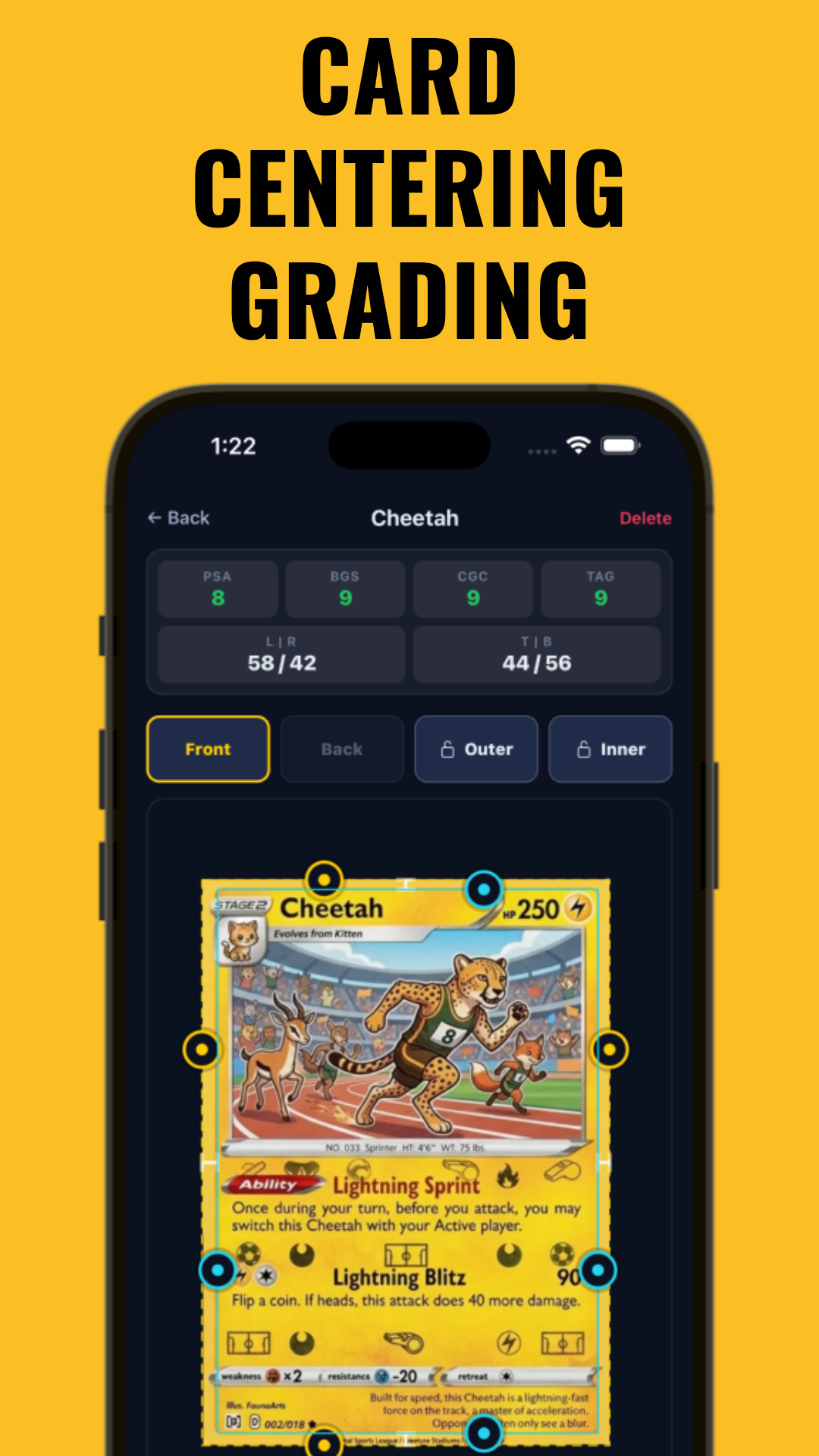
Centering is the easiest factor to measure up front. Our guide on how centering impacts card value explains why a few millimeters can change a grade, and the free centering calculator gives you a quick read.
8. Use the Dip to Grade a Cheap Copy That Centers Well
This is where a market drop can become an opportunity. Standard grading fees generally don't depend on what the raw card cost (though some services raise fees for higher declared values), so when raw prices are low, the fee becomes a bigger share of your total spend, but the upside from a high grade can matter more.
The strategy: buy a few inexpensive raw copies of a player you believe in, and only grade the ones that measure well.
- Ask sellers for sharp front and back photos, or inspect the card in person.
- Measure the centering on the front and back.
- Check corners, edges and surface for flaws.
- Only submit cards whose estimated grade makes the fee worth it.
Midpoint lets you measure centering down to the millimeter and get an estimated PSA, BGS, CGC or TAG grade before you pay to submit. For a walkthrough, see our step-by-step guide to pre-grading a card.
9. Choose Between Buying the Dip and Selling Now
Nobody can call the bottom. The better question is which move fits your situation and your risk tolerance.
Leaning toward buying the dip makes sense if:
- You're picking up scarce cards (numbered, autographed, high-grade) rather than common base.
- You plan to hold for a long stretch, not flip next month.
- You've confirmed the decline with sold comps and see steady sales volume.
Leaning toward selling now makes sense if:
- You hold many copies of an abundant, hype-driven raw card.
- The card has few recent sales, which means low liquidity and bigger downside.
- You need the cash and would rather accept a known price than wait.
A middle path is to sell duplicates of common cards, keep your best copies, and spread any dip buying over several weeks rather than all at once. Then track how your collection's value shifts with a portfolio tool so you're reacting to numbers, not feelings.
Products to Monitor Next
Since supply drives so much of this, keep an eye on the releases that add the most inventory. Panini Prizm, Topps Chrome UEFA Champions League and Donruss Road to World Cup are products collectors commonly watch, along with any other 2025-26 and 2026 soccer releases.
- See how prices for a set's rookies move in the weeks after release.
- Compare how base, parallel and numbered cards from the same product trade.
- Note whether PSA 10 prices hold when the raw price falls.
Store anything you plan to hold properly, too. Our guide to storing valuable cards covers protecting condition while you wait out the market.
Conclusion
Soccer card prices dropping in November 2026 is best treated as a research task. Verify the move with completed sales, consider whether supply, post-World Cup cooling or fading hype is behind it, and recognize that base cards, unnumbered rookies and numbered or graded cards behave very differently. Messi, Ronaldo, Haaland, Mbappé and the rising stars each carry different risk profiles, so judge each card on its own comps.
If you decide to use the dip, favor scarce cards, measure centering before you grade, and don't spend a grading fee on a copy that won't earn it. Midpoint is free on iOS and Android and can help you check centering and estimate a grade before you commit.
FAQ
Q: Why are soccer card prices dropping in November 2026?
A: Common causes include more supply from recent releases, demand cooling after the World Cup, and hype fading on specific players. Verify it for your own cards with completed sales over the last 30 days.
Q: Which soccer cards are losing the most value right now?
A: Abundant, unnumbered cards such as base cards and hype-driven rookies are generally the most exposed. Check the table in this post (as of 2026-10-21) for specific cards, and compare raw and PSA 10 prices separately.
Q: Is it a good time to buy soccer cards after the November 2026 drop?
A: It can be, if you focus on scarce or high-quality cards, confirm steady sales volume, and plan to hold. Spreading purchases over several weeks reduces the risk of buying before the bottom.
Q: Are Messi and Ronaldo soccer cards holding their value better than newer players?
A: They often have deeper, more consistent demand because of their global collector base, but common cards of both players are plentiful and can still slip. Scarce, high-grade versions typically hold better. Always confirm with recent sold prices.
Q: Should I sell my raw soccer cards before prices fall further?
A: It depends on the card. Duplicates of common, hype-driven cards may be worth selling if sales are slowing, while your best, scarcer copies may be worth holding. Nobody can predict the bottom, so consider selling in stages.
Q: How do I check the real value of a soccer card using recent sold prices?
A: Search the exact card on eBay, filter to Sold Items, and compare the last several sales with the prior 30 days. Keep raw and graded sales separate, and ignore listing prices that haven't sold.
Free to start
Try the Midpoint app
Grade any card from a photo, see its raw and PSA 10 value, and track what your collection is worth — free.
Get it on iPhoneGet it on Android