
Top 11 Cheap Hockey Cards Worth Grading in 2026
Discover 11 cheap hockey cards worth grading for big PSA 10 gains. See raw vs PSA 10 values, condition tips, and the smartest budget grading plays.

Estimated reading time: 10 min
Key Takeaways
- Some cheap hockey cards under $15 have shown large increases in value as PSA 10s, sometimes reaching multiples of their raw price.
- Condition—especially centering and corners—is critical for grading upside.
- Not all cheap cards are worth grading: avoid junk wax and damaged commons.
- Tools like Midpoint help pre-grade and estimate profit before you submit.
Looking for cheap hockey cards worth grading? With grading fees rising, collectors want affordable hockey cards to grade—cards that cost under $40 raw but can increase in value as PSA 10s. But which ones are the real budget grading picks, and how do you avoid wasting money on cards that will never grade well? In this guide, we break down some notable candidates, show real raw vs. PSA 10 price differences (as of 2026-07-11), and explain how to check condition and break even before you submit.
Raw vs PSA 10 value (biggest grading premium) — live data from Midpoint's card database, as of 2026-07-11. Prices move; Midpoint refreshes these daily.
| Card | Raw | PSA 10 | Gem premium | |
|---|---|---|---|---|
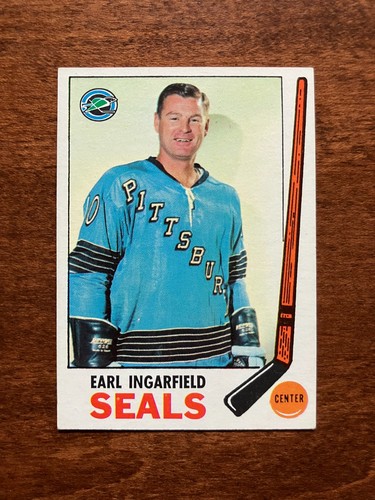 |
Earl Ingarfield #87 1969 Topps |
$3.42 | $1,026 | 300× |
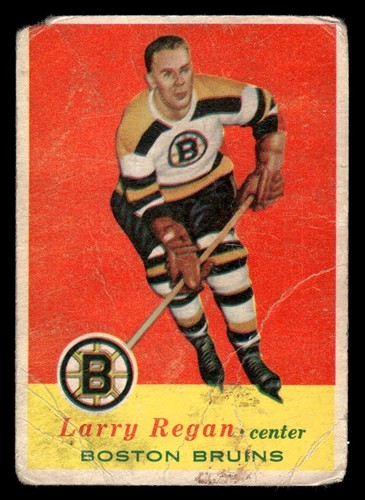 |
Larry Regan #6 1957 Topps |
$7.26 | $2,160 | 297.5× |
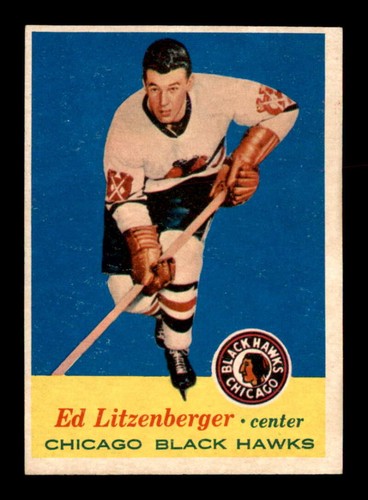 |
Ed Litzenberger #26 1957 Topps |
$7.83 | $2,304 | 294.3× |
 |
Earl Ingarfield #10 1959 Topps |
$6.50 | $1,893 | 291.3× |
 |
Hal Laycoe #71 1952 Parkhurst |
$8.32 | $2,398 | 288.3× |
 |
Tom Johnson #9 1952 Parkhurst |
$13.21 | $3,774 | 285.7× |
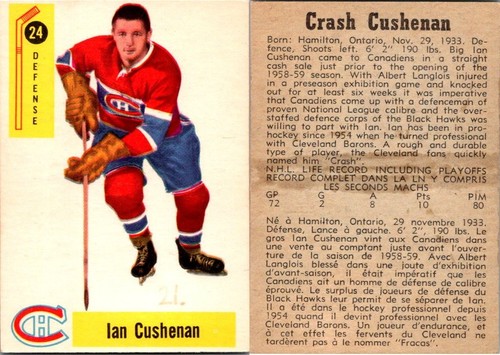 |
Ian Cushenan #24 1958 Parkhurst |
$8.95 | $2,550 | 284.9× |
 |
Pulford Comes Close #1 1958 Parkhurst |
$8.59 | $2,430 | 282.9× |
 |
John McKenzie #82 1971 Topps |
$3.25 | $915.85 | 281.8× |
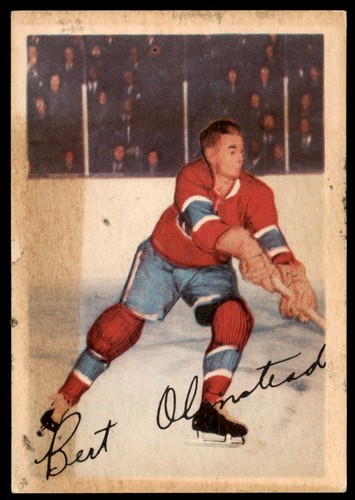 |
Bert Olmstead #19 1953 Parkhurst |
$14.02 | $3,946 | 281.5× |
 |
Ray Barry #32 1951 Parkhurst |
$14.07 | $3,950 | 280.8× |
 |
John McKenzie #37 1960 Parkhurst |
$6.60 | $1,812 | 274.5× |
Look up any card's current raw and graded value in Midpoint — and get an estimated grade before you pay to submit.
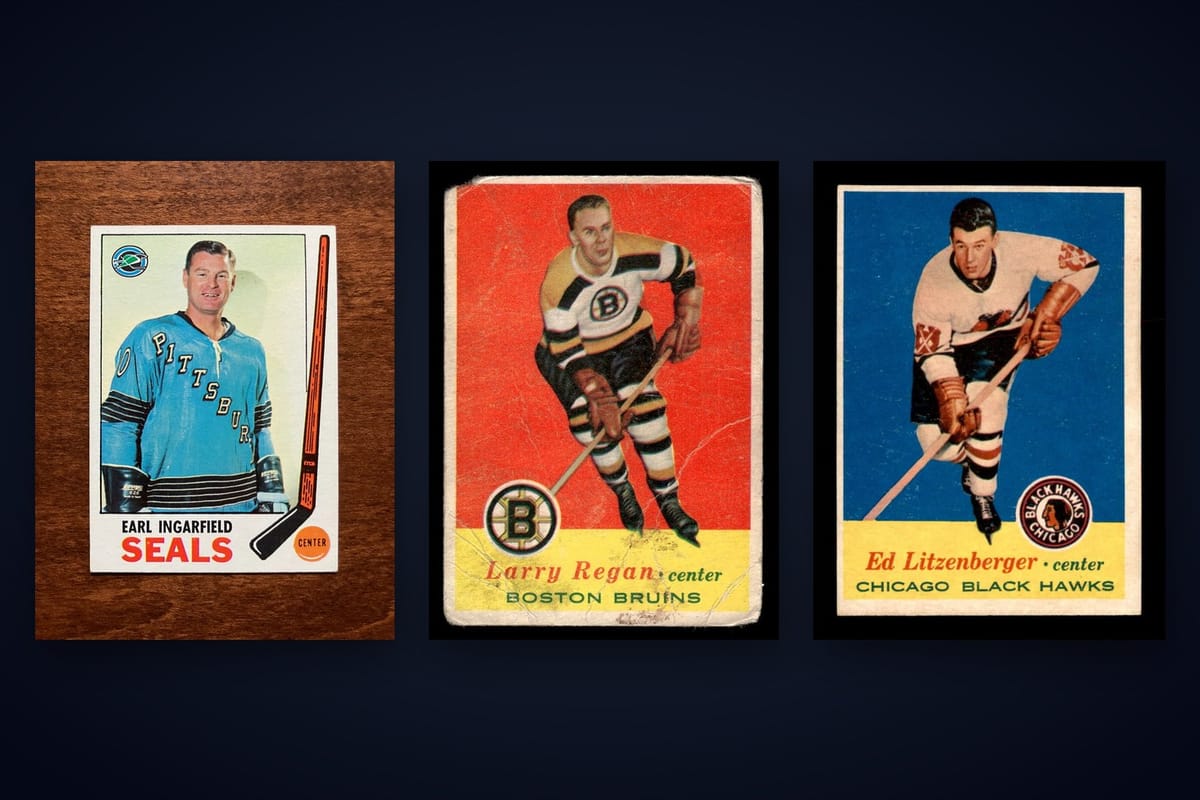
1. Earl Ingarfield #87 (1969 Topps)
This vintage card is one of the notable cheap hockey cards worth grading. As of 2026-07-11, you can pick up a raw Earl Ingarfield #87 for just $3.42. In a PSA 10 slab, sales have reached $1,026—a significant premium over raw price.
Why the huge jump? Vintage Topps hockey cards from the '60s are notoriously tough in high grade, especially for centering and corners. Most raw copies are well-loved, so finding a sharp one is rare—and that scarcity can drive the PSA 10 price higher.
- Raw price: $3.42
- PSA 10 price: $1,026
- Gem premium: ~300x
- Condition note: Check for clean edges, crisp corners, and minimal print defects.
2. Larry Regan #6 (1957 Topps)
Larry Regan’s 1957 Topps issue is a budget hockey grading pick with notable upside. Raw, it costs only $7.26. In PSA 10, the card has sold for as much as $2,160—a substantial gain.
1957 Topps cards are condition-sensitive: off-center cuts and fragile surfaces are common. Use an AI grading app or a card centering tool to measure before you submit. If your copy is well-centered with clean corners and no creases, it’s a strong candidate.
- Raw price: $7.26
- PSA 10 price: $2,160
- Gem premium: ~297x
- Pro tip: Surface gloss and centering are grading bottlenecks for this set.
3. Ed Litzenberger #26 (1957 Topps)
Another vintage affordable hockey card to grade, Ed Litzenberger #26 sits at $7.83 raw and has reached $2,304 as a PSA 10 (approx. 294x premium). This era’s cards are a grading challenge—print dots, centering, and edge chipping are common.
If your raw card looks sharp, the risk/reward can be exceptional. Use a high-res scan and compare to PSA 10 examples online before submitting.
- Raw price: $7.83
- PSA 10 price: $2,304
- Always check for snow (print defects) and back edge wear.
4. Earl Ingarfield #10 (1959 Topps)
At only $6.50 raw and $1,893 in PSA 10, this card offers a notable grading premium. The 1959 Topps set is known for centering issues, so finding a well-centered example is key. Even small flaws can downgrade to a PSA 8 or lower.
Tools like Midpoint's free centering calculator make it easy to measure precise centering before risking grading fees.
- Raw price: $6.50
- PSA 10 price: $1,893
- Look for print clarity and bold color.
5. Hal Laycoe #71 (1952 Parkhurst)
1952 Parkhurst is well known among vintage hockey collectors. At $8.32 raw and $2,398 as a PSA 10, Hal Laycoe #71 shows a large premium. But high-grade 1952s are extremely rare due to chipping, fragile paper stock, and poor print alignment.
Check for original gloss, sharp corners, and no writing or stains. Use an AI-powered grading preview, like Midpoint, to help assess if yours stands a shot at a gem mint grade.
- Raw price: $8.32
- PSA 10 price: $2,398
- Gem premium: ~288x
6. Tom Johnson #9 (1952 Parkhurst)
Tom Johnson’s rookie-era Parkhurst is $13.21 raw—still well under $40—and has reached $3,774 as a PSA 10 (approx. 285x premium). The main challenge: most available copies are well-worn, so scrutinize for creases, snow, and edge chips.
Use a magnifier or AI surface tool to detect hidden flaws. Even small print defects can mean the difference between a $40 card and a much higher value.
- Raw price: $13.21
- PSA 10 price: $3,774
- Condition is everything: pass on cards with corner rounding or wax stains.
7. Ian Cushenan #24 (1958 Parkhurst)
Ian Cushenan’s 1958 Parkhurst card is a classic sleeper: $8.95 raw, $2,550 as a PSA 10 (approx. 284x premium). 1958 Parkhurst cards are known for miscuts and off-centering.
Measure centering to the millimeter—tools like Midpoint can help you avoid paying $30+ to grade a card that won’t hit a high mark. Surface snow and registration are also trouble spots.
- Raw price: $8.95
- PSA 10 price: $2,550
- Check for print alignment and smooth edges.
8. Pulford Comes Close #1 (1958 Parkhurst)
Another Parkhurst card, Pulford Comes Close #1, costs just $8.59 raw but has sold for $2,430 as a PSA 10 (approx. 282x premium). This card is a narrative “event” card, not a player RC, but is still collected in top grade.
Look for sharp corners, centered image, and clean surface. Compare your copy to PSA 10s using high-res scans before submitting.
- Raw price: $8.59
- PSA 10 price: $2,430
9. John McKenzie #82 (1971 Topps)
Jumping to the 1970s, John McKenzie #82 (1971 Topps) sits at $3.25 raw—one of the cheapest on this list—but has reached $915.85 as a PSA 10 (approx. 281x premium). Early '70s Topps are known for print dots and miscuts, so cherry-picking is essential.
If you find a clean, centered copy, it’s an appealing budget grading pick. Use digital tools to check for registration and color quality.
- Raw price: $3.25
- PSA 10 price: $915.85
- Pro tip: Surface gloss and back centering are often overlooked.
10. Bert Olmstead #19 (1953 Parkhurst)
Bert Olmstead #19 from 1953 Parkhurst is $14.02 raw and has reached $3,946 in PSA 10 (approx. 281x premium). 1953 Parkhurst cards are condition-sensitive—look for soft corners and discoloration.
If you’re new to grading vintage, review PSA’s standards or check out this step-by-step pre-grading guide before submitting.
- Raw price: $14.02
- PSA 10 price: $3,946
- Centering and color registration are crucial.
11. Ray Barry #32 (1951 Parkhurst)
Wrapping up, Ray Barry #32 (1951 Parkhurst) trades for $14.07 raw and has sold for $3,950 in PSA 10 (approx. 280x premium). Early Parkhurst cards are ultra-thin and prone to creasing, so inspect carefully for hidden bends.
Use strong lighting and magnification to check for flaws. AI grading previews can help spot subtle corner wear or print snow before you risk grading fees.
- Raw price: $14.07
- PSA 10 price: $3,950
- Gem premium: ~280x

Conclusion
The best cheap hockey cards worth grading are often vintage singles with large gaps between raw and PSA 10 value—especially those under $15 raw that can fetch $1,000+ as a gem mint. But condition is everything. Only submit cards with sharp corners, strong centering, and clean surfaces. Avoid junk wax, common base cards, and anything with damage: for these, grading fees will likely wipe out any upside.
Before you send cards to PSA, BGS, or SGC, use digital grading tools like Midpoint to estimate your grade and compare raw vs. graded value. This way, you’ll know your break-even point and maximize your grading profit.
FAQ
Q: Which cheap hockey cards are worth grading?
A:
The best cheap hockey cards worth grading are often vintage cards with major jumps in value from raw to PSA 10—for example, Earl Ingarfield #87 (1969 Topps), Larry Regan #6 (1957 Topps), and Ray Barry #32 (1951 Parkhurst). Look for low-population, high-demand cards under $40 raw with a history of strong PSA 10 sales.
Q: How do I know if a hockey card is worth grading?
A:
Check the raw vs. PSA 10 value difference, research recent sales, and inspect your card’s condition. Use a digital pre-grading tool like Midpoint to estimate your card's likely grade and break-even point. If grading fees plus shipping are less than the PSA 10 premium, and your card is in top shape, it may be worth grading.
Q: What hockey cards should not be graded?
A:
Avoid grading junk wax era cards (late '80s, early '90s), common base cards, or any card with significant damage (creases, rounded corners, stains). The grading fee will usually exceed any value gained, even at PSA 10.
Q: Is it worth grading Young Guns hockey cards?
A:
Some Young Guns rookie cards are worth grading if they’re in pristine condition and the player is a star or has breakout potential. Always compare raw and PSA 10 prices and check population reports before submitting.
Q: What condition do hockey cards need to be to grade well?
A:
For a shot at PSA 10, cards must have sharp corners, near-perfect centering, clean edges, and a flawless surface (no scratches, stains, or print defects). Use a centering tool and magnifier to check before submitting. See this guide for more on centering’s impact.
Q: How much does grading a hockey card cost and is it profitable?
A:
Grading fees for PSA/BGS/SGC start around $20–$30 per card (as of 2026). It’s only profitable if your card is likely to achieve a high grade (PSA 9 or 10) and the PSA 10 value is significantly higher than your total cost.
Free to start
Try the Midpoint app
Grade any card from a photo, see its raw and PSA 10 value, and track what your collection is worth — free.
Get it on iPhoneGet it on Android


