What Makes a Card Valuable: Key Drivers and How to Check Prices
Discover what makes a card valuable, how to check prices, and why raw vs graded values differ. Use Midpoint for accurate card value insights.


Estimated reading time: 12 min
Key Takeaways
- Card value depends on rarity, condition, demand, and grading population reports.
- Raw vs graded card value can vary; grading often increases value but involves costs and risks.
- Player popularity, rookie status, and set prestige strongly impact card worth.
- Midpoint app offers instant AI-driven grading estimates and comprehensive card price lookup.
- Understanding print runs, parallels, and card variants is important for accurate valuation.
Table of Contents
- Section 1: Core Factors That Make a Card Valuable
- Section 2: Understanding Raw vs Graded Card Value
- Section 3: How to Check Card Prices Accurately
- Section 4: The Role of Population Reports and Grading Impact
- Section 5: Special Editions, Rookie Cards, and Variants
- Section 6: When to Sell and How to Price Your Cards
- Conclusion
- FAQ
Section 1: Core Factors That Make a Card Valuable
Rarity and Print Runs
One of the most fundamental elements determining what makes a card valuable is rarity. Cards printed in limited quantities or as short prints often command higher prices. Serial numbering, such as cards numbered out of 100 or fewer, generally signals scarcity. For example, a serial-numbered parallel card with only 50 copies is typically more valuable than a base card with larger print runs.
Additionally, print runs affect supply. Cards from highly produced sets tend to be less valuable unless other factors boost demand. For instance, the 1990s saw mass production of certain baseball cards, which contributed to lower prices, whereas limited print runs like those seen in premium sets (e.g., Panini Prizm) often maintain higher values. Understanding a card’s print run helps collectors assess if the card is a common or sought-after piece. Some manufacturers release short prints intentionally, limiting certain parallels or inserts to a fraction of the main set’s size, such as 1:24 or even 1:100 odds, creating a scarcity premium.
Condition: Centering, Corners, Edges, and Surface
Condition is critical in card valuation. Key aspects include:
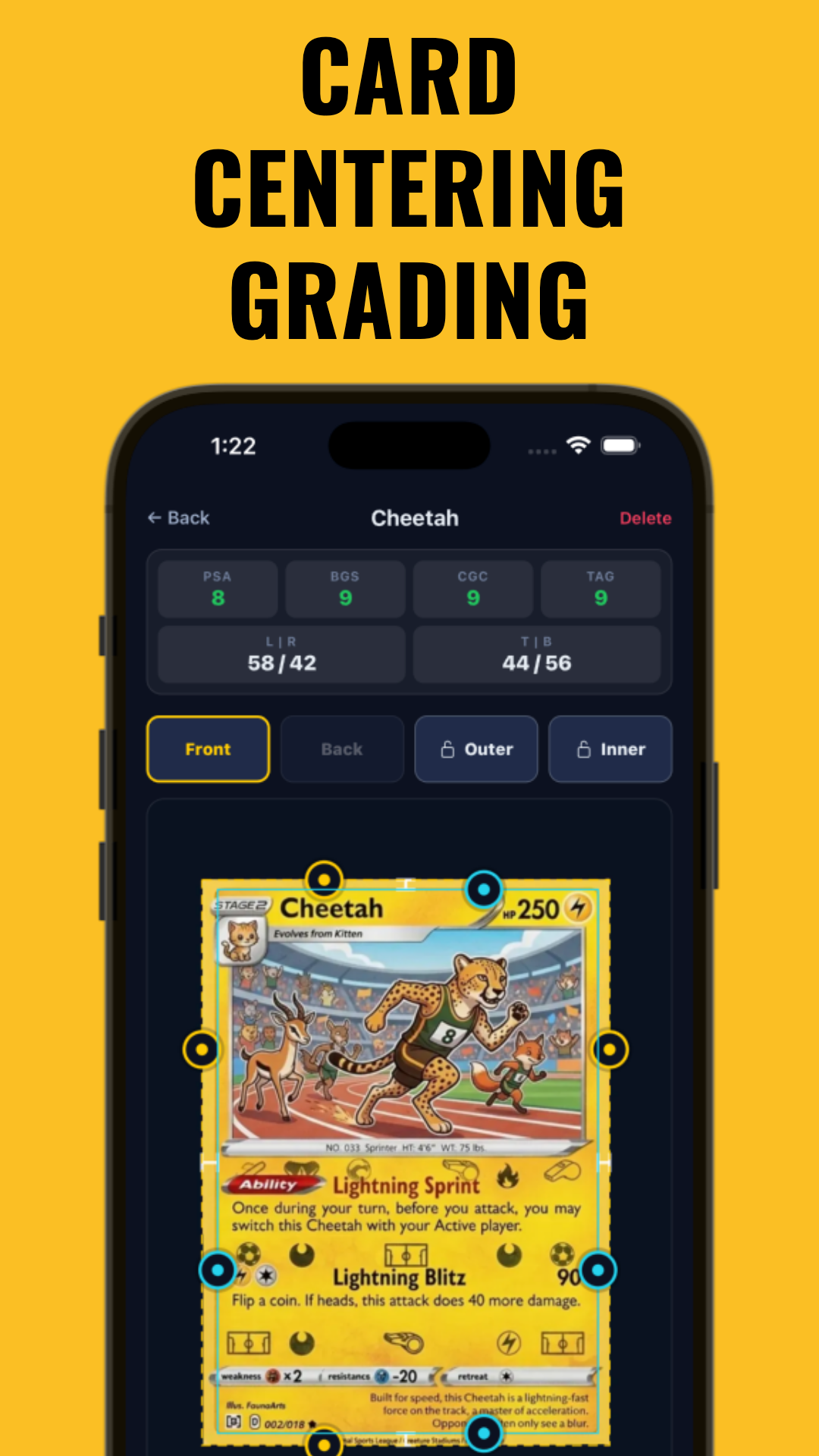
- Centering: How well the card’s image is aligned within its borders. Poor centering can detract from value. For example, a card with near-perfect 50/50 centering is generally more desirable than one with off-center borders, sometimes impacting the grade by multiple points.
- Corners: Sharp, undamaged corners add to a card’s appeal. Even slight fraying or whitening at the corners can reduce the grade.
- Edges: Clean, intact edges avoid grade deductions. Chipped or dented edges are common reasons for grade drops.
- Surface: Free of scratches, stains, or print defects. Surface imperfections such as print lines, stains, or scratches can lower value.
Professional grading companies weigh these factors heavily. Using tools like the Midpoint app, collectors can measure centering down to the millimeter and get instant AI-based grading estimates before investing in professional grading. Midpoint’s technology can analyze high-resolution images to provide a centering percentage and detect surface defects, offering a pre-assessment that may help collectors decide on grading, which can affect the card’s market value. For more details on grading and condition, see our Card Condition: The Complete Guide to Grading, Inspection, and Value.
Demand and Popularity
Demand is driven by player or character popularity, current performance, and cultural relevance. For sports cards, top athletes and hall-of-famers often increase card value. For example, a rookie card of a star athlete like LeBron James or Mike Trout generally commands higher prices than lesser-known players. Additionally, players with strong fan bases or those experiencing a surge due to recent performance or media attention can see spikes in card prices.
In Pokémon or Magic: The Gathering, iconic cards or fan-favorite characters similarly influence prices. Cards like Charizard or Black Lotus are notable due to both rarity and popularity. Moreover, cards from popular sets or eras gain value due to nostalgia and collector interest. For example, vintage cards or first editions often outperform newer releases of similar condition. This nostalgia effect is especially strong in markets like sports cards, where collectors seek high-profile releases from their youth.
Section 2: Understanding Raw vs Graded Card Value
What Is Raw Card Value?
Raw cards are ungraded and not authenticated by professional services. Their value depends on visible condition and market demand but without official verification. Raw cards can sell for less due to buyer uncertainty about damage or authenticity. For example, two identical raw cards might have different values depending on buyer trust and the ability to verify condition in person.
However, raw cards that are in gem mint condition can sometimes command higher prices, especially if they are key rookies or rare inserts. In some cases, collectors prefer raw cards to avoid grading fees or wait times, particularly in less expensive markets or for cards unlikely to grade highly.
Why Are Graded Cards Often Worth More?
Graded cards have been officially evaluated by companies like PSA, BGS, CGC, or TAG. These grades confirm condition and authenticity, reducing buyer risk. Higher grades (e.g., PSA 9 or 10) often increase value because collectors trust the grade as a condition benchmark. For example, a PSA 10 1986 Fleer Michael Jordan rookie card has sold for significantly more than raw versions.
Grading also helps identify and differentiate cards with similar raw appearance but different quality nuances, such as centering or surface flaws. The population report showing how many cards have earned each grade adds scarcity value to top-graded cards. Some cards have thousands graded at PSA 9 but only a handful at PSA 10, which can push the price premium higher for the perfect grade.
Costs and Considerations
Professional grading includes submission fees, which can exceed $30 per card depending on turnaround speed and card value. Some high-value cards may incur fees over $100 for premium service. This means sellers must weigh the potential value increase versus grading costs and the risk of a lower-than-expected grade. For example, submitting a card expected to grade PSA 9 but receiving a PSA 7 can reduce its market value and make the grading cost a loss.
Using apps like Midpoint to get instant AI-driven grading estimates helps collectors decide if grading is worthwhile. Midpoint’s AI can analyze images and provide a predicted grade range, allowing collectors to avoid costly grading on cards unlikely to receive top grades. This digital pre-grading can save both time and money, helping users build a grading strategy.
Section 3: How to Check Card Prices Accurately
Utilizing Online Marketplaces and Population Reports
Checking prices involves researching recent sales on platforms like eBay, COMC, and auction houses. Look for completed listings to see actual sale prices rather than asking prices, as asking prices can be inflated. For example, a card listed at $500 might have last sold for $350. Filtering by sold listings and recent dates gives a more accurate market snapshot.
Population reports from grading companies show how many cards have been graded at each level, indicating scarcity. Cards with fewer graded copies generally have higher value at top grades. For instance, a PSA 10 graded card with only 20 copies in existence will typically be worth more than one with thousands graded at the same level.
Using Card Price Checkers and Scanners
Apps designed as card value scanners streamline this process. Midpoint, for example, provides:
- Access to over 250,000 cards across multiple sports and games, including baseball, basketball, football, Pokémon, Magic: The Gathering, and more.
- Raw vs graded price comparisons updated frequently based on real-time sales data.
- Instant AI grading estimates to anticipate likely card grade and market value.
- Portfolio tracking to monitor collection value over time, including historical price trends and alerts on significant value changes.
This centralized approach saves time and provides valuation insights, making it a useful card price checker app for collectors. For example, Midpoint aggregates sales data from multiple sources, helping users see comprehensive pricing information rather than relying on a single marketplace. For a deeper dive into how to check card values and what drives them, check out our detailed article on Card Values: How to Check, What Drives Value, and Pro Tips for Collectors.
Spotting Fakes and Reprints
Price lookup also involves verifying card authenticity. Fakes, reprints, and unauthorized variants can drastically reduce value. Trusted grading companies include authentication as part of their process, using ultraviolet light, magnification, and other forensic techniques.
Collectors should cross-reference card details including holograms, print quality, serial numbers, and manufacturer marks with official sources or apps like Midpoint to avoid costly mistakes. For example, Midpoint’s database can flag known counterfeit cards and suspicious variants, helping users avoid fraud.
Additionally, some manufacturers release reprints or promo cards with similar artwork but different backs or print quality. Awareness of these distinctions is important to avoid overpaying or misrepresenting card value.
Section 4: The Role of Population Reports and Grading Impact
Understanding Population Reports
Population reports, published by PSA, BGS, and others, list how many cards from a set have been graded at each grade level. This data influences value because:
- Low population at high grades generally means rarity and higher prices. For example, a card with only 5 PSA 10 copies may fetch a premium compared to one with 500 copies.
- High population at a grade level may indicate that grade is common, potentially lowering scarcity premium. For instance, if thousands of PSA 9 copies exist, the premium over PSA 8 or raw cards may be less pronounced.
Collectors often reference these reports to gauge how rare a pristine example is and price accordingly.
How Grading Affects Card Value
Grading can increase a card’s value by confirming condition and authenticity. Even cards in similar raw condition can vary significantly in price due to grading differences. For example, a PSA 10 graded card might sell for multiple times the price of a PSA 9, depending on scarcity and demand.
Collectors and sellers often reference grade population reports to price cards for sale effectively. Using Midpoint’s AI grading and centering tools can help predict likely grade outcomes based on condition analysis, making it easier to decide whether to grade or sell raw. For more on grading, see our comprehensive guide on Card Grading: How It Works, What to Know, and When It's Worth It.
When Population Reports Are Most Useful
Population reports are especially relevant for scarce cards, rookies, and high-end inserts. For mass-market cards, grading may not increase value enough to justify the cost. For example, a common base card from a recent set with thousands of copies graded might see only a slight grade premium, making grading financially impractical.
Understanding when population reports impact value enables collectors to prioritize grading only the most promising cards, optimizing investment return.
Section 5: Special Editions, Rookie Cards, and Variants
Rookie Cards and First Editions
Rookie cards, the first card of a player or character, are often among the most valuable. Early editions or first print runs carry historical significance and are highly sought after. For example, the 1952 Topps Mickey Mantle rookie card remains one of the most iconic and valuable sports cards, especially in high grades.
First edition cards, such as first print runs of Pokémon Base Set, also command premium prices due to their place in hobby history. Collectors often seek out these cards as centerpiece items for their collections.
Autographs and Memorabilia Cards
Cards featuring authentic autographs or pieces of memorabilia (such as jersey swatches, bat pieces, or game-used equipment) can increase value substantially. For instance, an autographed card of an NBA star or a jersey card with a patch from an MLB player may multiply the base card’s value.
Authentication by grading companies is important here to avoid counterfeits. Many grading companies now offer autograph authentication services (e.g., PSA/DNA), providing buyers confidence in the card’s legitimacy.
Parallels, Short Prints, and Variants
Parallels are alternate versions of base cards with different colors, foils, or numbering, often produced in limited quantities. For example, a Red Parallel numbered out of 25 is typically more valuable than the base card. Short prints are intentionally limited print runs within a set, making them rarer and often more valuable. For instance, a short print insert might be produced at 1:12 odds versus the base set.
Variants and misprints also interest collectors. Unique card features or printing errors can create niche demand, increasing value beyond typical rarity. Famous misprints, such as the 1999 Pokémon 'Pikachu Illustrator' card or miscut errors, can become highly collectible. However, the value of variants depends heavily on collector acceptance and recognition.
Section 6: When to Sell and How to Price Your Cards
Should I Sell Raw or Graded?
Deciding whether to sell raw or graded depends on card condition, rarity, and market demand. Graded cards often command higher prices but involve upfront grading fees and wait times, which can range from several weeks to months depending on service speed and backlog.
Use tools like Midpoint to pre-grade your cards digitally. If the AI predicts a high grade, grading before sale may maximize profit. For example, a card estimated to grade PSA 10 could fetch significantly more than the raw counterpart. For lower-condition cards, selling raw might be better to avoid grading fees that the market may not recoup.
How to Price Cards for Sale
Effective pricing requires:
- Researching recent sale prices for similar raw and graded cards, focusing on completed sales within the last 90 days to reflect current market conditions.
- Considering grading population data to understand scarcity and grade premiums.
- Accounting for current market trends and player popularity, including upcoming events, player performance, or media exposure that might affect demand.
- Factoring in grading costs if selling graded, subtracting these fees from expected sale price to calculate net profit.
Midpoint’s comprehensive price lookup and portfolio tracking features can help set competitive prices and time sales for maximum return by alerting users to price changes in their collection’s value. For collectors interested in managing their collection’s worth and protection, our guide on Card Collection Portfolio: Ultimate Guide to Tracking, Valuing & Protecting Your Cards offers valuable insights.
When to Hold and When to Sell
Holding cards can be advantageous when anticipating player performance improvements, set popularity spikes, or market growth. For example, holding rookie cards of emerging athletes before breakout seasons may yield appreciation.
Conversely, selling may be wise during peak demand or before condition deteriorates. Cards can lose value if mishandled, exposed to moisture, or damaged, so selling before such risks is prudent.
Portfolio tracking tools help monitor card value fluctuations, aiding informed decisions on when to sell or hold. Midpoint’s alerts on market trends and player news support proactive management to optimize investment returns.
Conclusion
Knowing what makes a card valuable involves multiple factors including rarity, condition, demand, grading, and card specifics like rookie status or special editions. Understanding the difference between raw and graded values, leveraging population reports, and using reliable price checking tools are important for collectors and sellers alike.
The Midpoint app offers an all-in-one solution, providing AI digital grading estimates, raw vs graded price lookups across many cards, and portfolio tracking to help optimize your collection’s value. With these tools, Midpoint aims to empower collectors to make data-informed decisions that can enhance profits and collection quality.
FAQ
Q: What makes a trading card valuable?
A: Card value is influenced by rarity, condition (centering, corners, edges, surface), demand/popularity of the player or character, grading population, special editions, and print run scarcity.
Q: How do I know if my card is rare?
A: Check print runs, serial numbering, and if it’s a short print or special variant. Population reports and card databases like Midpoint can help identify rarity levels.
Q: Does grading make a card worth more?
A: Grading certifies condition and authenticity, reducing buyer risk and often increasing value, especially for high grades and low population cards.
Q: Are rookie cards always more valuable?
A: Rookie cards tend to be more valuable due to their significance, but condition, grading, and demand also heavily influence worth.
Q: What cards are worth the most money?
A: Cards with a combination of rarity, top condition, high demand (e.g., iconic rookies, autographed or memorabilia cards), and low graded population typically fetch the highest prices.
Q: How do print runs and numbered parallels affect card value?
A: Limited print runs and serial-numbered parallels create scarcity and exclusivity, which can boost card value compared to base cards.
Free to start
Try the Midpoint app
Grade any card from a photo, see its raw and PSA 10 value, and track what your collection is worth — free.
Get it on iPhoneGet it on Android