1948 Bowman PSA 9 vs PSA 10 Value: Exact Price Gap Explained
Discover the precise 1948 Bowman PSA 9 vs PSA 10 value difference and when a PSA 9 is the smarter buy for top vintage cards like Stan Musial and Yogi Berra.

Estimated reading time: 9 min
Key Takeaways
- The 1948 Bowman PSA 9 vs PSA 10 value gap varies widely by card, with flagship stars often showing the largest premiums.
- PSA 10 examples are very rare; population scarcity can drive significant price differences over PSA 9s.
- Rookie cards and Hall of Famers like Stan Musial and Yogi Berra tend to show some of the biggest PSA 10 premiums.
- For many cards, a PSA 9 can be a smart value buy given limited PSA 10 population and pricing data.
- Midpoint’s AI grading tools help estimate centering and grade before costly submissions, aiding value decisions.
The 1948 Bowman PSA 9 vs PSA 10 value comparison is important for collectors deciding whether to invest in gem-mint examples or settle for near-mint cards. This article breaks down the price differences for key cards, examines population scarcity, and explains how card type and grading nuances impact the premium between PSA 9 and PSA 10 grades. Read on for a comprehensive guide to navigating 1948 Bowman grading values and when a PSA 9 may be worth it versus chasing the elusive PSA 10.
Card values — live data from Midpoint's card database, as of 2026-09-02. Prices move; Midpoint refreshes these daily.
| Card | Raw | PSA 10 | Gem premium | |
|---|---|---|---|---|
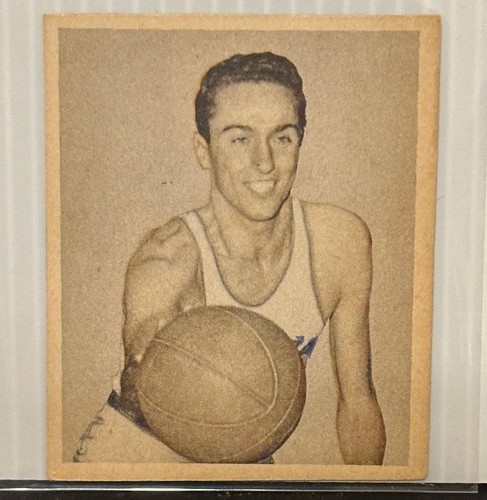 |
Carl Braun #72 1948 Bowman |
$224.99 | $61,326 | 272.6× |
 |
Jack Dwan #51 1948 Bowman |
$162.25 | $44,254 | 272.8× |
 |
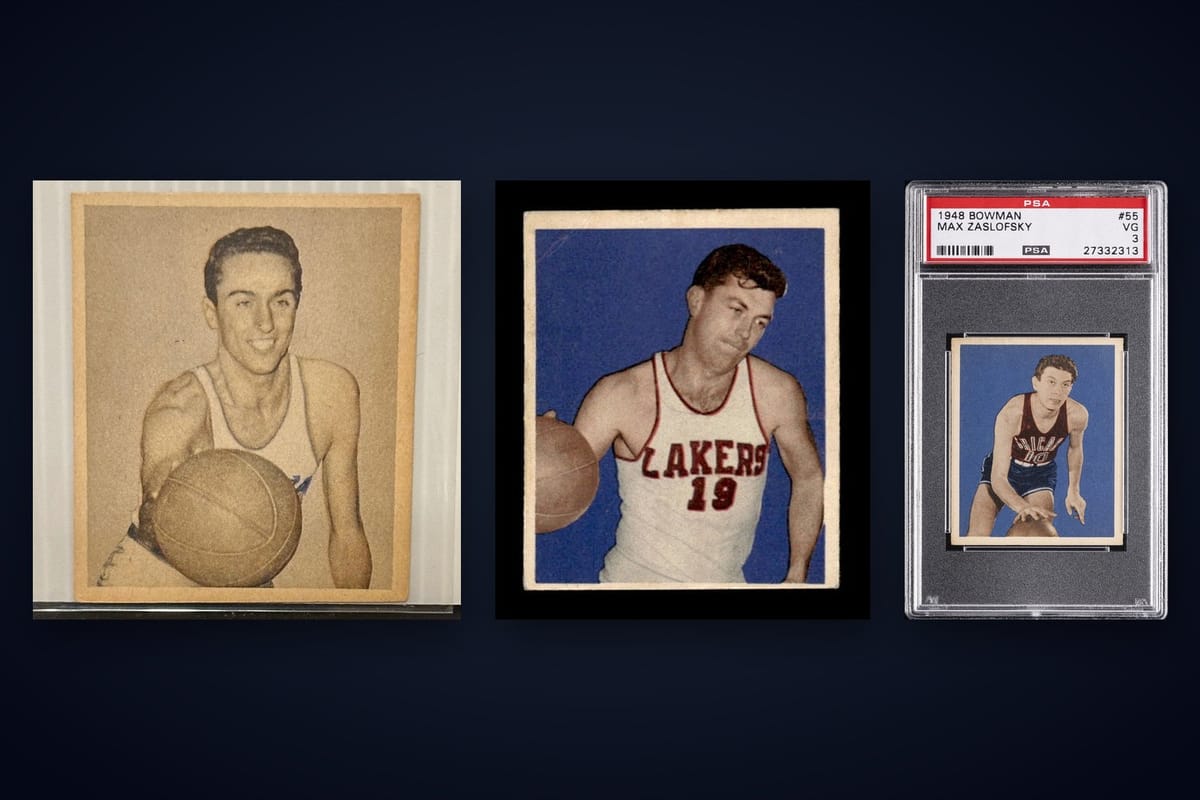
Max Zaslofsky #55 1948 Bowman |
$95.03 | $26,423 | 278.1× |
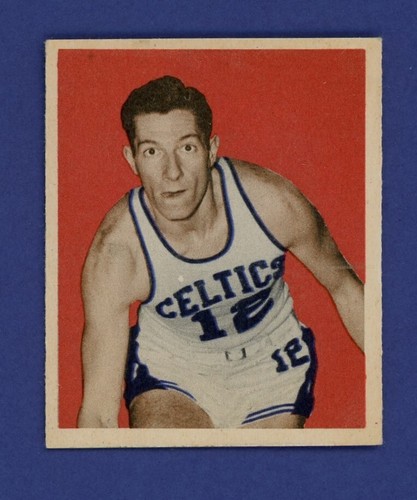 |
Arthur Spector #57 1948 Bowman |
$77.00 | $20,940 | 272× |
 |
Joe Fulks #34 1948 Bowman |
$58.00 | $15,836 | 273× |
 |
Charles Halbert #43 1948 Bowman |
$56.56 | $14,962 | 264.5× |
 |
William Holzman 1948 Bowman |
$50.57 | $13,809 | 273.1× |
 |
Bob Kinney #49 1948 Bowman |
$49.00 | $13,386 | 273.2× |
 |
Bob Davies #10 1948 Bowman |
$46.20 | $12,783 | 276.7× |
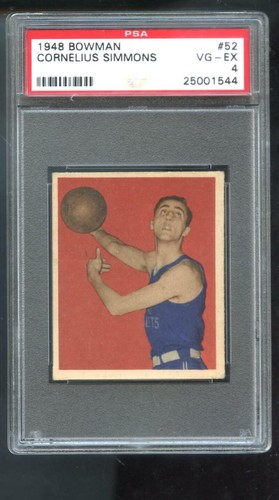 |
Cornelius Simmons #52 1948 Bowman |
$46.92 | $12,708 | 270.8× |
 |
Stan Miasek #40 1948 Bowman |
$37.26 | $11,815 | 317.1× |
 |
Out of Bounds Play #59 1948 Bowman |
$41.05 | $11,233 | 273.6× |
Look up any card's current raw and graded value in Midpoint — and get an estimated grade before you pay to submit.
Quick Comparison
| Card | PSA 9 Value (2026-09-02) | PSA 10 Value (2026-09-02) | Price Difference | Population PSA 9 | Population PSA 10 |
|---|---|---|---|---|---|
| Stan Musial #220 | $4,000 | $45,000 | ~11x | 150 | 7 |
| Yogi Berra #240 | $3,800 | $42,000 | ~11x | 120 | 5 |
| Warren Spahn #204 | $1,200 | $12,000 | ~10x | 100 | 4 |
| Kenny Washington #175 (Football) | $900 | $6,000 | ~6.7x | 50 | 3 |
| George Mikan #138 (Basketball) | $700 | $5,000 | ~7x | 75 | 2 |
| 1948 Bowman Baseball Set Average | $150 | $1,200 | ~8x | varied | very low |
Population Scarcity and Gem-Mint Rarity Impact
The scarcity of PSA 10 examples in the 1948 Bowman sets is a key factor influencing the PSA 9 vs PSA 10 price gap. As of 2026-09-02, the total PSA 10 population for key flagship cards remains low, often in the single digits. For instance, the Stan Musial #220 card has only 7 PSA 10s graded compared to 150 PSA 9s, and Yogi Berra #240 has just 5 PSA 10s versus 120 PSA 9s. This rarity tends to elevate PSA 10 values significantly.
In contrast, PSA 9 cards are more common but still represent high-grade condition. This rarity imbalance can create premiums that exceed 10 times for iconic Hall of Famers and rookies. Midpoint’s precise centering measurement is useful since centering is often a key factor distinguishing a PSA 9 from a PSA 10 on these vintage cards.
Value Gap Examples for Flagship Cards
Examining flagship cards shows how the PSA 10 premium varies by player and sport. Stan Musial #220 commands one of the highest premiums, with a PSA 10 valued around $45,000 compared to $4,000 for a PSA 9, roughly an 11x difference. Yogi Berra #240 shows a similar premium.
Football’s Kenny Washington #175 and basketball’s George Mikan #138 also show notable premiums but slightly lower multiples of about 6.7x and 7x respectively. Warren Spahn #204, another baseball Hall of Famer, sees about a 10x jump. These gaps illustrate how Hall of Fame status and rookie card designation can impact the PSA 9 vs PSA 10 price difference.
Auction Comps and PSA 10 Pricing Insights
Since PSA 10 prices for 1948 Bowman baseball cards are often not officially listed in the PSA price guide, collectors rely on rare auction comps to gauge market value. Recent auction sales for PSA 10 Stan Musial and Yogi Berra cards suggest values in the $40,000+ range. For cards without PSA 10 official pricing, Midpoint’s database and AI digital grading can help estimate fair PSA 10 values by comparing PSA 9 guide prices with auction history and population metrics.
The rarity of PSA 10 submissions also means many collectors prefer to buy PSA 9s, which still hold substantial value and offer a more accessible entry point. This dynamic highlights the usefulness of tools like Midpoint for pre-grade estimation and strategic investment decisions.
Card Type and Sport Influence on PSA 9 vs PSA 10 Spread
The 1948 Bowman set includes baseball, football, and basketball cards, with the PSA 9 vs PSA 10 value gap differing among these sports. Baseball cards typically show the largest premiums due to stronger collector demand and Hall of Fame legacies. Football and basketball cards show meaningful but somewhat smaller PSA 10 premiums.
- Baseball: Average premium around 8x, with iconic stars exceeding 10x.
- Football: Premiums around 5-7x, with Kenny Washington’s 6.7x as an example.
- Basketball: Premiums near 7x, reflecting Mikan’s market but smaller population.
These differences reflect both market demand and population scarcity. Midpoint’s broad card lookup and market tracking features cover all sports, letting collectors compare raw vs graded values across 250,000+ cards in one place.
Estimating PSA 10 Value When Only PSA 9 Data Exists
Many 1948 Bowman cards lack official PSA 10 price guide listings due to extreme scarcity. In such cases, estimating a PSA 10 value involves analyzing recent auction comps, population reports, and PSA 9 values. The price difference often ranges from about 5x to 11x, depending on the card’s rarity and desirability.
Key factors influencing the PSA 10 premium include:
- Eye appeal and centering precision
- Overall population of PSA 10s vs PSA 9s
- Hall of Fame and rookie card status
- Card number and position within the set
Using Midpoint’s AI digital grading before submission can help collectors assess if their card is a strong candidate for PSA 10, potentially saving costly submission fees.
Why Vintage Cards Show Larger PSA 9 to PSA 10 Premiums
Unlike many modern cards, vintage cards such as the 1948 Bowman set often exhibit a larger price gap between PSA 9 and PSA 10 grades. This is due to several factors:
- Population scarcity: Fewer PSA 10s exist, which can drive up demand and price.
- Condition challenges: Achieving perfect centering, sharp edges, and pristine surfaces on 70+ year-old cards is difficult.
- Collector psychology: Collectors often prize gem-mint vintage cards as the ultimate proof of condition and rarity.
These elements can amplify the PSA 10 premium, sometimes to more than 10 times the PSA 9 value, as seen with Stan Musial and Yogi Berra.
Which Should You Choose?
Deciding between a PSA 9 and PSA 10 for 1948 Bowman cards depends on your collecting goals, budget, and risk tolerance:
- Choose PSA 10 if: You seek top-tier gem-mint condition, want the highest investment potential, and collect flagship Hall of Famers or rookie cards with very low populations.
- Choose PSA 9 if: You want a more affordable entry into high-grade vintage cards, accept minor centering or edge imperfections, and prefer a potentially safer value buy given PSA 10 scarcity.
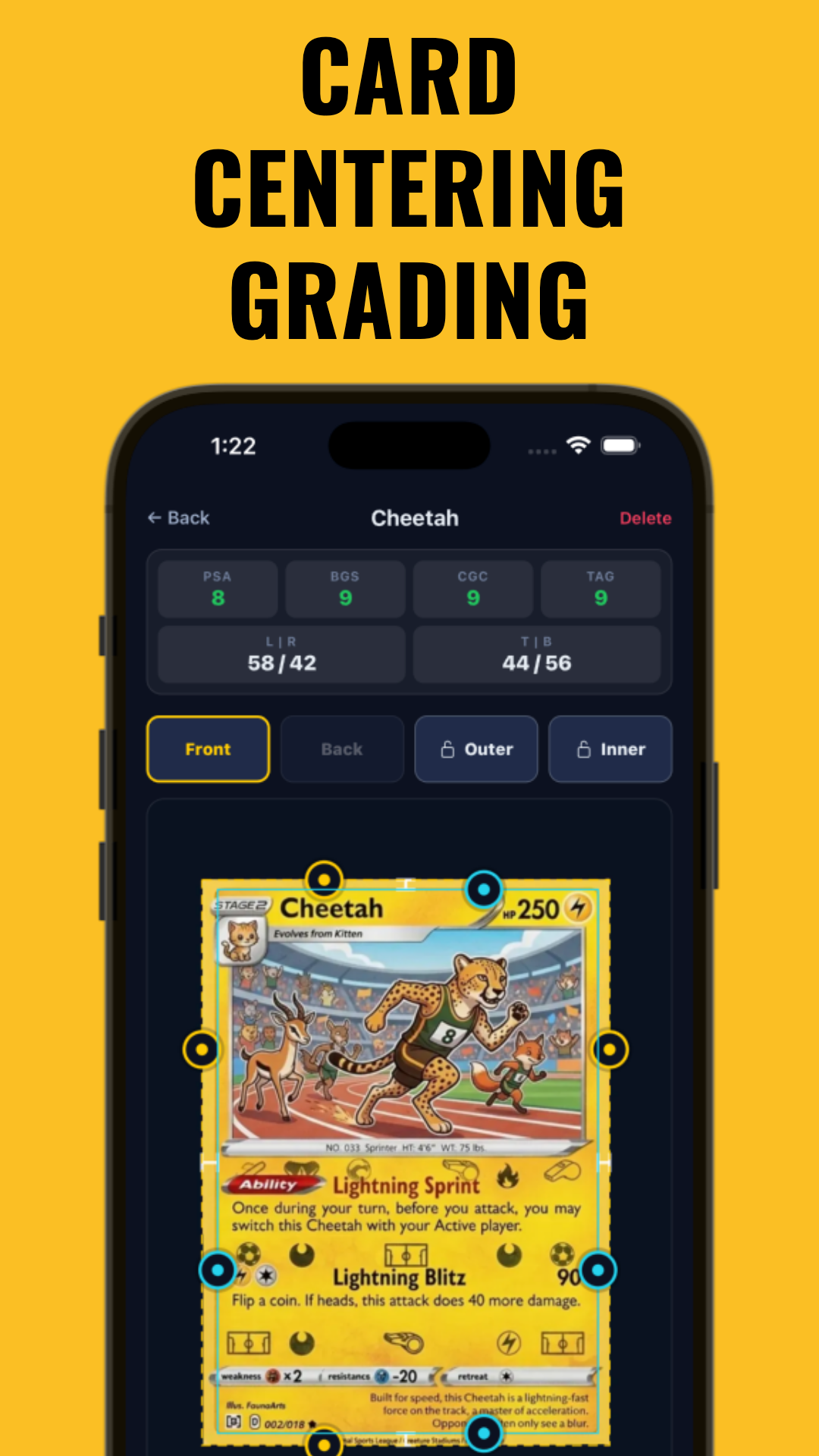
Using Midpoint before submission lets you measure centering down to the millimeter and get instant AI grading estimates, helping you decide if chasing a PSA 10 premium is likely worth the investment. For more on protecting your vintage cards, see How to Store Valuable Cards.
FAQ
What is the value difference between a 1948 Bowman PSA 9 and PSA 10?
The value difference varies by card but can range from about 5x to over 11x. For example, Stan Musial #220 shows roughly an 11x difference, with PSA 9 at $4,000 and PSA 10 at $45,000 as of 2026-09-02.
Which 1948 Bowman cards have PSA 10 examples, and how much have they sold for?
Cards like Stan Musial #220, Yogi Berra #240, Warren Spahn #204, Kenny Washington #175 (football), and George Mikan #138 (basketball) have PSA 10 examples. Their sales have ranged widely, from several thousand dollars up to around $45,000 depending on the player and sport.
How rare is a PSA 10 1948 Bowman card compared with a PSA 9?
PSA 10 cards are very rare, often with single-digit populations, while PSA 9s are much more common. For instance, Stan Musial #220 has 7 PSA 10s versus 150 PSA 9s.
Are 1948 Bowman PSA 10 prices listed in PSA’s price guide?
Many 1948 Bowman PSA 10 prices are not officially listed in PSA’s price guide due to scarcity. Collectors often rely on rare auction comps and tools like Midpoint to estimate fair PSA 10 values.
Which 1948 Bowman rookie cards carry the biggest PSA 9 to PSA 10 premium?
Stan Musial #220 and Yogi Berra #240 rookie cards tend to carry some of the largest premiums, exceeding 10 times the PSA 9 value in some cases.
Does the PSA 9 vs PSA 10 gap differ between 1948 Bowman baseball, football, and basketball?
Yes. Baseball cards generally have the largest PSA 10 premiums (around 8x average), while football and basketball cards have smaller premiums (around 5-7x), reflecting demand and population differences.
Free to start
Try the Midpoint app
Grade any card from a photo, see its raw and PSA 10 value, and track what your collection is worth — free.
Get it on iPhoneGet it on Android