1951 Bowman Baseball Cards Value: Complete Guide & Price Insights
Discover 1951 Bowman baseball cards value, top rookies, grading impact, and how to maximize returns with expert tips and a detailed price guide.

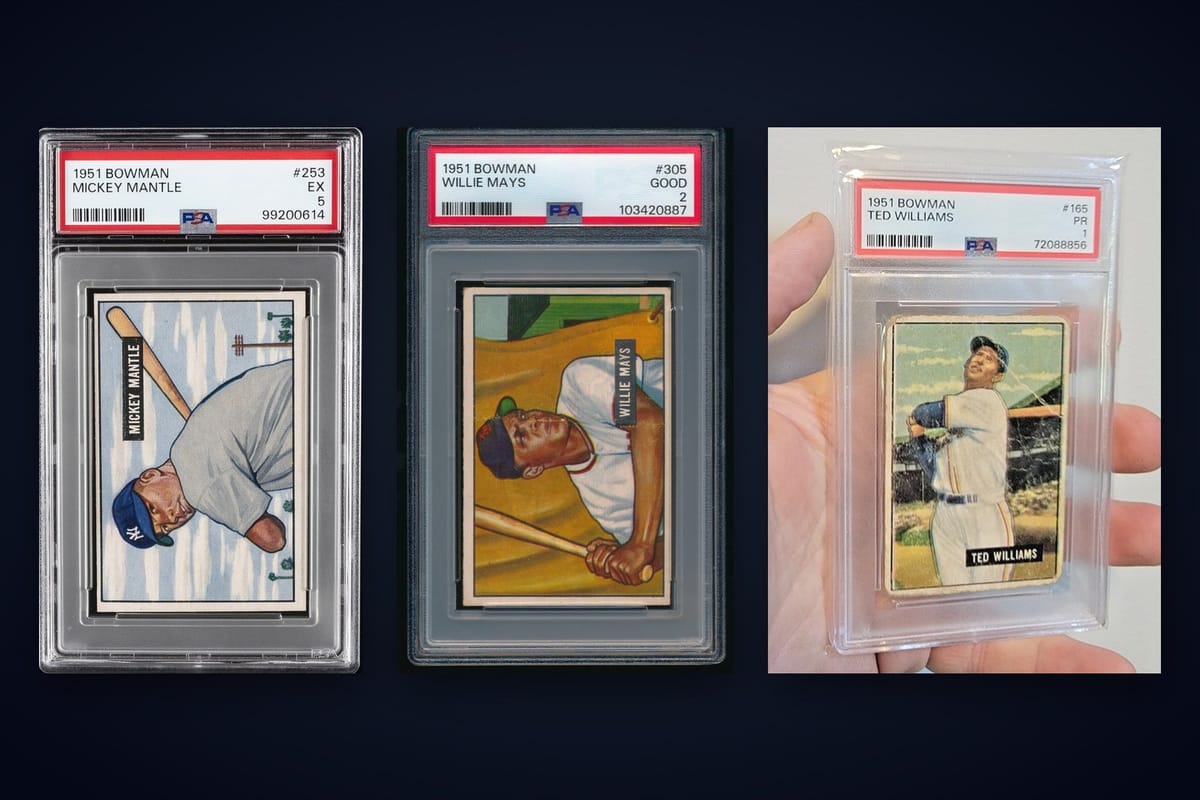
Estimated reading time: 18 min
Key Takeaways
- The 1951 Bowman baseball cards value varies widely based on player, card number, and condition, with some cards commanding very high prices in top grades.
- Key rookie cards like Mickey Mantle #253 and Willie Mays #305 are among the most sought-after and drive the set's highest prices, especially in high PSA grades.
- Grading significantly affects value; PSA 10 grades can be worth substantially more than PSA 8 or 9, highlighting the importance of condition.
- Complete set values depend heavily on condition and completeness, with high-grade copies being rare and commanding premium prices.
- Using tools like Midpoint’s AI grading and centering measurement can help optimize submission strategy, potentially reducing grading fees and maximizing returns.
Card values — live data from Midpoint's card database, as of 2026-09-04. Prices move; Midpoint refreshes these daily.
| Card | Raw | PSA 10 | Gem premium | |
|---|---|---|---|---|
 |
Mickey Mantle #253 1951 Bowman |
$8,800 | $2,199,268 | 249.9× |
 |
Willie Mays #305 1951 Bowman |
$2,607 | $657,780 | 252.3× |
 |
Ted Williams #165 1951 Bowman |
$217.65 | $54,330 | 249.6× |
 |
Ed Whitey Ford #1 1951 Bowman |
$112.88 | $48,430 | 429× |
 |
Larry Yogi Berra #2 1951 Bowman |
$123.13 | $39,914 | 324.2× |
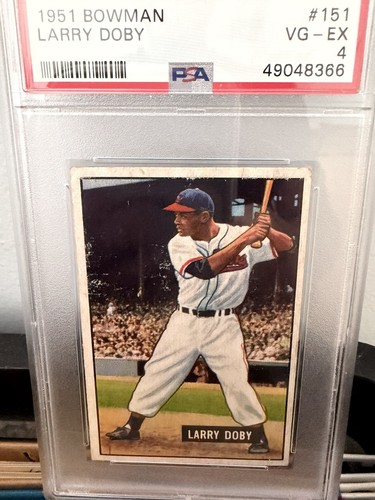 |
Larry Doby #151 1951 Bowman |
$98.53 | $24,284 | 246.5× |
 |
Warren Spahn #134 1951 Bowman |
$96.50 | $24,022 | 248.9× |
 |
Monte Irvin #198 1951 Bowman |
$90.00 | $22,516 | 250.2× |
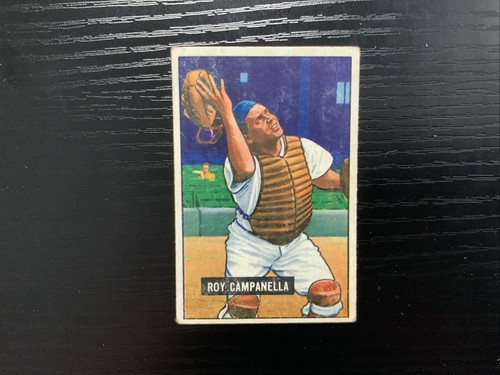 |
Roy Campanella #31 1951 Bowman |
$79.25 | $19,743 | 249.1× |
 |
Duke Snider #32 1951 Bowman |
$65.10 | $17,311 | 265.9× |
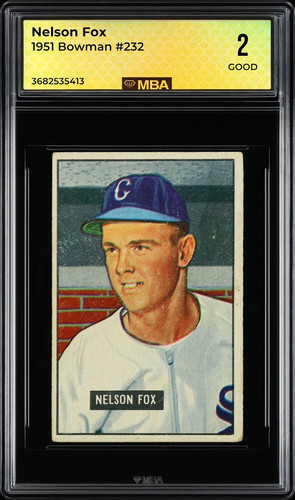 |
Nelson Fox #232 1951 Bowman |
$69.99 | $17,029 | 243.3× |
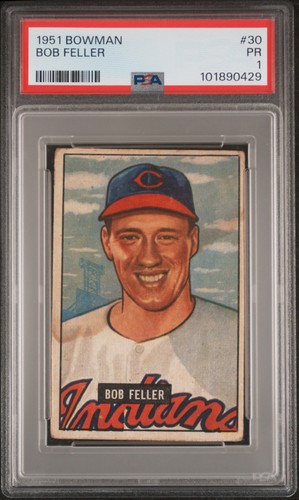 |
Bob Feller #30 1951 Bowman |
$74.99 | $16,076 | 214.4× |
Look up any card's current raw and graded value in Midpoint — and get an estimated grade before you pay to submit.
Table of Contents
- Section 1: Understanding the 1951 Bowman Set and Its Value
- Section 2: Most Valuable 1951 Bowman Cards and Key Rookies
- Section 3: The Impact of Grading and Condition on Card Value
- Section 4: Price Guide Insights and Recent Auction Comparisons
- Section 5: Identifying Cards Worth Grading
- Section 6: Tips for Collectors and Using Digital Grading Tools
- Conclusion
- FAQ
Section 1: Understanding the 1951 Bowman Set and Its Value
Overview of the 1951 Bowman Baseball Card Set
The 1951 Bowman baseball card set is a foundational set for vintage sports card collectors, representing a key era in baseball history. Produced by Bowman Gum, the set consists of 252 cards that highlight a wide range of players, from established stars and Hall of Famers to promising rookies. The set's appeal lies in its vivid color photography, clean and simple design, and the historic significance of the included rookie cards.
Unlike the more famous 1952 Topps set, the 1951 Bowman set has a distinctive style with bright, saturated colors and a straightforward layout that collectors appreciate. The set captures a snapshot of baseball’s golden era with legends like Mickey Mantle, Willie Mays, and Whitey Ford, among others.
What Drives the 1951 Bowman Baseball Cards Value?
The value of 1951 Bowman cards is influenced by multiple interrelated factors, including:
- Player Popularity and Rarity: Cards featuring iconic players—especially their rookie cards—tend to command the highest prices. Mickey Mantle’s and Willie Mays’ rookie cards are prime examples, with their popularity fueling strong demand.
- Card Condition: Condition plays a pivotal role. Cards with sharp corners, centered images, clean surfaces, and minimal wear achieve higher grades and consequently higher prices. The increase in value from PSA 8 to PSA 10 can be significant.
- Scarcity of High-Grade Copies: The 1951 Bowman set is known for its scarcity in top condition, primarily due to the era’s printing and distribution methods that often resulted in off-centering and surface issues. Cards that survive in PSA 9 or 10 condition are rare, driving premiums.
- Complete Set vs. Individual Cards: While individual star cards can fetch impressive sums, complete sets—especially those that are high-grade and complete—are coveted by serious collectors and investors. High-grade complete sets can command prices well above average market levels, reflecting both rarity and demand.
- Print Variations and High-Number Cards: The set is divided into low-numbered (1-200) and high-numbered (201-252) cards, with the latter generally being scarcer. The high-number cards include the famous Mickey Mantle #253, which is often considered the set’s centerpiece and has a higher value due to its scarcity.
Common Versus High-Number Cards
The 1951 Bowman set’s division into low- and high-number cards significantly impacts collectibility and value. Low-number cards are more common and generally easier to find in solid condition, whereas high-number cards—especially those above #200—are considerably rarer. For example, while many commons from 1 to 200 may be available in PSA 5-7 grades, high-number cards like Mantle’s #253 or Mays’ #305 are often found only in lower grades or raw condition.
This distinction is important for collectors and investors aiming to build a valuable collection. Understanding the distribution and rarity nuances helps prioritize acquisition and grading strategies.
Midpoint’s extensive and continuously updated price guide is a useful resource, reflecting market trends and offering detailed valuation insights as of 2026-09-04.
Section 2: Most Valuable 1951 Bowman Cards and Key Rookies
Top Rookie Cards Driving the Set’s Value
- Mickey Mantle #253: The star of the 1951 Bowman set, Mantle’s high-number rookie card is a centerpiece for vintage collectors and investors alike. PSA 10 graded copies have been reported to sell for very high prices, with recent sales in the high five-figure to six-figure range indicating strong market demand. Mid-grade PSA 8 or 9 cards typically trade for substantial amounts, showing the value increase tied to grading.
- Willie Mays #305: Another legendary rookie card, Mays’ #305 is slightly less common than Mantle’s but commands robust prices. PSA 10 copies have fetched significant sums at auction, while raw cards vary widely depending on condition and centering.
- Whitey Ford #1 and Yogi Berra #2: These Hall of Famers' cards are also prized. Ford’s card #1 is notable as a coveted set opener, with PSA 10 examples often selling for notable amounts. Yogi Berra #2, while slightly more common, remains a key card with values increasing with grade.
Other High-Value Hall of Famers and Stars
Beyond rookies, the 1951 Bowman set features other Hall of Famers whose cards hold significant value. Notables include:
- Ted Williams (#209): Considered one of baseball’s greatest hitters, Williams’ card tends to command prices in the thousands of dollars, especially in PSA 9 or 10 grades. PSA 9 cards can reach several thousand dollars, while PSA 10 can exceed that.
- Roy Campanella (#89): A key Dodger catcher, Campanella’s card is sought after in mid-to-high grades, with PSA 9 copies valued in the low thousands.
- Duke Snider (#217), Pee Wee Reese (#78), and Nellie Fox (#117): These stars hold solid value, often ranging from several hundred dollars for raw or lower-grade copies to higher amounts for high-grade versions.
Commons Vs. Stars Vs. High-Number Commons Pricing
The bulk of the set consists of commons, which generally carry modest values in raw condition—often under $10. However, some commons can command higher prices if found in exceptional condition or high-grade submissions. For example, a high-grade common card in PSA 9 or 10 can sometimes fetch higher amounts, especially if the player has a strong fan base.
In contrast, star cards and high-number cards have much higher values. For instance, a Ted Williams card in PSA 10 can be worth thousands, while a high-grade Mickey Mantle #253 can reach six figures. This disparity underscores the importance of identifying and prioritizing cards with high intrinsic value and grading potential.
Section 3: The Impact of Grading and Condition on Card Value
Why Grading Matters for 1951 Bowman Cards
Grading serves as an impartial, expert evaluation of a card’s condition, providing collectors and investors confidence in their purchases. For vintage cards like those in the 1951 Bowman set, grading is especially important because of the condition sensitivity and rarity of high-grade examples.
The leading grading companies include PSA, BGS (Beckett), CGC, and TAG Grading. While each uses slightly different standards and grading scales, PSA is widely regarded as the industry benchmark for vintage baseball cards.
Condition Sensitivity and Grade Value Multipliers
The 1951 Bowman set is highly condition sensitive. The difference between a PSA 7 and PSA 8 can mean thousands of dollars in value, particularly for key rookie cards. More dramatically, the jump from PSA 8 to PSA 9 or PSA 10 can multiply a card’s value by several times.
For example, a Mickey Mantle #253 card in PSA 8 might sell for tens of thousands of dollars, whereas a PSA 9 copy could command significantly more, and a PSA 10 copy might reach very high prices. This increase underscores why collectors invest significant effort in identifying and submitting cards capable of achieving the highest grades.
Centering and Its Role in Grading
Centering is one of the most critical grading factors for 1951 Bowman cards. Due to printing technology of the era, many cards exhibit off-center images, sometimes exceeding the grading threshold for top grades. For instance, PSA guidelines typically require centering to be approximately 60/40 or better for the highest grades.
Off-centering can be a primary reason a card does not receive a PSA 10 grade, even if corners and surfaces are near-perfect. As such, collectors must carefully evaluate centering before submission.
This is where Midpoint’s AI-powered centering measurement tool can provide an advantage. By precisely measuring the centering to the millimeter, collectors can estimate whether their card meets the stringent requirements for top grades, potentially reducing the risk of costly grading fees on cards unlikely to achieve premium grades.
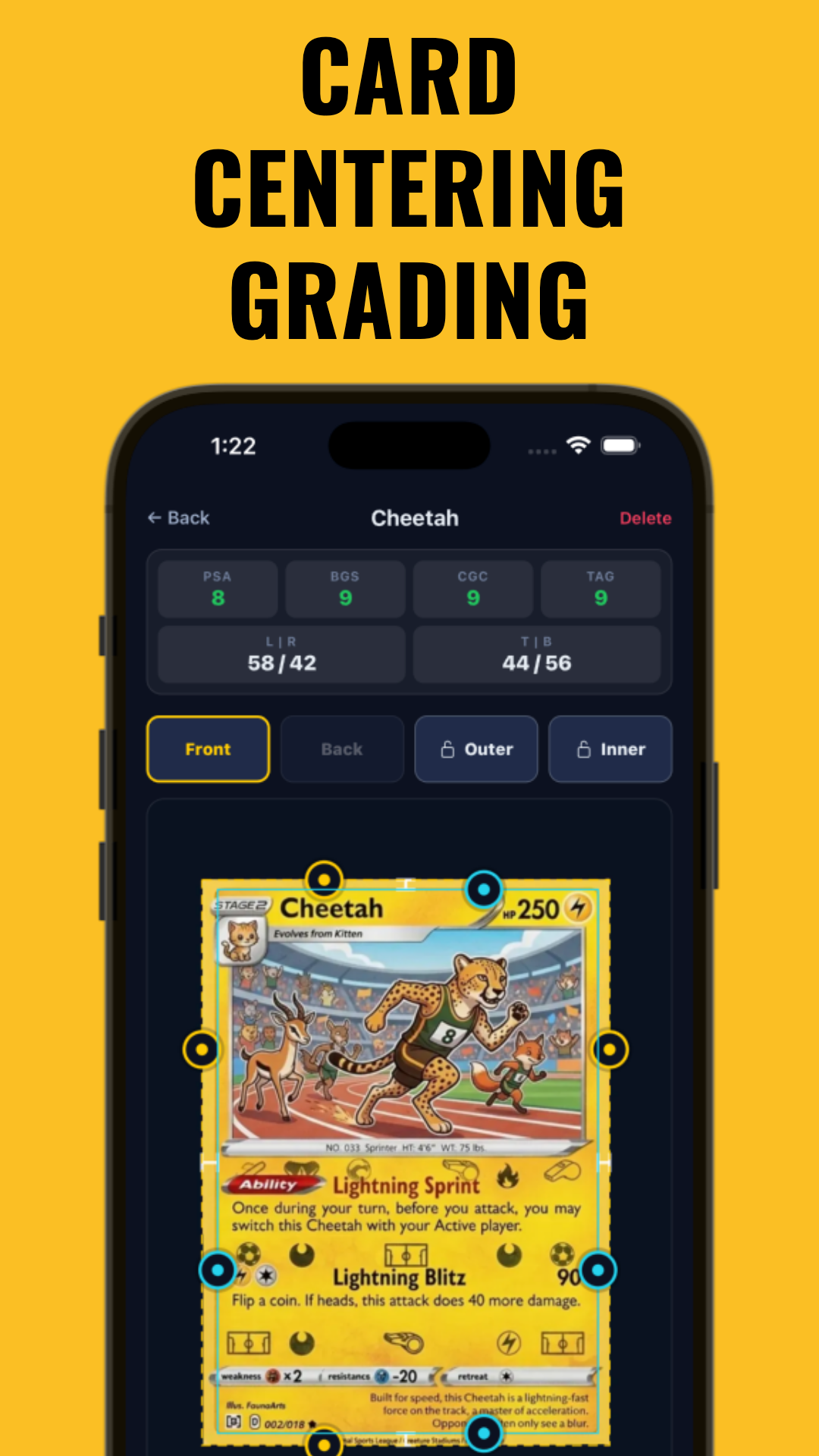
In addition to centering, Midpoint’s AI evaluates corners, edges, and surface conditions, offering an estimate of potential PSA, BGS, CGC, and TAG grades. This assessment can help collectors make informed submission decisions, focusing on cards with the best chance of high grades and maximizing investment returns.
Section 4: Price Guide Insights and Recent Auction Comparisons
Current Market Prices as of 2026-09-04
The latest 1951 Bowman price guide, updated in September 2026, illustrates current market values based on grading and condition. Key pricing benchmarks include:
- Mickey Mantle #253: Raw copies in poor condition may sell for lower amounts depending on defects, while PSA 10 cards command prices in the high five-figure to six-figure range. Mid-grade PSA 8 and 9 copies range between substantial amounts.
- Willie Mays #305: Raw cards typically fetch lower prices, but PSA 10 graded examples approach significant sums, reflecting the card’s popularity and scarcity in top condition.
- Whitey Ford #1: PSA 10 cards commonly trade within notable price ranges, while lower grades drop to several thousand dollars.
- Complete Set: Raw complete sets in average condition generally sell for a few thousand dollars, depending on the inclusion of high-number cards and overall quality. Graded complete sets, especially those graded PSA 8 or higher, can command prices well above average, driven by the rarity of high-grade completeness.
Recent Auction Examples
Recent auction sales support these price guide figures. For example, a PSA 9 Mickey Mantle #253 sold for a significant amount in a 2026 major auction, marking appreciation over previous years. Similarly, a PSA 10 Willie Mays #305 recently sold for a high price at auction.
Complete sets graded PSA 8 or higher have appeared at auctions with final bids exceeding six figures, reflecting collector demand for pristine, comprehensive collections.
Scarcity and Population Reports
Population reports from grading companies reveal the rarity of top-grade 1951 Bowman cards. PSA’s database shows relatively few PSA 10 copies exist for many key cards, including Mantle #253 and Mays #305. PSA 9 copies are more numerous but still scarce relative to raw population.
This scarcity underpins the premium prices and highlights the importance of pre-grading tools like Midpoint. By enabling collectors to identify cards with top-grade potential, these tools help avoid unnecessary grading submissions and focus resources on high-value candidates.
Section 5: Identifying Cards Worth Grading
Which 1951 Bowman Cards Are Worth Grading?
Given the costs associated with professional grading—typically ranging from $20 to over $100 per card depending on declared value and turnaround time—collectors should be selective in choosing cards for submission. Cards generally worth grading include:
- Key Rookies and Hall of Famers: Cards of Mickey Mantle, Willie Mays, Whitey Ford, Yogi Berra, and other significant players offer the greatest potential return on investment.
- Cards with Well-Preserved Condition: Sharp corners, vibrant colors, clean surfaces free from creases, stains, or print defects, and good centering are important for high grades.
- Cards With Potential for PSA 8 or Higher: Cards unlikely to achieve PSA 8 or above often see diminished value even after grading, making submission less cost-effective.
- High-Number Cards: Due to their scarcity, high-number cards, especially those with good centering and surface quality, can be valuable candidates.
Using Midpoint to Pre-Grade Cards
Midpoint’s AI-driven grading estimates assist collectors in making informed submission decisions. By analyzing centering to the millimeter, evaluating edges, corners, and surfaces, and comparing against grading standards, Midpoint provides an estimate of the grade a card is likely to receive.
This technology can reduce the financial risk of submitting cards that may receive low grades and thus command lower market prices. For example, a card estimated to grade PSA 7 or below might be better held or traded raw, while those with PSA 8+ potential are prime candidates for submission.
Spotting Reprints and Fakes
The vintage card market occasionally faces challenges from reprints, counterfeits, and altered cards. Collectors should be vigilant in verifying authenticity. Genuine 1951 Bowman cards exhibit specific printing characteristics, including color saturation, paper texture, and printing dot patterns consistent with early 1950s techniques.
Midpoint’s database and grading guides provide useful references and image comparisons to help identify authentic cards and avoid costly mistakes. Additionally, careful examination under magnification and comparison to verified examples can further safeguard against fakes.
Section 6: Tips for Collectors and Using Digital Grading Tools
Maximizing Your 1951 Bowman Collection Value
- Proper Storage: Use archival-quality sleeves, top loaders, and storage boxes to protect cards from environmental damage such as humidity, light, and physical wear. Consult this ultimate collector's guide for detailed best practices.
- Selective Grading: Submit only cards with strong pre-grade estimates and potential for high grades to avoid unnecessary grading fees and maximize return on investment.
- Portfolio Tracking: Use digital tools like Midpoint’s collection tracker to monitor your collection’s evolving market value. This helps identify trends, insurance needs, and strategic selling opportunities.
- Stay Informed: Regularly consult updated price guides and auction results to understand market fluctuations and adjust your collecting or selling strategies accordingly.
Using Midpoint’s Features to Your Advantage
Midpoint offers a comprehensive suite designed specifically for trading card collectors and investors:
- AI Digital Grading: Obtain instant, reliable estimates of PSA, BGS, CGC, and TAG grades using AI analysis of card images, reducing guesswork and grading costs.
- Precise Centering Measurement: Accurately measure card centering to the millimeter, a critical factor for vintage cards like 1951 Bowman.
- Card Lookup: Access raw and graded market values for over 250,000 cards, including detailed data on 1951 Bowman, enabling informed buying and selling decisions.
- Portfolio Tracking: Monitor your collection’s total market value, individual card prices, and grade distributions over time.
By leveraging these features, collectors can make smarter decisions, minimize grading expenses, and maximize the financial and sentimental value of their collections.
Understanding Grading Scale Differences
While PSA is the market leader for vintage baseball cards, it’s important to recognize that different grading companies have subtle variations in their grading standards. For example:
- PSA: Known for strict centering requirements and consistent grading, PSA grades are often considered the market benchmark.
- BGS (Beckett): Features subgrades for centering, corners, edges, and surface, allowing collectors to see detailed condition aspects; BGS 9.5 or 10 grades are highly prized but sometimes fetch slightly different prices than PSA.
- CGC: Originally focused on comics, CGC has expanded into sports cards with a similar subgrade system and competitive grading standards.
- TAG Grading: A newer entrant offering digital grading with AI assistance, rapidly gaining adoption.
Learning about these differences can help collectors decide which grading company best aligns with their collecting goals. For a detailed comparison, refer to this detailed guide.
Conclusion
The value of 1951 Bowman baseball cards is influenced by player significance, card condition, and professional grading. Key rookie cards such as Mickey Mantle #253 and Willie Mays #305 are among the most valuable, with PSA 10 graded examples commanding very high prices. Understanding the condition sensitivity of the set—particularly the impact of centering and surface quality—is important for collectors and investors aiming to maximize returns.
Employing advanced tools like Midpoint for AI-powered grading estimates and precise centering measurements can enhance submission strategies, potentially reducing grading fees and improving the likelihood of obtaining premium grades. Additionally, carefully selecting cards worth grading, staying updated on market trends and auction results, and properly storing cards are vital practices for preserving and increasing collection value.
Whether collecting individual stars or assembling complete sets, a well-informed approach supported by technology and market insight can help collectors navigate the 1951 Bowman card market effectively.
FAQ
Q: How much is a 1951 Bowman baseball card worth?
A: Values vary widely depending on the player and condition. Common cards may be worth a few dollars raw, while key rookies like Mickey Mantle #253 in high-grade condition can be worth very high amounts as of 2026-09-04. Condition and grading heavily influence values.
Q: What is the value of a 1951 Bowman Mickey Mantle rookie card?
A: The raw value ranges widely depending on condition and centering. Mid-grade PSA 8-9 copies typically sell for substantial amounts, reflecting strong demand for this iconic rookie.
Q: What is the value of a 1951 Bowman Willie Mays rookie card?
A: Willie Mays #305 can fetch high prices in PSA 10 condition, with raw copies valued significantly lower depending on wear, centering, and surface quality.
Q: How much is a complete 1951 Bowman baseball set worth?
A: Raw complete sets generally sell for a few thousand dollars, but high-grade graded sets (PSA 8 or above) can command prices well above average due to rarity and collector demand.
Q: Which 1951 Bowman cards are the most valuable?
A: Key rookies like Mickey Mantle #253, Willie Mays #305, Whitey Ford #1, and Yogi Berra #2 are among the most valuable, along with Hall of Famers such as Ted Williams and Roy Campanella.
Q: How do card condition and grading affect 1951 Bowman values?
A: Condition and grading are crucial. PSA 10 cards command the highest premiums, with value often increasing significantly between grades 8, 9, and 10. Centering, corners, edges, and surface quality all impact the final grade and market price.
Free to start
Try the Midpoint app
Grade any card from a photo, see its raw and PSA 10 value, and track what your collection is worth — free.
Get it on iPhoneGet it on Android