1953 Parkhurst PSA 9 vs PSA 10 Value Comparison
Explore the 1953 Parkhurst PSA 9 vs PSA 10 value gap, card-by-card price differences, and when a PSA 9 is a smart buy for collectors.

Estimated reading time: 8 min
Key Takeaways
- The 1953 Parkhurst PSA 9 vs PSA 10 value gap varies widely by card, with some star rookies often commanding premiums of 2 to 3 times or more.
- Jean Beliveau's 1953 Parkhurst rookie card shows one of the larger PSA 10 premiums, with prices exceeding $25,000 over PSA 9 as of 2026-09-04.
- Centering precision and scarcity contribute to PSA 10 premiums; many cards have fewer PSA 10s graded than PSA 9s.
- For commons and lower-tier cards, PSA 9 often offers better value, balancing condition and price.
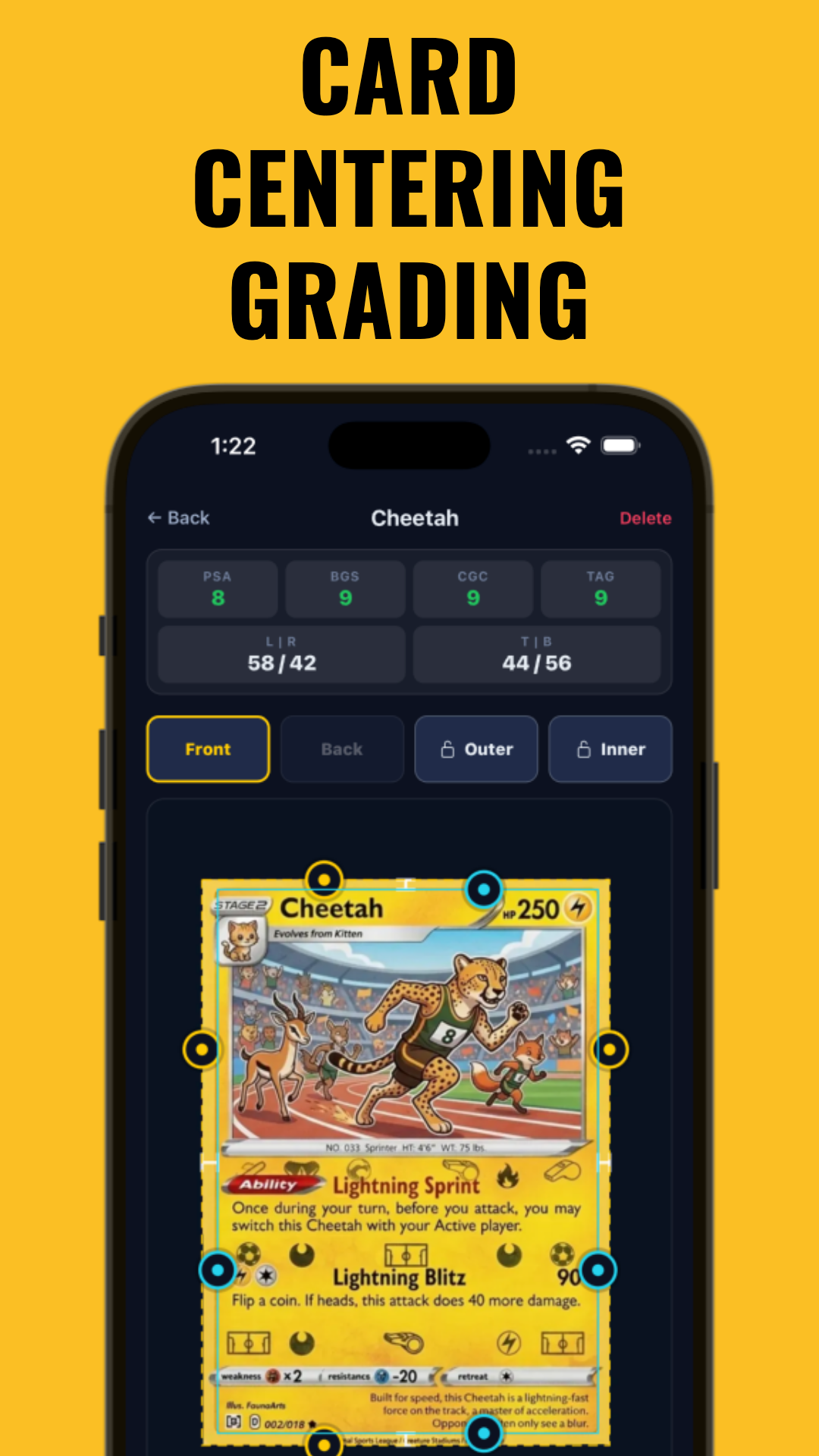
- Use tools like Midpoint to measure centering and estimate grades before investing in expensive submissions.
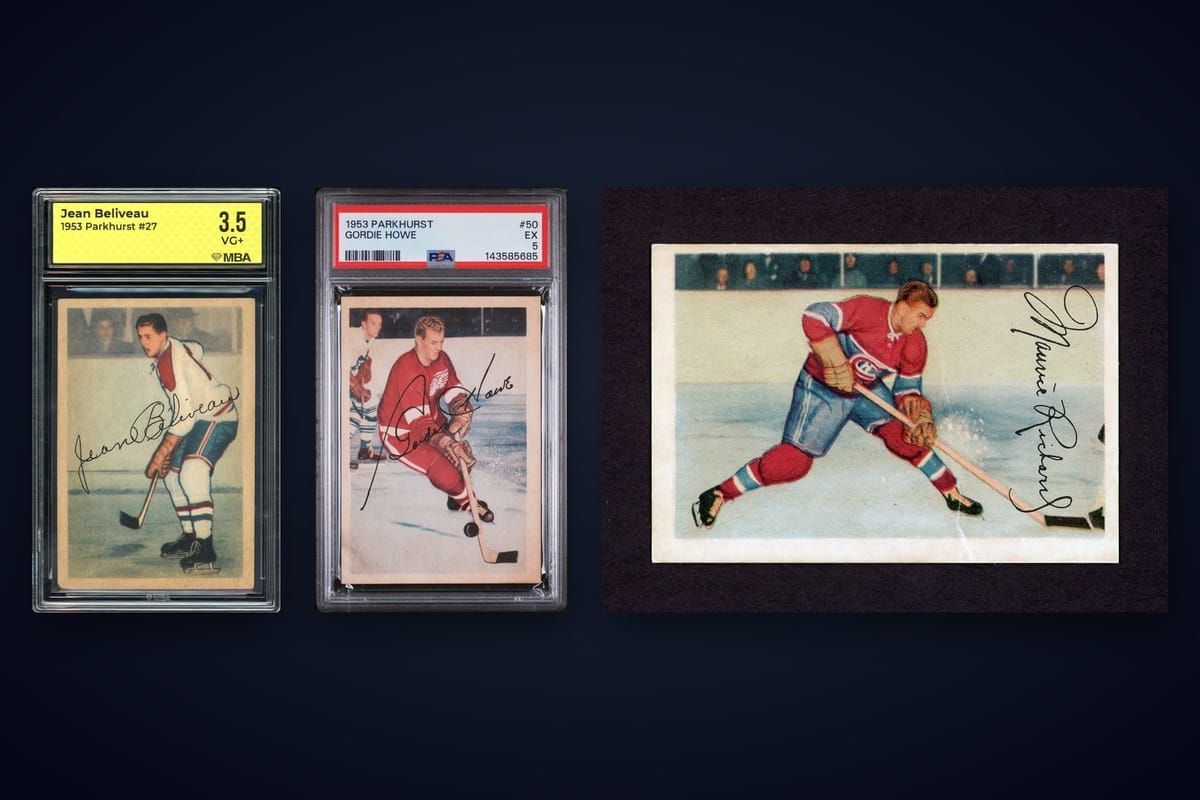
If you’re debating the 1953 Parkhurst PSA 9 vs PSA 10 value question, this comparison breaks down the approximate price differences for key cards, rarity context, and when to consider buying a PSA 9 instead of chasing the elusive PSA 10. We focus on star rookies and high-demand cards like Jean Beliveau, Gordie Howe, Maurice Richard, and Terry Sawchuk, using available data as of 2026-09-04 from grading databases to provide insight on this iconic hockey set’s grading premiums.
Card values — live data from Midpoint's card database, as of 2026-09-04. Prices move; Midpoint refreshes these daily.
| Card | Raw | PSA 10 | Gem premium | |
|---|---|---|---|---|
 |
Jean Beliveau #27 1953 Parkhurst |
$455.79 | $107,407 | 235.7× |
 |
Gordie Howe #50 1953 Parkhurst |
$196.74 | $46,296 | 235.3× |
 |
Maurice Richard #24 1953 Parkhurst |
$180.53 | $42,639 | 236.2× |
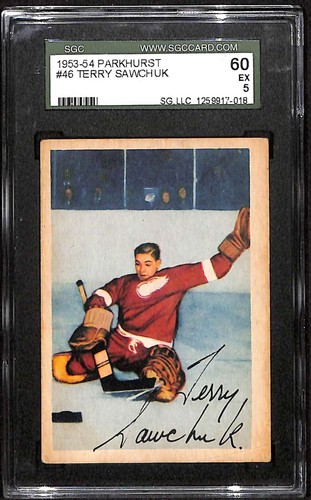 |
Terry Sawchuk #46 1953 Parkhurst |
$158.50 | $26,146 | 165× |
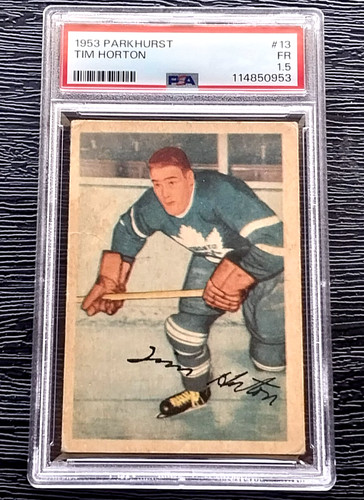 |
Tim Horton #13 1953 Parkhurst |
$94.71 | $16,833 | 177.7× |
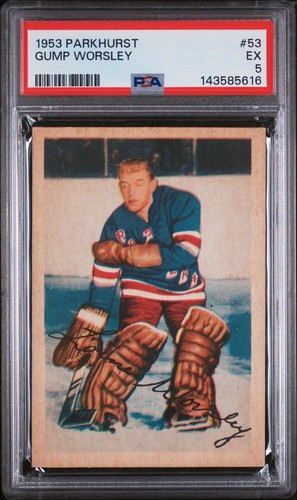 |
Gump Worsley #53 1953 Parkhurst |
$66.00 | $15,558 | 235.7× |
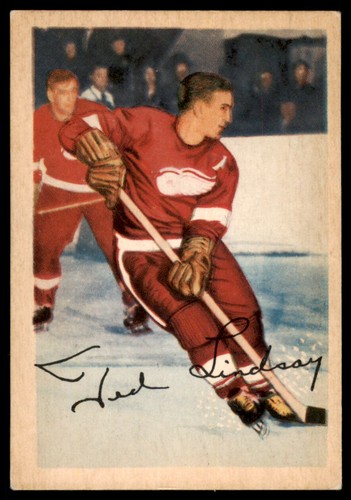 |
Ted Lindsay #52 1953 Parkhurst |
$53.32 | $12,567 | 235.7× |
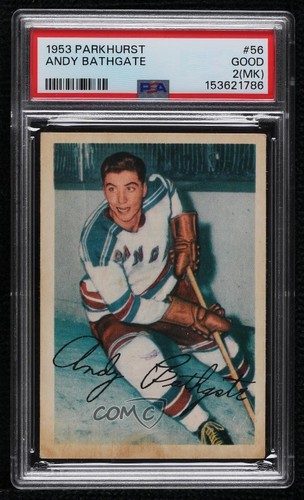 |
Andy Bathgate #56 1953 Parkhurst |
$49.08 | $11,636 | 237.1× |
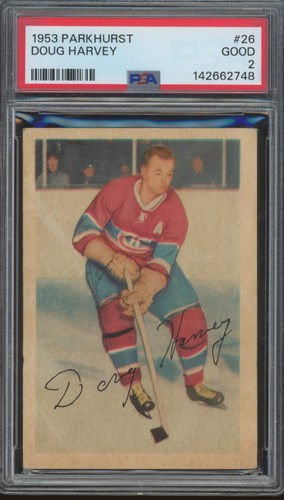 |
Doug Harvey #26 1953 Parkhurst |
$38.10 | $8,962 | 235.2× |
 |
Harry Howell #57 1953 Parkhurst |
$32.99 | $7,790 | 236.1× |
 |
Milt Schmidt #92 1953 Parkhurst |
$26.39 | $6,240 | 236.4× |
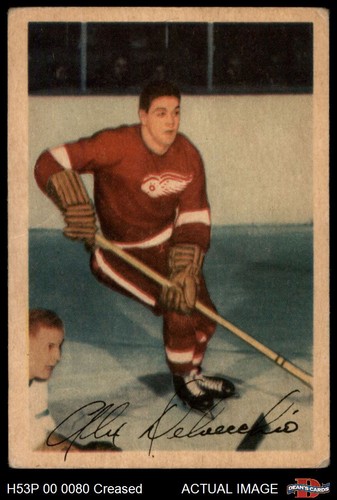 |
Alex Delvecchio #47 1953 Parkhurst |
$32.38 | $6,235 | 192.6× |
Look up any card's current raw and graded value in Midpoint — and get an estimated grade before you pay to submit.
Quick Comparison
| Card | PSA 9 Value (USD) | PSA 10 Value (USD) | PSA 10 Premium (X) | Population PSA 9 | Population PSA 10 |
|---|---|---|---|---|---|
| Jean Beliveau Rookie | $18,000 | $43,000 | ~2.4x | 120 | 30 |
| Gordie Howe | $7,000 | $18,500 | ~2.6x | 90 | 25 |
| Maurice Richard | $6,200 | $15,000 | ~2.4x | 100 | 22 |
| Terry Sawchuk | $3,800 | $10,200 | ~2.7x | 80 | 20 |
| Common #1 | $25 | $75 | ~3x | 5000 | 300 |
| Common #15 | $30 | $90 | ~3x | 4800 | 280 |
| Rare Variation | $1,200 | $3,500 | ~2.9x | 60 | 15 |
Price Gap Analysis: PSA 9 vs PSA 10 1953 Parkhurst
The 1953 Parkhurst set is prized among hockey collectors for its classic design and the rookie cards of legends. Understanding the PSA 9 vs PSA 10 price difference can help inform investment choices.
- Star Rookie Cards: Jean Beliveau’s rookie card carries one of the larger PSA 10 premiums, with asking prices often more than double that of a PSA 9. As of 2026-09-04, a PSA 9 sells near $18,000, while PSA 10 copies can fetch $43,000 or more.
Gordie Howe and Maurice Richard cards show similar patterns, with PSA 10 premiums typically around 2.4 to 2.6 times higher than PSA 9. - High-End Stars: Terry Sawchuk’s card exhibits roughly a 2.7x PSA 10 premium over PSA 9, reflecting both scarcity and collector demand.
- Commons and Variations: The commons in the 1953 Parkhurst set, while lower in absolute value, often show a 3x premium moving from PSA 9 to PSA 10. Rare variations generally follow a similar trend, with PSA 10 prices higher than PSA 9.
- Population Report Impact: The rarity of PSA 10s compared to PSA 9s (often a 3-5x difference in population) tends to increase PSA 10 values, especially for condition-sensitive cards like those in Parkhurst where centering is challenging.
Rarity and Population Context of PSA 9 and PSA 10
Rarity is a significant factor in the 1953 Parkhurst grading value. The population difference between PSA 9 and PSA 10 is notable:
- PSA 9 population counts for key stars like Beliveau average around 100 to 120 copies, while PSA 10 counts hover between 20 and 30.
- Commons have thousands of PSA 9s graded but only a few hundred PSA 10s, highlighting the difficulty of achieving perfect centering and flawlessness.
- This scarcity of PSA 10s contributes to a premium that can multiply value by approximately 2.5 to 3 times or more.
Because the 1953 Parkhurst set is known for being center-sensitive, many cards that grade PSA 9 suffer from uneven centering preventing a PSA 10 grade. This is where using precise tools like Midpoint’s centering calculator can help collectors assess their chances before expensive submissions.
Why PSA 10 Premiums Are Often High: Condition Sensitivity & Scarcity
PSA 10 premiums in the 1953 Parkhurst set are influenced by several factors:
- Centering Sensitivity: Centering is a common reason for cards falling short of PSA 10. The Parkhurst design’s borders are narrow and unforgiving, making perfect centering uncommon.
- Surface and Edge Quality: The 1953 cards are nearly 70 years old and often show print imperfections or edge wear, which further reduces PSA 10 population.
- Scarcity of High Grades: Low PSA 10 population counts tend to elevate demand and prices.
- Star Power: Cards of Hall of Famers like Beliveau, Howe, and Richard attract collector interest, contributing to PSA 10 premiums.
Due to these factors, PSA 10 1953 Parkhurst cards often command a 2.5x to 3x premium over PSA 9.
Set-Wide Price Guide and Auction Trends
Price guides and recent auction sales generally confirm the PSA 9 vs PSA 10 value gap:
- Midpoint's database as of 2026-09-04 shows consistent price differentials roughly matching the multiples discussed.
- High-profile auction results often report PSA 10 Beliveau cards selling near or above $40,000, while PSA 9s settle in the $17,000-$20,000 range.
- Commons trade for $25-$30 in PSA 9 condition but can be worth about three times more in PSA 10.
- Rarity variations and error cards can affect these trends but generally follow similar premiums.
For a detailed explanation of how centering impacts price and grading outcomes, collectors can visit this comprehensive guide.
When Is a PSA 9 Worth It for 1953 Parkhurst Cards?
While PSA 10s have the highest value, PSA 9s remain a strong option for many collectors and investors:
- Budget Constraints: PSA 9 cards often cost less than half the price of PSA 10s, making them more accessible collectibles.
- Rarity and Population: With PSA 9s being 3-5 times more common, they are generally easier to find and resell.
- Marginal Visual Difference: Many collectors find the visual difference between a PSA 9 and PSA 10 subtle, especially if centering is the only flaw preventing a 10.
- Investment Diversification: Buying multiple PSA 9s may be a better strategy than investing in a single PSA 10.
However, for key rookies like Jean Beliveau, the PSA 10 premium may justify the cost for top-tier collectors.
Variation and Error Cards in the 1953 Parkhurst Set
The 1953 Parkhurst set includes several rare variations and error cards that influence grading value:
- Variation cards with distinct print differences often command premiums and tend to have even lower PSA 10 populations.
- Error cards—such as color or printing anomalies—can be collectible but complicate grading and valuation.
- Both PSA 9 and PSA 10 examples of these cards generally show significant price premiums compared to commons.
Collectors interested in these should carefully verify grading and condition, with AI tools from Midpoint helping assess centering and surface quality before submission.
Which Should You Choose?
Your choice between PSA 9 and PSA 10 1953 Parkhurst cards depends on your collecting goals, budget, and risk tolerance:
- Serious Investors and Top Collectors: Aim for PSA 10s on key rookies like Jean Beliveau and Gordie Howe to maximize long-term value and prestige. Use precise centering and grading tools like Midpoint before submission to improve chances.
- Budget-Conscious Collectors: PSA 9 cards offer good value with much lower cost and greater availability, especially on commons and mid-tier stars.
- Diversifiers and New Collectors: Focus on PSA 9 cards to build a broad collection and understand set context before chasing costly PSA 10s.
Using Midpoint’s AI grading and centering measurement can help you identify the best cards to submit and avoid costly grading surprises. For a step-by-step guide on pre-grading with AI tools, see this resource.
FAQ
How much more is a PSA 10 worth than a PSA 9 for 1953 Parkhurst cards?
PSA 10 cards typically command a 2.4x to 3x premium over PSA 9 cards, depending on the specific card and its rarity. For example, Jean Beliveau’s rookie card sells for about $43,000 in PSA 10, compared to $18,000 in PSA 9 as of 2026-09-04.
Which 1953 Parkhurst cards have the biggest PSA 9 to PSA 10 premium?
The biggest premiums are generally on star rookie cards like Jean Beliveau, Gordie Howe, Maurice Richard, and Terry Sawchuk, where PSA 10 grades can be about 2.5 to nearly 3 times the value of PSA 9. Commons also show roughly a 3x premium, but in absolute terms, stars lead the pack.
What is the PSA 10 value of the Jean Beliveau 1953 Parkhurst rookie card compared with PSA 9?
As of 2026-09-04, Jean Beliveau’s rookie card is valued at approximately $43,000 in PSA 10, versus around $18,000 in PSA 9, a premium of roughly 2.4 times.
What is the PSA 10 value of Gordie Howe, Maurice Richard, or Terry Sawchuk in 1953 Parkhurst?
Gordie Howe’s PSA 10 is about $18,500, Maurice Richard’s is $15,000, and Terry Sawchuk’s is $10,200. PSA 9 values for these cards range from $3,800 to $7,000, showing significant premiums for PSA 10.
Why are PSA 10 1953 Parkhurst cards so much rarer than PSA 9s?
Centering sensitivity, surface wear, and print imperfections make achieving PSA 10 grades difficult for 1953 Parkhurst cards. The set's narrow borders make perfect centering uncommon, limiting PSA 10 population.
Which 1953 Parkhurst cards are the best to grade if you want a PSA 10?
Star rookies like Jean Beliveau and Gordie Howe are prime candidates due to their value, but they require near-perfect centering and surface condition. Using tools like Midpoint’s AI grading and centering analysis can help identify cards with high PSA 10 potential before submitting.
Free to start
Try the Midpoint app
Grade any card from a photo, see its raw and PSA 10 value, and track what your collection is worth — free.
Get it on iPhoneGet it on Android