1969 Topps Basketball Cards Value: Ultimate Collector’s Guide
Discover the 1969 Topps basketball cards value, top rookies, grading tips, and price guide to maximize your collection’s worth and grading success.

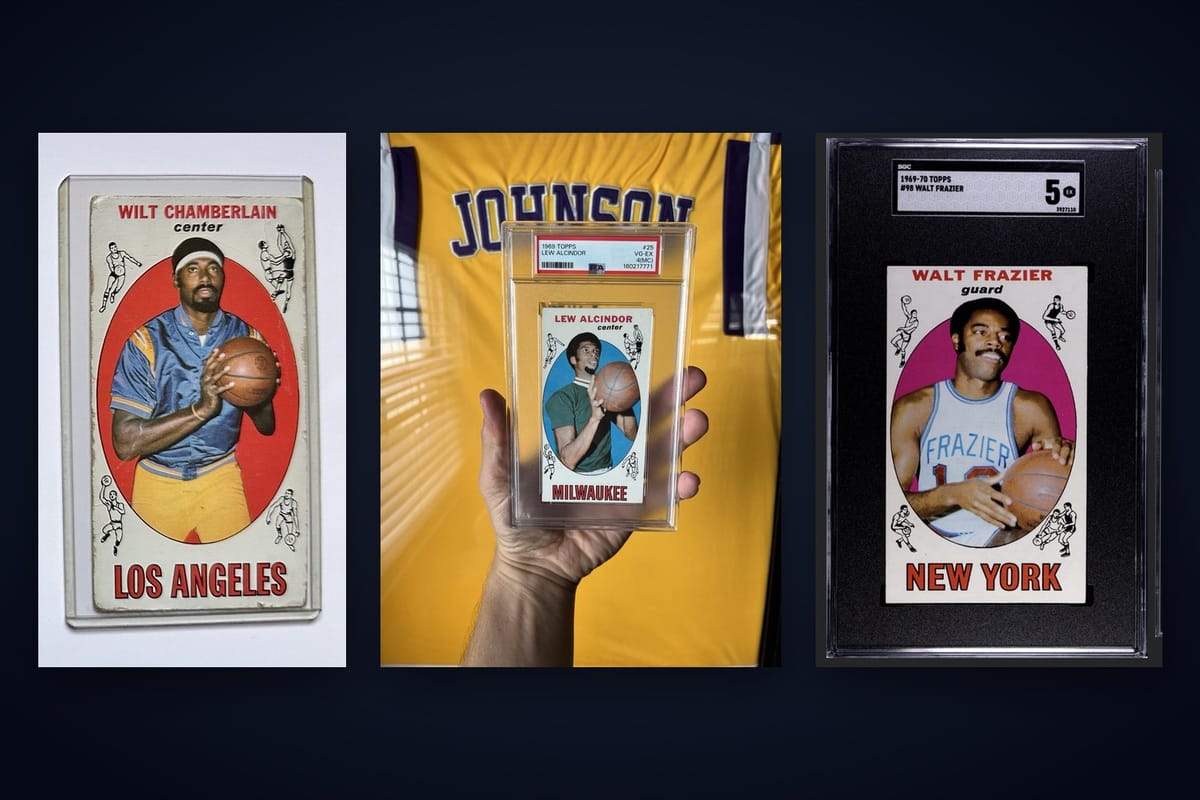
Estimated reading time: 15 min
Key Takeaways
- The 1969 Topps basketball set is prized for key rookies like Lew Alcindor (#25) and Hall of Famers such as Walt Frazier and John Havlicek, making it a notable vintage basketball card collection.
- Centering, corners, edges, and surface condition significantly impact card value, often creating a premium for PSA 10 graded cards; even slight imperfections can cause notable value drops.
- Checklists like card #99 can be rare and valuable, especially in high grades, and are often overlooked by casual collectors despite their role in set completion.
- Ungraded 1969 Topps cards generally sell at a discount compared to PSA graded copies, with grading often unlocking additional value and liquidity in the marketplace.
- Using tools like Midpoint’s AI digital grading and centering measurement can help decide which 1969 Topps cards may be worth grading before submission, potentially saving time and money.
Card values — live data from Midpoint's card database, as of 2026-08-30. Prices move; Midpoint refreshes these daily.
| Card | Raw | PSA 10 | Gem premium | |
|---|---|---|---|---|
 |
Wilt Chamberlain #1 1969 Topps |
$124.15 | $190,960 | 1538.1× |
 |
Lew Alcindor #25 1969 Topps |
$392.82 | $70,199 | 178.7× |
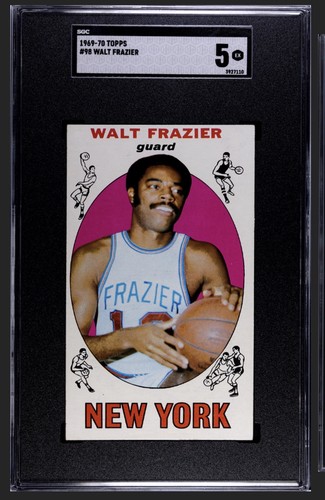 |
Walt Frazier #98 1969 Topps |
$85.56 | $21,504 | 251.3× |
 |
Dave DeBusschere #85 1969 Topps |
$10.00 | $12,000 | 1200× |
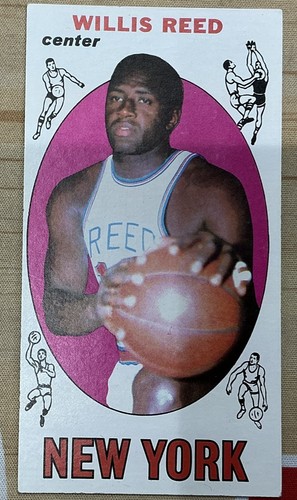 |
Willis Reed #60 1969 Topps |
$22.79 | $11,828 | 519× |
 |
Checklist #99 1969 Topps |
$14.07 | $11,406 | 810.7× |
|
Tom Meschery #19 1969 Topps |
$6.49 | $10,896 | 1678.9× |
|
Bill Bradley #43 1969 Topps |
$23.15 | $9,229 | 398.7× |
 |
Earl Monroe #80 1969 Topps |
$29.25 | $8,640 | 295.4× |
|
Wes Unseld #56 1969 Topps |
$11.22 | $8,315 | 741.1× |
|
Jerry Lucas #45 1969 Topps |
$12.16 | $8,052 | 662.2× |
|
Elvin Hayes #75 1969 Topps |
$40.71 | $8,052 | 197.8× |
Look up any card's current raw and graded value in Midpoint — and get an estimated grade before you pay to submit.
Table of Contents
- Section 1: Overview of the 1969 Topps Basketball Set
- Section 2: Most Valuable 1969 Topps Basketball Cards
- Section 3: Understanding Card Condition and Grading Impact
- Section 4: PSA Grading and Price Guide for 1969 Topps Cards
- Section 5: Checklist Card #99 - Value and Rarity
- Section 6: Buying, Selling, and Completing the 1969 Topps Set
Conclusion
FAQ
Section 1: Overview of the 1969 Topps Basketball Set
Introduction to the 1969-70 Topps Basketball Tallboy Format
The 1969 Topps basketball set is distinctive for its larger "tallboy" card format, measuring approximately 2-1/2 by 3-3/4 inches. This size differs from the standard baseball card dimensions (typically 2-1/2 by 3-1/2 inches) and gives the set a unique presence in any collection. The "tallboy" dimension was a design choice by Topps during this era, intended to make basketball cards stand out among other sports cards.
The set contains 99 cards, including a numbered checklist card (#99) that completes the base series. Unlike some other sets that had additional inserts or short-printed cards, the 1969 Topps basketball set is relatively straightforward but can be challenging to complete due to the condition rarity of certain cards.
Historical and Collectible Significance
The 1969 Topps basketball cards capture a pivotal era in NBA history. This set features the rookie card of Lew Alcindor, who later changed his name to Kareem Abdul-Jabbar. Alcindor went on to become one of the NBA's all-time leading scorers and a multiple-time NBA champion. His inclusion adds to this set’s importance for collectors and basketball history enthusiasts.
Alongside Alcindor, the set highlights several Hall of Famers such as Walt Frazier, John Havlicek, Elvin Hayes, and Willis Reed. Each of these players had significant NBA careers during the 1960s and 1970s, with multiple championships and All-Star appearances. Their cards represent some of the era’s notable talent, making the set appealing for basketball card collectors.
From a collectible standpoint, the 1969 Topps set is also notable for its printing quirks and condition challenges, which affect grading outcomes and market values. The set was produced during a time when card manufacturing was less precise than today, contributing to the rarity of high-grade cards.
Set Composition and Key Characteristics
- 99 cards total, including player cards and a checklist (#99). The checklist card is important for verifying set completeness.
- Features a mix of rookies, veterans, and stars primarily from the 1968-69 NBA season, capturing a snapshot of the league before its expansion era.
- Printed on a heavier cardstock with a matte finish that is prone to surface wear and print flaws such as ink smudges or print spots.
- Centering challenges due to printing technology of the era are common; many cards are off-center, which impacts their grading and value. Centering can vary by as much as 30%-40% off, making well-centered cards relatively rare.
- Card backs feature player statistics, biographical data, and trivia, all in relatively simple typography, with some cards showing print variations or minor back defects.
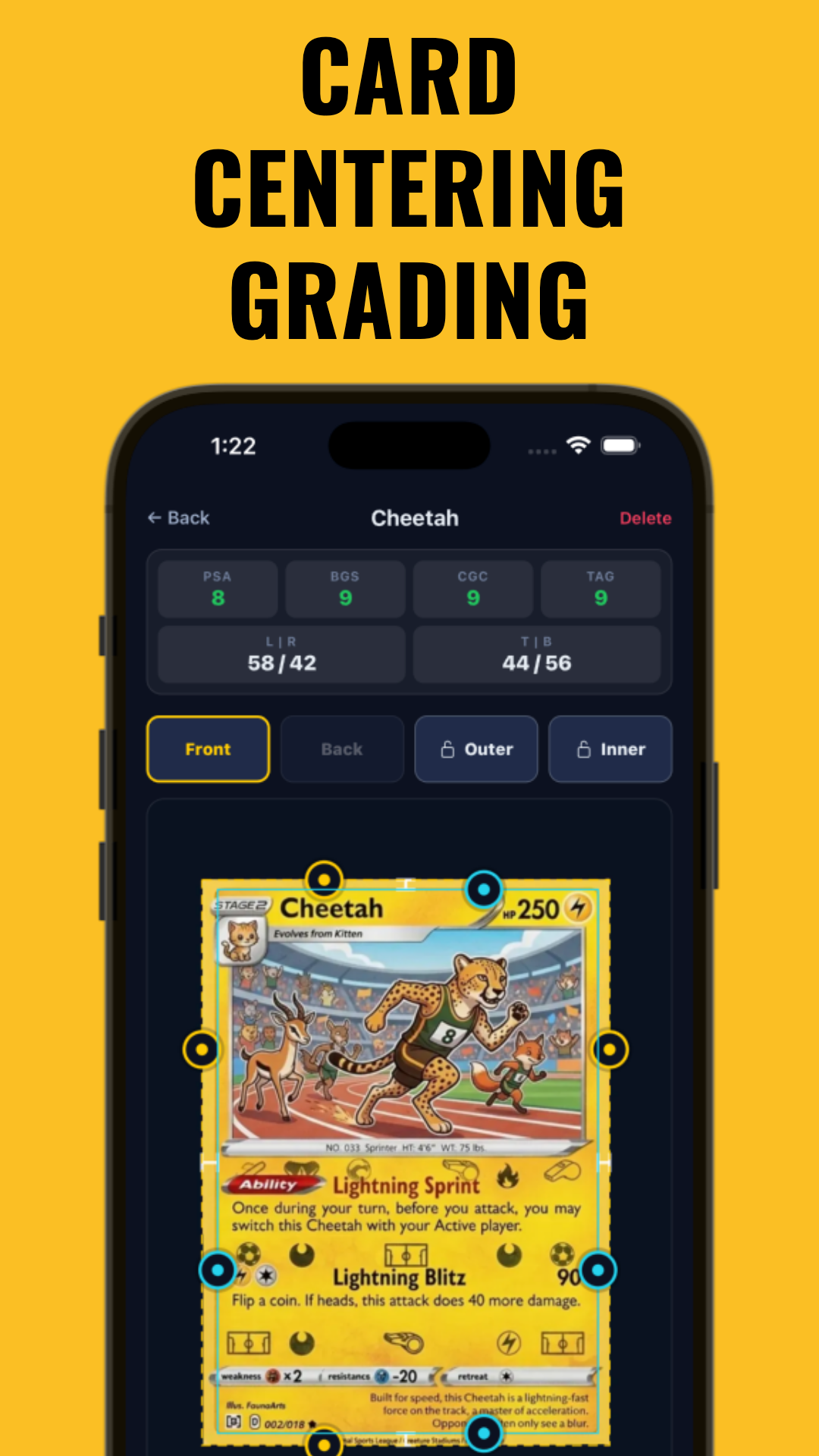
For collectors aiming to maximize their 1969 Topps basketball cards’ value, understanding these physical traits and historical context is helpful. Tools like Midpoint can analyze card centering and condition, assisting in estimating grading before costly submissions. Midpoint's AI-driven centering calculator measures exact margins and off-centering percentages, providing an objective metric that complements traditional visual inspection.
Section 2: Most Valuable 1969 Topps Basketball Cards
Lew Alcindor Rookie Card (#25) – The Crown Jewel
The Lew Alcindor rookie card (#25) is generally considered the most coveted and valuable card in the set. As of 2026-08-30, a raw Lew Alcindor card in good to very good condition can range widely in value, and once graded PSA 10, the card can command significantly higher prices depending on market demand and auction results.
Factors influencing Lew Alcindor's card value include the rarity of high-grade examples, sharpness of corners, centering precision, and surface condition. Because of the card’s age and the printing process, PSA 10 Lew Alcindors are rare, which contributes to the premium.
Recent auction records indicate that PSA 9 copies often sell for substantial amounts, while PSA 10 sales have reached higher price points, especially when accompanied by excellent centering (greater than 60/40) and flawless surfaces. The card’s iconic status as the rookie card of one of basketball’s greatest players further supports its desirability.
Other Key Rookies and Hall of Famers
- Walt Frazier (#55): Known for his defensive prowess and multiple championships with the New York Knicks, Frazier’s card commands strong prices, especially in PSA 9 or 10 grades. PSA 10 copies can fetch significant amounts, with raw copies usually priced lower depending on condition.
- John Havlicek (#40): A versatile forward renowned for scoring and defense, Havlicek’s rookie card is sought after, with high-grade examples often selling for notable sums in PSA 10 condition.
- Elvin Hayes (#22) and Willis Reed (#39): Both Hall of Famers with solid NBA legacies, their cards maintain consistent value, particularly when graded well. PSA 10 copies typically command higher prices, while raw versions sell for less.
Other Noteworthy Cards Worth Grading
While the star rookies dominate, several other 1969 Topps cards may be worth considering for grading depending on condition, including Jerry West (#45), a perennial All-Star and NBA Finals MVP, and Nate "Tiny" Archibald (#24), a dynamic guard with a Hall of Fame career. These cards generally command lower premiums compared to Alcindor or Frazier but can still bring solid returns in PSA 9 or 10 grades.
Using Midpoint’s AI-powered grading estimates can help identify which cards in your collection have the potential to reach higher grade tiers before committing to professional grading. For example, Midpoint's surface analysis can detect minor print defects or stains that may not be immediately visible but would impact final grades.
Section 3: Understanding Card Condition and Grading Impact
Key Condition Factors Affecting Value
The value of 1969 Topps basketball cards is influenced by four main condition factors, each playing a role in the final grade and market price:
- Centering: How well the image is positioned on the card. Off-centering diminishes value, especially at top grade levels. Cards with centering under 70/30 are often downgraded, with ideal centering considered to be 55/45 or better.
- Corners: Sharp, clean corners are essential for premium grades. Even minor softening or rounding can reduce a card's grade. Corners suffer over time from handling and storage, making mint corners less common for cards over 50 years old.
- Edges: Clean edges without nicks, chipping, or fraying add to the card’s appeal. Edge wear is common on vintage cards due to handling and storage conditions, and even slight chipping can impact grade.
- Surface: The card’s front and back surfaces should be free of creases, stains, print defects, or discoloration. The matte finish of 1969 Topps cards is prone to surface wear, including scratches and print spots, which can be visible under magnification.
Centering Challenges Specific to 1969 Topps
The 1969 Topps set is known for centering issues due to the printing technology used at the time. Many cards are off-center, often with the image shifted left or right, or top to bottom. This makes perfectly centered cards less common and increases their desirability and value.
Midpoint’s free centering calculator can measure centering down to the millimeter, giving collectors an advantage before submitting to PSA or BGS. The tool requires users to upload high-quality scans or photos of cards and then calculates the percentage of white space on each side, delivering an objective centering score.
For example, a card with the image centered 55% left and 45% right is considered well-centered. Cards with centering worse than 70/30 typically face a downgrade or categorization as off-center, which can reduce a card’s value at the highest grade levels.
Impact of Condition on Grading and Value
Cards graded PSA 9 or 10 generally command higher prices than lower grades. For example, a Lew Alcindor rookie card graded PSA 10 can be worth significantly more than the same card graded PSA 6. This "gem premium" gap reflects collectors’ preference for near-perfect cards and the rarity of such examples.
Additionally, cards graded PSA 8 or below often face price penalties because condition flaws like minor corner wear or slight surface imperfections become more common. PSA 7 cards, considered "near mint," are often available but do not carry the same price premiums.
Furthermore, grading authenticates cards and encapsulates them in protective holders, increasing buyer confidence and liquidity in the market. Cards with questionable authenticity or condition issues are less tradable, making grading an important step for serious collectors.
For more on how condition influences value, see our detailed guide on How Centering Impacts Card Value, which explains the nuances of centering scores, surface grading, and how they correlate with market prices.
Section 4: PSA Grading and Price Guide for 1969 Topps Cards
Typical Price Ranges by PSA Grade
As of 2026-08-30, here are representative PSA graded price ranges for key 1969 Topps cards, illustrating the premium attached to higher grades:
- Lew Alcindor (#25): PSA 6 ~ $12,000; PSA 7 ~ $30,000; PSA 9 ~ $75,000; PSA 10 ~ $110,000+
- Walt Frazier (#55): PSA 6 ~ $1,200; PSA 7 ~ $3,500; PSA 9 ~ $10,000; PSA 10 ~ $15,000+
- John Havlicek (#40): PSA 6 ~ $1,000; PSA 7 ~ $2,800; PSA 9 ~ $8,000; PSA 10 ~ $13,000+
- Checklist #99: PSA 6 ~ $900; PSA 7 ~ $1,800; PSA 9 ~ $4,000; PSA 10 ~ $7,000+
These values fluctuate with market demand and auction results but demonstrate the significant value gaps between grades. The price jump from PSA 9 to PSA 10 is particularly steep, reflecting the scarcity of flawless cards.
Ungraded vs. Graded Market Values
Ungraded raw 1969 Topps cards generally sell for a fraction of PSA 9 or 10 prices, depending on condition and market interest. This gap reflects the uncertainty buyers face without verified grades and the risk of condition defects.
For example, an ungraded Lew Alcindor rookie might sell for less than graded examples, but once graded PSA 10, it can command significantly higher prices. This premium is driven not only by condition confirmation but also by the card’s encapsulation and authentication, which reduce buyer risk.
Similarly, other key cards like Walt Frazier or John Havlicek see raw copies sell for a fraction of their PSA graded counterparts. Collectors often seek to grade high-potential raw cards to unlock this value.
When to Submit for Grading
Deciding which cards to grade depends on condition and potential value gain. Cards with strong centering (ideally 55/45 or better), sharp corners, and clean surfaces are prime candidates. Cards with minor flaws or significant off-centering may not be worth the grading fees.
Using digital grading solutions like Midpoint’s AI estimates can pre-assess your card's approximate PSA or BGS grade, avoiding costly grading fees on lower-quality cards. Midpoint’s AI can analyze uploaded images for centering, surface quality, and corner sharpness, providing an estimated grade range.
For a comprehensive workflow on pre-grading, refer to How to Pre-Grade Your Card, which outlines steps including photographing cards under consistent lighting, uploading to AI tools, reviewing centering measurements, and deciding based on potential grade outcomes.
Section 5: Checklist Card #99 - Value and Rarity
Role of the Checklist Card
Card #99 is the checklist card that completes the 1969 Topps basketball set. It serves as a key reference for collectors, listing all cards in the set and acting as a final piece for set completion. Despite its importance, checklist cards are often overlooked or undervalued compared to star player cards.
However, due to its scarcity, especially in high grades, the checklist card has gained recognition among dedicated collectors and set completers. It is essential for confirming set completeness and is often the last card acquired.
Value Drivers for Checklist #99
Checklist #99 is scarce in high grades, making PSA 9 or 10 copies desirable. As of 2026-08-30, a PSA 10 checklist card can fetch notable prices, reflecting its rarity and demand among set completers who aim for pristine sets.
The card's value is influenced by several factors:
- Relatively low population of high-grade examples due to surface and centering challenges.
- The card's large solid black print areas make surface imperfections and print wear more visible, increasing the difficulty of achieving top grades.
- Its role as a set completion piece increases demand from collectors seeking to build high-grade complete sets.
Condition Sensitivity and Grading Tips
Like other cards in the set, centering and surface condition heavily impact value. Due to the checklist’s large solid black print sections, any surface scratches, print scuffs, or minor edge wear are highly visible, increasing the challenge of obtaining a top grade.
Using Midpoint’s precise centering and surface analysis tools can help collectors identify promising checklist cards before grading submission. For example, Midpoint’s AI can highlight subtle surface defects that might not be apparent during casual inspection.
Collectors should also pay attention to the card back, as print imperfections or stains can affect overall grading. Proper storage in protective sleeves and top loaders can prevent additional wear during handling.
Section 6: Buying, Selling, and Completing the 1969 Topps Set
Strategies for Buying 1969 Topps Cards
- Focus on Key Rookies and Hall of Famers: Prioritize Lew Alcindor, Walt Frazier, John Havlicek, Elvin Hayes, and Willis Reed for their investment potential and historical significance. These cards retain demand and price stability.
- Check Card Condition: Use AI-based tools like Midpoint to measure centering and estimate card grades before purchase. Avoid cards with visible corner damage or heavy surface wear unless priced accordingly.
- Consider Raw vs Graded Cards: Raw cards offer value bargains but grading can unlock premiums. When buying raw cards, factor in potential grading fees and the likelihood of achieving a high grade.
- Verify Seller Reputation and Authenticity: When purchasing online or at auction, buy from reputable sources with clear return policies, and request detailed photos or grading certificates.
Tips for Selling and Grading
Sellers benefit from submitting high-potential cards for PSA or BGS grading to access premium markets. Cards graded 9 or 10 generally fetch higher prices and attract more serious buyers.
Documenting condition with high-resolution photos and digital grade estimates builds buyer trust and can justify higher asking prices. Use standardized lighting and backgrounds for photos to accurately represent cards.
Consider accurate card grading estimates to decide which cards merit grading, minimizing grading fees on cards unlikely to achieve top grades.
Timing sales to coincide with market demand, such as before major NBA events or anniversaries, can help maximize returns.
Completing the Set
Completing the 1969 Topps basketball set requires obtaining all 99 cards, including the checklist #99. Some cards, especially high-grade rookies and the checklist, are rarer and more expensive, so budgeting and patience are important.
Many collectors seek PSA graded complete sets for maximum value and display quality, as graded sets often command premiums over raw sets. However, assembling a graded set can be costly and requires access to high-grade individual cards.
For collection management, portfolio tracking apps like Midpoint can monitor your set’s value over time, alerting you to market trends and opportunities. These tools can track auction results, population reports, and pricing fluctuations, helping collectors make informed buying and selling decisions.
Conclusion
The 1969 Topps basketball set remains a notable choice for vintage basketball card collectors, driven by iconic rookies like Lew Alcindor and a host of Hall of Famers. Understanding the 1969 Topps basketball cards value involves careful attention to condition factors such as centering, corners, edges, and surface quality.
The premium for gem mint PSA 10 graded cards over raw or lower-grade versions highlights the importance of condition and grading. The gap between raw and PSA 10 graded cards can be substantial, making pre-grading tools like Midpoint useful for collectors deciding which cards to submit for professional grading, optimizing both investment potential and grading costs.
Checklist card #99, while sometimes overlooked, commands value in high grade and should be considered by set completers seeking a pristine collection. Whether buying, selling, or grading, leveraging AI tools and a trusted 1969 Topps price guide can help collectors maximize their investment and enjoyment of this historic set, securing a piece of basketball and card collecting history.
FAQ
Q: How much is a 1969 Topps basketball Lew Alcindor rookie card worth?
A: As of 2026-08-30, a raw Lew Alcindor rookie card (#25) in good condition can range widely in value, while a PSA 10 graded copy can command significantly higher prices, reflecting a premium for top grades. PSA 9 copies typically sell for substantial amounts.
Q: What are the most valuable cards in the 1969 Topps basketball set?
A: The most valuable cards generally include the Lew Alcindor rookie (#25), Walt Frazier (#55), John Havlicek (#40), Elvin Hayes (#22), Willis Reed (#39), and the checklist card #99, especially when graded PSA 9 or 10.
Q: Why is the 1969 Topps checklist card #99 so valuable?
A: Checklist #99 is scarce in high grades and completes the set, making PSA 9 or 10 copies sought after by collectors aiming for set completion. Its value is influenced by rarity, surface sensitivity, and the challenge of obtaining top grades due to heavy black print areas.
Q: How much do 1969 Topps basketball cards sell for ungraded vs PSA graded?
A: Ungraded cards typically sell for a fraction of the value of PSA 9 or 10 graded versions. For example, an ungraded Lew Alcindor card might sell for less than graded copies, while PSA 10 versions can command significantly higher prices.
Q: What condition factors affect the value of 1969 Topps basketball cards?
A: Centering, corners, edges, and surface condition are critical factors. Perfect centering is rare and commands premium prices. Surface wear, corner damage, or edge chipping reduce value. Cards with sharp corners, clean edges, and flawless surfaces are most valuable.
Q: What is the value of a complete 1969 Topps basketball set?
A: A complete set’s value varies widely based on condition and grading. PSA graded complete sets in high grades can fetch significant sums, while raw sets are more affordable but less valuable. Collectors should focus on high-grade key cards and checklist #99 for maximum set value.
Free to start
Try the Midpoint app
Grade any card from a photo, see its raw and PSA 10 value, and track what your collection is worth — free.
Get it on iPhoneGet it on Android