1996 Finest PSA 9 vs PSA 10 Value: Price Gap by Card
1996 Finest PSA 9 vs PSA 10 value explained: the 9-to-10 premium by card, why centering and chipped edges decide it, and when a PSA 9 is the smarter buy.

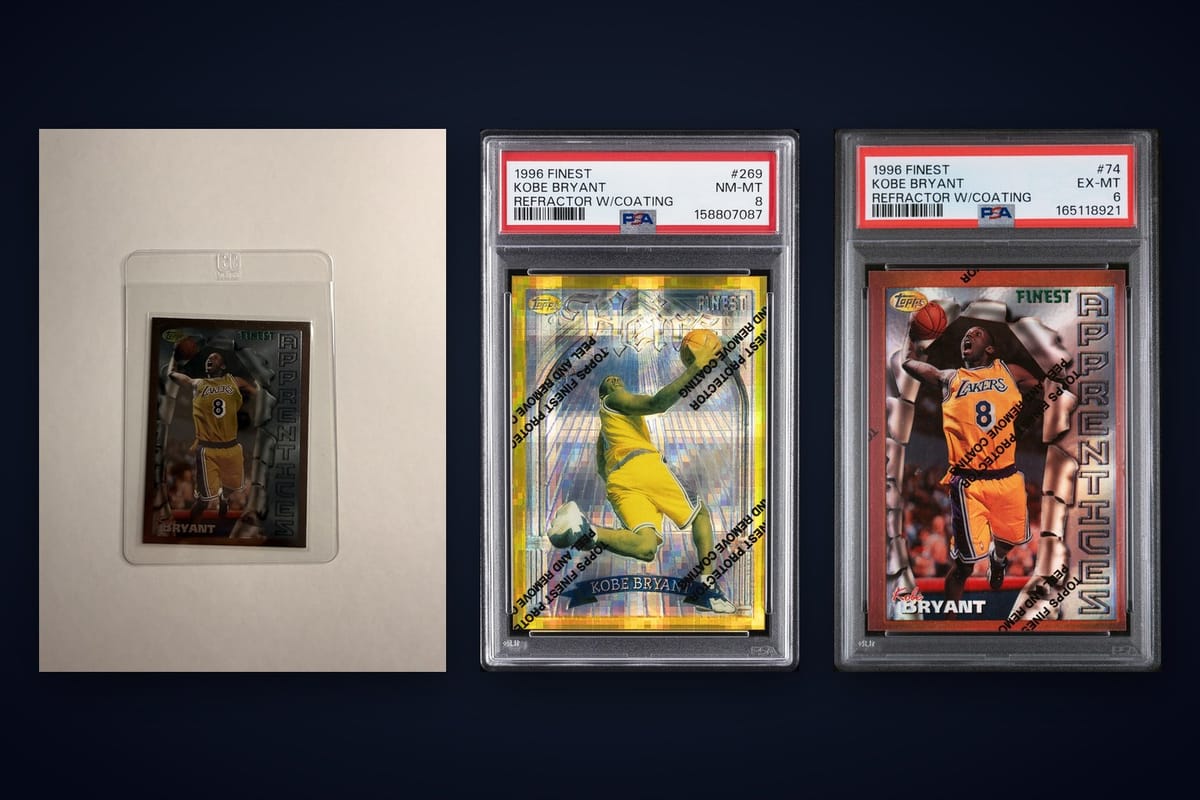
Estimated reading time: 9 min
Key Takeaways
- 1996 Finest PSA 9 vs PSA 10 value is a multiplier game, not a fixed gap. The PSA 10 premium differs by player, tier, refractor status and population.
- Centering and chipped chromium edges are two of the most common reasons a Finest card lands at a 9 instead of a 10.
- Divide the PSA 10 price by the PSA 9 price for each card (values as of 2026-11-22) and compare the ratios, not just the dollar gaps.
- Bottom line: pay the PSA 10 premium only for cards with strong demand and a clean, well-centered, coating-intact look. For most other 1996 Finest cards, a sharp PSA 9 is the smarter buy.
This guide compares 1996 Finest PSA 9 vs PSA 10 value for the 1996-97 Topps Finest basketball set. That is the set behind the Kobe Bryant, Michael Jordan and Allen Iverson cards most collectors search for. The quick answer is that the PSA 10 premium is real but uneven. It tends to be biggest where demand is highest and where a 10 is hardest to find, and smaller on cards where a 9 already looks excellent.
The table below shows how the two grades differ. Our values table (as of 2026-11-22) puts the card-by-card PSA 9 and PSA 10 numbers side by side. The rest of this article explains how to read it.
Card values — live data from Midpoint's card database, as of 2026-11-22. Prices move; Midpoint refreshes these daily.
| Card | Raw | PSA 10 | Gem premium | |
|---|---|---|---|---|
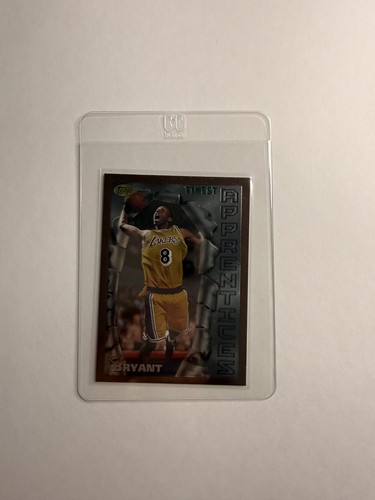 |
Kobe Bryant [Refractor] #74 1996 Finest |
$225.00 | $35,500 | 157.8× |
 |
Kobe Bryant [Refractor w Coating] #269 1996 Finest |
$4,000 | $31,112 | 7.8× |
 |
Kobe Bryant [Refractor w Coating] #74 1996 Finest |
$615.03 | $22,200 | 36.1× |
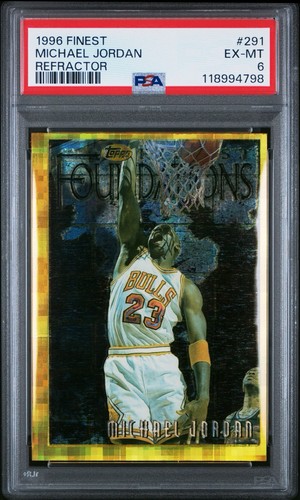 |
Michael Jordan [Refractor] #291 1996 Finest |
$2,600 | $18,850 | 7.3× |
 |
Michael Jordan [Refractor] #127 1996 Finest |
$770.00 | $9,291 | 12.1× |
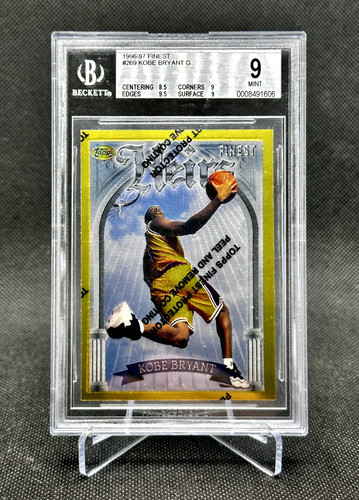 |
Kobe Bryant #269 1996 Finest |
$1,212 | $8,988 | 7.4× |
 |
Michael Jordan [Refractor] #50 1996 Finest |
$95.00 | $8,314 | 87.5× |
 |
Shaquille O'Neal [Refractor] #146 1996 Finest |
$439.14 | $6,976 | 15.9× |
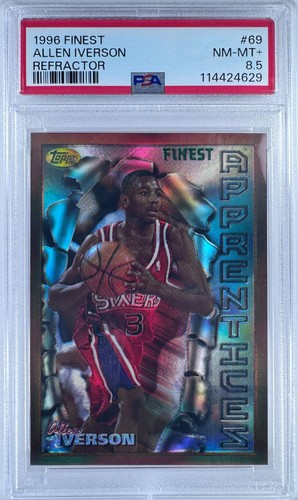 |
Allen Iverson [Refractor] #69 1996 Finest |
$262.75 | $6,200 | 23.6× |
 |
Michael Jordan #291 1996 Finest |
$823.39 | $5,816 | 7.1× |
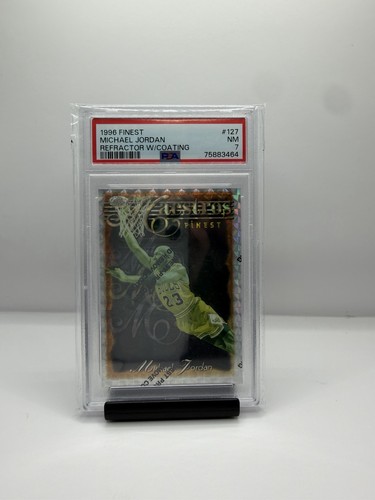 |
Michael Jordan [Refractor w Coating] #127 1996 Finest |
$621.50 | $5,500 | 8.9× |
|
Kobe Bryant [w Coating] #269 1996 Finest |
$1,786 | $5,338 | 3× |
Look up any card's current raw and graded value in Midpoint — and get an estimated grade before you pay to submit.
Quick Comparison: PSA 9 vs PSA 10 for 1996 Finest
| Dimension | PSA 9 (Mint) | PSA 10 (Gem Mint) |
|---|---|---|
| Centering (PSA standard) | Up to roughly 60/40 front, 90/10 back | Roughly 55/45 front, 75/25 back |
| Corners | Sharp, with one very minor flaw tolerated | Essentially perfect under magnification |
| Chromium edges | Tiny touch of wear can still pass | Clean edges, no visible chipping |
| Surface | A faint scratch or print line may be allowed | No visible scratches or coating damage |
| Population | Typically larger, so more comparable sales | Typically smaller, so more price volatility per sale |
| Price premium | Baseline | Varies by card, tier and demand |
| Best for | Value buyers and player collectors | Registry builders and investors |
Which 1996 Finest Cards Are We Talking About?
Before comparing grades, identify the exact card. The 1996 Finest set has several tiers, and the same player can appear at different card numbers.
- Kobe Bryant: listed at #74 and #269.
- Michael Jordan: listed at #50 and #291.
- Allen Iverson: listed at #69 and #280.
On top of the number, the set splits into Bronze, Silver and Gold tiers, plus Refractor versions. Refractors can also be found with the original protective coating still attached. A PSA 10 of one version is not comparable to a PSA 10 of another, so match the card number, tier and refractor status before you read any price.
When you compare prices, use recent completed sales rather than asking prices. Asking prices on rare PSA 10s are often aspirational.
The PSA 10 Premium: How to Calculate the Multiplier
The 1996 Finest PSA 10 premium is easiest to understand as a ratio:
- Multiplier = PSA 10 value ÷ PSA 9 value
- Dollar gap = PSA 10 value − PSA 9 value
Run this for each card in the values table (as of 2026-11-22). The two numbers tell different stories:
- A high multiplier on a cheap card may be a small dollar gap. It might not be worth chasing.
- A modest multiplier on an expensive card, such as a Kobe or Jordan, can still be a large dollar jump.
- A card with a high multiplier is where centering and edges are deciding everything.
The multiplier can move for four reasons:
- Demand: the most popular players can pull PSA 10 prices up faster than PSA 9 prices.
- Population: fewer gem copies generally means a bigger premium. Check the PSA Pop report for your exact card number and tier.
- Tier and parallel: Refractors and Golds may be harder to grade high than Bronzes, so check the population data for the specific version.
- Sales volume: thin PSA 10 sales can make the ratio jump around from one sale to the next.
Why the 9-to-10 Jump Can Be Biggest on Kobe, Jordan and Iverson
The PSA 9 vs PSA 10 price difference can be most dramatic on the headline names. Kobe Bryant #74 and #269, Michael Jordan #50 and #291, and Allen Iverson #69 and #280 all have deep buyer pools. Registry collectors and investors want the top grade, so competition for the few PSA 10s can lift that price faster than the PSA 9.
Here is how to read those cards in the table:
- Kobe Bryant: a PSA 9 is a strong, liquid card. A PSA 10 trades as a different tier of asset, with fewer sales and larger swings.
- Michael Jordan: demand is broad. The premium can reflect both the player and how rarely the card grades gem mint.
- Allen Iverson: usually a smaller dollar pool than Kobe or Jordan, but still a strong collector draw. Compare the ratio to see whether the premium is justified.
If a card's multiplier looks extreme, ask whether the PSA 10 price is built on one or two recent sales. One sale to a motivated bidder can distort the ratio.
What Separates a PSA 9 From a PSA 10 in 1996 Finest
Finest uses chromium stock with a thin protective film. That makes it unusually sensitive to a few specific flaws.
Centering
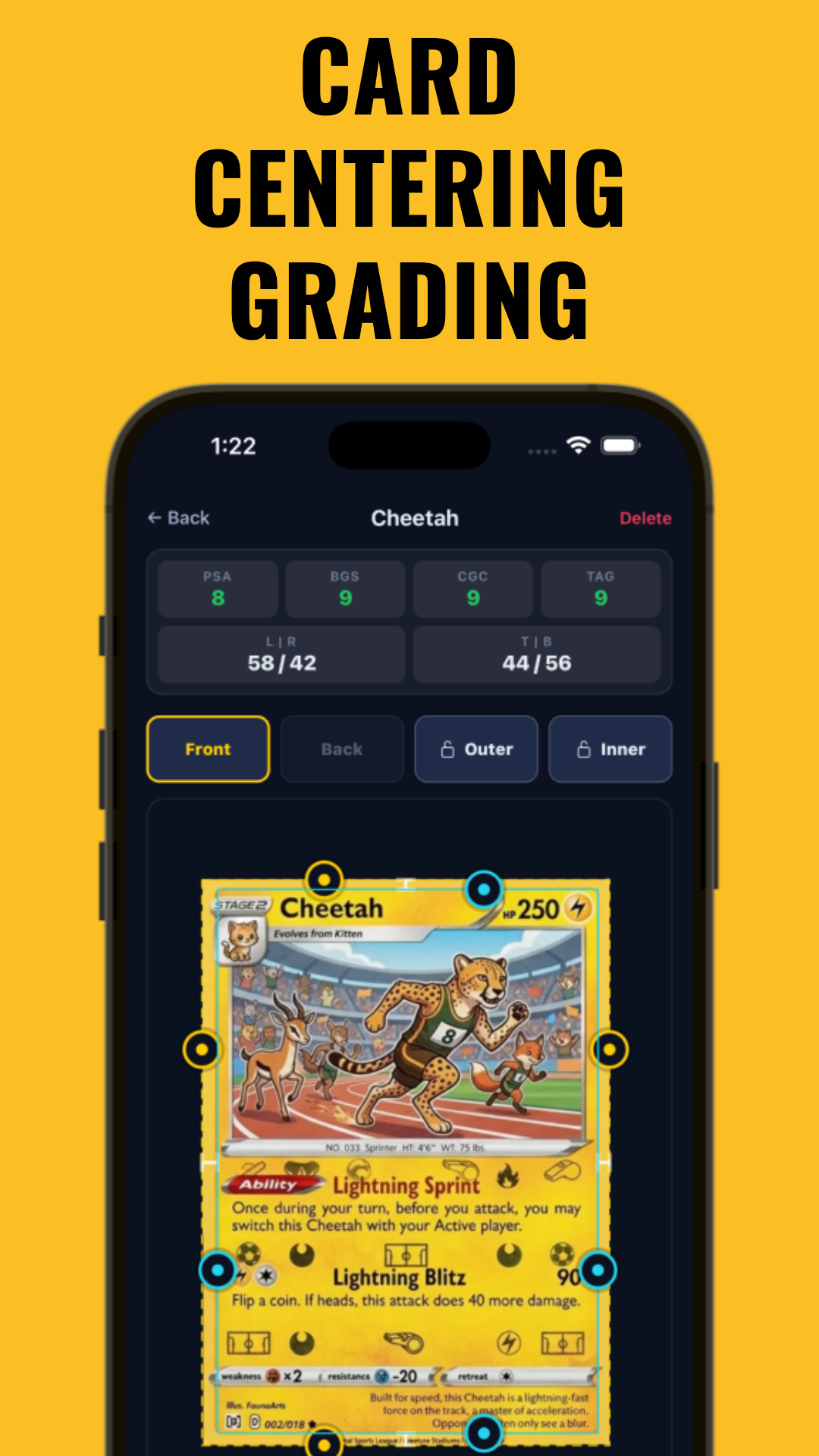
Centering is a common reason 1996 Finest cards miss the 10. PSA's published Gem Mint standard is roughly 55/45 on the front and 75/25 on the back. A card that measures 60/40 can still earn a 9 but will usually miss the 10. Measure before you submit. Our guide to how centering impacts card value explains why a few millimeters can move the grade.
Chipped chromium edges and corners
Chromium edges chip easily, and a tiny white nick on a dark border is visible. Corners that look sharp to the naked eye can show slight wear under a loupe. Either issue is a common reason for a 9.
Surface scratches and print lines
The reflective chromium surface exposes faint scratches and print lines that a base card would hide. Tilt the card under a light source to check.
Coating damage
The protective film matters here. Peeled cards can show lifting, residue or scuffs where the film came off. Unpeeled cards can show bubbling, creasing or clouding in the film. Either can pull a card from a 10 to a 9 or lower. Each condition should be judged on its own look, not assumed to be better or worse.
Protective Film: Peeled vs Unpeeled and the Refractor Question
Are 1996 Finest Refractors worth more with the coating still attached? In general, collectors often pay more for an intact, clean coating on a Refractor, because it signals the card has never been handled the way a peeled one has. That is a market preference, not a guaranteed rule. A clean, peeled PSA 10 can outsell a cloudy, unpeeled PSA 9.
Treat "coating on" and "coating off" as separate comparison points, as you would a different tier. When you check recent sales, filter for the same coating status. Never peel a card hoping to improve its grade. The risk of damaging the chromium surface usually outweighs the benefit.
Is Grading a Raw 1996 Finest Card Worth It?
Is a PSA 9 worth it for 1996 Finest? It depends on your math. Use this checklist:
- Estimate the likely grade: PSA 8, 9 or 10, based on centering and edges.
- Take the expected value for each outcome from the table (as of 2026-11-22).
- Subtract the grading fee, shipping both ways, insurance, taxes and selling fees.
- Compare the result with the raw price.
Grading fees vary by service level and are typically tens of dollars per card before shipping and fees, so check PSA's current pricing. For a high-demand Kobe, Jordan or Iverson, a PSA 9 often justifies grading if the raw card is cheap enough. For a low-value Finest card where a PSA 9 barely beats the raw price, grading may lose money unless you are confident of a 10.
This is where pre-grading helps. A good estimate of centering, edges and surface keeps you from paying to submit a card that will not clear the PSA 10 bar. Our step-by-step pre-grading guide walks through the process, and Midpoint can give you an estimated PSA grade from centering, corners, edges and surface before you pay.
Market Timing, Auction Venue and Eye Appeal
Two PSA 10s of the same card can sell for different prices. The usual reasons are:
- Timing: prices follow player news, playoff runs and market sentiment.
- Venue: a well-promoted auction with strong bidding can outperform a quiet listing.
- Eye appeal: a 10 with perfect centering looks better than one right at the limit. The same goes for a 9 with crisp edges.
- Qualifiers: notes about centering or other issues, and any recent PSA label changes, can affect price.
Use the most recent completed sales as your reference. For a deeper look at how a grade affects insured value, see our guide to card grade impact on insurance value.
Which Should You Choose?
- Buying to hold a Kobe, Jordan or Iverson: a PSA 10 is the premium asset, but the gap can be large. If budget matters, a PSA 9 gets you the same card at a much lower entry price.
- Registry or set builders: PSA 10 is the target, and the premium is part of the cost of a top-ranked set.
- Flippers and investors: compare the multiplier with the grading odds. If the PSA 10 premium is huge but your raw card has centering issues, a 9 is the realistic outcome.
- Casual fans: a PSA 9 with clean edges and good eye appeal gives you most of the look for less money.
- Refractor buyers: decide whether you want the coating intact. Confirm that sales you compare share the same coating status.
- Raw-card owners: measure centering first. If the card is clearly off-center, aim for a 9 and run the profit math on that outcome. If it is near perfect, a 10 could be worth the risk. See our guide to grading low population cards for how scarcity changes the odds.
Verdict: the 1996 Finest PSA 10 premium is worth paying only when demand is high and the card is genuinely clean. Otherwise a strong PSA 9 is the better value.
FAQ
How much is a 1996 Finest card worth in PSA 9 compared with PSA 10?
It depends on the card. Divide the PSA 10 value by the PSA 9 value for each card in our table (as of 2026-11-22) to get its multiplier. The gap is often widest on star cards like Kobe Bryant, Michael Jordan and Allen Iverson, where demand for gem-mint copies is highest.
What is the most valuable 1996 Finest card in PSA 10?
Check the PSA 10 column in the values table. The Kobe Bryant, Michael Jordan and Allen Iverson cards are the usual headline names. Tier (Bronze, Silver, Gold), refractor status and coating condition all affect the ranking, so compare the exact card number and version.
How much is a PSA 9 1996 Finest Kobe Bryant card worth?
Look up the specific number, either #74 or #269, in the values table (as of 2026-11-22). Then confirm with recent completed sales for the same tier and coating status before buying or selling.
Why is the PSA 10 price so much higher than the PSA 9 price for 1996 Finest cards?
Gem-mint copies are scarce because chromium edges chip easily and centering is often poor. Fewer PSA 10s plus strong demand from registry collectors and investors can push the premium up. Thin sales can also exaggerate the gap.
Are 1996 Finest Refractors worth more with the protective coating still attached?
Collectors often prefer an intact, clean coating, but it is not a guarantee. A clean peeled card can outsell a cloudy or damaged unpeeled one. Compare sales with the same coating status, and do not peel a card to try to improve the grade.
Is it worth grading a raw 1996 Finest card if it may receive a PSA 9?
Sometimes. Subtract grading fees, shipping, insurance, taxes and selling fees from the PSA 9 value, then compare the result with the raw price. It often works for high-demand star cards and often does not for low-value cards. Pre-grading with a tool like Midpoint's free centering calculator helps you judge the odds first.
Free to start
Try the Midpoint app
Grade any card from a photo, see its raw and PSA 10 value, and track what your collection is worth — free.
Get it on iPhoneGet it on Android