1998 Pokémon Cards Value: Top Cards Worth Grading & Selling
Explore the 1998 Pokémon cards value guide with PSA 10 prices, rookie cards, key chase cards, and tips for grading and selling your collection.

Estimated reading time: 12 min
Key Takeaways
- 1998 Pokémon cards from Base Set, Japanese promos, and special releases vary widely in value.
- PSA 10 grades can significantly boost prices, especially for Charizard and first edition cards.
- Knowing card details like set, edition, and centering helps identify potentially valuable 1998 cards.
- Using AI digital grading tools like Midpoint can help estimate card grades before costly submissions.
- Rare promos and Japanese trophy cards from 1998 often command premium prices beyond base cards.
1998 Pokémon cards remain some of the most collectible and sought-after trading cards in the hobby. Understanding the 1998 Pokémon cards value requires knowing which sets, editions, and conditions affect worth most. Whether you hold a first edition Charizard, a shadowless Blastoise, or rare Japanese promos, this guide will help you navigate prices, grading, and which cards may be worth grading or selling today. With over 250,000 cards in the Midpoint app database, you can quickly check raw and PSA 10 values to make informed decisions on your 1998 collection.
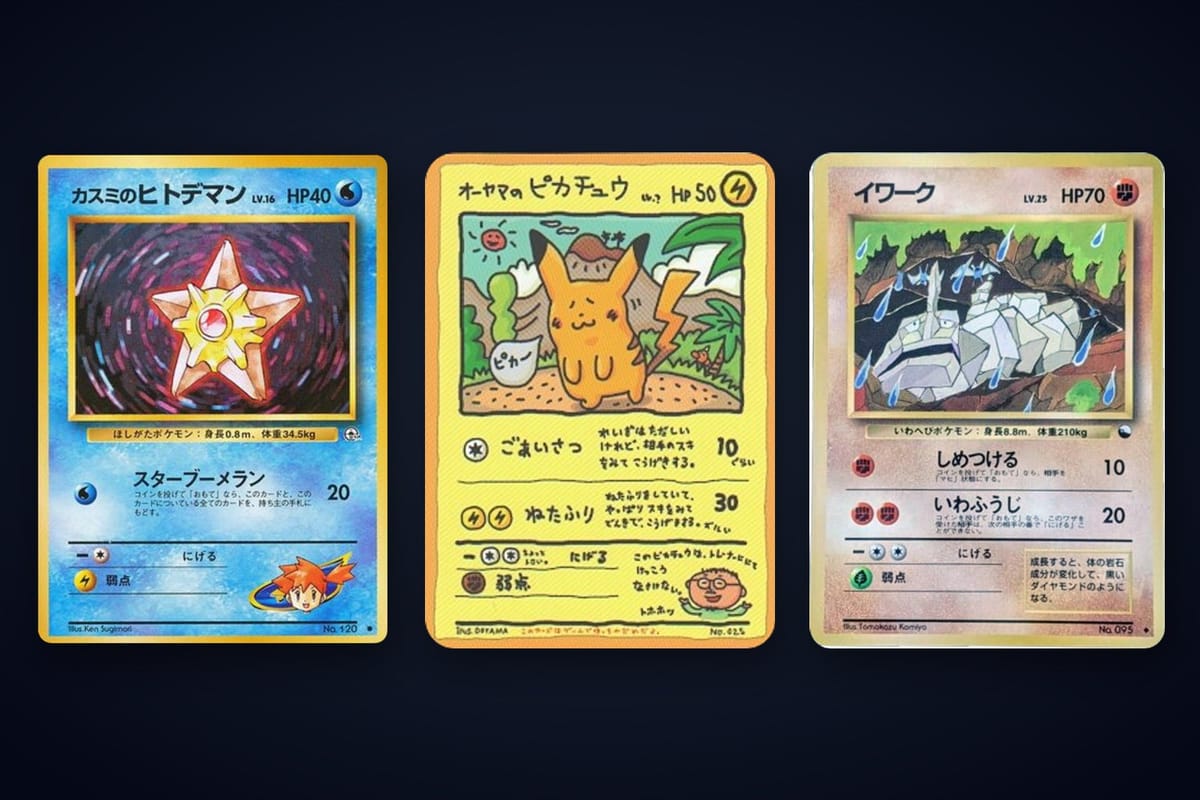
Card values — live data from Midpoint's card database, as of 2026-08-10. Prices move; Midpoint refreshes these daily.
| Card | Raw | PSA 10 | Gem premium | |
|---|---|---|---|---|
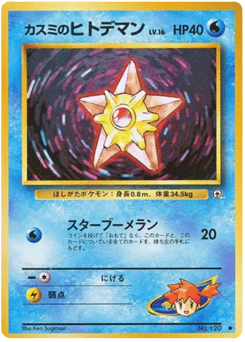 |
カスミのヒトデマン #No.120 リーダーズスタジアム (1998) |
$300.00 | $10,000 | 33.3× |
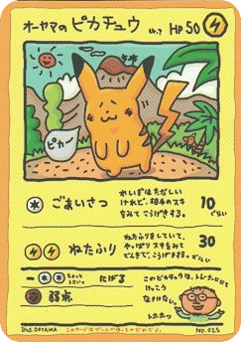 |
ピカチュウ #No.025 拡張シート3 (1998) |
— | $7,446 | — |
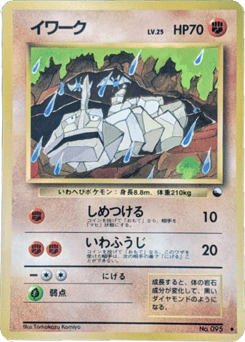 |
イワーク #No.095 拡張シート2 (1998) |
$2,000 | $4,398 | 2.2× |
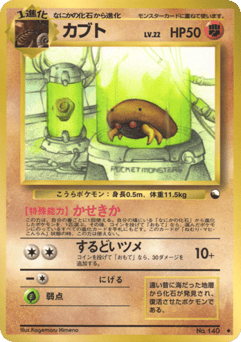 |
カブト #No.140 拡張シート2 (1998) |
$2,500 | $4,324 | 1.7× |
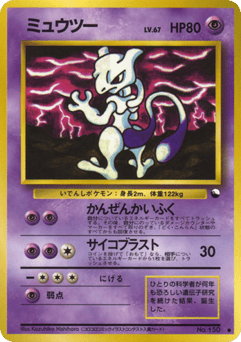 |
ミュウツー #No.150 拡張シート3 (1998) |
— | $3,095 | — |
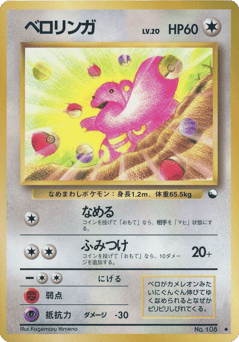 |
ベロリンガ #No.108 拡張シート1 (1998) |
$600.00 | $1,778 | 3× |
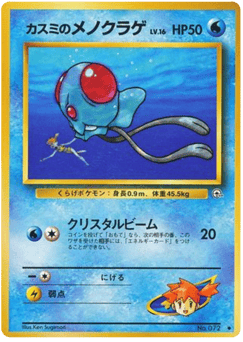 |
カスミのメノクラゲ #No.072 リーダーズスタジアム (1998) |
$300.00 | $1,500 | 5× |
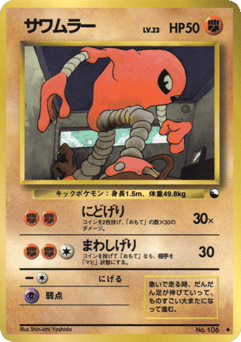 |
サワムラー #No.106 拡張シート2 (1998) |
$300.00 | $1,231 | 4.1× |
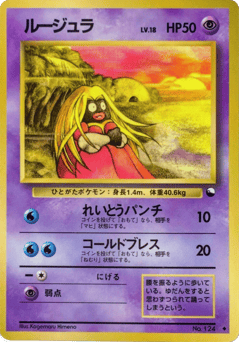 |
ルージュラ #No.124 拡張シート2 (1998) |
$600.00 | $1,185 | 2× |
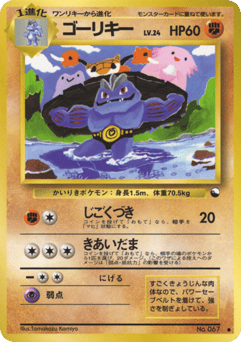 |
ゴーリキー #No.067 拡張シート3 (1998) |
— | $1,176 | — |
Look up any card's current raw and graded value in Midpoint — and get an estimated grade before you pay to submit.
1. Base Set Charizard: The Crown Jewel of 1998 Pokémon Cards
The Base Set Charizard from 1998 is one of the most iconic and valuable cards in the Pokémon trading card universe. Its value can increase substantially when graded PSA 10, with some sales reportedly reaching prices upwards of $60,000 as of 2026-08-10. Raw Charizards in Near Mint condition typically range from $1,200 to $2,500, but the premium for PSA 10 graded cards is often significant.
First edition and shadowless variants of Charizard are especially prized. The first edition PSA 10 Charizard is highly sought after by collectors due to limited print runs and historical significance. Even raw cards with good centering and surface quality can fetch strong prices.
- Key traits to check: first edition stamp, shadowless borders, precise centering, and surface condition.
- Use AI tools like Midpoint to estimate PSA grades before spending on grading fees.
2. 1998 Pokémon Rookie Cards: Identifying & Valuing Key Starters
Rookie cards for Pokémon such as Pikachu, Bulbasaur, Squirtle, and Charmander from 1998’s Base Set and promotional releases hold enduring appeal. Although not as expensive as Charizard, high-grade rookies can still command hundreds to thousands of dollars, especially in PSA 10 condition.
Look for first edition and shadowless print runs, which may increase value. Some Japanese 1998 promos also feature early Pikachu cards that are considered rare and valuable.
- Pikachu from the Base Set can be worth $100+ raw and $2,000+ PSA 10 in some cases.
- Charmander and Bulbasaur rookie cards have seen increased interest due to demand for starter Pokémon.
3. First Edition vs Unlimited vs Shadowless: What Changes Value?
Understanding the difference between first edition, unlimited, and shadowless cards is important to assessing 1998 Pokémon cards value. First edition cards have a distinctive "Edition 1" stamp and were produced in limited quantities, often making them more valuable.
Shadowless cards lack the drop shadow around the Pokémon image and were printed after the first edition but before unlimited runs. Unlimited cards have the shadow and the largest print runs, generally making them less valuable.
- First edition PSA 10 Base Set cards can be worth multiple times more than unlimited versions.
- Shadowless cards occupy a middle ground in value, often prized by collectors wanting rarity without the steep first edition premium.
4. Japanese 1998 Promo & Trophy Cards: Rare Gems with High Value
Besides the Base Set, 1998 saw the release of Japanese promo and trophy cards that are considered rare and valuable. These include Carddass series, KFC promos, and tournament trophies with limited print runs.
Collectors often pay premium prices for these cards due to scarcity and cultural significance. For example, some Japanese 1998 Pikachu trophy cards have sold for several thousand dollars in top condition.
- Verify authenticity carefully, as these cards can be targets for counterfeits.
- Grading and centering analysis with apps like Midpoint can help justify higher sale prices.
5. How Card Condition Impacts 1998 Pokémon Cards Worth Money
Condition is a key factor when it comes to 1998 Pokémon cards value. Even the rarest card loses value if corners are worn, edges nicked, or surface scratched. PSA 10 graded cards command the highest prices because they guarantee near-perfect condition.
Raw cards in Near Mint condition can still be valuable but carry risk when selling. Mid-grade cards (PSA 7-9) typically see a notable drop in price compared to PSA 10. Grading fees and turnaround times make it important to pre-grade cards with AI tools to estimate value accurately.
- Use Midpoint’s precise centering measurement to detect one of the biggest grading factors.
- Surface gloss and edge sharpness are also critical for achieving top grades.
6. Key Chase Cards Beyond Charizard: Blastoise, Venusaur & More
While Charizard leads the pack, other holos and rares from 1998 are worth attention. Blastoise, Venusaur, Dragonite, Snorlax, and holographic Pikachu cards have collector demand and market value.
PSA 10 values for these cards can range from a few thousand dollars depending on edition and condition. Raw values vary broadly, from a few hundred dollars to low thousands.
- Blastoise PSA 10 first edition cards have sold for around $5,000 as of 2026-08-10.
- Venusaur and Dragonite also see premiums for shadowless and first edition grades.
7. Identifying Your 1998 Pokémon Card: Set Symbol, Number & Variants
To accurately assess 1998 Pokémon cards value, you must correctly identify the card’s set, edition, and print variant. Look for the set symbol (e.g., Base Set), card number, copyright date, and language.
Shadowless cards lack a shadow under the image frame, while first edition cards have the edition stamp on the left side. Japanese cards have distinct language and printing differences. Knowing these details helps determine the card’s rarity and value.
- Midpoint’s card lookup feature helps confirm card details and value ranges.
- Compare eBay sold listings and PriceCharting data for market validation.
8. Market Data & Pricing: Sold Listings vs Asking Prices
Understanding 1998 Pokémon cards worth money requires looking at actual sold prices rather than asking prices, which can be inflated. Platforms like eBay, TCGplayer, and PriceCharting provide real-time market data.
Midpoint aggregates these data points to give estimates for raw and graded cards, helping you make informed selling or buying decisions.
- Watch for price fluctuations based on demand spikes and grading population changes.
- Gem mint PSA 10 cards typically represent the highest market value benchmarks.
9. Should You Grade Your 1998 Pokémon Cards?
Grading 1998 Pokémon cards can increase resale value but involves fees and risks. Use AI grading tools like Midpoint to pre-grade your cards and assess potential PSA 10 value before submitting.
Cards with strong centering, clean edges, and flawless surfaces are the best candidates. Grading low-condition cards is usually not cost-effective.
- Learn how to pre-grade your card with our step-by-step guide.
- Understand grading scale differences with the guide on PSA, BGS, and CGC.
10. Using Midpoint to Maximize Your 1998 Pokémon Cards Value
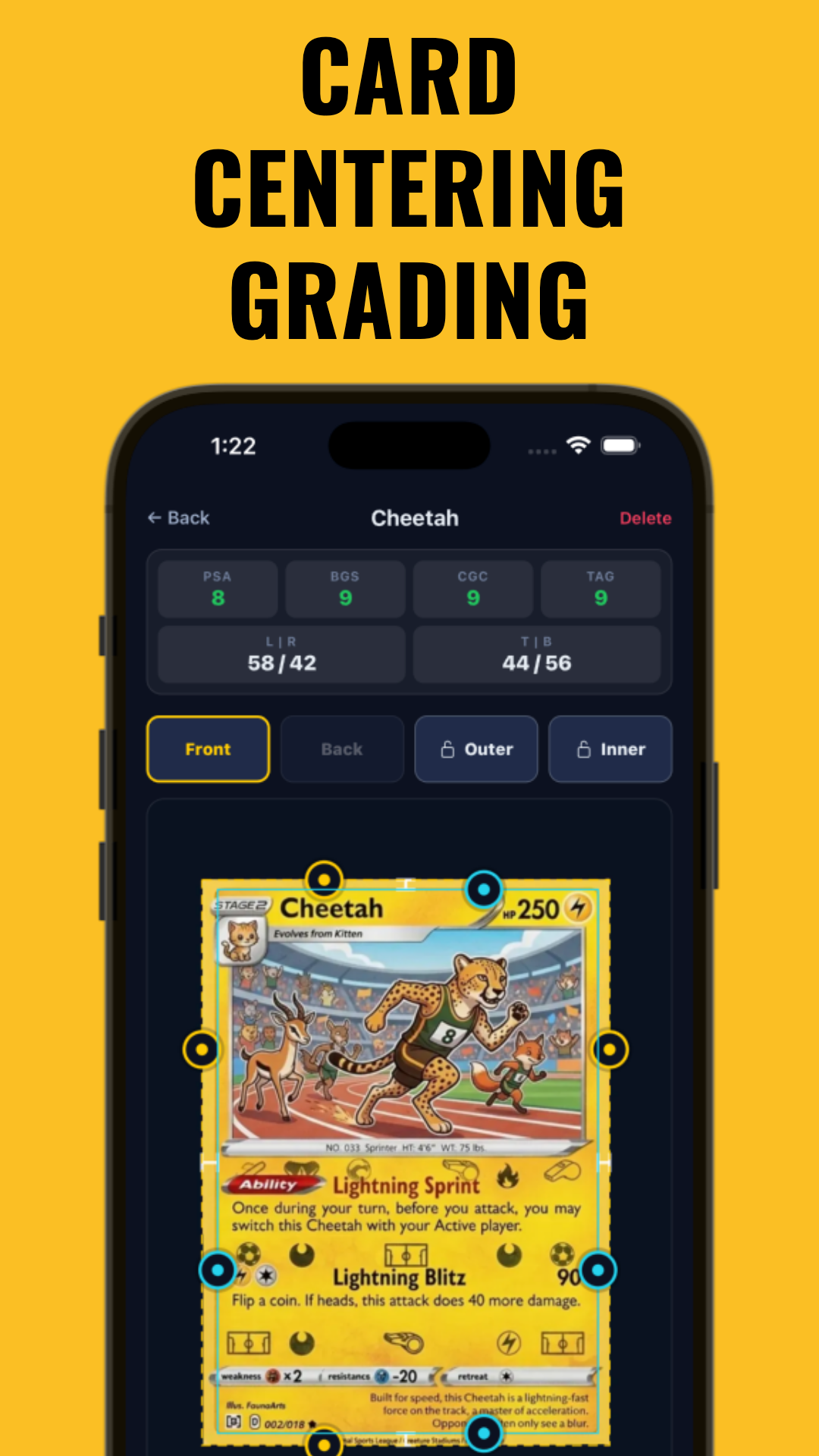
Midpoint is a useful app for collectors who want to measure centering down to the millimeter, get instant AI-based PSA, BGS, CGC, and TAG grade estimates, and monitor their collections’ values over time.
Before submitting your expensive 1998 cards for grading, use Midpoint to save costs and improve confidence. The app covers all major card games including Pokémon and supports over 250,000 cards in its database.
- Instantly check your 1998 Pokémon cards value and grading potential.
- Track your collection's worth and get alerts for market changes.
- Visit Midpoint to start improving your grading accuracy today.
Conclusion
1998 Pokémon cards value depends heavily on edition, condition, and demand, with Charizard often leading the market by a wide margin. First edition and shadowless cards command strong premiums, especially in PSA 10 condition. Japanese promos and trophy cards from 1998 add rare and potentially lucrative collecting options. Grading is an important step to maximize returns, but using AI-powered tools like Midpoint to pre-grade and measure centering can save you money and increase selling confidence. By understanding key card distinctions, market data, and grading impact, you can better navigate the exciting world of 1998 Pokémon card collecting and selling.
FAQ
Q: How much are 1998 Pokémon cards worth?
A: Values vary widely—from a few dollars for common unlimited cards to tens of thousands for PSA 10 first edition Charizard. Most valuable cards in top condition command the highest prices.
Q: What 1998 Pokémon cards are the most valuable?
A: The Base Set first edition Charizard is typically the most valuable, followed by first edition Blastoise, Venusaur, and rare Japanese promos and trophy cards.
Q: Is a 1998 Charizard card worth anything?
A: Yes, especially first edition and shadowless versions. Raw cards in good condition may be worth $1,200 or more, while PSA 10 graded cards can reach very high prices.
Q: How do I tell if my 1998 Pokémon card is first edition or unlimited?
A: First edition cards have a distinctive "Edition 1" stamp on the left side below the artwork. Unlimited cards lack this stamp and usually have a shadow around the Pokémon image.
Q: Should I grade my 1998 Pokémon cards before selling them?
A: Grading can increase value but costs money. Use AI tools like Midpoint to pre-grade and estimate if your card is likely to achieve a high grade before submitting.
Q: How can I identify whether my 1998 Pokémon card is Japanese, promo, or Base Set?
A: Check the language, set symbol, card number, and copyright date. Japanese cards have Japanese text and different print variants. Promos often have unique logos or giveaway indicators. Base Set cards have the Base Set symbol and English text.
Free to start
Try the Midpoint app
Grade any card from a photo, see its raw and PSA 10 value, and track what your collection is worth — free.
Get it on iPhoneGet it on Android