Antiquities MTG Cards Value: Complete 2026 Price Guide & Grading Tips
Discover the full Antiquities MTG cards value guide, top cards, grading tips, and how condition impacts prices for raw and PSA 10 graded cards.

Estimated reading time: 18 min
Key Takeaways
- Antiquities MTG cards value varies widely, with Mishra’s Workshop and Candelabra of Tawnos among the highest in worth, often commanding thousands of dollars in top condition.
- Grading can significantly boost prices, especially PSA 10, but condition aspects such as centering, edges, and surface quality are critical for achieving high grades.
- The 1994 Antiquities set contains 102 cards, including rare, uncommon, and common cards with distinct price tiers influenced by playability and collector demand.
- Midpoint’s AI grading and centering tools help collectors decide which Antiquities cards may be worth grading by providing condition estimates and value projections.
- Sealed booster packs and product prices reflect strong demand but also premium rarity and condition concerns, with sealed packs sometimes commanding tens of thousands of dollars.
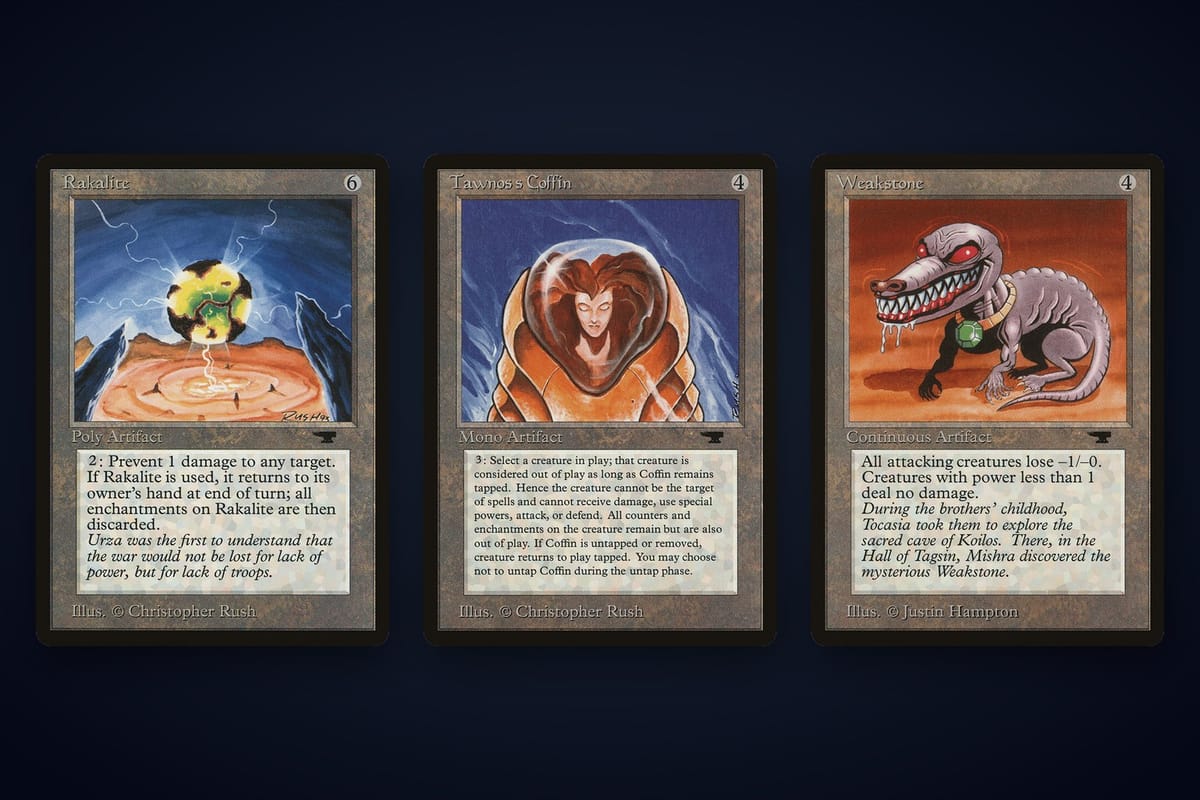
Card values — live data from Midpoint's card database, as of 2026-10-30. Prices move; Midpoint refreshes these daily.
| Card | Raw | PSA 10 | Gem premium | |
|---|---|---|---|---|
 |
Rakalite #62 Antiquities (1994) |
$1.38 | — | — |
 |
Tawnos's Coffin #68 Antiquities (1994) |
$111.43 | — | — |
 |
Weakstone #78 Antiquities (1994) |
$5.98 | — | — |
 |
Strip Mine #82a Antiquities (1994) |
$76.97 | — | — |
 |
Urza's Mine #83d Antiquities (1994) |
$4.81 | — | — |
 |
Urza's Power Plant #84d Antiquities (1994) |
$11.90 | — | — |
 |
Urza's Tower #85a Antiquities (1994) |
$16.06 | — | — |
 |
Urza's Tower #85b Antiquities (1994) |
$33.89 | — | — |
 |
Urza's Tower #85c Antiquities (1994) |
$18.08 | — | — |
 |
Urza's Tower #85d Antiquities (1994) |
$27.34 | — | — |
 |
Gate to Phyrexia #16 Antiquities (1994) |
$58.34 | — | — |
 |
Priest of Yawgmoth #19 Antiquities (1994) |
$1.70 | — | — |
Look up any card's current raw and graded value in Midpoint — and get an estimated grade before you pay to submit.
Table of Contents
- Section 1: Overview of the Antiquities MTG Set and Its Value
- Section 2: Most Valuable Antiquities Cards and Market Leaders
- Section 3: Rarity, Condition, and Their Impact on Antiquities Card Prices
- Section 4: Mishra’s Factory Variations and Pricing Nuances
- Section 5: Antiquities PSA 10 Value and Grading Considerations
- Section 6: Sealed Antiquities Products and Collector Demand
- Conclusion
- FAQ
Section 1: Overview of the Antiquities MTG Set and Its Value
Historical Context and Set Details
The Antiquities Magic: The Gathering (MTG) set was released in 1994 with the set code ATQ. It features 102 cards, including 15 rares, 30 uncommons, and 57 commons. This set is known for its deep artifact theme, which was pioneering at the time, and has become a cornerstone for collectors due to its age, unique art style, and Reserved List status, which means its cards are not expected to be reprinted in the same form. The Reserved List designation makes this set particularly important for long-term collectors and investors, as the supply of these cards is fixed, with no future printings anticipated.
Antiquities MTG Cards Value: Baseline Pricing
As of late 2026, the combined near-mint singles market value for a complete Antiquities set is estimated to be around $6,500. This value can fluctuate depending on factors including card condition, market demand, and the presence of special variants like numbered cards or misprints. Individual card prices vary significantly within the set — commons and uncommons typically range from under $5 to $20 due to their higher print runs and lower playability, whereas rares can reach into the hundreds or thousands of dollars depending on demand and scarcity. For example, the iconic Mishra’s Workshop commands a premium due to its gameplay impact and rarity.
Price Sources and Valuation Methods
Price guides and valuation tools commonly rely on multiple data points including TCGplayer marketplace prices, buylist offers from dealers, and historical sales data from auction sites and private sales. Marketplaces reflect current demand and real-time prices, while buylist prices provide insight into what dealers are willing to pay, often at a discount due to resale costs. Midpoint integrates these various sources to offer users a comprehensive picture of each card’s value, factoring in condition and grading estimates which are important for accurate valuation. Combining multiple data points helps smooth out anomalies and provides a reliable benchmark for collectors.
| Card Name | Near Mint Raw Value | PSA 10 Value |
|---|---|---|
| Mishra's Workshop | $1,250 | $7,500 |
| Candelabra of Tawnos | $800 | $4,800 |
| Mishra's Factory (Numbered) | $300 | $1,950 |
| Power Artifact | $150 | $950 |
| Stone Calendar | $10 | $65 |
Section 2: Most Valuable Antiquities Cards and Market Leaders
Top-Tier Antiquities Cards by Value
The most valuable Antiquities cards, as of late 2026, include several standout pieces favored by players and collectors alike:
- Mishra’s Workshop: Among the highest valued, with raw near-mint values around $1,250 and PSA 10 values potentially exceeding $7,500. Its power level in legacy formats and limited supply contribute to its desirability.
- Candelabra of Tawnos: A powerful artifact with raw values near $800 and PSA 10 fetching close to $4,800. Its utility in combo decks and scarcity contribute to its premium pricing.
- Mishra’s Factory (Numbered Version): Notable for its unique serial numbering and seasonal art variations issued during promotional events, this card commands higher prices than the standard version, with raw values around $300 and graded values near $2,000.
- Power Artifact and Black Lotus (if present in collections): While Black Lotus is not part of Antiquities, many collectors who focus on early artifacts also seek it. Power Artifact remains a high-value card within the set, valued for its gameplay impact.
Why These Cards Command Premium Prices
These cards combine several factors that drive their premium prices:
- Scarcity: Cards like Mishra’s Workshop and Candelabra of Tawnos had limited print runs and have low supply, especially in pristine condition.
- Gameplay Utility: High demand comes from their competitive playability in formats such as Legacy and Vintage, making them attractive to players as well as collectors.
- Collector Demand: Iconic status and Reserved List protection increase desirability for long-term holding and investment.
- Unique Variants: Numbered Mishra’s Factory cards offer a twist that appeals to variant collectors, boosting prices beyond standard versions.
Comparing Raw vs Graded Values
The price gap between raw and professionally graded cards can be significant, emphasizing the importance of condition and certification. For instance, a raw Mishra’s Workshop near mint card may sell for roughly $1,250, but a PSA 10 graded copy can reach several times that amount, reflecting the rarity of perfect-condition cards from 1994, where handling and centering often reduce raw card quality. Grading provides assurance to buyers and increases liquidity in the marketplace, especially for high-value cards.
Section 3: Rarity, Condition, and Their Impact on Antiquities Card Prices
Rarity Categories and Price Distribution
Antiquities cards fall into three main rarity categories, each with distinct price profiles and market dynamics:
- Rares: These are generally the most valuable cards, with prices ranging widely depending on playability and collector appeal. Cards like Mishra’s Workshop and Candelabra of Tawnos dominate this category.
- Uncommons: Valued typically between $10 and $100, some uncommons such as Power Artifact exceed this range due to their popularity in gameplay and relative scarcity.
- Commons: Usually priced under $10, but exceptions exist where commons gain collector interest or have notable playability, such as certain artifact lands or key combo pieces.
Condition Grades and Their Price Impact
Condition is a critical factor influencing Antiquities MTG cards value. The grading scale ranges from Near Mint (NM) to Damaged (DMG), with incremental differences significantly affecting pricing:
- Near Mint (NM): Cards with minimal handling wear, sharp edges, perfect corners, and clean surfaces. These command the highest prices and are the most likely to grade PSA 9 or 10.
- Lightly Played (LP): Minor surface or edge wear, slight corner imperfections, or faint scratches. Prices typically drop 15-40% compared to NM, depending on severity.
- Played (PL): Noticeable wear, such as whitening on edges, minor creases, or surface scuffs, can reduce value by a substantial amount from NM prices.
- Damaged (DMG): Cards with heavy creases, bends, or staining may have significantly reduced collector value, though they may retain some play value.
For older sets like Antiquities, condition is particularly challenging due to the cards’ age and the tendency for centering and printing inconsistencies to affect grades.
Centering and Surface Quality
Centering refers to how well the card’s image is aligned within its borders. Perfect centering is rare in early MTG sets and is a significant factor for grading companies. Cards with off-center images often receive lower grades, impacting value. For instance, a card with 60/40 centering typically will not achieve a PSA 10 grade, even if the surface and edges are flawless.
Surface quality includes scratches, print defects, and gloss wear. Minor surface imperfections can be the difference between a PSA 9 and PSA 10 grade, especially for cards from the 1990s.
Midpoint’s AI-powered centering measurement tool enables collectors to measure centering precisely before submitting cards for grading. This helps avoid costly grading fees on poor candidates who are unlikely to achieve high grades. By uploading a card image, Midpoint analyzes border widths and percentages, providing a centering score and visual feedback. This guide on card centering tool explains how accurate centering analysis affects value and grading outcomes.
Section 4: Mishra’s Factory Variations and Pricing Nuances
Standard vs Numbered Mishra’s Factory
Mishra’s Factory is unique within Antiquities for having both a standard and a numbered version. The numbered version features a serial number printed in the text box and seasonal artwork variations issued during promotional events in the mid-1990s. These numbered cards were typically distributed as promos or given out during tournaments, making them scarcer than the regular print run.
Price Differences and Collector Appeal
The numbered Mishra’s Factory commands a premium over the standard version. As of late 2026, the numbered version’s near mint raw value is estimated around $300, while the standard version is closer to $150. PSA 10 values nearly double this gap, with numbered versions reaching around $1,950 versus standard’s approximately $900. This premium arises from collector demand for rarer variants and the appeal of limited-edition artwork.
Collectors also value the numbered versions for their uniqueness and the challenge of completing a set that includes these rarities. The seasonal artwork variations, such as summer or winter themes, add another layer of interest and value for variant collectors.
Identifying Variations and Authenticity
Collectors should carefully identify which Mishra’s Factory they own before pricing or grading. Numbered versions have distinct serial numbers and artwork that can be verified via trusted databases or apps like Midpoint, which provide card lookup features with raw and graded values. Additionally, authentic numbered cards show a consistent font and placement of the serial number, while counterfeit or misrepresented cards may have inconsistencies.
Using Midpoint’s AI tools, collectors can upload images to confirm card versions and receive value estimates, ensuring accurate valuation and avoiding underpricing rare variants. This step is especially important before investing in grading services, as the premium for PSA 10 numbered Mishra’s Factory cards can be substantial.
Section 5: Antiquities PSA 10 Value and Grading Considerations
Why PSA 10 Graded Antiquities Cards Are So Valuable
PSA 10 is the highest grade for card condition, indicating gem mint quality. For Antiquities cards, PSA 10 status can multiply raw values by several times depending on the card. The rarity of PSA 10 copies, especially from 1994 sets where handling wear, surface imperfections, and centering issues are common, makes these cards sought after by collectors and investors alike.
Because of the set’s age, achieving PSA 10 is particularly challenging. Cards often show minor surface wear or slight mis-centering that can prevent the top grade. This scarcity drives prices up for the few graded PSA 10 copies available, as buyers pay a premium for the assurance of condition and authenticity.
Which Antiquities Cards Are Worth Grading?
- High-value rares like Mishra’s Workshop and Candelabra of Tawnos are prime candidates, as grading can add significant value.
- Numbered Mishra’s Factory and other limited print run variants also command strong premiums when graded highly.
- Cards with excellent centering and surface condition on initial inspection, especially those assessed using AI tools, maximize the likelihood of achieving a PSA 9 or 10 grade.
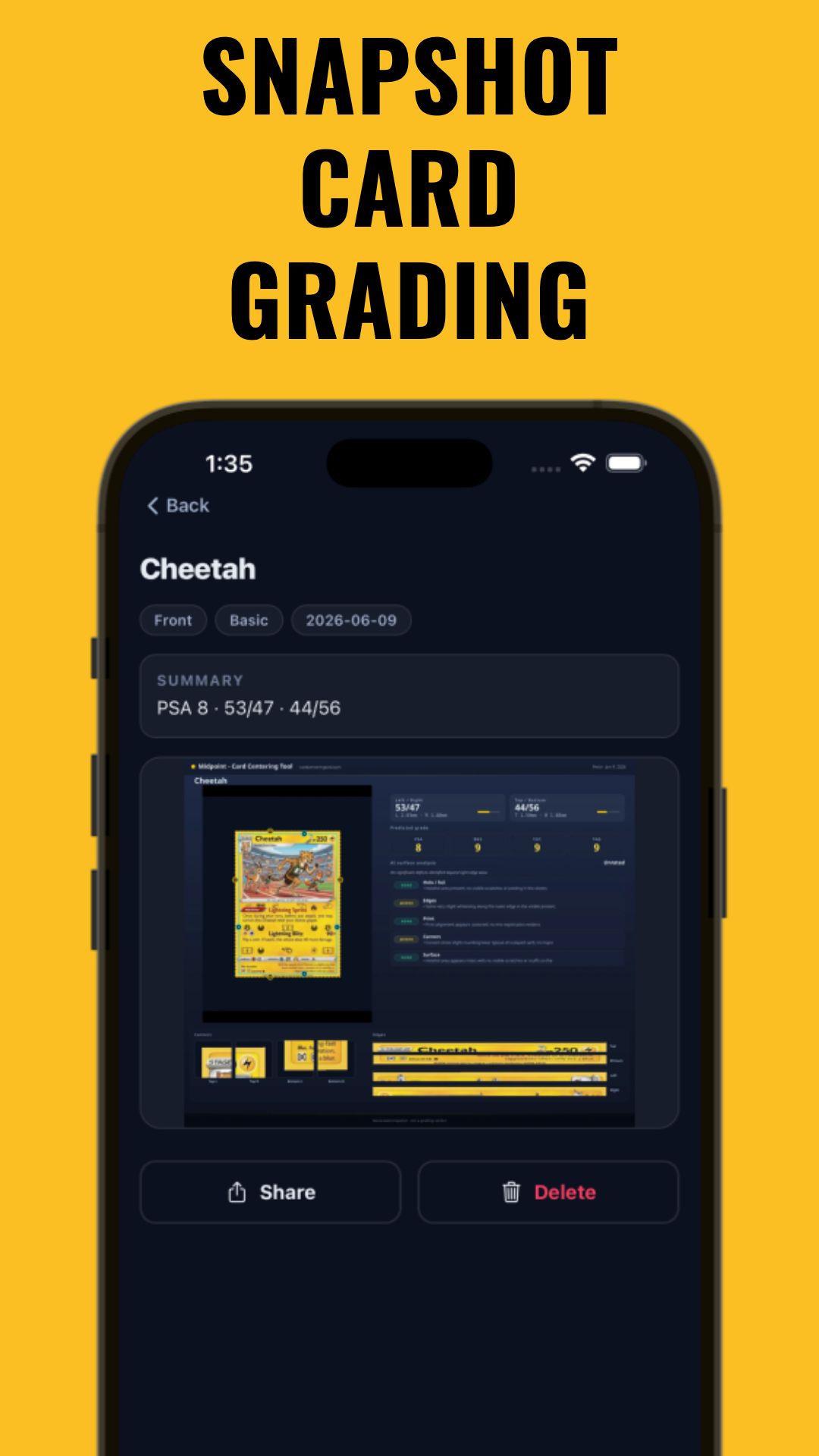
Midpoint’s AI digital grading tool can estimate PSA, BGS, CGC, and TAG grades by analyzing centering, corners, edges, and surface before committing to grading fees, helping collectors save money and avoid disappointment. It uses advanced image recognition to detect minute imperfections and provide a grading estimate within minutes. Learn how to pre-grade your card efficiently.
Price Impact of Grading Companies
While PSA is the most recognized and widely accepted grading authority, other companies such as Beckett Grading Services (BGS), Certified Guaranty Company (CGC), and The Authenticators Guild (TAG) also have market presence. Each grading company’s scale has subtle differences; for instance, BGS uses subgrades that can influence final grade and market perception. However, PSA 10 remains the most sought-after grade for Antiquities cards, often commanding the highest premiums due to collector trust and liquidity.
Collectors should also consider grading turnaround times, fees, and reputation when choosing where to submit cards. While PSA often has longer wait times, its market dominance often justifies the wait and expense, especially for high-value cards.
Section 6: Sealed Antiquities Products and Collector Demand
Sealed Booster Pack and Product Pricing
Sealed Antiquities booster packs and boxes are very rare and command substantial premiums. As of late 2026, sealed booster packs can approach or exceed $20,000 depending on condition, provenance, and storage history. Sealed boxes are even scarcer, with prices often exceeding $50,000 when available, reflecting their status as some of the most coveted unopened MTG products from the 1990s.
Collectors prize sealed products for their potential to contain high-value pulls such as Mishra’s Workshop, Black Lotus, or rare promotional cards. The unopened nature serves as a strong indicator of card condition, making these items attractive for investment or museum-quality collections.
Why Collector Demand Remains High
The combination of the set’s age, Reserved List protection, and iconic card pool fuels strong collector demand. The allure of owning original, sealed products from 1994 is significant in the marketplace. Many collectors view sealed products as long-term investments, betting on the continued growth of MTG’s secondary market and the scarcity of unopened vintage stock.
Additionally, the nostalgia factor and the historical significance of the Antiquities set contribute to persistent demand. Limited supply and rising interest from international collectors further support price strength.
Storage and Preservation Tips
Maintaining sealed product condition is essential for preserving and enhancing value. Proper storage away from direct light, high humidity, and temperature fluctuations is important to prevent packaging degradation, discoloration, or warping. Ideally, sealed packs and boxes should be stored in climate-controlled environments with stable temperatures around 65-70°F and humidity levels between 40-50%.
Collectors should also avoid stacking heavy items on top of sealed products to prevent crushing or corner damage. Using protective sleeves, airtight containers, or display cases can further protect products. For detailed guidance on protecting valuable cards and sealed products, see this ultimate collector’s guide on storage.
Conclusion
The Antiquities MTG cards value landscape is complex but rewarding for collectors who understand rarity, condition, grading dynamics, and market trends. Key cards like Mishra’s Workshop and Candelabra of Tawnos are among the market leaders, with PSA 10 grading often multiplying their worth considerably. Variants such as the numbered Mishra’s Factory add unique collector interest and price premiums, while sealed products remain among the most premium and scarce collectibles. Condition, especially centering and surface quality, plays a pivotal role in pricing, making tools like Midpoint valuable for pre-grading, condition analysis, and portfolio tracking. Armed with this detailed guide and modern AI-powered tools, collectors can better navigate the Antiquities market, optimize grading investments, and make informed acquisition decisions for long-term value.
FAQ
Q: What is the most valuable card in Antiquities MTG?
A: Mishra’s Workshop is generally considered the most valuable Antiquities card, with raw near-mint values around $1,250 and PSA 10 graded copies potentially reaching $7,500 as of late 2026.
Q: How much is a complete Antiquities set worth?
A: A complete near-mint Antiquities set is estimated to be worth approximately $6,500, depending on card condition and market fluctuations.
Q: How much is Mishra’s Workshop from Antiquities worth?
A: Raw near-mint Mishra’s Workshop cards are valued around $1,250, while PSA 10 graded versions can command significantly higher prices.
Q: What are the most expensive Antiquities cards?
A: Besides Mishra’s Workshop, Candelabra of Tawnos and numbered Mishra’s Factory variants rank among the most expensive, especially in high grades.
Q: How many cards are in the Antiquities MTG set?
A: The Antiquities set contains 102 cards, including rare, uncommon, and common cards.
Q: Are Antiquities MTG cards worth money?
A: Yes. Many Antiquities cards hold significant value due to their age, rarity, and Reserved List status, with some cards worth thousands of dollars, especially when graded PSA 10.
Free to start
Try the Midpoint app
Grade any card from a photo, see its raw and PSA 10 value, and track what your collection is worth — free.
Get it on iPhoneGet it on Android