Baseball Card Prices Dropping November 2026: 9 Smart Moves
Baseball card prices dropping November 2026? See why prices cool, which cards fall hardest, how to verify a dip, and when grading a raw copy makes sense.

Estimated reading time: 9 min
Key Takeaways
- The baseball card market in November 2026 looks like a seasonal cooling, not a collapse. Demand fades after the World Series while new supply keeps arriving.
- Modern rookies, prospects, hype-driven parallels and sealed wax usually fall hardest. Vintage cards and established stars tend to hold up better.
- PSA 10 premiums can compress as graded populations grow, so a drop in a PSA 10 does not always mirror the raw price.
- Confirm any drop with sold listings, not asking prices, and compare the same grade each time.
- Before buying a dip and grading a cheap raw copy, check its centering. A card that centers badly is unlikely to earn a high grade.
If you have noticed baseball card prices dropping in November 2026, you are not imagining it. Searching sold listings can turn up softer prices on many cards, especially modern ones. This guide covers the baseball card market in November 2026: why falling baseball card prices happen, which cards tend to be baseball cards losing value, and how to use the dip. The data table in this post shows the as-of 2026-11-27 figures from the Midpoint database. Use it for card-level numbers; the sections below explain how to read them.
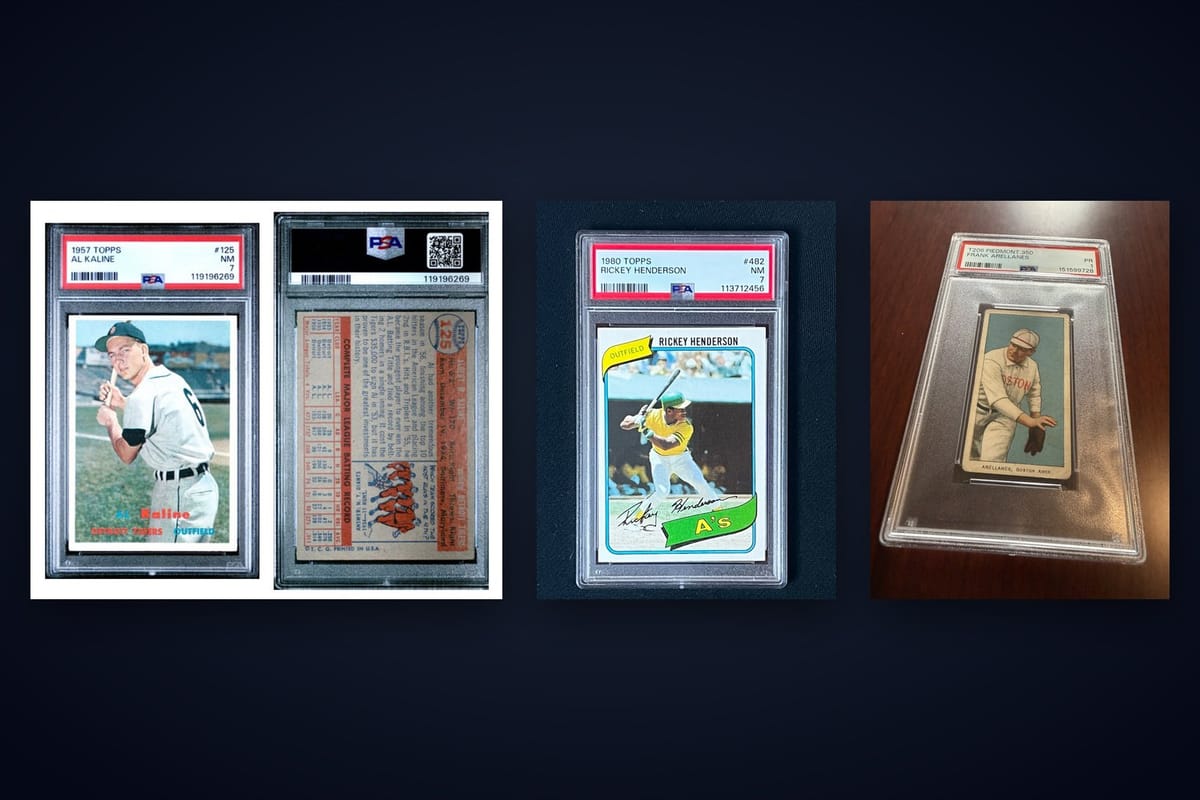
30-day price movers — live data from Midpoint's card database, as of 2026-11-27. Prices move; Midpoint refreshes these daily.
| Card | Raw | PSA 10 | 30-day | |
|---|---|---|---|---|
 |
Al Kaline #125 1957 Topps |
$38.73 | $7,706 | -24% |
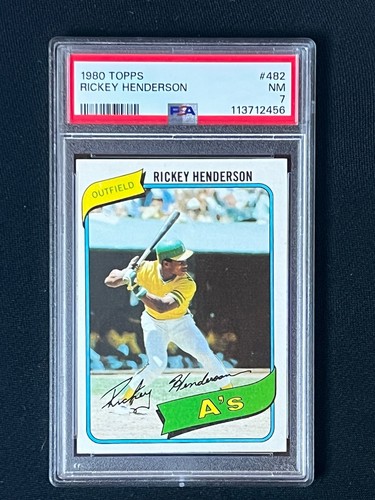 |
Rickey Henderson #482 1980 Topps |
$48.85 | — | -21.8% |
 |
Frank Arellanes 1909 T206 Piedmont 350 |
$54.52 | — | -21% |
 |
Michael Jordan #SP1 1991 Upper Deck |
$21.72 | $1,092 | -16.4% |
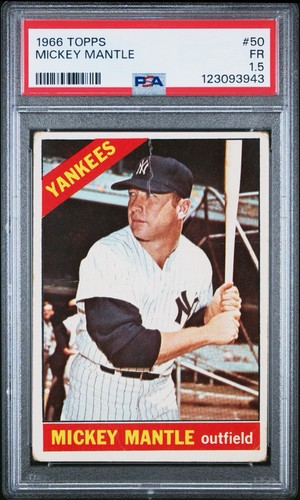 |
Mickey Mantle #50 1966 Topps |
$209.50 | $32,171 | -12.1% |
 |
Johnny Bench #430 1969 Topps |
$19.99 | $2,734 | -6.9% |
 |
Frank Thomas #414 1990 O Pee Chee |
$38.22 | $1,844 | -2.7% |
 |
Jacob Misiorowski [75th Anniversary] #10 2026 Topps Flagship Real One Autograph |
$427.41 | $1,829 | -1.1% |
 |
Babe Ruth #149 1933 Goudey |
$6,141 | $2,460,305 | -1.1% |
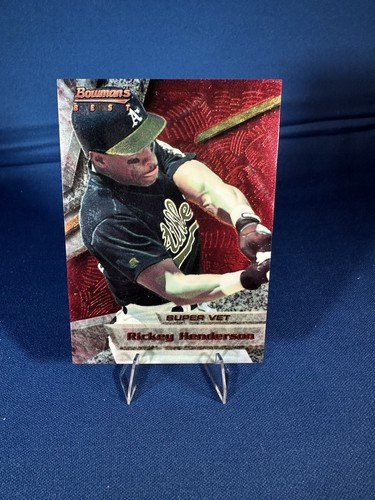 |
Rickey Henderson [Red Refractor] #4 1994 Bowman's Best |
$43.12 | $1,504 | -0.6% |
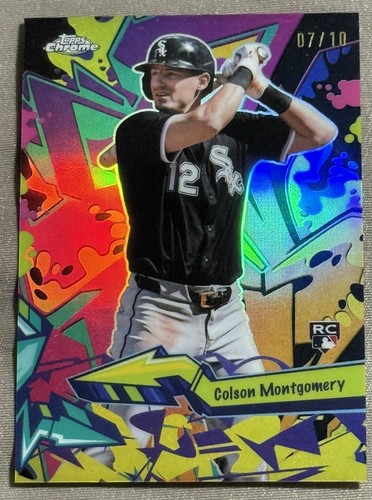 |
Colson Montgomery [Black] #WST-24 2026 Topps Chrome Wild Style |
$133.50 | $645.12 | 0% |
 |
Lou Criger 1909 T206 Piedmont 350 |
$34.99 | — | 0% |
Look up any card's current raw and graded value in Midpoint — and get an estimated grade before you pay to submit.
1. Cooling vs. Crash: What the November 2026 Market Actually Looks Like
The first question is whether this is a crash or a cool-off. Most of what collectors see in November fits a cool-off: lower sold prices, slower sales and fewer bidding wars, concentrated in the most hyped segments.
A true crash would hit everything at once, including cards with long track records. A cool-off is uneven. Some categories slip, others stay flat, and a few keep climbing.
- Cooling looks like: falling sold prices on trendy cards, steady prices on proven ones, and fewer bids per auction.
- Crash looks like: broad declines across vintage, stars and modern cards, with thin demand even at deep discounts.
- Your move: check several card types in the same week before deciding which one you are in.
2. Post-World Series and Offseason Demand Decline
Baseball card demand is tied to the calendar. Interest tends to peak during the season and the postseason, when players are in the news and highlights circulate. Once the World Series ends, that attention fades.
The offseason brings fewer headlines and often less impulse buying. Holiday spending also competes with card budgets. Sellers who list into that quieter window may have to accept lower prices to move cards.
This is why baseball card prices dropping in November 2026 can be partly seasonal. Part of the decline may reflect attention drifting away rather than a lasting loss in a card's appeal. Spring training and Opening Day often bring that attention back.
3. New Releases, High Print Runs and Reprints Add Supply
Prices tend to fall when supply grows faster than demand. Modern baseball products are produced in large quantities, and new releases keep adding cards to the market just as demand cools.
Three supply pressures matter most:
- New releases: each new product pulls attention and budget from older sets.
- High print runs: when a rookie or star appears in many products and parallels, buyers have plenty of alternatives.
- Reprints and re-releases: they can soften demand for the original, especially when the reprint looks similar.
More listings also give buyers leverage. When many copies of the same card are available, the lowest sold price tends to set the market.
4. Modern Rookies and Prospects: Hype Fades Fast
Modern rookies and prospects are among the biggest decliners in a cooling market. Their prices often include a premium for expected future performance, and that premium is fragile.
A prospect's price can rise on a promotion, a viral highlight or a hot week, then fall when attention moves on. In the offseason there are no new highlights to keep the story alive.
- Why they fall harder: prices rest on expectation, and expectation shifts quickly.
- What to watch: a card that spiked in-season and is now drifting back is normal behavior, not necessarily a warning sign.
- Rule of thumb: the more a card's price relied on hype, the more room it has to fall.
5. Hype-Driven Parallels and Sealed Wax
Two product types often lead the declines: low-numbered, hype-driven parallels and sealed wax.
Parallels can look scarce but compete with many other versions of the same player. When excitement fades, buyers may stop paying for the label and the price can drop quickly.
Sealed wax follows the product cycle. It tends to spike near release and then soften as supply spreads and the next product arrives. Sealed boxes also carry no guarantee of what is inside, so buyers can get cautious when the market cools.
- Parallels: compare a card against other parallels of the same player before assuming it is rare.
- Sealed wax: look at how many boxes are listed and how fast they sell.
6. Vintage and Established Stars Hold Value Better
Vintage cards and established stars such as Mickey Mantle and Hank Aaron tend to hold value better when the market cools. Their supply is fixed, their demand comes largely from long-term collectors, and their appeal does not depend on this week's highlights.
That does not make them immune. A thin market can still produce a soft sale, and condition matters a great deal. But the swings are usually smaller than those of hype-driven modern cards.
- Why they are steadier: a fixed supply and a collector base that is not chasing trends.
- The catch: condition differences are large, so compare like with like.
- Use it as a benchmark: if vintage is flat while modern falls, you are seeing a cool-off, not a crash.
7. Raw vs. PSA 10 vs. PSA 8: Where Graded Prices Move Differently
Raw and graded cards do not move in lockstep. A raw card's price reflects an unknown grade, so it follows general demand. A graded card's price reflects a specific grade and the number of copies at that grade.
Compare these three:
- Raw: moves with overall demand and with how much buyers trust the condition shown in photos.
- PSA 10: carries a large premium that can be harder to defend when many copies exist.
- PSA 8 and similar mid-grades: can hold up better because they carry less premium to lose.
Check the as-of 2026-11-27 table to compare raw and graded movement on the same card. If you are unsure how grades differ between companies, this breakdown of grading scales by company helps.
8. Growing Graded Populations Compress PSA 10 Premiums
Part of a PSA 10's price comes from scarcity. As more raw cards get graded, populations grow and that scarcity shrinks. Collectors who graded in anticipation of a rally can add to this effect.
When populations rise, the gap between a PSA 10 and a PSA 9, or between a PSA 10 and the raw price, can narrow. A PSA 10 can fall further, in percentage terms, than the raw card because it had more premium to give back.
- Watch the population report for the specific card, not just the player.
- Compare the PSA 10 premium over raw now against what it was a few months ago.
- Be careful with newer cards. Populations tend to grow fastest where grading volume is highest.
Low-population cards behave differently. This guide to grading low-population cards explains why.
9. How to Verify a Genuine Price Drop
Before reacting to baseball cards losing value headlines, confirm the drop yourself. Asking prices and single sales can mislead. Use this checklist:
- Sold listings, not active ones. Completed sales show what buyers actually paid.
- Seven-day high and low. Compare the recent high with the recent low. A narrow range suggests stability; a widening one suggests uncertainty.
- Bid counts. Auctions ending with few bids can point to weak demand.
- Listing volume. Rising listings with flat sales suggest supply is outrunning demand.
- Comparable grades. Do not compare a PSA 9 sale with a PSA 10 sale, or a raw sale with a graded one.
Track several sales rather than one. A single low sale can be a mislabeled card, a rushed seller or a damaged copy.
10. Buying the Dip: Baseball Cards to Buy and Whether to Grade a Raw Copy
A dip can be an opportunity, but only for the right cards. The best baseball cards to buy the dip are usually those with lasting demand whose price has fallen mainly because of seasonal softness: established stars and proven names, rather than cards whose price depended entirely on hype. Nothing guarantees a rebound, so treat any purchase as a judgment call.
- Buy the dip: when demand is durable and the drop looks clearly seasonal.
- Wait for stabilization: when prices are still sliding week over week or supply is still growing.
- Skip it: when the old price depended on hype that has gone.
Then there is grading. A cheap raw copy can be attractive, but grading costs money (fees vary by company and service level, and they add up quickly), and the grade depends on centering, corners, edges and surface. Centering is the first thing to check, because off-center cards rarely reach the top grades. This guide to how centering affects card value explains the impact, and this pre-grading walkthrough shows the full process.
With Midpoint, you can measure centering and get an estimated PSA, BGS, CGC or TAG grade before you pay to submit. You can also look up raw versus graded values and track your collection over time. For a quick check, try the free centering calculator.

A simple rule: only grade a dip-priced card if the estimated grade makes the PSA 10 or PSA 9 premium worth the grading fee. Otherwise, hold it raw or sell it.
Conclusion
Baseball card prices dropping in November 2026 is best read as a cooling in specific segments: modern rookies, prospects, hype-driven parallels and sealed wax. Vintage cards and established stars tend to hold up better. Supply, seasonal demand and fading hype explain much of the pressure, and growing graded populations can squeeze PSA 10 premiums further.
Verify any drop with sold listings and comparable grades, decide whether to buy now or wait for stabilization, and check centering before paying to grade a cheap copy. Use the as-of 2026-11-27 table above for card-level figures, and run any card you are considering through Midpoint first.
FAQ
Q: Are baseball card prices really dropping in November 2026?
A: Many segments may be softening, especially modern and hype-driven cards, but it looks more like a seasonal cooling than a market-wide crash. Vintage and established stars tend to be steadier. Check sold listings for the specific card you care about.
Q: Why are baseball card prices falling after the 2026 MLB season?
A: Demand typically fades after the World Series and through the offseason, while new releases, high print runs and reprints keep supply growing. Hype around rookies and prospects also tends to cool when there are no new games or highlights.
Q: Which baseball cards lost the most value in November 2026?
A: Modern rookies, prospects, hype-driven parallels and sealed wax are typically the biggest decliners in a cooling market. See the as-of 2026-11-27 table in this post for card-level raw and graded movement.
Q: Are modern baseball cards dropping more than vintage cards?
A: Generally yes. Modern cards depend more on hype and face more supply, while vintage cards and established stars like Mickey Mantle and Hank Aaron tend to hold value better. Condition still matters a great deal for vintage.
Q: Should I buy baseball cards during the November 2026 dip?
A: It can make sense for cards with lasting demand whose price drop looks seasonal. If prices are still falling week over week or supply keeps growing, waiting for stabilization is reasonable. Verify with sold listings first.
Q: Are PSA 10 baseball cards losing more value than raw cards?
A: It depends on the card. PSA 10s carry larger premiums that can compress as graded populations grow, so they can fall further in percentage terms. Compare raw and graded figures for the same card before deciding.
Free to start
Try the Midpoint app
Grade any card from a photo, see its raw and PSA 10 value, and track what your collection is worth — free.
Get it on iPhoneGet it on Android