
Basketball Rookie Cards Worth Grading: The Ultimate Collector’s Guide
Discover which basketball rookie cards are worth grading, value thresholds, grading tips, and key card types. Learn how to maximize your collection's value.


Estimated reading time: 15 min
Key Takeaways
- Only select basketball rookie cards are generally worth grading—star players, high-value parallels, and vintage icons tend to stand out.
- Raw card value, condition, and card type (e.g., Silver Prizm, Chrome refractor) are important in deciding whether to grade.
- Grading fees may be justified when the graded premium (especially for PSA 9/10s) significantly boosts resale value.
- Centering, corners, surface, and edges heavily influence grading outcomes and potential return.
- Tools like Midpoint can help pre-grade and estimate value before spending on grading services.
Card values — live data from Midpoint's card database, as of 2026-08-16. Prices move; Midpoint refreshes these daily.
| Card | Raw | PSA 10 | Gem premium | |
|---|---|---|---|---|
![LeBron James [Black Refractor] #111 2003 Topps Chrome card](https://i.ebayimg.com/images/g/FO4AAeSw8fBqUcHg/s-l500.jpg) |
LeBron James [Black Refractor] #111 2003 Topps Chrome |
$1,091 | $480,000 | 440× |
 |
Bob Cousy #17 1957 Topps |
$512.00 | $424,560 | 829.2× |
 |
Bill Russell #77 1957 Topps |
$2,900 | $360,328 | 124.3× |
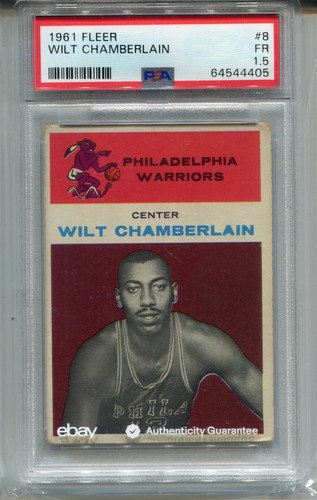 |
Wilt Chamberlain #8 1961 Fleer |
$1,683 | $304,960 | 181.2× |
 |
Lew Alcindor #75 1970 Topps |
$109.06 | $198,000 | 1815.5× |
 |
Wilt Chamberlain #1 1969 Topps |
$118.76 | $190,960 | 1608× |
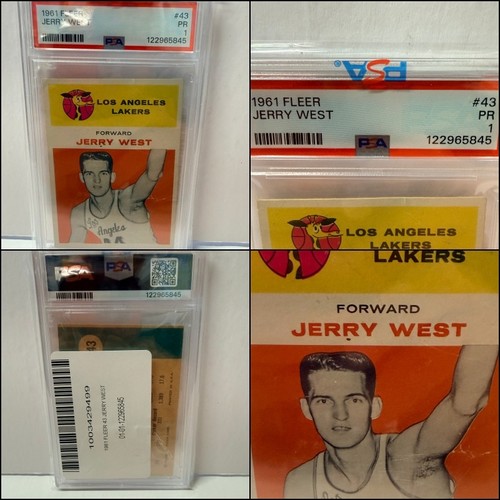 |
Jerry West #43 1961 Fleer |
$648.78 | $136,633 | 210.6× |
![Victor Wembanyama [Mojo] #136 2023 Panini Prizm card](https://i.ebayimg.com/images/g/AHYAAeSwlGBqHmhh/s-l500.jpg) |
Victor Wembanyama [Mojo] #136 2023 Panini Prizm |
$15,000 | $106,750 | 7.1× |
 |
Oscar Robertson #36 1961 Fleer |
$539.60 | $99,730 | 184.8× |
![LeBron James [Gold Refractor] #23 2008 Topps Chrome card](https://i.ebayimg.com/images/g/WooAAeSwizZqUE9N/s-l500.jpg) |
LeBron James [Gold Refractor] #23 2008 Topps Chrome |
$150.00 | $94,100 | 627.3× |
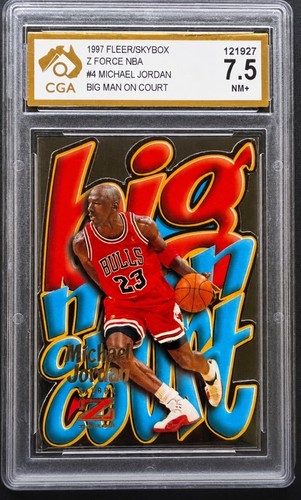 |
Michael Jordan #4 1996 Skybox Z Force Big Men on Court |
$3,215 | $89,955 | 28× |
![Stephen Curry [Gold] #321 2009 Topps card](https://i.ebayimg.com/images/g/s3kAAeSw1WNqKzIR/s-l500.jpg) |
Stephen Curry [Gold] #321 2009 Topps |
$7,500 | $89,270 | 11.9× |
Look up any card's current raw and graded value in Midpoint — and get an estimated grade before you pay to submit.
Table of Contents
- Section 1: Why Grade Basketball Rookie Cards?
- Section 2: Which Rookie Cards Are Worth Grading Now?
- Section 3: How Card Condition Drives Grading Decisions
- Section 4: Understanding Raw Value Thresholds and Grading Fees
- Section 5: Star Rookies, Role Players & Commons—Who’s Worth It?
- Section 6: Vintage vs Modern Rookie Cards: Grading for Profit
- Section 7: Card Types That Grade Well: Parallels, Refractors & RPAs
- Section 8: When To Skip Grading & Keep Cards Raw
- Conclusion
- FAQ
Section 1: Why Grade Basketball Rookie Cards?
What Is a Rookie Card and Why Does It Matter?
In sports card collecting, a rookie card is the first licensed card of a player produced in their debut professional season. For basketball, this means the player’s first NBA-licensed card. Rookie cards are considered the cornerstone of the sports card market—demand is typically highest for the first appearance of superstars like LeBron James, Stephen Curry, and Victor Wembanyama.
The Value of Grading Sports Cards
Grading authenticates and professionally evaluates your card’s condition. PSA, BGS, CGC, and TAG are among the top grading companies. A high grade (PSA 9 or 10) can increase a card’s value, create trust for online buyers, and enable inclusion in high-end sets or auctions. For example, the 2003 Topps Chrome LeBron James [Black Refractor] #111 has been reported to be worth over $1,000 raw, while a PSA 10 has sold for hundreds of thousands of dollars at auction—representing a significant premium for top grades.
Why Grading Isn’t Always Profitable
Grading fees start around $30/card and can exceed $100 for fast service or high-value cards. If the raw-to-graded value premium is small, or your card won’t grade a 9 or 10, grading may not pay off. Using a sports card grading app like Midpoint lets you simulate the likely grade using AI analysis before spending money.

Section 2: Which Rookie Cards Are Worth Grading Now?
High-Demand Players and Sets
Not all rookie cards are created equal. Typically, only star rookies or Hall-of-Famers justify grading. For example:
- LeBron James [Black Refractor] #111 (2003 Topps Chrome): Raw values have been reported over $1,000, and PSA 10s have sold for hundreds of thousands of dollars.
- Stephen Curry [Gold] #321 (2009 Topps): Raw values and PSA 10 sales have shown significant premiums for high grades.
- Victor Wembanyama [Mojo] #136 (2023 Panini Prizm): Early sales for rare parallels have reached high amounts, with PSA 10s commanding notable premiums.
These cards are often worth grading due to player stardom, set popularity (like Topps Chrome or Prizm), and substantial value jump at PSA 10.
Understanding Premium Multipliers
The “gem premium” is the ratio of PSA 10 price to raw price. Cards with a high gem premium are strong grading candidates, especially if you believe your card could achieve a top grade. Vintage cards like Bill Russell #77 (1957 Topps) and Wilt Chamberlain #8 (1961 Fleer) have also shown high gem premiums. This can make the grading fee relatively small compared to the potential upside—if the card is in top shape.
Modern Rookies & Hype Prospects
Recent draft stars like Victor Wembanyama attract significant attention. If you own rare Prizm parallels or low-numbered cards of new stars, grading can help lock in value before population counts rise. However, base rookie cards of role players or “commons” rarely justify grading unless an ultra high grade is likely.
For a deeper look at centering’s impact on rookie card value, see How Centering Impacts Card Value: A Detailed Guide.
Section 3: How Card Condition Drives Grading Decisions
The Four Pillars: Centering, Corners, Surface & Edges
Card grading companies use four main criteria: centering, corners, surface, and edges. Each has a significant influence on the final grade:
- Centering: Misaligned borders can drop a grade from 10 to 8 or lower. Use digital tools (like Midpoint or free centering calculators) to measure down to the millimeter.
- Corners: Even a tiny ding can be the difference between a 9 and 10. Inspect for sharpness and any whitening.
- Surface: Scratches, print lines, or dimples can lower value. Look under strong light and magnification.
- Edges: Fraying, chipping, or wear is common on older or foil cards; even minor flaws reduce the grade.
How To Pre-Grade Your Card
Before sending a card to PSA, BGS, or CGC, use a sports card grading app to estimate its likely grade. Apps like Midpoint use AI to analyze centering, corners, edges, and surface, giving you a realistic grade estimate—potentially saving you from costly mistakes.
For a step-by-step approach, read How to Pre-Grade Your Card: A Step-by-Step Guide.
When Condition Isn’t Enough
Some cards are so rare or iconic that even lower grades command notable premiums (e.g., Bill Russell #77 in PSA 5-7). For most modern rookies, however, only near-flawless condition justifies grading.
Section 4: Understanding Raw Value Thresholds and Grading Fees
When Does Grading Make Financial Sense?
Grading costs can quickly eat into profits. A common rule is that your raw basketball rookie card should be worth at least $50–$100 before considering grading. For ultra-modern cards, some collectors raise this threshold to $200, given lower gem premiums and higher PSA submission volumes.
Calculating Expected Value
- Submission Fee: $30–$100+ per card depending on service level.
- Shipping & Insurance: Often another $10–$20 per submission.
- Gem Rate: Only a percentage of cards actually achieve PSA 10.
Suppose you own a LeBron James [Gold Refractor] #23 (2008 Topps Chrome)—raw value and PSA 10 values can differ dramatically. If your card is a true gem, grading may be worthwhile. But if it’s likely a PSA 8, the graded value may only be a bit higher than raw, or even lower after fees.
Using Technology to Make the Call
Sports card grading apps help you estimate the likely outcome before you spend. With Midpoint, you can scan your card, get instant AI-based grading predictions, and see the raw vs graded value spread in real time. This is especially useful for deciding between grading and keeping the card raw.
Section 5: Star Rookies, Role Players & Commons—Who’s Worth It?
The Superstar Effect
PSA 10 rookie cards of Hall-of-Famers and modern superstars (LeBron, Curry, Wembanyama) often command significant premiums. These are typically the best targets for grading—especially if you own rare parallels or low serial-numbered versions.
Role Players and Commons
Even in popular sets like Panini Prizm or Topps Chrome, rookie cards of average players (“commons”) rarely justify grading. The value jump from raw to PSA 10 is often minor, and population counts are high. Grading makes sense only if the card is flawless and you’re targeting a registry set or want to preserve it long-term.
Exceptions: Short Prints & Inserts
- Numbered Cards: Even a lesser-known rookie’s /10 or /25 parallel can be valuable if the set is iconic or the player’s market heats up. See our guide to grading low population cards for more.
- SP/SSP Inserts: Cards like Michael Jordan #4 (1996 Skybox Z Force Big Men on Court)—even though not technically an RC—can be worth grading if they’re rare and high grade.
Section 6: Vintage vs Modern Rookie Cards: Grading for Profit
Vintage Basketball Card Grading
Vintage cards (pre-1980s) are often heavily worn. Even low-to-mid grades (PSA 4–7) can carry notable premiums due to scarcity. For example:
- Bob Cousy #17 (1957 Topps): Raw and PSA 10 values have shown large differences, with high premiums for top grades.
- Wilt Chamberlain #1 (1969 Topps): Raw and PSA 10 values can differ by a large margin, reflecting scarcity and demand.
Grading authenticates, preserves, and can maximize value, especially since many fakes or altered cards circulate. For more on vintage baseball card grading, see our grading scale differences guide.
Modern Rookies: Higher Gem Rates, Lower Premiums
Modern rookie cards (2000s–present) are often pack-fresh and stored carefully. PSA 10s are more common, so the gem premium is usually lower—except for rare parallels or top players. For most modern base rookies, the value jump from raw to graded is relatively modest unless the player is a future Hall-of-Famer.
Population Reports and Grading Strategy
- Check how many PSA 10s exist for your card—high population means lower premiums.
- For low-pop, vintage, or rare parallels, grading is often worthwhile if the card is authentic and undamaged.
Section 7: Card Types That Grade Well: Parallels, Refractors & RPAs
Understanding Prizm Parallels & Chrome Refractors
Modern sets like Panini Prizm and Topps Chrome are known for their “parallels”—alternate versions of the base rookie card with different colors, patterns, or serial numbers. Prizm parallels explained: Silver Prizms are unnumbered but highly sought-after; Mojo, Gold, Black, and other parallels are serial-numbered and can command significant premiums.
Refractors in Topps Chrome products are similar—colorful, shiny, and often numbered. They stand out visually and are easier to distinguish using guides on how to tell card parallels apart.
Rookie Patch Autos (RPAs) and Inserts
- RPAs: These combine a rookie card, game-worn patch, and autograph. They are among the most coveted modern basketball rookie cards worth grading, though condition is often tough due to thick stock and handling.
- Inserts and Short Prints: Ultra-rare inserts like the Michael Jordan #4 (1996 Skybox Z Force Big Men on Court) can see notable value spikes when graded high.
Which Card Types Grade Best?
Generally, parallels and refractors are printed with higher quality control, but foil surfaces can scratch easily. Numbered cards (e.g., /10 Gold, /25 Mojo) are often prime grading candidates because of their built-in scarcity and higher demand among collectors. For detailed grading tips by card type, check out our centering tool deep dive.
Section 8: When To Skip Grading & Keep Cards Raw
Raw Value Below Grading Fee
If your card sells for less than the grading cost (often $30–$50), it is generally not worth grading. This is especially true for base rookies of non-star players and high-population cards.
Condition Flaws
Surface scratches, soft corners, or poor centering can significantly reduce the chance of a grade above PSA 9, which in turn reduces resale premium. In these cases, selling raw is typically smarter—especially if the card is liquid and demand is high for ungraded copies.
Collector Preference and PC Cards
- If you’re collecting for personal enjoyment, grading may be unnecessary unless you want protection or registry inclusion.
- Some collectors prefer raw cards for ease of display or trade.
Trusting Your Pre-Grade
Before submitting, always double-check your card using a sports card grading app. Midpoint’s AI grading and value lookup let you preview the likely outcome, so you can decide when to submit or skip. For more on card centering and value, explore their free centering calculator.
Conclusion
Grading basketball rookie cards can be valuable—but only if you pick the right cards and accurately assess their condition. Focus on star rookies, rare parallels, and vintage icons with high raw value and strong gem premiums. Use digital tools like Midpoint to pre-grade and check value before submitting. Remember, centering, corners, surface, and edges are the key grading drivers. For commons or cards with flaws, it’s usually smarter to keep them raw. By combining knowledge, technology, and careful selection, you can maximize your collection’s value and avoid costly mistakes.
FAQ
Q: Which basketball rookie cards are worth grading?
A: Cards of superstar players, Hall-of-Famers, rare parallels (like Silver Prizm or low-numbered Chrome refractors), and iconic vintage rookies are typically worth grading—especially when raw value is high and the card is in excellent condition.
Q: Is it worth grading modern basketball rookie cards?
A: Sometimes, but mainly for stars, rare parallels, or cards in near-perfect condition. For base rookies of role players or commons, grading rarely delivers a return unless a PSA 10 is likely.
Q: What raw value should a basketball rookie card have before grading?
A: Ideally, the card should be worth at least $50–$100 raw. For modern cards with lower premiums, a $200+ raw value is safer to ensure grading costs are justified.
Q: Which condition factors matter most before grading a rookie card?
A: Centering, corners, surface, and edges all heavily influence grades. Even minor flaws dramatically reduce the chance of a PSA 9 or 10 and hurt resale value.
Q: Should I grade a Silver Prizm or Chrome rookie card?
A: Silver Prizm and Chrome refractor rookies of top players are popular grading targets due to their scarcity and collector demand. High-grade versions can command significant premiums.
Q: When should I not grade a basketball rookie card?
A: Avoid grading cards with low raw value, obvious flaws, or where the grading fee exceeds the potential value gain. For commons and role players, selling raw is usually the better option.
Free to start
Try the Midpoint app
Grade any card from a photo, see its raw and PSA 10 value, and track what your collection is worth — free.
Get it on iPhoneGet it on Android


