Card Centering Analyzer Tutorial: A Step-by-Step Guide
Learn how to use the card centering analyzer for precise grading results. This step-by-step tutorial covers setup, usage, tips, and more.

Estimated reading time: 7 minutes
Key Takeaways
- Precision measurement: Software-based analyzers remove guesswork with sub-millimeter accuracy.
- Comprehensive features: Auto border detection, draggable guides, centering ratios, and grade estimates.
- Easy setup: Available as a web tool, mobile app, or desktop application in minutes.
- Actionable insights: Advanced tips, real-world examples, and troubleshooting boost grading success.
Table of Contents
- Introduction
- Understanding the Card Centering Analyzer
- Setup and Installation
- Detailed Tutorial
- Advanced Tips and Best Practices
- Practical Use Cases and Examples
- Conclusion
Introduction
When you submit trading cards for grading, centering is crucial to achieving top subgrades. A card centering analyzer uses image processing to measure how well your card’s printed image is centered within its borders, predicting outcomes for grading services like PSA, BGS, CGC, SGC, or TAG with unmatched accuracy.
For detailed manual measurement techniques, check our step-by-step guide.
Understanding the Card Centering Analyzer
Key Functions and Components
- Image input – Upload a high-resolution scan or photo for analysis.
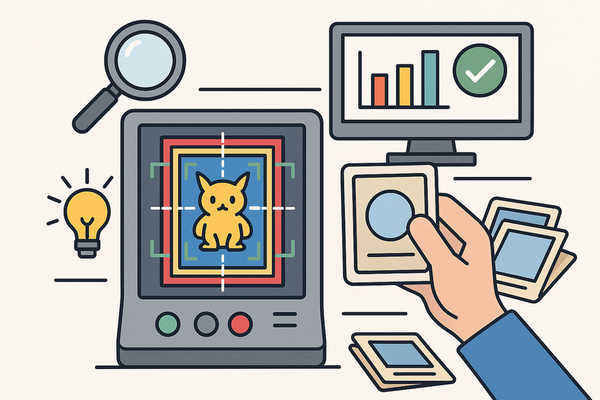
- Auto border detection – The tool locates outer card edges and inner artwork borders using computer vision.
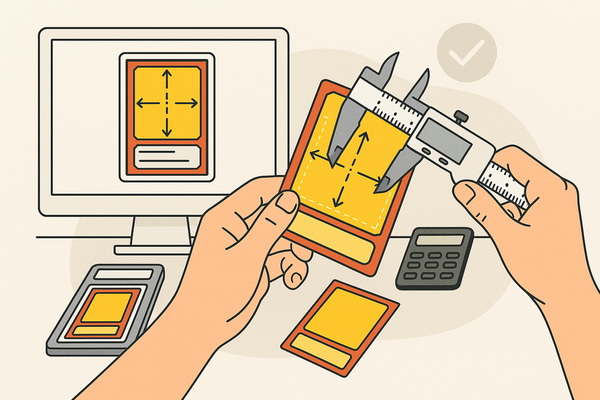
- Measurement guides – Draggable lines mark the left, right, top, and bottom borders for fine adjustment.
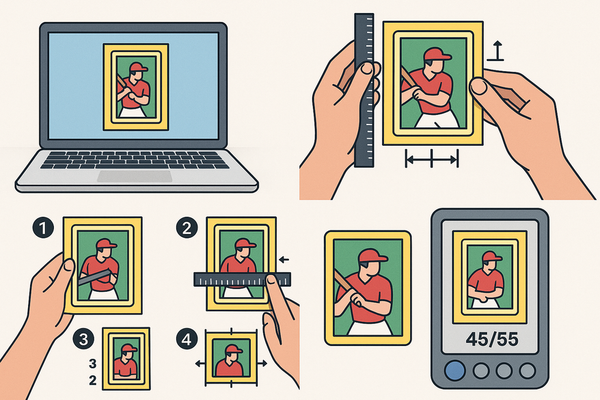
- Centering ratios – Ratios (e.g., 55/45, 60/40) are calculated by comparing opposite border widths.
- Grade estimates – Predicts centering subgrades for major grading companies based on your measurements.
- Front/back analysis – Measures both sides and reports the limiting side for combined grading.
Benefits of Each Function
- Objectivity – Removes guesswork with precise, repeatable measurements.
- Precision – Detects sub-millimeter differences critical for top-tier grades.
- Speed – Processes batches of cards quickly with automated detection.
- Optimization – Identifies which grading standards your card best fits.
Brief History
- Early methods – Physical rulers, plastic guides, printed templates.
- Digital evolution – Desktop software and web calculators in the 2000s.
- AI era – Modern analyzers use image processing and machine learning to automate detection.
Setup and Installation
This section covers the three primary ways to access the analyzer:
- Web tool – Open your browser and go to the analyzer site, no install required.
- Mobile app – Download from the App Store or Google Play and install on your device.
- Desktop application – Download the installer for Windows or macOS and follow on-screen prompts.
Detailed Tutorial
Use this step-by-step process to measure your card’s centering:
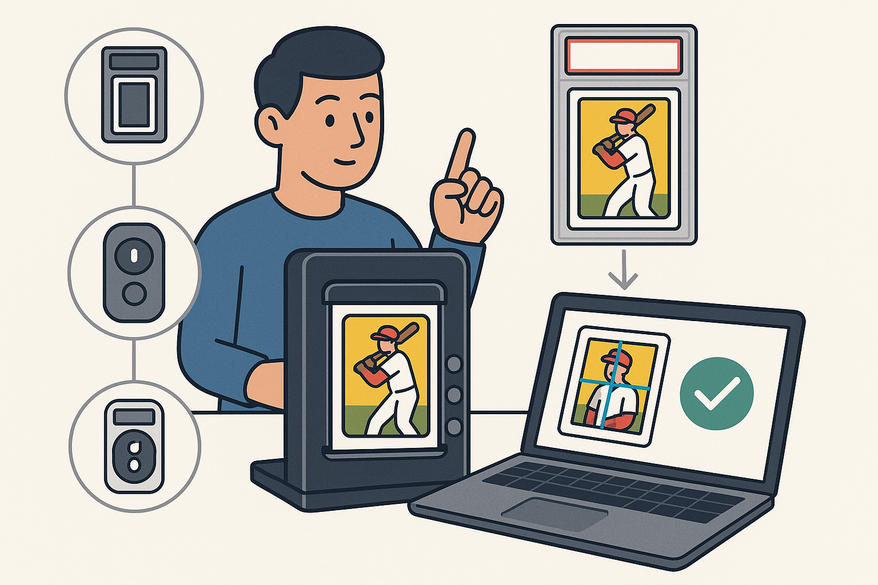
- Scan or photograph your card under even lighting.
- Upload the image to the analyzer.
- Adjust the draggable guides to align with the card borders and artwork.
- Review the calculated centering ratios and grade estimates.
Advanced Tips and Best Practices
- Consistent lighting: Avoid shadows or glare by using diffuse, even light sources.
- High-resolution scans: Ensure at least 300 DPI for sub-millimeter accuracy.
- Calibration: If the tool allows, calibrate guide positions against a known reference card.
- Batch processing: Group similar cards to speed up analysis and spot trends.
- Double-check: Re-measure if results seem off, and compare with manual measurements.
Practical Use Cases and Examples
- Single-card analysis: Fine-tune guides on a near-mint Pokémon card to confirm a 60/40 centering and anticipate a PSA 10 subgrade.
- Bulk submissions: Process dozens of sports cards, filter out those off-center beyond your threshold, and save on grading fees.
Conclusion
By mastering a card centering analyzer, you’ll benefit from:
- Objective, precise measurements for confident submissions
- Fee savings by avoiding off-center cards
- Higher potential subgrades with optimized centering
Compare centering standards across services with our PSA vs BGS vs CGC centering tolerances compared guide and learn how to avoid wasted submission fees.
FAQ
- How accurate is the card centering analyzer? It offers sub-millimeter precision, typically within ±0.5 mm, ensuring reliable grading estimates.
- Why does centering matter for grading? Centering is a key subgrade that can make or break a high-tier grade; deviations beyond 55/45 often lower overall scores.
- Can I use the tool on both card fronts and backs? Yes—you can measure both sides and the tool reports the limiting side for combined grading.
- Is a mobile app version available? Absolutely—you can measure cards on the go by downloading the analyzer from your device’s app store.