Card Grading App Platform Differences: A Comprehensive Comparison
Discover the key card grading app platform differences, helping collectors choose the right tools for reliable pre-grades, improved sales, and efficient workflows.

9 min read
Key Takeaways
- Platform Categories: Four main types—from dedicated AI graders to manual tools—serve different user needs.
- Feature Variation: Sub-grades, centering metrics, ID recognition, and live pricing distinguish top platforms.
- Cost Models: Free tiers, subscription plans, pay-per-scan, and credit packs cater to varying volumes.
- Accuracy & Workflow: Dataset quality, UI ease, batch processing, and support affect grading reliability and efficiency.
- Use-Case Alignment: Choosing the right tool depends on collector, dealer, or investor priorities.
Table of Contents
- Overview of Card Grading Apps and Platform Differences
- Major Grading App Platforms and Differences
- Side-by-Side Comparison of Key Dimensions
- In-Depth Analysis & Real-World Scenarios
- Choosing the Right Platform
- Conclusion
- FAQ
1. Overview of Card Grading Apps and Platform Differences
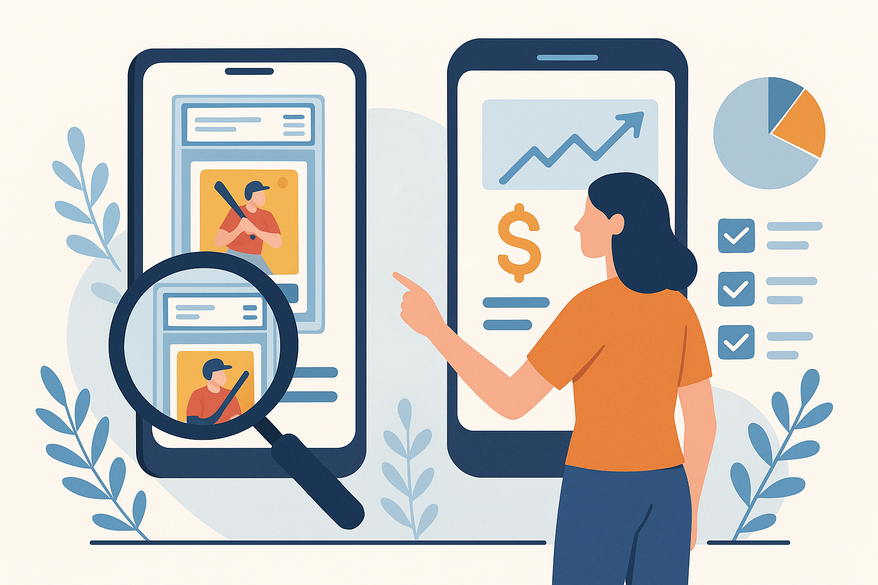
Card grading apps—whether mobile, web, or desktop—use AI-powered image recognition to predict a card’s condition on a 1–10 scale plus sub-grades. They replicate criteria from top grading houses like PSA, BGS, and CGC, delivering fast, unofficial pre-grades.
- Centering metrics: border alignment front/back (learn more)
- Corners: sharpness, whitening, chipping
- Edges: nicks, roughness, wear
- Surface: scratches, print lines, stains
Evolution: Pre-2023, collectors relied on magnifiers and rulers; from 2023 onward, AI-driven tools like CardGrading.app and CardGrader.AI emerged.
Benefits: Speed, consistency, educational overlays, cost efficiency, portfolio tracking.
Limitations: Unofficial grades, image-quality dependence, subtle damage detection gaps, variance in grading nuance.
2. Major Grading App Platforms and Card Grading App Platform Differences
Four primary platform types cater to the hobby:
- Dedicated AI graders
• Focus on PSA-style pre-grades.
• Features: sub-grades, centering overlays, live market prices.
• Users: serious collectors and investors. - AI grading + identification hubs
• Combine card ID with condition estimates.
• Features: set recognition, tool comparisons, educational guides.
• Users: hobbyists handling unknown sets. - Generic scanner/inventory apps
• Collection management with basic grade estimates.
• Users: bulk collectors and beginners. - manual digitized pre-grading
• User-entered assessments in spreadsheets or simple apps.
• Users: experienced collectors preferring full control.
3. Side-by-Side Comparison of Key Dimensions and Card Grading App Platform Differences
How do these platforms measure up across core criteria?3.1 Features & Functionalities
- CardGrading.app: PSA-grade + sub-grades, centering metrics, live prices, ROI advisor.
- CardGrader.AI: Card ID, multi-engine grades, educational guides.
- Generic scanners: Scanning, cataloging, rough condition tags.
- manual tools: Notes and user-assigned grades.
3.2 UI & Ease of Use
- CardGrading.app: Browser-based, ~30s photo upload, visual overlays.
- CardGrader.AI: Web dashboard, side-by-side AI outputs.
- Generic apps: Smartphone UI, grading in nested menus.
- manual tools: Forms or sheets, no visual aids.
3.3 Pricing Model
- CardGrading.app: Free tier (1 scan), $4.99/mo (30 scans), $9.99/mo (100 scans), credit packs.
- Other AI tools: pay-per-scan or bundles.
- Generic apps: included in broader subscriptions.
- manual methods: free but time-intensive.
3.4 Grading Criteria & Accuracy
- CardGrading.app: Trained on PSA slabs, four sub-grades, precise border ratios (compare tolerances).
- Other AI tools: dataset quality varies.
- Generic apps: rough classifications.
- manual tools: depend on user experience.
3.5 Customer Support & Community Feedback
- CardGrading.app: Photo tips, help center, active blog.
- CardGrader.AI: Educational guides, neutral reviews.
- Generic apps: inventory-focused support.
- manual tools: community-driven tips.
4. In-Depth Analysis & Real-World Scenarios of Card Grading App Platform Differences
Case Study 1: Collector Pre-Screening PSA Submission
A collector scans 100 Pokémon cards with CardGrading.app. AI flags 25 as likely PSA-9/10, saving submission fees on the remaining 75.
Case Study 2: Dealer Pricing Inventory at Show
A dealer uses centering overlays and AI estimates to price cards. Poorly centered cards receive discounts; top candidates match market prices.
Case Study 3: New Hobbyist Learning Sub-Grades
A beginner cross-checks manual grades against AI sub-grades, learning to spot edge whitening and scratches through visual feedback.
Technical Differences
- AI Training Data: Large, clean PSA datasets vs. smaller or noisy sets.
- Image Processing: Edge detection and border ratios vs. basic brightness checks.
- Processing Location: Cloud vs. on-device.
- Market Data: Live price feeds vs. no pricing.
5. Choosing the Right Platform: Card Grading App Platform Differences
Key factors:
- Accuracy & Alignment: Quality of training data, sub-grade depth.
- Cost Structure: Free tiers, subscriptions, pay-per-scan.
- Workflow Fit: Browser-based vs. app, batch vs. single scans.
- Extra Features: Live pricing, ROI tools, ID recognition.
- Support & Trust: Documentation, community reviews.
Recommendations by user:
- New collectors: CardGrading.app for educational overlays.
- Set builders: CardGrader.AI hubs for robust ID.
- Dealers: Pro AI plans with live prices and ROI tools.
- Budget users: Free scans + credit packs; calibrate with PSA returns.
6. Conclusion: Card Grading App Platform Differences
We compared platforms on:
- Depth & accuracy: PSA-aligned AI vs. basic tags.
- Feature scope: dedicated vs. multi-function.
- Pricing models: scans, subscriptions, packs.
- Usability & support: streamlined vs. manual methods.
While no app replaces professional grading, the right AI tool can save fees, teach sub-grades, and speed workflows. Test multiple platforms to match your collecting, investing, or dealing needs.
Call to Action: Share your experience with different card grading app platforms in the comments. Which tool boosted your ROI or learning?
FAQ
- Are AI pre-grades accurate?
AI pre-grades are reliable for initial screening but can miss subtle defects. Always verify borderline cards. - Which platform is best for low-volume users?
Free tiers and credit packs from dedicated AI apps (like CardGrading.app) offer great value. - Can I trust AI centering metrics?
Yes, top tools use precise border ratio calculations, but validate on clear, well-lit images. - Do apps support all card types?
Coverage varies: dedicated graders excel at major sports and Pokémon cards; identification hubs cover broader sets. - Will AI replace professional grading?
No. AI is a pre-screening companion to guide submissions, not a replacement for certified slabs.
Free to start
Try the Midpoint app
Grade any card from a photo, see its raw and PSA 10 value, and track what your collection is worth — free.
Get it on iPhoneGet it on Android