
Football Cards Worth More Graded: 10 Key Examples & Grading Tips
Discover which football cards are worth more graded, the PSA 10 premium, and how to spot the best cards to grade for profit. Real values, expert grading tips.

Estimated reading time: 11 min
Key Takeaways
- Football cards can be worth significantly more when graded a PSA 10 compared to raw, sometimes by hundreds or even thousands of times.
- Vintage rookie cards and iconic sets often show the largest PSA 10 premiums, but some modern cards can also see notable value increases.
- Condition factors like centering, corners, edges, and surface heavily impact the graded value—use tools like Midpoint to pre-grade before submitting.
- Not all cards are worth grading: low-value base cards or cards likely to grade below 9 often don’t justify the cost.
- Research recent comps and understand grading company scales to make informed decisions about grading.
Football cards worth more graded are at the center of today’s collector market. The difference in value between raw vs graded football cards—especially those that achieve a coveted PSA 10—can be substantial. But which cards see the biggest jump? When does grading make sense for the best profit, and how can you spot cards with real PSA 10 premium potential? This guide breaks down real-world examples, key grading considerations, and tips to help you get the most out of your football card collection.
Raw vs PSA 10 value (biggest grading premium) — live data from Midpoint's card database, as of 2026-08-09. Prices move; Midpoint refreshes these daily.
| Card | Raw | PSA 10 | Gem premium | |
|---|---|---|---|---|
 |
Joe Namath #65 1968 Topps (1968) |
$34.71 | $46,800 | 1348.3× |
 |
Jerry Rice #161 1986 Topps (1986) |
$55.39 | $72,500 | 1308.9× |
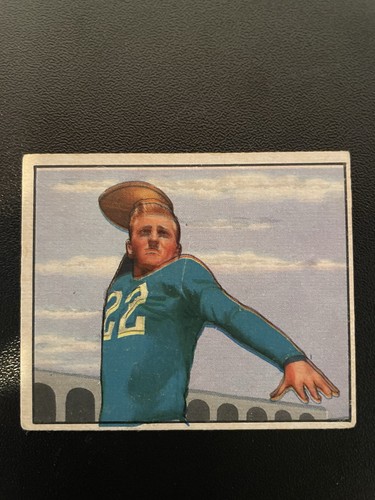 |
Bobby Layne #37 1950 Bowman (1950) |
$43.76 | $36,768 | 840.2× |
 |
Jim Brown #10 1959 Topps (1959) |
$148.26 | $112,240 | 757.1× |
 |
Joe Greene #245 1971 Topps (1971) |
$40.00 | $30,060 | 751.5× |
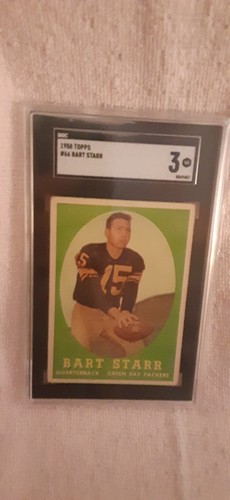 |
Bart Starr #66 1958 Topps (1958) |
$45.39 | $25,200 | 555.2× |
 |
Johnny Unitas #1 1959 Topps (1959) |
$35.16 | $19,032 | 541.3× |
 |
Nick Buoniconti #10 1963 Fleer (1963) |
$96.00 | $50,000 | 520.8× |
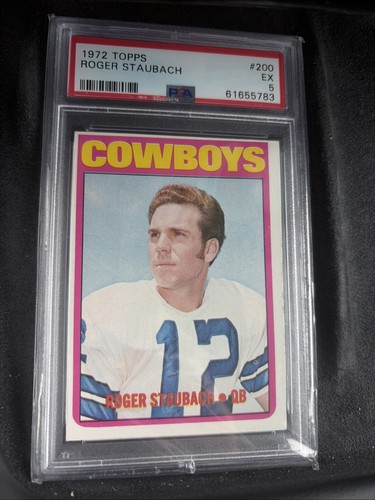 |
Roger Staubach #200 1972 Topps (1972) |
$50.00 | $25,620 | 512.4× |
 |
Joe Montana #216 1981 Topps (1981) |
$106.50 | $51,240 | 481.1× |
 |
Otto Graham #45 1950 Bowman (1950) |
$311.75 | $146,400 | 469.6× |
 |
Kenny Washington #8 1948 Bowman (1948) |
$72.07 | $31,200 | 432.9× |
Look up any card's current raw and graded value in Midpoint — and get an estimated grade before you pay to submit.
1. Understanding the PSA 10 Premium: Why Grading Matters
The "gem mint" PSA 10 grade is highly sought after. For some classic football cards, a PSA 10 can fetch hundreds or even thousands of times the value of the same card sold raw. This PSA 10 premium exists because gem-mint examples of vintage and iconic cards are rare, highly desired, and have long-term collector appeal.
For instance, as of 2026-08-09, a raw Jerry Rice #161 (1986 Topps) has sold for around $55.39, while a PSA 10 example has sold for as much as $72,500—a 1,308.9x multiple. Joe Namath’s 1968 Topps #65 has been reported to go from $34.71 raw to $46,800 in PSA 10, a 1,348.3x premium. Several other legends’ rookies (Jim Brown, Joe Montana, Bart Starr) have shown similar leaps in certain sales.
Grading doesn’t just add value for investors. It authenticates, protects, and can make high-end cards more liquid in the market. But not every card benefits—understanding which cards to grade is critical for maximizing profit.
2. Vintage Football Rookies: The Biggest Grading Gains
Vintage rookie cards are often the best examples of football cards worth more graded. Low population, hobby nostalgia, and Hall of Fame status can drive up premiums for gem-mint copies.
Top examples (as of 2026-08-09):
- Joe Namath #65 (1968 Topps): Raw $34.71, PSA 10 $46,800, 1,348.3x premium
- Bobby Layne #37 (1950 Bowman): Raw $43.76, PSA 10 $36,768, 840.2x premium
- Bart Starr #66 (1958 Topps): Raw $45.39, PSA 10 $25,200, 555.2x premium
These cards are extremely difficult to find in pristine condition, which makes each PSA 10 a trophy for collectors. If you own a clean vintage rookie, using digital tools like Midpoint’s centering analyzer can help you decide if it’s a real gem candidate before spending on grading.
3. Modern Icons: When PSA 10 Still Dominates
While vintage cards show the highest multipliers, modern legends like Joe Montana and Jerry Rice can also see major value jumps in PSA 10. Their rookie cards from the 1980s have enough age and popularity that gem examples are rare and highly sought-after.
- Joe Montana #216 (1981 Topps): Raw $106.50, PSA 10 $51,240, 481.1x premium
- Jerry Rice #161 (1986 Topps): Raw $55.39, PSA 10 $72,500, 1,308.9x premium
Even with more cards printed in these eras, surviving examples in flawless condition are scarce. If you’re holding ‘80s or early ‘90s stars—especially rookies—use tools like Midpoint’s Free Centering Calculator to pre-grade and maximize your shot at a gem premium.
4. Condition Factors: Centering, Corners, Edges & Surface
The real difference between a $50 raw and a $50,000 graded card? Condition, measured by strict grading standards. PSA, BGS, SGC, and CGC all assess:
- Centering: Off-center cards rarely achieve PSA 10. Use AI grading tools to measure centering to the millimeter—Midpoint excels here.
- Corners: Blunt or dinged corners lower your grade dramatically. Magnification and digital scans help you spot flaws.
- Edges: Chipping or fraying is common on vintage cardboard and modern glossy stock.
- Surface: Look for print lines, scratches, or gum/wax stains. Even the best cards can hide subtle defects.
Before submitting, consult resources like How to Pre-Grade Your Card: A Step-by-Step Guide and How Centering Impacts Card Value: A Detailed Guide to gauge your card’s true potential.

5. When a PSA 9, BGS 9.5, or SGC 9.5 Adds Little Value
Here’s a critical tip: for many cards, only a PSA 10—or equivalent "gem mint" from BGS/SGC/CGC—commands a significant premium. PSA 9, BGS 9.5, and SGC 9.5 grades often sell for just a modest bump over raw, especially on modern issues or high-population cards.
For example, a modern rookie parallel might sell for $100 raw, $120 in PSA 9, and $350+ in PSA 10. The "gem premium" is concentrated at the very top. That means pre-grading and only submitting likely gems is essential for profit.
If your card has visible flaws, it’s usually smarter to sell raw—grading fees can eat up any value added by a 9 or lower.
6. Football Card Types That Grade Best (and Worst)
Not all football cards respond equally to grading. For the best profit, focus on:
- Rookies: Often the top target for grading, especially Hall of Famers and stars.
- Parallels & Short Prints: Modern low-numbered or unique variants can yield strong premiums if flawless.
- Autographs & Patches: On-card autos with clean surfaces and edges can be valuable when graded highly, but thick patch cards are notoriously hard to gem.
- Vintage base cards: Scarcity and age mean even base cards (not just rookies) can see significant increases in PSA 10.
Be cautious about grading most base cards from post-2010 sets unless it’s a superstar rookie or extremely low-population parallel. Common cards rarely recover grading fees.
7. Break-Even Math: Grading Fees vs. Expected Value
Grading isn’t free. With PSA/BGS/SGC/CGC fees now typically $20-50+ per card (plus shipping and potential taxes), you need to do the math. Only submit cards where a high grade will yield a major value jump over raw.
For example, if a card is worth $50 raw and $70 as a PSA 9, it’s not worth grading after fees. But if it’s $100 raw and $5,000 in PSA 10, targeting that grade makes sense—if your pre-screening shows gem potential.
Use Midpoint to estimate your odds of achieving a PSA 10 and run the numbers before submitting.
8. Grading Companies: PSA, BGS, SGC, CGC—What to Know
Each major grading company has its own strengths and quirks:
- PSA: The most widely recognized for football, with the highest premiums for PSA 10 in many cases.
- BGS: Popular with modern cards and for subgrades (centering, corners, etc.).
- SGC: Respected for vintage cards; SGC 10s often sell at a discount to PSA 10.
- CGC: Gaining ground in sports cards, especially for modern issues.
Understand how grading scales differ (see Grading Scale Differences by Company) and always check which slabs sell best for your card or set before submitting.
9. Comp Research: Raw vs Graded Football Card Values
Before grading, always research recent sales ("comps") for both raw and graded versions of your card. Tools like Midpoint’s database can help you access the latest values and gem premiums across many cards.
For example, comparing a Johnny Unitas #1 (1959 Topps): raw $35.16 vs. PSA 10 $19,032, a 541.3x jump. But for many modern, common cards, the graded premium may be minimal or negative—especially below PSA 10.
Look for cards and players with proven track records of high gem premiums, and avoid grading cards where the spread is narrow or the population of high grades is high.
10. When Raw Can Outperform Graded
Sometimes, a raw football card actually sells for more than a graded one—usually when the graded example receives a low grade (PSA 7 or lower). This happens because collectors may prefer to take a chance on a raw card’s potential or want an unaltered card for display.
If you suspect your card has hidden flaws or is unlikely to grade above a PSA 8, it’s usually best to sell raw. This is especially true for modern cards where buyers chase gems; a "lesser" grade can actually be a turnoff.
In select cases, the "raw premium" is real—so always pre-grade, research comps, and choose the path with the best upside for your specific card.
Conclusion
The gulf between raw vs graded football card values is significant—and for certain cards, especially vintage rookies and iconic modern sets, the PSA 10 premium can be substantial. But smart collectors know that not every card is worth grading, and condition is everything. Use AI tools like Midpoint to pre-grade and research, and focus your submissions on true gem candidates for maximum profit. With a little knowledge and the right strategy, you can unlock the full potential of your football card collection.
FAQ
Q: How much more is a football card worth graded PSA 10 than raw?
A: The "PSA 10 premium" can be very large. For example, a Jerry Rice #161 (1986 Topps) has sold for $55.39 raw and as much as $72,500 graded PSA 10—a 1,308.9x increase as of 2026-08-09. Many vintage and iconic modern rookies have seen similar multiples in certain sales.
Q: Is it worth grading football cards in 2026?
A: It can be, but only for cards with strong gem premium potential. Grading is most profitable for vintage rookies, star player cards, and modern parallels likely to grade PSA 10. Use pre-grading tools and research comps before submitting.
Q: What football cards should I grade for the best profit?
A: Focus on rookie cards of Hall of Famers, iconic vintage cards, low-numbered parallels, and autographs—especially in top condition. Cards like Joe Montana #216, Joe Namath #65, and Jerry Rice #161 are often considered prime grading targets.
Q: Does PSA 9 add value to football cards, or is it only PSA 10?
A: For many cards, only PSA 10 (or equivalent "gem mint" grades) add major value over raw. PSA 9 often brings only a modest premium, especially for modern cards. Always weigh grading fees against the expected value jump.
Q: How do I know if my football card is worth getting graded?
A: Check recent sales of both raw and graded examples, assess condition (especially centering, corners, and surface), and use a digital pre-grader like Midpoint. If your card has gem potential and the premium is large, it may be worth submitting.
Q: Can a raw football card ever sell for more than a graded one?
A: Yes, especially if the graded card receives a low grade (PSA 7 or lower). In some cases, buyers pay more for a raw card with "potential" than for a confirmed lower-grade slab.
Free to start
Try the Midpoint app
Grade any card from a photo, see its raw and PSA 10 value, and track what your collection is worth — free.
Get it on iPhoneGet it on Android


