Fourth Edition MTG Cards Value: Ultimate Price Guide & Grading Tips
Discover the true Fourth Edition MTG cards value, top chase cards, grading tips, and market insights to maximize your collection's worth.

Estimated reading time: 15 min
Key Takeaways
- Fourth Edition MTG cards value varies widely by rarity, condition, and grading status, with premiums often seen on high-grade examples.
- Mana Vault is among the most valuable Fourth Edition cards, with PSA 10 values significantly exceeding raw prices, demonstrating the potential impact of grading.
- Key chase cards include Sylvan Library, Land Tax, Strip Mine, Birds of Paradise, and Winter Orb, each showing notable value appreciation when graded.
- Proper identification of Fourth Edition cards involves recognizing white borders, the 1995 copyright line, and the absence of an expansion symbol, which helps avoid confusion with other sets.
- Using AI grading tools like Midpoint can help estimate PSA, BGS, CGC, and TAG grades before costly submissions, potentially improving grading success rates and investment returns.
Card values — live data from Midpoint's card database, as of 2026-10-30. Prices move; Midpoint refreshes these daily.
| Card | Raw | PSA 10 | Gem premium | |
|---|---|---|---|---|
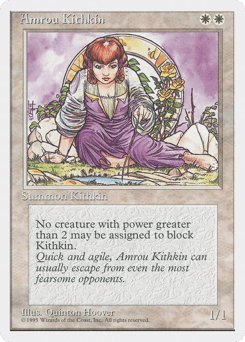 |
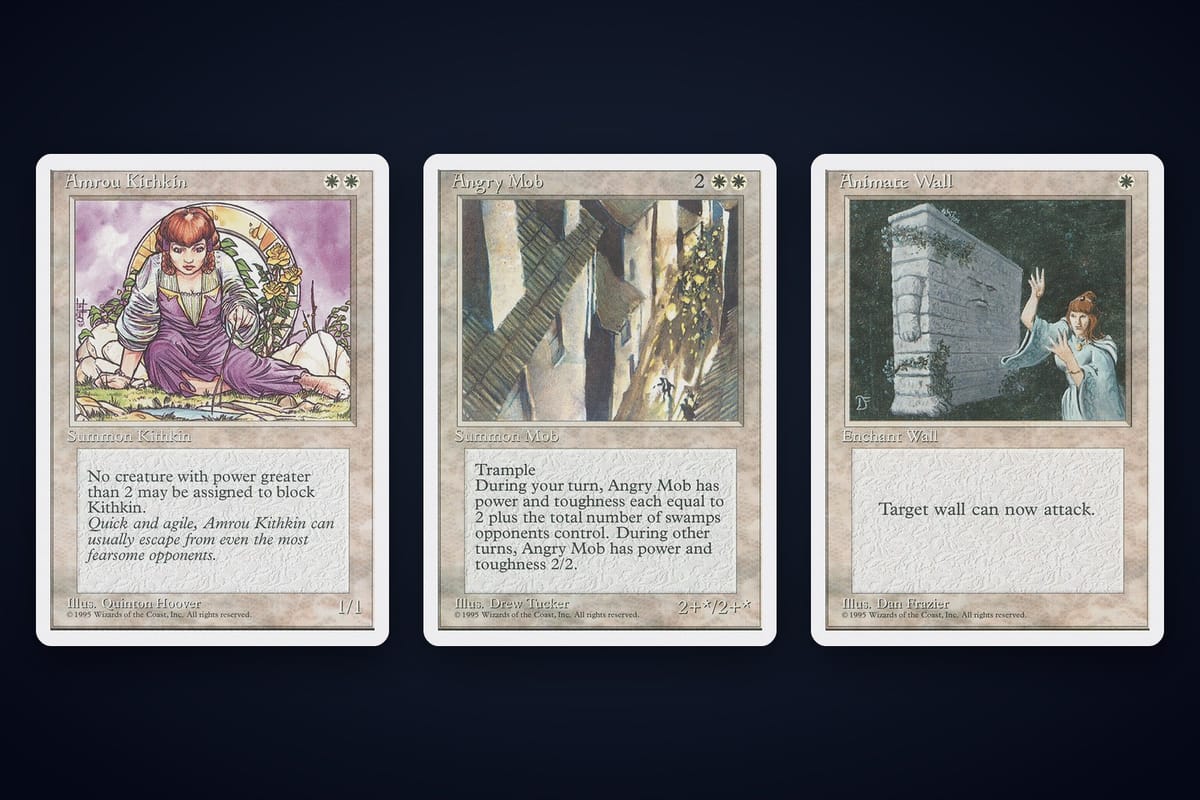
Amrou Kithkin #2 Fourth Edition (1995) |
$0.24 | — | — |
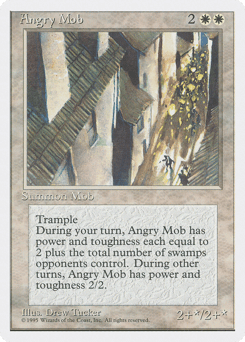 |
Angry Mob #3 Fourth Edition (1995) |
$0.17 | — | — |
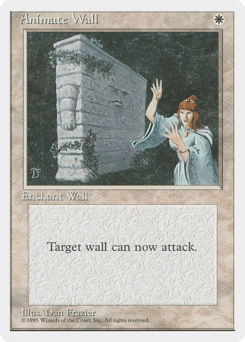 |
Animate Wall #4 Fourth Edition (1995) |
$0.57 | — | — |
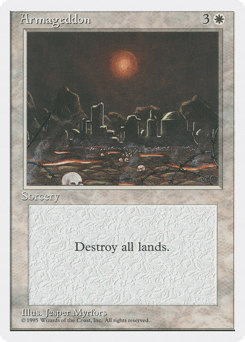 |
Armageddon #5 Fourth Edition (1995) |
$14.55 | — | — |
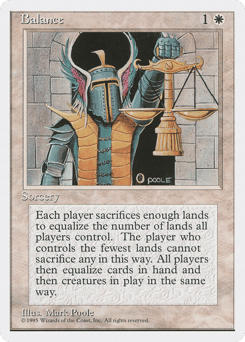 |
Balance #6 Fourth Edition (1995) |
$2.89 | — | — |
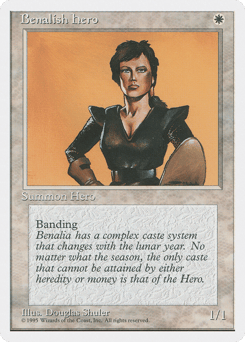 |
Benalish Hero #7 Fourth Edition (1995) |
$0.17 | — | — |
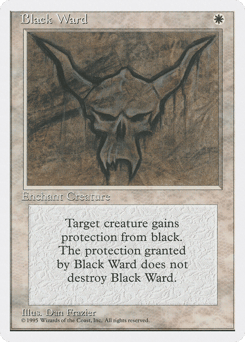 |
Black Ward #8 Fourth Edition (1995) |
$0.26 | — | — |
 |
Blessing #9 Fourth Edition (1995) |
$0.66 | — | — |
 |
Blue Ward #10 Fourth Edition (1995) |
$0.28 | — | — |
 |
Brainwash #11 Fourth Edition (1995) |
$0.12 | — | — |
 |
Castle #12 Fourth Edition (1995) |
$0.33 | — | — |
 |
Circle of Protection: Artifacts #13 Fourth Edition (1995) |
$0.25 | — | — |
Look up any card's current raw and graded value in Midpoint — and get an estimated grade before you pay to submit.
Table of Contents
- Section 1: Overview of Fourth Edition MTG Cards and Set History
- Section 2: Most Valuable Fourth Edition Cards and Chase List
- Section 3: Fourth Edition Cards Value by Rarity and Condition
- Section 4: Grading Impact and Fourth Edition PSA 10 Value Insights
- Section 5: Identifying Authentic Fourth Edition MTG Cards
- Section 6: Fourth Edition Sealed Products and Complete Set Values
- Section 7: Selling and Pricing Fourth Edition MTG Cards in Today's Market
- Conclusion
- FAQ
Section 1: Overview of Fourth Edition MTG Cards and Set History
Release Date and Card Count
Fourth Edition Magic: The Gathering was released on April 1, 1995, as the third core set following Revised Edition. It contains a total of 378 cards, including 121 rare cards, 121 uncommons, 121 commons, and 15 basic lands. This set was designed to be a comprehensive core collection of cards for new and existing players, consolidating many favorites from early expansions like Arabian Nights, Antiquities, and Legends, updated and reprinted for broader accessibility.
Its release marked a pivotal moment, as Fourth Edition introduced updated artwork and card frames, while maintaining the white border design. This set replaced the Revised Edition and remained the main core set until Fifth Edition in 1997.
Set Design and Differences From Other Printings
One of the defining features of Fourth Edition cards is the distinctive white border, which visually separates it from the black-bordered Revised Edition and all subsequent core sets. The white borders were utilized primarily to distinguish reprint cards, often carrying a perception of lesser tournament legitimacy, which influenced player preferences at the time.
Fourth Edition cards also lack an expansion symbol, a design choice reflecting its status as a core set rather than an expansion. Instead, the cards feature an explicit copyright date of 1995 at the bottom left of the card, along with the Wizards of the Coast logo, which aids collectors in authenticating the printing year and edition.
The card frame subtly evolved from Revised Edition, with Fourth Edition featuring a slightly different font for card names and updated text box styles, further differentiating it in the eyes of collectors and players. The cards also have slightly different card stock and printing quality compared to earlier sets, a factor that can influence grading outcomes.
Market Presence and Popularity
Fourth Edition has long been a cornerstone for collectors due to its historical importance and broad card pool. Many of the cards are staples in various Vintage and Legacy decks, sustaining both playability and collector interest. Its white borders, while initially less desirable for tournament use, have become iconic to collectors, with certain cards commanding higher values in excellent condition.
Over the years, Fourth Edition cards have experienced appreciation, particularly for rare cards with strong play and collector demand. The set’s continued relevance is supported by frequent reprints of key cards in modern products, but the original Fourth Edition printings retain distinct value due to their vintage status.
Fourth Edition cards can be found widely in the secondary market, but high-grade examples, especially PSA 9 and PSA 10 graded cards, are relatively scarce, creating a supply-demand dynamic that can influence price premiums.

Section 2: Most Valuable Fourth Edition Cards and Chase List
Top Valued Cards Led by Mana Vault
The crown jewel of Fourth Edition is widely considered to be Mana Vault, a powerful artifact that plays a critical role in Vintage and Legacy formats. As of late 2026, raw (ungraded) Fourth Edition Mana Vault cards typically sell for around $200, depending on condition. When graded PSA 10 (Gem Mint), these cards have been known to fetch prices significantly higher, illustrating the impact grading can have on value.
Mana Vault’s high value stems from its limited print runs, iconic status, and demand among both collectors and competitive players. The card’s playability in fast combo decks and artifact synergies ensures persistent interest in the market.
Other Noteworthy Chase Cards
- Sylvan Library: This staple card is highly sought after for deck-building and collection. Raw prices often hover near $100, but PSA 10 graded copies can command substantial premiums.
- Land Tax: A versatile enchantment popular in Legacy and Commander, raw Fourth Edition copies average around $70. Graded PSA 10 cards typically command higher prices, reflecting its desirability.
- Strip Mine: A powerful land destruction card, Strip Mine’s raw values average around $60. PSA 10 graded cards generally fetch higher prices, fueled by its staple status in eternal formats.
- Birds of Paradise: A classic mana fixer, Birds of Paradise raw cards have values around $50. PSA 10 grades often approach several hundred dollars, a result of the card’s consistent playability and collector demand.
- Winter Orb: Known for its impactful board control, Winter Orb has raw prices near $45, with PSA 10 graded copies selling for higher amounts.
Chase Cards Worth Grading
Given the value differences between raw and graded cards, the chase list cards mentioned above are often prime candidates for professional grading. Because grading fees commonly exceed $30 per card, it’s financially prudent to pre-assess cards using AI-driven tools like Midpoint. These tools provide centering, edge, corner, and surface analysis, producing estimated grades aligned with PSA, BGS, CGC, and TAG standards.
By filtering cards through such pre-grading checks, collectors can avoid submitting cards unlikely to achieve high grades, reducing wasted fees and optimizing investment returns.
Section 3: Fourth Edition Cards Value by Rarity and Condition
Rares: The Core Value Drivers
The rare slot in Fourth Edition contains the majority of high-value cards, driving the set’s overall worth. Cards like Mana Vault, Sylvan Library, and Strip Mine demonstrate how rarity combined with playability and condition drives pricing. For example, a near-mint rare card can command multiple times the price of a heavily played example.
Price differences between raw and graded rares can be significant. For example, a lightly played Sylvan Library might fetch around $80 raw, but a PSA 9 grade can push value substantially higher, with PSA 10 grading potentially commanding even more.
Uncommons and Commons: Hidden Gems
While uncommons and commons generally have lower base prices, select cards defy this trend. Cards like Birds of Paradise and Winter Orb are notable because their competitive utility sustains demand. A PSA 9 or 10 graded Birds of Paradise can command prices multiple times that of a raw near-mint copy.
Other uncommons and commons may hold sentimental or niche value but rarely achieve significant premiums unless graded to pristine condition or possessing unique misprints.
Basic Lands and Their Market
Basic lands from Fourth Edition typically hold minimal monetary value, often under $1 each in raw condition. However, pristine or PSA 10 graded examples can be of interest to collectors seeking complete graded sets or perfect-condition staples. Despite this, basic lands are generally not recommended for grading due to limited return on investment.
Condition and Grading Factors
- Centering: Centering is a key element for grading. Fourth Edition cards with centering within 55/45 to 60/40 ratios are often ideal for top grades. Midpoint’s AI tool measures centering precisely, providing an objective metric to assess grade potential.
- Corners and Edges: Sharp, undamaged corners and clean edges free of whitening or dings are essential. Cards with bent or frayed corners typically cannot reach PSA 9 or 10.
- Surface: Scratches, print defects, and stains reduce grade. Surface gloss and texture integrity are carefully analyzed by graders, and Midpoint’s surface analysis helps detect such flaws.
- Language and Printing Variants: English-printed Fourth Edition cards generally lead in value. Foreign language variants and misprints typically have lower market demand unless they are rare or error cards.
Section 4: Grading Impact and Fourth Edition PSA 10 Value Insights
The Gem Premium Gap
The 'gem premium' refers to the price difference between raw cards and PSA 10 graded cards. In Fourth Edition, this premium can be several times higher for top chase cards, underscoring the financial upside of professional grading. Examples include:
- Mana Vault: Raw ~$200 vs PSA 10 prices reported significantly higher (often multiple times raw value)
- Sylvan Library: Raw ~$100 vs PSA 10 prices substantially higher
- Land Tax: Raw ~$70 vs PSA 10 prices notably higher
This gap is driven by collectors’ desire for certified condition assurance, protection, and presentation, all of which add tangible value.
How Midpoint Helps with Pre-Grading
Midpoint utilizes advanced AI image recognition to analyze submitted card images and quantify centering, corners, edges, and surface condition. It generates estimated grades aligned with major grading companies (PSA, BGS, CGC, TAG), allowing collectors to make informed decisions before incurring grading fees.
For example, a collector with a Fourth Edition Sylvan Library can upload a photo to Midpoint, which then returns an estimated grade of PSA 9, indicating a strong candidate for grading. Conversely, if the estimate is PSA 7 or below, the collector can choose to improve card condition (if possible), or hold off on submitting.
By leveraging this technology, collectors can minimize grading costs, avoid disappointment, and maximize potential returns.
For detailed guidance, read our step-by-step pre-grading guide, which walks through best practices for photographing and evaluating cards using Midpoint.
Grading Scale Nuances
Different grading companies apply nuanced criteria affecting final grades:
- PSA: Highly strict on centering and surface flaws, with PSA 10 requiring nearly perfect condition.
- BGS (Beckett): Uses subgrades (centering, edges, corners, surface), which allows some flexibility if one aspect is slightly weaker.
- CGC: Emphasizes surface quality and authenticity, with grading scale similar to PSA.
- TAG: Smaller grading company focusing on competitive pricing and quick turnaround, gaining traction among collectors.
Midpoint’s comprehensive grading estimates consider these differences, allowing users to decide which service best fits their cards and goals.
Section 5: Identifying Authentic Fourth Edition MTG Cards
Visual Identification
- White Borders: Fourth Edition cards feature distinctive white borders approximately 2 mm wide, contrasting with the black borders of Revised Edition and later core sets.
- 1995 Copyright Line: Located at the bottom left of the card text box, this date confirms the card was printed for Fourth Edition, differentiating it from Revised Edition (1994) and Fifth Edition (1997).
- No Expansion Symbol: Fourth Edition cards do not display any expansion icon next to the card name, unlike subsequent sets.
- Font and Layout: The card title font is slightly bolder and different compared to Revised Edition; the text box has a uniform style without modern ornamentation.
Common Counterfeits and Misprints
Due to their value, Fourth Edition cards are sometimes counterfeited. Common counterfeit indicators include:
- Incorrect card stock thickness or weight.
- Blurry or pixelated printing, especially noticeable on mana symbols and text.
- Wrong card back printing color or alignment.
- Missing or incorrect copyright information.
Misprints like color shifts or miscut borders are rare but can add value if authenticated.
Collectors are advised to use a blacklight test, light transmission test, and compare to known authentic cards to verify authenticity.
Using Digital Tools for Verification
Digital apps like Midpoint assist in authentication by analyzing physical characteristics such as centering, edge wear, and surface condition. Midpoint’s AI algorithms detect anomalies inconsistent with genuine Fourth Edition card print runs, flagging potential fakes or altered cards.
This technology can reduce risk when purchasing cards online or at shows, giving buyers additional confidence in their acquisitions.
Section 6: Fourth Edition Sealed Products and Complete Set Values
Sealed Booster Boxes and Starter Decks
Original sealed Fourth Edition booster boxes and starter decks are exceptionally rare and valued by collectors. A sealed booster box typically contains 36 booster packs with 15 cards each, providing a full core set experience.
As of late 2026, sealed booster boxes have reportedly sold for prices in the range of $10,000 to $15,000 depending on condition and market demand, reflecting scarcity and nostalgia. Starter decks, while less valuable, still command several hundred dollars when unopened.
Sealed products offer the advantage of factory-sealed authenticity and the potential for unopened packs to appreciate as collectible time capsules.
Complete Set Values
Complete Fourth Edition sets, meaning all 378 cards in near-mint condition, represent a significant investment. As of late 2026, prices for complete sets vary widely based on card condition, with raw sets in near-mint condition often ranging from $2,500 to $4,000.
Sets containing graded chase cards, especially if those cards are PSA 9 or 10, can command higher premiums, sometimes exceeding $6,000. Collectors often seek graded cards for verification and investment security.
Investment Considerations
- Stability: Sealed product values tend to be more stable over time than individual singles, given the scarcity of unopened items.
- Storage: Proper storage is crucial to preserve condition; UV-protected display cases, temperature- and humidity-controlled environments, and limited handling are recommended.
- Insurance: High-value sealed products should be insured to protect against loss or damage.
- Tracking: Midpoint’s collection tracker allows investors to monitor portfolio values, helping to time sales or acquisitions wisely.
- Reference Guides: Consult resources like The Ultimate Collector's Guide for detailed best practices on card preservation and risk management.
Section 7: Selling and Pricing Fourth Edition MTG Cards in Today's Market
Market Price Trends
Prices for Fourth Edition cards fluctuate based on player demand, collector interest, grading population, and macroeconomic factors. For example, cards like Mana Vault and Sylvan Library have shown steady price increases over recent years, with occasional spikes following major tournament usage or reprints.
Marketplaces report seasonal trends, with activity peaking around major Magic tournaments and holidays. Monitoring platforms like TCGPlayer, eBay, and card grading population reports helps sellers time their listings for optimal returns.
Where to Sell
- Online Marketplaces: eBay remains a leading venue for reaching global buyers, especially for graded and high-value cards. Specialized MTG marketplaces like TCGPlayer and Cardmarket offer direct listing with price guides.
- Local Game Stores (LGS) and Card Shows: Provide faster sales and immediate payment but often at a discount compared to online sales.
- Buylist Offers: Quick liquidation option for bulk or lower-value cards, but generally at 30-50% below market value.
Using Midpoint for Pricing and Portfolio Management
Midpoint’s card lookup feature includes comprehensive pricing data for over 250,000 Magic cards, including Fourth Edition printings. It differentiates between raw and graded values, helping sellers set competitive prices aligned with current market conditions.
Additionally, Midpoint’s portfolio tracker enables collectors to monitor their entire collection’s value over time, identifying trends and informing strategic selling or acquisition decisions. Alerts on price changes and grading population shifts further empower users to optimize timing.
Collectively, these features reduce market guesswork, enabling smarter, data-driven sales and purchases.
Conclusion
Understanding Fourth Edition MTG card value requires a detailed look at rarity, condition, grading, and market demand. Iconic cards like Mana Vault and Sylvan Library offer opportunities for grading and resale, with gem premiums highlighting the importance of condition certification.
Accurate identification using visual cues such as white borders, the 1995 copyright, and absence of expansion symbols is essential to avoid confusion with other editions. Leveraging AI-based grading tools like Midpoint allows collectors to pre-assess and potentially maximize grading success, reducing unnecessary fees and enhancing investment returns.
Sealed Fourth Edition products and complete sets also present valuable investment options, requiring proper storage and portfolio management to preserve value.
Whether you are an experienced collector or a newcomer, combining technology, market insights, and careful card evaluation is key to successfully navigating the Fourth Edition Magic: The Gathering market.
FAQ
Q: What is the most valuable card in Fourth Edition MTG?
A: Mana Vault is among the most valuable Fourth Edition cards, with raw prices around $200 and PSA 10 graded copies often significantly higher as of late 2026.
Q: How much is a Fourth Edition Mana Vault worth?
A: Raw Fourth Edition Mana Vault cards are valued around $200, while PSA 10 grades typically command higher prices, reflecting a notable premium.
Q: Are Fourth Edition MTG cards worth anything?
A: Yes, many Fourth Edition cards hold value, especially rares and chase cards. Grading can increase their worth.
Q: How can you tell if a Magic card is Fourth Edition?
A: Fourth Edition cards have white borders, a 1995 copyright line at the bottom, and lack an expansion symbol.
Q: What Fourth Edition MTG cards are worth money?
A: Notable valuable cards include Mana Vault, Sylvan Library, Land Tax, Strip Mine, Birds of Paradise, and Winter Orb.
Q: How much is a complete Fourth Edition MTG set worth?
A: A complete Fourth Edition set in good condition can be worth several thousand dollars, especially when containing graded chase cards.
For collectors interested in precise grading and value estimation, Midpoint offers a powerful all-in-one app to measure centering, predict grades, and track portfolio value, helping ensure smart grading submissions and maximizing returns.
Free to start
Try the Midpoint app
Grade any card from a photo, see its raw and PSA 10 value, and track what your collection is worth — free.
Get it on iPhoneGet it on Android