Grading Differences for Autographed Cards: Complete Guide & Comparison
Explore grading differences for autographed cards: card vs autograph grades, PSA/BGS/CGC standards, authentication, value impact, and expert centering tips.


Estimated reading time: 15 min
Key Takeaways
- Grading autographed cards involves separate assessments for card and autograph quality.
- PSA, BGS, CGC/CSG, and SGC use distinct scales and labels for autographs and cards.
- Centering remains a crucial factor in achieving top card grades like PSA 10 or BGS Black Label.
- Authentication and grading are not the same—both impact value and marketability.
- Pack-pulled, in-person, and third-party authenticated autographs may be graded differently.
Table of Contents
- Section 1: Card Grade vs Autograph Grade — Key Differences
- Section 2: The Grading Scales — PSA, BGS, CGC/CSG, SGC Explained
- Section 3: Dual Grading & Authentication — How the Process Works
- Section 4: What Affects Autograph Grades?
- Section 5: Card Grade Factors for Signed Cards
- Section 6: Types of Autographs and Their Grading Implications
- Section 7: Value, Resale, and Premiums for Graded Autographed Cards
- Section 8: Centering — The Deciding Factor for Top Grades
- Conclusion
- FAQ
Section 1: Card Grade vs Autograph Grade — Key Differences
Understanding the Two-Part Grading System
One of the most common points of confusion is the difference between card grading and autograph grading. For autographed cards, especially those graded by PSA, BGS, CGC/CSG, or SGC, there are typically two separate grades displayed on the slab:
- Card Grade: This assesses the physical condition of the trading card itself using standard grading criteria such as centering, corners, edges, and surface.
- Autograph Grade: This specifically evaluates the quality, strength, and visual appeal of the autograph on the card.
It’s possible for a card to receive a high card grade but a lower autograph grade—or vice versa. For example, a pack-pulled autograph card could be a PSA 10 for the card but only an 8 for the signature if there’s smudging or fading.
Why This Matters for Collectors
Understanding which grade to prioritize depends on your collecting goals. If you’re after the best presentation, both grades matter. If you’re investing, the combined grade can impact resale value. When comparing a PSA 10 vs PSA 9 card, even a one-point difference in either the card or autograph can mean a significant difference at auction.
Authentication vs Grading
Some cards receive only authentication—not a numeric grade—for the autograph, especially if the card is in poor condition or has been altered. PSA, for example, may slab a card as “Authentic Auto” with no number if grading the card itself isn’t possible or requested.
Section 2: The Grading Scales — PSA, BGS, CGC/CSG, SGC Explained
PSA Grading System
PSA (Professional Sports Authenticator) uses a 1 to 10 scale for both cards and autographs. A PSA 10 Gem Mint is the highest standard for both, with strict requirements for centering, corners, edges, and surface for the card, and boldness and clarity for the autograph.
- PSA 10: Virtually perfect in every aspect.
- PSA 9: Minor imperfections, still very high quality.
PSA labels will list both grades, e.g., "Card: 9, Auto: 10." If only the autograph is authenticated, the label reads "Authentic Auto."
BGS and SGC Approaches
BGS (Beckett Grading Services) and SGC (Sportscard Guaranty) also use 1 to 10 scales, but BGS features subgrades (centering, corners, edges, surface) and special Black Label (Pristine 10) and Gold Label distinctions:
- BGS Black Label 10: Perfect 10 across all subgrades; extremely rare.
- BGS Gold Label 10: Pristine card with one subgrade at 9.5.
- BGS 10 Autograph: Requires no visible defects, skips, or fading.
SGC and CSG/CGC use similar scales, but with their own labeling conventions and slab designs.
Gem Mint vs Pristine vs Black Label
Collectors often debate gem mint vs pristine (e.g., CGC Pristine 10 vs Gem Mint 10, PSA 10 vs BGS 10). Pristine or Black Label is generally considered stricter than Gem Mint—centering and all other factors must be essentially flawless. The Card Centering Tool can help you understand if your card’s centering meets this bar before you submit.
Section 3: Dual Grading & Authentication — How the Process Works
Submitting for Dual Grading
Most grading companies allow you to choose from:
- Card Grade Only
- Autograph Authentication Only
- Dual Grading (Card + Autograph)
For in-person signed cards, PSA, BGS, and CGC must first authenticate the autograph. If the signature is genuine, you can then request a numeric grade for both the card and the autograph. For pack-pulled autographs from major sets (Topps, Panini), authentication is usually assumed and only grading is performed.
Labeling Conventions
Slabs will clearly indicate each grade. On a PSA slab, for example:
- "10/10" means card grade 10, autograph grade 10.
- "9/10" means card grade 9, autograph grade 10.
- "Authentic Auto" means only the autograph was authenticated, no numeric grade for the card.
Altered or Restored Autographs
If a signature has been traced, inked, or otherwise altered, grading companies may refuse to grade the autograph or label it as "Altered." This can impact both value and the ability to receive dual grades. Restored signatures are especially scrutinized, and may only receive authentication at best.
Section 4: What Affects Autograph Grades?
Key Criteria: Boldness, Placement, and Clarity
Autograph grading focuses on the visual quality of the signature. Top grades (PSA 10, BGS 10) demand:
- No smudging, fading, or ink skips
- Even, bold ink throughout the entire autograph
- Proper placement—not running off the card or obscured by dark backgrounds
- No streaking or breaks in the signature
Common Issues That Lower Grades
Even minor flaws can drop an autograph to a 9 or lower:
- Light fading or uneven color
- Smudges from handling or poor storage
- Ink skipping due to pen running dry or glossy card surface
- Autograph running off edge or into text/images
Collectors frequently ask: "What makes an autograph get a PSA 10 or lower?" The answer is that any visible flaw—no matter how slight—prevents a perfect grade.
Impact of Pen Type and Surface
Sharpies and paint pens are often preferred for bold, lasting signatures. Ballpoint can result in skips or thin lines, especially on glossy cards. Some modern sets use special coatings to accept ink better.
Section 5: Card Grade Factors for Signed Cards
Standard Grading Criteria Still Apply
The card itself is graded using the same standards as unsigned cards:
- Centering: Symmetry of the printed image; off-centering is a common reason for missing a PSA 10 or BGS Black Label.
- Corners: Must be sharp and free of dings or fraying.
- Edges: No chipping or white spots.
- Surface: Free from scratches, print lines, or residue.
Even on autographed cards, centering is frequently the deciding factor for gem mint vs pristine grades. To measure centering down to the millimeter, collectors can use Midpoint before submitting for grading.
Special Considerations for Signed Cards
- Autograph Placement: If the signature is on a sensitive area (like a holo or foil section), it can increase the risk of surface scratches.
- Ink Transfer: Mishandling after signing can cause ink to transfer to the card protector, damaging both surface and signature.
- Alteration Risk: Any evidence of erased or "cleaned" signatures will typically result in an "Altered" label.
PSA 10 vs PSA 9, BGS 10 vs 9.5, CGC Pristine 10 vs Gem Mint 10
Comparing top grades across companies reveals subtle differences. For instance, BGS 10 requires at least three 10 subgrades, with the fourth at 9.5 for a gold label. BGS Black Label demands perfect 10s. CGC’s Pristine 10 is considered tougher than Gem Mint 10, with stricter standards for centering and surface. PSA is sometimes considered more forgiving on centering than BGS/CGC, but the overall eye appeal is key. For more on how centering impacts value, see the centering value impact guide.
Section 6: Types of Autographs and Their Grading Implications
Pack-Pulled Autographs
These are cards with manufacturer-issued signatures (e.g., Topps Chrome Autographs, Panini Prizm Autos). They come with built-in authentication, so grading companies generally do not question their legitimacy. Both card and autograph are eligible for numeric grades.
In-Person and Aftermarket Signatures
Cards signed at events or by mail require thorough authentication. Some collectors prefer "Authentic Auto" only slabs, especially for vintage cards whose condition is poor. Dual grading is available once the autograph passes authentication, but alterations, fading, or surface issues may limit the grades achievable.
Third-Party Authenticated Autographs
Some cards are pre-authenticated by third parties (JSA, Beckett Witnessed). Grading companies may accept these, but will still apply their own authentication and grading standards.
- Restored, Traced, or Enhanced Signatures: Attempting to improve or restore a faded autograph usually results in a refusal to grade or an "Altered" label.
When to Choose Authentication vs Grading
For rare or historic cards, even a poor condition card with a genuine autograph can be valuable. In such cases, collectors often opt for authentication only, preserving the card and signature in a tamper-evident slab without risking a low numeric grade that could deter buyers.
Section 7: Value, Resale, and Premiums for Graded Autographed Cards
Premiums for Dual-Graded Cards
Cards that earn high grades for both the card and the autograph can command significant premiums. For example, a PSA 10/10 dual-graded card may sell for considerably more than a PSA 10 card with only an authenticated autograph, or a PSA 9/10. This is especially true for superstar athletes, rookie cards, and limited-edition parallels.
Market Preferences by Grading Company
Some collectors prefer PSA slabs for modern cards, while others pursue BGS Black Label or CGC Pristine 10 for maximum value. The "which grade is hardest to get" debate often centers around these ultra-high standards, with BGS Black Label and CGC Pristine 10 generally considered among the toughest. For comparisons, see our AI-focused grading comparison.
Impact of Authentication Alone
Cards slabbed as "Authentic Auto" (no numeric grade) are generally worth less than dual-graded cards, but may still command a strong premium if the autograph is rare, vintage, or from a legendary signer.
- Altered or Restored Labels: These typically reduce value, as collectors prize originality.
Examples of Value Differences
- A 2003 Topps Chrome LeBron James Auto PSA 10/10 has been reported to sell for significantly more than the same card slabbed "Authentic Auto." Exact values vary by market and auction.
- Modern cards with pristine autographs and top card grades often set auction records.
Section 8: Centering — The Deciding Factor for Top Grades
Why Centering Matters Most
Across all major grading companies, centering is often the most challenging and decisive subgrade. A card with perfect corners, edges, and surface can still miss a PSA 10 or BGS Black Label due to minor off-centering. For autographed cards, centering remains just as important—sometimes even more so, as the eye is drawn to the signature and overall presentation.
How Graders Assess Centering
Grading standards (PSA, BGS, CGC) define centering tolerances for each grade. For example:
- PSA 10: Typically requires centering of 55/45 or better on the front, 75/25 on the back.
- BGS Black Label: Demands centering of 50/50 or 50.5/49.5—virtually perfect.
- CGC Pristine 10: Even stricter, with minimal tolerance for off-centering.
To see how your card measures up, try the Free Centering Calculator or the step-by-step centering measurement guide.
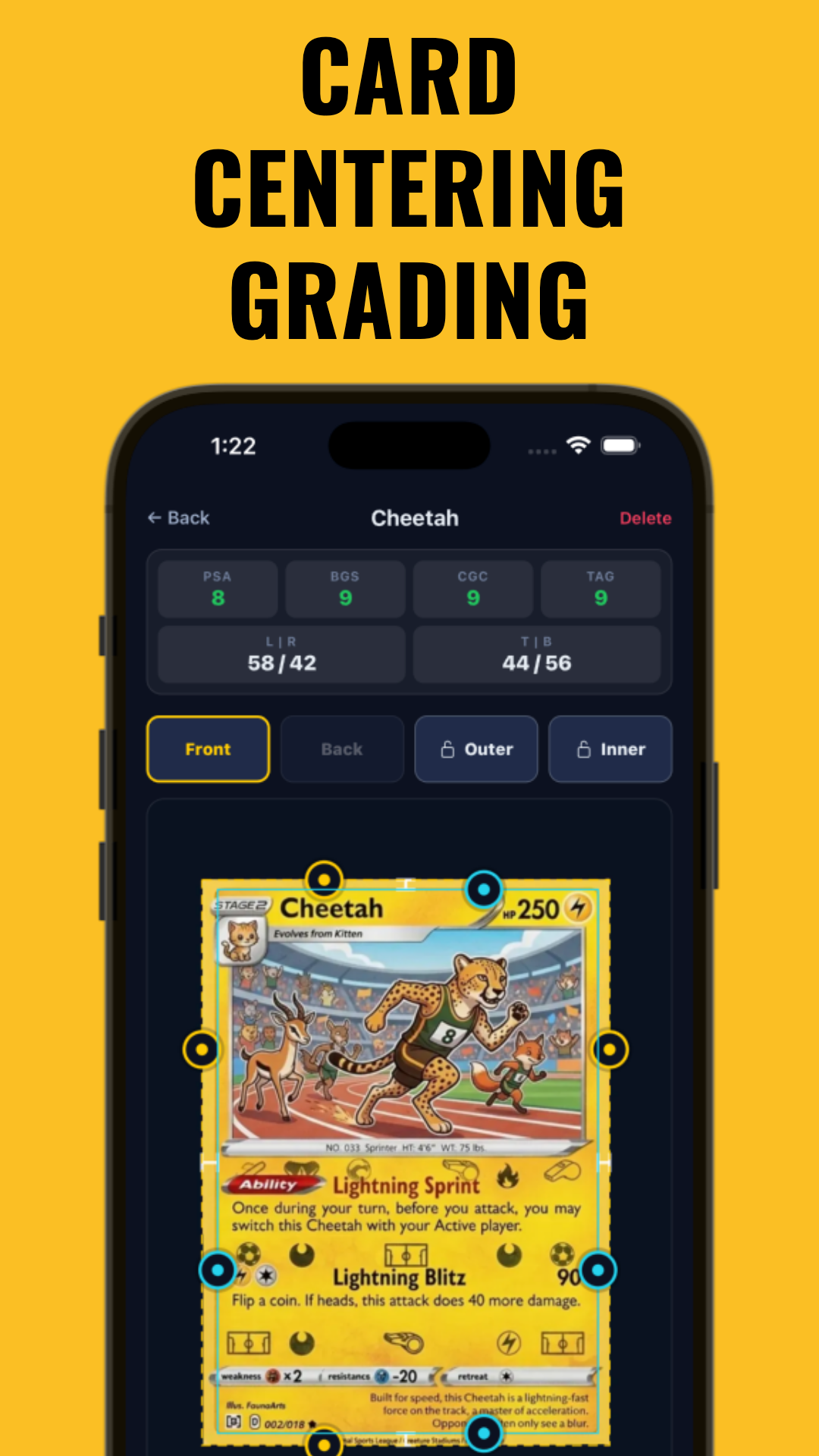
Using Tools Like Midpoint
Before submitting your autographed card for grading, use Midpoint to measure centering down to the millimeter. This lets you estimate your chances for a PSA 10, BGS 10, or CGC Pristine 10 and avoid spending on grading fees for cards unlikely to hit top grades.
Conclusion
Grading differences for autographed cards can be complex, with separate standards and scales for card grade and autograph grade. PSA, BGS, CGC/CSG, and SGC each have their own definitions for gem mint, pristine, and black label conditions. Centering remains the make-or-break factor for the highest grades—whether you’re aiming for a PSA 10, BGS Black Label, or CGC Pristine 10. By understanding the dual grading process, knowing what affects both card and autograph grades, and using tools like Midpoint to pre-grade your cards, you can maximize your chances of earning top marks and achieving the best possible resale value. For more tips on centering, grading standards, and pre-grading, explore our guides linked above.
FAQ
Q: What is the difference between a graded card and a graded autograph?
A: A graded card receives a numeric score for the card’s physical condition (centering, corners, edges, surface), while a graded autograph gets a separate score based on the signature’s quality (boldness, placement, no smudging or fading). Both grades can appear together on the same slab, reflecting the condition of each component.
Q: Can PSA grade both the card and the autograph on the same slab?
A: Yes, PSA offers dual grading, displaying both the card grade and the autograph grade on one slab (e.g., "Card: 10, Auto: 9"). You can also choose to have only the autograph authenticated if the card is in poor condition.
Q: What makes an autograph get a PSA 10 or lower?
A: To earn a PSA 10, the autograph must be bold, evenly inked, well-placed, and free from smudging, fading, ink skips, or streaks. Any visible flaw—even minor—can result in a lower grade (PSA 9 or below).
Q: Do autographed cards need authentication before grading?
A: Yes, for in-person or aftermarket signatures, authentication is required before grading. Pack-pulled autographs from manufacturers are pre-authenticated, so grading can proceed directly.
Q: Is it worth grading autographed cards, or just authenticating them?
A: Dual grading (card + autograph) typically yields higher resale value, especially for high grades. However, for vintage or poor-condition cards, authentication alone may be preferable to avoid a low numeric grade that could deter buyers.
Q: How do PSA, Beckett, and SGC differ on autograph grading?
A: All use a 1-10 scale for autographs, but their standards and label designs differ. BGS and SGC may use "Pristine" or "Black Label" distinctions for perfect signatures, while PSA uses "Gem Mint." Each company’s criteria for top grades are slightly different—with BGS and CGC/CSG generally being stricter than PSA.
Free to start
Try the Midpoint app
Grade any card from a photo, see its raw and PSA 10 value, and track what your collection is worth — free.
Get it on iPhoneGet it on Android