Optimize Your Card Grading Submission Preparation for Top Results
Learn essential steps and tips for effective grading submission preparation to avoid delays, reduce fees, and ensure top grades for your trading cards.


Estimated reading time: 7 minutes
Key Takeaways
- Pre-screen cards to focus on high-value, top-condition items.
- Handle and clean with care to avoid micro-scratches and surface flaws.
- Document and organize each card’s details to streamline intake and prevent delays.
- Protect and package with proper sleeves, holders, and secure shipping methods.
- Follow best practices and avoid common pitfalls to maximize grades and minimize fees.
Table of Contents
- Introduction
- Understanding the Card Grading Process
- Essential Steps in Grading Submission Preparation
- Common Pitfalls and How to Avoid Them
- Best Practices for Optimizing Card Grading Submissions
- Resources and Tools
- FAQ
Introduction
Grading submission preparation is the end-to-end process of inspecting, protecting, documenting, and packaging trading cards before sending them to a professional grading company. According to PSA, submission preparation is “the systematic approach to ensuring cards arrive in pristine condition and with accurate paperwork.” Proper preparation matters: a single scratch, bent corner, or paperwork error can cost you a top-grade or trigger resubmission fees. In fact, up to 15% of submissions are delayed or downgraded due to packaging or documentation mistakes. This guide delivers actionable tips to improve and optimize your process.
For full details, see the PSA Submission Guide and the PSA Grading Statistics.
Section 1: Understanding the Card Grading Process
Before you prepare your cards, know the path they’ll follow. Proper preparation impacts every phase:
- Intake & Registration
- Package is opened and cards are matched to your form.
- Cards are logged and assigned unique IDs.
- Authentication & Verification
- Specialists detect counterfeits, trims, or recolors.
- Altered or inauthentic cards may be rejected or flagged.
- Condition Assessment
- Evaluation of centering, corners, edges, surface, and eye appeal.
- Clean, consistent cards speed the process.
- Grade Assignment & Slabbing
- A numerical grade (1–10) is assigned.
- Cards are encapsulated in tamper-evident holders.
- Quality Control & Return Shipping
- Final checks for label accuracy and secure encapsulation.
- Cards are packaged for return shipping.
Impact of Preparation on Each Phase
- Intake delays drop when forms match card order exactly.
- Dust-free surfaces help graders focus on true flaws.
- Proper sleeves and holders prevent transit damage.
These criteria mirror Beckett Grading Criteria. For precise centering analysis, use the Card Centering Tool.
Section 2: Essential Steps in Grading Submission Preparation
- Pre-Screen Your Cards
- Select high-value, Near Mint+ cards using eBay sold listings: eBay Sales Data.
- Skip low-value commons unlikely to recoup fees.
- Clean & Handle Cards Properly
- Wash hands or wear powder-free nitrile gloves.
- Hold cards by the edges and remove dust with a dry microfiber cloth.
- PSA warns that moisture or chemicals can cause micro-scratches. See PSA Care Tips.
- Assess & Document Condition
- Inspect under strong, angled light; use a 10× loupe.
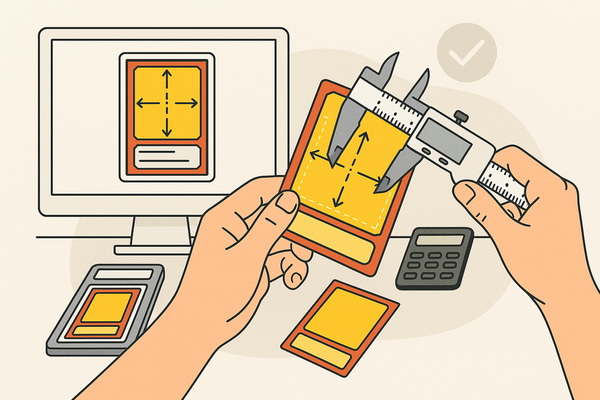
- Check centering with a grid overlay or links like How to Measure Card Centering and How to Tell if My Card Is Off-Center Before Grading.
- Photograph both sides with a timestamp for insurance claims.
- Protect Cards with Sleeves & Holders
- Use fresh penny sleeves and semi-rigid holders (Card Saver style).
- Avoid screw-downs and taping holders.
- Beckett recommends semi-rigid holders. See Beckett Submission Guide.
- Organize & Label Your Submission
- Group by sport, set, year, and service tier.
- Match order to form and use dividers or rubber bands.
- Complete fields: card name, set, number, declared value, service level, add-ons.
- Refer to the CGC Submission Form PDF.
- Package & Ship Securely
- Internal: team bags, cardboard shields, bubble wrap.
- Outer box: sturdy, right-sized, filled with air pillows.
- Double-tape seams; ship with trackable, insured service. TCGplayer recommends $100 insurance per $1,000 declared value (TCGplayer Shipping).
Section 3: Common Pitfalls and How to Avoid Them
- Submitting Cards That Won’t Recoup Fees: Use pre-screen criteria and sales data.
- Inadequate Packaging: Sleeve + semi-rigid + padding + shake-test before sealing.
- Over-Cleaning or Altering: Limit cleaning to dry dust removal.
- Incomplete or Incorrect Forms: Double-check order vs. form entries and values.
- Ignoring Guidelines: Reference the latest instructions from grading services.
- Poor Storage Pre-Submission: Store in sleeves/holders in a cool, dry, dark environment.
Section 4: Best Practices for Optimizing Card Grading Submissions
- Create and Follow a Submission Checklist:
- Hands washed or gloved
- Cards inspected under angled light
- Fresh sleeves and holders
- Form filled and order matched
- Batch Cards by Era/Value: Group vintage vs. modern for turnaround time decisions.
- Maintain a Submission Log: Record predicted vs. actual grades and refine criteria.
- Use All-in-One Kits: Consider Graders Choice All-in-One Submission Kit for consistent materials.
“One of the keys to consistent high-quality submissions is using the same routine every time,” notes a high-volume submitter on Reddit. Consistency reduces errors and builds your grading eye. (Reddit r/baseballcards Thread)
Compare grading services by brand impact, slab aesthetics, pricing tiers, and turnaround times. See a detailed PSA vs. BGS vs. SGC vs. CGC comparison. For more on maximizing acceptance rates, visit Maximize Grading Acceptance Guide.
Section 5: Resources and Tools
- Official Submission Guides:
- Checklists & Kits: Graders Choice All-in-One Submission Kit
- Packaging Materials: Penny sleeves, semi-rigid holders, team bags, cardboard protectors, bubble wrap, sturdy boxes, packing tape.
- Further Reading & Videos:
FAQ
- Should I clean my cards before submitting them? Only light, dry dust removal with a microfiber cloth. Avoid liquids or vigorous wiping. See PSA Care Tips.
- Are top loaders acceptable? Semi-rigid holders are preferred by most grading companies. Check official guidelines.
- How do I determine if a card is worth grading? Compare raw vs. graded sales, factor in fees and condition; focus on NM+ and high-value targets.
- What if my card is damaged in transit? Use timestamped photos, trackable and insured shipping; file claims with the carrier and grading company.
- Bulk vs. small-batch submissions? Bulk lowers per-card cost but ties up funds; small batches let you adjust after each submission.